
society
Senate Blocks Mandatory Electronic Transmission of Election Results: Implications for Nigeria’s Electoral Integrity

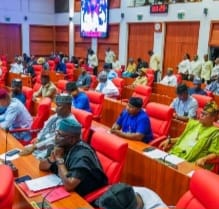
Senate Blocks Mandatory Electronic Transmission of Election Results: Implications for Nigeria’s Electoral Integrity
By George Omagbemi Sylvester | Published by SaharaWeeklyNG
“As the Senate rejects compulsory digital reporting of votes, Nigeria faces renewed debates over transparency, security, and public trust in its democratic processes.”
In a landmark yet controversial decision, the Nigerian Senate has voted against the compulsory electronic transmission of election results, a move that has reignited the long-standing national debate over the integrity and transparency of electoral processes. The decision, which was widely anticipated by political analysts, has drawn mixed reactions from civil society groups, election monitors, and political stakeholders. While proponents of the Senate’s stance cite concerns over security and technological readiness, critics argue that the rejection risks perpetuating inefficiencies and undermining public confidence in Nigeria’s democracy.
The Senate, acting on a bill proposed to institutionalize the electronic transmission of results as mandatory for all elections, voted decisively against making the technology compulsory. Advocates of the measure had argued that such a system would minimize human interference, reduce delays in vote counting and ensure timely dissemination of results to the Independent National Electoral Commission (INEC) and the electorate. However, senators opposing the bill raised apprehensions about cybersecurity threats, infrastructural inadequacies and the potential for technological malfunctions during critical electoral exercises.
“This decision signals a cautionary approach by our lawmakers,” remarked Professor Festus Iyayi, a noted political scientist at the University of Lagos. “While the intention to secure elections through electronic means is laudable, the infrastructure and human capacity to implement it nationwide remain limited. Until these foundational gaps are addressed, mandating such a system could introduce more chaos than clarity.”
The Nigerian political landscape has historically been marked by electoral controversies, ranging from ballot manipulation to delayed result announcements. The 2023 general elections, which were plagued by logistical challenges and sporadic violence, underscored the need for reform in the transmission and verification of results. Proponents of compulsory electronic transmission contend that the adoption of secure digital channels would mitigate these recurrent challenges, increase voter confidence and align Nigeria with global best practices in electoral management.
Dr. Amina Waziri, a governance and elections expert at the Centre for Democratic Development in Abuja, emphasizes the transformative potential of technology in strengthening democratic institutions. “Electronic transmission of results is not merely a technical upgrade; it is a tool for accountability,” Waziri asserted. “Countries across Africa, including Ghana and Kenya, have adopted similar systems to significant effect. Nigeria’s rejection of compulsory electronic transmission delays its entry into this new era of transparent governance.”
Security concerns, however, remain central to the Senate’s rationale. Senators cited the potential vulnerability of digital systems to cyberattacks, manipulation and unauthorized access. In a country where political tensions often escalate rapidly, the fear that election results could be tampered with electronically is not without precedent. Moreover, rural constituencies with limited internet connectivity present additional logistical challenges, raising questions about equitable implementation across Nigeria’s 36 states.
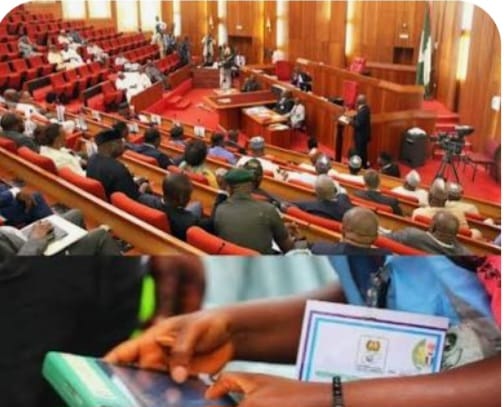
The National Electoral Commission (INEC) has, for years, advocated for the modernization of election processes, emphasizing that technology can enhance efficiency and public confidence. INEC’s previous pilot programs with electronic transmission, although successful in select constituencies, highlighted both the promise and the challenges of scaling the system nationwide. Professor John Olorunfemi, a senior analyst at the Nigerian Institute of Policy and Strategic Studies, notes, “The technical feasibility exists in urban centers and well-equipped districts. The critical question remains whether this can be replicated uniformly across remote areas without disenfranchising voters.”
Political reactions to the Senate’s decision have been sharply divided. Opposition parties and civil society organizations have criticized the rejection as a missed opportunity to institutionalize transparency and reduce electoral malpractices. “This is a step backward for Nigeria’s democracy,” declared Dr. Chinyere Okafor, spokesperson for the Nigerian Electoral Reform Coalition. “We cannot continue to rely solely on manual processes prone to human error and manipulation. The electorate deserves a system that guarantees accuracy, speed and accountability.”
Conversely, some legislators defended their position, arguing that rushing technology adoption without adequate safeguards could jeopardize electoral credibility. Senator Olusegun Balogun, one of the vocal opponents, stated, “We are not against progress, but we must be pragmatic. A nationwide system that fails on election day will do far more damage than benefit. Let us first address infrastructural gaps and train personnel before mandating electronic transmission.”
The decision also reverberates internationally, drawing scrutiny from election observers and governance watchdogs. Nigeria, Africa’s most populous nation and largest economy, often serves as a benchmark for democratic practice across the continent. As Dr. Michael Kofi, a senior analyst at the African Governance Institute, notes, “The credibility of Nigeria’s elections has regional implications. Electronic transmission is a standard adopted by several democracies to mitigate fraud. The Senate’s rejection delays Nigeria’s alignment with these global norms.”
Beyond technical and security considerations, the debate touches on broader societal and political dimensions. Electronic transmission of results is seen by many experts as a critical instrument for reducing the influence of political godfathers and local power brokers who have historically manipulated manual result collation. By ensuring immediate reporting from polling units to central servers, the system can reduce opportunities for vote inflation, result alteration and intimidation.
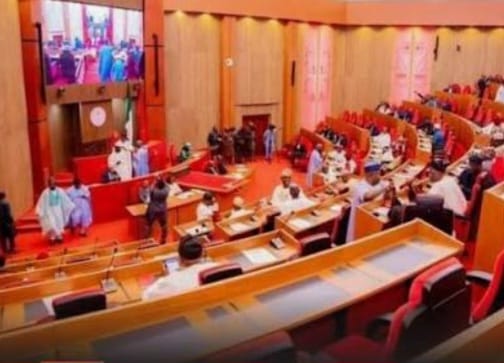
Yet, the Senate’s cautious stance may reflect a deeper concern over the pace of technological adoption in governance. Nigeria’s experience with digital systems in other sectors (ranging from financial services to civil registration) has been uneven, often complicated by cyber fraud, poor internet penetration and insufficient regulatory oversight. These realities underscore the complexity of introducing a high-stakes system like electronic result transmission in a politically charged environment.
Legal experts also highlight that the rejection does not entirely foreclose technological innovation in elections. INEC retains the authority to deploy electronic transmission as a voluntary or supplementary mechanism, meaning that gradual adoption remains possible. “The Senate has opted for caution, not prohibition,” explains Barrister Emeka Uche, a constitutional law specialist. “The commission can still leverage technology incrementally, allowing lessons to be learned and adjustments made before nationwide implementation becomes mandatory.”
As Nigeria prepares for upcoming gubernatorial and local elections, the Senate’s decision will likely shape both the operational strategy of INEC and the expectations of the electorate. Transparency advocates warn that without decisive reforms, public trust in electoral outcomes may remain fragile, perpetuating cycles of skepticism, protests and litigation.
Ultimately, the rejection of compulsory electronic transmission underscores the tension between ambition and pragmatism in Nigeria’s democracy. It reflects a legislature cautious of technological vulnerabilities, yet it also highlights the persistent struggle to modernize political processes in the face of infrastructural limitations. As Professor Festus Iyayi aptly concludes, “Nigeria stands at a crossroads. Embracing technology is essential for credible elections, but doing so without preparation could undermine the very integrity it seeks to protect. The path forward requires both vision and discipline.”
The decision carries profound implications for the evolution of Nigeria’s democratic practices. For citizens, it is a reminder that the fight for electoral transparency is ongoing, shaped not only by technology but also by political will, institutional capacity and civic engagement. For policymakers, the challenge remains clear: to reconcile the promise of innovation with the realities of implementation, ensuring that every Nigerian’s vote is counted accurately, efficiently and securely.
In conclusion, the Senate’s rejection of compulsory electronic transmission of election results represents both a pause and a warning. While it reflects a legitimate concern over readiness and security, it also delays the adoption of a system that could substantially reduce electoral malpractice and enhance public confidence. The coming months will test Nigeria’s ability to balance caution with reform, ultimately determining whether its democratic institutions can modernize in tandem with public expectations and global standards.









EPSTEIN FILES EXPOSE SECRETED SCHEME TO CASH IN ON LIBYA’S BILLIONS
By George Omagbemi Sylvester | Published by SaharaWeeklyNG
“How newly released documents reveal an attempted exploitation of Libya’s frozen wealth before and after Gaddafi — and what it means for justice, sovereignty, and global finance.”
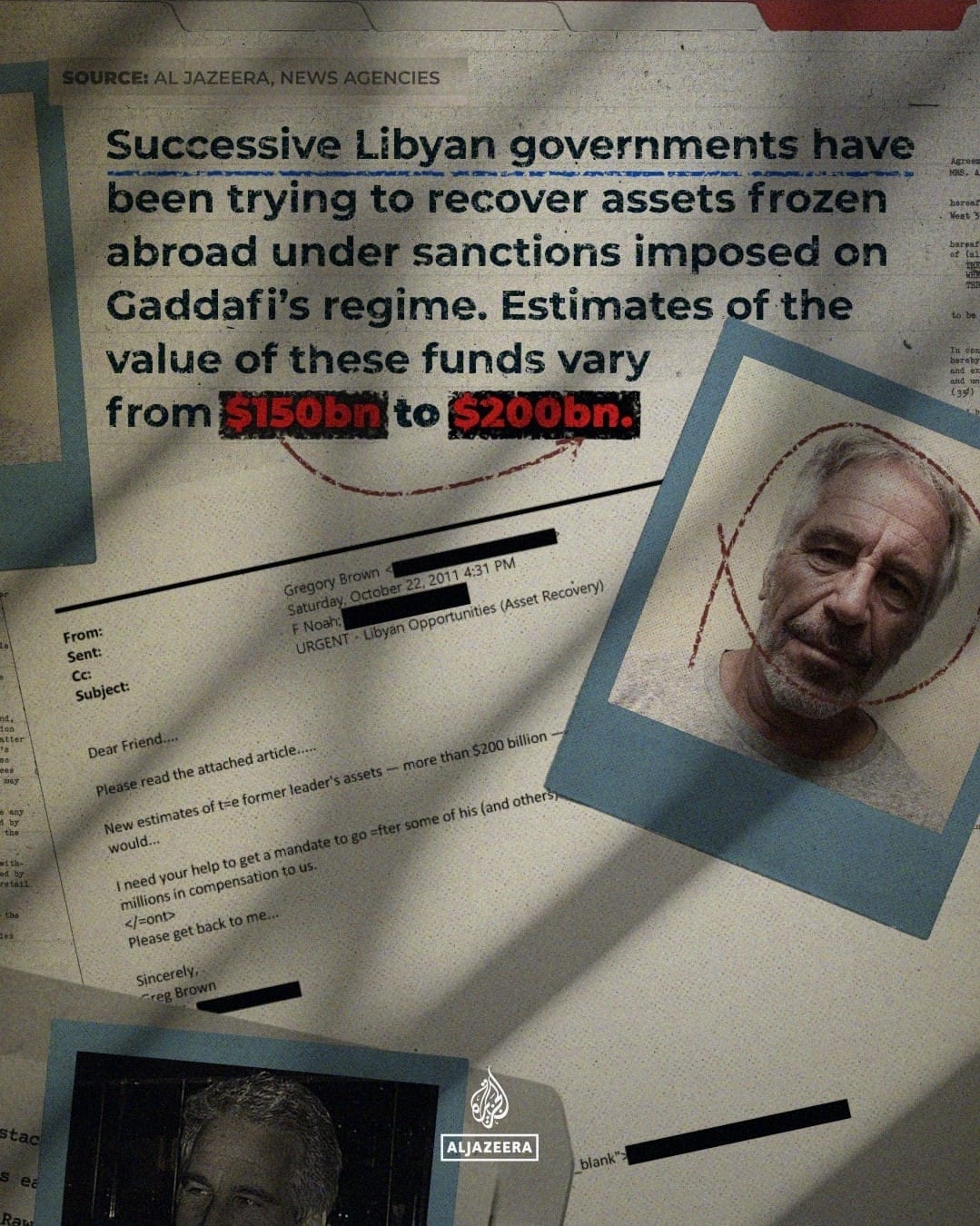
In one of the most startling and geopolitically charged revelations of the decade, newly released documents from the Epstein Files (a vast tranche of records linked to the late financier Jeffrey Epstein) have unveiled a clandestine blueprint to profit from Libya’s immense frozen state assets during a period of political upheaval that began in 2011. More than a decade after the overthrow and death of Libyan leader Muammar Gaddafi, these records outline plans that, if carried out, risked transforming a nation’s sovereign wealth into the private windfall of global financiers, intermediaries, and former intelligence operatives. The implications extend far beyond financial opportunism, touching the core of international law, post-conflict reconstruction and the fragile sovereignty of states emerging from chaos.

Libya’s Frozen Fortune: The Lure of Billions.
At the heart of these revelations is an email dated July 2011 sent to Epstein by an associate that outlines a proposal to pursue access to Libyan state assets that were frozen abroad in the wake of the NATO-backed uprising that toppled Gaddafi. At the time, the United Nations imposed freezes on Libyan assets under Security Council Resolutions 1970 and 1973, designed to limit the Gaddafi regime’s access to funds during the conflict. However, this freeze also created a pool of state wealth (estimated at around $80 billion, including $32.4 billion held in the United States) that was suddenly susceptible to external legal and financial manoeuvring.
According to the email, the actual value of what was described as “sovereign, stolen and misappropriated” assets could be three to four times larger than the $80 billion figure, suggesting a potential trove exceeding hundreds of billions. “If we can identify or recover just 5 to 10 percent of these monies and receive between 10 and 25 percent as compensation, we are talking about billions of dollars,” the correspondence stated, framing the operation as a lucrative business opportunity rather than a sovereign asset recovery.
The email went further, painting a picture of Libya as not only a ripe target for asset recovery but also a future hub of investment: one that, if engaged early, could “become their go-to guys” for reconstruction work. The correspondence noted projections that Libya would need to spend at least $100 billion on rebuilding its economy and infrastructure, positioning the scheme as a gateway into a multi-billion-dollar market tied to reconstruction and legal services.

Former Spies and International Networks
What transforms this from opportunistic financial speculation into a geopolitical intrigue is the involvement of former intelligence personnel. The email references preliminary discussions with former agents from Britain’s MI6 and Israel’s Mossad, and suggests that some members expressed willingness to help identify and trace Libyan assets abroad is a stark illustration of how intelligence networks can be folded into private financial projects that operate in the grey intersection of influence, law and power.
The use of former intelligence officials in legal and asset-recovery matters is not inherently illegitimate; in many cases, their expertise in tracing financial flows and navigating international systems can aid legitimate restitution efforts. However, in the context of this proposal (where the stated objective was profit extraction for private benefit unaffiliated with Libya’s legitimate government) the lines between recovery, coercion, and exploitation become perilously blurred.
Sovereignty, Asset Recovery and International Law.
The emergence of these documents has reignited a long-standing debate over sovereign asset freezes and the ethics of asset recovery. Scholars and policy experts emphasize that frozen funds belong to the people of the state in question, and that any recovery or release should serve the sovereign interests of that nation and not the private ambitions of third parties. According to analysis published by the International Crisis Group, efforts to reform sanctions and allow asset reinvestment must be conducted with “the consent of Libya’s legitimate authorities,” and designed to benefit the Libyan people rather than external interests.
The complex legal landscape surrounding frozen Libyan assets has already resulted in numerous litigations. Libya has fought cases in European courts, including against global finance giants such as Goldman Sachs, while also seeking pathways to unlock portions of its sovereign wealth for national development and economic revival. However, political fragmentation (a persistent challenge in Libya’s civil conflict) has frequently stalled progress, underscoring how easily frozen assets can become political bargaining chips rather than tools for reconstruction.
As legal expert Mohammed bin Shaaban observed in recent reporting on Libya’s asset situation, the maze of international litigation and competing claims has left much of the country’s wealth inaccessible and shifts in governance further complicate matters. Such dynamics underline the inherent risk when third parties position themselves as intermediaries in sovereign matters without clear legal mandate or ethical grounding.
Libya’s Fragile Context and Corruption Complexities
Understanding the Epstein scheme also requires acknowledging the broader context of Libya’s political instability and deeply entrenched corruption.
Transparency International consistently ranks Libya among the lowest globally on the Corruption. Perceptions Index, a stark reflection of systemic governance challenges since Gaddafi’s fall. That corruption has extended into the management of state resources and has complicated efforts to ensure that any recovered assets serve the public good rather than private pockets.
This offers a sobering backdrop to the Epstein correspondence. What might at first appear as financial opportunism can also be interpreted (in the harshest light) as a schemed attempt to exploit both the political disarray and the legal ambiguity surrounding Libya’s frozen assets for private advantage. In environments where rule of law is weak and sovereign authority is contested, external actors can, intentionally or otherwise, exert disproportionate influence over outcomes.
Ethics of Engagement and the Limits of Opportunism.
The revelations raise essential questions about ethical boundaries in international finance and asset recovery. The stated willingness of international law firms to work on a contingency fee basis (paid only upon success) reflects common practice in asset litigation. Yet the inclusion of such firms alongside former intelligence operatives underlines how humanitarian, legal and economic projects can be co-opted into efforts aimed at generating private profit under the guise of public service.
Experts argue that genuine asset recovery should be driven by transparent legal frameworks, international cooperation and unwavering commitment to justice for victimized populations. The Organisation for Economic Co-operation and Development (OECD) and other multilateral bodies have long emphasized that illicit financial flows hamper development and that asset recovery must be anchored in lawful restitution not speculative gain.
The Road Ahead: A Cautionary Tale for Post-Conflict Economies.
The Epstein Files revelations about Libya serve as a potent reminder of the perils facing nations emerging from conflict: when enormous sovereign wealth is frozen or in legal limbo, it attracts not only legitimate legal claims but also those driven by speculation and profit. What should be a process grounded in restoring national wealth and dignity can become a theatre for the powerful to profit off instability.
In a world grappling with conflict-induced asset freezes (from Libya to other nations displaced by war or sanctions) the imperative is clear: international law and ethical standards must protect sovereign assets, ensure their return benefits the people to whom they belong, and guard against schemes that would commodify national misfortune into private fortune. Only through principled engagement and rigorous accountability can the promise of rebuilding shattered states be realised without handing over their priceless heritage to opportunists.
society
Queen of Talk Joyce Daniels Marks 44th Birthday As Money Making Mouth Conference 2.0 Holds In Lagos

Queen of Talk Joyce Daniels Marks 44th Birthday As Money Making Mouth Conference 2.0 Holds In Lagos
Renowned communication strategist and public speaking authority, Joyce Daniels, popularly known as the Queen of Talk, has marked her 44th birthday with the successful hosting of the Money Making Mouth Conference 2026 in Lagos.
The conference, held on Saturday, January 31, 2026, at the Admiralty Event Centre, Victoria Island, brought together professionals, entrepreneurs and speakers to examine how effective communication can drive career advancement, business growth and personal influence.
With over 18 years of professional experience, Daniels has built a strong reputation as an award-winning Master of Ceremonies, public speaker, presentation skills coach and author of two bestselling books. Widely regarded as Africa’s foremost advocate for monetising communication skills, she is popularly referred to as the “Money Making Mouth.”

Delivering her keynote sessions, “The Money Making Mouth Philosophy” and “Mission 2026,” Daniels stressed that speaking well is no longer optional in today’s competitive workplace and business environment. She explained that clear, confident and value-driven communication strengthens leadership credibility, improves workplace relationships, boosts sales performance and opens doors to new professional opportunities. According to her, professionals who can articulate their ideas effectively are better positioned for promotions, partnerships and increased earnings.
She further challenged participants to deliberately invest in their voices as tools for visibility, relevance and wealth creation, noting that communication, when properly harnessed, becomes a sustainable economic asset.
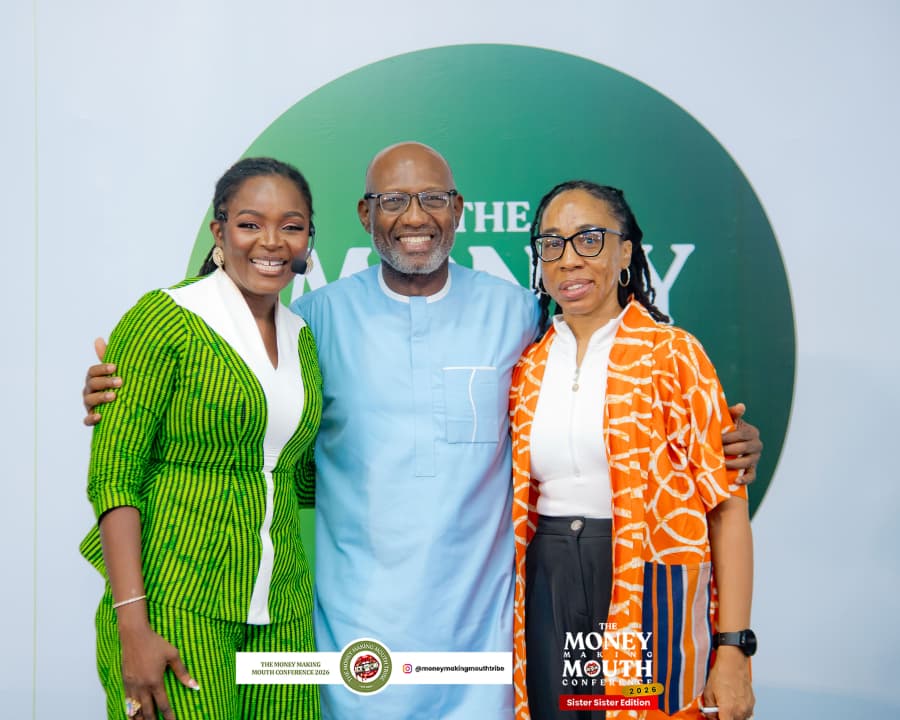
Another major highlight of the conference was “The Hidden Wealth Panel”, presented by Carib Health Group, which focused on wellness, medical awareness, and healthy living. The speakers emphasized the connection between personal wellbeing and professional productivity, noting that long-term financial success and influence are difficult to sustain without physical and mental health stability.
Participants also engaged in a practical session titled “The Money Magnet Conversation”, led by Dr. Pamela Udoka and Adeola Kingsley-James, popularly known as ‘I Am That I Am’. They explored the power of mindset, mental wellbeing, overcoming fear and imposter syndrome, stressing that control over one’s mind directly influences what one will attract in 2026.
The program continued with “Negotiate Like a Boss”, facilitated by finance expert – Chukuka Chukuma, where attendees learned strategies for negotiating professional value, fees, and contracts with confidence and clarity, particularly in business and corporate settings.

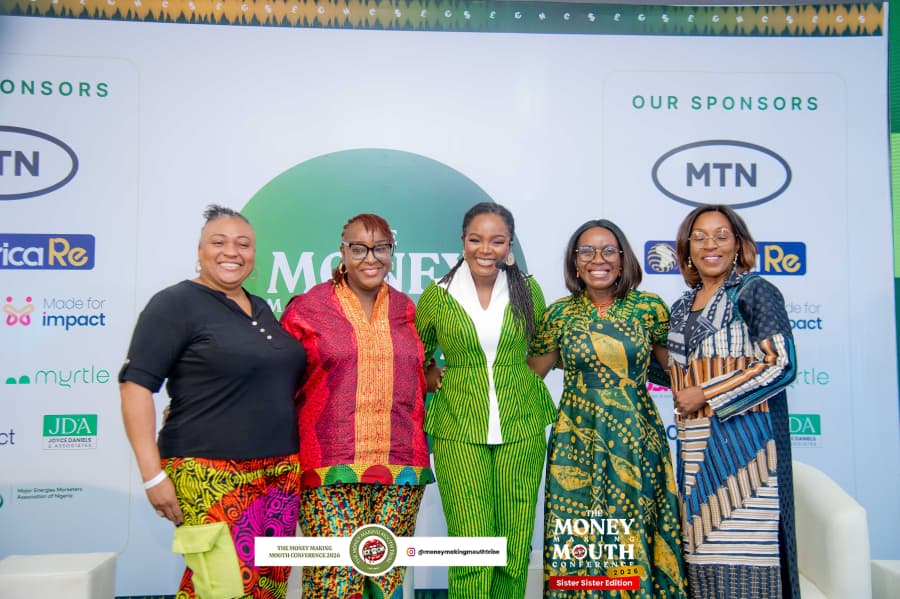
The event enjoyed the support of several corporate organisations, including MTN, Africa Re, Carib Health Group, Konga 103.7FM, Myrtle Asset Management, 9PSB, Item7go, Cutstruct, JD&A, and Made for Impact, reflecting growing corporate interest in communication, leadership and influence.
The conference concluded with an anniversary celebration marking the first anniversary of The Money Making Mouth Tribe, as well as Joyce Daniels’ birthday, alongside group photographs and networking, reinforcing her mission to eliminate the culture of speaking for free or undervaluing communication skills.
Outrage Over Alleged N507.5 Million SUV Purchase Deepens Nigeria’s Governance Crisis
By George Omagbemi Sylvester | Published by SaharaWeeklyNG
“As Poverty, Insecurity and Youth Unemployment Escalate, Questions Mount Over Government Spending Priorities in the Ministry of Humanitarian Affairs.”
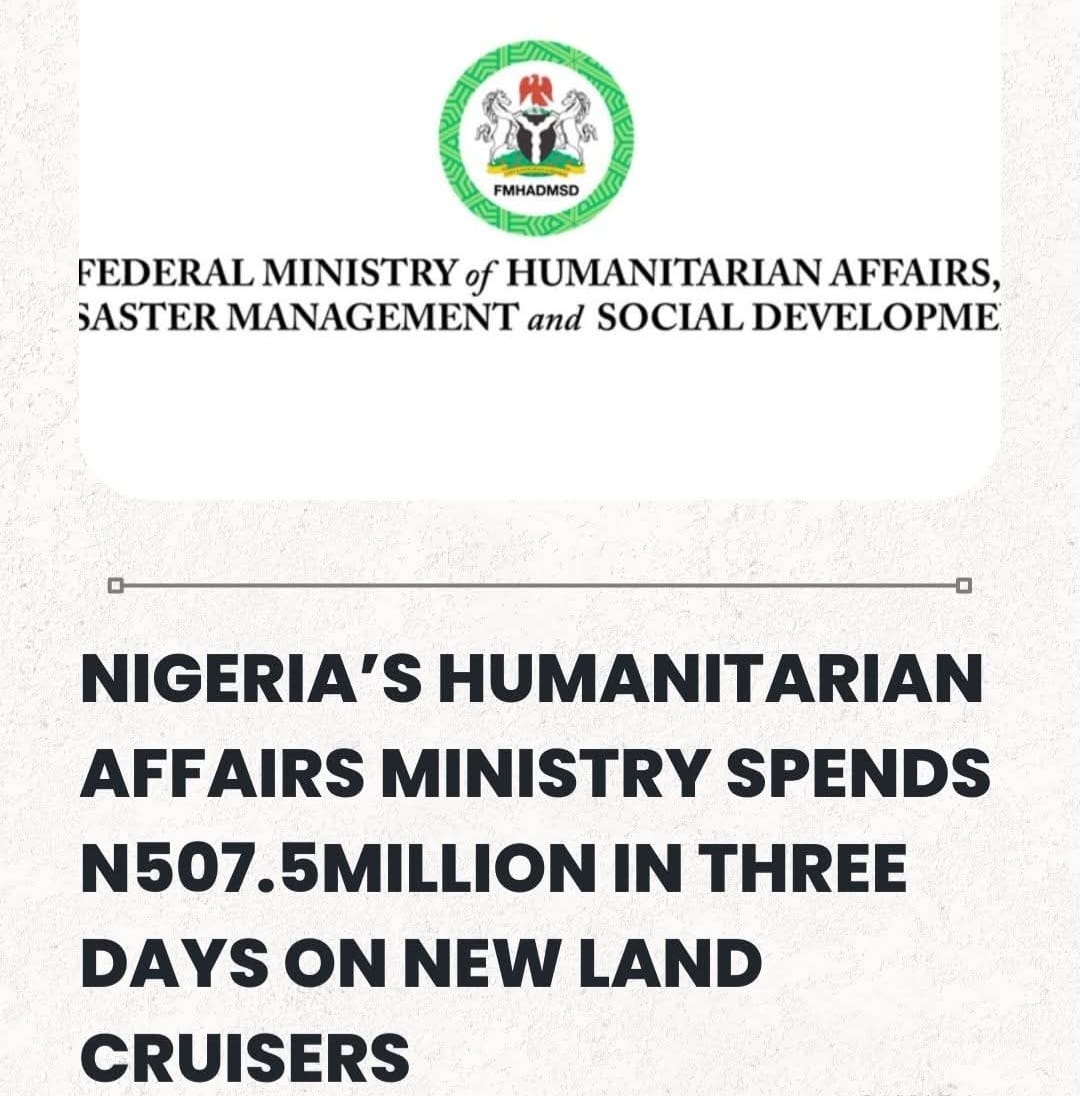
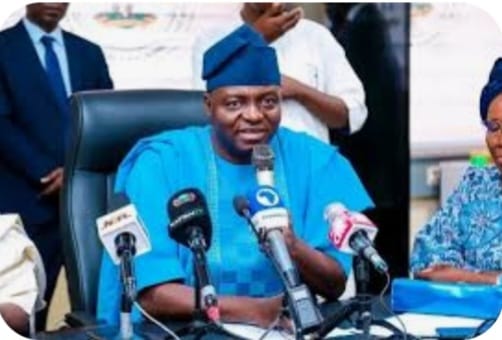
Nigeria’s already fragile public trust in government spending has once again been shaken following reports that the Federal Ministry of Humanitarian Affairs and Poverty Alleviation allegedly expended approximately N507.5 million within a short period on Toyota Land Cruiser vehicles. Although official documentation and full procurement details remain subject to scrutiny and verification, the reports have ignited widespread public outrage, largely because they emerge against the backdrop of worsening poverty, rising unemployment and persistent insecurity across the country.
The controversy is particularly striking because the ministry in question is institutionally mandated to address poverty, coordinate social intervention programmes, and support Nigeria’s most vulnerable populations. Critics argue that the optics of such high-value vehicle procurement, whether legally compliant or not, represent a profound disconnect between government priorities and the harsh economic realities confronting millions of Nigerians.
Nigeria’s socio-economic crisis is both deep and multidimensional. According to data from the National Bureau of Statistics and international development institutions, Nigeria remains home to one of the world’s largest populations living in extreme poverty. Economic growth has struggled to keep pace with population expansion, while inflation and currency depreciation have significantly eroded purchasing power. Youth unemployment remains particularly alarming, with millions of young Nigerians unable to secure stable employment or sustainable livelihoods.
The situation is further aggravated by persistent insecurity, including terrorism in the North-East, banditry across the North-West, kidnapping for ransom in several regions and communal clashes in parts of the Middle Belt and South. These security challenges have disrupted agricultural production, weakened supply chains and discouraged both domestic and foreign investment. The cumulative effect has been a steady deterioration in living standards and economic stability.
Public policy analysts argue that government spending patterns must be evaluated not merely by legality but by moral and developmental relevance. Nigerian economist and development scholar Prof. Pat Utomi has consistently warned that governance failures in resource allocation often reflect broader structural inefficiencies. Utomi famously observed that “leadership is ultimately about prioritising the welfare of the people over the privileges of power.” His statement resonates strongly in the current debate, where many citizens question whether the procurement of luxury-grade official vehicles aligns with the ministry’s humanitarian mandate.
Government defenders often argue that official vehicles are operational necessities required for field monitoring, project implementation and administrative efficiency. Such arguments are not without precedent. The Centre for Social Justice previously noted that the procurement of high-value official vehicles is a longstanding practice across Nigeria’s public institutions, with some lawmakers receiving SUVs valued at over N130 million each as part of official oversight responsibilities. However, critics maintain that historical precedent does not necessarily justify continued expenditure patterns, especially during periods of acute economic hardship.
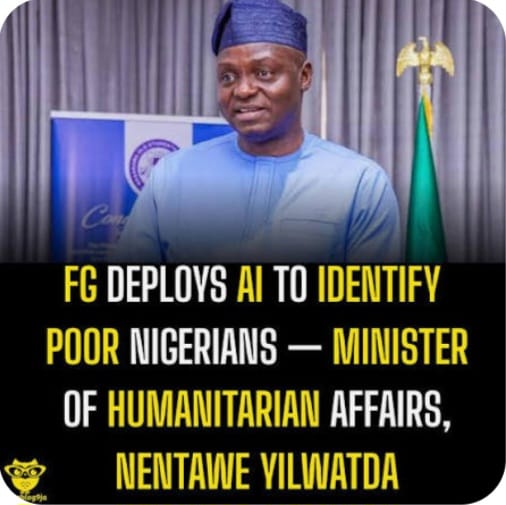
The Ministry of Humanitarian Affairs itself has faced repeated allegations of financial mismanagement in recent years. The Socio-Economic Rights and Accountability Project (SERAP) previously called for investigations into the alleged disappearance of over N57 billion linked to the ministry’s programmes, urging the federal government to prosecute any officials found culpable. Such allegations, though still subject to investigative processes, have contributed to growing public skepticism regarding the transparency and accountability of humanitarian funding structures.
Globally, development experts emphasise that effective poverty alleviation programmes depend heavily on public trust. Nobel laureate economist Joseph Stiglitz has argued that “transparency and accountability are essential components of sustainable development, particularly in countries struggling with institutional fragility.” Stiglitz’s insight underscores the broader implications of controversies surrounding government procurement, which can undermine citizen confidence in social intervention initiatives.
The optics of the alleged vehicle purchase also intersect with Nigeria’s broader cost-of-governance crisis. Nigeria maintains one of the most expensive political administrative systems relative to its revenue capacity. Scholars and civil society organisations have repeatedly called for drastic reductions in governance costs, arguing that excessive recurrent expenditure continues to drain resources needed for infrastructure, education, healthcare and poverty alleviation.
Security analysts warn that the economic frustration generated by perceived government extravagance could indirectly fuel instability. Political economist Dambisa Moyo has emphasised that persistent inequality and perceived governance injustice often create fertile ground for social unrest. In her analysis of developing economies, Moyo argues that “when citizens lose faith in the fairness of economic systems, the legitimacy of political institutions begins to erode.”
Nigeria’s youth demographic adds another layer of urgency to the debate. With over sixty percent of the population under the age of thirty, the country faces enormous pressure to generate employment opportunities and expand economic inclusion. Youth unemployment has been widely linked to rising migration trends, cybercrime and recruitment into violent extremist networks. Many analysts argue that every naira allocated to administrative luxury is a missed opportunity to invest in job creation, entrepreneurship development or vocational training.
Government accountability advocates also stress the importance of procurement transparency. International best practices require public disclosure of procurement justifications, competitive bidding processes and cost-benefit analyses. While Nigerian procurement laws theoretically incorporate these safeguards, enforcement gaps continue to undermine public confidence. Transparency International has repeatedly stressed that public procurement is one of the sectors most vulnerable to corruption globally.
Beyond the financial implications, the controversy touches on deeper questions about national ethics and leadership responsibility. Former United Nations Secretary-General Kofi Annan once stated that “good governance is perhaps the single most important factor in eradicating poverty and promoting development.” Annan’s assertion highlights the inseparable relationship between governance integrity and social progress, particularly in developing democracies.
It is equally important to acknowledge that public outrage alone cannot substitute for institutional reform. Experts argue that strengthening audit mechanisms, empowering anti-corruption agencies and enhancing legislative oversight remain essential to addressing recurring procurement controversies. Nigeria’s Office of the Auditor-General and parliamentary oversight committees are legally mandated to review public spending, yet their effectiveness often depends on political independence and enforcement authority.
The Ministry of Humanitarian Affairs occupies a particularly sensitive position within Nigeria’s governance architecture. Its programmes directly affect internally displaced persons, disaster victims and economically vulnerable households. Any perception of financial mismanagement within such a ministry carries symbolic consequences that extend beyond administrative accountability to national moral legitimacy.
Ultimately, the alleged N507.5 million vehicle procurement controversy reflects a broader governance dilemma confronting Nigeria. The nation’s economic and security crises demand disciplined fiscal management, strategic resource allocation, and demonstrable commitment to social welfare. Public trust, once eroded, is difficult to rebuild, particularly in societies already burdened by historical governance challenges.
As Nigeria continues to grapple with poverty, unemployment and insecurity, the expectations placed on public institutions remain extraordinarily high. Citizens increasingly demand not only lawful governance but also ethical governance—leadership that reflects empathy, accountability and developmental foresight. Whether the current controversy leads to formal investigations, policy reforms, or deeper public introspection remains uncertain. However, one reality remains clear: in a nation struggling to lift millions out of poverty, every government expenditure carries profound symbolic and practical consequences.
For Nigeria, the path forward may ultimately depend on whether public leadership can realign spending priorities with the urgent humanitarian needs of its people. Until such alignment becomes visible and measurable, controversies over governance spending are likely to remain potent reminders of the country’s ongoing struggle between public expectation and political reality.


-

 celebrity radar - gossips6 months ago
Why Babangida’s Hilltop Home Became Nigeria’s Political “Mecca”
-

 society6 months ago
Power is a Loan, Not a Possession: The Sacred Duty of Planting People
-

 Business6 months ago
Batsumi Travel CEO Lisa Sebogodi Wins Prestigious Africa Travel 100 Women Award
-

 news6 months ago
THE APPOINTMENT OF WASIU AYINDE BY THE FEDERAL GOVERNMENT AS AN AMBASSADOR SOUNDS EMBARRASSING