
society
Banditry in Nigeria: When Governance Failure Becomes Armed Authority


Banditry in Nigeria: When Governance Failure Becomes Armed Authority
By George Omagbemi Sylvester | Published by SaharaWeeklyNG
“Why military force alone cannot defeat a crisis rooted in poverty, political incentives and institutional retreat.”
In large stretches of Nigeria’s Northwest, the state no longer holds a monopoly on violence or authority. Armed groups raid villages, collect levies, regulate mining routes, negotiate ransoms and enforce their own rules. This is commonly described as a “security crisis.” It is more accurate (and more troubling) to describe it as governance failure that has matured into armed parallel administration.
Banditry is not merely a breakdown of law and order. It is what happens when the social contract collapses.
Between 2018 and 2023, thousands of Nigerians were killed or abducted in Zamfara, Katsina, Kaduna, and Sokoto states. Mass school kidnappings in Kankara, Jangebe and Kuriga drew global attention. Entire farming communities have been displaced, deepening food insecurity in a region already burdened by poverty. According to national data, the Northwest consistently records some of the highest poverty and out-of-school rates in the country; structural conditions that create fertile ground for recruitment into armed networks.
But statistics alone do not explain why banditry became systemic.
The roots lie in prolonged institutional retreat. Rural policing is thin. Judicial access is limited. Land governance mechanisms to resolve farmer–herder disputes remain weak or politicized. Youth unemployment remains chronically high. In many districts, citizens interact more frequently with traditional rulers or armed actors than with formal state institutions. Over time, coercive groups evolve from opportunistic criminals into structured authorities.
The 2011 collapse of Libya after the fall of Muammar Gaddafi further intensified this trajectory. Arms proliferation across the Sahel dramatically increased the lethality and organizational capacity of non-state actors. Nigeria’s porous northern borders allowed weapons trafficking networks to expand faster than enforcement capacity. What were once communal clashes involving rudimentary weapons transformed into heavily armed insurgent-style operations.
Nigeria has seen this pattern before.
The rise of Boko Haram in the Northeast offers a cautionary precedent. In its formative years, the group was often underestimated, politically entangled, or viewed through a narrow security lens. Allegations referenced in a United Nations Panel of Experts report connected early elements of the group to political actors, including former Borno governor Ali Modu Sheriff, who has denied wrongdoing. Regardless of individual culpability, the broader institutional lesson is clear: political systems that tolerate, manipulate, or underestimate armed movements risk enabling forces that ultimately escape all control.
Today’s bandit formations in the Northwest differ ideologically from Boko Haram, but they share structural similarities: they emerged where governance deficits were deepest.
The political economy of insecurity complicates resolution. Kidnapping-for-ransom has become a multi-million-naira industry. Informal taxation systems imposed by armed groups generate steady revenue. Illicit gold mining operations flourish under armed protection. Meanwhile, security votes allocated to state executives remain largely unaudited, and emergency procurement frameworks often operate with limited transparency. When instability expands discretionary authority or financial opacity, reform incentives weaken.
This incentive distortion is central. Sustainable peace requires that the political and financial costs of insecurity outweigh any perceived benefits derived from it.
Military force remains necessary. Territorial recovery and civilian protection demand it. However, purely kinetic responses cannot dismantle recruitment ecosystems rooted in poverty, illiteracy, land disputes, and institutional distrust. Each successful operation that clears a forest camp without restoring governance presence creates only temporary stability.
The deeper crisis is absence of state legitimacy in rural zones. Where courts are inaccessible, armed arbiters emerge. Where taxation yields no visible services, alternative collectors impose their own levies. Where young men perceive no economic pathway, armed entrepreneurship becomes rational.
Reversing this trajectory requires structural intervention:
Institutionalized farmer–herder mediation mechanisms with enforceable land titling frameworks.
Rural education investment targeting out-of-school populations vulnerable to recruitment.
Transparent auditing of security expenditures to realign incentive structures.
Border security cooperation with Sahelian neighbors focused on arms tracing.
Targeted agricultural modernization and rural employment programs.
Crucially, governance must return visibly and credibly; not as episodic military convoys, but as functioning courts, schools, healthcare systems and accountable budgeting processes.
Nigeria’s banditry crisis is not accidental. It is the predictable outcome of prolonged neglect intersecting with regional destabilization and distorted political incentives. The language of “war against bandits” obscures the more urgent imperative: reconstruction of state authority through legitimacy, transparency and service delivery.
Until governance reaches the villages, forests will continue to produce armed alternatives.
And no volume of airpower can permanently defeat a vacuum.






society
2027 PRESIDENTIAL ELECTION: PROF. MUHAMMAD OMOLAJA SUBMITTED EXPRESSION OF INTEREST TO SOUTHWEST ADP LEADERSHIP
2027 PRESIDENTIAL ELECTION: PROF. MUHAMMAD OMOLAJA SUBMITTED EXPRESSION OF INTEREST TO SOUTHWEST ADP LEADERSHIP
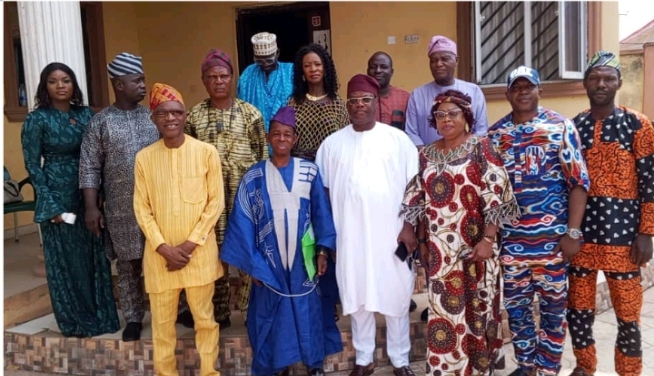
Thursday, February 27, 2026 was a special day in the life of the Action Democratic Party (ADP) in the southwest of Nigeria. This was the day one of the outstanding academician cum politician and Presidential Aspirant of the Party during the 2023 general election from the Obe Royal family of Ayetoro City, the headquarters of Yewa North Local Government in Ogun State part of the region – Prof. Muhammad Ayinla Omolaja (MAO) – formally submitted his Expression of Interest to contest for the Nigerian President during the forthcoming presidential election slated to take place on January 16, 2027, by the Independent National Electoral Commission (INEC).
The occasion was well attended by the six State Chairmen of the Party from the region together with other notable southwest leaders.
The National Liberation Patriots (NLP) team of which Prof. Muhammad Omolaja is the National Chairman was lead to the occasion by their National Political Adviser (South) covering the 17 States of the Southern Part of Nigeria – Alhaji (Chief, Dr.) Moshood Alao Adegboyega – from Oyo State accompanied by other leaders of the political family.
The six ADP State Chairmen that attended the crucial meeting were Hon. Toye Ola of Osun State who doubles as the Southwest Chairman, Barrister (Dr.) Nasir Adewale Bolaji of Lagos State, Hon. (Chief, Amb., Dr.) Olufunke Modupeola Olanrewaju of Ogun State, His Excellency Ojo Ayodeji Tope of Ekiti State who is also the ADP governorship candidate for the forthcoming 2026 Ekiti State gubernatorial election, Hon. (Apostle) Oludare Ojo of Oyo State, and Hon. (Apostle) Oluwafemi Oladejo of Ondo State.
Also at the meeting were the ADP Governorship candidate for the forthcoming 2026 Osun State gubernatorial election – Her Excellency (Hon.) Yemisi Adeagbo-Opawoye, His Excellency (Dr.) Kazeem Olanrewaju Shokunbi – the Ogun State ADP Governorship Aspirant and his Deputy Governorship Aspirant – Her Excellency (Dr.) Oluronke Morenikeji Oseni.
The presidential hopeful, Prof. Muhammad Omolaja, used the opportunity to convince the Party leaders that if given the mandate to represent them as the Party’s flag bearer during the 2027 general election, he will make them proud and make Nigeria greater! He then handed over three copies of his Expression of Interest letter with its concomitant profile of him for the race. The three copies were duly signed and received while two copies were returned to him for further action upward to the National Chairman of the Party, Engineer Yusuf Yabagi, at the National Secretariat in Abuja – the Federal Capital Territory of Nigeria.

Tell Your Men To Obey Court, Alaka Landowners Appeal To IGP Disu
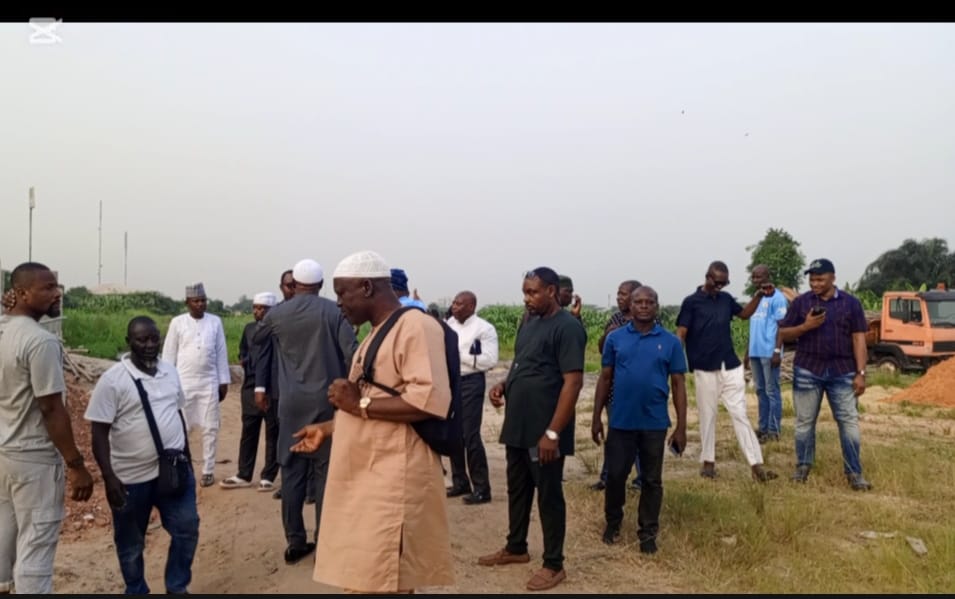
Landowners in the Alaka area of Lagos State have called on the newly appointed Inspector General of Police (IGP), Tunji Disu, to order the policemen stationed on their property to obey a subsisting court order directing the withdrawal of all security personnel from the site.
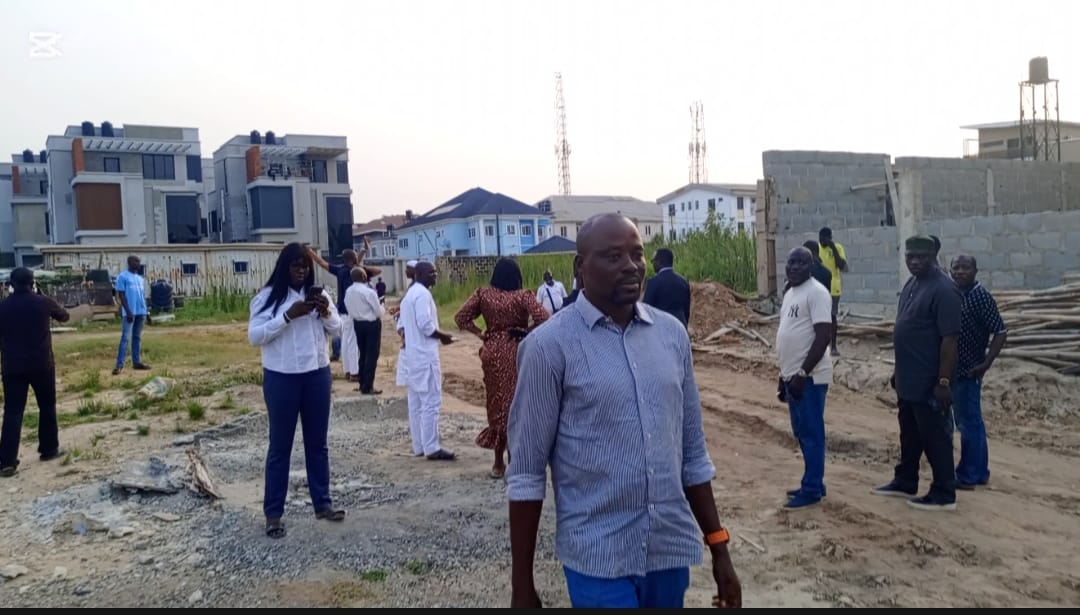
The landowners made the call on Wednesday, February 25, during an inspection visit to the land that saw them being threatened by armed policemen.
According to the landowners, they arrived at the property following a judicial directive ordering officers to leave the land and were in the process of inspecting their individual plots, taking photographs, recording videos, and discussing plans to commence development, only to be confronted by armed policemen who questioned their presence and issued threats to shoot at them.
Speaking to journalists, one of the landowners, Tolani Agbajobi, described the encounter as disturbing and insisted that the officers had no legal basis to remain on the land. He stressed that the police should respect the authority of the court and withdraw from the property without further delay.
Agbajobi said the inspection was a long-awaited opportunity for many landowners who had been denied access to the land for an extended period. He added that the continued presence of armed officers, despite a clear court order, undermines confidence in the rule of law and raises concerns about accountability within the security architecture.
He further questioned why policemen were still deployed on the land despite public statements by the immediate past Inspector General of Police, Kayode Egbetokun, who had warned that police involvement in land recovery or related disputes was not part of the Force’s constitutional duties and would attract disciplinary action.
Calling for urgent intervention, Agbajobi appealed to the current Inspector General of Police, Tunji Disu, to enforce compliance with both court rulings and established police directives by ordering the immediate withdrawal of the officers from the site.
Another landowner, who identified himself simply as Samuel, also expressed concern over what he described as growing impunity, questioning how officers could continue occupying the land in defiance of a court order and clear instructions previously issued by the leadership of the Nigeria Police Force.
The landowners maintained that their demand was not confrontational but rooted in respect for the law, insisting that the police must act within their constitutional mandate and allow the courts to resolve civil land disputes without intimidation or unlawful interference.
OGUN 2027: ABIODUN ISIAQ AKINLADE – A CHANGER OF POLITICAL NARRATIVES IN OGUN WEST
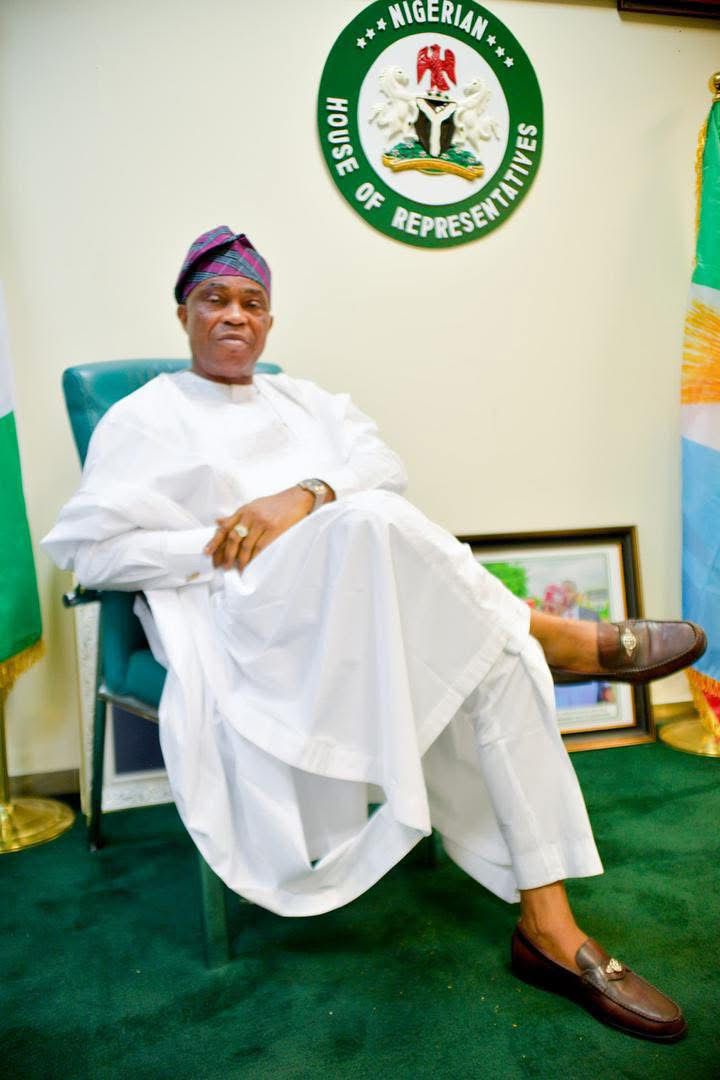
The Chairman, House Committee on Agricultural Institutions and Colleges, member representing Yewa South/Ipokia Federal Constituency, Right Honorable Akinlade Abiodun Isiaq, remains a political patriot and a true changer of political narratives in Ogun West. Over the years, he has consistently invested in building people and nurturing future leaders, leaving behind a legacy centered on empowerment and human capital development.
There is no doubt that his political dynasty is a proudly made-in-Nigeria project. The foundation he laid and the blueprints he developed during his tenure as a four-term member of the House of Representatives continue to simplify governance and inspire developmental strides across his constituency and beyond.
His roadmap for development has remained a guiding compass toward achieving the Ogun State of his dreams, particularly in improving the lives of the people of Ogun West.
Unarguably, the true test of leadership lies in the number of leaders and successful individuals one has raised. By this standard, Hon. Akinlade stands tall. Many beneficiaries of his mentorship, empowerment initiatives, and strategic support testify to his enduring impact.
Having served diligently during the era of the Action Congress of Nigeria (ACN), which later evolved into the All Progressives Congress (APC), his unmatched antecedents remain etched in the hearts of the people of Ogun West. He continues to serve as a dependable point of contact, known for his pragmatic and solution-driven approach to governance.
Hon. Akinlade has continually reshaped the political narrative in Ogun West through employment facilitation, empowerment programs, and sustained community engagement. His unwavering commitment to the welfare of his people demonstrates his belief that leadership is about service and impact.
As a man of vision and positive ambition for his people, his political journey and aspirations—especially his Governorship ambition—reflect his continued desire to serve at higher levels. With sustained support and collective commitment, the people of Ogun West can continue to reap the dividends of democracy under his leadership.
Daniel Topology De-Prof


-

 celebrity radar - gossips6 months ago
Why Babangida’s Hilltop Home Became Nigeria’s Political “Mecca”
-

 society5 months ago
Religion: Africa’s Oldest Weapon of Enslavement and the Forgotten Truth
-

 society6 months ago
Power is a Loan, Not a Possession: The Sacred Duty of Planting People
-

 news7 months ago
THE APPOINTMENT OF WASIU AYINDE BY THE FEDERAL GOVERNMENT AS AN AMBASSADOR SOUNDS EMBARRASSING