
Politics
“I shall run an open government of inclusion that will not leave anyone behind”- Gov.Ambode


BEING THE INAUGURAL ADDRESS BY HIS EXCELLENCY, MR. AKINWUNMI AMBODE, GOVERNOR OF LAGOS STATE ON FRIDAY, MAY 29, 2015 AT TAFAWA BALEWA SQUARE, LAGOS
PROTOCOL:
Today, I have just performed the sacred duty of oath-taking as the Governor of Lagos State. It has pleased GOD through the good people of Lagos State, that my destiny as a little boy, born from a humble background, on the 14th day of JUNE to become the 14th Governor of our great State, Lagos is being realised.
2 I am eternally grateful to all of you. To all Lagosians,
the young and elderly, widows, physically-challenged; girls and boys, and especially, the children; who followed our musical campaign with vigour; God bless you all.
3 Permit me to acknowledge and appreciate especially all the voters that voted for me; equally appreciate those that did not and also the people that did not exercise their franchise to vote at all. We are all winners. One of the instructive lessons from this last political campaign and election is for all politicians never to take our people for granted again. I would, more than ever before; take you, the good people of Lagos, along with me, in this journey of renewed hope and prosperity at all times.
4 My appreciation goes to all our elder statesmen and women including all our senior citizens. To all our religious leaders, I say thank you. All our Muslim leaders, Christians leaders and other faiths; your prayers for Lagos State did not go unanswered.
5 I must not fail to acknowledge all our civil society organisations. The students, civil servants, labour unions, artisans, professionals, corporate Lagos, the business community, thank you very much. To all Lagosians in diaspora, foreign residents and all other stakeholders; thank you for keeping faith in the potential greatness of our State.
6 From the bottom of my heart, I greet all our traditional rulers, our Royal Fathers, Kings, Chiefs and their wives. I thank you all, most especially, the Chairman; the State Council of Obas and Chiefs, His Royal Majesty, Oba Rilwan Akiolu, Oba of Lagos. We promise to continue to nurture our traditional institutions as part of our heritage.
7 To our Party Leaders and all members of our great party, The All Progressives Congress (APC); today belongs to you all. Our elected Officers, the three Distinguished Senators, Honourable Members of the House of Representatives and Members of the House of Assembly; congratulations and thank you.
8 And my Deputy; Dr. Idiat Oluranti Adebule, thank you.
9 To my family, words are not enough; My mother, who is here today, thank you for being a very caring mother to me. All my uncles, brothers and sisters; I appreciate you. To my lovely wife, Bolanle, thank you so much for your sacrifices and perseverance. God bless you always. My children, friends and loved ones and supporters; I really appreciate the enormity of sacrifices, pain, prayers and efforts. I remain eternally grateful.
10 Lastly, I speak to the two people that have shaped the history of this State in the last sixteen (16) years.
11 You are focused, dogged and hard-working, you are a visioner par excellence. You are a bridge-builder. To our leader Asiwaju Bola Ahmed Tinubu; you have laid an enduring foundation for what we are all building on today. When the history of the political economy of Nigeria is being written, surely it would be kind to you. Thank you so much.
To our Distinguished Senator, (Mrs.) Oluremi Tinubu; your support and commitment to our State and to me personally during the election is well appreciated.
12 To the out-going Governor, Mr. Babatunde Raji Fashola (SAN), you have fought the good fight. You came, you saw, you conquered. I have been at close quarters as a student, you as my teacher and mentor. On behalf of my family and other good people of Lagos; we say thank you. We appreciate you and your family.
13 EVERYBODY COUNTS
As we collectively face the challenge to make Lagos a better place to live in, we must recognize our strength in diversity. A common national identity where everybody counts. I shall run an open government of inclusion that will not leave anyone behind. No matter your age, sex, tribe or any other Status, as long as you reside in Lagos, we will make Lagos work for you.
14 THE NIGERIAN DREAM
Lagosians are hardworking people. Lagos is striving because of its undying entrepreneurial spirit. However we must realise that there are no short-cuts to success. To our youths, we must nurture good family values to succeed in any endeavour. I want our younger ones and children to draw some lessons from my story. Anyone of you can rise up to be the best you want to be. Your background and circumstances cannot be an obstacle to your dreams. In our country, particularly in Lagos, you can always succeed. This is the Nigerian dream where hard-work, courage, perseverance, persistence, merit and rewards pay. We must therefore embrace new thinking and be determined to succeed at all times. I am ready to encourage and nurture that dream in our children, youths and every hard-working Lagosian. We would reward merit, hard-work and loyalty to the State. The future is for those who dare to dream and find courage to pursue their dreams.
15 THE FUTURE IS NOW
We are all witnesses to the economic downturn and dwindling revenues at the national and state levels. The present economic situation has affected the financial profile of most states in the country.
The state is blessed that the foundation of its financial autonomy was designed and implemented by that visioner and our leader, Asiwaju Bola Ahmed Tinubu. Thus, the state has been partially shielded from the negative trend flowing from the federal level.
For us to sustain the progressive and radical transformation on-going in the state, we have to redouble our efforts on all fronts for our commitment to excellence. While we must be creative and innovative; we are not citizens until we become responsible tax payers. I want to assure all of us that I will make your taxes work for you. You will surely get a transparent and incorruptible government that will give you good value for your taxes paid.
Creativity is the most valuable asset in any public institution. Progressive governments must reward contributors of good ideas. Therefore, wherever practicable, we shall practise government by incentives and not government by enforcement. We shall implement creative ideas and concepts that reduce the cost of running government; ideas that make life simpler and happier for our people.
I, therefore, invite you all, to join hands with me, to offer new ideas that will pull more resources to cater for the poor and needy amongst us. This will be a compassionate government.
16 DEVELOPMENT PLAN (2012 – 2025)
In the spirit of continuity, I am committed to the State Development Plan (2012 – 2025). The plan is structured under four pillars; (1) Social Development and Security; (2) Infrastructural Development; (3) Economic Development and (4) Sustainable Environment.
The challenges we face today as a State, are good enough ingredients to bring out the best of all of us. Together, we shall push forward and not look back, with our hands firmly on the plough. We would work hard to tackle poverty, ignorance and social decadence in our State.
17 PUBLIC SECTOR REFORMS
As we all know, the best practices of yesterday may not be good enough for the products of today. In this sense, we shall embark on continuous reforms in the public service. I am determined to demonstrate that the government belongs to the citizens. You have put us here as servants to serve you and not you serving us. Today we are committed to that creed.
Moving forward, the Civil Service will be strengthened and made to respond to the needs of all citizens in the same manner, quality services are rendered in the private sector.
My administration is prepared to take the decisions needed to promote merit and professionalism. To restructure where required, eliminate poor Human Resource practices and accelerate the pace of reforms in the spirit of good governance.
I want to assure the business community and corporate Lagos that the ease of doing business in Lagos will be improved upon earnestly. Lagos is open for greater business; To this end, a new office of Overseas Affairs and Investment (LAGOS GLOBAL) shall be created under the Governor’s Office.
We want you to fly into Lagos, start your business, find your way; live, work and enjoy in Lagos.
As part of our reforms, a new Ministry of Wealth Creation and Employment shall be established. This would specifically address the promise I made during the campaign on employment trust fund, labour exchange and entrepreneurship. This goal, we shall pursue vigorously.
Also, the Office of Civic Engagement shall be created under the Deputy Governor’s Office to strengthen and enhance our promise on government of inclusion. Everyone must have a voice in my administration.
18 CONCLUSION
I have the political will to engage investors and stakeholders in creating the enabling environment for tourism, entertainment and arts; and iconic infrastructure for the benefit of all.
Once again, I thank the good people of Lagos for the confidence reposed in our party; both at the national and State levels. We shall not disappoint you. God bless you all.
20 God bless Lagos State
God bless Nigeria
Itesiwaju Ipinle Eko
Oje mi lo gun; Oje wa lo gun
Eko oni baje – I promise.
Thank you.


Amupitan: Why the ADC is Chasing Shadows
Sanya Oni
It is no surprise that the African Democratic Congress is insistent on the immediate resignation of the chairman of the Independent National Electoral Commission, Prof. Joash Amupitan. First, was for the ‘high crime’ of seeking to play safe over a judgment of the court which demanded that ADC’s feuding parties and INEC under the leadership of Amupitan in particular take no further step to present the court with a fait accompli over a matter before it. Not sufficient to play the judge and jury in its own cause, it also insists on treating the appearance of any position deemed contrary to its own as treasonable.
Now, they want the head of the electoral body served on the platter over an alleged pro-President Bola Tinubu tweet in 2023. And so determined to press its case, the ADC, in a statement by its rambunctious National Publicity Secretary, Bolaji Abdullahi, would on Saturday, lob yet another charge at the INEC boss for what it claimed were attempts (by who?) to erase the digital trail of the offending tweet – which it also says amounted to a dangerous cover-up that undermined the credibility and neutrality of Nigeria’s electoral system.
Talk of an unproven tweet suddenly becoming an issue over which the chief electoral umpire’s integrity is not only being called into question but constituting the grounds for demanding for his head!
Of course, save for the party’s army of salesmen with their all-familiar talking points on prime time television, few Nigerians would be surprised by such antics which border on desperation. Before now, the party had, much earlier, raised the alarm over what it described as a calculated plot to impose a one-party state ahead of the 2027 general elections, accusing the ruling All Progressives Congress (APC) of using INEC to weaken opposition parties.
Let’s take a look at the tragedy of a party which seeks to pride itself as a leading opposition but has done practically nothing to earn its stripes. It started with a horde of angry, internally displaced politicians overrunning the organs of a once-marginal party, the ADC in a spectacular act of a hostile take-over. Unfortunately, if the image presented by the party from the outside at the time was one of cohesion, it certainly did not help that the invaders neither possessed the patience nor the discipline to undertake the required due diligence! Now that it turns out that what they thought they had bought with pride was in every sense, a damaged good, Nigerians as a whole are being blackmailed, accused of being an accessory to their grand act of dereliction.
Yet, as the presidential candidate of the party in the 2023, general election, Dumebi Kachikwu, would care to remind, the takeover bid, being a flawed process is akin to erecting a castle on shifting sand. The tenure of the so-called chairman of the party, Ralph Nwosu, with whom the invaders negotiated, had long been rendered invalid by the effluxion of time. Not only that, the constitution of the party also made clear that those seeking the leadership of the party must have spent no less than two years in the party! These are supposed to be the issues before the courts!
Across the states, it is the same story of a party riven with crises from top to bottom. Yet, convinced that their good – as illegitimate as could be – was already theirs for keeps, the caretakers-turned undertakers plodded on, choosing to ignore the feelings of a section of the party hierarchs that needed to be placated. With just enough crude blackmail, impunity, cash and more cash in their armoury to waltz through, the conquistadors actually assumed they were unstoppable.
Of course, they pretended that the court processes are merely a side-show. The Federal High Court ruling which required the invaders to show cause why the prayers of the aggrieved ADC members should not be granted was thought of as a joke; the same way the judgment of the appellate court which directed the parties to return to status quo ante bellum was deemed by the ADC invaders a non-binding opinion hence their plans to proceed with a convention fraught with potential legal jeopardy.
To the invaders – Mark, Rauf Aregbesola et al, their interpretation, as against that of INEC with its tilt on neutrality – was sacrosanct.
While these drag on, trust the lawyers with their boring whining about how Section 83 of the Electoral Act, 2026 ousts the jurisdiction of the courts. Yes, it provides that “No court in Nigeria shall entertain jurisdiction over any suit or matter pertaining the internal affairs of a political party” as if that effectively translates to shutting the doors of mediation to aggrieved party men even on issues bordering on their rights or non-observance of party constitutions. In like manner, it is like the express provisions of Section 6(6)(b) which also provides that: “The judicial powers vested in accordance with the foregoing provisions of this section – shall extend to all matters between persons, or between government or authority and to any persons in Nigeria, and to all actions and proceedings relating thereto, for the determination of any question as to the civil rights and obligations of that person” has suddenly become superfluous in the current electoral cycle!
To return to the Amupitan matter: Should anyone be fooled by the orchestrated blackmail by those whose record private and public can’t hold a candle to Amupitan’s? Certainly not with what I had earlier described as a programmed de-legitimisation of the 2027 elections by overrated political actors being already an open book. Sure enough, the matter, in the coming days, would not be whether or not the gentleman from Kogi can take the heat, but how far those in the business of concocting lies would go to undermine the process simply because the odds are not going their way. While they are at it, they have still not told Nigerians how the lone individual – out of 37 odd Resident Electoral Commissioners (RECs) and 12 National Commissioners, with two representing each of the six geopolitical zones, has suddenly become the ultimate decider of how things will go in 2027.
Reminds of the bad workman perennially blaming his tools.
First published in The Nation on April 14, 2026
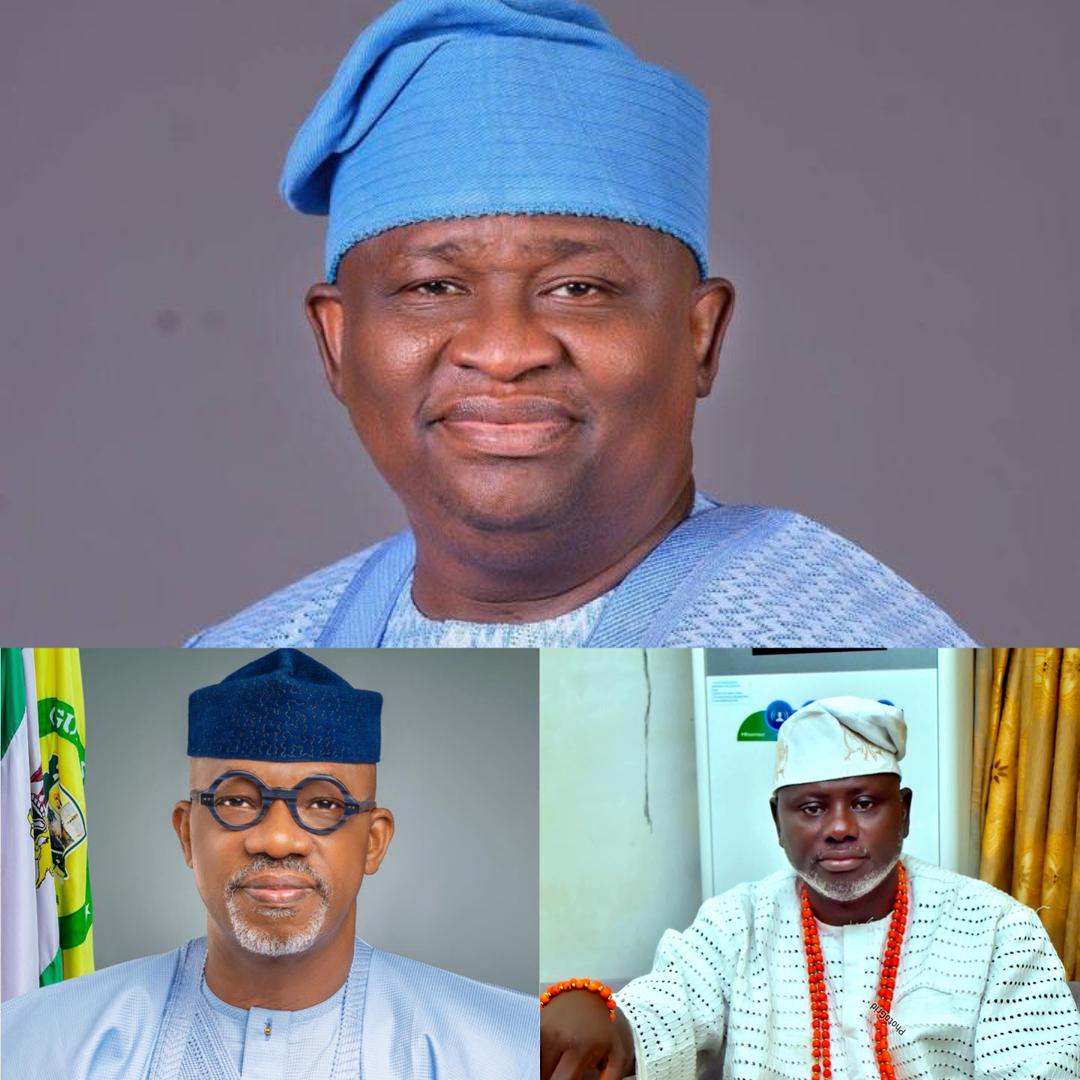
*Ogun’s Future at Risk, Says MAO, Faults ‘Anointed’ Consensus Candidate Yayi*
“In a land starved of vision, even the barely capable are crowned as kings.”
With this striking illustration, Chairman of the Egba Agenda Forum, High Chief Mustapha Abdulakeem Owolabi (MAO), has condemned the emergence of Senator Solomon Olamilekan Adeola, popularly known as Yayi, as the consensus governorship candidate of the All Progressives Congress (APC) in Ogun State.
In a strongly worded statement issued on Tuesday, Owolabi described the development as a “quiet and almost shameful orchestration,” insisting that the process reflects calculated imposition rather than the genuine will of the people.
According to him, while Yayi may have found political footing in Ogun about six years ago through Yewa, his elevation as a statewide consensus candidate without what he termed “a true test of popular mandate” raises fundamental concerns about the state of democracy in Ogun.
“This is not democracy; it is orchestration,” Owolabi declared.
The Egba Agenda Forum chairman further alleged that the move represents a stepping stone in a broader political design, suggesting that Ogun State risks becoming an extension of entrenched political influence beyond its borders.
He argued that the ambition behind the arrangement is “structured, patient and deliberate,” warning that such consolidation threatens the independence of the state’s political space.
Owolabi blamed past administrations for laying the groundwork for what he described as the recycling of failure. He accused previous leaders of governing “without building,” entrenching poverty, weakening institutions and replacing sustainable development with dependency.
“The next generation has learned the system too well,” he said. “They understand that you don’t need to fix the people; you only need to manage them.”
He criticized what is often presented as empowerment programmes, describing them as tools of control rather than genuine development initiatives. According to him, with education weakened, healthcare struggling, infrastructure decaying and debt mounting, citizens are left vulnerable to “small relief packages and symbolic gestures” that replace accountability with gratitude.
“This is not progress. It is recycling failure,” the statement read.
The Forum also expressed concern over what it called the systematic weakening of opposition parties, alleging that fractured and destabilized opposition voices leave citizens with “no real alternative only the illusion of choice.”
“True democracy thrives on vibrant, credible opposition. It demands competition, accountability and the constant testing of ideas,” Owolabi stated. “What we are witnessing is a slow drift toward political monopoly disguised as consensus.”
He further criticized former aspirants and political actors who, according to him, have abandoned principles in a bid to secure appointments and remain in the good graces of the “anointed.”
“Principles abandoned, convictions traded, ambition preserved at all costs. Shameful is an understatement,” he said.
Owolabi warned that the situation sends the wrong message to emerging political leaders, who he fears are being trained to perfect the same political playbook rather than inspired to chart a new course.
“A nation cannot rise on manipulation. A people cannot thrive on crumbs,” he added.
Concluding his statement, the Egba Agenda Forum chairman called on Nigerians to reflect deeply on the direction of the country’s democracy.
“‘Nigeria, we hail thee’ but surely, this cannot be the nation our forefathers envisioned, nor the system they hoped to build. If this cycle is not broken, then the future is already compromised. May Nigeria find the courage to demand more.”
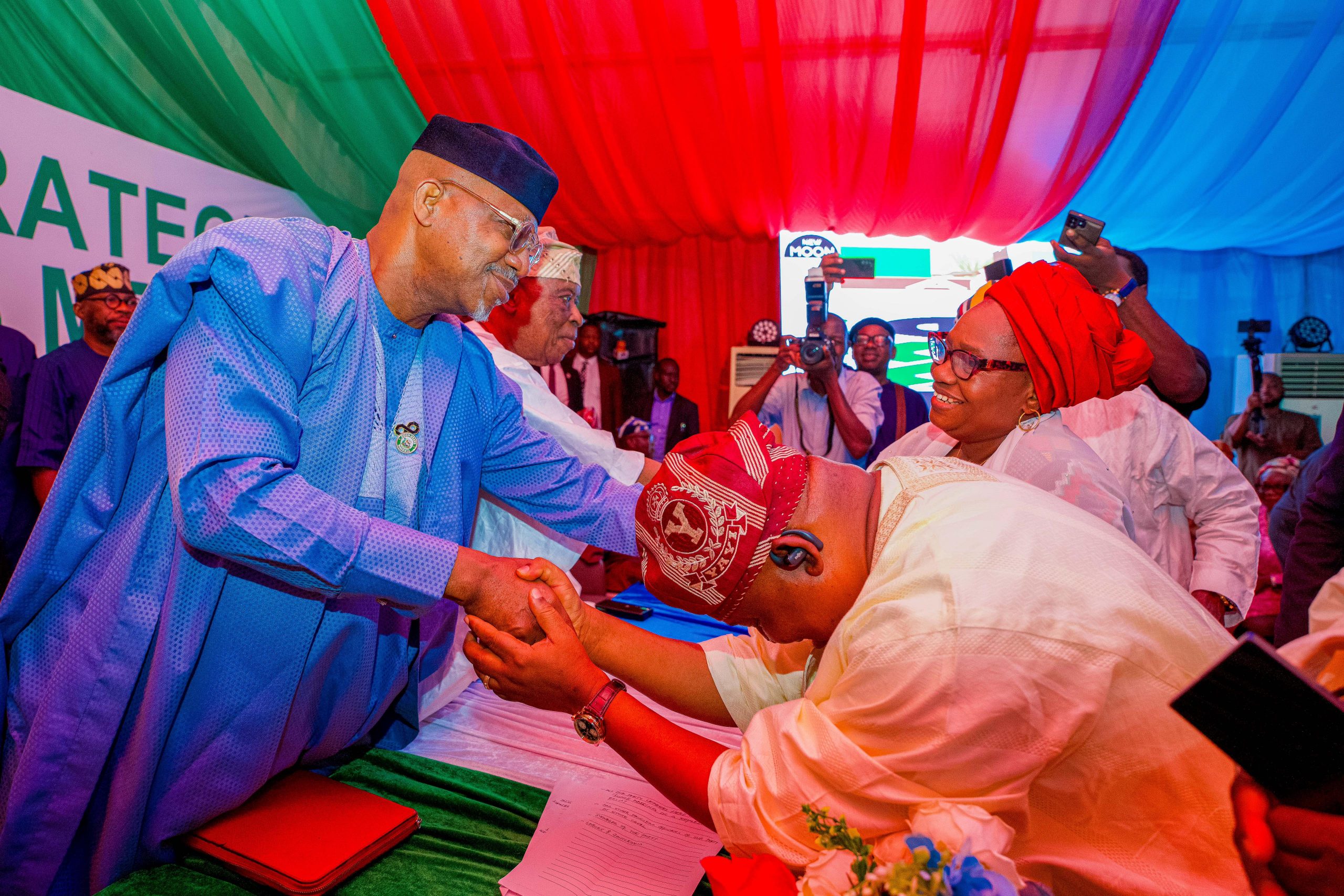
APC Picks Adeola Yayi as Consensus Candidate, Declares ‘New Ogun State Is Born’
ABEOKUTA, OGUN STATE — The Ogun State chapter of the All Progressives Congress (APC) has adopted Solomon Olamilekan Adeola, popularly known as Yayi, as its consensus governorship candidate ahead of the 2027 election.
The decision was announced on Monday, April 13, 2026, during a high-level party congress held in Abeokuta, drawing party leaders and stakeholders from across the state.
Governor Dapo Abiodun, who presided over the gathering, said the consensus arrangement was a strategic move to promote equity and inclusiveness, particularly by addressing what he described as a decades-long marginalisation of Ogun West Senatorial District in the state’s leadership structure.
He noted that the decision reflects a deliberate effort by the party to rotate power fairly among the state’s senatorial zones.
“Nothing will give me more joy than to fulfill the dreams of my predecessors — especially ensuring that Ogun West produces the next governor,” Abiodun said.
“I look forward to a time when I will sit proudly with my successor and my fellow former governors at the swearing-in of a new APC governor.”
Amid applause from party faithful, the governor formally unveiled Adeola as the party’s flagbearer, describing him as the most suitable candidate to lead the state into its next phase of development.
The announcement triggered jubilant reactions, with chants of “Yayi” echoing across the venue.
In his acceptance speech, Adeola expressed gratitude to party leaders and members, describing his emergence as a product of unity, sacrifice, and collective vision.
“I believe in oneness and the unity of our dear state and Ogun West by extension,” he said, pledging to justify the confidence reposed in him.
Adeola highlighted Ogun State’s growing economic relevance, noting its status as one of Nigeria’s most industrialised states. He promised to consolidate existing gains while advancing policies that would further drive development and prosperity.
“I will not let you down. I promise to keep the flag flying and maintain the unity, peace, and progress achieved in Ogun State,” he added.
Using a nautical metaphor, the senator assured party members of steady leadership, saying, “The ship I’m about to take over, I will make sure that it does not derail.”
He also emphasized inclusiveness, pledging to unite all factions within the party and across the state, regardless of political differences.
“By the grace of God, I will do my utmost best to keep every member of our great party together and ensure that we remain one indivisible family,” he said.
Declaring a new chapter for the state, Adeola proclaimed, “A new Ogun State is born,” promising a renewed focus on unity, development, and shared prosperity.
The endorsement, which took place during the APC Strategic Caucus Meeting, is widely seen as a defining moment in Ogun State politics, setting the stage for the 2027 governorship race and signaling strong internal cohesion within the ruling party.


- Merck Foundation marks ‘World Art Day’ through their Film, Song, Media and Fashion Awards 2026 in partnership with Africa’s First Ladies to raise awareness about social & health issues April 15, 2026
- Gabon’s Offshore Comeback: International Oil Companies (IOCs) Return as Exploration Heats Up Ahead of Paris Forum April 15, 2026
- Shell’s Eugene Okpere to Speak at Angola Oil & Gas (AOG) 2026 Amid $1B Angolan Deepwater Drive April 15, 2026
- Oando Joins African Energy Week (AEW) 2026 as Emerald Sponsor as Firm Reports 10% Profit Rise April 15, 2026
- Africa Finance Corporation (AFC) Invests in Dhamana Guarantee Company to Catalyse Local Currency Infrastructure Financing in East Africa April 15, 2026
- WESGRO and Enlit Africa 2026 unite to spotlight the Western Cape’s energy investment opportunity April 15, 2026
- Gianni Merlo re-elected as International Sports Press Association (AIPS) President for sixth and final term in landslide victory April 15, 2026
- African Development Fund approves 1.7 billion CFA francs to boost private sector competitiveness across West African Economic and Monetary Union (WAEMU) countries April 15, 2026
- Knowledge Katti: The Architect Behind Namibia’s Energy Breakthrough April 15, 2026
- African Mining Week to Highlight Africa’s Artisanal and Small-Scale Mining (ASM) Transformation Amidst $8.5T Resource Potential April 15, 2026
- Merck Foundation marks ‘World Art Day’ through their Film, Song, Media and Fashion Awards 2026 in partnership with Africa’s First Ladies to raise awareness about social & health issues April 15, 2026
- Gabon’s Offshore Comeback: International Oil Companies (IOCs) Return as Exploration Heats Up Ahead of Paris Forum April 15, 2026
- Shell’s Eugene Okpere to Speak at Angola Oil & Gas (AOG) 2026 Amid $1B Angolan Deepwater Drive April 15, 2026
- Oando Joins African Energy Week (AEW) 2026 as Emerald Sponsor as Firm Reports 10% Profit Rise April 15, 2026
- Africa Finance Corporation (AFC) Invests in Dhamana Guarantee Company to Catalyse Local Currency Infrastructure Financing in East Africa April 15, 2026
- WESGRO and Enlit Africa 2026 unite to spotlight the Western Cape’s energy investment opportunity April 15, 2026
- Gianni Merlo re-elected as International Sports Press Association (AIPS) President for sixth and final term in landslide victory April 15, 2026
-

 news4 months ago
WHO REALLY OWNS MONIEPOINT? The $290 Million Deal That Sold Nigeria’s Top Fintech to Foreign Interests
-

 celebrity radar - gossips3 months ago
Dr. Chris Okafor Returns with Power and Fire of the Spirit -Mounts Grace Nation Altar with Fresh Anointing and Restoration Grace on February 1, 2026
-

 celebrity radar - gossips4 months ago
Prophet Kingsley Aitafo Releases 2026 Prophecy: ‘Nigeria Will Rise, but the World Must Prepare for Turbulence’
-

 celebrity radar - gossips6 months ago
End of an Era: Nigeria Mourns Evangelist Dr. Uma Ukpai, 80
You must be logged in to post a comment Login
You must log in to post a comment.