
Business
SPIDS LOGISTICS BOSS, AYO AKINRINSOLA RECOUNTS GRASS TO GRACE STORY +Why He Is Eyeing Ondo Governorship Seat


The grass to grace story of SPIDS LOGISTICS LIMITED boss, Ayo Akinrinsola is not only inspiring, it is also must read for those who want to build their business from the scratch. Having graduated from The Obafemi Awolowo University his search for jobs without success led him to start a Logistics firm on a small scale and today the business has grown beyond his expectation. He also stated why he will be contesting for Ondo state governorship in the next election in this interview
Why did you decided to set up a business after school and not search for jobs?
Of course i do searched for jobs after i graduated from the Obafemi Awolowo University but the jobs are not coming forth. The expectation was that i get a job,but i realised it was not easy as i thought it would be, after my NYSC I came to Lagos and did some job tests but at the end I was not shortlisted for the job I applied. I have a friend who was into Logistics, I joined his team instead of staying at home on a voluntary basis. With that I learnt the rudiments of the business, I also did teaching job because I don’t like to stay idle, at that time I got a scholarship for a Post Graduate course in Netherlands, after the course I came back to Nigeria and I decided to leverage on my experience on the business to start immediately, I reached out to my contacts and thats it. Fortunately for me I got a contract from a Telecommunication company, they needed a warehouse which i got for them, that was my first job and from there we were expanding gradually.
What would you say is working for you in this kind of business this far?
The grace of God has kept us going, Apart from that you must be a very good resource manager to succeed on this job, accountability also matters, transparency and discipline. Another thing that has sustained us is the good name, I have a name to protect, you can give me your job and go to sleep. We have got referrals from big organisations, multinationals, it is because we have integrity. I don’t also joke with staffs welfarism their salary is very important because they too have to make a living.
Could you please define the exact nature of the task at Spids Logistics?
We are into warehousing management, supply chain management we do warehouse sourcing and management, we do customize warehousing, distribution of goods and services. We source for warehouse for multinationals and big organisations, we help them keep their goods and also help distribute to the end users
Does one need a lot of money to set up a business like this?
You don’t need a lot of money to set up business like this, I started by understudying somebody who was also into the business, in the process i met so many people who took interest in me. The most important thing is if you meet people who believe in what you can do, you don’t need huge capital to start the business, the business is all about trust and integrity
You studied Accounting in the University, how much of that would you say has helped you in this business?
It has in a way, I studied Accounting at Obafemi Awolowo University, I did Financial Management in Netherlands, I did other course that is related to management.Yes my educational experience has helped and is still helping me in the business especially in the area of cost management. But it is not always what you study in school that come to play outside there, it is all about what you can do, the people you relate with and your perception. Because of competition I sleep less, I am always looking for new ideas that can give us the edge over others.
How would you describe life as the CEO?
It is quite challenging, when you have a lot to think about, the business, staff welfarism, family, the growth of the business matters to you more. It is not all work and no plays, I play golf for relaxation, nobody is perfect but i try as much as possible to strike a balance between my work and family.
How would you describe your lifestyle?
I live a simple lifestyle, i don’t drink alcohol,i don’t smoke and i don’t womanize. During my leisure time i like to dance, i play indoor games like Basketball, Scrabble, Chess. I love gadgets, cars but i only buy them when i think it is necessary.
Give us a brief about your immediate family?
I got married in 2005, to the glory of God we are blessed with three children
Why the sudden interest in politics?
I have being following politics since the days of SDP and NRC in the early 90s, I remember when i clocked 18 i was excited that i would be able to vote. I am from Ile Oluji in Ondo state, i was born with a silver spoon but I wasn’t trained with a silver spoon, i am from a Polygamous family. I joined Politics because i want to impact in the lives of my people especially in Ondo state, that state is blessed with natural resources that if well managed will create job opportunities for the youths in that state. People will not run to Lagos to seek for job again, this is the time to make impact. I admire people like Asiwaju Bola Tinubu, he is the Architect of a new Lagos that is why people like me can succeed in this environment. I am a supporter of well organised Political Party, APC as a party understand the plight of the common man.
So why do you want to contest for the Governorship and not from a lower profile?
This is the time that i still have the energy, i want to manage the endowment of the state, i want to bring my experience as a resource management to bear in the governance of Ondo state. In Ondo state we have oil, bitumen and others, we need accountability in governance of the state, who says we cant have sea port in Ondo state? I have thought about it very well and i am convinced it is possible.
How would you describe the current political situation in Nigeria?
If you see the manifestoes of the two major political parties in Nigeria the All Progressives Congress APC is the only party that has the interest of the people in their plan. APC is a party of highly intellectuals who know how to meet the needs of the common man, they know what it entails to make the common man relevant, they know the pain that the common man is going through. You can see leadership by example since APC took over, President Buhari and his Vice Yemi Osinbajo led by example by cutting their salaries by half, the wind of change is blowing and i am ready to channel that wind into my state Ondo so that people will also enjoy the new things, there is no better time than now.
Was it because you want to contest for an election that you set up an empowerment scheme for the youths?
Before the end of the year we are going to launch the scheme fully and it is called, AYO AKINRINSOLA YOUTH EMPOWERMENT FOUNDATION. I am concentrating on the artisans, market women, petty traders, farmers, commercial drivers, unemployed youths, civil servants, pensioners, widows. This is what i have being doing before now, it has being part of my lifestyle to help people, it is not because i want to run for an elections. I just want to extend it to the state and allow more people to benefit.




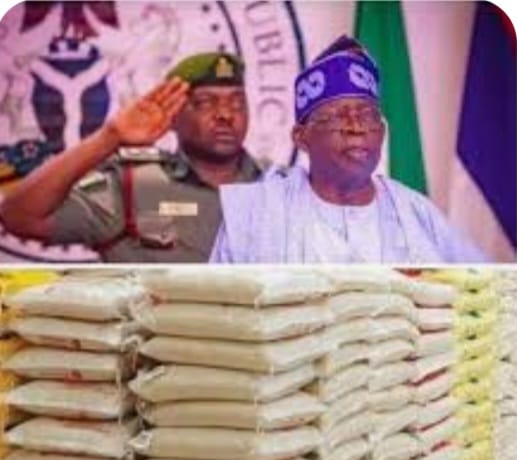
Riceocracy: When Tinubu and the APC Government Substitutes Governance with Handouts
By George Omagbemi Sylvester
“Tinubu’s administration faces mounting criticism as rice palliatives replace real solutions to Nigeria’s deepening crisis.”
ABUJA, Nigeria — March 17, 2026
A growing wave of public frustration is sweeping across Nigeria as citizens decry what has now been dubbed “Riceocracy” a governance pattern where the government of President Bola Ahmed Tinubu and the ruling All Progressives Congress (APC) respond to systemic failures with the distribution of rice rather than meaningful reforms.
Across the country, from major cities like Lagos and Abuja to underserved rural communities, Nigerians are voicing anger over persistent issues: no stable electricity, deteriorating road networks, unaffordable fuel and cooking gas, and a struggling education system. Yet, in response to these structural problems, the government’s most visible intervention has been the distribution of food palliatives; particularly rice.
The central figures in this unfolding crisis are President Tinubu and the APC-led federal and state governments, who have overseen the rollout of these relief measures. On the other side are millions of Nigerians battling rising inflation, joblessness, and declining living standards.
The trend gained momentum following the removal of fuel subsidies in May 2023, a policy decision by the Tinubu administration that triggered a surge in transportation and commodity prices. By 2024 and into 2025, the government intensified the distribution of rice and other palliatives as a stopgap measure to quell public discontent. Now, in 2026, the approach has become a defining feature of the administration’s response to economic hardship.
The “Riceocracy” phenomenon is nationwide. Reports from states such as Kano, Rivers, and Borno show large crowds gathering for rice distribution exercises, even as basic infrastructure continues to decay. Urban centers are not exempt; in cities like Lagos, residents still grapple with erratic power supply and high living costs despite periodic palliative programs.
Analysts point to political convenience and immediate optics. Distributing rice is quick, visible, and politically advantageous, especially in a climate of widespread hardship. However, critics argue that it reflects a deeper governance failure; an inability or unwillingness to implement long-term solutions.
Nobel laureate Wole Soyinka has long warned against superficial governance, describing such approaches as “a betrayal of democratic responsibility.” In the same vein, global economist Ngozi Okonjo-Iweala has stressed that “palliatives may provide temporary relief, but they cannot replace sound economic management and structural reform.”
Political economist Pat Utomi offers a sharper critique: “A state that reduces its responsibility to food sharing risks institutionalizing poverty rather than eliminating it.” His statement captures the growing concern that Nigeria’s leadership is addressing symptoms rather than causes.
The implications are severe. Nigeria’s power sector remains unreliable, forcing businesses to depend on costly alternatives. Road infrastructure continues to hinder economic activity, while the education sector suffers from underfunding and frequent disruptions. Despite these challenges, rice distribution has become the most consistent government response.
Critics further argue that this strategy fosters dependency and weakens civic engagement. Instead of demanding accountability, citizens may feel compelled to accept handouts as substitutes for rights and services. Allegations of mismanagement and politicization of palliative distribution also persist, raising questions about transparency and fairness.
The term “Riceocracy” may sound satirical, but it reflects a sobering reality. It highlights a governance model where survival replaces development, and where public policy is reduced to emergency relief rather than strategic planning.
As Nigeria marks this moment on March 17, 2026, the message from scholars, civil society, and frustrated citizens is unmistakable: rice cannot fix a broken system. Only deliberate investments in infrastructure, education, energy, and economic productivity can restore confidence and chart a sustainable path forward.
Until then, the image of Nigerians queuing for bags of rice will remain a stark symbol of a nation still searching for leadership that goes beyond palliatives to deliver real progress.



ZENITH BANK OPENS MANCHESTER BRANCH TO SUPPORT CROSS-BORDER TRADE AND INVESTMENT
Zenith Bank Plc has announced the opening of a new branch in Manchester, United Kingdom, marking another significant milestone in the bank’s international growth and its commitment to strengthening financial connections between Africa and global markets.
The official opening ceremony, scheduled to hold on Tuesday, March 17, 2026, is expected to attract government officials from Nigeria and the United Kingdom, regulators, investors, customers, and business leaders from both countries, underscoring the growing economic ties and investment opportunities between the two markets.
The new Manchester branch will complement Zenith Bank’s existing operations in the United Kingdom and serve as a strategic hub for supporting businesses engaged in international trade and investment. Through the branch, the bank will provide corporate banking, trade finance, treasury and related financial services to clients operating across the United Kingdom, Europe and Africa.Speaking ahead of the launch, the Group Managing Director/Chief Executive Officer of Zenith Bank Plc, Dame Dr. Adaora Umeoji, OON, said: “The opening of our Manchester branch represents another important step in Zenith Bank’s growth as a leading African financial institution connecting businesses and markets across continents. Manchester is one of the United Kingdom’s most dynamic commercial centres, and our presence here will further strengthen financial connections between businesses in the UK and opportunities across Africa’s rapidly expanding markets.
”Founded in 1990 by its Founder and Chairman, Jim Ovia, CFR, Zenith Bank has grown into one of Africa’s most respected banking institutions, boasting a robust capital base and a remarkable history of year-on-year profitability. Built on a strong foundation of people, technology and service, the Bank has consistently delivered innovative financial solutions while maintaining a disciplined approach to growth and risk management. The impressive performance of the Bank has consistently earned it excellent ratings, recognition and endorsement from local and international agencies and institutions.Headquartered in Lagos, Nigeria, Zenith Bank operates over 500 branches and business offices across the 36 States of the Federation and the Federal Capital Territory (FCT). The Bank currently operates subsidiaries in several African countries including Ghana, Sierra Leone, Gambia, and Cote d’Ivoire, while maintaining a presence in major international financial centres including the United Kingdom, France, UAE and China.
In recent years, Zenith Bank has continued to expand its international network as part of its strategy to support global trade and investment flows involving Africa.Manchester, widely regarded as one of the United Kingdom’s most vibrant economic centres, hosts a diverse base of businesses across sectors such as manufacturing, engineering, logistics, technology and consumer goods. The city’s strong commercial ecosystem and international outlook align closely with Zenith Bank’s expertise in corporate banking, structured finance and trade finance.The Manchester branch will work closely with the Bank’s London operations and its broader international network to support clients seeking to expand across markets and unlock new opportunities in both the United Kingdom and Africa.
With the opening of the Manchester branch, Zenith Bank continues to advance its vision of building a truly global African banking institution that connects businesses, facilitates trade and investment, and creates stronger economic bridges between Africa and the world.
Business
New Petrol Import Permits May Reverse Nigeria’s Push for Domestic Refining and Increase Pressure on Foreign Reserve” — Energy Policy Group Tells President Tinubu
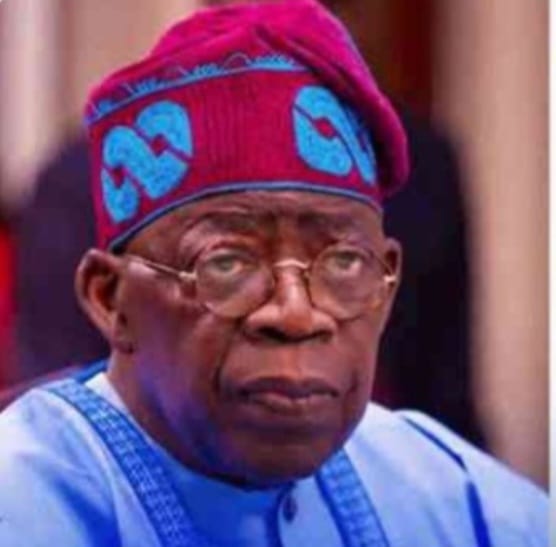
*“New Petrol Import Permits May Reverse Nigeria’s Push for Domestic Refining and Increase Pressure on Foreign Reserve” — Energy Policy Group Tells President Tinubu*
An energy policy group has advised President Bola Ahmed Tinubu to reconsider the wider economic consequences of newly issued permits allowing marketers to import petrol into the country, warning that the move could undermine Nigeria’s efforts to strengthen domestic refining and stabilise the economy.
In a statement released on Sunday in Abuja, the Energy Transparency and Market Justice Initiative (ETMJI) said the approvals granted by the Nigerian Midstream and Downstream Petroleum Regulatory Authority (NMDPRA) could produce unintended consequences if not carefully managed.
The group’s president, Dr. Salako Kareem, said Nigeria was at a delicate moment in its energy transition and that policy choices made now would determine whether the country finally escapes its decades-long dependence on imported refined petroleum products.
Kareem said while the regulator’s responsibility to guarantee adequate fuel supply is understood, expanding import permissions at this stage could weaken the policy direction required to encourage local production and long-term sector stability.
“Our respectful appeal to President Bola Ahmed Tinubu is that decisions concerning petrol importation must be carefully weighed against their long-term economic consequences,” Kareem said.
“Nigeria has spent decades trying to overcome the paradox of being a major crude oil producer while relying heavily on imported refined products. Any policy action that appears to reopen the floodgates of importation may slow down the progress that has been made toward strengthening domestic refining capacity.”
He warned that increasing petrol imports could place additional pressure on the country’s foreign exchange reserves, especially at a time when the government is pursuing difficult economic reforms aimed at stabilising the naira and improving fiscal discipline.
“For many years, the country has lost enormous volumes of foreign exchange importing petroleum products that could ideally be refined locally,” Kareem said.
“If import volumes begin to rise again, the demand for foreign currency will inevitably grow. This could place renewed strain on the naira and undermine the broader economic stabilisation programme that the government is currently pursuing.”
The group also warned that excessive reliance on imported petrol could create opportunities for product dumping and the entry of substandard fuel into the Nigerian market, a challenge that has troubled regulators and consumers in the past.
According to Kareem, Nigeria’s downstream sector has historically struggled with quality control issues whenever importation becomes widespread, because imported fuel often travels through multiple intermediaries before reaching domestic depots.
“One of the lessons from the past is that when imports dominate the supply chain, the market sometimes becomes vulnerable to the dumping of inferior petroleum products,” he said.
“This not only creates regulatory complications but also exposes Nigerian consumers to fuels that may damage vehicles, affect industrial machinery and ultimately impose hidden economic costs on the country.”
He added that encouraging domestic refining and strengthening local supply chains would provide better product traceability and improve overall market transparency.
Kareem stressed that the group’s intervention was not intended as criticism of the NMDPRA, noting that regulators must often make complex decisions to prevent supply disruptions in a volatile energy market.
However, he urged the federal government to ensure that short-term supply management does not weaken long-term national objectives in the petroleum sector.
“We recognise that the regulator has the responsibility to ensure that Nigerians do not experience fuel shortages, and that duty is extremely important,” he said.
“But at the same time, policy coherence is essential. The country must avoid sending signals that could discourage investment in local refining or create uncertainty about Nigeria’s commitment to energy self-sufficiency.”
Kareem said Nigeria now has a rare opportunity to restructure its downstream petroleum industry in a way that strengthens domestic production, protects foreign exchange reserves and builds long-term industrial capacity.
He urged the president to ensure that the country’s regulatory framework reflects that strategic vision.
“Our appeal is simply for policy alignment. If Nigeria truly wants to build a resilient energy economy, then every major decision in the downstream sector must reinforce the goal of reducing import dependence, strengthening domestic production and protecting the country’s economic stability,” Kareem noted.
The group added that careful policy coordination between regulators and the presidency would help ensure that Nigeria avoids repeating the costly fuel import cycles that have historically drained public resources and weakened the national economy.


-

 society6 months ago
Religion: Africa’s Oldest Weapon of Enslavement and the Forgotten Truth
-

 news3 months ago
WHO REALLY OWNS MONIEPOINT? The $290 Million Deal That Sold Nigeria’s Top Fintech to Foreign Interests
-

 society6 months ago
“You Are Never Without Help” – Pastor Gebhardt Berndt Inspires Hope Through Empower Church (Video)
-

 society7 months ago
Who is Chief Kestin Pondi? Niger Delta’s “People’s Chief” Winning Hearts With Hundreds of Millions in Generosity
You must be logged in to post a comment Login
You must log in to post a comment.