
Business
I rejected a multi-million naira job to follow the call of God – Prof. Dele Braimoh

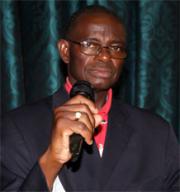


For many, the challenges of life vary and those who are strong to overcome the obstacles on the road to success and stardom would surely go through rigours. One man who never believed he could attain the height he found himself today is Professor Dele Braimoh. First, he never had the normal educational attainment that could qualify someone as a professor and second, he never knew he was being prepared by the Almighty God. Armed with dexterity and deep passion for education, Prof. Braimoh was able to acquire some level of education by divine means. He worked assiduously in the university after bagging his masters and Phd degrees. His foray into Christendom was also by divine intervention. He was a parish pastor at the RCCG after working as a photographer, typist and radio mechanic. It was during his time at the RCCG that he was called by God to found the Cornerstone Revival Church which today is making waves in South Africa, winning many souls and changing the face of Christianity across the country and beyond. He spoke with Sahara Weekly about himself, his relationship with God, his wife and the ministry. Enjoy reading.
Interestingly sir, you are a professor and also a pastor, can you tell us how the journey began?
It has been a very wonderful journey, when I tell people that it is just by the grace of God that I became a pastor, I have been a professor for about 25years and I have thought in many universities in Africa for about 35 years but the journey was rough, I never had any basic education, I never went to the secondary school for a day, I read at home through the extra-moral studies at the University of Ibadan and I did my advance level on my own before I went to the University of Lagos (UNILAG) where I had my first degree and then later to the University of Ibadan for my Masters. I finished my Phd in 1986, that is about 31 years ago. Well, it has not been easy, going by that background, it was rough especially coming from a polygamous family, I never had the advantage of going to school apart from when I had the primary school education and then the modern school In those days, I was on my own but I thank God today for seeing me through not because I was clever than anybody, I love education and I had to do it on my own having learnt photography, typing and shorthand, radio mechanic, those were the things I did before I went to the university but I thank God today that after teaching for 35 years in the university, though I got born again in between and then I joined the whole process of being a parish pastor under RCCG and then also teaching but eventually when God called me out to start the CORNERSTONE REVIVAL CHURCH in Pretoria, South AFrica and then working in Universities across Nigeria and Lesotho in South Africa, I eventually retired as a UNESCO Chair of Open and distance learning at the University of South Africa, I retired in 2012 and since then, I went into full time ministry, it has not been easy, if not for God, it would not have been anything that we are seeing but it has been a pleasant, fascinating journey especially now as a servant of God because I used to tell people in those days University of Ibadan and Lesotho University used to be my employers but right now, Jesus Christ is my employer.
You said you never attended a secondary school, what was your driving force?
It was not just by choice, it was by force. I used to be a departmental secretary at the Department of Theatre art at the University of Ibadan, my professor used to be Late Prof. Yinka Adedeji, he was a very hardworking man. I used to think I had everything because I read my O’levels at home so I was very content but I was overseeing typist, drivers, synographers, so I thought I had arrived until one day I was trying to type an examination question and two boys and two girls came in despite the fact that I wrote at the entrance of the office that it is out of bound for students, but they just ignored it and they came in, I asked if they were students of the department and they said yes, I said they should have read the notice on the door and they said and so what? They laughed and they said ‘You this bloody typist’, I seriously cried, because of the fact that I never went to secondary school, I never thought somebody who never went to secondary school could ever make it so when my professor came back, I went to report to him, I got their names then, he apologized and asked to tell me two things, he said unfortunately, he cannot tell them to apologize to me and that they are undergraduates, leaders of Nigeria’s tomorrow and they are studying for examination and therefore, I shouldn’t expect them to come and apologize because there are many things going on in their brains, so if they are the leaders of tomorrow, it means I’m the messenger of tomorrow, he said I should take it as one of the hazards of my professional calling, it’s very belittling for him to ask them to come and apologize to me, I wept and made up my mind to see what is going on in the heads of people in the university, and also aspire to be an undergraduate. That year, I registered for my A’Levels, I went to school, met some of my friends in the University to recommend books for me and be my supervisor. In fairness, I thought I had arrived but thank God today, I told Prof. Adedeji after I got admission, I wrote Economics and Government, I had A in Economics and B in government giving me 9 points so that was how I applied to many universities, God answered my prayer, I had admission into many universities but I chose UNILAG to read Mass communication, if not for those boys and girls, I would have been old and tired now. I thought I had arrived until they showed me I was nothing. When I finished my first degree, I returned to the University of Ibadan for my masters so that they will not think I have gone to buy certificate for the number of years I went for my advanced level, I did my masters in the same department and also served as a Youth Corper in the same department, teaching, eventually I did my masters in education and when I finished, they said they have never seen anyone like me, combining Mass Communications with education and they wanted somebody in that position, except I wanted to go for my PHd, they would immediately absorb me so I started as an Assistant, then as a lecturer, and I started to rise until I left Nigeria in the 1990s.
This is quite inspiring, how did you feel when you became a graduate?
I cried, I did not cry bitterly until I had my Phd because my father who had six wives, unfortunately he is late now, never saw any value in education, and when Prof Onabanjo was the then VC of University of Ibadan when he was conferring the doctoral degree on few of us, I cried having a handshake with him because I just thought what kind of Journey have I made from having no secondary education, for being a typist, photographer, radio Mechanic now calling me doctor Dele, it amazes me, this is why I say to the young ones except there is no determination, that is when you can not achieve, I tell people not to say the sky is the limit, beyond the sky is the limit because if without educational foundation, I could still go for the Phd, in fairness I believe there is nothing one cannot achieve with determination. The driving force was that I want to achieve this to make myself unique among my family members and after everything, I and Professor Adedeji were both sitting at the senate and I use to query him on certain things when he makes comment because he has a Phd and I had Phd too though he was a professor but I was not a professor yet so he said he’s not surprised because he knows I can always achieve something, maybe he is the one God used to propel me, that was my driving force
Redeemed GO, Pastor Adeboye once said something that his dream or aspiration is to be a Vice Chancellor and it is so obvious that you have the same passion, what was your dream educationally before you came into the ministry?
I wanted to aspire to become a Vice Chancellor but luckily I was a sub-dean as they call it in Nigeria at the faculty of education because my dean used to be a travelling dean so I used to be in charge of everything so I was thinking not to become a dean since I was a sub-dean already, but then I was thinking of becoming a vice chancellor of any university just to tell them I got to that level with my kind of educational background, in the long last, I thought it was a dream I have pursued earnestly but when the calling even with this one to have become a UNESCO Chairman of a University in a foreign land and I have travelled to over 32 countries of the world because of my position so I thought one day I must be a vice chancellor but God said I’m wasting my time, it was a drastic U-Turn I never knew though I was working until God said he needed me, I thought I was working as a pastor and as an academician but when prophecies kept coming including the prophecy of Brother Iginla who said I am in the wrong field and also Daddy Adeboye said the same thing that is it because I’m a professor and that is why I didn’t want to answer God’s call but I said I’m answering God because I was doing it as a part time then but now God called me and gave me the name of the ministry, it has been a very wonderful thing. I think I couldn’t be fulfilled than what I’m experiencing now, I have touched lives, evangelized, and God is doing a bit of His miracles to heal, change the destinies of people through prayer in our church, we are young but we are going gradually, so it is a very super accomplishment for me. I don’t even see the title of being a professor as more rewarding to me than when they said Pastor, and this is why some people call me Mr. Double P.
How would you describe the transition from the academics to the ministry?
It was originally complementary because you as a professor in the university, you are a parrot, you talk but on top of that, the reality is that with the ministry, you are also a parrot because you preach, the only thing you add to it is winning of souls for God and you do it passionately, I was prepared from being an academic to answer the call of God, it was an easy thing for me because I was talking all along and it has become part and parcel of my life, I can stand in class for hours ministering to people is no longer a problem, except that you are not talking about academics but when you dish out some points in the Bible, you must be able to convince people so I see it as a complementary effort and therefore to be able to move to the other side wasn’t a problem for me.
Lets talk about the ministry now, what makes your ministry unique?
Well, it is unique in the sense that, as I told you we are still young but to some people, I think my life evangelizes Christ, how could anybody has got to this level and got back to the church, I’ve seen people ask me of what I am looking for in church despite my post, sometime after we started, I got a job and the salary was about $15,000 without Tax and I was to relocate to Kenya to be an African Director for an international organisation and they said I would be travelling around, which is my hobby, and also live in a big house in Kenya and it was supposed to be a 5 years contract, I didn’t apply for it, why didn’t it come when I was a UNESCO Chairman, they only said I should submit my CV and let them know when I would start but when I spoke to God about it, God told me He will allow me to take the Job but from this time around I’ll be on my own so I rejected it so right now, I’m focusing on my ministry, I let my members know my past so most people say they like my God and they want to serve Him, sometimes I ask why God made me go through all the academic heights before calling me but it is for a purpose so whatever God does, He has never made mistakes.
What was your wife’s reaction when you told her you wanted to leave the academics for full time ministry?
I must tell you frankly that she was very happy, I thought she and God were communicating regularly, she never knew it was series of prophecies and warnings that I had that made me to change, she said that has always been her dream, it’s not as If she’s not enjoying my company as an academics but she said she sees me in the church as a full time ministry, where are we going to get the money though our last born was 35 and married so we are not sponsoring anybody but she said God will always provide, she is backing me in the ministry and I don’t look back, when I am not there, I have other pastors working with me, she is there too and very happy. For coming to Israel, she was one of the motivating factors, she said if my daddy is having his birthday and for this pilgrimage, I just have to join them and God provided the money. She is backing me very well and the children also pray and encourages me. When daddy was asking us of how many years we want to live, I said I still need beyond 70, I need another 50 so I will be able to impact positively on lives, I am not thinking of anything in this world, I want to build my home in heaven so that at the end of the day I will also be welcomed to paradise, that is my mission.
Would we be right to say your background and your life story is the secret of the success of your ministry?
I should think so because coming from that background, having travailed those things, I never dreamt of becoming a professor but with everything, that has given me the full commitment to say if God can do it, how could God not do His own work, It is one of the things that energizes me, even if I do not become a Vice Chancellor, I am already a Professor and there is no other position in the university that anyone would aspire to be because even the VC is a political appointment but this is an academic achievement and if then I use that, I do not see how God will not support me to do His work, teaching me the way to go about it, sending people like my father to me to instruct me, I have no fear that the ministry would expand to attract people to win souls for God
Some of your colleagues, what were their reactions when you told them you wanted to leave for full time ministry?
You see, one thing everyone is craving for is money, if it becomes the overriding force everybody is using, people may not make heaven, most of them thought I was crazy, someone hated me for it and said how will I reject a job of $15,000 and when I told him my next employer is Jesus Christ, he said Dele, now I know you are crazy, so they did not support, but most of them when they have problem, they come, we pray, some of them have seen changes, some of them are becoming Christians, I suspect that if they are called for full time ministry, they will not hesitate to go but initially it was tough, most of them looked at me as an eccentric, after about 25 years of being a professor, when I am supposed to be enjoying the fruit of my labour but well, it took me sometime to convince some people but since it is my life, they should not live my life for me, I was convinced with what I was doing and some of them have seen the results. Whatever you have minus God, that person is finished, what is happening around me is sufficient to convince them without me telling them, I am enjoying it and I am proud to say it anywhere. We have our website and some go there and get amazed (www.cornerstonerevivalchurch.org), it is fantastic, we are young but I know with the support of Daddy Joshua Iginla, beyond the sky is our limit, he is doing a lot for us. He established the church actually, he came to South Africa to establish it and he has come to minister when we were two years, we are his baby and he has not left us alone, he is my spiritual father, with the support, we may have not gotten the finances but we believe that God will open doors and also raise within the church millionaire members.



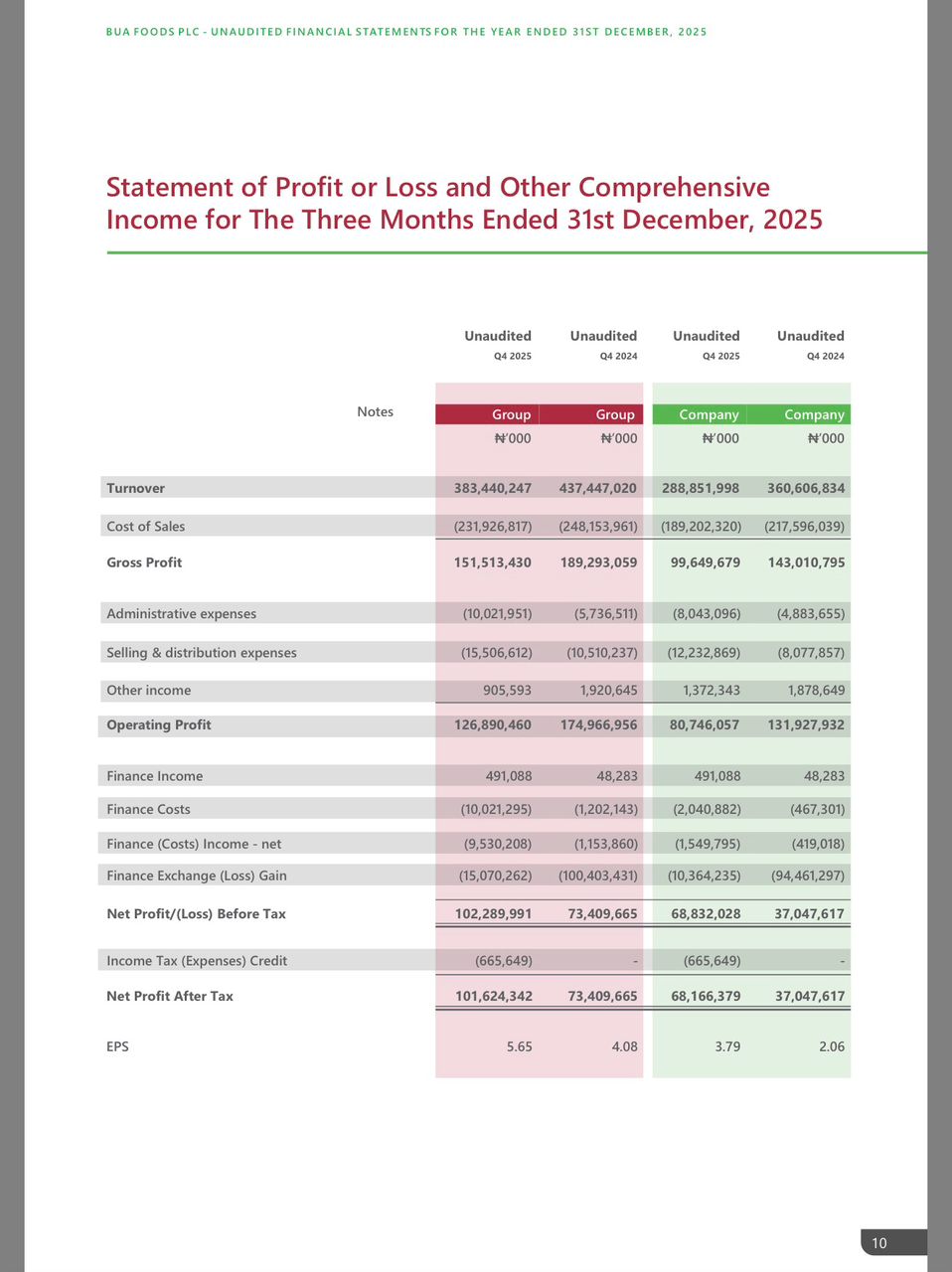
BUA Foods Records 91% Surge in Profit After Tax, Hits ₦508bn in 2025
By femi Oyewale
Business
Adron Homes Unveils “Love for Love” Valentine Promo with Exciting Discounts, Luxury Gifts, and Travel Rewards

Adron Homes Unveils “Love for Love” Valentine Promo with Exciting Discounts, Luxury Gifts, and Travel Rewards
In celebration of the season of love, Adron Homes and Properties has announced the launch of its special Valentine campaign, “Love for Love” Promo, a customer-centric initiative designed to reward Nigerians who choose to express love through smart, lasting real estate investments.
The Love for Love Promo offers clients attractive discounts, flexible payment options, and an array of exclusive gift items, reinforcing Adron Homes’ commitment to making property ownership both rewarding and accessible. The campaign runs throughout the Valentine season and applies to the company’s wide portfolio of estates and housing projects strategically located across Nigeria.
Speaking on the promo, the company’s Managing Director, Mrs Adenike Ajobo, stated that the initiative is aimed at encouraging individuals and families to move beyond conventional Valentine gifts by investing in assets that secure their future. According to the company, love is best demonstrated through stability, legacy, and long-term value—principles that real estate ownership represents.
Under the promo structure, clients who make a payment of ₦100,000 receive cake, chocolates, and a bottle of wine, while those who pay ₦200,000 are rewarded with a Love Hamper. Payments of ₦500,000 attract a Love Hamper plus cake, and clients who pay ₦1,000,000 enjoy a choice of a Samsung phone or a Love Hamper with cake.
The rewards become increasingly premium as commitment grows. Clients who pay ₦5,000,000 receive either an iPad or an all-expenses-paid romantic getaway for a couple at one of Nigeria’s finest hotels, which includes two nights’ accommodation, special treats, and a Love Hamper. A payment of ₦10,000,000 comes with a choice of a Samsung Z Fold 7, three nights at a top-tier resort in Nigeria, or a full solar power installation.
For high-value investors, the Love for Love Promo delivers exceptional lifestyle experiences. Clients who pay ₦30,000,000 on land are rewarded with a three-night couple’s trip to Doha, Qatar, or South Africa, while purchasers of any Adron Homes house valued at ₦50,000,000 receive a double-door refrigerator.
The promo covers Adron Homes’ estates located in Lagos, Shimawa, Sagamu, Atan–Ota, Papalanto, Abeokuta, Ibadan, Osun, Ekiti, Abuja, Nasarawa, and Niger States, offering clients the opportunity to invest in fast-growing, strategically positioned communities nationwide.
Adron Homes reiterated that beyond the incentives, the campaign underscores the company’s strong reputation for secure land titles, affordable pricing, strategic locations, and a proven legacy in real estate development.
As Valentine’s Day approaches, Adron Homes encourages Nigerians at home and in the diaspora to take advantage of the Love for Love Promo to enjoy exceptional value, exclusive rewards, and the opportunity to build a future rooted in love, security, and prosperity.
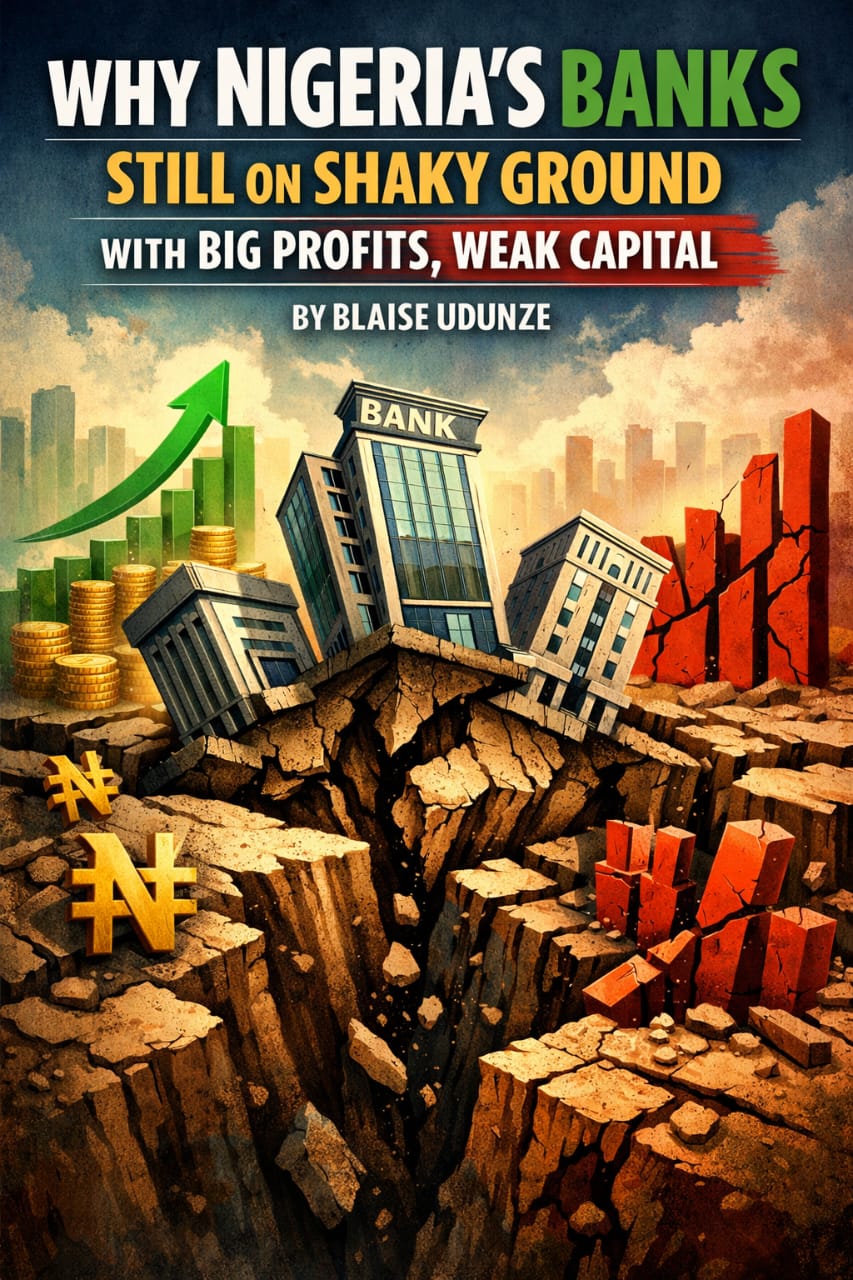
*Why Nigeria’s Banks Still on Shaky Ground with Big Profits, Weak Capital*
*BY BLAISE UDUNZE*
Despite the fragile 2024 economy grappling with inflation, currency volatility, and weak growth, Nigeria’s banking industry was widely portrayed as successful and strong amid triumphal headlines. The figures appeared to signal strength, resilience, and superior management as the Tier-1 banks such as Access Bank, Zenith Bank, GTBank, UBA, and First Bank of Nigeria, collectively reported profits approaching, and in some cases exceeding, N1 trillion. Surprisingly, a year later, these same banks touted as sound and solid are locked in a frenetic race to the capital markets, issuing rights offers and public placements back-to-back to meet the Central Bank of Nigeria’s N500 billion recapitalisation thresholds.
The contradiction is glaring. If Nigeria’s biggest banks are so profitable, why are they unable to internally fund their new capital requirements? Why have no fewer than 27 banks tapped the capital market in quick succession despite repeated assurances of balance-sheet robustness? And more fundamentally, what do these record profits actually say about the real health of the banking system?
The recapitalisation directive announced by the CBN in 2024 was ambitious by design. Banks with international licences were required to raise minimum capital to N500 billion by March 2026, while national and regional banks faced lower but still substantial thresholds ranging from N200 billion to N50 billion, respectively. Looking at the policy, it was sold as a modern reform meant to make banks stronger, more resilient in tough times, and better able to support major long-term economic development. In theory, strong banks should welcome such reforms. In practice, the scramble that followed has exposed uncomfortable truths about the structure of bank profitability in Nigeria.
At the heart of the inconsistency is a fundamental misunderstanding often encouraged by the banks themselves between profits and capital. Unknown to many, profitability, no matter how impressive, does not automatically translate into regulatory capital. Primarily, the CBN’s recapitalisation framework actually focuses on money paid in by shareholders when buying shares, fresh equity injected by investors over retained earnings or profits that exist mainly on paper.
This distinction matters because much of the profit surge recorded in 2024 and early 2025 was neither cash-generative nor sustainably repeatable. A significant portion of those headline banks’ profits reported actually came from foreign exchange revaluation gains following the sharp fall of the naira after exchange-rate unification. The industry witnessed that banks’ holding dollar-denominated assets their books showed bigger numbers as their balance sheets swell in naira terms, creating enormous paper profits without a corresponding improvement in underlying operational strength. These gains inflated income statements but did little to strengthen core capital, especially after the CBN barred banks from using FX revaluation gains for dividends or routine operations. In effect, banks looked richer without becoming stronger.
Beyond FX effects, Nigerian banks have increasingly relied on non-interest income fees, charges, and transaction levies to drive profitability. While this model is lucrative, it does not necessarily deepen financial intermediation or expand productive lending. High profits built on customer charges rather than loan growth offer limited support for long-term balance-sheet expansion. They also leave banks vulnerable when macroeconomic conditions shift, as is now happening.
Indeed, the recapitalisation exercise coincides with a turning point in the monetary cycle. The extraordinary conditions that supported bank earnings in 2024 and 2025 are beginning to unwind. Analysts now warn that Nigerian banks are approaching earnings reset, as net interest margins the backbone of traditional banking profitability, come under sustained pressure.
Renaissance Capital, in a January note, projects that major banks including Zenith, GTCO, Access Holdings, and UBA will struggle to deliver earnings growth in 2026 comparable to recent performance.
In a real sense, the CBN is expected to lower interest rates by 400 to 500 basis points because inflation is slowing down, and this means that banks will earn less on loans and government bonds, but they may not be able to quickly lower the interest they pay on deposits or other debts. The cash reserve requirements are still elevated, which does not earn interest; banks can’t easily increase or expand lending investments to make up for lower returns. The implications are significant. Net interest margin, the difference between what banks earn on loans and investments and what they pay on deposits, is poised to contract. Deposit competition is intensifying as lenders fight to shore up liquidity ahead of recapitalisation deadlines, pushing up funding costs. At the same time, yields on treasury bills and bonds, long a safe and lucrative haven for banks are expected to soften in a lower-rate environment. The result is a narrowing profit cushion just as banks are being asked to carry far larger equity bases.
Compounding this challenge is the fading of FX revaluation windfalls. With the naira relatively more stable in early 2026, the non-cash gains that once flattered bank earnings have largely evaporated. What remains is the less glamorous reality of core banking operations: credit risk management, cost efficiency, and genuine loan growth in a sluggish economy. In this new environment, maintaining headline profits will be far harder, even before accounting for the dilutive impact of recapitalisation.
That dilution is another underappreciated consequence of the capital rush. Massive share issuances mean that even if banks manage to sustain absolute profit levels, earnings per share and return on equity are likely to decline. Zenith, Access, UBA, and others are dramatically increasing their share counts. The same earnings pie is now being divided among many more shareholders, making individual returns leaner than during the pre-recapitalisation boom. For investors, the optics of strong profits may soon give way to the reality of weaker per-share performance.
Yet banks have pressed ahead, not only out of regulatory necessity but also strategic calculation.
During this period of recapitalization, investors are interested in the stock market with optimism, especially about bank shares, as banks are raising fresh capital, and this makes it easier to attract investments. This has become a season for the management teams to seize the moment to raise funds at relatively attractive valuations, strengthen ownership positions, and position themselves for post-recapitalisation dominance. In several cases, major shareholders and insiders have increased their stakes, as projected in the media, signalling confidence in long-term prospects even as near-term returns face pressure.
There is also a broader structural ambition at play. Well-capitalised banks can take on larger single obligor exposures, finance infrastructure projects, expand regionally, and compete more credibly with pan-African and global peers. From this perspective, recapitalisation is not merely about compliance but about reshaping the competitive hierarchy of Nigerian banking. What will be witnessed in the industry is that those who succeed will emerge larger, fewer, and more powerful. Those that fail will be forced into consolidation, retreat, or irrelevance.
For the wider economy, the outcome is ambiguous. Stronger banks with deeper capital buffers could improve systemic stability and enhance Nigeria’s ability to fund long-term development. The point is that while merging or consolidating banks may make them safer, it can also harm the market and the economy because it will reduce competition, let a few banks dominate, and encourage them to earn easy money from bonds and fees instead of funding real businesses. The truth be told, injecting more capital into the banks without complementary reforms in credit infrastructure, risk-sharing mechanisms, and fiscal discipline, isn’t enough as the aforementioned reforms are also needed.
The rush as exposed in this period, is that the moment Nigerian banks started raising new capital, the glaring reality behind their reported profits became clearer, that profits weren’t purely from good management, while the financial industry is not as sound and strong as its headline figures. The fact that trillion-naira profit banks must return repeatedly to shareholders for fresh capital is not a sign of excess strength, but of structural imbalance.
With the deadline for banks to raise new capital coming soon, by 31 March 2026, the focus has shifted from just raising N500 billion. N200 billion or N50 billion to think about the future shape and quality of Nigeria’s financial industry, or what it will actually look like afterward. Will recapitalisation mark a turning point toward deeper intermediation, lower dependence on speculative gains, and stronger support for economic growth? Or will it simply reset the numbers while leaving underlying incentives unchanged?
The answer will define the next chapter of Nigerian banking long after the capital market roadshows have ended and the profit headlines have faded.
Blaise, a journalist and PR professional, writes from Lagos and can be reached via: [email protected]


-

 celebrity radar - gossips6 months ago
Why Babangida’s Hilltop Home Became Nigeria’s Political “Mecca”
-

 society6 months ago
Power is a Loan, Not a Possession: The Sacred Duty of Planting People
-

 Business6 months ago
Batsumi Travel CEO Lisa Sebogodi Wins Prestigious Africa Travel 100 Women Award
-
 news6 months ago
THE APPOINTMENT OF WASIU AYINDE BY THE FEDERAL GOVERNMENT AS AN AMBASSADOR SOUNDS EMBARRASSING
You must be logged in to post a comment Login