
Uncategorized
What President Buhari told me about Biafra agitation – Gov. Umahi reveals


Recently, Governor David Umahi of Ebonyi state and Chairman, South East Governors’ Forum, travelled with President Buhari to New York to attend the UN General Assembly. In this interaction covered by our correspondent, OBINNA ODOGWU, the Governor revealed the details of his private discussions with Buhari on Biafra agitation as well as the President’s response.
Hate speeches seem to be the order of the day in Nigeria. What is the Ebonyi State Government doing to curb the menace?
We have a very important law we are going to make and that will be on hate speeches. You will have to prove henceforth whatever allegations you put forward, whether it is on the social media or on the pages of newspaper. We are going to make the law so that when you are accusing anybody you will have to prove it. We will create a department that will be in charge of that so that we regulate hate speeches in the state.
Already, Kaduna state did it and I told the Governor, please export whatever you have in Kaduna and bring here. What is pulling this country down is our mouths and mindset. People just sit down at one corner and start to destroy people and cook up all kinds of things you cannot prove. We know that this is democracy but he that comments must prove his or her point and we must insist on that. The courts are there to prove our points and strengthen democracy. Anybody who stays at the corners of his/her house to accuse you, that person must be fished out to prove it.
From all indications, the country will soon be restructured in view of the clamour all over the nation. How prepared are South East states?
Very soon, there will be no more money coming from Abuja, it will happen just suddenly. If they just say okay let us do restructuring and of course the North is doing greatly very well, how do we survive? North has a lot of opportunities, they are moving into agriculture.
And so some people see restructuring as a dream that may not come to pass. If they say we must restructure and let every region harness its resources and keep it, bring 50% of it to the centre, 30% to common pocket to be redistributed and 20% to the federal government. The question is: what are we going to bring to the centre? But this is one of the aspects of restructuring and so we must wake up. I will continue to shout it, we must hear that and I am happy the President commended Ebonyi state in agriculture and fertilizer. One of my fights in this state is such that the Abakaliki rice would not be dimmed because it is known all over the world. But we have to do different things if we must excel. We have improved in agriculture actually but we have not reached our destination and we must get to the destination in rice production in this country.
What can you say about the ongoing agitations in the South-East region for the actualization of Sovereign State of Biafra and the recent proscription of IPOB?
I want to thank the Governors of South-East and the North for their efforts in ending the ugly incident that occurred recently. Let me assure Nigerians that Mr. President has heard you and he is going to address all the issues raised. There is no need to continue insulting our leaders and abusing other tribes. No need trying to pose danger to the existence of our people. We are not untrustworthy people. We are very, very trustworthy. We are hardworking and well cultured people and so, we have made our points.
I had private discussion with Mr. President in New York and I want to assure the South-Easterners that the President will address all our problems. Nigeria is going to see peace. We are stronger when we are bigger. Let me also tell our people that we are playing too much politics. It is only in the South-East that you see petitions that they are piling in the EFCC. Everything is now about politics and we left our hard work for politics.
As the incumbent and 3rd civilian Governor of Ebonyi State since its creation 21 years ago, what efforts have you made in living up to the dreams of the founding fathers?
In our efforts to create a new Ebonyi State of the dreams of our founding fathers, we christened the platform upon which God brought us to leadership and raised us so high above distractions through the divine mandate. We remain grateful to God. We can humbly say that we have achieved a lot through God’s divine mandate within the two years of our administration. We have kept hope alive and delivered on our campaign promises despite obstacles that have stirred us and still stirring us in the face, but we are surmounting most of them.
Undoubtedly, this year’s celebration for us as a people is an important juncture in the annals of our statehood; because, we have worked hard to bring development to our state.
In the previous years, we have devoted this celebration to enumerating our collective challenges in which insecurity had formed the major challenge. But today, we have modified this annual event such that it has become a convention for our collective achievements. We have kept hope alive and tackled our challenges as a people who are destined to succeed.
Let me emphasize that the dream of our founding fathers was that should Ebonyi State be created; it will survive based on the human and mineral resources that God endowed us with. It is important that we know how far we have harnessed these resources that God gave to us.





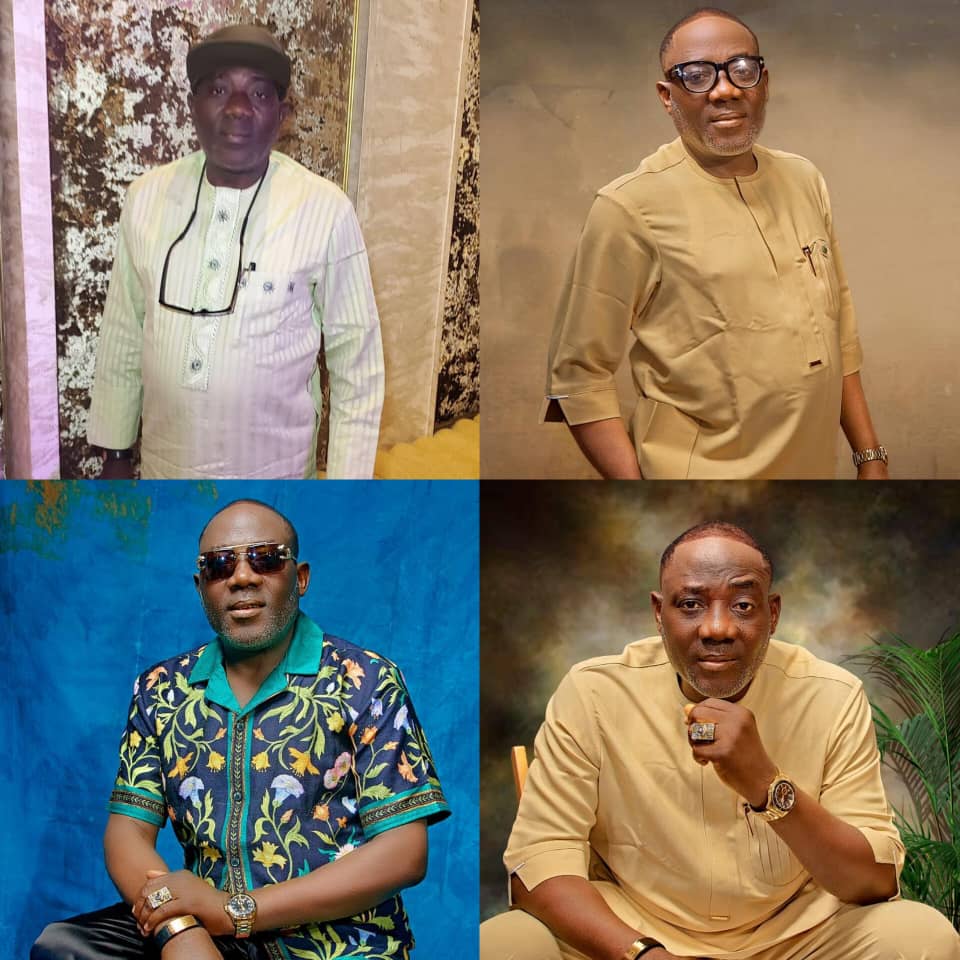
Ramadan 2026: Let’s Be United, Shina Akanni Urges Muslims.
As Muslims all over the world begins the 30 days compulsory fasting and prayer today,top Fuji Musician Aare Sir Shina Akanni Aroworeyin Scorpido has congratulates them for witnessing another month of Ramadan.
Akanni advised them to follow the teachings of the the Holy Prophet Muhammad (SAW) which is peaceful co existence among themselves and their neighbor ‘because Islam is Religion of peace”.
He said the month of Ramadan is an holy month therefore Muslims should try as much as they can to maintain peaceful coexistence among themselves and others and that they should see themselves as ambassador of peace.
While praying for Nigeria,Aare Sir Shina Akanni Aroworeyin Scorpido said he believes that there will be an economic turnaround soon because what’s is happening now are signs of thought times that never last “if we can pecevere things will get better”.
The Scorpido crooner who recently released a hip hop single titled “Magbelo” said he is currently working on a complete album which will be released before the end of the year.
Aare Sir Shina Akanni Aroworeyin Scorpido whose last album ‘ABCD” is still in hot demand said that his next album will be a pot pouri of all kinds of music because his brand of Fuji music is a blend Fuji , Hip-hop,Apala ,Highlife and others.
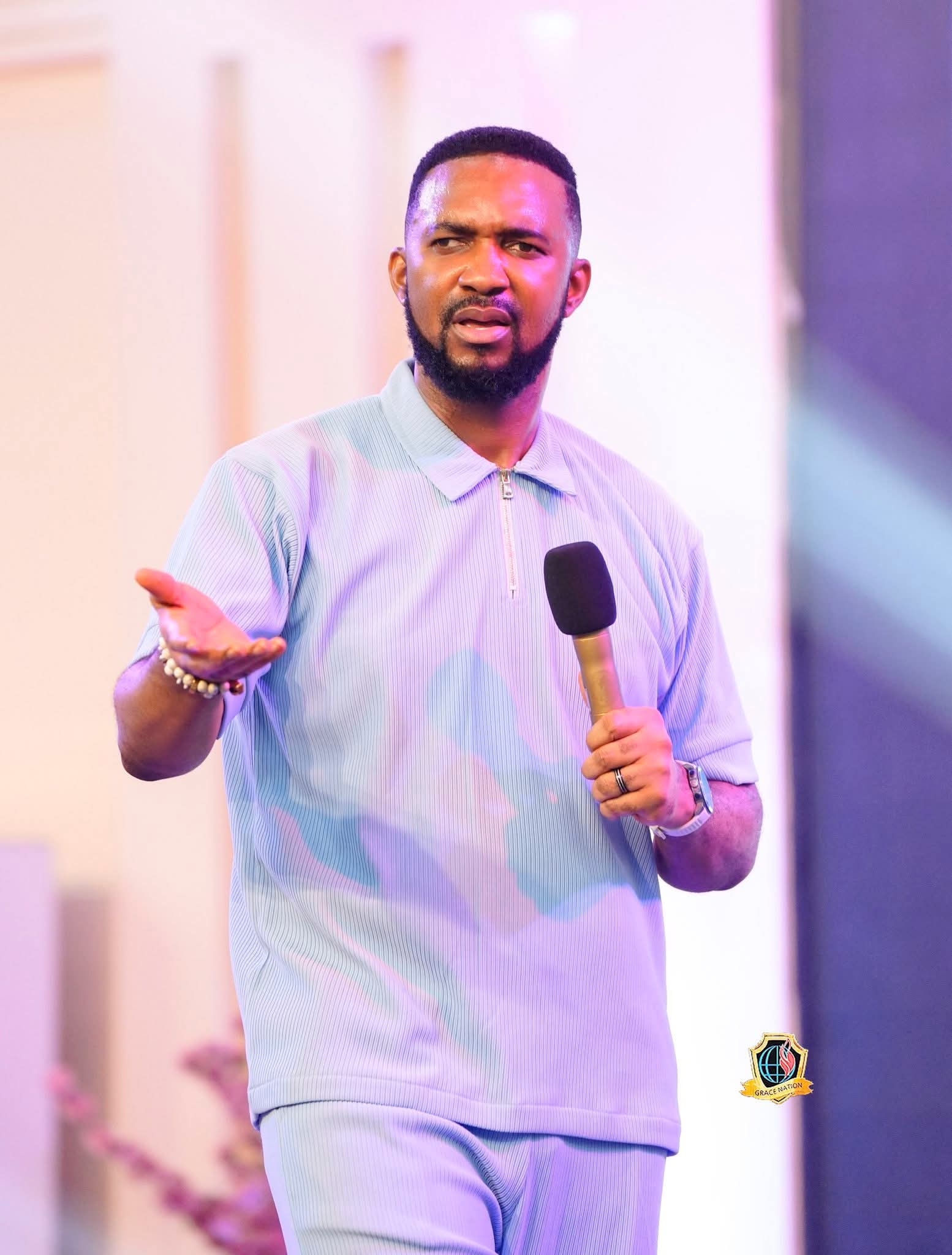
The Enemies Within:
Jonahs Are Not Manageable — Dr. Chris Okafor
…….“To remove Jonah, you must bring Jesus into the matter.”
When a “Jonah” enters a person’s life, confusion, gossip, blackmail, betrayal, and the pull-him-down syndrome often follow. But the moment Jesus Christ is invited into the situation, the storm subsides and stability is restored.
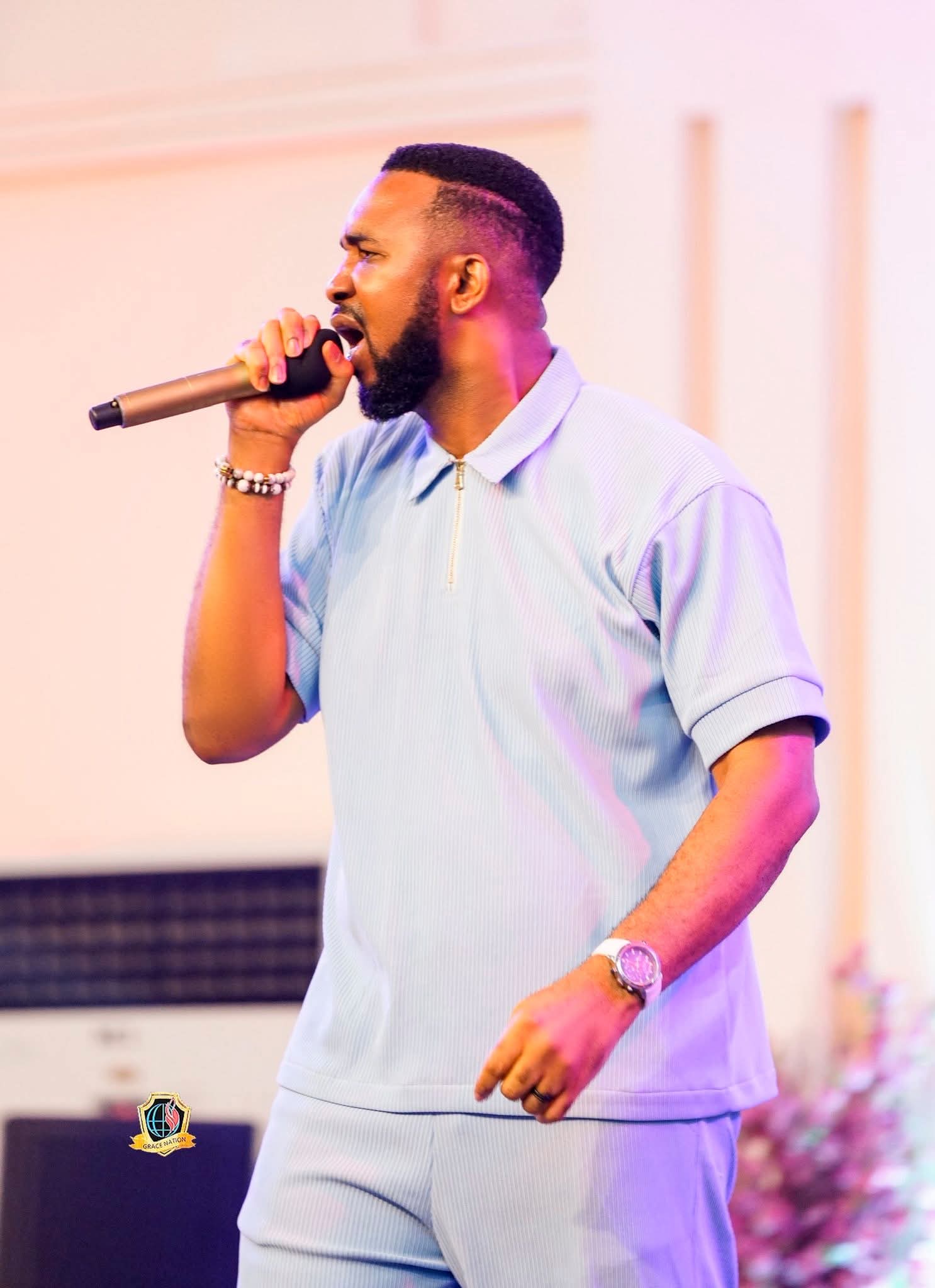
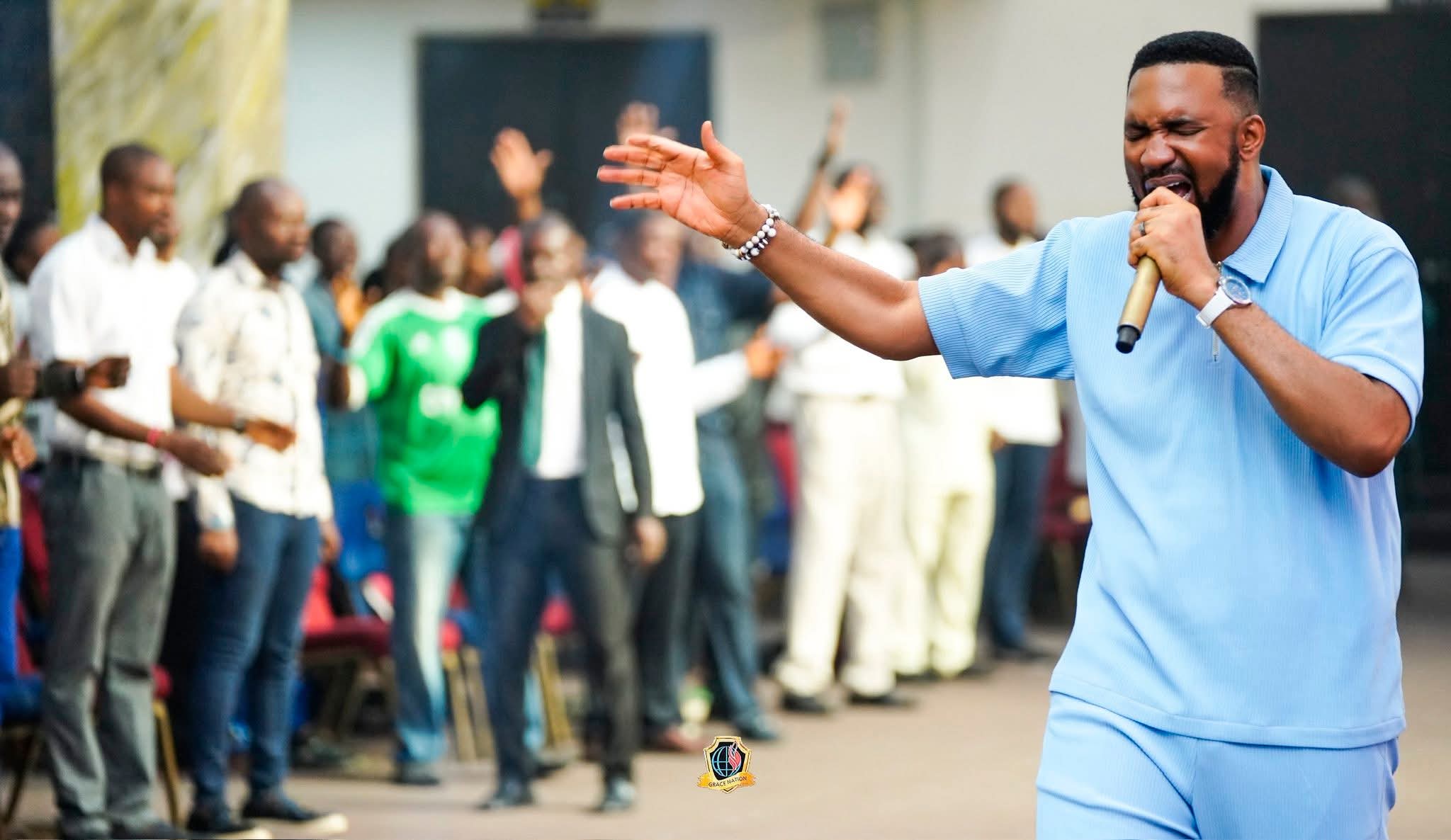
This was the central message delivered by the Generational Prophet of God and Senior Pastor of Grace Nation Global, Dr. Chris Okafor, during the midweek non-denominational Prophetic Healing, Deliverance and Solutions Service (PHDS) held at the international headquarters of Grace Nation Worldwide in Ojodu Berger, Lagos, Nigeria.
The Clergyman also declared that Nothing Happens Without Spiritual Influence
In his sermon titled “The Enemies Within,” Dr. Okafor declared that nothing happens without spiritual involvement. According to him, every visible battle has an invisible root.
Referencing the biblical story of Jonah, the Man of God explained that Jonah’s presence on the ship gave access to a contrary spirit that tormented everyone onboard.
Despite the losses suffered by innocent traders and sailors, the storm persisted because of one man’s disobedience.
However, he noted that when Jesus speaks into a situation, every storm must obey. Just as Christ rebuked the storm and it ceased, so too will the storms in believers’ lives subside when He is invited into their “boat.”
*The Impact of a Jonah*
Dr. Okafor further emphasized that “Jonahs” are difficult to manage. When such individuals are present in one’s circle, progress becomes delayed.
What should ordinarily manifest quickly may be prolonged or frustrated because someone close—someone who understands you deeply—may be operating as a spiritual adversary.
He explained that negative narratives, unnecessary battles, and unexplained setbacks often begin when a “Jonah” gains access to a person’s inner circle.
*The Solution*
“To remove Jonah from the boat of your life,” the Generational Prophet declared, “you must invite Jesus Christ into the matter.”
According to him, when Jesus takes control of the boat, the plans of the enemy are overturned.
What was designed for downfall becomes a testimony. No storm or battle can succeed where Christ reigns, and the enemy is ultimately put to shame.
The midweek service witnessed a strong prophetic atmosphere, with the power of God evident through deliverance, restoration, and divine revelations.
The Generational Prophet ministered deeply in the prophetic, calling out names, villages, and addressing alleged spiritual strongholds, as many lives were reportedly restored—all to the glory of God.
By Sunday Adeyemi
Uncategorized
FROM BORDER TO MARKETS: HOW NIGERIA’S REFORMS ARE REWRITING AND MODERNISING TRADE FACILITATION By O’tega Ogra
FROM BORDER TO MARKETS: HOW NIGERIA’S REFORMS ARE REWRITING AND MODERNISING TRADE FACILITATION
By O’tega Ogra
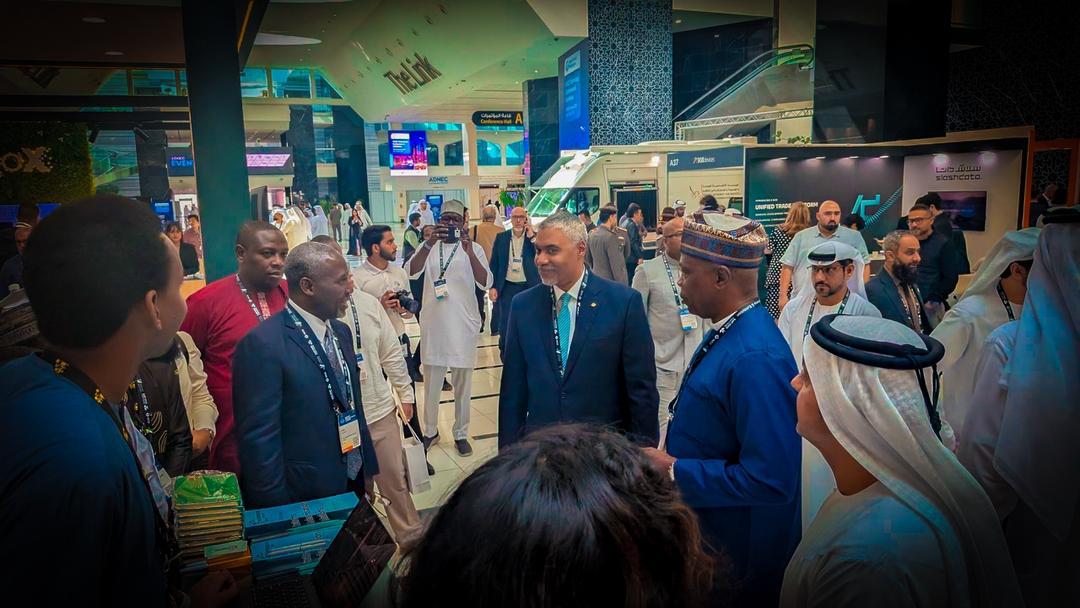
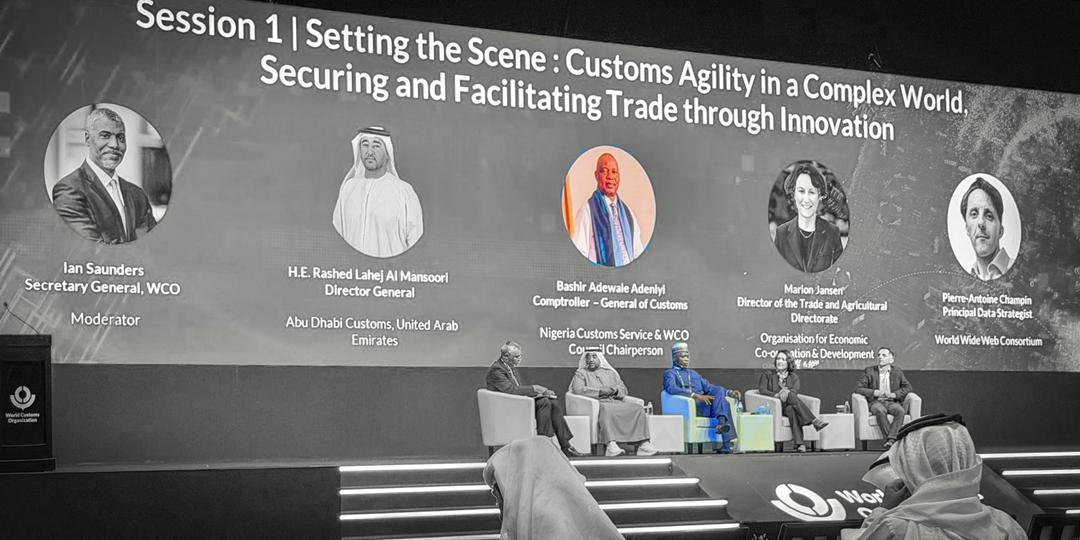
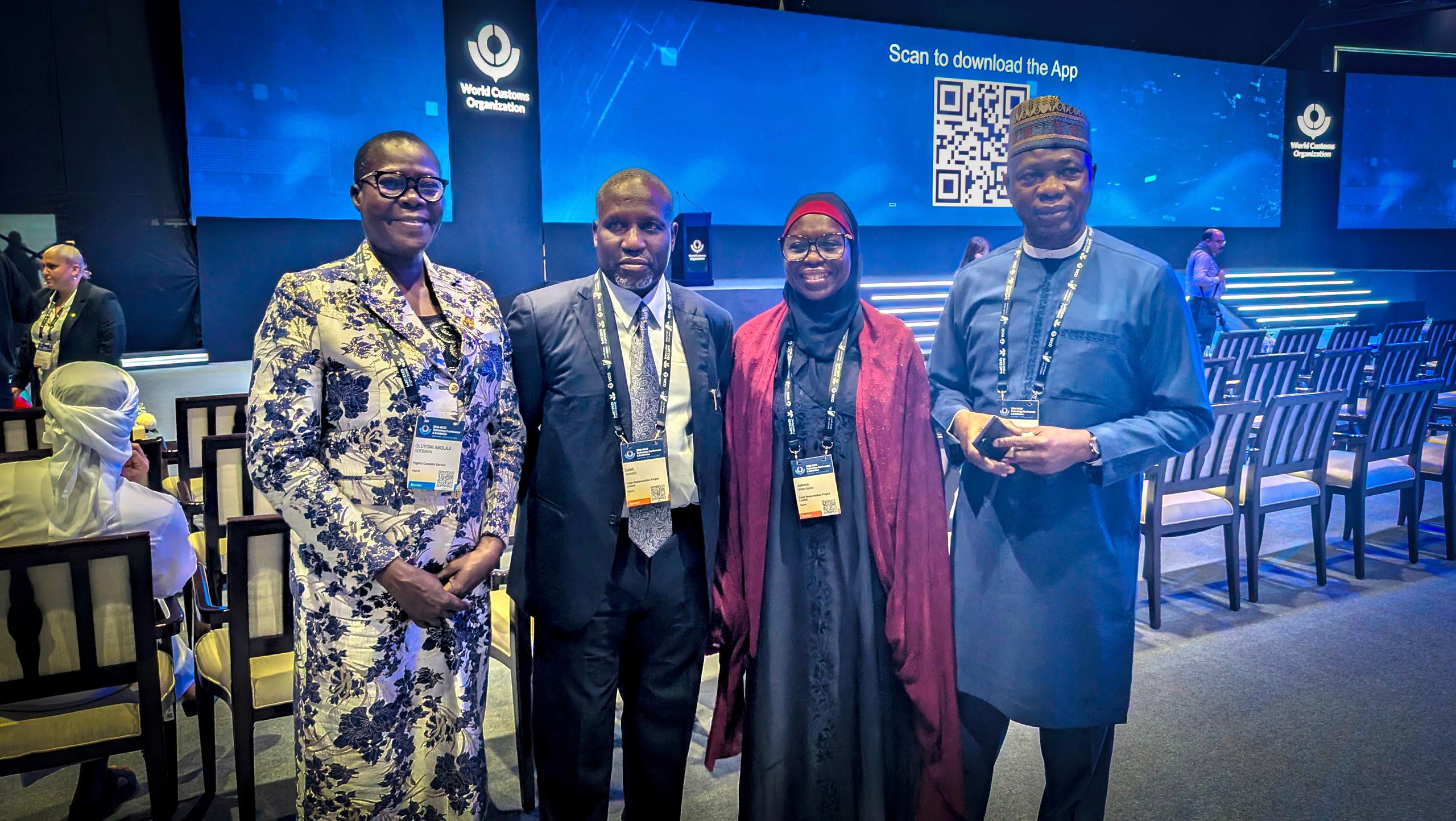
On the surface, the 2026 World Customs Organization (WCO) Technology Conference in Abu Dhabi, held in the last week of January, followed a familiar script: flags, formal sessions, carefully worded speeches. But beneath the choreography, something more consequential was unfolding. As customs chiefs and trade officials compared notes on the future of borders, Nigeria arrived not with theory, but with a working proposition.
The Nigeria Customs Service (NCS) Modernisation Project, being implemented through Trade Modernisation Project (TMP) Limited, unveiled to a global audience of customs administrators and policy leaders a window into how Africa’s largest economy is confronting one of the most complex challenges in public administration: reforming the machinery of trade while it is still running.
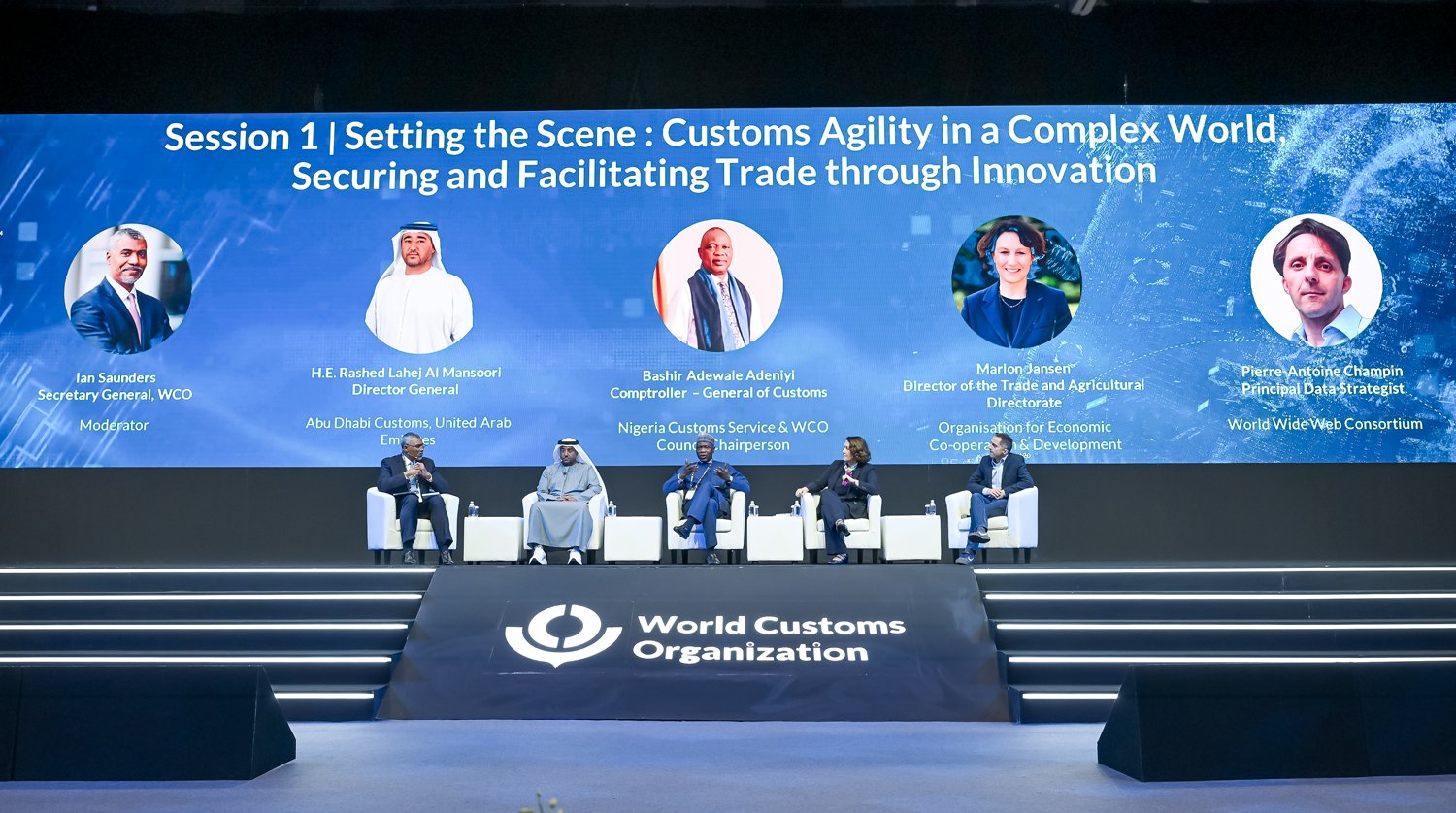
For decades, customs reform was treated largely as a technical exercise—frequent patches here, shoddy fixes there; new software in one corner, revised procedures in another. Nigeria’s presence in Abu Dhabi signalled something different. TMP Limited, working in partnership with the NCS, advanced the argument that trade is a cornerstone of economic development and must be supported by organic, sustainable partner ecosystems. Such ecosystems deliver speed and trust, revenue and credibility, and secure borders without stifling commerce.
That argument resonated in a room increasingly aware that global trade is no longer defined solely by tariffs and treaties, but by data, interoperability, and the quiet efficiency of systems that simply work.
The annual WCO Technology Conference has, in recent years, become a barometer for the direction of global trade governance. This year’s discussions reflected a shared anxiety: supply chains are more fragile, compliance risks are rising, and governments face mounting pressure to collect revenue without discouraging investment. Customs administrations now sit at the intersection of all three.
Nigeria’s response has been to attempt a full reset.
At the heart of this effort is the NCS Modernisation Project, implemented through a Public-Private Partnership (PPP) arrangement with TMP Limited as the concessionaire. The project seeks to replace fragmented technology deployments and manual processes within the Nigeria Customs Service with a single, integrated framework. This is anchored on B’Odogwu, a Unified Customs Management System (UCMS) that brings together cargo clearance, risk management, payments, and inter-agency collaboration. The ambition is sweeping—and so are the stakes.
Alhaji Saleh Ahmadu, OON, Chairman of TMP, framed the initiative as nothing less than an institutional reconstruction, designed to position the NCS at the forefront of global customs administration technology, aligned with international standards and assurance frameworks.
“Digital trade modernisation is not just about upgrading systems,” he told participants in Abu Dhabi. “It is about upgrading trust, predictability, and confidence in how trade flows through our borders.”
That choice of words matters. Nigeria’s economy has long struggled with the perception gap between its size and the ease of doing business. Investors cite delays. Traders complain of opacity. Government points to revenue leakages. In this context, customs reform becomes as much a credibility project as a technical one.
Saleh’s message was timely and direct: modern trade demands modern customs. Data-driven processes, automation, and risk-based controls are no longer luxuries; they are prerequisites for competitiveness in a world where capital moves faster than policy.
The institutional face of this digital transformation is the Comptroller-General of Customs, Bashir Adewale Adeniyi, who led Nigeria’s delegation to Abu Dhabi. His message reflected a subtle but important shift in how customs leadership now understands its role.
“Customs administrations today must evolve from gatekeepers to facilitators of legitimate trade,” Adeniyi said. “Nigeria’s customs modernisation project reflects our determination to place the Nigeria Customs Service at the centre of national economic transformation.”
It is a familiar refrain globally, but one that carries particular weight in Nigeria, where customs revenue remains a critical pillar of public finance. Automation, Adeniyi argued, is not about weakening control; it is about strengthening it through intelligence rather than discretion.
Risk management systems reduce unnecessary physical inspections. Integrated platforms limit human contact. Data analytics improve compliance targeting. When executed well, the result is faster clearance for compliant traders and tighter scrutiny for high-risk consignments.
In Abu Dhabi, peers from Asia, Europe, and Latin America listened closely to Nigeria’s presentation. Reforming customs in a small, open economy is one thing. Doing so in a market of over 200 million people, home to some of Africa’s busiest ports and its largest economy, is quite another.
Nigeria’s engagement emphasised that customs modernisation is embedded within a broader economic reform agenda under President Bola Ahmed Tinubu, GCFR. Simplifying trade procedures, strengthening revenue assurance, and aligning with international standards form part of a wider effort to reposition the economy for investment-led growth.
What makes the project particularly noteworthy is its insistence on end-to-end coherence. Rather than digitising isolated functions, the reform aims to connect agencies, harmonise data, and reduce duplication across government—an all-of-government approach that acknowledges an uncomfortable truth: trade friction is often created not at the border, but between institutions.
The WCO 2026 Technology Conference offered Nigeria more than a platform; it provided a stress test. Questions from peers were pointed. How will change be sustained across political cycles? How will capacity be built? How will entrenched institutional behaviours be unlearned?
The responses were pragmatic. Reform is being phased. Training programmes are ongoing. International benchmarks are being adopted not as slogans, but as operating standards. There were no claims of perfection—only a clear statement of intent.
“Our engagement here underscores Nigeria’s commitment to international cooperation,” Adeniyi noted. “We are learning, sharing, and contributing to global conversations on the future of customs administration.”
That contribution matters. As Africa moves to deepen regional trade under continental frameworks, customs efficiency will determine whether integration succeeds in practice or remains aspirational on paper. Nigeria’s experience, if successful, could offer a valuable template for other developing economies navigating similar constraints.
In Abu Dhabi, the mood was cautious but curious. Reform fatigue is real in many countries. Yet there was a growing sense that Nigeria’s effort—precisely because of its scale and difficulty—deserves attention.
Borders are rarely glamorous. But they are decisive. In choosing to modernise its borders in public, under global scrutiny, Nigeria is signalling something beyond technical competence. It is signalling seriousness.
And in global trade, seriousness still counts.
O’tega Ogra is Senior Special Assistant to President Bola Ahmed Tinubu, GCFR, responsible for the Office of Digital Engagement, Communications and Strategy in the Presidency.


-

 celebrity radar - gossips6 months ago
Why Babangida’s Hilltop Home Became Nigeria’s Political “Mecca”
-

 society6 months ago
Power is a Loan, Not a Possession: The Sacred Duty of Planting People
-
 society5 months ago
Religion: Africa’s Oldest Weapon of Enslavement and the Forgotten Truth
-

 news6 months ago
THE APPOINTMENT OF WASIU AYINDE BY THE FEDERAL GOVERNMENT AS AN AMBASSADOR SOUNDS EMBARRASSING
You must be logged in to post a comment Login