
society
SHOMOLU LOCAL GOVT., LAGOS: A LAND OF MANY TROUBLES

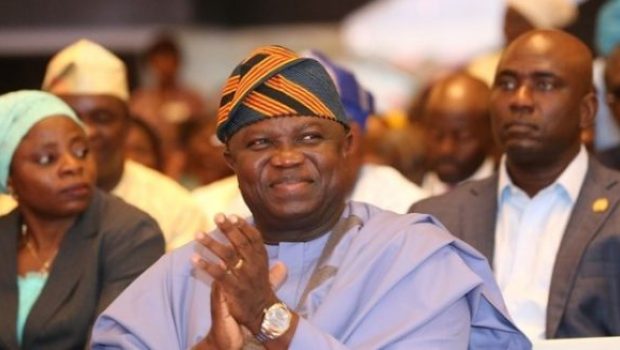
On Wednesday 25th of April, 2018, I was invited as an identified stakeholder by the United State Institute of Peace (USIP) to a forum at the Human and Environmental Development Agenda headquarters in Lagos State, on Election Violent Risk Assessment tagged “Identifying Opportunity for Peace”.
The program was aimed at getting the view of identified stakeholders, mostly Nigerians across board, on the possibility of a violent free election in Nigeria and necessary preventive measure.
Anyone with the slightest interest and sentiment for Shomolu local government, among few others identified, would have been really embarrassed seeing Somolu being used as a case study on possible outburst from intraparty grievances. But as a leader and public administrator, I represent no single local government, but all. So I could not afford to be sentimentally biased and so must admit the fact that Shomolu local government is a good case study of “a land of many troubles”, as painted, hence this report and writeup.
Although there are many issues in Nigeria i.e the Senate drama; Killing in Benue; even the dormancy or better called betrayal of peoples’ trust by the Lagos State House of Assembly by giving automatic rubber stamp to every anti people and exploitative policies and laws by the executive e.t.c. All these would be addressed in future and the leadership of the Human Rights Monitoring Agenda (HURMA) is deliberating day and night on way forward.
The focus at present is how to avoid possible breakdown in Shomolu local government as recently identified by distant speculators.
To start with, the Secretariat of Somolu, just like others in Lagos, is identified to be under the supervision and control of some professional politicians with professional area boys that are better referred to as “Abobaku”, the unprincipled sycophantic loyalists.
As rightly described by Comrade Soetan (Baba Sho) in his recent write-ups: “Between ABOBAKU and a SUPPORTER!”
A major difference between a Supporter and Abobaku of a reigning King is that a Supporter keeps silent when the King is wrong but Abobaku jumps up in jubilation and praises the King! Long live the King, the King can never be wrong!
Though our office is aware and agreed that there are many problems in Shomolu and we have also conducted some research on way out, I never knew Somolu is being watched by many unknown and from a distance.
The Constitution of the Federal Republic of Nigeria stated clearly, what should be the primary aims and objectives of government under Chapter 2 that speaks on “Fundamental Objectives and Directive Principles of State Policies”. The security of lives and properties is clearly identified.
Section 14 (2b) States: the security and welfare of the people shall be the primary purpose of government.
Section 17 speaks on “Social Justice” and in subsection 3(d) states: The State shall direct its policy towards ensuring that there are adequate medical and health facilities for all persons.
Although the Executive Chairman, Hon. Salaudeen, appears to be cool headed and one with listening ears, on the above matters he seems to have failed and as well confused.
The once functional General Hospital is now distressed with no room for admission. People die regularly for this reason with no solution from any end other than promise by the ruling elite since no direct family member of theirs is or could be affected.
On the area of security, the gentle looking poor Dullar, chairman of Somolu local government, who is supposed to be the number one and chief security personnel of the L.G was recently attacked by someone from and within his territory, yet nothing done on the matter till date.
The question people ask till date is “who attacked the chairman and why is the matter not fully investigated? Are these people now playing politics with the lives of the citizenry in the territory, then what becomes of ordinary poor citizens.
By and large, the U.S Institute initiated forum see this part of the country, Lagos State, as not seem to be brutally violent, come 2019 general election, if the intraparty issues are well managed.
The forum identified Lagos state as the melting point of Yoruba politics, which is what Ibadan used to be. As regards the ruling party, most people are identified to see the APC in Lagos, as representing their cultural values.
More so, based on precedence, election in Lagos has not been so violent, though there are recorded cases of politically motivated killing i.e the killing of Funsho Williams in 2003 by God knows who.
Intraparty issue cannot however be ruled out, especially when it comes to imposing unpopular candidate on the people. But the party leadership seem to have control over its subject in the party
It is however unfortunately observed that Somolu L.G among few other areas was identified as territory where even the apex leadership (Jagaban) has not been able to solve the intraparty issues as some elements are still protesting since the last L.G election.
Serious state and party intervention was suggested as to prevent possible peace breach in Somolu community.
One of the most brutal experience in Yoruba land was linked to an attempt to impose the late Akintola on the people of the Southwest by the F.G in 1964 and possible reoccurrence of similar event is envisaged where imposition is seen as the order of the day.
The vice chairman of Somolu local government is observed to not have resumed the office given to him in a silent protest since the last L.G election and yet the highest Oracle of Apc is yet to completely resolve the crisis in the Secretariat.
Reason identified for the internal grumbling was that some are not pleased and are silently protesting the stolen candidacy of a chairmanship aspirant, Bowale, who celebrated his primary victory across the entire local government, but only to be sidelined from a kangaroo arrangement by members of Lagos House of Assembly (LAHA) as dictated by the man on top, to fulfill some hidden agenda.
He is said to have been supported locally for the L.G primary election by a man identified to be most popular in Somolu politics, in person of Hon. Olowo Rotimi, a member of LAHA whose generosity is said to be confirmed by even his enemies. Rotimi Olowo is said to be more popular than the entire local government councillors, even in their various street, but rumor has it that he may not be on the good list of Jagaban, the king maker, with a resultant effect that may not be palatable on the entire community and beyond.
The man Bowale was later made vice but never resume office for ones.
The recent attack on the easy going chairman of the local government was however linked to the candidacy issues above, perhaps by some abobakus.
From the above observations by non political observers, it is glaring that people in the territory may be sitting on a keg of gun powder and truly requires urgent attention.
On a personal note, among what come to my mind on the above sceneries are two major questions:
1. Why would a so called sincerely generous and truthful Hon. Olowo support the removal of his candidate in the first instance, 2 days to election at LAHA?
2. On the Vice Chairman of Somolu L.G, Hon. Bowale, who has refused to resume office since swearing in, who takes his salaries?
On a serious note, our office, HURMA, may assist, with transparency and proper accountability, in judicious distribution of the rejected monies among the oppressed and poor who troop our office on daily basis, if given the opportunity.
May I sincerely hereby advice all members of Nigeria political class or associate, especially in the ruling APC, for the sake of their future, if they care for any. Party members must see the parties as their own and seize the initiative for collective ownership beyond reducing themselves to beggars living on hands outs from their corrupt leaders. This I see as minimum responsibility expected.
Finally as a revolutionary activist in the now more popular Local Government, but unfortunately with possible future violent trait, I would rather refer to the all key political players as same of same. They all belong to the bourgeois capitalist ruling class whose interest is to hold the people down for perpetual oppression and exploitation.
Only a genuine revolution, which we regularly discourse and mobilise people to, at our regular meeting can liberate the poor masses.
For democracy and good governance to thrive in Nigeria, as observed by a leader in struggle, Comrade Adeola Soetan, it is better to be an Abobawi, that is, those who correct the king when he is wrong because he is not infaliable, than to be an Abobaku, that is those who are ready to die with king, rightly or wrongly.
To be an Abobaku is to worship the king as a sycophant and falsely projects the king”s infallibility naively or consciously for whatever personal reason or bandwagon affliction. And in that process, an Abobaku suffers from a self inflicted or contagious debilitating disease of mind closure and anal reasoning complex.
Such tragic human commodities die with the king because they have no souls of their own.
A word is enough for the wise.
Comrade Buna Olaitan Isiak is the Executive Director of Human Rights Monitoring Agenda (HURMA).
A public affairs analyst and a certificated trainee on Anti Corruption by the United Nation Office on Drugs and Crime.







Journalists for Good Governance Shines Searchlight on Local Government Administration
…Calls for Accountability in Nigeria’s Grassroots Governance
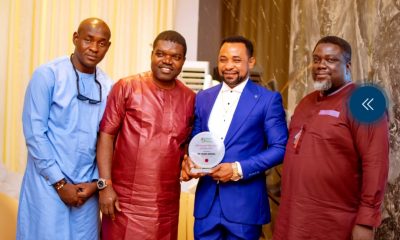
LAGOS, Nigeria — A civil society coalition known as Journalists for Good Governance(JGG) has intensified public debate on transparency and accountability within Nigeria’s local government system, urging media professionals, civil society actors, and citizens to hold grassroots leaders accountable.
Speaking an event in Lagos recently, the acting chairman of the society, Comrade Bunmi Obarotimi said that despite reforms such as the Supreme Court’s 2024 ruling granting financial autonomy to all 774 Local Government Areas (LGAs), systemic challenges continues to hinder effective service delivery and responsible stewardship of public funds.
“Local governments are the closest tier of government to the people — yet too often they remain the least transparent. Without civic oversight and vibrant media, promises of autonomy ring hollow.” the acting chairman said.
The Journalist for Good Governance emphasised crucial roles that journalists can play in uncovering discrepancies in council spending, flagging poor service delivery, and educating citizens on their rights. Their call comes amid wider efforts by media and civic organisations to bridge accountability gaps. The civil society initiatives had previously launched monitoring campaigns to track local government expenditures and have been quietly advocating for transparency in how public money is deployed.
The leaders of the Journalists for Good Governance (JGG) highlighted the importance of physical assessment and citizens engagement on projects to boost people’s confidence, urging local councils to adopt open data platforms and proactive information dissemination in compliance with the Freedom of Information Act. Experts say the majority of LGAs currently lack operational websites or digital portals, further limiting public scrutiny.
The Journalists for Good Governance initiative aligns with sustained advocacy by civil society groups and governance experts calling for a collective approach to strengthening democratic accountability, and has decided to engage in critical and holistic assessments of how Local Governments is being run and the impact and quality of projects they embark-on and to address deficits in transparency and public trust.
Meanwhile, some state governments have signalled support for improved community engagement. In Lagos State, authorities reiterated a commitment to enhancing community media platforms as vehicles for civic participation and accountability at the grassroots level.
The renewed spotlight on local government administration has reignited public debate over fiscal responsibility and priorities. Controversies such as the widely criticised Adamawa council chairmen’s wives trip to Istanbul — which drew public outrage for perceived misuse of public funds — underscore why watchdog groups say stronger oversight mechanisms are urgently needed at the grassroots.
Citizens and activists have welcomed the journalists’ initiative, calling for sustained media engagement that goes beyond headlines to influence policy and accountability reform.
The civic rights advocates note that real change will require robust legal frameworks, a free press, and empowered communities equipped to demand transparency at every level of governance.
As Journalists for Good Governance mobilises its members, the coming months are likely to see heightened media attention on grassroots administration — from council budgets and service delivery to the enforcement of public information laws and digital transparency initiatives.
Good Politics Or Just Power? Two Years After The Elections
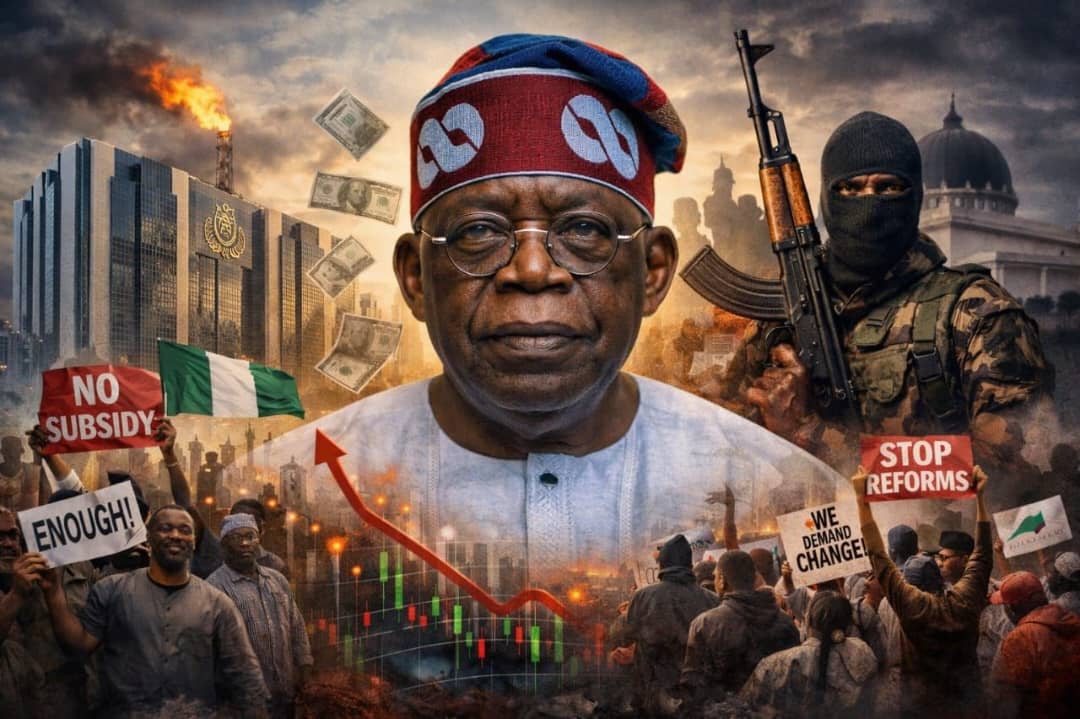
Two years after the last general election, Nigerians are justified in asking a direct question: is our democracy stronger today than it was then? Democracy is not measured by how many offices a party controls or how loudly politicians speak. It is measured by integrity, accountability, and the lived experience of the people. Good Politics demands more than victory at the polls; it demands moral leadership and visible progress in the lives of citizens.
The debate over amendments to the Electoral Act should have provided an opportunity to deepen transparency and strengthen public confidence. Instead, hesitation to fully embrace reforms that safeguard credible vote transmission and accountability has fueled doubt. In a nation where electoral credibility remains fragile, any reluctance to reinforce safeguards sends the wrong signal. Good Politics stands firmly for processes that are open, fair, and beyond suspicion.
The party in power commands significant authority across the federation. With control of the presidency, many state governments, a strong presence in the National Assembly, and influence at local levels, there should be no anxiety about reforms that ensure free and fair elections. Confidence in leadership is demonstrated not by dominance, but by a willingness to subject power to scrutiny. Politics rooted in the omoluabi ethos embraces fairness, transparency, and responsibility, even when inconvenient.
This is the standard long associated with Awolowo, whose politics emphasized discipline, social welfare, education, and institutional strength. His vision was not merely about holding office, but about transforming society through principled governance. Good Politics follows that tradition. It rejects manipulation, arrogance, and the concentration of power without accountability. It insists that authority must serve the people, not itself.
Beyond electoral reforms, democracy must deliver tangible relief. Across the country, households struggle with rising prices and shrinking purchasing power. Small businesses are burdened by escalating costs. Young people search for opportunities that remain scarce. When economic hardship deepens, democracy feels abstract. Good Politics recognizes that political legitimacy is reinforced when citizens can see and feel the benefits of governance.
The concentration of power within a single political structure should translate into coordinated reform and measurable development. When it does not, questions naturally arise. Democracy weakens when dominance replaces performance. It weakens when loyalty to party eclipses loyalty to principle. The omoluabi tradition teaches that character defines leadership. Without character, authority becomes hollow.
A healthy democracy requires credible elections and compassionate governance. It requires leaders who understand that politics is a moral enterprise. Two years into this administration, many Nigerians remain uncertain about the direction of both our democratic processes and their daily welfare. If democracy is to endure, it must reflect Good Politics: fairness in competition, integrity in conduct, and compassion in governance. Anything less falls short of the standard that our history and our values demand.

GEN CHRISTOPHER GWABIN MUSA SUPPORT INITIATIVE COMMENDS STATE-FEDERAL COLLABORATION IN ZAMFARA
The Gen Christopher Gwabin Musa Support Initiative (GCGMSI) has commended the Zamfara State Government for its decisive contribution to security operations through the donation of newly acquired armoured personnel carriers (APCs), surveillance drones, and other critical operational equipment to troops and security agencies in the state.
This commendation was contained in a statement signed by the Convener of the GCGMSI, Ibrahim Dahiru Danfulani, Sadaukin Garkuwan Keffi/Betara Biu, and made available to the press.
The equipment was formally commissioned on Wednesday, February 18, by the Grand Patron of the GCGMSI and Minister of Defence, General Christopher Gwabin Musa, OFR (rtd.), in a ceremony at the Government House, Gusau. The event was attended by senior military officers, heads of security agencies, and top officials of the Zamfara State Government.
The GCGMSI, in its statement, hailed the donation as a “transformative and timely intervention” that aligns perfectly with its core objective of advocating for and supporting tangible measures that enhance the operational capacity and welfare of Nigeria’s security forces. The Initiative praised Governor Dauda Lawal’s administration for moving beyond rhetoric to actionable, material support, describing the move as a “blueprint for state-level collaboration in national security.”
“The provision of these assets by the Zamfara State Government is a testament to visionary leadership and a profound commitment to the peace and stability of its people,” the GCGMSI statement read. “It represents the exact kind of synergistic partnership between state and federal authorities that the GCGMSI champions. This initiative will significantly close operational gaps, boost the confidence of our gallant troops, and send a strong message to criminal elements.”
Speaking at the commissioning, General Musa emphasized that sustained collaboration is indispensable in confronting the nation’s evolving security challenges. He specifically commended Governor Lawal for his proactive support.
“Governor Dauda Lawal has demonstrated exemplary leadership and an unwavering dedication to the security of Zamfara State,” the Defence Minister stated. “The provision of these armoured vehicles, surveillance drones, and other operational equipment will undoubtedly boost the morale and operational effectiveness of our troops and other security agencies on the ground. This is a commendable effort that should be emulated by others.”
The newly commissioned assets, which include multiple APCs and advanced surveillance drones, are expected to dramatically enhance the mobility, protection, intelligence-gathering, and rapid response capabilities of security forces, particularly in the state’s remote and difficult terrains where anti-banditry operations are ongoing.
In his remarks, Governor Lawal reiterated his administration’s steadfast commitment to being a reliable partner in the security architecture. He urged security agencies to deploy the new resources responsibly and effectively to safeguard lives and property.
The Federal Government, through the Ministry of Defence, reaffirmed its commitment to continuing and deepening such partnerships with state governments across the nation to strengthen coordination and resource allocation in the collective fight against insecurity.
The GCGMSI concluded its statement by urging other state governments to take a cue from Zamfara’s “bold and pragmatic” approach, affirming that such concrete support is vital for achieving lasting peace and security across Nigeria.


-

 celebrity radar - gossips6 months ago
Why Babangida’s Hilltop Home Became Nigeria’s Political “Mecca”
-

 society6 months ago
Power is a Loan, Not a Possession: The Sacred Duty of Planting People
-
 society5 months ago
Religion: Africa’s Oldest Weapon of Enslavement and the Forgotten Truth
-

 news6 months ago
THE APPOINTMENT OF WASIU AYINDE BY THE FEDERAL GOVERNMENT AS AN AMBASSADOR SOUNDS EMBARRASSING
You must be logged in to post a comment Login