
Business
FBNHOLDINGS: SETTING THE TONE FOR GENDER INCLUSIVENESS, BALANCE IN BOARDROOM

By Hope Ashike
In many parts of the world, including Nigeria, women often face the barriers of discrimination and persistent gender inequalities which deny them access to key positions in the corporate world as well as access to finance or the formal economy.
Women make up almost half of the world’s working-age population of nearly 5 billion people. But only about 50 percent of those women participate in the labor force, compared with 80 percent of men, according to a report by the International Monetary Fund (IMF).
The IMF’s research highlights how the uneven playing field between women and men imposes large costs on the global economy. Early IMF studies on the economic impact of gender gaps assumed that men and women were likely to be born with the same potential, but that disparities in access to education, health care, and finance and technology; legal rights; and social and cultural factors prevented women from realizing that potential.
Nearly 70 UK companies have been told to employ more women in senior roles. Domino’s Pizza, JD Sports and Greene King are among those that have called out by financial trade sector body The Investment Association and the Hampton-Alexander review, a diversity study backed by the government.
The number of women holding the most senior jobs in the boardrooms of Britain’s biggest companies has fallen, according to a report that criticises the lack of progress made by businesses in getting more women to the top.
Analysis from Cranfield University, as part of its 20th FTSE Women on Boards Report, shows a sharp drop in the number of women occupying chief executive (CEO), chief financial officer (CFO) or other executive roles on FTSE 250 boards, and static numbers at FTSE 100 companies.
Women constitute almost half of the Nigerian’s population and its workforce. Yet the kind of work they do, the condition under which they work, and their access to opportunities for advancement at work place differ from that of men. Women are often disadvantaged in access to employment opportunities and in conditions of work as compared to men. In addition, many women forgo or curtail employment because of family responsibilities. The removal of obstacles and inequalities faced by women is advantageous to an economy’s development. For example, the Beijing Declaration affirms a national commitment to the inalienable rights of women and girls and their empowerment and equal participation in all spheres of life including the economic domain.
Also, Goal 8, target 8.5 of the Sustainable Development Goals (SDG) is to achieve full and productive employment and decent work for all women and men (including for young people and persons with disabilities), as well as equal pay for work of equal value by 2030.
According to a report by the National Bureau of Statistics (NBS) the percentage of men employed in the State Civil Service from 2014 to 2015 was higher than the percentage of women for both senior and junior positions.
The average percentage of women employed in the State Civil Service from 2010 to 2015 in each category (junior and senior) was 38.16 per cent, while it was 68.84 per cent for men.
Also, men dominated employment in federal MDAs while women on grade level 01 –17 plus Special grade level was 34.67, 35.08 and 32.79 per cent for 2015, 2016 and 2017 respectively.
In the financial services sector, the Central Bank of Nigeria (CBN) had in 2014 directed that 40 per cent of banks’ top management and 30 per cent of board directors should be women.
Reports revealed that that women constitute only 22.3 per cent of the total board appointments in Nigerian banks, while their counterparts make up 77.7 per cent since 2014.
However, FBNHoldings, Nigeria’s leading financial holding company and parent company to FirstBank is no doubt exemplary at representing the change, thus demonstratively redefined the Women in Business trajectory with women occupying various leadership positions, positioning the financial group powerhouse as a leading institution at driving Gender Balance in the Boardroom.
Leading the pack of women in the board across the group structure which comprises FirstBank and its subsidiaries , FBNQuest is Ibukun Awosika whom has been Chairman of FirstBank since 2016. Prior to being the Chairman, she was a Non-Executive Director. since 2016 . The representation further cuts across the group entity of its parent company, FBNHoldings. Other companies across the group, FBNQuest and FBNInsurance are also not left out.
Otunba Debola Osibogun, Non-Executive Director, FBNHoldings; Cecilia Akintomide (OON), Independent Non-Executive Director, FBNHoldings; Oluwande Muoyo, Independent Non-Executive Director, FBNHoldings; Dr. Omobola Johnson, Non-Executive Director, FBNQuest Merchant Bank; Oyinkansade Adewale, Non-Executive/Independent Director, FBNQuest Merchant Bank.
Others are Kehinde Adenrele, Chairman, FBNInsurance, Folake Ani-Mumuney,Chairman, FBNInsurance Brokers; Ijeoma Agboti, Non-Executive Director, FBNQuest Capital; Funke Feyisitan Ladimeji, Non-Executive Director, FBNQuest Asset Management; Titi Adebiyi, Independent Director, FBN General Insurance and Margaret Dawes, Non-Executive Director, FBNInsurance.
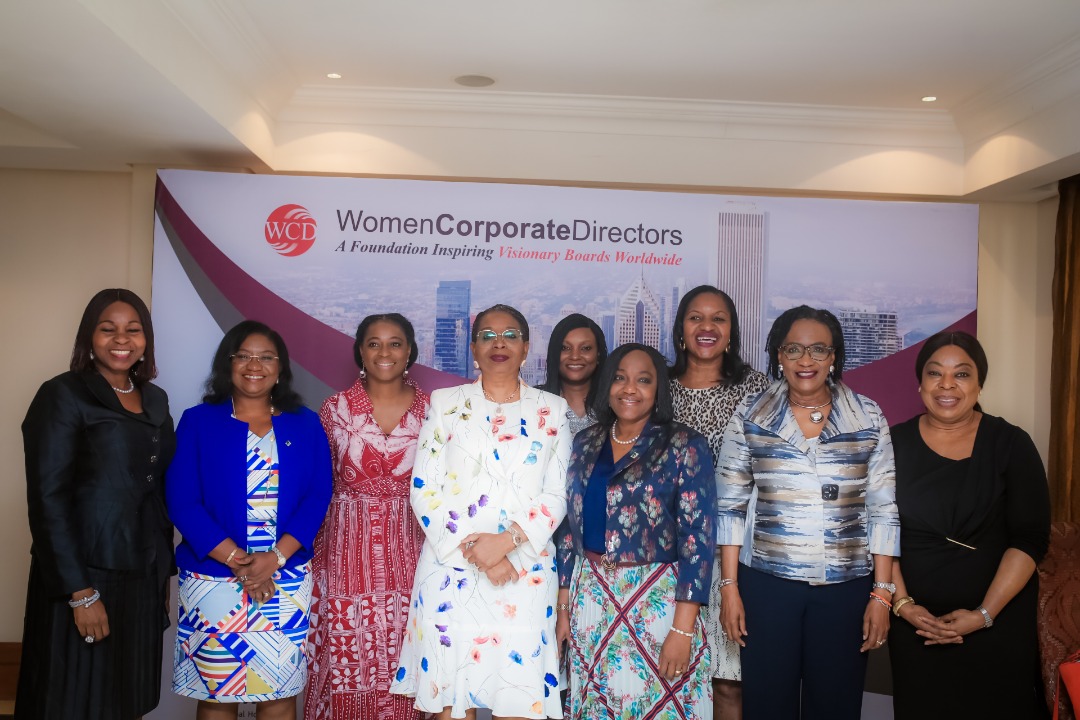
With such an admirably notable representation, it is no surprise that only recently, Women Corporate Directors (WCD) – Nigerian Chapter – had FirstBank host its meeting, held on Thursday, 3 October 2019 with 60 female directors and leaders of various organisations across various industries in attendance. These women discussed pertinent corporate issues with a view to promote the continued influence of women in Business and the economy, also ensuring that the needed balance on the home front is bolstered. The keynote speaker is Osagie Okunbor, managing director SPDC & Country Chair, Shell Companies in Nigeria.”
FBNHoldings recognition of female impact in its business operations at management level no doubt sets the tone for other institutions across other industries to promote women inclusiveness in management, thereby instrumentally shaping gender balance in the business atmosphere, thus influencing ethical practices in a cultured way worthy of consistently reiterating the recognition of female at impacting the economy and National Income as a whole. This in no small measure transcends to the political space, the cornerstone of legislative impact in the economy and business activities as a whole.
Godwin Emefiele, governor of the CBN, said recently that the Apex bank had made remarkable progress in closing the gender gap in the Bank.
“It is heartening that today, women represent 29.0 per cent of CBN staff and 29.0 percent of directors are women. Eight departmental directors and one Director General of WAMZ as against 26.0 per cent of staff and 25.0 percent of directors in 2014. Similarly, three out of 11 board members are women (27 percent)”, Emefiele said at the 2019 CBN Commemoration of the International Women’s Day (IWD) in March, 2019.


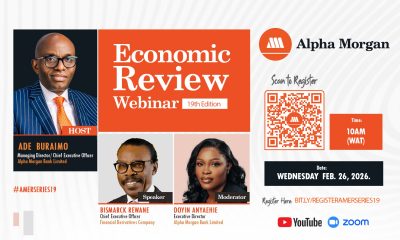






Nigeria’s headline inflation rate declined to 15.10 per cent in January 2026, marking a significant drop from 27.61 per cent recorded in January 2025, according to the latest Consumer Price Index (CPI) report released by the National Bureau of Statistics.
The report also showed that month-on-month inflation recorded a deflationary trend of –2.88 per cent, representing a 3.42 percentage-point decrease compared to December 2025. Analysts say the development signals easing price pressures across key sectors of the economy.
Food inflation stood at 8.89 per cent year-on-year, down from 29.63 per cent in January 2025. On a month-on-month basis, food prices declined by 6.02 per cent, reflecting lower costs in several staple commodities.
The data suggests a sustained downward trajectory in inflation over the past 12 months, pointing to improving macroeconomic stability.
The administration of President Bola Ahmed Tinubu has consistently attributed recent economic adjustments to ongoing fiscal and monetary reforms aimed at stabilising prices, boosting agricultural output, and strengthening domestic supply chains.
Economic analysts note that while the latest figures indicate progress, sustaining the downward trend will depend on continued policy discipline, exchange rate stability, and improvements in food production and distribution.
The January report provides one of the clearest indications yet that inflationary pressures, which surged in early 2025, may be moderating.
Alpha Morgan to Host 19th Economic Review Webinar
In an economy shaped by constant shifts, the edge often belongs to those with the right information.
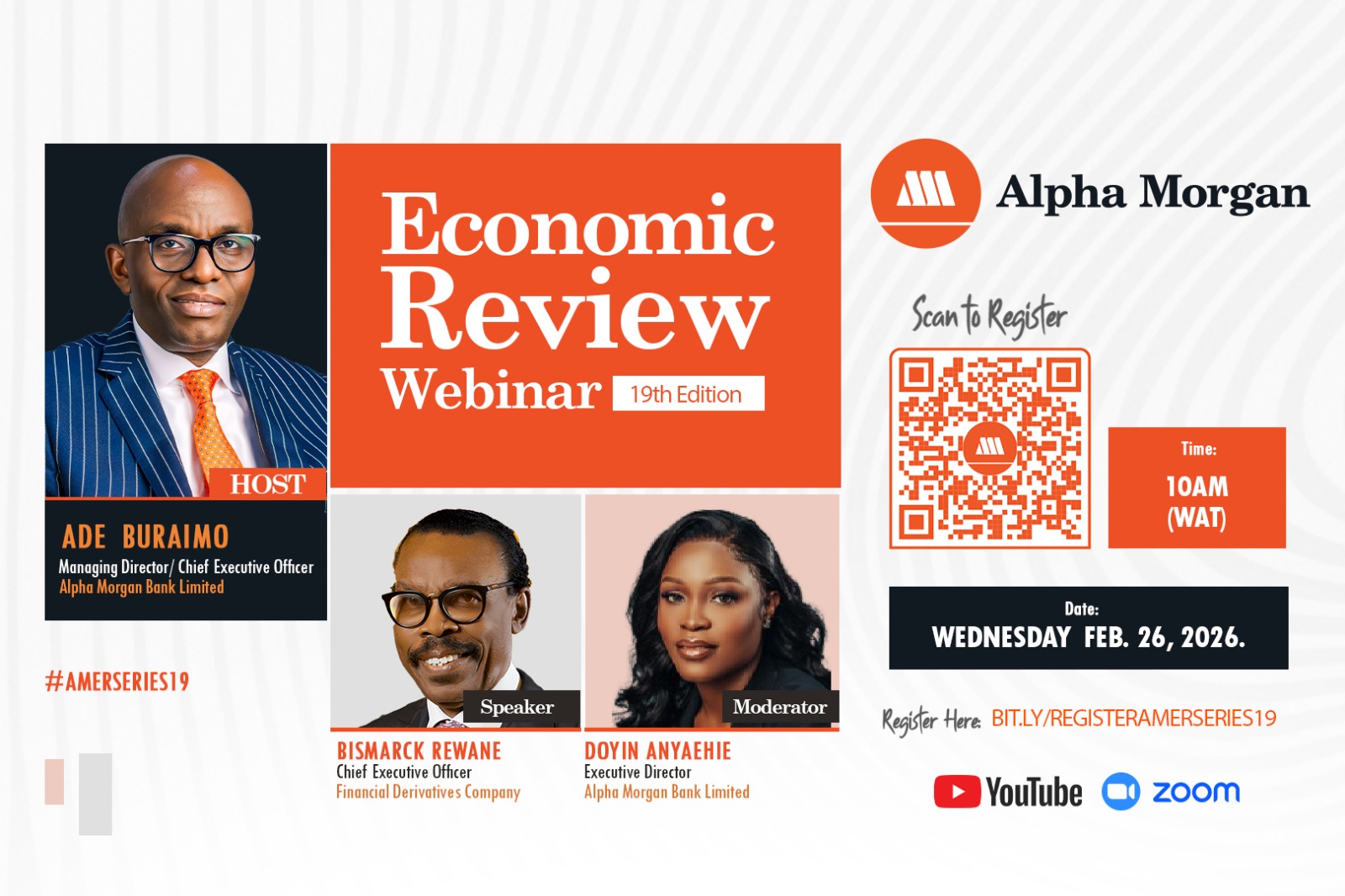
On Wednesday, February 25, 2026, Alpha Morgan Bank will host the 19th edition of its Economic Review Webinar, a high-level thought leadership session designed to equip businesses, investors, and individuals with timely financial and economic insight.
The session, which will hold live on Zoom at 10:00am WAT and will feature economist Bismarck Rewane, who will examine the key signals influencing Nigeria’s economic direction in 2026, including policy trends, market movements, and global developments shaping the local landscape.
With a consistent track record of delivering clarity in uncertain times, the Alpha Morgan Economic Review continues to provide practical context for decision-making in a dynamic environment.
Registration for the 19th Alpha Morgan Economic Review is free and can be completed via https://bit.ly/registeramerseries19
It is a bi-monthly platform that is open to the public and is held virtually.
Visit www.alphamorganbank to know more.
GTBank Launches Quick Airtime Loan at 2.95%
Guaranty Trust Bank Ltd (GTBank), the flagship banking franchise of GTCO Plc, Africa’s leading financial services group, today announced the launch of Quick Airtime Loan, an innovative digital solution that gives customers instant access to airtime when they run out of call credit and have limited funds in their bank accounts, ensuring customers can stay connected when it matters most.
In today’s always-on world, running out of airtime is more than a minor inconvenience. It can mean missed opportunities, disrupted plans, and lost connections, often at the very moment when funds are tight, and options are limited. Quick Airtime Loan was created to solve this problem, offering customers instant access to airtime on credit, directly from their bank. With Quick Airtime Loan, eligible GTBank customers can access from ₦100 and up to ₦10,000 by dialing *737*90#. Available across all major mobile networks in Nigeria, the service will soon expand to include data loans, further strengthening its proposition as a reliable on-demand platform.
For years, the airtime credit market has been dominated by Telcos, where charges for this service are at 15%. GTBank is now changing the narrative by offering a customer-centric, bank-led digital alternative priced at 2.95%. Built on transparency, convenience and affordability, Quick Airtime Loan has the potential to broaden access to airtime, deliver meaningful cost savings for millions of Nigerians, and redefine how financial services show up in everyday life, not just in banking moments.
Commenting on the product launch, Miriam Olusanya, Managing Director of Guaranty Trust Bank Ltd, said: “Quick Airtime Loan reflects GTBank’s continued focus on delivering digital solutions that are relevant, accessible, and built around real customer needs. The solution underscores the power of a connected financial ecosystem, combining GTBank’s digital reach and lending expertise with the capabilities of HabariPay to deliver a smooth, end-to-end experience. By leveraging unique strengths across the Group, we are able to accelerate innovation, strengthen execution, and deliver a more integrated customer experience across all our service channels.”
Importantly, Quick Airtime Loan highlights GTCO’s evolution as a fully diversified financial services group. Leveraging HabariPay’s Squad, the solution reinforces the Group’s ecosystem proposition by bringing together banking, payment technology, and digital channels to deliver intuitive, one-stop experiences for customers.
With this new product launch, Guaranty Trust Bank is extending its legacy of pioneering digital-first solutions that have redefined customer access to financial services across the industry, building on the proven strength of its widely adopted QuickCredit offering and the convenience of the Bank’s iconic *737# USSD Banking platform.
About Guaranty Trust Bank
Guaranty Trust Bank (GTBank) is the flagship banking franchise of GTCO Plc, a leading financial services group with a strong presence across Africa and the United Kingdom. The Bank is widely recognized for its leadership in digital banking, customer experience, and innovative financial solutions that deliver value to individuals, businesses, and communities.
About HabariPay
HabariPay is the payments fintech subsidiary of GTCO Plc, focused on enabling fast, secure, and accessible digital payments for individuals and businesses. By integrating payments and digital technology, HabariPay supports innovative services that make everyday financial interactions simpler and more seamless.
Enquiries:
GTCO
Group Corporate Communication
[email protected]
+234-1-2715227
www.gtcoplc.com


-

 celebrity radar - gossips6 months ago
Why Babangida’s Hilltop Home Became Nigeria’s Political “Mecca”
-

 society6 months ago
Power is a Loan, Not a Possession: The Sacred Duty of Planting People
-

 society5 months ago
Religion: Africa’s Oldest Weapon of Enslavement and the Forgotten Truth
-

 news6 months ago
THE APPOINTMENT OF WASIU AYINDE BY THE FEDERAL GOVERNMENT AS AN AMBASSADOR SOUNDS EMBARRASSING
You must be logged in to post a comment Login