
Politics
Sowore’s Sahara Reporters: The Story Of A Serial Blackmailer Destroying Journalism

By Adegboyega Oluwasegun
Journalism is not just a profession; it is a sweet experience. Yes, it is undoubtedly so. The average journalist takes pride in knowing that he rubs shoulders with the high and mighty in the society. Even though we may not be as wealthy as we should be because of what we do, the so-called big men cannot do without us.
This feeling of importance brings us a level of pride and raised ego, we understand that we can either make or mar a person, a society, anything. Painfully, however, this noble profession has not just taken the position of an ‘all-comers affair’, some of its practitioners now see it as a means of extorting people, a tool of attack and a cash-and-carry mechanism for anybody with the assumption of some grievances to create victims of, sometimes, innocent people.
Put straight, the media and the profession which are supposed to be the purveyors of facts, balanced and fair reports, are constantly being dented by quacks who see journalism as nothing more than a bid to make ends meet or willing tools to fight perceived enemies thus betraying its tenets in the face of unrelenting clamour against fake news. A case in point is Sahara Reporters.
For those who have been following the trends of the online medium, they will understand that it falls short of true journalism practices. What happens to the simple principles of balance, fairness and objectivity? For those who may not understand the practice, these three principles guide journalism and they instruct that every angle to a story must be explored; if you are accused, you must be given the opportunity to defend yourself.
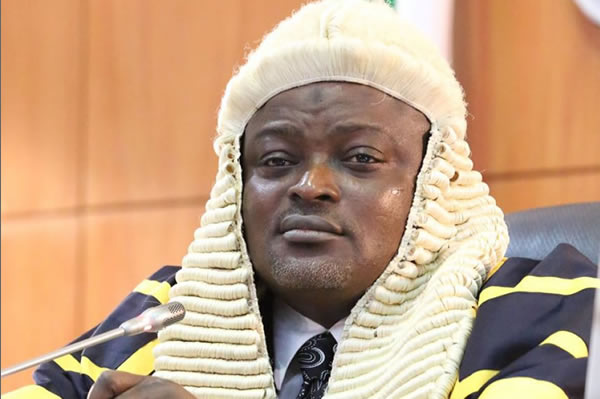
Let us look at some cases: Days ago, towards the end of July, Sahara Reporters came up with what it considers a ‘banger’ without any consideration for the same principles I emphasized earlier. ‘EXCLUSIVE: No Record Of Lagos Assembly Speaker, Obasa, As A Lawyer In Our Registry, Supreme Court Reveals’. That was the headline. The report started with ‘more trouble may be brewing for the Speaker of the Lagos State House of Assembly, Mudashiru Obasa…’ The report gave the impression that whereas Obasa calls himself a lawyer, its checks show that he is not, especially as the Supreme Court says his name is not in the Rolls of Legal Practitioners kept with it.
Rather than rush into publishing, a responsible medium would dig further by asking further questions. Yes, his name was not in the roll, does that pooh-pooh his assertion of attending Law School? A medium worth its name would reach out to Obasa, being the subject of the write-up to prove his claim. No, Sahara Reporters suddenly began to orgasm. It was an opportunity to celebrate and churn out materials below half-truths. The statement from the Supreme Court NEVER said Obasa is not a lawyer. Here is a part of the statement: ‘MUDASHIRU AJAYI OBASA is at liberty to come to the honourable court with his call to bar and qualifying certificates for enrollment.’
For a proof, different photographs of the Speaker’s Call To Bar emerged after the story by Sahara Reporters. Instead of the medium to humble itself, swallow its pride and tell Nigerians it was misguided in its celebrated but maladroit exclusive story, it rushed into another fake it called a ‘Face-Check’ where it claimed Obasa never graduated from Law School but that the Speaker bought a gown to pretend being a lawyer. Unfortunately, because Sahara Reporters know that some of its followers make up the gullible whose hatred for politicians would make them believe anything and everything negative about them, it presented this second concoction.
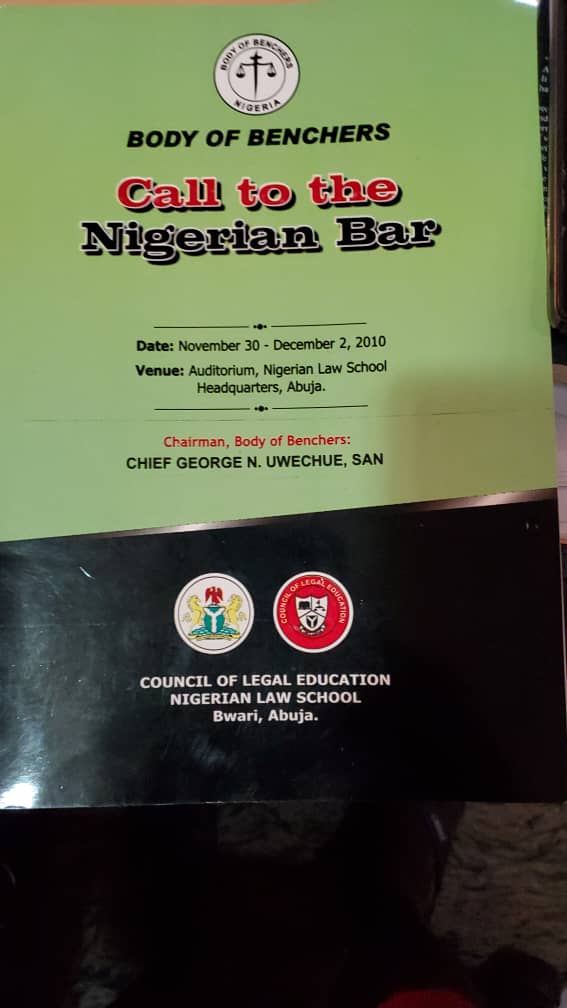
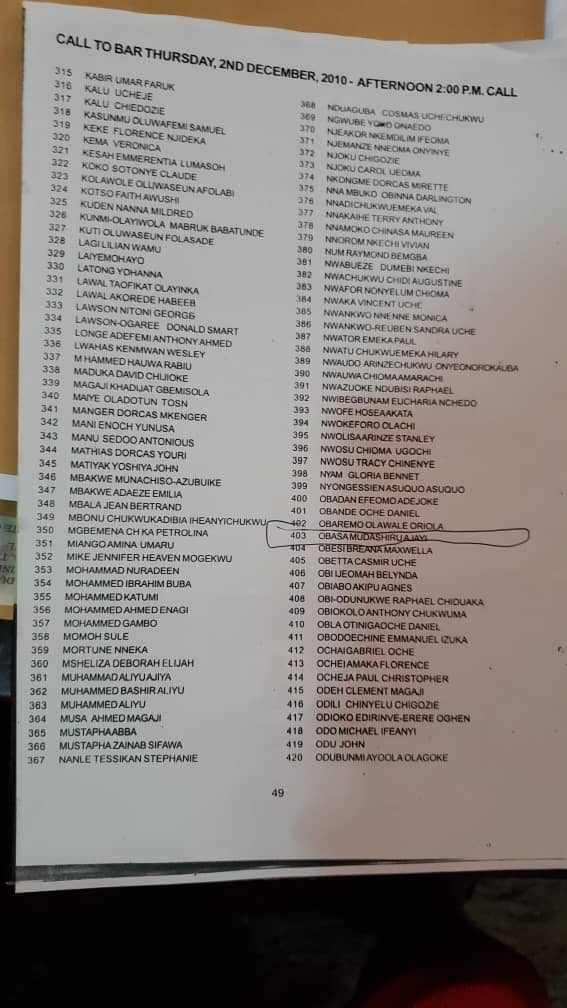
I decided to call out Sahara Reporters now because I have done my personal finding. Against the half-baked, poorly planned and hare-brained investigation it says it carried out, my finding shows that Obasa was actually called to bar and possesses a certificate with number 050879. In fact, Obasa was number 403 on the roll of those called to bar by the Body of Benchers chaired by Chief George N. Uwechue, a Senior Advocate of Nigeria (SAN). The evidence are here added to this piece. He has been certified by the body of benchers.
I am not just the only one putting a lie to the recent claim by Sahara Reporters. Benjamin Waive, a Nigerian lawyer, recently faulted the report by Sahara Reporters as he confirmed that he and Obasa were close course mates during the one year Bar Part II Course at the Lagos Campus of the Nigeria Law School. Hear him: “The recent claim that the Speaker of the Lagos State House of Assembly, Mr. Mudashiru A. Obasa, is a fake lawyer almost got on my nerves because here was an outright falsehood gaining momentum before my very eyes. The gentleman Obasa attended the Lagos Campus of the Nigerian Law School with me, wrote the bar finals with me and was called together with me.”
Does this ring a bell against Sahara Reporters’ poor outing and denigration of our noble profession? Barrister Waive is not the only one who was called to bar with the Speaker. Barristers Oyinlola Adeleke, Tunde Coker, Bisola Agbaje are a few in the long list.
For the avoidance of doubt, section 2 (1) of the Legal Practitioners Council Act stipulates the modalities for practice as a lawyer: “Subject to the provisions of this Act, a person shall be entitled to practise as a barrister and solicitor if, and only if, his name is on the roll.” Now, the question should be: Did Sahara Reporters expect the Speaker to be making appearances in court for clients to prove his qualification when he serves his state as a lawmaker? Is the Speaker the only law graduate who does not make such appearances in courts? Does Sahara Reporters even understand the stipulations of the Legal Practitioners Council Act?
The Nigerian government and the various media bodies have been shouting against unprofessionalism and fake news, but who will help clean this Augean stable, especially based on the fact that this is not a one-off?
Sahara Reporters had earlier agreed to become a tool in the hands of Obasa’s traducers. It came out with a series of reports, and in most cases, faking documents. The reports were all discredited with the House of Assembly displaying original documents and actual explanations. It claimed the Speaker took N17 million for the maintenance of his guest house and office, but a later finding showed that the money is spent on many other things other than Sahara Reporter’s claim and that it was even reduced from N27 million that it was before the emergence of Obasa as Speaker.
The medium also claimed that Obasa approved N258 million for the printing of invitation cards for the inauguration of the ninth Assembly when the actual document showed that the invitation was printed with N1.13 million and that the full event had a total expenditure of N61.3 million. It was discovered that Sahara Reporters covered the truth and displayed the amount left in the account as the money approved for the printing of the invitation cards. Till date, the medium never apologised for misinforming its readers, it continues to cover its lies with more lies.
Reno Omokri, an aide to former President Goodluck Jonathan, recently revealed how Sahara Reporters blackmailed him just few days to the 2015 election by publishing a fake story claiming he robbed a house and stole money to use in the election. He said he wrote to Omoyele Sowore, sent him logs of his activities on the said day, and the man ignored his mails. Even the man cited by the medium denied it and this was reported by responsible media, but Sowore refused to admit the professional failure of his medium or take the story down. It was only when Omokri’s lawyer discovered that Ford Foundation is Sowore’s sponsor and he sent a letter detailing the true situation of things that Sowore rushed to pull down the story. “He did not do this because he wanted to. He did it, only because he did not want his money threatened,” Omokri said. Is such a man credible enough to make people believe him?
In 2017, a UK-based journalist and Public Relations (PR) practitioner, Lekan Fatodu, who even sponsored Sowore’s honeymoon as a bossom friend, told how the self-acclaimed activist blackmailed him demanding N100 million from him for a contract his company got with the government of Jonathan. According to Fatodu, who even presented an audio conversation between him and Sowore, the latter claimed he was aware that his friend got N1.7 billion from the government and that the EFCC was coming for him. He told Fatodu he could help out if his own demand was met. But Fatodu told him he was ready for the EFCC. Then, Sowore rushed a report out claiming his supposed friend laundered money for the government. “He told me that if I don’t give him N100M from the famous Dasuki loot, he’ll run the story,” Fatodu said. The contract was even N38 million and the company was paid N12 million, not N1.7 billion as claimed by Sowore.
Fatodu was investigated after Sowore’s report and cleared. And Sowore started threatening to deal with him. “While driving around Ikeja alongside a friend, a car hurriedly jumped the red light and almost caused an accident for myself and other motorists that had the right of way. I just asked my friend; ‘is that not Sowore?’ Because we are all friends. I’ve driven in Sowore’s car and I’ve also offered him a ride in my car. So I told my friend that the driver deliberately jumped the red light because of his previous threat to me.
“We moved close to the car and it was Sowore at the passenger’s seat. As soon as he saw me, he started saying that he was going to deal with me in this country. I noticed they were about four guys in Sowore’s car. I ran to the police at the junction of Nitel bus stop by GRA who helped to reach their colleagues who came to pick Sowore up. How can a so called investigative reporter, who prides himself as one of Nigeria’s best, be involved in such rascality and blackmail? Imagine how many other persons whose careers Sowore has killed with his blackmail brand of journalism. I wasn’t going to take it lying low. Apart from me, Sowore has ruined the careers of other mutual friends. What kind of man is this? With a friend like Sowore, who needs enemies?” Fatodu had asked. He also led a protest in which he called Sahara Reporters “the headquarters of fake news in Nigeria which is run by the most notorious blackmailer in the history of Nigeria, Sowore Omoyele.”
Only recently, in its usual manner of diehard irresponsibility, Sahara Reporters caused panic in the country by announcing that Ghali Umar Na’Abba had died. A call to Na’Abba, who was rocking his life in London, was all that Sahara Reporters should have made to confirm. No, like a drink who would not think before talking, the medium broke all journalism tenets to publish a story against the former Speaker of the House of Representatives. I remember how Dele Momodu, in an Instagram Live session, mocked the report by asking Na’Abba: “How is heaven?” And the former Speaker replied: “I have not been there…”
In a follow-up video, Na’Abba said he was saddened by the rumour of his death which he said was carried in an evil manner. Sahara Reporters later carried a corregendum, but does that correct the harm the fake news had done to family members and close associates of the former Speaker?
As if that was not enough, it reported that Nigeria’s Minister of Communications and Digital Economy, Dr Isa Ali Pantami, purchased three houses for his wives whereas this was blatant falsehood. The man had been living in one of the houses far before becoming minister. He rented the other. The man said two of the images presented by Sahara Reporters are not even known to him. The sin of the medium, like a drop of oil, now stains all of us judging by this admonition from the Minister: “We plead with the Nigerian media to deploy the strategies of investigative journalism and avoid false sensationalism in order to uphold the tenets of the noble pen profession.” What more damage should we wait for?
The President of the Senate, Ahmad Lawan, was also a recent victim of Sahara Reporters’ falsehood when it claimed that the politician was already rallying ahead of the 2023 presidential election. But Lawan describes the report as puerile with the medium having “its source in beer parlour gossips and should be treated with the contempt which it and those who concocted it deserve.”
The most recent was a story accusing the Inspector-General of Police, M. A. Adamu, of being involved in a multi-billion naira fraud scheme. Among his claims were that Adamu illegally raised huge sums of money for the construction of a police training school in Endehu, which falsely claimed was the IGP’s hometown in Nasarawa State. Adamu is even from Lafia, the state capital and not Endehu.
But the police, through its spokesperson, Frank Mba, described the report as a usual tradition of blackmail engaged in by Sahara Reporters. Again, it was discovered that all those who contributed never donated cash but materials required for the school. So where did Saraha Reporters get the information about the multiples of billion it claimed?
With these antecedent, is such a notorious blackmailer, in the words of Fatodu, who knows him so well, be described as a name in the noble profession of journalism? Is it not high time his financial sponsors, Ford Foundation and The MacArthur Foundation understood the adage: ‘A thief is not as ashamed as his family members.’ Will Ford Foundation and The MacArthur Foundation allow their names to be rubbished and described as sponsors of fake news?
Adegboyega is a freelance journalist and advocate against fake news. He is based in Surulere, Lagos.






Politics
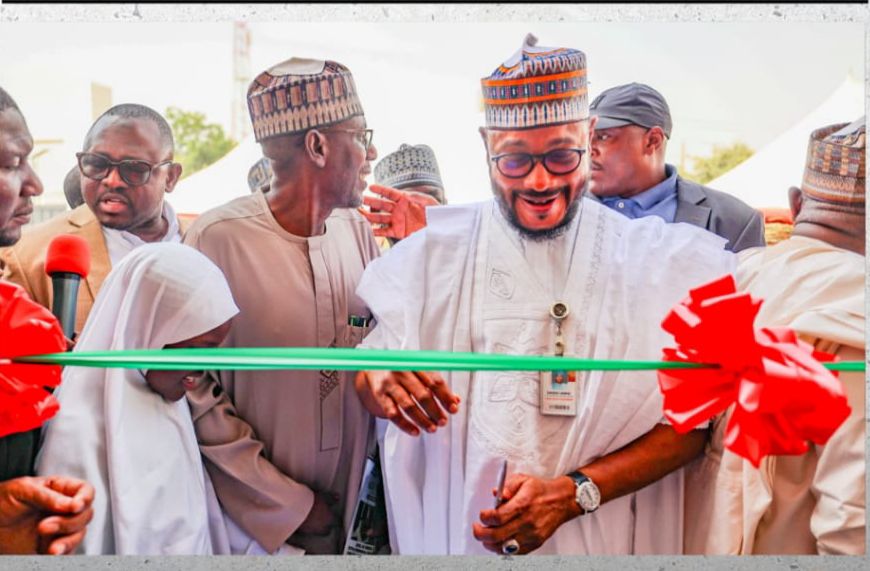
Governor Dauda Lawal Commissions Key Strategic Projects in Tsafe LGA, Commits to Responsive Development
Governor Dauda Lawal Commissions Key Strategic Projects in Tsafe LGA, Commits to Responsive Development
In a significant display of commitment to the people of Zamfara State, Governor Dauda Lawal emphasized the importance of development that is not only visible but also functional and responsive to the community’s needs. On Friday, he inaugurated five pivotal projects in the Tsafe Local Government Area, aimed at enhancing the quality of life for residents and bolstering local infrastructure.
According to a statement released by the governor’s spokesperson, Sulaiman Bala Idris, the projects unveiled include a fully reconstructed modern motor park, a refurbished market, a rehabilitated educational institution, an upgraded and equipped general hospital, and a renovated emir’s palace. Each of these initiatives plays a crucial role in various aspects of community life, encompassing leadership, education, healthcare, commerce, and mobility. The governor underscored that these projects are designed not only to serve practical needs but also to instill a sense of pride and ownership among the residents.
During the commissioning ceremony, Governor Lawal highlighted that these five facilities represent the commitment of his administration to fortify public institutions, revitalize infrastructure, and enhance the palpable impact of governance on the populace. “The reconstructed Emir’s Palace in Tsafe stands as a symbol of continuity, authority, and cultural identity,” he stated. He further noted the essential role of traditional institutions in grassroots governance, underscoring their function as peacemakers, custodians of values, and community partners. “This palace’s reconstruction reflects our respect for tradition and acknowledges the pivotal role of traditional rulers in maintaining harmony, resolving conflicts, and fostering unity. Our administration will continue to collaborate with these trusted allies to rebuild and rejuvenate Zamfara State.”
In addressing the issues of education and human capital development, the governor declared, “The College of Health Technology in Tsafe plays a critical role in training health professionals who provide essential care to the community. By enhancing the school’s environment and infrastructure, we are investing in the future competence and confidence of these future health workers. Renovating this college strengthens our healthcare foundation and supports the development of a skilled, service-oriented workforce.”
Linked to these educational improvements is the comprehensive rehabilitation and re-equipping of the General Hospital in Tsafe, a vital secondary healthcare facility that serves as a bridge between primary and specialized medical care. The governor explained that these upgrades are intended to elevate service delivery and enhance patient experiences while providing much-needed support to healthcare workers. “Access to quality healthcare is a top priority for our administration, and we are fully committed to strengthening health facilities across the state,” he added.
Governor Lawal also spoke about the economic implications of the newly inaugurated facilities. “Economic activity is the engine of growth, employment, and stability within our communities. The Tsafe Market and Motor Park are integral to the local economy, serving as hubs for trade, supporting farmers, vendors, artisans, and small business owners. The motor park not only connects communities but also facilitates broader economic exchanges. By enhancing these facilities, we are promoting productivity, ensuring order, and enabling sustainable livelihoods. These improvements not only boost local revenue but also promote safety and uphold the dignity of all users.”
In a call to action, the governor urged all stakeholders including traditional leaders, community members, traders, transport operators, healthcare professionals, and local authorities to take collective ownership of the newly commissioned facilities. “Public infrastructure thrives where there is a shared sense of responsibility and civic duty. Proper utilization and care of these facilities will ensure they effectively serve the community for many years to come,” he concluded, reinforcing the need for continued cooperation in maintaining and protecting these vital resources.
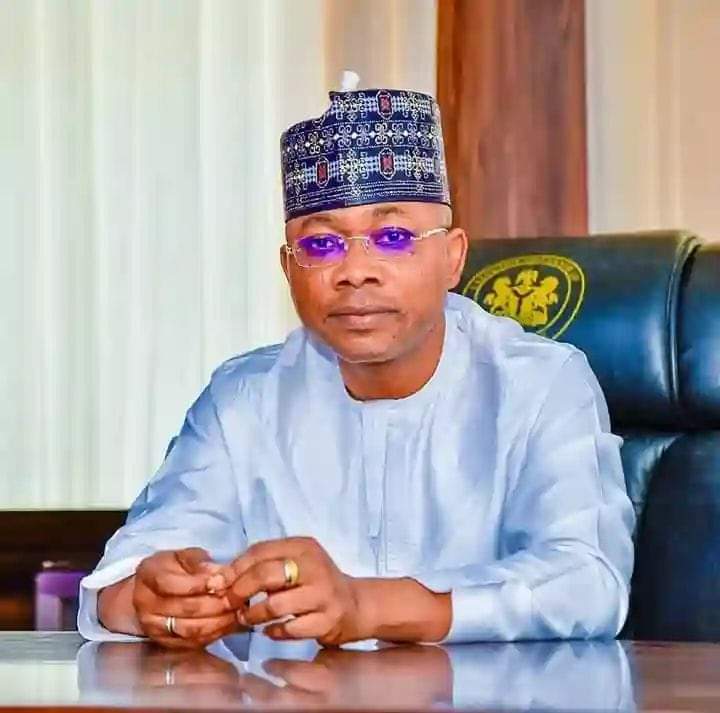
Kogi’s Quiet Shift: Reviewing Governor Ododo’s First 24 Months in Office
By Rowland Olonishuwa
On Tuesday, Kogi State paused to mark two years since Alhaji Ahmed Usman Ododo took the oath as Executive Governor. Across government circles, community halls, and everyday conversations, the anniversary was more than a date on the calendar; it was a milestone that invites both reflection and renewed optimism. A moment to look back at how far the state has travelled in just twenty-four months, and where it is heading next.
Since assuming office in January 2024, Ododo has steered the state through a period of measured consolidation, delivering strategic interventions across security, infrastructure, human capital, and economic revitalisation that are beginning to translate into real improvements for residents.
Governor Ododo stepped into office at a time when expectations were high, and confidence in public institutions needed rebuilding.
His response to these was not loud declarations, but steady consolidation, strengthening structures, restoring order in governance, and setting a clear direction. Over time, that calm approach has become his signature: leadership that listens first, plans carefully, and moves with purpose.
Security has remained the most urgent concern for Nigerians, and Kogi residents are no exceptions; the Ododo-led administration has treated it as such. From deploying surveillance drones to support intelligence operations to recruiting and integrating local hunters and vigilante personnel into formal security frameworks, the government has built a layered safety net.
For farmers returning to their fields, travellers moving along highways, and families in rural communities, the impact is simple and deeply personal: fewer fears, quicker response, and growing confidence that the government is present and concerned about the ordinary people.
Infrastructural development has followed the same practical logic. Roads have been rehabilitated, easing movement for traders and commuters. Budget priorities have shifted toward capital projects and human development, while revived facilities like the Confluence Rice Mill now provide farmers with real economic opportunity. For many households, this means better income prospects, stronger local trade, and renewed belief that development is no longer a distant promise.
Health and education are not left out; the Ododo-led administration has expanded free healthcare services and supported students through examination funding and institutional improvements.
Parents who once struggled with medical bills and school fees have felt relief. Young people preparing for their futures now see government investment not as abstract policy but as something that touches their daily lives.
Governance reforms, from civil service strengthening to new legislative frameworks, have quietly improved how government functions. Salaries are more predictable, public offices are more responsive, and local government structures are more coordinated. These may not always make headlines, but they shape how citizens experience leadership every day.
As the second year anniversary celebrations fade into routine today and Governor Ododo enters his third year in office, the true meaning of the anniversary will continue to linger on.
Two years may not have solved every challenge in the Confluence State -no government ever does, by the way- but they have set a tone of stability, responsiveness, and direction. The next phase will demand deeper impact, broader reach, and sustained security gains.
But for many in Kogi State, the story of the past twenty-four months is already clear: steady hands on the wheel, and a journey that is firmly underway.
Olonishuwa is the Editor-in-Chief of Newshubmag.com. He writes from Ilorin
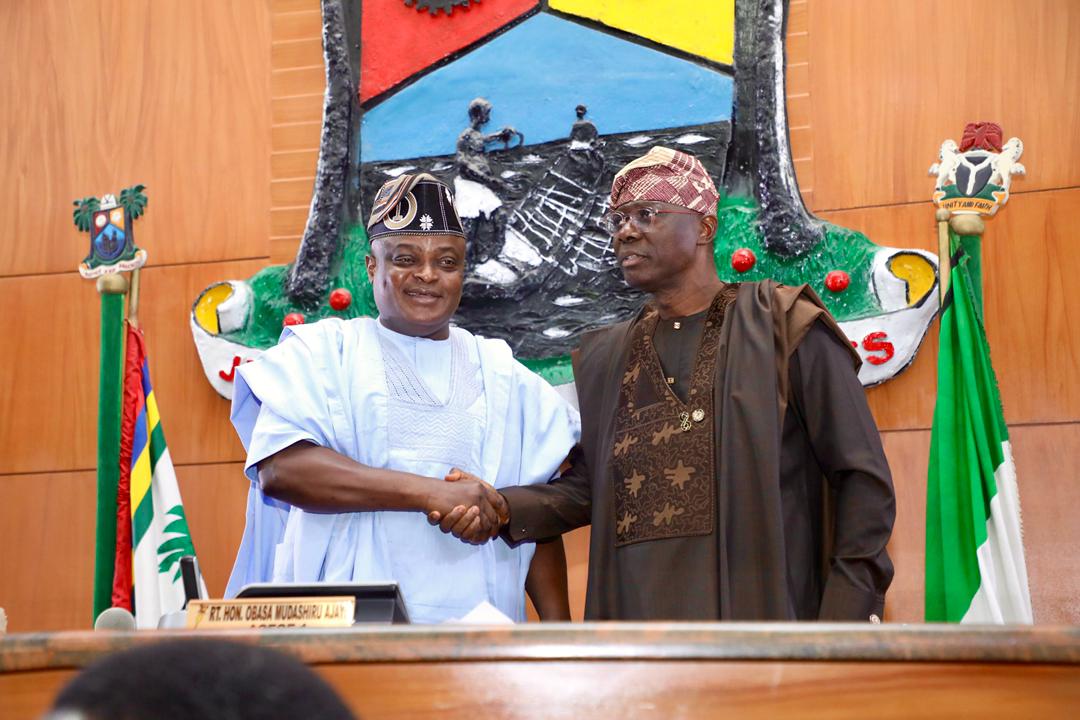
Lagos Assembly Debunks Abuja House Rumour, Warns Against Election Season Propaganda
The Lagos State House of Assembly has described as misleading and mischievous the widespread misinformation that it budgeted for the purchase of houses in Abuja for its members in the 2026 Appropriation Law.
This rebuttal is contained in a statement jointly signed by Hon. Stephen Ogundipe, Chairman, House Committee on Information, Strategy, and Security, and Hon. Sa’ad Olumoh, Chairman, House Committee on Economic Planning and Budget.
Describing the report as a deliberate and disturbing falsehood being peddled by patently ignorant people, the statement reads, “There is no provision whatsoever in the 2026 Budget for the purchase of houses in Abuja or anywhere else for members of the Lagos State House of Assembly. The report is a complete fabrication and a product of political mischief intended to misinform the public.
“The Lagos State House of Assembly does not operate in Abuja. Our constitutional responsibilities, constituencies, and legislative duties are entirely within Lagos State. It is, therefore, illogical, irrational, and irresponsible for anyone to suggest that legislators would appropriate public funds for personal housing outside their jurisdiction.”
The statement emphasised that the budget is already in the public domain and accessible for scrutiny by discerning Lagosians and Nigerians alike. It reiterated that the Lagos State Government operates a transparent budget that speaks to the needs of the people and the demands of a megalopolis.
“We view this rumour as part of a wider attempt at election-season propaganda, designed to erode public trust, sow discord, and malign democratic institutions.”
The chairmen further clarified that the 2026 capital expenditure of the House of Assembly is less than 0.04% of the total CAPEX of the state, which clearly demonstrates the culture of prudence, accountability, and fiscal responsibility that guides the legislature. However, they noted, “Historically, the House does not even access up to its approved budget in many fiscal years.”
They stressed that the Assembly remains fully committed to excellence, transparency, good governance, and the collective welfare of the people of Lagos State, in line with the objectives of the 2026 Budget of Shared Prosperity.
“We therefore challenge those behind this harebrained allegation to produce credible evidence or retract their statements forthwith. Failure to do so may attract appropriate legal actions.
“We urge Lagosians and the general public to disregard this baseless rumour and always verify information from official and credible sources.”


-

 celebrity radar - gossips6 months ago
Why Babangida’s Hilltop Home Became Nigeria’s Political “Mecca”
-

 society6 months ago
Power is a Loan, Not a Possession: The Sacred Duty of Planting People
-

 Business6 months ago
Batsumi Travel CEO Lisa Sebogodi Wins Prestigious Africa Travel 100 Women Award
-

 news6 months ago
THE APPOINTMENT OF WASIU AYINDE BY THE FEDERAL GOVERNMENT AS AN AMBASSADOR SOUNDS EMBARRASSING