
society
Prestige Excellence Awards to Honour Lagos Gov, Sanwo-Olu, November 29

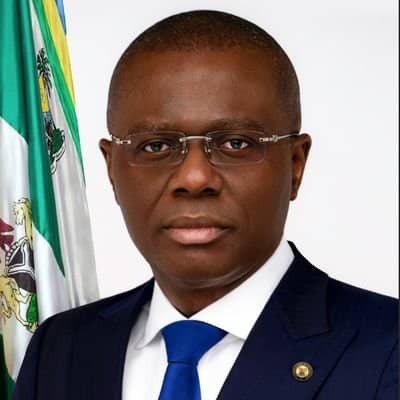
4th Prestige Excellence Awards and Lecture 2020 is set to honour Lagos State Executive Governor, His Excellency, Babajide Sanwo-Olu as Most Performing Governor of the Year.
The glamorous event is slated for Sunday November 29 in Lagos at Presken Hotels and Resorts Ltd Opposite Airport Hotel, 17, Alade Avenue, Obafemi Awolowo Way, Ikeja, Lagos.
Governor Sanwo-Olu deserves the honour considering how he has made meaningful impacts in private and public sectors, especially since he assumed the leadership as number one citizen in the Centre of Excellence.
It would be recalled that the ruling party has provided good governance in Lagos State in the last 21 years and Governor Sanwo-Olu has been part of the State’s progressive trajectory in the past seventeen years. He was a member of the cabinet of the three previous governors. The banker, who turned politician began his political journey at 37 when he served as Special Adviser on Corporate matters to ex-deputy governor, Otunba Femi Pedro and later Special Adviser to Governor Bola Tinubu on Corporate Matters in 2004. He was head of different ministries between 2004 and 2015 as Honourable Commissioner
Former Governor Tinubu appointed Sanwo-Olu as acting Commissioner for Economic Planning and Budget from 2004 to 2005, and later made him substantive Commissioner for Commerce and Industry in 2007. Also former Governor Babatunde Fashola in 2007 appointed him as Commissioner of Establishment, Training and Pensions. The incumbent governor also served as the Managing Director/CEO of the Lagos State Development and Property Corporation (LSDPC) under the immediate past governor, Mr. Akinwunmi Ambode.
As a man who has played active role in the growth and development of the State in line with the ‘Lagos Master plan’, Sanwo-Olu didn’t disappoint Lagosians immediately he took over the mantle of leadership. Knowing the various challenges facing the state, Sanwo-Olu’s administration, working with a six pillars policy programme tagged T.H.E.M.E.S to deliver good governance to millions of Lagosians swung into action. T.H.E.M.E.S stands for; Traffic Management and Transportation; Health and Environment; Education and Technology; Making Lagos a 21st Century economy; Entertainment and Tourism; Security and Governance.
It is of note that when Sanwo-Olu emerged as APC governorship candidate, Lagos had literally become a dumpsite as heaps of municipal waste littered the streets. Apart from the issue of waste, there were several other issues of concern that the governor faced when assumed office. The issues of heavy traffic, bad roads, and blockage of drainage, among others were monstrous in nature.
Governor Sanwo-Olu believes that government is continuous and that was why he didn’t spend energy in his early days in office blaming previous administration. Rather than giving excuses, Sanwo-Olu hit the ground running from his day one in office. He took a lot of bold steps in the early few weeks. To him, the task of achieving the ‘Greater Lagos’ he promised Lagosians must be accomplished.
Sanwo-Olu, within a week in office announced members of his kitchen cabinet as well as key appointments in the state to set the ball of governance rolling in the Centre of Excellence.
The governor also signed the Lagos State 2019 Appropriation Bill of N873,532,460,725 into law. As promised during the electioneering, Sanwo-Olu constituted his full cabinet within his first 60 days in office.
With the cabinet fully in place, the government swung into action by working hard to ensure that the people of Lagos State start enjoying dividends of democracy. His administration is witnessing a huge success story for a young several programmes and projects executed by administration as there were several projects displayed in the score card.
Within his first 100 days in office, the issues of bad roads were aggressively addressed to ease movement across the State. For government to achieve this, eight multi-national construction firms mobilised were ordered to carry out massive repair works on critical highways across the State. In addition to the efforts of the eight multi-national companies, extensive palliative and maintenance works were also carried out by Lagos State Public Works Corporation in different parts of the State. The State government also engaged Public Infrastructure Improvement Partnership arrangement to ease traffic considerably in some parts of the State.
One of the important steps taken by Lagos State government was the resuscitation of Adiyan waterworks, Phase Two, which has a production capacity of 70 million gallons per day. Government commenced the rehabilitation of the dam to increase the provision of safe drinking water to more than five million Lagos residents and to address the challenges of water-borne diseases.
The state government also put many measures in place to address waste management and environmental issues, among which are acquisition of 10 new boats by the Lagos Waste Management Authority (LAWMA) to boost its marine waste operations in the state.
The Lagos Blue Box initiative was launched on September 5, 2019 in Community Recycling Centres across five councils with recyclers strategically positioned to help drive the process.
A critical look showed that Governor Sanwo-Olu has delivered on a lot of his electoral promises. This is evident in the remarkable list of achievements he read out on June 12 during his Democracy Day broadcast titled “Great Leap towards a Greater Lagos” in commemoration of his administration’s first year in office.
Among the remarkable achievements of the Babajide Sanwo-Olu’s administration are; development of a reliable intermodal system of transportation, with investment in waterways and a light rail system; rehabilitation of roads; putting a plan in place to construct the 4th Mainland Bridge; two Mother and Child Centers (MCCs) at Eti-Osa and Igando respectively; free medical interventions in conjunction with BOSKOH Health Mission International and the Benjamin Olowojebutu Foundation to over 250,000 Lagosians across several locations in the State, huge investment in education and technology; construction of 13, 18 or 20 classroom blocks in some schools in Egbe, Ikorodu, Bariga, Shomolu, Ifako-Ijaiye and Epe areas of the state; signing of $629 million financing facility aimed at completing the Lekki Deep Seaport project and significant progress in the area of housing through four major housing projects that are ready for commissioning, among other laudable projects.
Governor Sanwo-Olu has also displayed uncommon leadership in African, putting Lagos on the global map as a very resilient state in the ongoing COVID-19 pandemic. Since Lagos became the epicenter of the pandemic in Nigeria in February 27, the governor has been up to the task as Incident Commander in ensuring that the pandemic is well managed in the State. This feat has earned Mr. Governor local and international recognition.
So far, Governor Sanwo-Olu’s action, which is largely putting personal touch to governance has set the state is on the right path to Greater Lagos.
According to Wale Abiodun, Publisher/ Editor-in-chief, Prestige News Online and Prestige International Magazine in a press release, Prestige Excellence Award and Lecture(PEAL) is instituted to recognize and appreciate deserving individuals, corporate entities and professional institutions that have made remarkable impact in our society.
The Award is the brainchild of Prestige News Online and Prestige International Magazine published by Timmary Communications. Prestige media platforms are dedicated to extolling the virtues of hard work, ingenuity, integrity and uncommon achievement in service to humanity, while its online platform www.prestigenewsonline.com reports up to date news as it is.
The PEAL 2020 edition is tailored to honour and celebrate individuals and organizations who have exemplified those virtues in the course of the year under review. This award is expected to bring together the crème de la crème of the Nigerian society from all walks of life and offering a unique platform for social and corporate networking as well as a fertile ground for corporate and product branding.





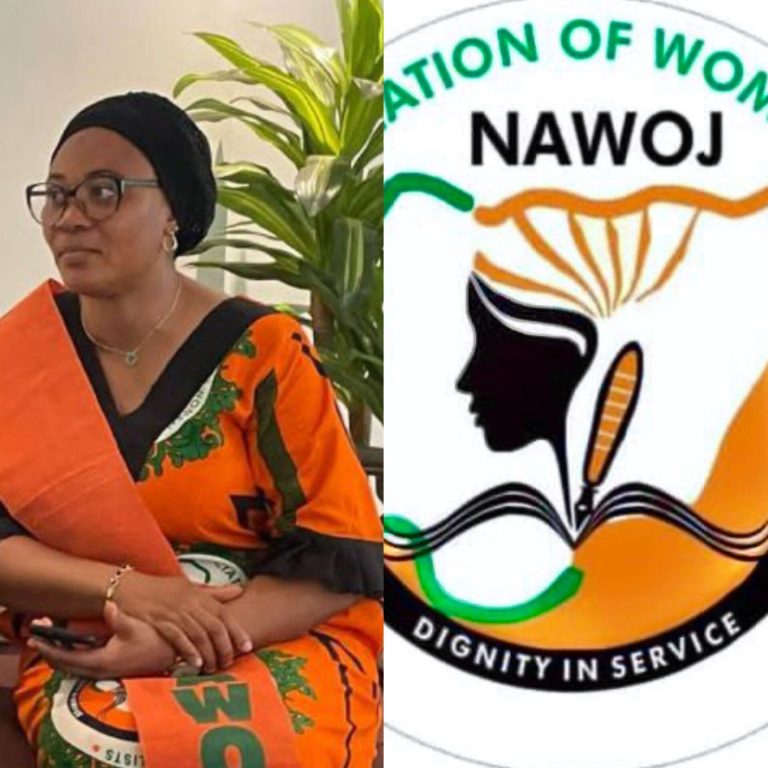
NAWOJ: SEKINAT, CHARITY GETS VOTE OF CONFIDENCE
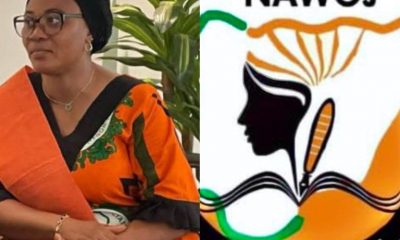
The Nigeria Association of Women Journalists,(NAWOJ), Ogun State Chapter Executives has unanimously passed a vote of confidence on Chairman NAWOJ SEKINAT Salam and the Financial Secretary, Charity James, saying that, their leadership reflect the ideal and objectives of NAWOJ.
This was revealed in a communique issued at an Emergency meeting of the Executive held at the NUJ State Council, Iwe-Iroyin in Abeokuta.
The vote of confidence on the Leadership of NAWOJ was unanimously signed by all the five executive members that attended the meeting with the vice chairperson taking apology for official engagement outside the state capital.
According to the communique ” Consequently, NAWOJ Ogun State Chapter, reaffirms it’s unwavering support and confidence in the Chairperson and the Financial Secretary, Sekinat Salam and Charity James respectively, Urge them to continue in their commitment to purposeful leadership in the best interest of the association and the society at large”.
Speaking briefly with Journalists after the emergency Executive meeting, the Chairperson, Nigeria Association of Woman Journalists (NAWOJ), Com. Sekinat Salam, said the meeting was necessary as the news of her suspension was laughable and insulting because it is like a pot calling a kettle black in this case, saying that the Leadership of the State Council, Com. Wale Olanrewaju has no local standing to suspend her or any executive member, even he cannot be a judge in his own case.
According to her” The Leadership of the Nigeria Union of Journalists, Ogun State led by Wale Olanrewaju has always been misusing power without recourse to the constitution of this noble Union, hence has no local standing to suspend me or any executive member “.
She said only the Central Working Committee (CWC) has the constitutional rights to sanction or suspend any members found wanting after due process has been followed.
While calling on members to stay calm, Com. Sekinat Salam assured members of positive representation of NAWOJ at both the State and National level, adding the success recorded under her administration cannot be overemphasized.
She therefore called on the National leadership of NUJ to critically look into the matter, either by setting up independent committee to investigate the issues and resolve the matter as quickly as possible.
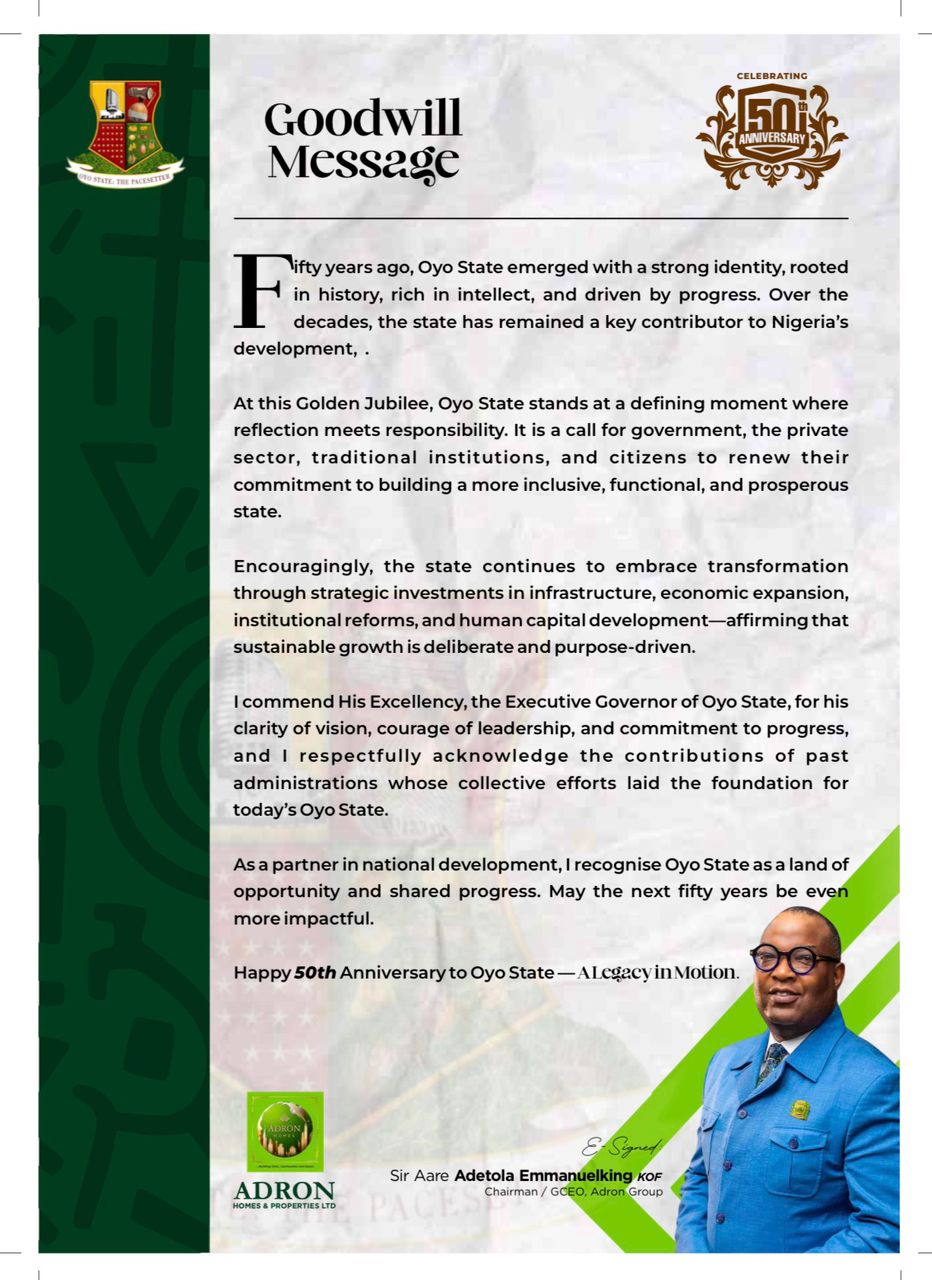
Adron Homes Chairman Congratulates Oyo State on 50 Years of Progress
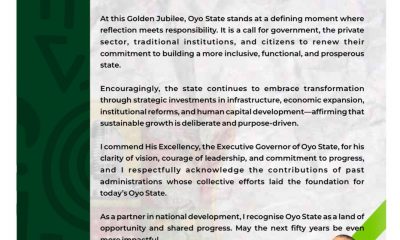
The Chairman and Chief Executive Officer of Adron Homes and Properties Limited, Aare Adetola Emmanuelking, has congratulated the Government and people of Oyo State as the state marks its 50th anniversary, describing the occasion as a celebration of resilience, cultural pride, and sustained progress.
He noted that since its creation, Oyo State has remained a strong contributor to Nigeria’s socio-economic and cultural development, emerging as a hub of commerce, education, and innovation.
According to him, the Golden Jubilee offers a moment for reflection and renewed commitment by government, private sector players, traditional institutions, and citizens toward building a more inclusive and prosperous state.
Aare Emmanuelking commended the state’s ongoing transformation through investments in infrastructure, economic expansion, and human capital development, adding that sustainable growth is deliberate and must remain purpose-driven.
He also praised the leadership of the current administration while acknowledging the contributions of past leaders whose efforts laid the foundation for today’s Oyo State.
Reaffirming Adron Homes’ commitment to national development, he described Oyo State as a land of opportunity. He wished the state continued peace and prosperity, expressing confidence that the next fifty years will bring even greater achievements for the Pace Setter State and its people.
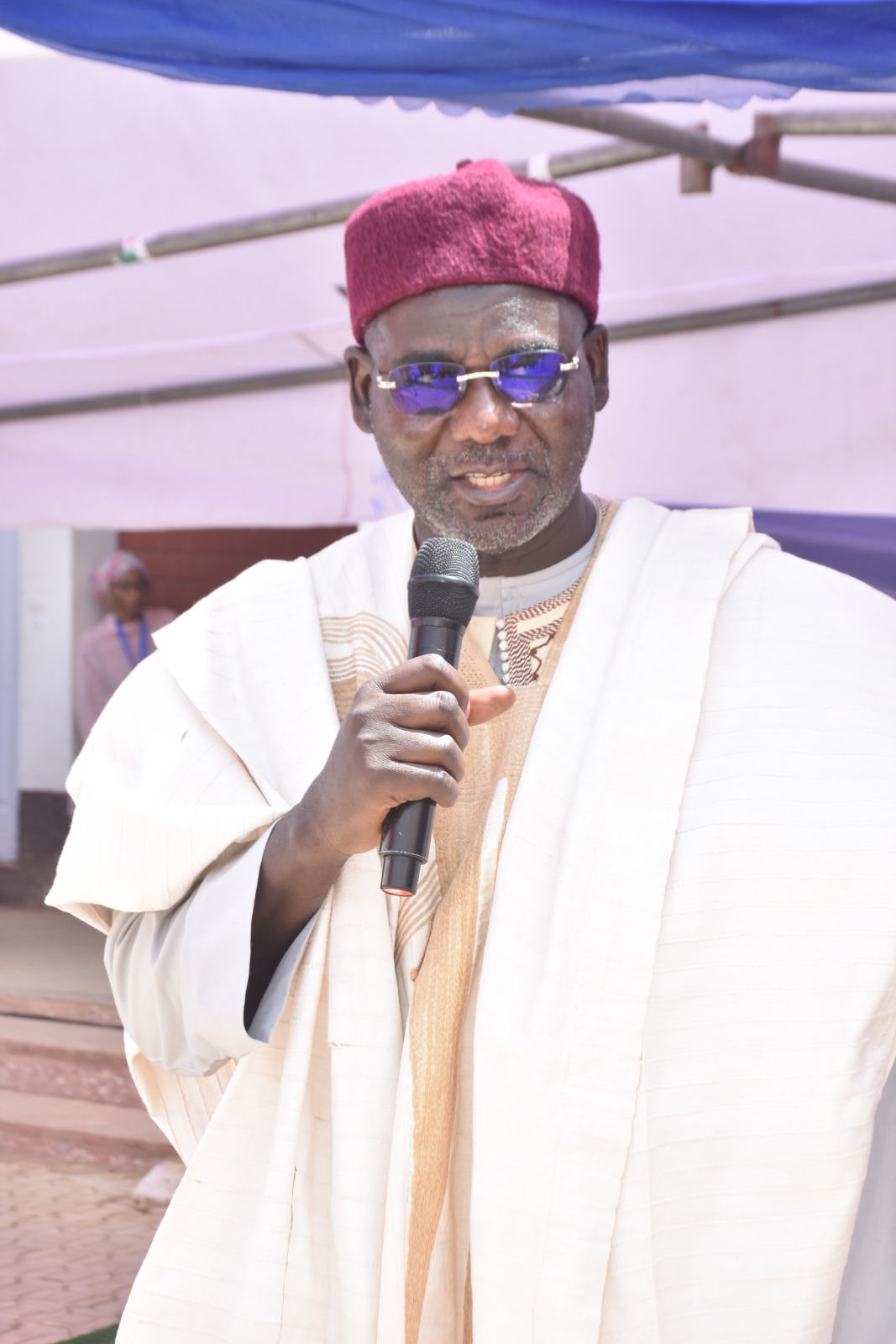
TY BURATAI HUMANITY CARE FOUNDATION CONDOLES WITH BIU EMIRATE OVER TRAGIC ATTACK
In a profound expression of sorrow, the TY Buratai Humanity Care Foundation has extended its heartfelt condolences to the families of the victims and the entire people of Biu Emirate, Borno State, following the recent tragic attack attributed to Boko Haram. This devastating assault, which occurred at a work site in northeastern Nigeria, claimed the lives of dozens, including brave soldiers committed to protecting the nation.
In a statement released to the press and signed by the Chairman of the foundation, Ibrahim Dahiru Danfulani Sadaukin Garkuwan Keffi/Betara Biu, the Grand Patron of the Foundation, His Excellency Amb. Lt. Gen. Tukur Yusufu Buratai CFR (Rtd), former Chief of Army Staff, described the incident as “one too many senseless, barbaric, and ruthless displays of inhumanity.” His Excellency emphasized the heartbreaking impact of such attacks on innocent, hardworking citizens striving to make a positive difference in their communities.
The Grand Patron praised the swift and decisive response of military personnel during this critical time, underscoring their brave commitment to safeguarding the nation. He called upon them to maintain this momentum, commending their courage and sacrifice in the face of adversity. “May Almighty Allah forgive their souls and grant them Aljannah Firdouse,” he remarked, encouraging the nation to honor their spirit of sacrifice as they rally together to rebuild and restore hope across the region.
In his statement, Gen. Buratai highlighted the importance of collective action in overcoming the challenges posed by insecurity, urging concerned citizens to increase their efforts in fostering a virile community that future generations can cherish. “Together, we can surmount these troubles,” he asserted, calling on all patriotic leaders and citizens to unite in the fight against violence and insecurity.
The TY Buratai Humanity Care Foundation remains committed to supporting initiatives that promote peace, security, unity, and prosperity. As the foundation extends its condolences to the bereaved, it also calls upon all segments of society to collaborate in creating a better and safer future. May Allah guide and protect the nation and lead it toward enduring peace. Amen.


-

 celebrity radar - gossips6 months ago
Why Babangida’s Hilltop Home Became Nigeria’s Political “Mecca”
-

 society6 months ago
Power is a Loan, Not a Possession: The Sacred Duty of Planting People
-

 Business6 months ago
Batsumi Travel CEO Lisa Sebogodi Wins Prestigious Africa Travel 100 Women Award
-

 news6 months ago
THE APPOINTMENT OF WASIU AYINDE BY THE FEDERAL GOVERNMENT AS AN AMBASSADOR SOUNDS EMBARRASSING