
society
Between the devil and the deep blue sea By Tunde Odesola

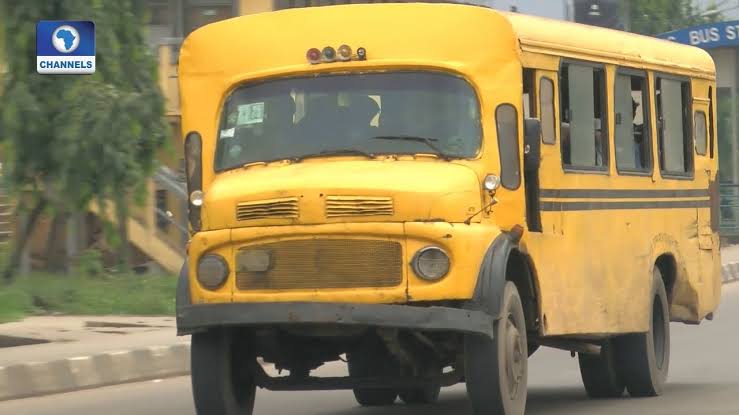
The molue is a bizarre bus. It’s a bucket of bolts with the loud noise of a helicopter. Indeed, the 49-sitting-99-standing-passenger bus is renowned in Lagos, Africa’s largest capital city, as a mobile coffin.
With the clanking sound of an engine about to knock, this particular molue, painted in green-white-green colours, jangled to a jerky stop as the driver squished the failing brake pedal to the floorboard, causing a collision of passengers against the unblunted metal edges of the shabby interior body work.
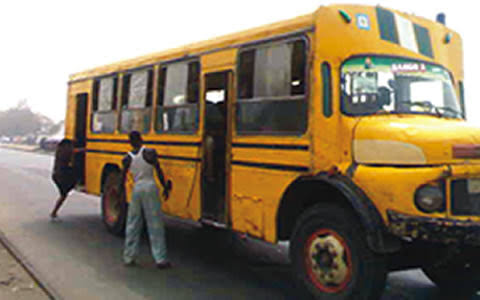
In a three-part choreographic sequence, human noise erupted from inside the molue after the deafening engine noise died down and a thick smoke enveloped the jagged metal contraption.
Cursing and coughing, Lucky, the driver of the molue, and his conductor, Sambi, were the first to emerge from the eye-peppering smoke of the bus. Swearing and sweating, passengers of the fully loaded bus emerged from within the smoke like displaced cockroaches, coughing and furious.
Purchased since 1960, this molue had not been serviced by subsequent drivers who only fed fuel to the grumpy bus despite ceaseless complaints by passengers calling for a total overhaul of the vehicle.
At different times in the accident-ridden life of this molue, subsequent negligent drivers had ignored the demand for a turnaround maintenance by passengers whose flesh, clothes and goods were daily ripped by the sharp metal edges inside the bus.
After the cloud of smoke had cleared and the black oil dripping from under the vehicle had stopped, Lucky pinched a dripping hole in a sachet of ‘Sledgehammer’ with his teeth, and in one belching gulp, drained the alcoholic content.
However, all hell broke loose when Lucky implored the passengers to go back into the bus to commence their journey to Abuja.
Lucky: Let’s go inside the bus and pray so that we can commence our journey in earnest.
Passenger 1: What kind of stupid and clueless driver is this? So, you can call for prayer after drinking ogogoro, abi? Are you supposed to call for prayer or fix your cursed bus?
Passenger 2: You kari bus komot for house, you no gauge oil, you no gauge tyre, brake no good, no whipper, no horn, no pointer, yet you collect money from us, and your motor come pafuka on top Third Mainland Bridge. Me, I no sabi swim o. I don warn you o, ehn-ehn!
Lucky: Don’t come and insult me here o. I’m not an ordinary driver, I am a graduate and I have my degrees, including a PhD. I’m here to serve the masses. So, don’t talk to me anyhow.
Sambi: (Appealing to the passengers) I’m also a graduate but I’ll speak pidgin so that everyone can understand. Na because make we no delay una for road here, das why my oga say make we pray and manage the bus to Abuja. Na small thing dey worry the bus o; na just to change the crankshaft, gearbox and carburetor, then we go make it to Abuja in 24 hours; we can still manage the brake to Abuja, my oga sabi pump failing brake well, well.
Passenger 2: You must be mad, you this stupid conductor! You want to manage faulty brakes from Lagos to Abuja, abi? It’s you that will not see 2021, you murderer!
Just then, a sparkly bus parked in front of Lucky’s shambly molue. Written boldly on it was, “Integrity Airbus.” The bus owner, Eko, came out with his garage mob, and together, they poached passengers from Lucky’s bus. A tired old man called Baba Integrity was the driver of the bus.
Eko: (Appealing to the stranded passengers on Lucky’s bus) Abuja straight! Abuja straaaaight!! No stopping for road o. Fully air-conditioned bus at affordable price. Free wi-fi, free food, maximum security of life and property, peace and enjoyment guaranteed during the journey. Abuja sttraaaaaightt! You guys know I won’t lead you astray, this bus is heading to the Promised Land straight!
(The ensuing surge for space on the bus almost led to a stampede. All the passengers, except one, abandoned Lucky’s bus and went on to board Baba’s ‘Integrity Bus’. Three passengers, Johnbull, Paine and Iya Aburo spoke freely on Integrity Bus)
Paine: Ha, see Chief Eko himself vouchsafing for this bus, it must be reliable.
Other Passengers: It must surely be.
Baba: (Speaking over the intercom) Trust me, I’m a tested and trusted driver. You know I’ve done it before. I’ll give you a trip you will live to remember for the rest of your lives.
Passengers: (Roar in applause)
Eko: You guys are very lucky Baba graciously agreed to drive you to Abuja by himself. No force in the world can stop this bus.
Paine: (Effusing joy) Yes, we sabi. Na God say make Baba show up to rescue us from the dangers on the Third Mainland Bridge and the sea under. For my life, I no go ever enter any motor driven by Lucky and his PindiPi company.
Johnbull: Na true, we all dey very lucky.
(Everyone was in amazement of the Integrity Bus – its sheen and perfect body work. But as Baba attempted to start the engine, the paints began to peel off. The engine failed to crank.)
Passengers: Haaaaa!
Paine: Wetin bi dis? Lucky’s bus still dey move small-small, dis one no even move at all. Na from frying pan to fire be dis o.
Johnbull: But why dem come build special cabin for Baba for driver seat nah? I mean, why we no fit see Baba face nah?
Eko: To drive the Integrity Bus no easy. All of us sabi Abuja road very well – armed robbers full everywhere, Boko Haram dey yanfu-yanfu, kidnappers dey berekete. So, Baba need concentration to drive and crush all the robbers, Boko Haram and kidnappers on the road.
Paine: Drive and crush Boko Haram, robbers and kidnappers at the same time? Baba na James Bond or Formula 1 driver, uhmm?
Johnbull: Abeg, wetin be di bus wi-fi password?
Garage boy: It’s not advisable to use wi-fi now because Boko Haram can use wi-fi signal to locate and blow up this bus.
Paine: Ha?! But we never even comot Third Mainland Bridge nah?
Garage boy: Yes, I know, but Boko Haram dey everywhere o.
(A baby lets out a shriek)
Garage girl: Make im mama give am breastmilk nah. Abi you no want make Baba concentrate ni?
Iya Aburo: It’s the hotness here that’s making my baby cry, not hunger. Please, switch on your full air-conditioner.
Eko: Iya Aburo, so you no sabi say air-conditioner no dey good for small pikin? Air-conditioner is a very dangerous thing o.
Johnbull: Wey the food una promise passengers?
Eko: When embarking on this type of dangerous journey, you need fasting and prayers.
Iya Aburo: Please, come and help me open the window by my seat so that my baby can get some fresh air.
Garage boy: Dat na very big security risk o; you want to expose other passengers to danger? Passengers mustn’t even touch the window blinds. Everybody should just put their trust in Baba, he’s doing a fantastic job, we are moving so fast.
Iya Aburo: But I can’t hear the sound of the engine.
Paine: I can’t hear any engine sound, too. Is this bus flying or are we not riding on Nigerian roads full of potholes?
Eko: Baba is trained to dodge potholes.
A passenger angrily yanked off the blind from the window, alas!, the vehicle hadn’t moved from the same spot it picked the passengers.
Passengers: Whaaaaat!!! Why haven’t we moved from the same spot since?
Baba: You lazy passengers can’t understand. I’m trying to make a choice between staying with the devil, that is, the Third Mainland Bridge, or plunging you into the deep blue sea below!
Passengers: Haaaaaaa!
ENDS
Email: [email protected]
Facebook: @tunde odesola
Twitter: @tunde_odesola






society
Enough Is Enough”: Elem Kalabari Rises Against Decades of Injustice, Women Stage Peaceful Protest
“Enough Is Enough”: Elem Kalabari Rises Against Decades of Injustice, Women Stage Peaceful Protest
By: Al Humphrey Onyanabo
For decades, Elem Kalabari has borne the burden of Nigeria’s oil wealth without tasting its benefits. Its rivers have carried crude oil to the Atlantic; its land has hosted pipelines, flow stations, and gas facilities; its people have inhaled fumes, watched their waters darken, and their livelihoods collapse.
Yet opportunity, justice, and inclusion have consistently flowed elsewhere. On Monday February 2, 2026, that long-suppressed pain found a powerful voice.
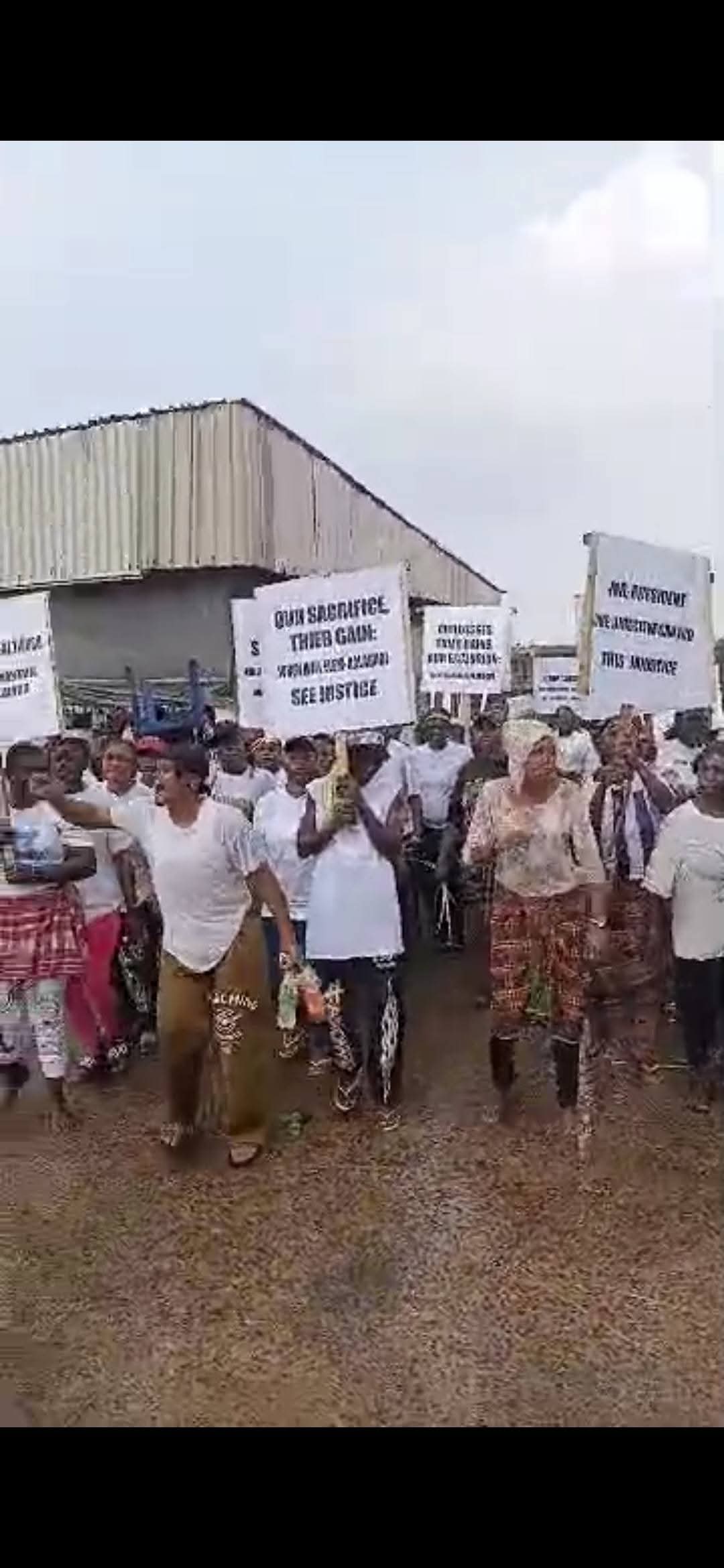
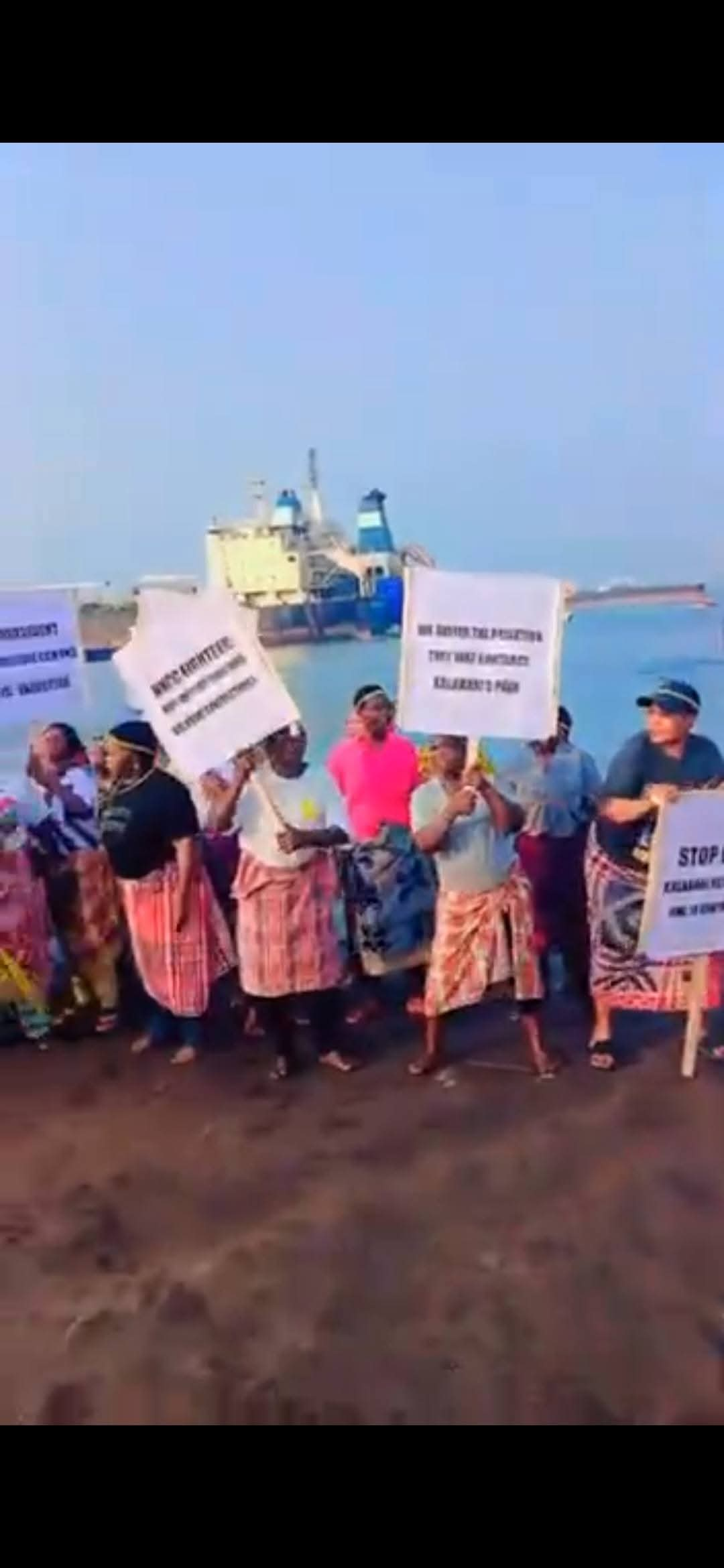
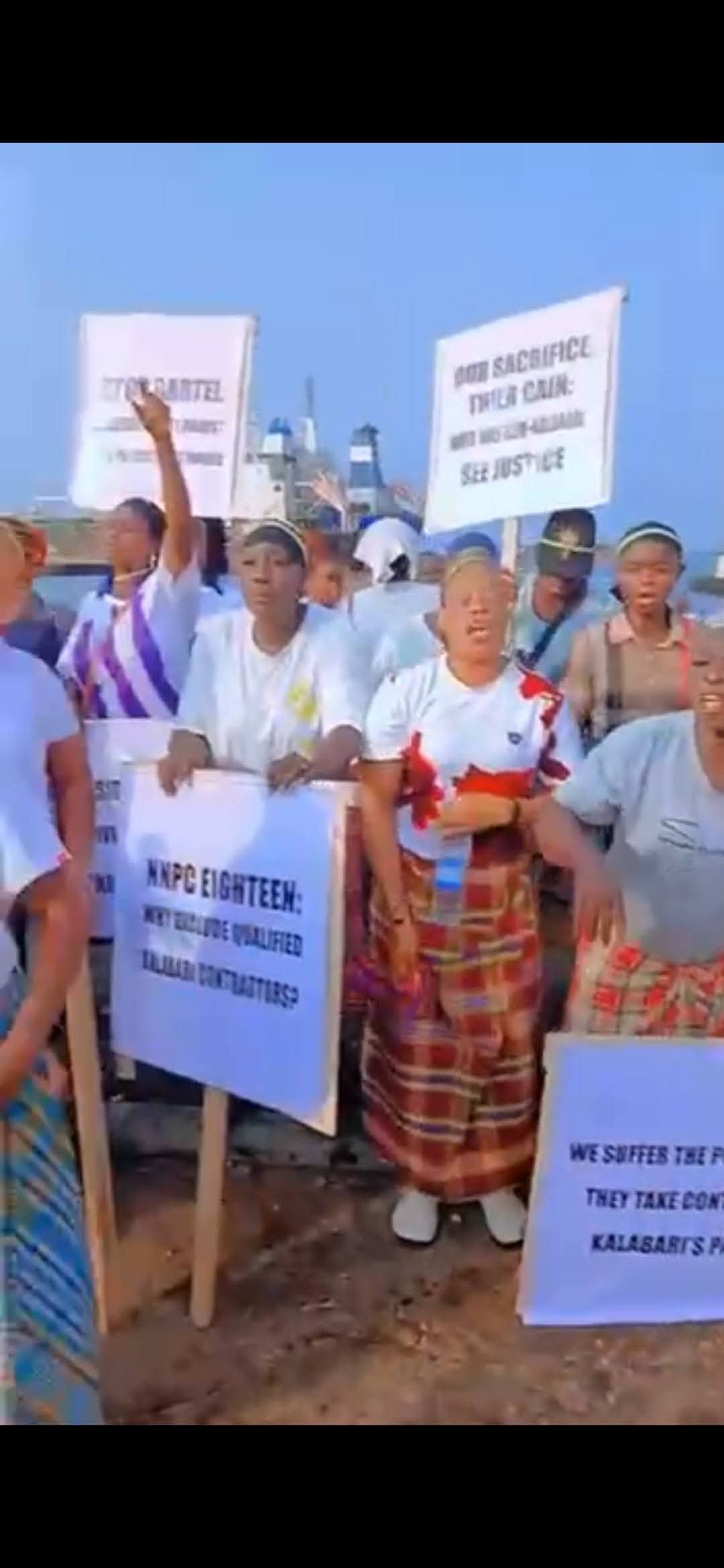
Defying a heavy morning downpour, hundreds of women from Elem Kalabari poured into the Cawthorne Channel 2 Jetty in what many now describe as the “Mother of All Protests.”
It was peaceful, disciplined, and resolute—but unmistakably firm.
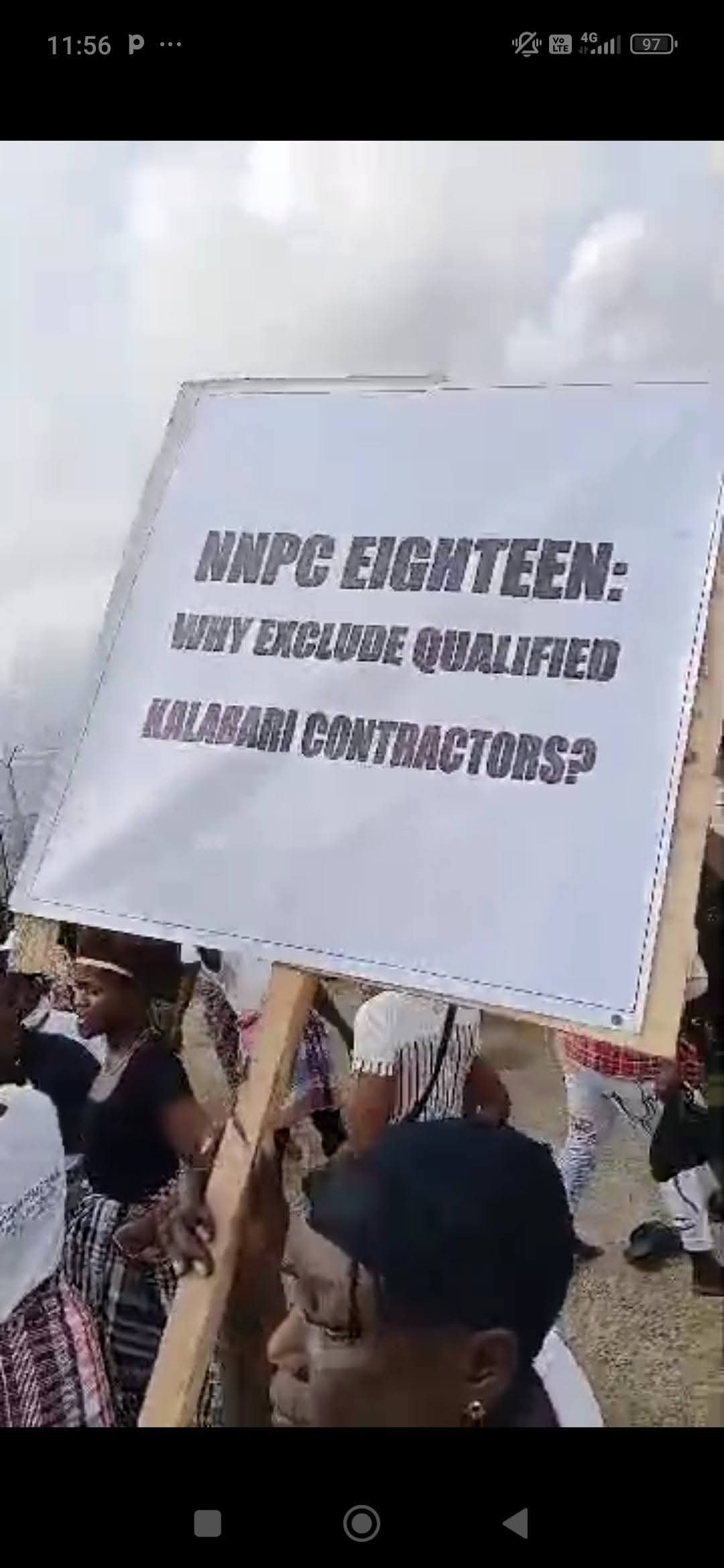
This was not noise. It was a declaration. Placards told the story words alone could not fully carry: “We Carry the Burden, They Take the Benefits.”
“Our Sacrifice, Their Gain: When Will Elem-Kalabari See Justice?”
“Local Content Law Violated: Kalabari Demands First Right of Refusal.”At the heart of the protest lies a single, bitter truth: exclusion has become systemic.
A Broken Promise in OML 18
The immediate trigger was the recent award of the OML 18 pipeline security and surveillance contract by NNPC Eighteen Limited to Manton Engineering Limited—a company neither from Elem Kalabari, nor from Rivers State.
To the protesting women, this was not merely an administrative decision. It was another chapter in a long history of betrayal.
Under Nigeria’s Local Content Law and the Petroleum Industry Act, host communities are guaranteed the right of first refusal in contracts directly affecting their territory. Yet this right, the women insist, was ignored.
Even more troubling is the contradiction embedded in the law itself. Section 257(2) of the Petroleum Industry Act places responsibility for sabotage on host communities—yet when it comes to securing their own territory, those same communities are excluded. “How can a people be blamed for insecurity,” one protester asked, “and then denied the right to secure their own land?”
Rivers That Carry Wealth, Communities That Carry Pain
Elem Kalabari is not just another oil-bearing community. It is the export artery of OML 18.
Crude oil from Cawthorne Channels 1, 2, and 3, Awoba, and Krakrama is evacuated exclusively through Elem Kalabari waterways to the Atlantic Ocean. Without these rivers, there would be no barging route—no export. Yet the women revealed a staggering injustice: none of the vessels used in these daily operations belong to Elem Kalabari. None belong to Kalabari people. None even belong to Rivers State. No courtesy visits. No engagement with the Amanyanabo. No sense of obligation to the host community—despite operations generating millions of dollars daily.
“What flows through our waters enriches others,” said a woman leader “But when it comes to opportunity, our people are treated as strangers on their own land.”
Educated Children, Locked-Out Futures
Perhaps the most painful testimony came when the women spoke of their children. Many told stories of sacrifice—years of trading, fishing, and borrowing to send sons and daughters to universities—only for those graduates to return home unemployed, watching companies operate profitably on their ancestral land.
Those fortunate enough to secure employment fared little better.
Workers who had previously been full staff under the former operator, Eroton, were reportedly downgraded to contract staff under NNPC Eighteen Limited. Their pay dropped. Job security vanished.
Working conditions worsened.
In what the women described as the ultimate insult, workers allegedly brought in from Lagos were trained by these local employees—only for the trainees to be offered permanent roles, while the locals remained on contract.“It is not just unfair,” one woman said quietly. “It is humiliating.”
Environmental Destruction, Official Silence
While contracts and jobs disappear, pollution remains. Oil contamination has been reported repeatedly in Mbi-Ama, Moni-Kiri, Portuguese Kiri, and Jacob-Ama—areas affected by constant barging and operational discharge. Marine life has dwindled. Fishing yields have collapsed. Mangroves continue to die.
Reports have been filed. Complaints have been made. Yet regulatory agencies, mandated to investigate and sanction offenders, have taken little or no meaningful action. To the women, this silence feels like complicity. A First-Hand Account of Despair.
A First Encounter with Abandonment
My first visit to Elem Kalabari on 1st January, 2025 remains a haunting reminder of how thoroughly a people can be forgotten in the midst of plenty.
I visited in the company of The Amanyanabo of Elem Kalabari, Da Amakiri Tubo, Alhaji Mujahid Abubarkr Dokubo-Asari, Dabaye Amakiri 1. It was on January 1st 2025, the day after he received the staff of office from Governor Siminalayi Fubara.
What we met was not a community benefiting from decades of oil extraction, but a landscape of utter devastation, neglect, and grinding poverty.
Elem Kalabari was wrapped in darkness—total, suffocating darkness. There was no public electricity, no streetlights, not even basic solar lamps that have become commonplace in remote settlements across the Niger Delta. Night fell early, and with it came an overwhelming sense of isolation, as though the community had been cut off not only from development, but from national consciousness itself.
There were no schools to nurture young minds.
There were no clinics to tend to the sick, the pregnant, or the elderly.
There was no market, no organised economic space, no visible engine of local commerce.
What stood in place of social infrastructure was emptiness—broken structures, abandoned land, and a silence that spoke of long years of disappointment. This was a community sitting at the heart of Nigeria’s oil wealth, yet living as though the nation’s prosperity flowed around it, never through it.
It became painfully clear that the oil companies operating in and around Elem Kalabari had taken the people for granted for far too long. Their pipelines crisscross the land, their barges dominate the waterways, their wealth moves daily through Kalabari rivers—yet the human beings who bear the environmental cost have been left with nothing to show for it.
That visit stripped away any illusion. It revealed a truth the women of Elem Kalabari now proclaim with courage and clarity: neglect has become policy, and exclusion has been normalised. What we saw was not underdevelopment by accident, but abandonment by design.
And today, the people—especially the women—are saying with one voice: enough is enough.
At night sitting on the jetty, surrounded by mosquitoes in search of cellular network, I saw across the sea, vessels loading crude oil, I watched as others left. I saw the gas flares… It was a sight.
A Line Drawn in the Sand
The women have vowed to sustain their protest until justice is done. They have warned that if ignored, they will escalate actions, including shutting down operations at the flow station.
For Elem Kalabari, this moment marks a turning point.
After decades of neglect, the people are no longer whispering their pain. They are standing, together, and saying clearly—to government, to corporations, and to the nation:
Enough is enough.
There needs no telling. This is the first of many protests that will happen. The people have their backs to the wall and can’t take it no more. I can’t blame them, they have suffered for too long.


By: Al Humphrey Onyanabo,
The PEN
Tel: 08109975621
Email: [email protected]
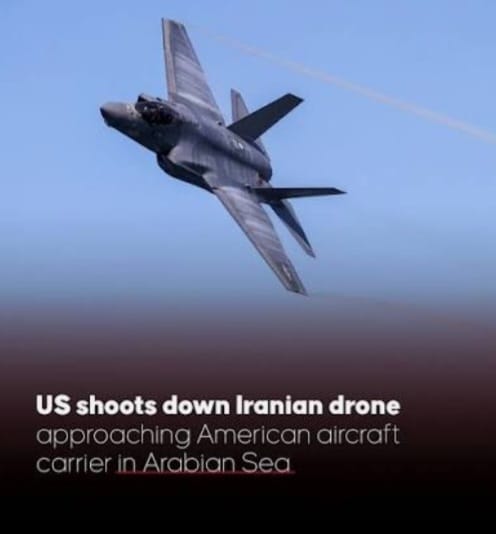
Tension in the Skies: U.S. Fighter Jet Shoots Down Iranian Drone in Arabian Sea
By George Omagbemi Sylvester | Published by saharaweeklyng.com
“An In-Depth Examination of the Strategic Clash, Its Regional Context, and What This Means for Middle East Stability.”
In a dramatic escalation that reverberates across the volatile geopolitical landscape of the Middle East, a United States fighter jet has intercepted and destroyed an Iranian military drone that was approaching the USS Abraham Lincoln aircraft carrier in the Arabian Sea. The event has once again thrust U.S.–Iran tensions into the global spotlight, revealing both the raw edges of strategic competition and the profound risks inherent in the world’s most sensitive maritime corridors.
According to the U.S. military’s Central Command, the unmanned aerial vehicle in question was a Shahed-139 drone, a type of Iranian reconnaissance and attack drone that has been increasingly deployed by Tehran in recent years. The drone’s flight toward the warship was described as aggressive and of unclear intent, prompting a U.S. F-35C fighter jet (embarked on the Abraham Lincoln) to engage and destroy it in self-defense. No U.S. personnel were harmed and no equipment was damaged during the encounter.
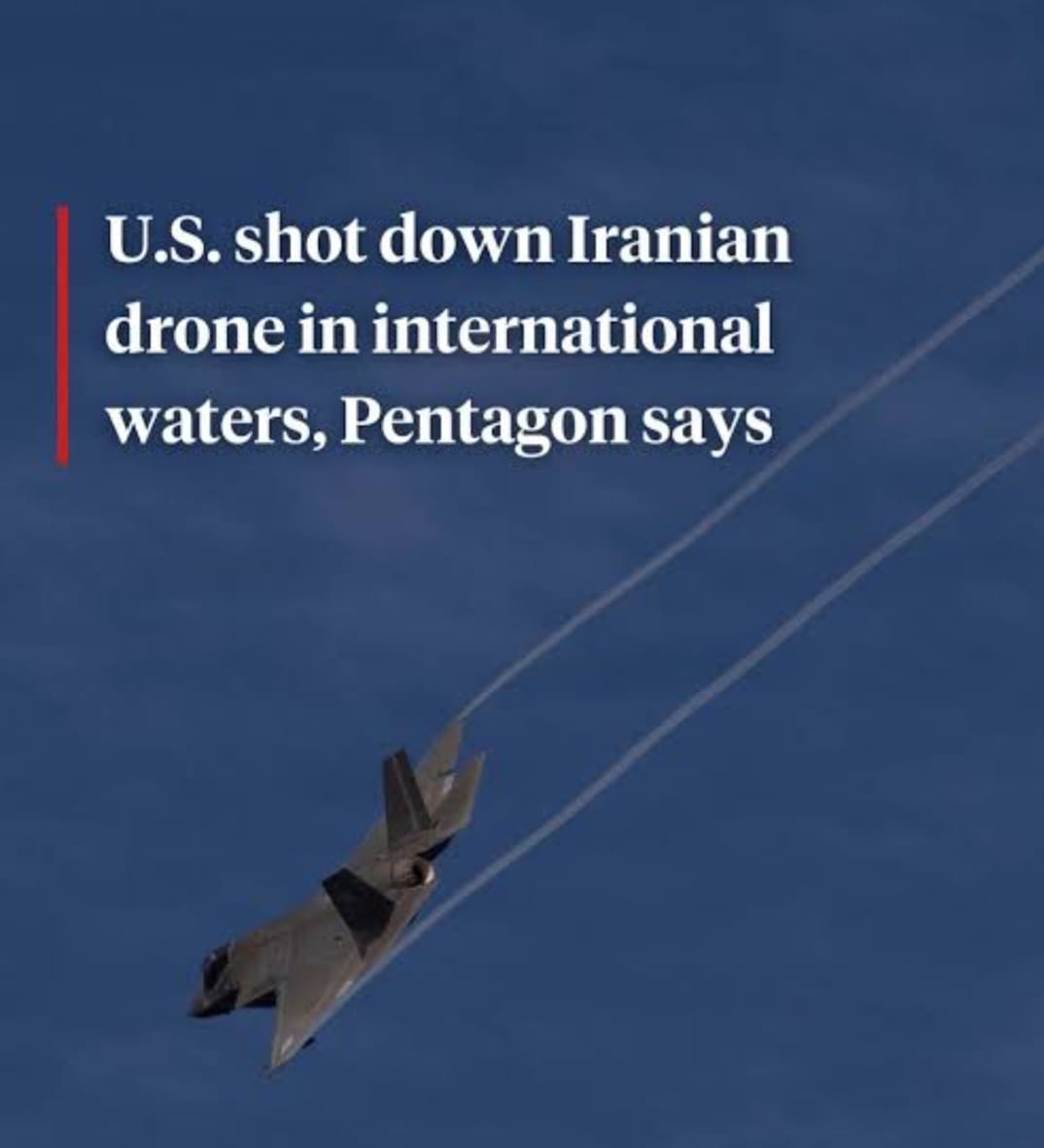
The Strategic Backdrop: A Region on Edge.
The Arabian Sea, situated between the Gulf of Oman and the broader Indian Ocean, has become a flashpoint in recent months as geopolitical tensions between Washington and Tehran have surged. The United States, under the current administration, has deployed significant naval and aerial assets to the region in response to a series of provocations and concerns over Iran’s nuclear ambitions and domestic repression. The Abraham Lincoln and its strike group represent the most visible component of that buildup, intended officially to deter hostile actions and protect sea lanes that carry a significant proportion of the world’s energy supply.
For Iran, the deployment of drones and asymmetric naval forces; such as swift patrol boats operated by the Islamic Revolutionary Guard Corps (IRGC), which serves as a strategic counterweight to U.S. military superiority. Drones like the Shahed-139 can operate at long ranges, surveil maritime traffic and potentially be armed, making them an appealing tool for Iran to project power in international waters while avoiding overt escalation.
A Sequence of Confrontations.
The shootdown did not occur in isolation. Hours earlier, the U.S. military reported that IRGC forces harassed the U.S.-flagged merchant vessel M/V Stena Imperative in the narrow Strait of Hormuz, a chokepoint through which a large percentage of global oil shipments pass. Two fast patrol boats and an Iranian Mohajer drone approached the tanker at high speed and appeared to threaten boarding or seizure, forcing the guided-missile destroyer USS McFaul and accompanying air support to intervene and ensure the ship’s safe passage.
This sequence of collisions (drones heading toward a major capital warship and smaller Iranian craft closing in on a civilian vessel) underscores just how easily miscalculation could spiral into open conflict. It evokes broader questions about freedom of navigation, the security of international waters, and the rules governing naval and aerial encounters among adversaries.
Voices From the Frontlines of Policy and Strategy.
To add intellectual weight to the analysis of this incident, it is essential to consider the interpretations of respected scholars and security experts who have long studied U.S.–Iran strategic dynamics.
Dr. Karim Sadjadpour, a senior fellow at a leading international policy think tank, argues that “the interception of this Iranian drone highlights the growing role of unmanned systems in strategic deterrence. Iran views these systems as force multipliers that allow it to contest superior naval forces at a lower threshold of direct conflict. However, this calculus is fraught with danger because it creates ambiguity about intent that can easily be misread under high tension.”
Echoing this concern, Professor Emma Sky, an expert in Middle Eastern security affairs, says, “What we are witnessing is not simply a tactical engagement; it is a symptom of deeper structural tensions. The United States and Iran are locked in a cycle where military posturing and strategic signaling substitute for diplomacy. Without clear communication channels and trusted negotiation frameworks, these kinds of encounters risk igniting a broader confrontation that neither side truly wants.”
These perspectives underscore that the shootdown is far more than a momentary flashpoint. it is a window into a broader strategic rivalry with implications for regional peace, global trade and international law.
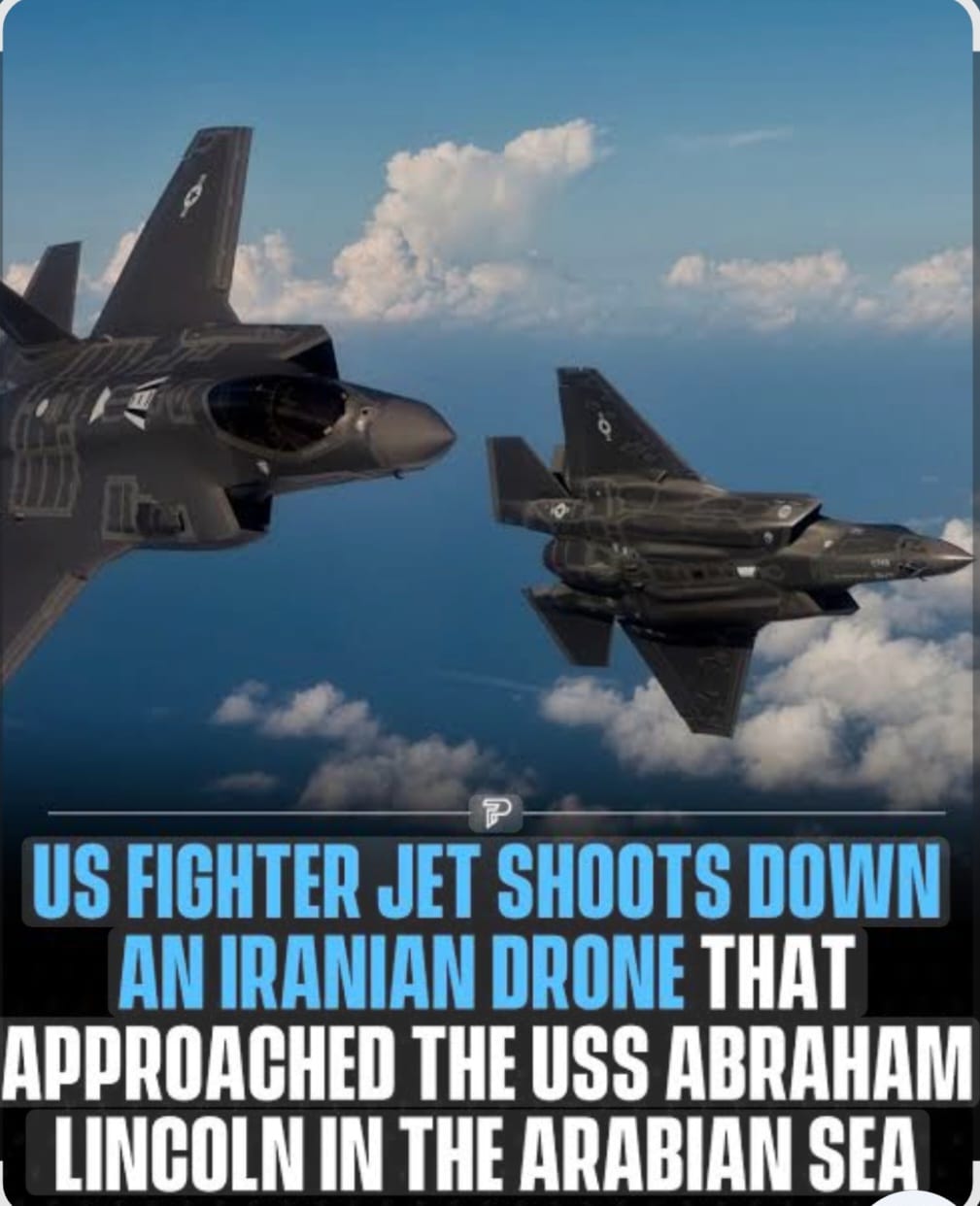
Historical Context and the Legacy of Miscalculations.
The specter of past incidents looms large over contemporary events. History offers sobering reminders of how aerial and naval engagements can escalate with devastating consequences. One of the most infamous examples was the downing of Iran Air Flight 655 in 1988, when a U.S. Navy warship mistakenly shot down a civilian airliner over the Strait of Hormuz, killing all passengers and crew. That tragedy has remained a touchstone in U.S.–Iran relations and continues to inform how both sides view rules of engagement and the risks of misidentification in crowded maritime airspace.
More recently, in 2019, Iran shot down a U.S. surveillance drone over the Strait of Hormuz, claiming it had violated Iranian airspace, a claim rejected by Washington. That event brought the two nations to the brink of retaliatory strikes before cooler heads prevailed.
These historical precedents frame the latest shootdown as not merely an isolated act of defense, but part of an enduring pattern of shadow boxing between two powerful adversaries whose missteps can have outsized consequences.
Diplomacy Amidst Tension: Negotiations Continue.
Despite the military flare-ups, diplomatic currents are still flowing. Officials from both countries have indicated that negotiations remain scheduled, with discussions focusing principally on nuclear issues and broader security concerns. Tehran has proposed shifting the venue of talks to Oman and emphasizing bilateral rather than multilateral engagement. Washington, for its part, has maintained that diplomacy is preferable to conflict but that it reserves the right to act in defense of its forces and interests.
Ali Larijani, a senior Iranian statesman, recently commented that “Iran desires peace and stability, especially in our region. But peace must be rooted in fairness, respect for sovereign rights, and a mutual recognition of security concerns.” At the same time, U.S. officials have reiterated that freedom of navigation and the protection of commercial shipping are non-negotiable principles of international order.
What This Means for Regional Stability.
The implications of this shootdown extend well beyond a single drone or a single aircraft carrier. It underscores the delicate balance of power in the Middle East, where strategic competition between the United States and Iran plays out not only in boardrooms and negotiation halls, but in the skies and seas that connect continents.
For regional actors, from Gulf states to North African capitals, these events reinforce the urgency of diversified security frameworks that reduce reliance on unilateral military actions and encourage collective approaches to maritime safety. For global actors concerned about energy markets, commerce, and geopolitical stability, the incident is a stark reminder that conflict in this part of the world can have ripple effects far beyond its shores.
Summative
The downing of an Iranian drone by a U.S. fighter jet near the USS Abraham Lincoln is far more than a tactical military engagement, it is a stark symbol of the entrenched tensions between Washington and Tehran, and a testament to how easily localized confrontations can escalate into broader strategic crises. While diplomacy persists, the fragile equilibrium that holds the Middle East together is under test. As scholars and policymakers continue to debate pathways toward peace, one truth remains clear: without sustained dialogue, mutual restraint, and robust mechanisms to manage friction, such episodes will continue to shape the future of international security with unpredictable consequences.
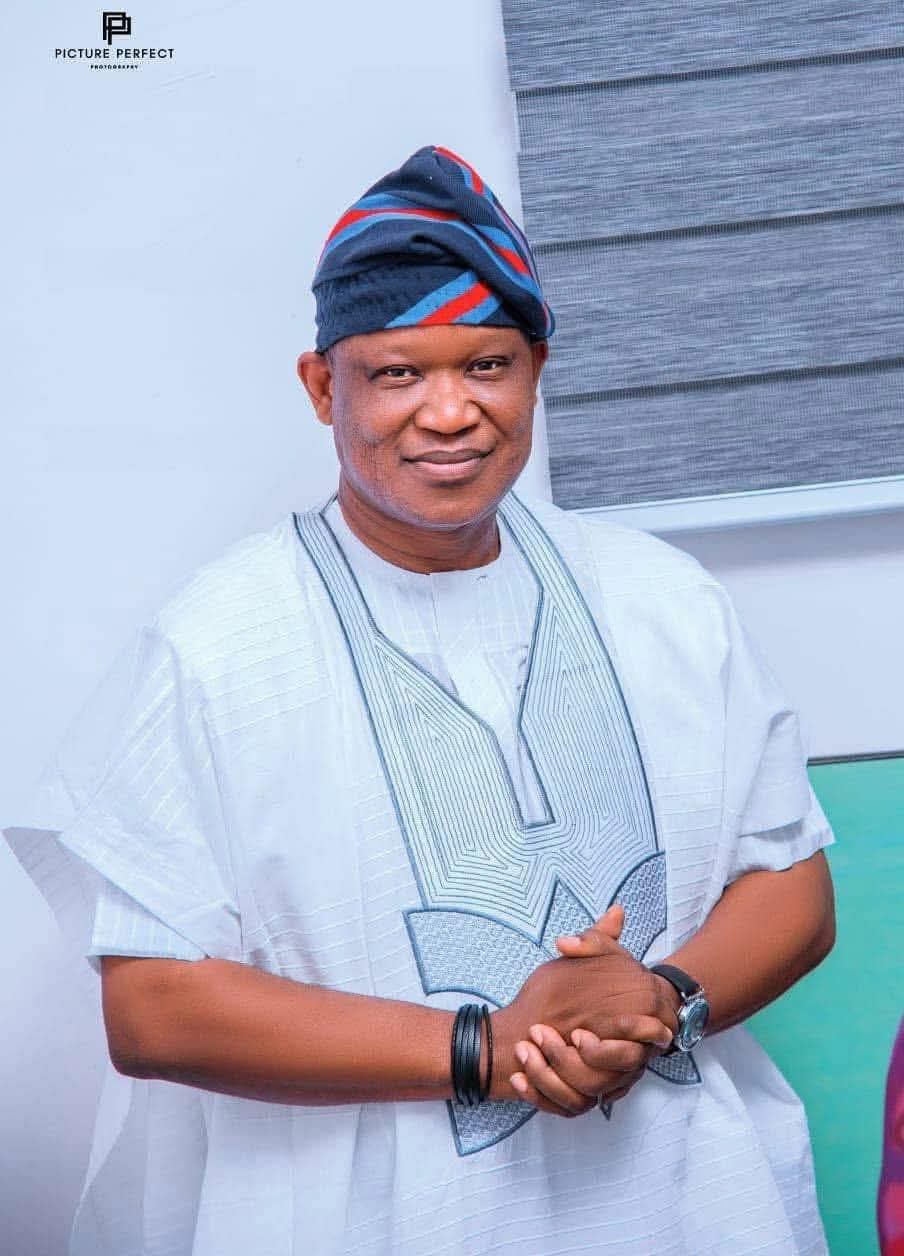
Malam Olawale Rasheed marks his birthday celebration in grand manner
…A truly resourceful man
~By Oluwaseun Fabiyi
Oluwaseun Fabiyi, a Lagos-based journalist and publisher of BethNews Media International Magazine, celebrates the birthday of Mallam Olawale Rasheed, official spokesperson for Governor Ademola Adeleke
On the occasion of his birthday, Mallam Olawale Rasheed was praised by award-winning publisher Oluwaseun Fabiyi for his outstanding qualities
In a statement released on February 2, 2026, Oluwaseun Fabiyi lauded Mallam Olawale Rasheed as a visionary leader whose impact will endure over time. The statement read: ‘Today marks a celebration of your life and the lasting influence you’ve imprinted. As a skilled spokesperson for the Osun State governor and a driving force in community development through media, your exceptional leadership has empowered the growth of numerous individuals, including ourselves, in Osun State.’
Your trailblazing spirit and commitment to excellence inspire the young minds of our era, shining brightly like a guiding star. With leadership expertise honed through diverse experiences both abroad and in Nigeria, you embody resilience, ingenuity, and a steadfast commitment to achieving remarkable growth.Your determination and resilience have inspired us all, transforming obstacles into opportunities and turning your vision into reality, thereby enriching our shared experiences; we are grateful for the privilege of celebrating your achievements.
In celebration of your prudent leadership and the divine guidance you receive, may your forthcoming days be marked by triumph and rapid progress.With humility and brilliance defining your architectural masterpieces, you set a high standard for excellence. May your birthday be a celebration of past successes and a precursor to even greater accomplishments, guided by divine wisdom and filled with peace. Wishing you many happy returns Sir!


-

 celebrity radar - gossips6 months ago
Why Babangida’s Hilltop Home Became Nigeria’s Political “Mecca”
-

 society6 months ago
Power is a Loan, Not a Possession: The Sacred Duty of Planting People
-

 Business6 months ago
Batsumi Travel CEO Lisa Sebogodi Wins Prestigious Africa Travel 100 Women Award
-

 news6 months ago
THE APPOINTMENT OF WASIU AYINDE BY THE FEDERAL GOVERNMENT AS AN AMBASSADOR SOUNDS EMBARRASSING