
celebrity radar - gossips
BURATAI’S BATTLE AGAINST INSURGENTS AND NIGERIAN DISINTEGRATION

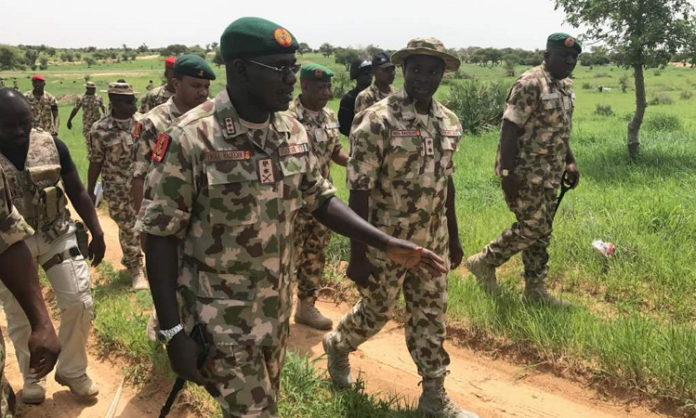
BURATAI’S BATTLE AGAINST INSURGENTS AND NIGERIAN DISINTEGRATION
“You may wonder that this counter insurgency operation has lingered for too long. We all know globally that counter-terrorism is very complex. There are some countries that have fought counter terrorism for close to 50years. But, we’re not going to leave it to linger that long. We will have to finish these criminals very soon.”
These were the exact words of Nigeria’s Chief of Army Staff, Lieutenant General Tukur Buratai while addressing troops of Operation Lafiya Dole at the Army Special Super Camp at Ngamdu, a border town between Borno and Yobe during 2020 Easter celebration.
To achieve this, Buratai vowed to remain committed to the fight against terrorism “until final defeat” even as he admitted that the fight of counter-terrorism all over the world is complex.
The concurrence of the National Association of Online Security Reporters, NAOSRE with General Buratai on the complex nature of fight against terrorism, was the spirit behind the association’s dinner summit which held at Oriental Hotel on December 11, 2020.
At the security dinner summit, speakers unanimously sued for co operation with security personnel and made serious appeal to the government for adequate funding of military operation.
Interesting, that appeal and submission hve been re echoed by another Nigerian writer Yabo Chris Ephraim who cast a retrospective look at 2020 military commitment to the fight against Boko Haran and by extension the commitment of General Buratai at ensuring that Nigeria does not disintegrate.
Without doubt, the year 2020 will forever be a historical reference point for every country around the globe. Every country had a share of the challenges that 2020 came with or at worst felt it impact. In Nigeria, it was not just the global pandemic and its ravaging impact, it was a year the Nigerian Army had a date with history. It was tested in many fronts, but it core mandate of defending our sovereignty, unity and democracy was tested in no small measure. Like Abraham Lincoln said; “only the test of fire makes fine steel”. The Nigerian Army has earned itself a place in history for standing up to the enemies of our nation both internally and externally
In the year 2020, precisely around October, there was an uprising that culminated in the killings of scores of our security personnels by our own citizens, massive and wanton destruction/looting of public and private properties. This uprising was disguised as a peaceful protest, but it was not aimed at pursuing any genuine reforms or good governance. The stated objective was to end police brutality and bring reforms, but the organizers only used that as a smokescreen to lure unsuspecting Nigerians to join the uprising and give it more publicity. The grand design was to topple the government in power by creating and sponsoring chaos and anarchy in the fashion that was used in Afghanistan, Iraq, Libya, Egypt, Syria, Tunisia and Sudan.
The strategy is to sow strife and disaffection among citizenry, which will engender a fertile ground for the evil machination of Western power in collaboration with some of our brothers in Nigeria. Once this is achieved through a combination of propaganda and incitement, then the real bloodthirsty masquerades will surface in the name of democratic institutions and organizations such as Amnesty International, ICC and their propaganda apparatus CNN.
Nigerian Army through intelligence, discovered this devilish plan by unscrupulous elements and planned a counter strategy to quell the uprising peacefully and without contravening the constitution of our country which guarantees the right of the citizens to protest. On 14th October 2020, it issued a statement to the effect that it will not allow subversive elements destabilize our country. It equally reaffirmed its commitment to protect our democracy at all cost.
Those who masterminded atrocities that ousted the legitimate government of Iraq, Afghanistan and Libya chose a different strategy of accusing the leaders of harboring and sponsoring terrorism which has not been proven till this day. The case of Egypt was plain animosity by the Western power against the Moslem Brotherhood and the government of Mohammed Morsi which started as a protest at Tahrir Square that eventually led to his ouster and death. The other cases were through economic sabotage and perpetually organized insecurity which brought these countries to their knees
Nigeria as the biggest player in Africa with so much potentials became the target of this unscrupulous elements from within and without. Through economic sabotage, relentless recruitments of terrorists, training, arming and funding terrorism, they have clogged the wheels of progress in Nigeria. With the prediction of the disintegration of Nigeria in the year 2020, it was hoped that this government wouldn’t last beyond their projected date for its disintegration. With the support of some international organizations, they project an image of democratic ideals and protection of human rights on the one hand, while fuelling terrorism and insecurity on the other. These Western powers have largely refused to cooperate with the Nigerian government in the fight against insecurity by outrightly delaying or refusing to sale arms to Nigeria, but have continue to supply more than enough arms to the enemies of Nigeria. Many may not quite understand the full scale of the grand design by this satanic forces. With this government surviving more than five years after the said prediction, they have in recent times intensified their effort to keep a date with their prediction of Nigeria’s disintegration, with the collaboration of some political jobbers willing to trade our peace and stability for their selfish ambition.
Despite the setbacks and towering challenges, the Nigerian Army and other security agencies have sacrificed their lives, blood and sweat to manage these internally and externally engineered insecurity, to keep Nigeria standing after their due date. The Nigerian Army has maintained utmost discipline, valour and patriotism even in the face of provocative propaganda, and has continue to ensure that Nigeria’s case did not spiral out of control as is the case with countries mentioned earlier.
We, as a people, must resist the plan to destabilize our country by refuting and disregarding all the negative propaganda against our government and the security agencies. We must be resolute and united in supporting our security agencies particularly the Nigerian Army that is at the forefront of this war and keeping our democracy. We must keep the faith knowing that darkness cannot overcome light and evil cannot triumph over good. I salute the courage and determination of the leadership and all personnel of the Nigerian Army and other security agencies for their sacrifices and doggedness.





celebrity radar - gossips
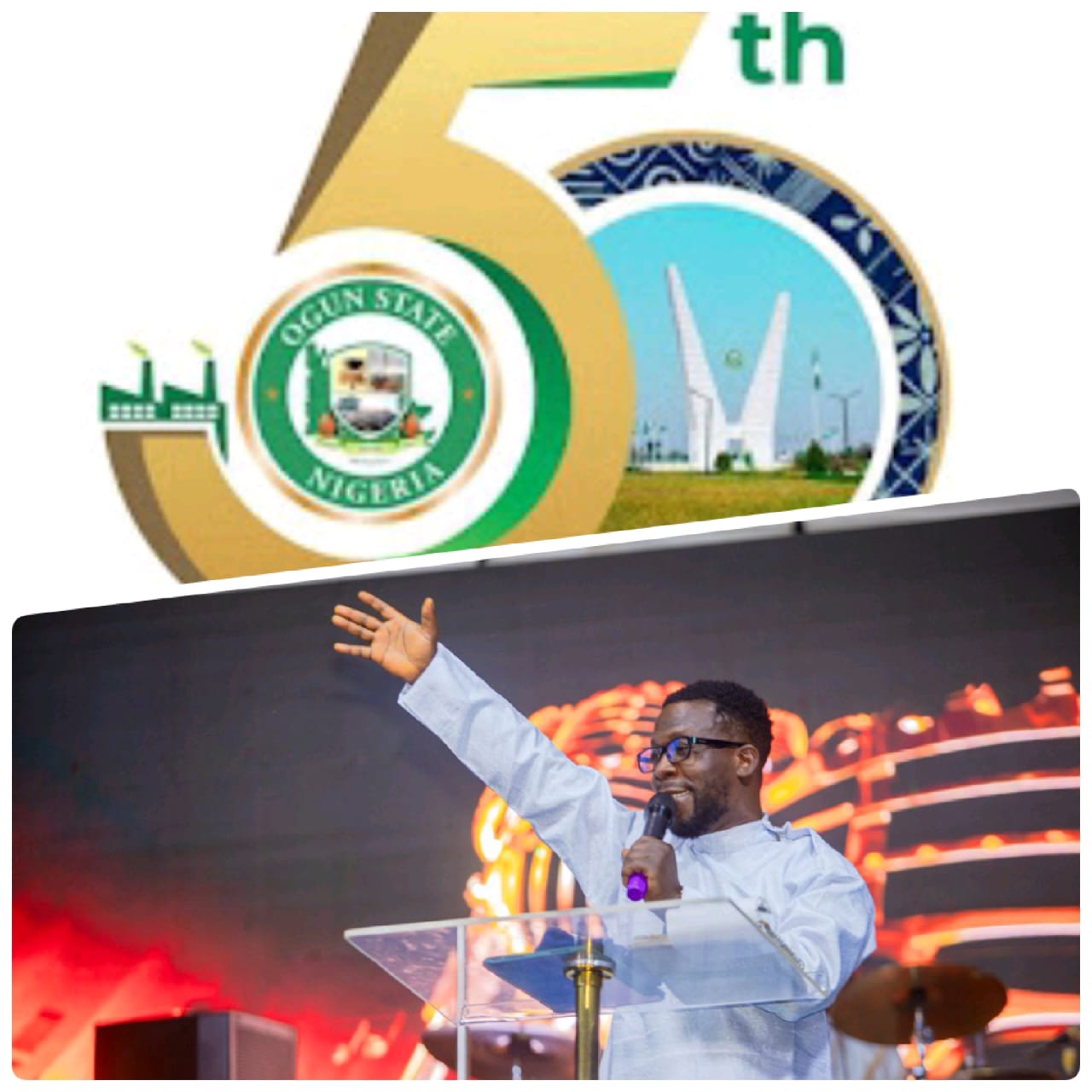
Ogun State Turns 50: Genesis Global Prophet Israel Offers Prayers for Unity During Celebrations
Ogun State Turns 50: Genesis Global Prophet Israel Offers Prayers for Unity During Celebrations
As Ogun State celebrates its golden jubilee, it is worth recalling that the state was created on February 3, 1976, and has since witnessed rapid development and growth across its entire domain.Ogun State has demonstrably proven itself to be one of the most progressive states in Nigeria, boasting rapid development, as observed by Prophet Israel Oladele Ogundipe in a statement released through his media aide, Oluwaseun Fabiyi.
“I am proud to hail from Ogun State, a region blessed with an abundance of mineral resources and home to a significant number of manufacturing companies in Nigeria, which is a testament to the state’s unique blessings and favour. Ogun State is richly endowed with esteemed public figures who have distinguished themselves in diverse fields such as politics, academia, religion, entertainment, and sports. The state is proud to have produced leaders of national stature, including a President and Vice President of Nigeria, while its entertainment and sports personalities have garnered international recognition, consistently positioning Ogun State at the forefront of national achievements” Governor Dapo Abiodun’s regime has prioritized infrastructural development, commissioning roads, and showcasing achievements that demonstrate Ogun’s remarkable progress, worthy of commemoration at fifty.
Ogun State has emerged as a pivotal entity in Nigeria, steadily growing in strategic importance. Strategically situated near Lagos, it serves as a vital commercial corridor, connecting the nation’s economic hub to the Southwest region. By living up to its reputation as the Gateway State, Ogun unlocks opportunities for enterprise, tourism, and development.Economically and infrastructurally, the state has progressed significantly, and its political journey has been outstanding in all facets.
It is with great pleasure that I join in celebrating this milestone with Governor Prince Dapo Abiodun, while praying for increased unity within Ogun State and beyond, to ensure that the state’s progress translates into rapid growth for its inhabitants.
celebrity radar - gossips
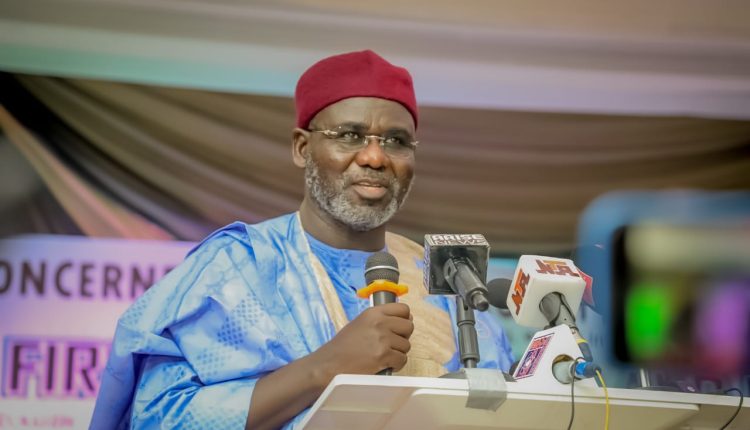
Buratai Congratulates Newly Elected TYBGRCC Executive, Commends Transparent 2026 Polls
Buratai Congratulates Newly Elected TYBGRCC Executive, Commends Transparent 2026 Polls
February 2, 2026
celebrity radar - gossips
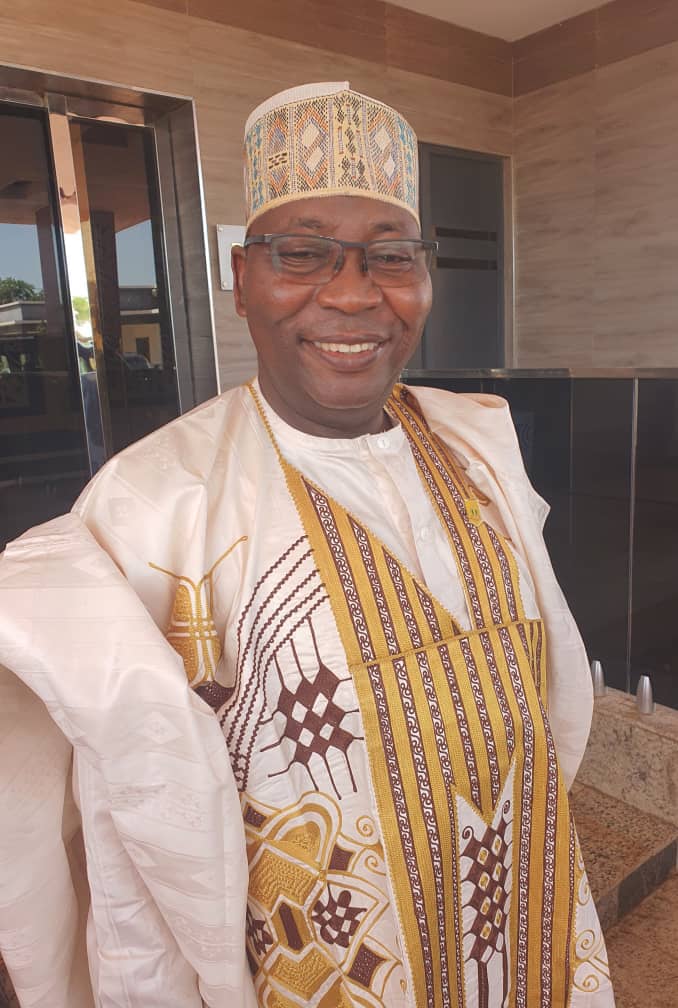
AANI CELEBRATES BRIGADIER-GENERAL S. K. USMAN (RTD), mni (SEC 40, 2018), ON HIS BIRTHDAY
*AANI CELEBRATES BRIGADIER-GENERAL S. K. USMAN (RTD), mni (SEC 40, 2018), ON HIS BIRTHDAY
On behalf of the National Executive Committee and the entire AANI family, the President of the Alumni Association of the National Institute (AANI), Ambassador Emmanuel Obi Okafor, mni, warmly felicitates with Brigadier-General S. K. Usman (Rtd), mni (SEC 40, 2018), on the occasion of his birthday today, Monday, 2nd February 2026.
Brigadier-General S. K. Usman (Rtd), mni, is a former Director of Army Public Relations (DAPR) of the Nigerian Army, widely respected for his professionalism, strategic communication expertise, and principled leadership. He also served meritoriously as the immediate past National Publicity Secretary of AANI, where he significantly strengthened the Association’s public engagement, visibility, and messaging standards. Since retirement, he remains active as a security consultant and public affairs analyst, offering authoritative insights on national security and governance. He holds the traditional title of Sarkin Yakin Kanwan Katsina and currently serves as Chairman, Board of Trustees of the Confederation of African Journalists (CAJ). Notably, he is fondly acknowledged for mentoring and transforming the current AANI National Publicity Secretary from an engineer into a refined wordsmith.
The AANI family joins his family, friends, colleagues, and mentees in celebrating this distinguished officer, communicator, and mentor, wishing him good health, long life, and continued relevance in national service.
Warm regards,
Engr. Ifeanyi Jude Ngama, mni
National Publicity Secretary, AANI


-
 celebrity radar - gossips6 months ago
Why Babangida’s Hilltop Home Became Nigeria’s Political “Mecca”
-

 society6 months ago
Power is a Loan, Not a Possession: The Sacred Duty of Planting People
-

 Business6 months ago
Batsumi Travel CEO Lisa Sebogodi Wins Prestigious Africa Travel 100 Women Award
-
 news6 months ago
THE APPOINTMENT OF WASIU AYINDE BY THE FEDERAL GOVERNMENT AS AN AMBASSADOR SOUNDS EMBARRASSING