
Politics
Examining Governor Sanwo-Olu’s 600 Days of Making Lagos Greater

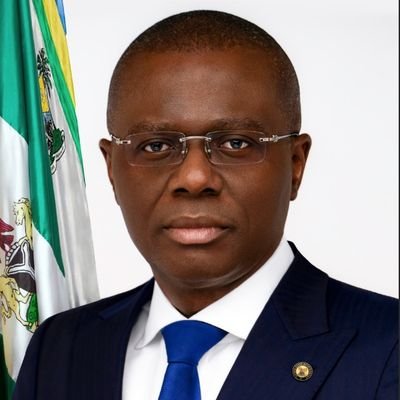
It is about 600 days that Governor Babajide Olusola Sanwo-Olu took over the reins of affairs as Governor of Lagos State. Between then and now, the governor has been confronted by several debilitating storms like the corona virus pandemic and the ENDSARS protests yet, he has not derailed from his developmental agenda christened T.H.E.M.E.S (Traffic Management and Transportation; Health and Environment; Education and Technology; Making Lagos a 21st Century State; Security and Governance). In this article, we examine how he has fared in each area of T.H.E.M.E.S.

By Femi Titus
TRAFFIC MANAGEMENT AND TRANSPORTATION
To aggressively address the challenge of bad roads and ease traffic congestions across the state, the first thing Governor Sanwo-Olu did on assumption of office was to introduce the ‘Zero Tolerance for Potholes Initiative’ by directing the Public Works Corporation to commence the patching and rehabilitation of the roads and the clearing and cleaning of all secondary and tertiary drainage systems to ensure the free flow of rainwater during the rainy season across the state. He also directed the Lagos State Traffic Management Authority (LASTMA) to operate a minimum of two shifts by managing traffic until 11:00 pm daily.
The ubiquitous okada motorcycles and tricycles were also banned across 15 local councils as a stop-gap solution to the endless traffic jams. To ameliorate the attendant inconvenience of the ban, the state government rolled out 65 high-capacity buses in addition to the existing buses in the fleet of the Lagos Bus Services Limited. 550 medium-capacity vehicles are expected anytime soon.
To further strengthen the drive for a multi-modal transport system, Governor Sanwo-Olu launched the Uber Boat water transportation service, a partnership between the global ride-hailing company and the Lagos State Waterways Authority, LASWA, which is exploring the state’s abundant waterways and, thereby, reducing the pressure on roads.
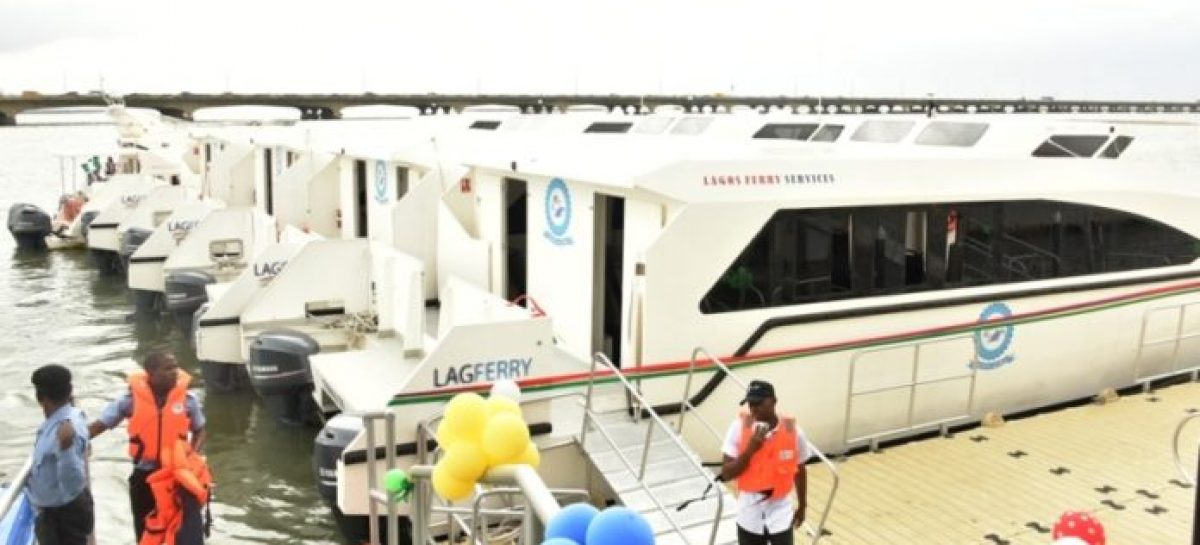
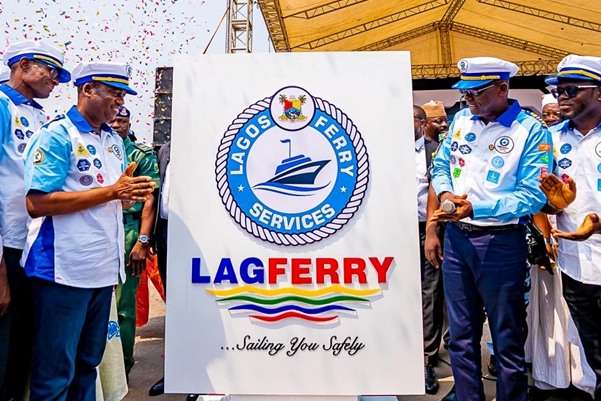
Similarly, the Lagos Ferry Services (LAGFERRY) launched its commercial operations in February. In its fleet are 14 boats with a capacity of between 30 and 60 passengers. Apart from the Badore Ferry Terminal in Ajah, other modern jetties are being built in Ijegun, Badagry, Lekki, and Ajegunle.
Significantly, to improve traffic management and transportation, the Blue Line Mass Transit Rail project, which started in 2009, has been revived with the completion of the sea-crossing track. The five-kilometre elevated sea-crossing track of the project in Marina was completed last December. Other rail lines on the drawing board are the 68km – Green Line from Marina through Victoria Island, Lekki Phases 1 and 2, Ajah, Ogombo, Lekki Airport to Lekki Free Trade Zone; the 60km – Purple Line from the Redemption Camp through Ogba, Iyana Ipaja and Igando ending at Ojo; and the 34km Yellow Line from Otta through Isheri Osun, Ejigbo Mafoluku, Isolo to National Theatre. There is also the 48km Orange Line from Ikeja crossing through Mile 12, Ikorodu, Alapadi, Eligana, Isiwu, Imota and ending at Agbowa.
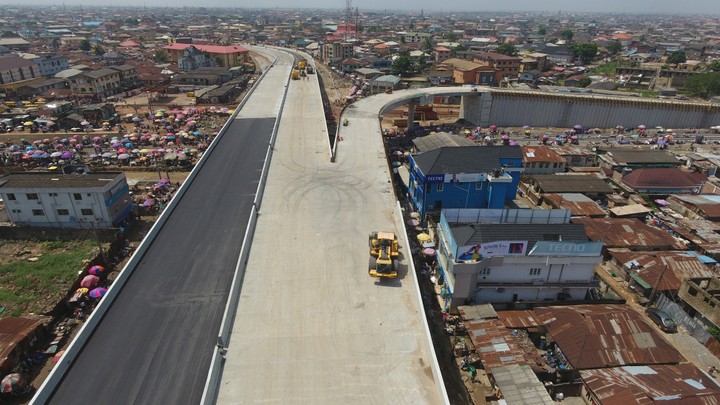
Also, the Oshodi – Abule-Egba section of the Lagos–Abeokuta expressway has been reconstructed and commissioned last September. The 13.68 kilometre-long BRT corridor has reduced commute time on the route by as much as 75 per cent.
HEALTH AND ENVIRONMENT
In a bid to create more awareness and sensitisation on the Lagos State Health Scheme (LSHS), the Lagos State Health Management Agency (LASHMA) has launched ‘Ilera Eko’ campaign to achieve universal health coverage for all Lagosians. This is intended to achieve universal health coverage for Lagos residents.
There is a renaissance in the state’s public health sector. A 149-bed Maternal and Childcare Centre, MCC, in Alimosho General Hospital was commissioned recently. The specialist centre is equipped with ultra-modern equipment that aids prompt delivery of maternal and child care services.
A four-floor 110-bed Maternal and Child Centre (MCC) was also recently commissioned in Eti-Osa. Specially designed to provide integrated healthcare for mothers and children, the facility has four operational surgical theatres, defibrillators, ventilators, and oxygen therapy and phototherapy units. The Eti-Osa MCC is the eighth facility completed by the state government to provide specialized mother and childcare services while two other similar facilities located in Epe and Badagry are nearing completion.
The Healthy Bee Initiative of the Lagos government, a free healthcare programme aimed at combating organ impairment and life-threatening ailments in children saw over 25,000 residents benefitting from free treatment and surgery recently.
Lagos has also been at the forefront of the fight against the coronavirus pandemic in Nigeria with a functional incident command centre and, apart from the existing isolation centre, recently opened another in Victoria Island. The new centre is a purpose-built medical facility equipped with ICU capacities in response to the resurgence of the coronavirus in Nigeria with Lagos still the hub of the infection.
The Lagos State Waste Management Authority, LAWMA, acquired 10 boats to boost its marine waste operations. The agency also launched the Lagos Blue Box initiative, a single stream recyclable collection program that encourages the separation of recyclable materials from the general waste at the point of generation and which aims to, among other objectives, encourage zero waste generation in the state and promote a healthier and cleaner environment; reduce carbon footprints and increase economic security by tapping the domestic source of the material.
EDUCATION & TECHNOLOGY
To promote a smart city with technology, the Sanwo-Olu administration organised the Art of Technology Lagos where the governor announced a N250m grant for tech start-ups to encourage young people with fantastic ideas.
The administration gave N350million bailout for personnel cost and increased the subvention of the Adeniran Ogunsanya College of Education from N200million to N250mllion.
As part of the reforms for the education sector, the Eko Excel, an acronym for ‘Excellence in Child Education and Learning’, was launched in January 2020. It is already empowering teachers to deliver at the same level as their counterparts around the world; and providing strong continuous support that will encourage improvement in teachers and pupils. An estimated 14,000 primary school teachers are expected to benefit from the initiative while over 500,000 pupils would be positively impacted. Microsoft recently partnered with the state government to train 18, 000 teachers on its Microsoft Office suite.
In continuation of the use of skill acquisition as a tool of empowerment, 4, 885 youths graduated from 17 skill acquisition centres located in the five divisions of the state.
More than three decades after it was established, the Lagos State University, LASU, is set to become a residential tertiary institution as the state government, under the Public-Private Partnership, PPP, has signed a Build, Operate and Transfer, BOT, agreement with six property developers to construct 8,272 units of hostel in the school’s premises to be ready in the Year 2021.
EMPOWERMENT/SOCIAL WELFARE
To help legal residents whose businesses were affected by the carnage trailing the END SARS protest to resuscitate their businesses, the governor launched the N5bn MSME Recovery Fund under the Lagos State Entrepreneurship Trust Fund (LSETF).
In fulfilment of his pledge to end poverty through the implementation of socio-economic empowerment programs, Governor Sanwo-Olu recently empowered a total of 1,050 vulnerable and indigent residents in the state. Beneficiaries received, in addition to financial support, business support tools and equipment such as grinding machines, hairdressing tools, sewing machines and tyre repair kits among other materials. The governor promised that this initiative would be done quarterly.
Last November, the state government paid about N1.3 billion into the Retirement Savings Account (RSA) of 246 retirees in the state’s public service for October. The beneficiaries included employees from the mainstream service, Local Government Service, State Universal Basic Education Board (SUBEB), the Teaching Service Commission (TESCOM), and other parastatals of the state government.
INFRASTRUCTURE
The state government has resuscitated the Adiyan Waterworks, Phase Two with contractors mobilised to site. The water treatment plant, with a production capacity of 70 million gallons per day, was started in 2013. About N600million compensation was paid to owners whose property had to give way for the reconstruction works. After resuscitation, it will provide drinking water for more than five million Lagos residents and will help to address sanitation challenges and fight water-borne diseases.
In Ojokoro Local Council Development Area, 31 roads, which adds up to a total of 20.216 kilometres, have been completed and commissioned by Governor Sanwo-Olu.
The hitherto abandoned Pen Cinema flyover project is expected to be completed and commissioned in the first quarter of 2021.
A newly constructed section of the Lagos – Badagry expressway has been declared open. The 4-kilometre section stretches from Agboju and cuts across strategic locations like Maza-Maza and Alakija to Trade Fair.
The state government entered into a Public Infrastructure Improvement Partnership (PIIP) agreement that involves banks handling the rehabilitation of roads as a Corporate Social Responsibility (CSR). For instance, Access Bank is partnering with the state government in the infrastructural upgrading of the Oniru network of roads under the PIIP arrangement.
Under Governor Sanwo-Olu, the China Development Bank has injected a $629million financing facility to accelerate the completion of the Lekki Deep Seaport project, which started in 2011. When completed in 2022, the deep seaport would have two container berths of 680-metre long and 16.5-metre water depth. It will also have the capacity to be berthed by fifth-generation container ships, with a capacity of 18,000 TEU ship. Governor Sanwo-Olu affirmed that the project will transform the Lekki corridor into a new economic hub and offer a new impetus for socio-economic growth in the state.
HOUSING
In January 2021, Governor Sanwo-Olu commissioned 264-units of flats ranging from one to four bedrooms for upper and middle-income earners in two different estates in the Ikate Elegushi and Lekki area of the state.
The 492-flat housing project in Igando area of Lagos was completed, commissioned and handed over to its new occupants in 2019. The project, which originally started in 2012 under the Home Ownership Scheme of the administration of ex-Governor Babatunde Fashola, but was abandoned by the immediate past administration, is a testimony of Sanwo-Olu’s campaign pledge to complete and deliver all critical projects inherited from the last administration. The estate is fittingly named after the first civilian governor of Lagos State, Alhaji Lateef Jakande, who died February 11th, 2021. Similarly, the recently commissioned 132-unit Lagos HOMS project at Iponri in Surulere area was named after former Governor Babatunde Raji Fashola, SAN.
There are also an additional 360 units in Igbogbo, 744 in Sangotedo, 660 in Agbowa and 680 in Egan Igando are slated for commissioning soon.
AGRICULTURE
Under the Agro-Processing Productivity Enhancement and Livelihood Support (APPEALS) Women and Youth Empowerment Scheme (WYEP), 350 have graduated being the batch 1. Out of these beneficiaries, 165 majored in the poultry value chain, 35 in the rice value chain and 150 in the aquaculture value chain. The thrust of the project is to increase farmers’ productivity, production, and improve the processing and marketing of the target value chains, which would foster job creation along identified value chains.
The Imota Rice Mill in Lagos is nearing completion. The 38 metric tonnes per hour mill will be one of the biggest on the continent when completed. It is expected to throw up between 1000 and 1,500 jobs and positively impact the rice value chain that will produce 2.4 million bags of 50kg rice yearly.
The governor also unveiled a five-year master plan that would guide the state’s intervention and investment in agriculture for a long-term return with the objective to reduce food importation and over dependence on finished products from outside the country.
The state government is also in the process of establishing the Lagos Aquaculture Centre of Excellence (LACE) to drive fish production in the state. The centre will have a hatchery with a capacity to produce 50 million fish – enough to supply 5,000 smallholder farms. It will also include a 24,000 tonnes feed mill and a 20,000 tonne capacity fish processing centre. He said that the annual demand for fish in the state was 374,000 tonnes, considerably below the state’s current 155,000 tonnes of production.
SECURITY
Effective security is an essential component of the Sanwo-Olu developmental agenda for Lagos State. As such, he has been proactive and pragmatic in the handling of the state’s security providing the required support for the police for effective discharge of their duties. He recently commissioned the new Area L Police Command in Ilashe, Ojo; the Area ‘J’ Police Command administrative building at Elemoro town in Ibeju-Lekki and donated 125 patrol vehicles and 35 patrol motorcycles for the use of security operatives in the state.


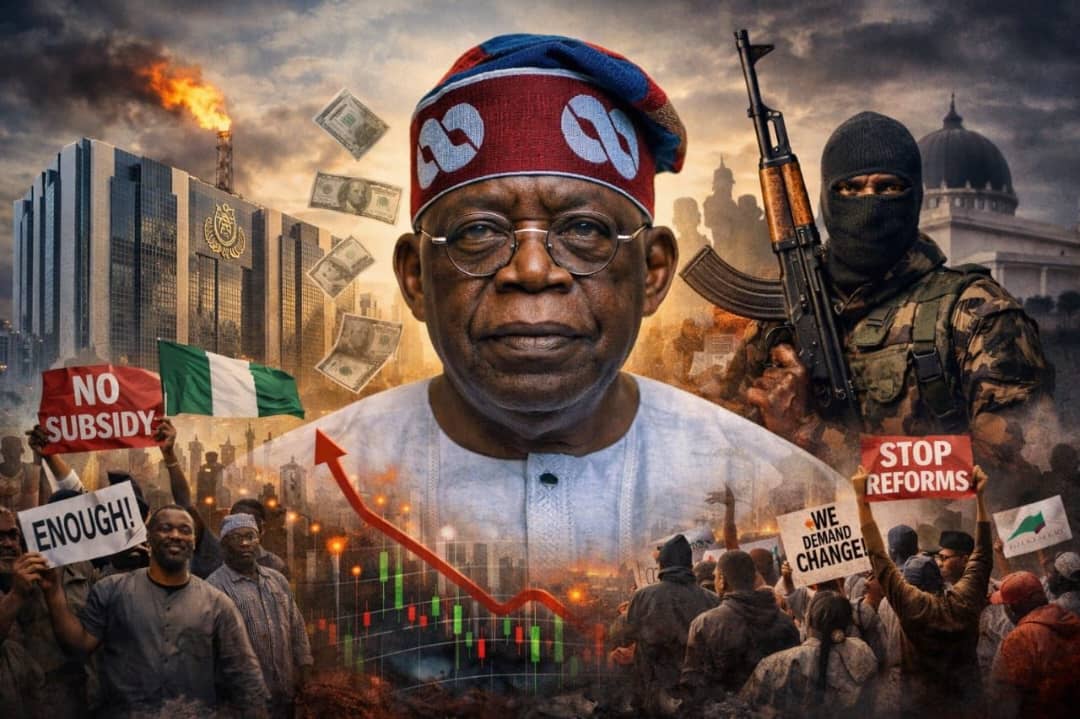
Are You Better Off? Two Years On, Nigerians Ask Hard Questions
Two years after this administration took office, Nigerians are confronted with a hard and unavoidable question: are we truly better off? For many households, the answer is no. The cost of living has risen sharply, purchasing power has collapsed, and daily survival has become a struggle. What was promised as renewed hope now feels like renewed hardship, especially for ordinary Nigerians who bear the brunt of economic decisions.
Since 2024, an estimated 14 million more Nigerians have slipped into poverty, pushing the total number of people living below the poverty line to about 129 million. This is not just a statistic but a human tragedy. It speaks to empty kitchens, withdrawn children, shuttered small businesses, and families forced to choose between food, education, and healthcare. At such a moment, leadership is expected to respond with empathy, urgency, and clear welfare policies. Instead, Nigerians hear promises without visible plans or measurable outcomes.
History offers a powerful contrast. Chief Obafemi Awolowo built his leadership on a simple philosophy: the welfare of the people must come first. His introduction of free universal primary education in the Western Region transformed literacy and opportunity, while free healthcare for children and disciplined public finance proved that social welfare and fiscal responsibility can coexist. His vision showed that government exists to lift the many, not protect the few.
That tradition of people centred governance did not end with Awolowo. In recent years, the Buhari administration rolled out the largest social investment programme in Nigeria’s history. Initiatives such as N Power, conditional cash transfers, school feeding, and trader support schemes reached millions of vulnerable Nigerians. While imperfect, these programmes acknowledged poverty as a national emergency and treated welfare as a core responsibility of government.
At the state level, examples from Osun and Kaduna reinforced the same lesson. In Osun, Rauf Aregbesola prioritised youth employment, school feeding, social welfare for the elderly, digital learning tools, and massive school infrastructure, earning national and international recognition. In Kaduna, Nasir El Rufai expanded free education, scholarships, healthcare access, and women empowerment programmes, proving that subnational governments can deliver real social protection when there is political will.
Aregbesola’s administration launched the Osun Elementary School Feeding and Health Programme (O-MEALS), which provided daily meals to over 250,000 pupils in public primary schools across the state. The programme directly empowered more than 3,000 local food vendors and caterers, most of them women, while creating a steady market for local farmers, especially poultry farmers, vegetable growers, and food suppliers. Beyond improving school attendance and nutrition for pupils, O-MEALS reduced the financial burden on parents and injected income into rural economies. Complementing this was the O-YES youth empowerment scheme, which engaged about 40,000 young people in public works, community services, and vocational training. Massive investments in modern school infrastructure, digital learning tools (Opon Imo), social welfare support for the elderly, and health initiatives earned Osun national and international recognition. These interventions demonstrated that with political will, subnational governments can protect the vulnerable, stimulate local economies, and deliver inclusive development even in fiscally constrained environments.
 ;
;
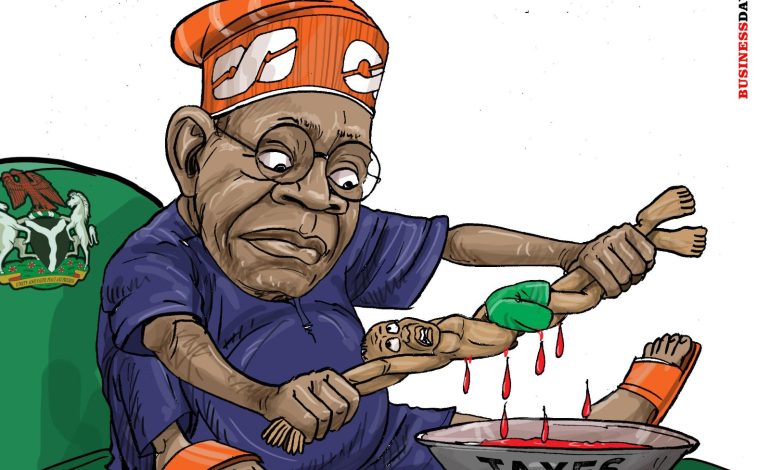
These policies are not distant memories or theoretical ideas. They are recent, verifiable interventions that improved lives and expanded opportunity. They demonstrate that governance rooted in compassion, planning, and accountability can soften economic shocks and protect the vulnerable, even in difficult times.
Today, many Nigerians feel abandoned by a system that appears more responsive to elites than to the masses. The absence of strong, visible welfare policies in the face of rising poverty raises a troubling question about our national priorities. A society that allows suffering to deepen without intervention risks losing not just stability, but its moral compass.
Nigeria must return to a simple principle: leadership exists to serve the people. A country where the child of a poor family has the same chance as the child of the powerful is not built by slogans, but by deliberate policies. Nigerians must demand better governance, resist the temptation to trade their votes for short term gain, and insist on a future where leadership truly cares.
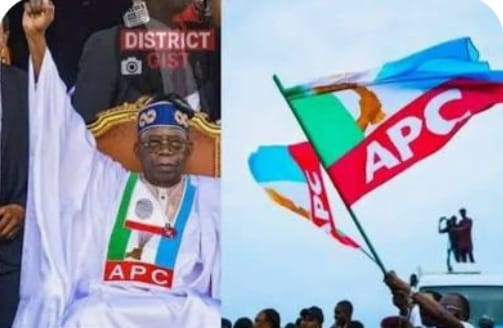
A Nation in Distress: How APC’s Years in Power Have Deepened Nigeria’s Crisis
By George Omagbemi Sylvester | Published by saharaweeklyng.com
“A Nation at the Brink — Why APC’s Failures Demand a New Political Direction.”
Nigeria stands today at a perilous crossroads with economically strained, socially fragmented and morally wounded. The promise that once accompanied the rise of the All Progressives Congress (APC) has given way to widespread disillusionment. What was sold as a vehicle for national renewal has, in reality, become a synonym for hardship, division and stagnation. This is not hyperbole. It is the sobering verdict of millions of citizens whose lived realities speak louder than partisan spin.
From the economy to national unity, from domestic politics to global standing, from tribal tensions to religious relationships, the APC’s record has been a catalogue of missed opportunities and deepening crises. Nigeria deserves better. Nigerians deserve another party, one that puts the people above politics, unity above division and progress above self-interest.
ECONOMIC DECLINE: Hunger, Poverty, and Eroded Hope.
The heart of any nation’s stability is its economy. On this front, the APC’s performance has been deeply disappointing. Bold reforms such as the removal of fuel subsidies and foreign exchange liberalisation were touted as necessary moves to stabilise the economy and attract investment. Yet, for millions of ordinary Nigerians, these policies have translated into unbearable hardship. Prices of essential goods have soared, inflation has blasted household budgets and poverty has become entrenched in everyday life.
Critics inside and outside Nigeria point to a stark reality: despite claims of economic recovery, the benefits remain out of reach for the majority. Food inflation, transport costs and the cost of living have escalated beyond what most families can afford. Various reports highlight that poverty and food insecurity have worsened, even as macroeconomic figures are debated.
As economist and social critic Ha-Joon Chang once reminded the world, “An economy’s success should be measured by how its most vulnerable citizens fare, not by abstract figures on paper.” Today, Nigeria’s most vulnerable are sinking deeper into deprivation.
TRIBAL AND RELIGIOUS RELATIONSHIPS: Division Instead of Unity.
Nigeria’s diversity is its strength with a mosaic of peoples, cultures and histories. Yet under the APC, this diversity too often became a source of division rather than a foundation for unity. Competing ethnic interests have periodically been manipulated for political advantage, reopening old wounds and aggravating suspicions between communities. Observers have noted that political rhetoric and strategic statements have at times undermined national cohesion, diverting attention from governance failures to age-old regional tensions.
A healthy polity celebrates differences while forging shared purpose. A government should foster cooperation across tribes and religions not exploit fault lines for political survival. Nigerian scholar and author Wole Soyinka’s enduring wisdom resonates here: “The greatest threat to a nation is the corruption of its conscience.” A leadership that fuels division corrodes the moral fabric of the nation.
REGIONAL RELATIONSHIPS: Neglect and Fragmentation.
A nation for the people must not be a nation divided. Though many Nigerians feel left behind. Regions that should be engines of growth have languished under policies that prioritise political expediency over structural development. The promise of balanced regional development has often been drowned by centralised decision-making that pays lip service to inclusivity but delivers little in tangible benefits.
Nigeria’s unity must be more than rhetoric; it must be reflected in policy outcomes, improved infrastructure and equitable opportunities for all regions. When citizens feel marginalised or unheard, the very idea of a united nation weakens.
PARTY RELATIONSHIPS: Internal Disarray and Erosion of Trust.
Political parties thrive on discipline, vision and inclusive leadership. Yet the APC has struggled with internal cohesion. Public disputes, defections and power struggles have underscored deeper conflicts over direction and purpose. Instead of engaging critics with constructive dialogue, party rhetoric too often resorts to personal attacks and defensive posturing, closing off spaces for genuine critique and reform.
Strong parties are not built on silencing dissent but on embracing diverse viewpoints and using them to strengthen policy and practice. The APC’s internal dynamics reflect a larger problem: a disconnect between leadership and the lived experiences of citizens.
THE NATIONAL ASSEMBLY: Compromise Over Accountability.
A robust legislature is a cornerstone of democratic governance — a check on executive power and a voice for the people. Yet, under APC dominance, the National Assembly has often appeared more an instrument of acquiescence than one of accountability. Rather than provide independent oversight, it has been criticised for aligning too closely with executive priorities, even when those priorities fail to address fundamental public needs.
Democracy is not measured by elections alone but by the capacity of institutions to hold leaders to account and to represent the interests of all citizens not just a political elite.
INTERNATIONAL RELATIONS: Reputational Strains and Missed Opportunities.
On the global stage, Nigeria’s voice once carried remarkable moral weight in Africa and beyond. Though when domestic weaknesses are projected internationally (from economic instability to insecurity) that voice diminishes. Diplomatic engagement demands a strong, confident nation, secure in its foundations and clear in its values.
While governments change and global dynamics shift, a consistent lesson from international relations scholars is that credibility comes from internal strength. A nation beset by internal anxieties cannot project the confidence needed to lead on the world stage.
HUMANITY FIRST: Policies That Hurt the People.
Above all, governance must centre on human dignity. When policies deepen suffering, particularly for the most vulnerable, leadership has lost its moral compass. The APC era has witnessed protests, public frustration and grassroots movements demanding dignity and relief from hardship. The “End Bad Governance” protests, for example, were driven by widespread discontent with rising hunger and economic distress with realities far removed from official narratives of ‘RECOVERY’.
True leadership listens first to the voices of its people not to spin doctors or political strategists.
THE TIME FOR CHANGE IS NOW.
This is not an indictment born of bitterness, it is a call to action. Nigeria deserves a politics that places the welfare of citizens above all else. A politics that unites rather than divides. A politics that fosters prosperity, justice and opportunity for every Nigerian.
Renowned Nigerian historian and scholar Chinua Achebe once wrote that “Until the lion learns to write, every story will glorify the hunter.” It is time for Nigerians themselves (not the political elite) to reclaim the narrative of this nation.
The APC’s record across economy, unity, governance and leadership is a compelling reason to consider another party with one that builds bridges, uplifts citizens and strengthens institutions. Nigeria’s journey toward greatness cannot wait another decade in the hands of leaders who promise change but deliver distress.
Let this be the clarion call for a new chapter with one defined by responsibility, humanity, and genuine progress.
Politics
Governor Dauda Lawal Commissions Key Strategic Projects in Tsafe LGA, Commits to Responsive Development
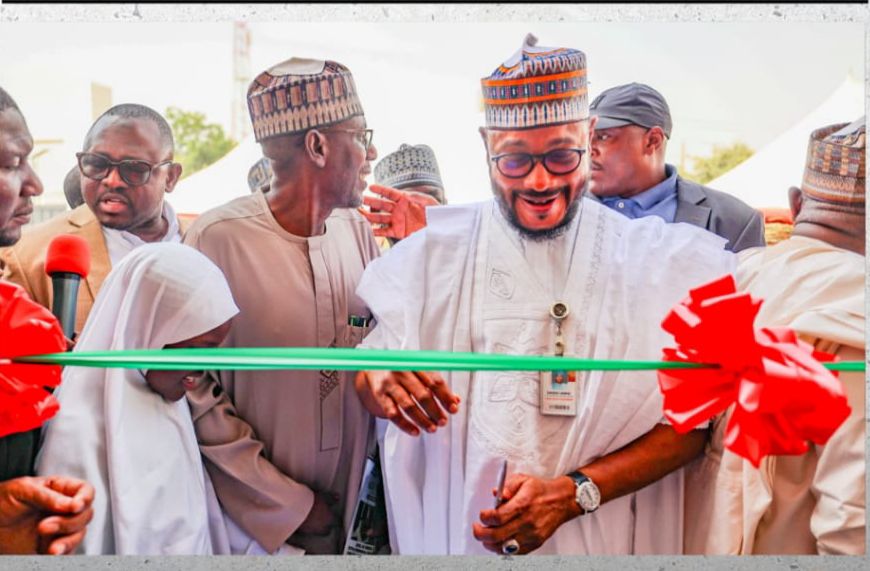
Governor Dauda Lawal Commissions Key Strategic Projects in Tsafe LGA, Commits to Responsive Development
In a significant display of commitment to the people of Zamfara State, Governor Dauda Lawal emphasized the importance of development that is not only visible but also functional and responsive to the community’s needs. On Friday, he inaugurated five pivotal projects in the Tsafe Local Government Area, aimed at enhancing the quality of life for residents and bolstering local infrastructure.
According to a statement released by the governor’s spokesperson, Sulaiman Bala Idris, the projects unveiled include a fully reconstructed modern motor park, a refurbished market, a rehabilitated educational institution, an upgraded and equipped general hospital, and a renovated emir’s palace. Each of these initiatives plays a crucial role in various aspects of community life, encompassing leadership, education, healthcare, commerce, and mobility. The governor underscored that these projects are designed not only to serve practical needs but also to instill a sense of pride and ownership among the residents.
During the commissioning ceremony, Governor Lawal highlighted that these five facilities represent the commitment of his administration to fortify public institutions, revitalize infrastructure, and enhance the palpable impact of governance on the populace. “The reconstructed Emir’s Palace in Tsafe stands as a symbol of continuity, authority, and cultural identity,” he stated. He further noted the essential role of traditional institutions in grassroots governance, underscoring their function as peacemakers, custodians of values, and community partners. “This palace’s reconstruction reflects our respect for tradition and acknowledges the pivotal role of traditional rulers in maintaining harmony, resolving conflicts, and fostering unity. Our administration will continue to collaborate with these trusted allies to rebuild and rejuvenate Zamfara State.”
In addressing the issues of education and human capital development, the governor declared, “The College of Health Technology in Tsafe plays a critical role in training health professionals who provide essential care to the community. By enhancing the school’s environment and infrastructure, we are investing in the future competence and confidence of these future health workers. Renovating this college strengthens our healthcare foundation and supports the development of a skilled, service-oriented workforce.”
Linked to these educational improvements is the comprehensive rehabilitation and re-equipping of the General Hospital in Tsafe, a vital secondary healthcare facility that serves as a bridge between primary and specialized medical care. The governor explained that these upgrades are intended to elevate service delivery and enhance patient experiences while providing much-needed support to healthcare workers. “Access to quality healthcare is a top priority for our administration, and we are fully committed to strengthening health facilities across the state,” he added.
Governor Lawal also spoke about the economic implications of the newly inaugurated facilities. “Economic activity is the engine of growth, employment, and stability within our communities. The Tsafe Market and Motor Park are integral to the local economy, serving as hubs for trade, supporting farmers, vendors, artisans, and small business owners. The motor park not only connects communities but also facilitates broader economic exchanges. By enhancing these facilities, we are promoting productivity, ensuring order, and enabling sustainable livelihoods. These improvements not only boost local revenue but also promote safety and uphold the dignity of all users.”
In a call to action, the governor urged all stakeholders including traditional leaders, community members, traders, transport operators, healthcare professionals, and local authorities to take collective ownership of the newly commissioned facilities. “Public infrastructure thrives where there is a shared sense of responsibility and civic duty. Proper utilization and care of these facilities will ensure they effectively serve the community for many years to come,” he concluded, reinforcing the need for continued cooperation in maintaining and protecting these vital resources.


-
 celebrity radar - gossips6 months ago
Why Babangida’s Hilltop Home Became Nigeria’s Political “Mecca”
-
 society6 months ago
Power is a Loan, Not a Possession: The Sacred Duty of Planting People
-

 Business6 months ago
Batsumi Travel CEO Lisa Sebogodi Wins Prestigious Africa Travel 100 Women Award
-
 news6 months ago
THE APPOINTMENT OF WASIU AYINDE BY THE FEDERAL GOVERNMENT AS AN AMBASSADOR SOUNDS EMBARRASSING