
Politics
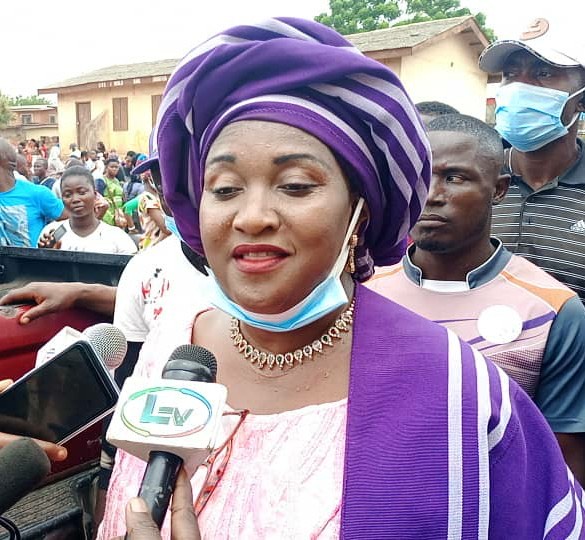
AAREBIRIN HON PRINCESS FOLASHADE OLABANJI-OBA: THANKFUL AND GRATEFUL IS THE WORD, THE PEOPLES PROJECT IS A FOREVER SERVICE TO GOD AND HUMANITY. THE VICTORY IS FOR US ALL…


|
Ikorodu local government elections which occurred on the 24th of July 2021, saw the incumbent chairman of Ikorodu local government Hon Wasiu Adesina and his Amiable Vice Chairman Aarebirin hon Princess Folashade Olabanji-Oba victorious, returning their leadership to Ikorodu central for the second term.
The Vice-chairman, Aarebirin hon princess folashade Olabanji-Oba who also marked her birthday on the 24th of July, extended her heartfelt appreciation to the people for the overwhelming love and support she receives not only for voting her back to the office but also for the warm birthday felicitations…
In her remarks to the press “It is such a thing of joy and gratitude going into the elections and seeing the level of support we got from the good people of Ikorodu local government”
“First of all, I want to return all the glory to God in Heaven for giving us life, zeal, and passionate drive to go about our ambitions in life. He started this journey with us, and he has led us to success. He also added another year to my age which I am forever grateful for, To his name alone be all the glory”
“Words cannot describe how indebted I am to everyone that not only came out in mass to vote, but also for the birthday messages I received prior/post-elections“
“It is a journey that we have set in motion collectively to give Ikorodu Central the ideal value it deserves and I want to say on this note that going forward, we’re going to deliver like never before for the interest of the entire Ikorodu LG”
“The leadership responsibilities have been handed over to us once again and with all humility, we’re accepting it to diligently enhance our progressive contributions towards the growth and development of Ikorodu LG”
“Our party members, supporters and loyalists that never wavered their support during the campaign, the rallies we had and the constant positive response we got going into the LG elections, history beckons Ikorodu LG for this great feat we have achieved together, it will reflect in our efforts to transform lives of every resident in our communities”
“ With a heart full of gratitude, I say a big thank to the great leadership of Our Party The All Progressive Congress, Our National Leader Asiwaju Dr. Bola Ahmed Tinubu, Our National Leader; Mr. Babajide Olusola Sanwo-Olu, the Governor of Lagos State; Dr. Obafemi Hamzat, Deputy Governor; Most Distinguished Sen. Tokunbo Mikhail Abiru, H.E. Prince Abiodun Ogunleye; Asiwaju Olorunfunmi Bashorun, APC State Chairman; Hon. Tunde Balogun, GAC Leaders; and Hon. Babajimi Benson, Member House of Representative”
“Also, I appreciate our Royal father’s in Ikorodu division, HRM.Oba Kabiru Adewale Shotobi (The Ayangburen Of Ikorodu Kingdom), HRM Oba Semiudeen Kasali Orimadegun (The Adegboruwa of igbogbo Kingdom), HRM Oba Mudashiru Ajibade Bakare-Agoro (Ranodu of Imota), HRM Oba Richard Abayomi Ogunsanya (Olubeshe of Ibeshe), and Oba Bashir Aremu Shotonwa (Sekumade Of Ipakodo)”
“Mr. Tayo Ayinde, Chief of Staff to the Lagos state governor; Rt. Hon. Obasa, the Speaker, Lagos State House of Assembly, and his team; Hon. S.O.B Agunbiade (Majority Leader) Lagos State House of Assembly;Chief Kaoli Olatunji Olusanya ,APC Lagos East Senatorial Vice Chairman, APC State Executives; Ikorodu Division Apex Leaders; APC Apex Leaders; Hon. Taiwo Longe, Ikorodu APC LGA Chairman; LGA Exco; Ward Exco; Zonal Exco; the Election Planning Committees at LGA & Ward; stakeholders; and electorates. The People, The good and great people of Ikorodu, Lagos, and Nigeria”
“I cannot end this appreciation message without thanking all our leaders and internal stakeholders who stands by me . May you and all that is yours continuously be richly and abundantly blessed.
Our Amazon’s and Queen of Hearts Senator Oluremi Tinubu, Chief Mrs Olukemi Nelson and Hon. Jumoke Okoya Thomas”
“We believe together we shall make a functional impact for the development of our great Lagos State and Nigeria at large. Thank You for trusting us, and thank you for voting the Progressive Party, All Progressive Congress, and the winning Team” Aarebirin Hon Princess Folashade Olabanji-Oba Added
|


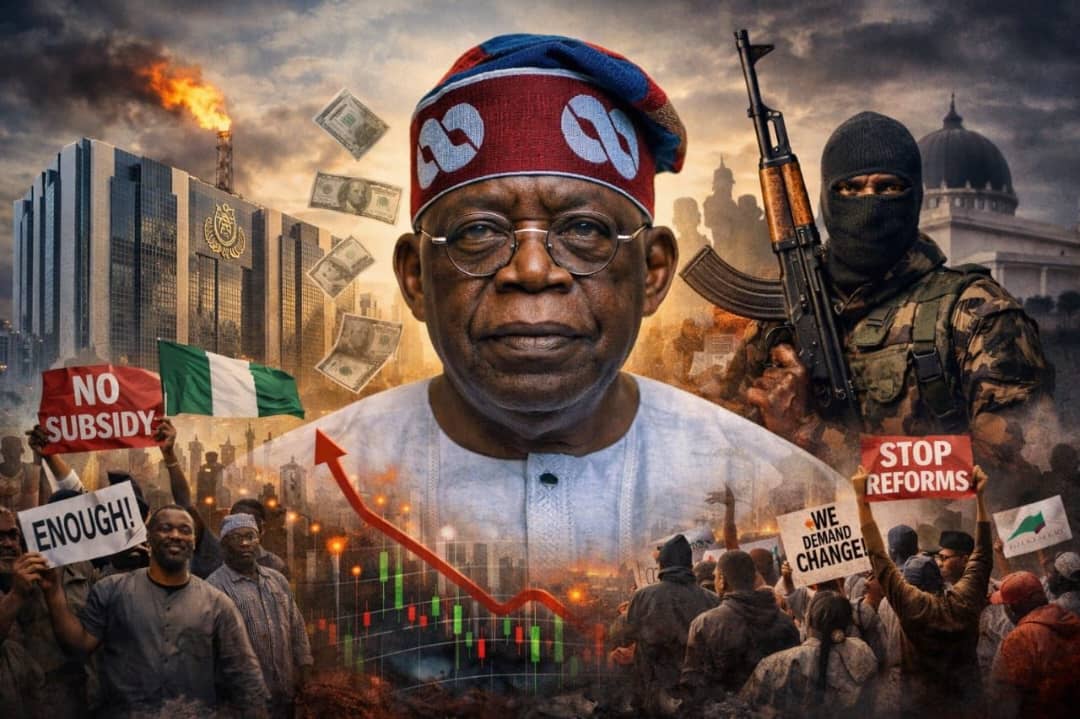
Are You Better Off? Two Years On, Nigerians Ask Hard Questions
Two years after this administration took office, Nigerians are confronted with a hard and unavoidable question: are we truly better off? For many households, the answer is no. The cost of living has risen sharply, purchasing power has collapsed, and daily survival has become a struggle. What was promised as renewed hope now feels like renewed hardship, especially for ordinary Nigerians who bear the brunt of economic decisions.
Since 2024, an estimated 14 million more Nigerians have slipped into poverty, pushing the total number of people living below the poverty line to about 129 million. This is not just a statistic but a human tragedy. It speaks to empty kitchens, withdrawn children, shuttered small businesses, and families forced to choose between food, education, and healthcare. At such a moment, leadership is expected to respond with empathy, urgency, and clear welfare policies. Instead, Nigerians hear promises without visible plans or measurable outcomes.
History offers a powerful contrast. Chief Obafemi Awolowo built his leadership on a simple philosophy: the welfare of the people must come first. His introduction of free universal primary education in the Western Region transformed literacy and opportunity, while free healthcare for children and disciplined public finance proved that social welfare and fiscal responsibility can coexist. His vision showed that government exists to lift the many, not protect the few.
That tradition of people centred governance did not end with Awolowo. In recent years, the Buhari administration rolled out the largest social investment programme in Nigeria’s history. Initiatives such as N Power, conditional cash transfers, school feeding, and trader support schemes reached millions of vulnerable Nigerians. While imperfect, these programmes acknowledged poverty as a national emergency and treated welfare as a core responsibility of government.
At the state level, examples from Osun and Kaduna reinforced the same lesson. In Osun, Rauf Aregbesola prioritised youth employment, school feeding, social welfare for the elderly, digital learning tools, and massive school infrastructure, earning national and international recognition. In Kaduna, Nasir El Rufai expanded free education, scholarships, healthcare access, and women empowerment programmes, proving that subnational governments can deliver real social protection when there is political will.
Aregbesola’s administration launched the Osun Elementary School Feeding and Health Programme (O-MEALS), which provided daily meals to over 250,000 pupils in public primary schools across the state. The programme directly empowered more than 3,000 local food vendors and caterers, most of them women, while creating a steady market for local farmers, especially poultry farmers, vegetable growers, and food suppliers. Beyond improving school attendance and nutrition for pupils, O-MEALS reduced the financial burden on parents and injected income into rural economies. Complementing this was the O-YES youth empowerment scheme, which engaged about 40,000 young people in public works, community services, and vocational training. Massive investments in modern school infrastructure, digital learning tools (Opon Imo), social welfare support for the elderly, and health initiatives earned Osun national and international recognition. These interventions demonstrated that with political will, subnational governments can protect the vulnerable, stimulate local economies, and deliver inclusive development even in fiscally constrained environments.
 ;
;
These policies are not distant memories or theoretical ideas. They are recent, verifiable interventions that improved lives and expanded opportunity. They demonstrate that governance rooted in compassion, planning, and accountability can soften economic shocks and protect the vulnerable, even in difficult times.
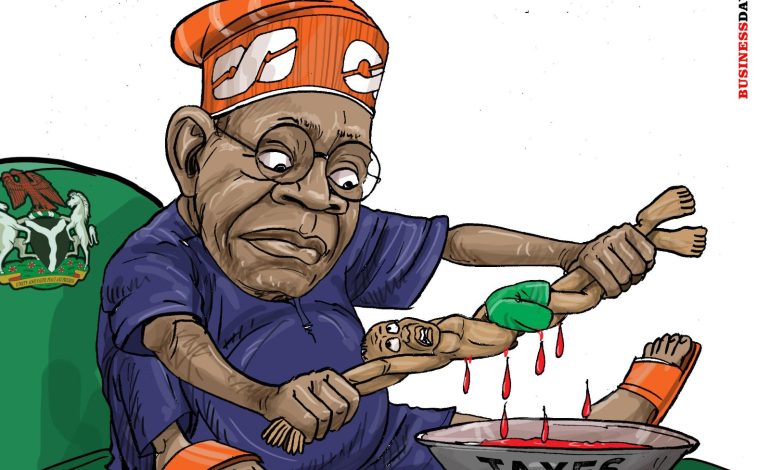
Today, many Nigerians feel abandoned by a system that appears more responsive to elites than to the masses. The absence of strong, visible welfare policies in the face of rising poverty raises a troubling question about our national priorities. A society that allows suffering to deepen without intervention risks losing not just stability, but its moral compass.
Nigeria must return to a simple principle: leadership exists to serve the people. A country where the child of a poor family has the same chance as the child of the powerful is not built by slogans, but by deliberate policies. Nigerians must demand better governance, resist the temptation to trade their votes for short term gain, and insist on a future where leadership truly cares.
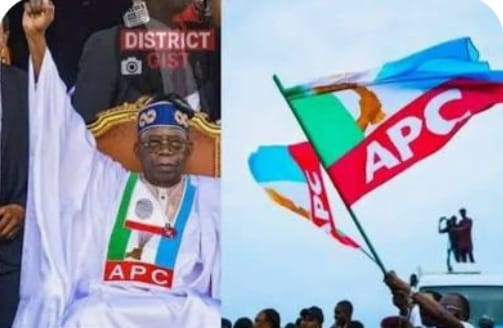
A Nation in Distress: How APC’s Years in Power Have Deepened Nigeria’s Crisis
By George Omagbemi Sylvester | Published by saharaweeklyng.com
“A Nation at the Brink — Why APC’s Failures Demand a New Political Direction.”
Nigeria stands today at a perilous crossroads with economically strained, socially fragmented and morally wounded. The promise that once accompanied the rise of the All Progressives Congress (APC) has given way to widespread disillusionment. What was sold as a vehicle for national renewal has, in reality, become a synonym for hardship, division and stagnation. This is not hyperbole. It is the sobering verdict of millions of citizens whose lived realities speak louder than partisan spin.
From the economy to national unity, from domestic politics to global standing, from tribal tensions to religious relationships, the APC’s record has been a catalogue of missed opportunities and deepening crises. Nigeria deserves better. Nigerians deserve another party, one that puts the people above politics, unity above division and progress above self-interest.

ECONOMIC DECLINE: Hunger, Poverty, and Eroded Hope.
The heart of any nation’s stability is its economy. On this front, the APC’s performance has been deeply disappointing. Bold reforms such as the removal of fuel subsidies and foreign exchange liberalisation were touted as necessary moves to stabilise the economy and attract investment. Yet, for millions of ordinary Nigerians, these policies have translated into unbearable hardship. Prices of essential goods have soared, inflation has blasted household budgets and poverty has become entrenched in everyday life.
Critics inside and outside Nigeria point to a stark reality: despite claims of economic recovery, the benefits remain out of reach for the majority. Food inflation, transport costs and the cost of living have escalated beyond what most families can afford. Various reports highlight that poverty and food insecurity have worsened, even as macroeconomic figures are debated.
As economist and social critic Ha-Joon Chang once reminded the world, “An economy’s success should be measured by how its most vulnerable citizens fare, not by abstract figures on paper.” Today, Nigeria’s most vulnerable are sinking deeper into deprivation.
TRIBAL AND RELIGIOUS RELATIONSHIPS: Division Instead of Unity.
Nigeria’s diversity is its strength with a mosaic of peoples, cultures and histories. Yet under the APC, this diversity too often became a source of division rather than a foundation for unity. Competing ethnic interests have periodically been manipulated for political advantage, reopening old wounds and aggravating suspicions between communities. Observers have noted that political rhetoric and strategic statements have at times undermined national cohesion, diverting attention from governance failures to age-old regional tensions.
A healthy polity celebrates differences while forging shared purpose. A government should foster cooperation across tribes and religions not exploit fault lines for political survival. Nigerian scholar and author Wole Soyinka’s enduring wisdom resonates here: “The greatest threat to a nation is the corruption of its conscience.” A leadership that fuels division corrodes the moral fabric of the nation.
REGIONAL RELATIONSHIPS: Neglect and Fragmentation.
A nation for the people must not be a nation divided. Though many Nigerians feel left behind. Regions that should be engines of growth have languished under policies that prioritise political expediency over structural development. The promise of balanced regional development has often been drowned by centralised decision-making that pays lip service to inclusivity but delivers little in tangible benefits.
Nigeria’s unity must be more than rhetoric; it must be reflected in policy outcomes, improved infrastructure and equitable opportunities for all regions. When citizens feel marginalised or unheard, the very idea of a united nation weakens.
PARTY RELATIONSHIPS: Internal Disarray and Erosion of Trust.
Political parties thrive on discipline, vision and inclusive leadership. Yet the APC has struggled with internal cohesion. Public disputes, defections and power struggles have underscored deeper conflicts over direction and purpose. Instead of engaging critics with constructive dialogue, party rhetoric too often resorts to personal attacks and defensive posturing, closing off spaces for genuine critique and reform.
Strong parties are not built on silencing dissent but on embracing diverse viewpoints and using them to strengthen policy and practice. The APC’s internal dynamics reflect a larger problem: a disconnect between leadership and the lived experiences of citizens.
THE NATIONAL ASSEMBLY: Compromise Over Accountability.
A robust legislature is a cornerstone of democratic governance — a check on executive power and a voice for the people. Yet, under APC dominance, the National Assembly has often appeared more an instrument of acquiescence than one of accountability. Rather than provide independent oversight, it has been criticised for aligning too closely with executive priorities, even when those priorities fail to address fundamental public needs.
Democracy is not measured by elections alone but by the capacity of institutions to hold leaders to account and to represent the interests of all citizens not just a political elite.
INTERNATIONAL RELATIONS: Reputational Strains and Missed Opportunities.
On the global stage, Nigeria’s voice once carried remarkable moral weight in Africa and beyond. Though when domestic weaknesses are projected internationally (from economic instability to insecurity) that voice diminishes. Diplomatic engagement demands a strong, confident nation, secure in its foundations and clear in its values.
While governments change and global dynamics shift, a consistent lesson from international relations scholars is that credibility comes from internal strength. A nation beset by internal anxieties cannot project the confidence needed to lead on the world stage.
HUMANITY FIRST: Policies That Hurt the People.
Above all, governance must centre on human dignity. When policies deepen suffering, particularly for the most vulnerable, leadership has lost its moral compass. The APC era has witnessed protests, public frustration and grassroots movements demanding dignity and relief from hardship. The “End Bad Governance” protests, for example, were driven by widespread discontent with rising hunger and economic distress with realities far removed from official narratives of ‘RECOVERY’.
True leadership listens first to the voices of its people not to spin doctors or political strategists.
THE TIME FOR CHANGE IS NOW.
This is not an indictment born of bitterness, it is a call to action. Nigeria deserves a politics that places the welfare of citizens above all else. A politics that unites rather than divides. A politics that fosters prosperity, justice and opportunity for every Nigerian.
Renowned Nigerian historian and scholar Chinua Achebe once wrote that “Until the lion learns to write, every story will glorify the hunter.” It is time for Nigerians themselves (not the political elite) to reclaim the narrative of this nation.
The APC’s record across economy, unity, governance and leadership is a compelling reason to consider another party with one that builds bridges, uplifts citizens and strengthens institutions. Nigeria’s journey toward greatness cannot wait another decade in the hands of leaders who promise change but deliver distress.
Let this be the clarion call for a new chapter with one defined by responsibility, humanity, and genuine progress.
Politics
Governor Dauda Lawal Commissions Key Strategic Projects in Tsafe LGA, Commits to Responsive Development
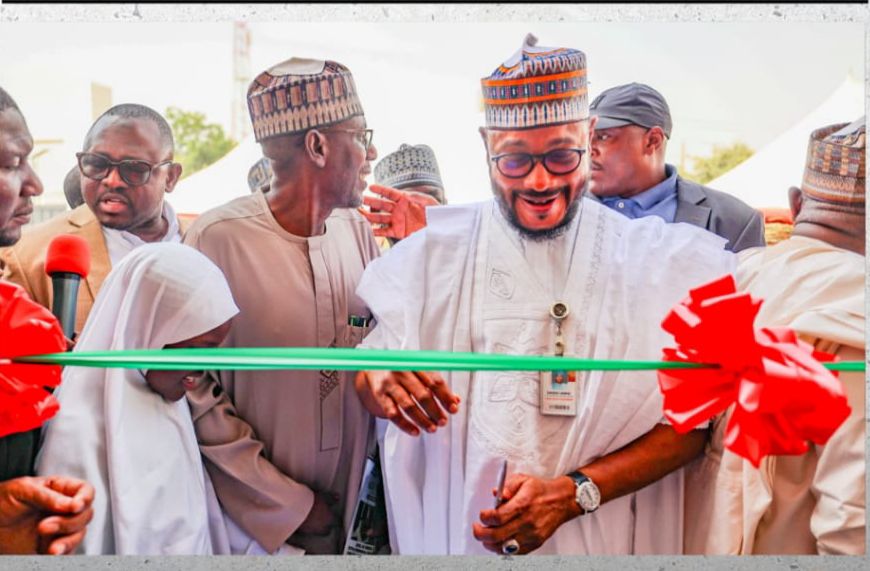
Governor Dauda Lawal Commissions Key Strategic Projects in Tsafe LGA, Commits to Responsive Development
In a significant display of commitment to the people of Zamfara State, Governor Dauda Lawal emphasized the importance of development that is not only visible but also functional and responsive to the community’s needs. On Friday, he inaugurated five pivotal projects in the Tsafe Local Government Area, aimed at enhancing the quality of life for residents and bolstering local infrastructure.
According to a statement released by the governor’s spokesperson, Sulaiman Bala Idris, the projects unveiled include a fully reconstructed modern motor park, a refurbished market, a rehabilitated educational institution, an upgraded and equipped general hospital, and a renovated emir’s palace. Each of these initiatives plays a crucial role in various aspects of community life, encompassing leadership, education, healthcare, commerce, and mobility. The governor underscored that these projects are designed not only to serve practical needs but also to instill a sense of pride and ownership among the residents.
During the commissioning ceremony, Governor Lawal highlighted that these five facilities represent the commitment of his administration to fortify public institutions, revitalize infrastructure, and enhance the palpable impact of governance on the populace. “The reconstructed Emir’s Palace in Tsafe stands as a symbol of continuity, authority, and cultural identity,” he stated. He further noted the essential role of traditional institutions in grassroots governance, underscoring their function as peacemakers, custodians of values, and community partners. “This palace’s reconstruction reflects our respect for tradition and acknowledges the pivotal role of traditional rulers in maintaining harmony, resolving conflicts, and fostering unity. Our administration will continue to collaborate with these trusted allies to rebuild and rejuvenate Zamfara State.”
In addressing the issues of education and human capital development, the governor declared, “The College of Health Technology in Tsafe plays a critical role in training health professionals who provide essential care to the community. By enhancing the school’s environment and infrastructure, we are investing in the future competence and confidence of these future health workers. Renovating this college strengthens our healthcare foundation and supports the development of a skilled, service-oriented workforce.”
Linked to these educational improvements is the comprehensive rehabilitation and re-equipping of the General Hospital in Tsafe, a vital secondary healthcare facility that serves as a bridge between primary and specialized medical care. The governor explained that these upgrades are intended to elevate service delivery and enhance patient experiences while providing much-needed support to healthcare workers. “Access to quality healthcare is a top priority for our administration, and we are fully committed to strengthening health facilities across the state,” he added.
Governor Lawal also spoke about the economic implications of the newly inaugurated facilities. “Economic activity is the engine of growth, employment, and stability within our communities. The Tsafe Market and Motor Park are integral to the local economy, serving as hubs for trade, supporting farmers, vendors, artisans, and small business owners. The motor park not only connects communities but also facilitates broader economic exchanges. By enhancing these facilities, we are promoting productivity, ensuring order, and enabling sustainable livelihoods. These improvements not only boost local revenue but also promote safety and uphold the dignity of all users.”
In a call to action, the governor urged all stakeholders including traditional leaders, community members, traders, transport operators, healthcare professionals, and local authorities to take collective ownership of the newly commissioned facilities. “Public infrastructure thrives where there is a shared sense of responsibility and civic duty. Proper utilization and care of these facilities will ensure they effectively serve the community for many years to come,” he concluded, reinforcing the need for continued cooperation in maintaining and protecting these vital resources.


-

 celebrity radar - gossips6 months ago
Why Babangida’s Hilltop Home Became Nigeria’s Political “Mecca”
-

 society6 months ago
Power is a Loan, Not a Possession: The Sacred Duty of Planting People
-

 Business6 months ago
Batsumi Travel CEO Lisa Sebogodi Wins Prestigious Africa Travel 100 Women Award
-

 news6 months ago
THE APPOINTMENT OF WASIU AYINDE BY THE FEDERAL GOVERNMENT AS AN AMBASSADOR SOUNDS EMBARRASSING