
celebrity radar - gossips
Foundation gives school materials to over 5000 less privileged in Lagos

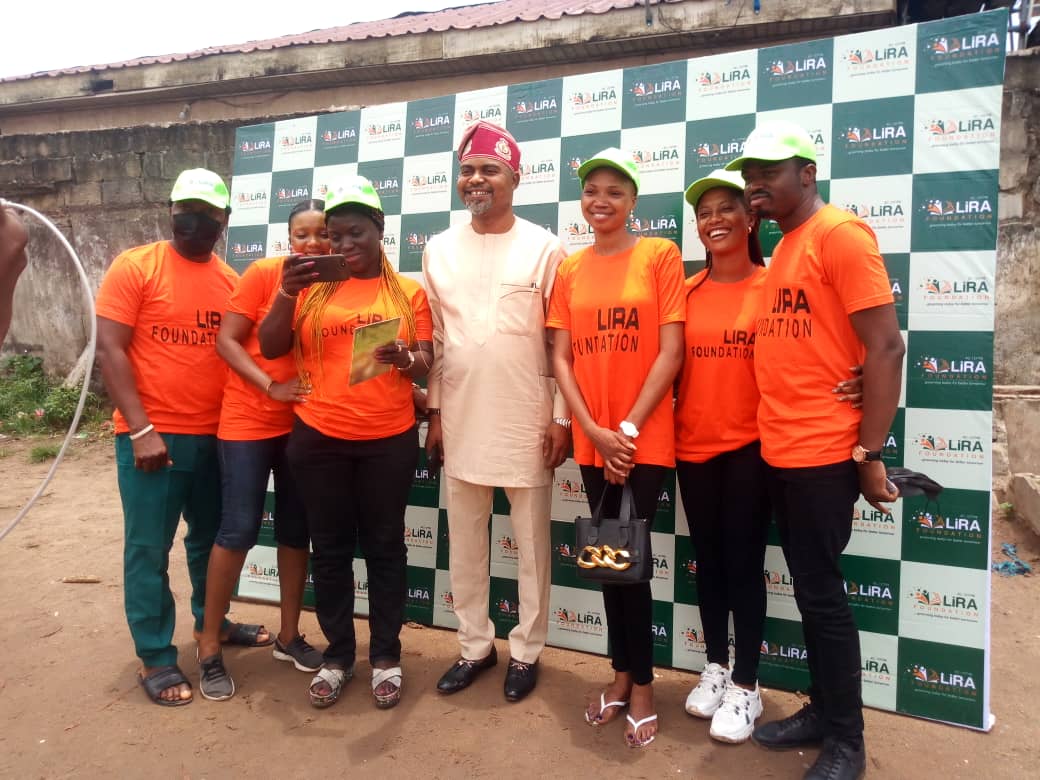
Foundation gives school materials to over 5000 less privileged in Lagos
School-No fewer than 5000 children drawn from various residents within and outside Bariga, Lagos state received one form of educational item or the other at the Back to School 2.0 event.

A humanitarian organization, LiRA Foundation gave out the books, school bags, shoes and other educational materials to them at Ladi -Lak Primary School Compound, Bariga.
Lijirin Ruth Ayomide, Executive Director and founder of the Lira Foundation, said she was inspired to give back to her people because she belonged and is part of them.
“I did not know how to glorify my Maker for his faithfulness in my life so I decided to give back to my people”.
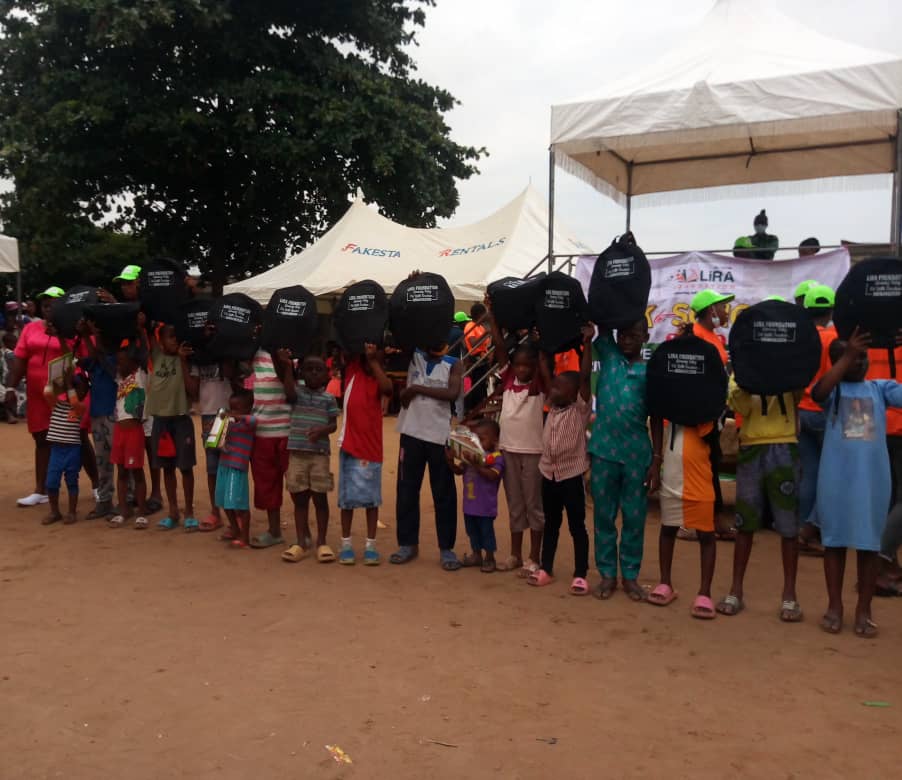
According to her, ‘the responsibilities of every person dwelling in our society today is to ensure progression and normalcy of indoor and outdoor activities as an avenue to contribute to the goodness of the society.
“I will use this medium to tell everyone to be focused and never look down on yourself because you don’t know where you will be tomorrow.
“I am overwhelmed with the massive turnout, individuals should learn how to give.
“To this end, I’m equally appreciating all the dignitaries across the three senatorial districts in Lagos who honoured our invitation, may God continue to bless them and their families.
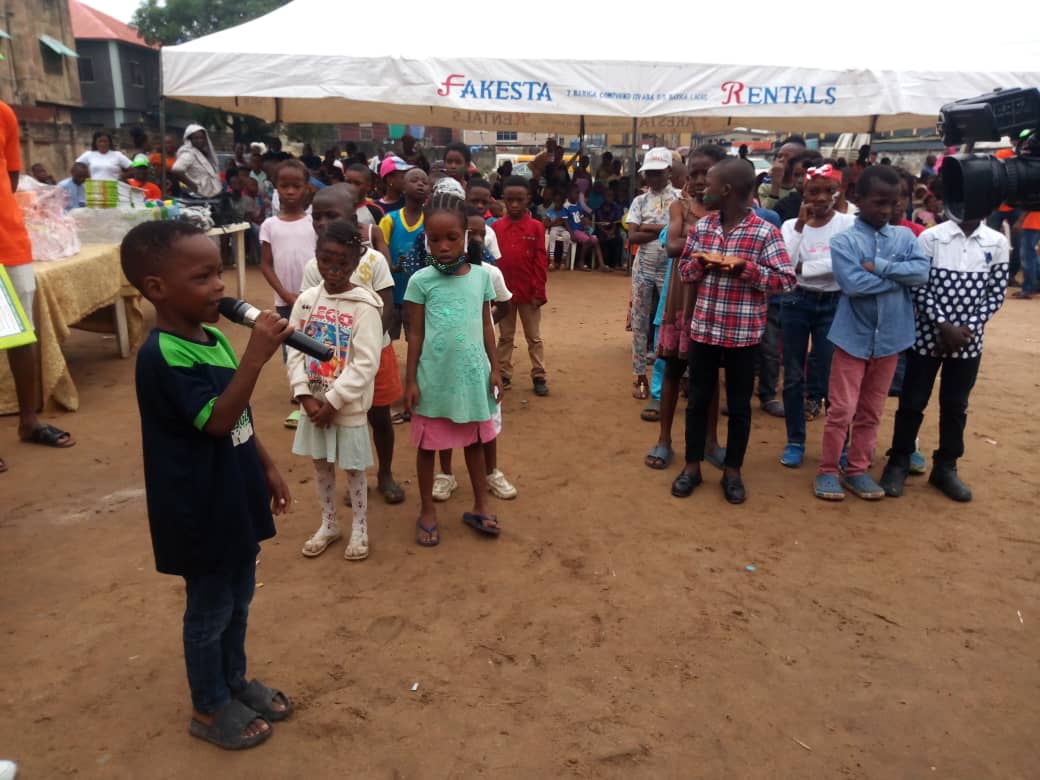
Hon. Segun Ogunlade, a former house member of the All Progressive Congress (APC), said that when you continue to empower and reach out to the children, you have already secured their future.
“With the way this exercise started, it has secured the future of the children, we don’t know what they will become tomorrow but with education their future is bright, children are the leaders of tomorrow.
He also added that when you empower children, you have secured the environment, entire family lineage, communities and generation to come because education is the bedrock of all nations.
“My message and advice to our children are that they should be focused on education, see it as the major key to enriching themselves in the future and make themselves better person tomorrow especially in Bariga community.
” We have to see brilliants children here, that is the message LiRA foundation is trying to pass across by preparing them to be better persons in the future.
“Also I will urge the children to be of good conduct and not throw away the moral value which our forefathers have given to us and ensure you pass it to the next generation.
Prince Ladega Ibrahim, the guest speaker explained that Bariga is known for her academic excellence and positive place to be in all ramifications of life.
He said that the foundation was trying to bring them back to their roots.
He advised parents to shun all unnecessary activities and get the children ready back to school.
Some of the beneficiaries expressed delight, saying that the kind gesture extended to them by the foundation was a major inspiration they needed to fulfill their dreams.
Taiwo Odumosu, a basic four student said: “I am happy with new academic materials given to me today, and I pray to God to bless this foundation”.
Also, Miss Bakare Idarinat, another basic four pupil that was given a school bag, notebooks and other materials, said the foundation has made the Bariga children happy as they resume new session with everything new.
A mother of two, Mrs Sanni Abosede said her children were beneficiaries and asked God to bless and enrich the LIRA foundation.
“This kind gesture has helped most parents provide school materials for at least three children from each family, with the economic situation in Nigeria I am delighted.
Otunba Omotayo Olusesan, a businessman said the gesture is what other meaningful Nigerians need to emulate to assist school children, especially the less privileged and vulnerable in the society.
Omotayo opined that with the gesture, most of the school dropouts in the community will go back to school again.
A member of Akoka Leo Club, Leo Ejiowo Kudirat said they partnered with the foundation to encourage the children to become good leaders of tomorrow and better members of society.
“Our club carries out sensitization programs monthly to encourage the younger ones on the importance of education and the need for someone to be educated.




**Another Feather for Nollywood Icon Fidelis Duker
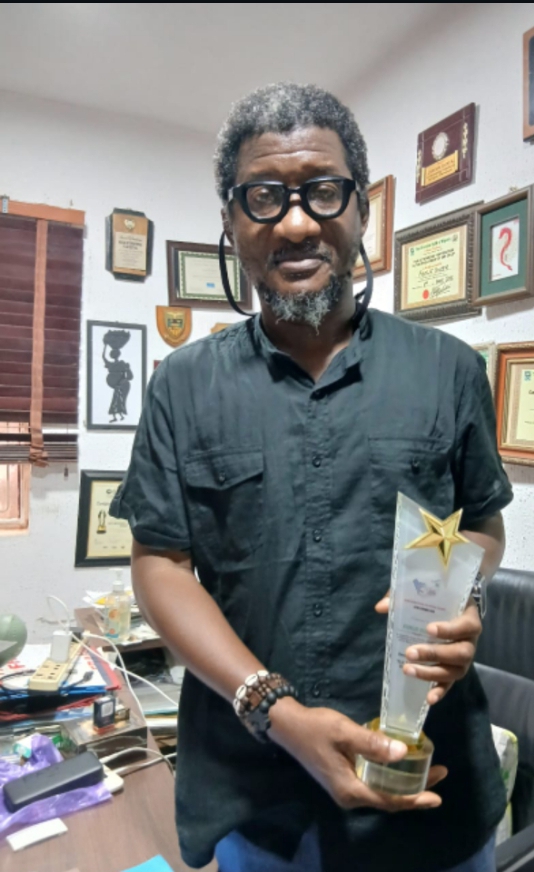
*Lagos, Nigeria* — In a remarkable celebration of artistic achievement, renowned Nollywood figure Fidelis Duker received yet another prestigious accolade last weekend, solidifying his role as a key player in the growth of the Nigerian and African film industries. The award was presented in a ceremony held at Duker’s Lagos office by esteemed film and theatre director, Mr. Alex Eyengho, founder of the Warri International Film Festival, alongside Marketing and Strategy Director, Mrs. Matel Eyengho.
The recent recognition builds upon Duker’s previous achievement at last year’s ECOFEST in Dakar, where he was honored with a Lifetime Achievement Award. This latest accolade is a testament to his unwavering dedication and substantial contributions to the cinematic landscape.
“I am truly humbled by this recognition,” Duker expressed during the event. In his speech, Alex Eyengho lauded Duker’s pioneering efforts in establishing significant film festivals in Nigeria, particularly the Abuja International Film Festival, which has played a vital role in promoting local talent and storytelling.
Eyengho emphasized, “Fidelis has not only paved the way for emerging filmmakers but has also helped elevate Nigerian cinema on the global stage. His creative vision and commitment inspire all of us in the industry.”
As Duker reflects on this honor, he acknowledges the importance of teamwork and collaboration in achieving success. “This acknowledgment reaffirms to my team and me that our work is being observed, and it motivates us to continue contributing to the development of our sector,” he stated.
With numerous projects on the horizon, Duker remains a relentless advocate for the growth and recognition of African cinema. His latest recognition is yet another testament to the vibrant and evolving landscape of Nollywood, as industry leaders like him continue to inspire future generations.
As the film industry anticipates the next phase of development, Duker’s continued influence signals a promising future for filmmakers in Nigeria and across the continent.
celebrity radar - gossips
E‑Money’s Grand Gesture: A Closer Look at the SUV Gift to Chinedu “Aki” Ikedieze

E‑Money’s Grand Gesture: A Closer Look at the SUV Gift to Chinedu “Aki” Ikedieze
By George Omagbemi Sylvester | Published by SaharaWeeklyNG
“Public Generosity, Celebrity Loyalty and the Symbolism of Wealth in Nigeria’s Entertainment Elite.”
On Tuesday, February 17, 2026, Nigerian billionaire and entrepreneur Emeka Okonkwo, widely known as E‑Money, once again captured national attention with a lavish and highly publicised act of generosity, gifting a brand‑new 2024/2025 Ford SUV to veteran Nollywood actor Chinedu Ikedieze, affectionately called Aki, during his high‑profile birthday celebration.
The event, held in Lagos amidst a constellation of entertainers, business figures and socialites, was itself part of an annual tradition in which E‑Money marks his birthday (on February 18) with large‑scale giveaways and spectacular shows of material philanthropy. This year, he announced the gift of over 30 cars to friends, staff and family, a gesture that quickly went viral as videos and images circulated across social media platforms.
In the case of Ikedieze, E‑Money’s gift appeared to be deeply personal. During the festivities, E‑Money stood beside his elder brother, Grammy‑nominated musician KCee and recounted how Ikedieze stood by him at his 2007 wedding. The billionaire explained that the SUV was a “token of appreciation” for the enduring support the actor had shown over the years which is a narrative that blends friendship with public celebration.
Ikedieze, a Nollywood staple with a career spanning more than two decades and over 150 film credits, including the iconic Aki na Ukwa franchise, visibly reacted with humble surprise as he received the vehicle, bowing his head in respect and gratitude. The actor later shared the moment on his Instagram account with a caption celebrating the gift, further fuelling online engagement around the event.
Beyond the spectacle, this incident underscores evolving dynamics in Nigerian celebrity culture and the intersection of wealth, influence and reciprocity. Sociologist Dr. Chinedum Uche of the University of Lagos, speaking on the broader implications of such high‑profile gifts, notes: “Philanthropy that is highly publicised can reinforce social bonds, but it also reflects a culture where generosity is intertwined with reputation economy; where giving becomes as much a social signal as it is an act of kindness.” The quote highlights how public acts of wealth transfer among elites serve layered social functions that extend beyond pure altruism.
Critics of such displays argue that ostentatious giveaways, particularly in a country with stark economic disparities, risk amplifying social envy and exacerbating perceptions of inequality. Economist Dr. Ifunanya Nwosu from the Lagos Business School observes: “In societies marked by economic stratification, celebrity largesse may inspire admiration, but it can also inadvertently highlight structural inequities; prompting questions about systemic investment in public welfare versus individual generosity.”
Still, supporters maintain that E‑Money’s annual tradition (which has in past years included cash gifts to his brother KCee, comedians and even domestic staff) reflects genuine gratitude and a commitment to uplifting his immediate circle, albeit within the private sphere.
For Ikedieze, the SUV stands both as a heartfelt gesture from a longtime friend and a public affirmation of their enduring relationship. As the video of the moment continues to circulate, the broader narrative has ignited discussions about the role of private wealth in public life, celebrity culture and how acts of giving are interpreted in contemporary Nigerian society.
In a landscape where influence and generosity often play out in equal measure on public stages, E‑Money’s gift to Aki is more than a headline, it is a flashpoint in ongoing debates about wealth, friendship and visibility in Nigeria’s entertainment and entrepreneurial ecosystem.
celebrity radar - gossips
Spiritual Reality: Wicked People Are Possessed by Wicked Spirits — Dr. Christian Okafor
Spiritual Reality: Wicked People Are
Possessed by Wicked Spirits — Dr. Christian Okafor
…..“You don’t need to offend them before they attack you.”
…..“Your only true help comes from God.”
Demons are strategic and calculating. They detect threats quickly and position themselves to resist any power that may expose or overpower them.
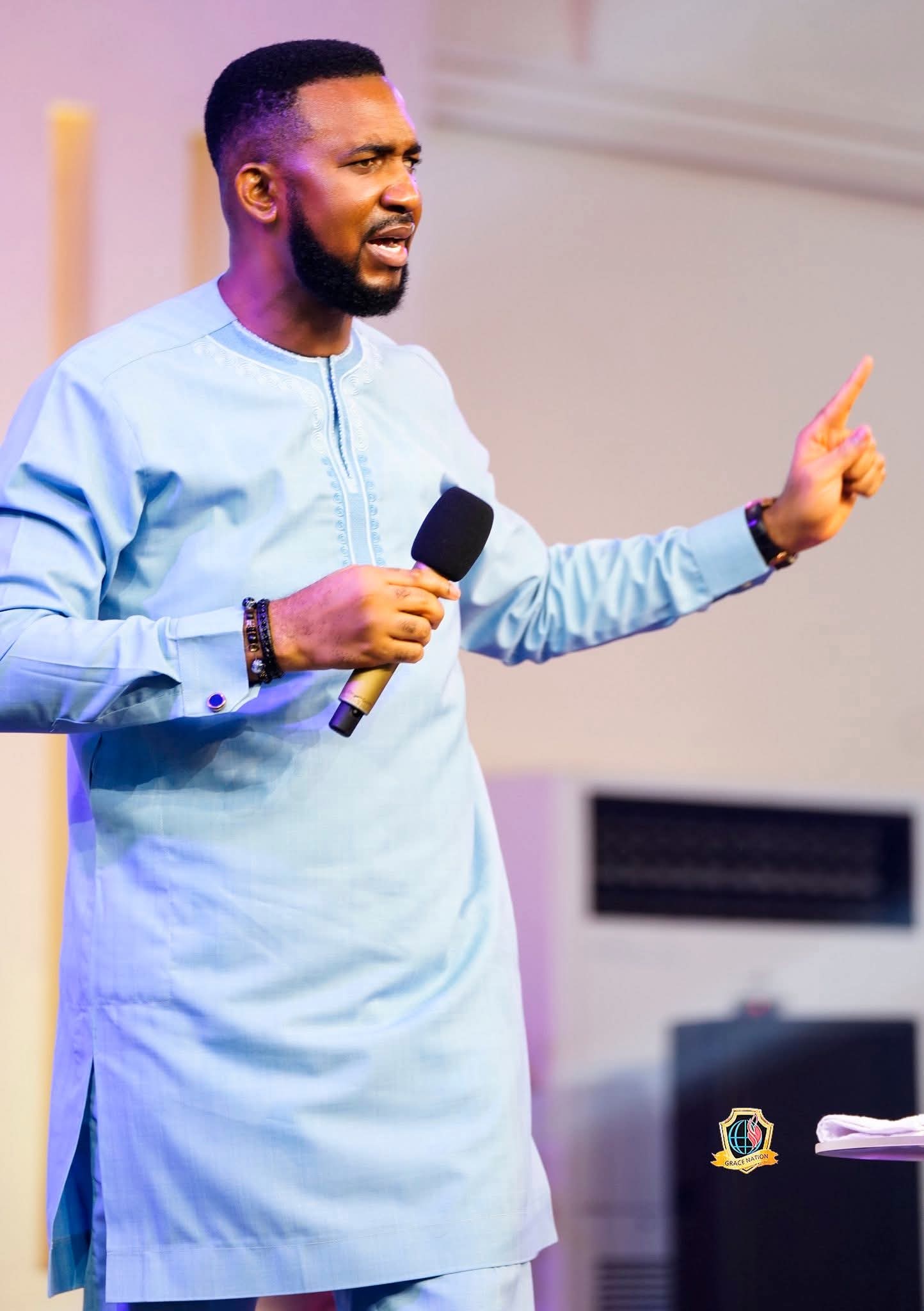
According to the Generational Prophet and Senior Pastor of Grace Nation Global, Christian Okafor, spiritual intelligence operates both in light and in darkness—and believers must understand this reality.
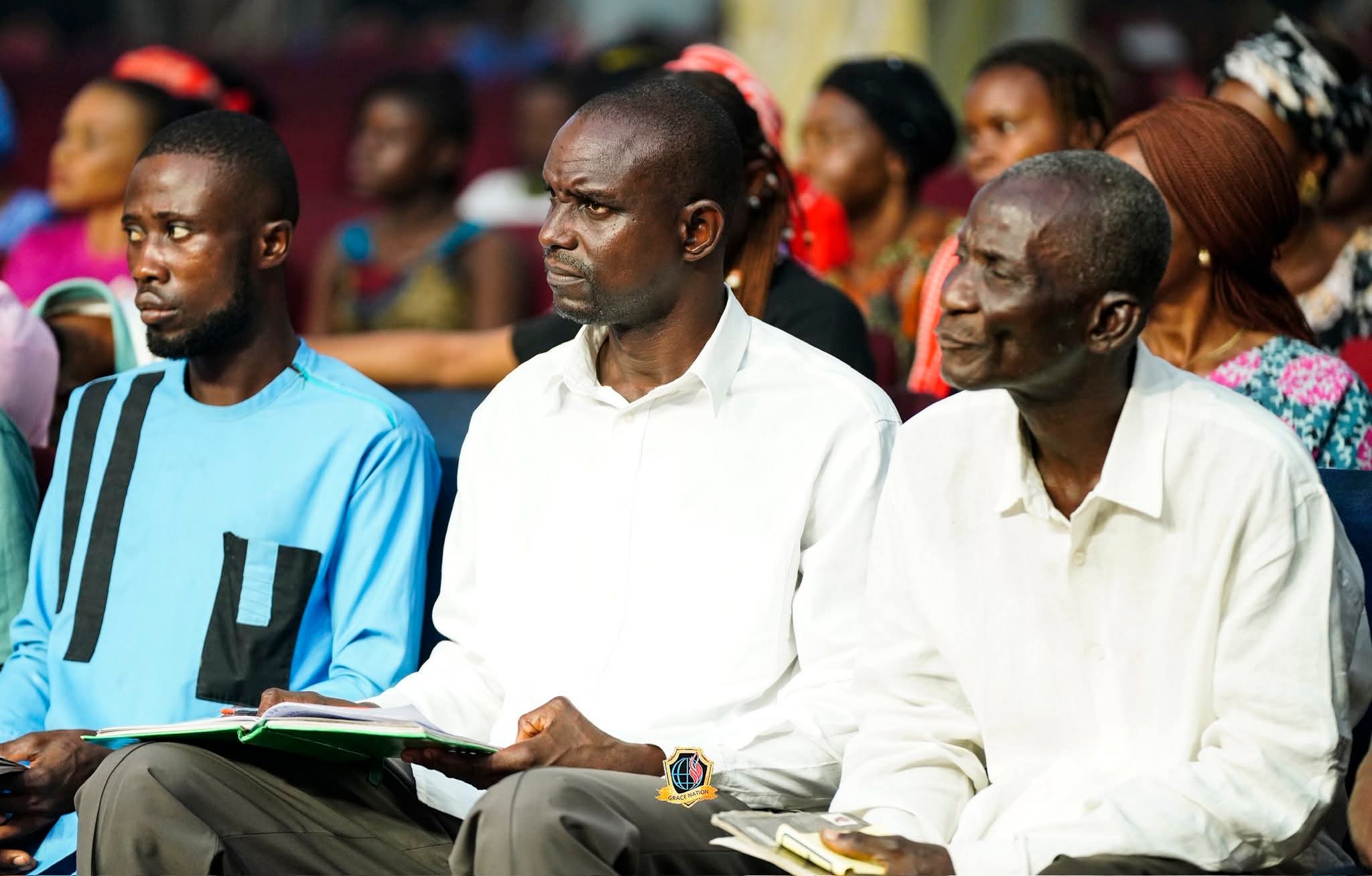
Dr. Okafor delivered this message on Thursday, February 19, 2026, during the midweek Prophetic, Healing, Deliverance and Solutions Service (PHDS) held at the international headquarters of Grace Nation Worldwide in Ojodu Berger, Lagos, Nigeria.
The Operations of Demons
Teaching on the subject “Spiritual Reality” with the subtitle “Operations of Demons,” the Man of God explained that when demons possess individuals, their behavior changes. Such people may attack, bully, or resist those sent by God to help them, unknowingly rejecting divine assistance and prolonging their struggles.
“You don’t need to offend a demon before it attacks you,” he said. “What you carry is enough to provoke opposition. The greater your potential, the greater the battle.”
Dr. Okafor noted that many believers misinterpret battles as signs that God has abandoned them. However, he explained that some battles are permitted for growth, training, and divine glorification.
According to him, God may allow certain confrontations so that believers understand spiritual warfare and emerge stronger.
“Some battles are necessary,” he emphasized. “They push you into your turning point.”
He further stated that God does not respond to lies, blackmail, or bullying. He responds to His Word. Therefore, opposition is not proof of God’s absence, but often evidence of destiny at work.
The Weapon Against Demonic Attacks
Addressing solutions, Dr. Okafor described prayer as the strongest weapon against satanic operations.
“Prayer is the license that invites God into your battles,” he declared. “God does not intrude—He responds to invitation.”
According to the Apostle of Altars, understanding the principles and discipline of prayer enables believers to receive divine strategies for overcoming demonic resistance. Without prayer, he warned, spiritual help cannot be activated.
“You cannot receive help without God,” he concluded. “And you cannot engage God without prayer.”
Manifestations at the Service
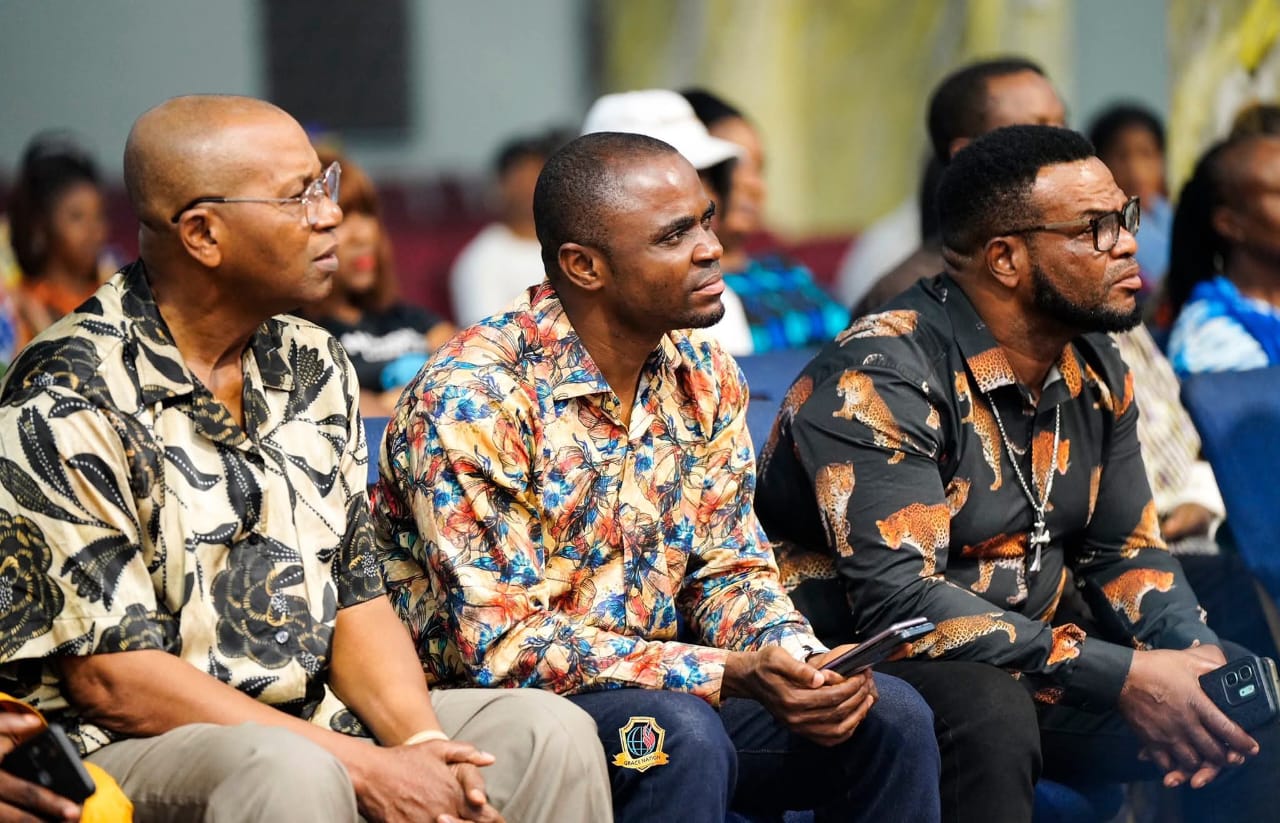
The midweek gathering was marked by a strong move of the Spirit, with testimonies of deliverance, miracles, restoration, and solutions to various challenges presented before God. Several individuals reportedly committed their lives to Christ during the service.


-

 celebrity radar - gossips6 months ago
Why Babangida’s Hilltop Home Became Nigeria’s Political “Mecca”
-

 society6 months ago
Power is a Loan, Not a Possession: The Sacred Duty of Planting People
-
 society5 months ago
Religion: Africa’s Oldest Weapon of Enslavement and the Forgotten Truth
-

 news6 months ago
THE APPOINTMENT OF WASIU AYINDE BY THE FEDERAL GOVERNMENT AS AN AMBASSADOR SOUNDS EMBARRASSING