
Business
IDPs pray for Indimi, Dangote, Atiku at Adamawa’s food distribution centres

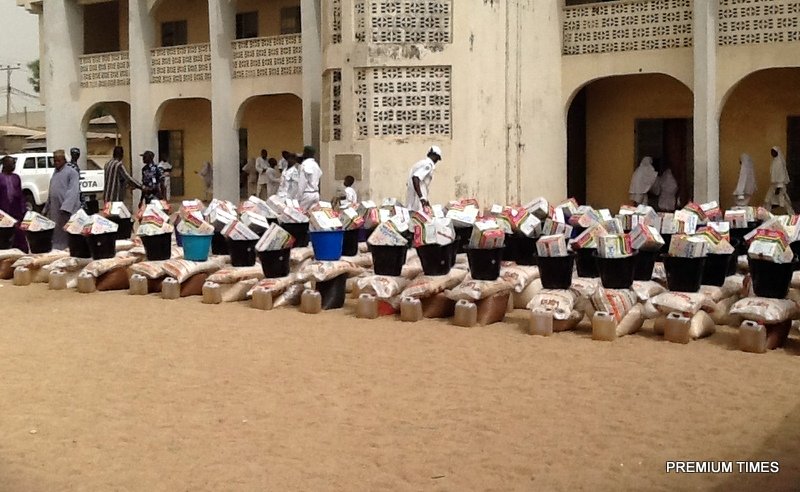

Internally displaced persons in Adamawa State who received food and relief items in December put religious and sectarian differences aside to thank their benefactors and pray for them.
At Churches and Mosques in Jimeta-Yola, and at other distribution points in the seven Local Government Areas most hit by the insurgency, grateful IDPs offered prayers for the donors, as well as for the members of the Adamawa Peace Initiative, for continuously supplying the breadlines, even as governments and local NGOs battle to contain the humanitarian crisis in the northeast region of the country.
Medicines, blankets, vegetable oil, spaghetti, seasonings, salt, sugar, and rice that the IDPs received were bought with donations from three prominent philanthropists: Mohammed Indimi, Aliko Dangote, and AUN Founder, Atiku Abubakar.
The AUN founder has been a leader in supplying continuous financial support for the IDPs since the university’s involvement with their feeding more than a year ago.
At the St. Theresa Catholic Cathedral Church, Jimeta, where 15,500 families were served in three distributions, a Muslim woman, Amina Mamman, joined the Bishop of Yola Catholic Diocese, Stephen Mamza, in leading prayers for peace in Nigeria and in expressing appreciation to those who made the donations to support IDPs in the state.
Six hundred families received food and relief items at the Adamawa State headquarters of the Jamatu Nasril Islam, in Jimeta, on December 13, where JNI officials, Gambo Jika and Fadimatu Ahmad Marafa, led IDPs to offer prayers.
It was a similar story at the New Life Gospel Centre, Demsawo, Deeper Life Camp, and at other centres, where volunteers from the American University of Nigeria and Adamawa Peace Initiative distributed the food and relief items donated by Dangote Foundation.
IDPs and local officials took turns to thank the donors, the peacemakers, Governor Mohammed Jibrilla of Adamawa State, and the volunteers who had worked tirelessly to alleviate their suffering during the year.
All through December, the AUN-API Team supplied food, medicines and relief materials to over 163,500 households through local religious and community-based organizations in the state.
Humanitarian aid was also sent to IDPs who had relocated to their destroyed homes in the most insurgency-hit areas, through local contacts networking with AUN-API.
According to the Coordinator of Relief for AUN-API, Bello Abdullahi, supplies were sent to IDPs in Maiha, Mubi North and South, Hong, Gombi, Michika, and Madagali LGAs through trusted API members working in those areas who ensured effective and accountable distribution of relief materials.
Coordinator of the Madagali distribution and President of Kinjir Foundation, Saleh Kinjir, confirmed that over 552,000 households received supplies from the Adamawa Peacemakers since the crisis peaked in 2014 through local partners of AUN-API including Kinjir Foundation, JIBWIS, Upper Room Cathedral and the Adamawa Muslim Council.
The food and medicines sent to IDPs in the seven most affected Local Governments were procured with a N100million donation which came from oil and gas tycoon, Mohammed Indimi, and which was passed on to API by the Governor of Adamawa State, Mohammed Jibrilla, as well as funds given by former Nigerian Vice President, Atiku Abubakar.
On October 14, an AUN-API team led by Bishop Mamza, Imam Dauda Bello and AUN’s Head of Security, Dr. Lionel Rawlins, dispatched supplies in a military-backed convoy to most of the worst-hit areas accompanied by foreign and local journalists.
Meanwhile, AUN President, Dr. Margee Ensign, who chairs the API, said the organization has initiated numerous programmes in the community to benefit both indigenes and IDPs. “We have the all-year-long ‘Peace Through Sports’ program, two major income-generating projects for community women, and a new literacy program christened ‘Technology Enhanced Learning for All’.”
Under the literacy programme, funded by the US Government, 20, 000 vulnerable youth, including out-of-school children, displaced children, and those disadvantaged in schools who are not now learning how to read, will benefit.
“It has not been an easy year, or an easy Christmas, in this part of Nigeria,” she concluded. “But there has always been hope, there has always been remarkable generosity, and, as befitting this season, there has always been goodwill.”
Source: Premium Times




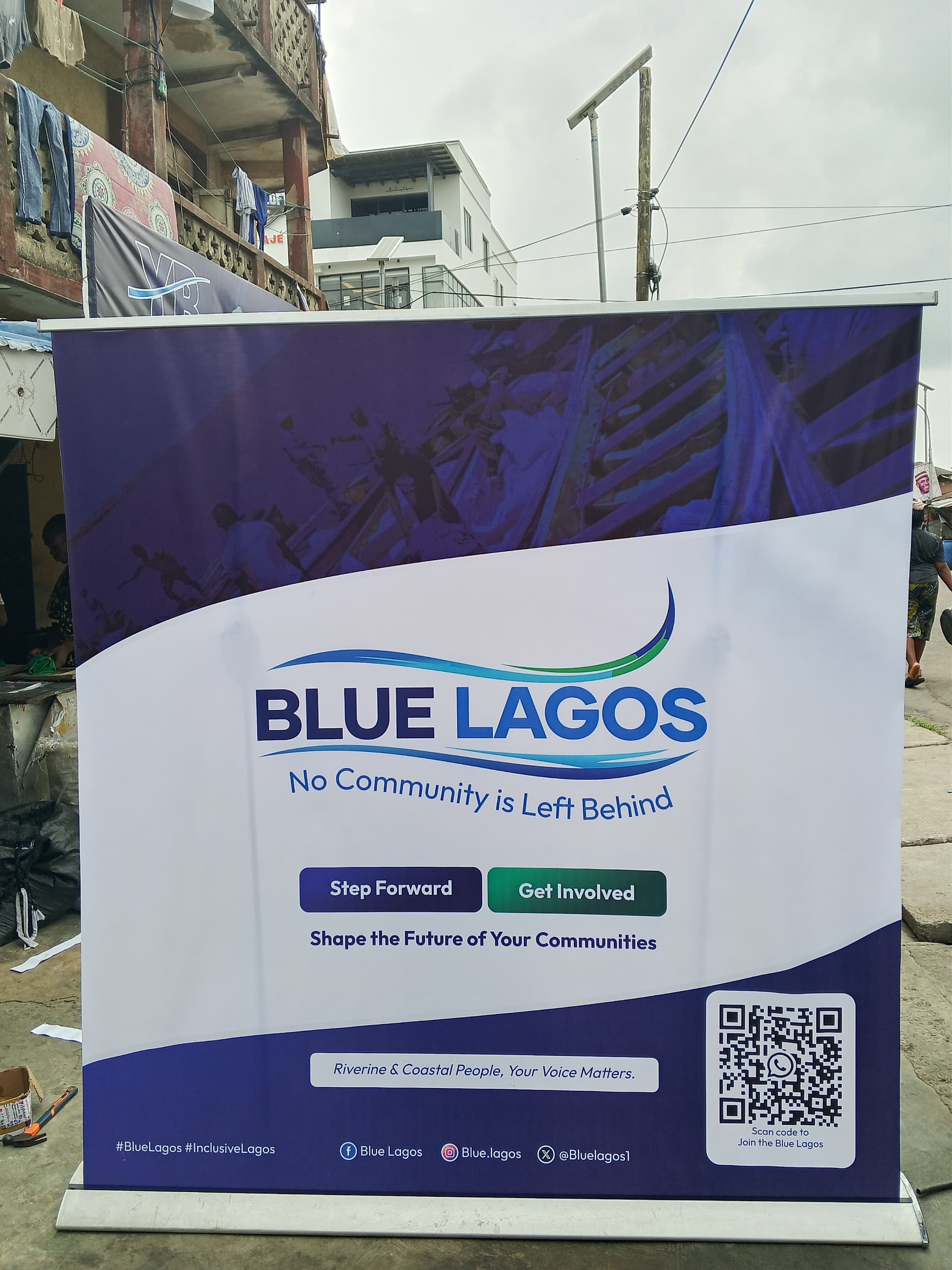
Blue Lagos Launches Community Sensitisation and Engagement Campaign in Riverine Areas
Blue Lagos has officially commenced its community sensitisation and engagement campaign across riverine and coastal communities in Lagos State.
The initiative is designed to amplify the voices of underserved communities, raise awareness on civic responsibilities, and highlight the unique challenges faced by residents living along the waterways.
Through on-ground interactions and digital advocacy, Blue Lagos aims to foster inclusive participation and ensure that no community is left behind.
Speaking on the campaign, The Director of Mobilisation & Community Engagement for the Blue Lagos Team, Hon. Ashade Abdul-Salam emphasized the importance of engaging directly with residents to better understand their daily realities, from access to basic services and transportation challenges to opportunities for development and improved governance.


The campaign will feature community visits, short sensitisation videos, interactive sessions, and stakeholder engagement, all geared towards empowering residents with the knowledge and tools to actively participate in shaping their future.
Blue Lagos calls on riverine and coastal residents to take advantage of this initiative, share their experiences, and stay informed on civic processes, including voter registration and community development programs.
This campaign marks a significant step towards building stronger connections between communities and decision-makers, while promoting inclusive growth across Lagos State.

For media inquiries, please contact:
Blue Lagos Team via email: [email protected]

One Universe Launches to Redefine How People Find and Pay for Trusted Services
One Universe, a new trusted digital marketplace designed to connect people who need services with skilled professionals, has officially launched and is now available for download on the Apple App Store and Google Play Store.
Built to solve the everyday challenge of finding reliable service providers, One Universe brings trust, convenience, and transparency into one seamless platform. From beauty and lifestyle services to technical, creative, and professional support, users can now discover verified professionals, agree on terms, and complete payments securely – all within the app.
A Safer, Smarter Way to Get Things Done
One Universe was created to eliminate uncertainty in service transactions. The platform enables buyers to find professionals, chat directly, agree on pricing and timelines, and make payments securely. Funds are held safely until the job is completed, ensuring protection for both parties.
Empowering Professionals to Grow
For service providers, One Universe offers a powerful opportunity to showcase skills, receive referrals, build credibility through reviews, and access more customers without the usual barriers. Professionals can focus on delivering quality work while the platform supports visibility, trust, and secure payments.
Introducing the One Universe Recruiter Program
As part of its launch, One Universe is rolling out the Recruiter Program, designed to reward individuals who help grow the community. Recruiters earn incentives by inviting people to join the platform – especially buyers seeking services – thereby helping professionals get more jobs while expanding the ecosystem. The program turns everyday referrals into real value and shared growth for all participants.
Key Features Include:
• Verified professionals across multiple service categories
• Secure in-app payments with buyer and seller protection
• Transparent pricing and direct communication
• Ratings and reviews to build trust
• A growing community driven by referrals and reputation
• Incentives through the Recruiter Program for community growth
*Now Available on iOS and Android*
One Universe is now live and ready for use. Individuals and businesses are encouraged to download the app, explore services, and experience a smarter way to connect and transact.
Download One Universe today:
Apple App Store
https://apps.apple.com/au/app/one-universe/id6753012310
Google Play Store
https://play.google.com/store/apps/details?id=com.oneuniverse.oneuniverse
About One Universe
One Universe is a trusted digital marketplace built to connect people with skilled professionals, making service discovery, engagement, and payment simple, safe, and reliable. The platform is committed to empowering service providers while giving users confidence and peace of mind.
Media Contact:
www.oneuniverse.ng
08083327368
Business
Adron Homes Unveils Sallah Mega Promo with 30% Discount and Exciting Gift Rewards for Subscribers

Adron Homes Unveils Sallah Mega Promo with 30% Discount and Exciting Gift Rewards for Subscribers
As the festive spirit of Eid al-Adha (Sallah) approaches, Adron Homes & Properties, Nigeria’s leading real estate company, has announced a nationwide Sallah Mega Promo designed to reward subscribers with unbeatable discounts, flexible payment plans, and exciting gift items.
The limited-time promotional campaign aims to empower Nigerians to celebrate the season of sacrifice with both joy and long-term investment security by making property ownership more accessible and rewarding. Subscribers can enjoy a 30% discount on all plots across Adron estates nationwide, alongside a flexible payment plan of up to 36 months. In addition, clients can spread their initial deposit over four months, easing financial pressure while securing valuable real estate assets.
According to the company, the Sallah promo reflects its continued commitment to providing affordable housing solutions while rewarding both new and existing clients during key festive periods.
“Sallah is a time of giving, sacrifice, and celebration. At Adron Homes, we believe there is no better time to empower families and investors with the opportunity to own land while also receiving valuable gifts that enhance their celebration,” the company stated.
As part of the promo, subscribers will enjoy a wide range of gift rewards tied to their payment milestones. Platinum plot subscribers stand to receive items such as bags of rice ranging from 10kg to 50kg, food packs with chicken and seasoning, goats and rams for Sallah celebrations, and even a cow or a double-door refrigerator for high-value subscribers. Compact plot subscribers will also benefit from gift items including bags of rice, vegetable oil, cartons of noodles, goats, and other household essentials designed to support festive celebrations.
Over the years, Adron Homes & Properties has remained at the forefront of real estate development in Nigeria, consistently delivering affordable luxury and flexible payment structures tailored to a wide range of investors. The Sallah Mega Promo further reinforces the company’s mission to democratize property ownership while strengthening its relationship with clients through value-driven initiatives.
Prospective subscribers are encouraged to take advantage of this limited-time offer by contacting Adron Homes through its official channels.
📲 WhatsApp: +234 805 101 1951
🌐 Website: Adron Homes Official Website
With the Sallah season fast approaching, this promo presents a unique opportunity for Nigerians to celebrate meaningfully by securing their future through real estate investment while enjoying generous festive rewards.


- Uganda Development Corporation (UDC) to take 82% of Trade ministry budget April 16, 2026
- Merck Foundation marks ‘World Art Day’ through their Film, Song, Media and Fashion Awards 2026 in partnership with Africa’s First Ladies to raise awareness about social & health issues April 15, 2026
- Gabon’s Offshore Comeback: International Oil Companies (IOCs) Return as Exploration Heats Up Ahead of Paris Forum April 15, 2026
- Shell’s Eugene Okpere to Speak at Angola Oil & Gas (AOG) 2026 Amid $1B Angolan Deepwater Drive April 15, 2026
- Oando Joins African Energy Week (AEW) 2026 as Emerald Sponsor as Firm Reports 10% Profit Rise April 15, 2026
- Africa Finance Corporation (AFC) Invests in Dhamana Guarantee Company to Catalyse Local Currency Infrastructure Financing in East Africa April 15, 2026
- WESGRO and Enlit Africa 2026 unite to spotlight the Western Cape’s energy investment opportunity April 15, 2026
- Gianni Merlo re-elected as International Sports Press Association (AIPS) President for sixth and final term in landslide victory April 15, 2026
- African Development Fund approves 1.7 billion CFA francs to boost private sector competitiveness across West African Economic and Monetary Union (WAEMU) countries April 15, 2026
- Knowledge Katti: The Architect Behind Namibia’s Energy Breakthrough April 15, 2026
- Uganda Development Corporation (UDC) to take 82% of Trade ministry budget April 16, 2026
- Merck Foundation marks ‘World Art Day’ through their Film, Song, Media and Fashion Awards 2026 in partnership with Africa’s First Ladies to raise awareness about social & health issues April 15, 2026
- Gabon’s Offshore Comeback: International Oil Companies (IOCs) Return as Exploration Heats Up Ahead of Paris Forum April 15, 2026
- Shell’s Eugene Okpere to Speak at Angola Oil & Gas (AOG) 2026 Amid $1B Angolan Deepwater Drive April 15, 2026
- Oando Joins African Energy Week (AEW) 2026 as Emerald Sponsor as Firm Reports 10% Profit Rise April 15, 2026
- Africa Finance Corporation (AFC) Invests in Dhamana Guarantee Company to Catalyse Local Currency Infrastructure Financing in East Africa April 15, 2026
- WESGRO and Enlit Africa 2026 unite to spotlight the Western Cape’s energy investment opportunity April 15, 2026
-

 news4 months ago
WHO REALLY OWNS MONIEPOINT? The $290 Million Deal That Sold Nigeria’s Top Fintech to Foreign Interests
-

 celebrity radar - gossips3 months ago
Dr. Chris Okafor Returns with Power and Fire of the Spirit -Mounts Grace Nation Altar with Fresh Anointing and Restoration Grace on February 1, 2026
-

 celebrity radar - gossips6 months ago
End of an Era: Nigeria Mourns Evangelist Dr. Uma Ukpai, 80
-

 celebrity radar - gossips4 months ago
Prophet Kingsley Aitafo Releases 2026 Prophecy: ‘Nigeria Will Rise, but the World Must Prepare for Turbulence’
You must be logged in to post a comment Login
You must log in to post a comment.