
Uncategorized
I Share Your Pains, I’ll Ensure Free and Fair Elections In 2023 —- Buhari Delivers Last Independence Day Speech As President [FULL TEXT]

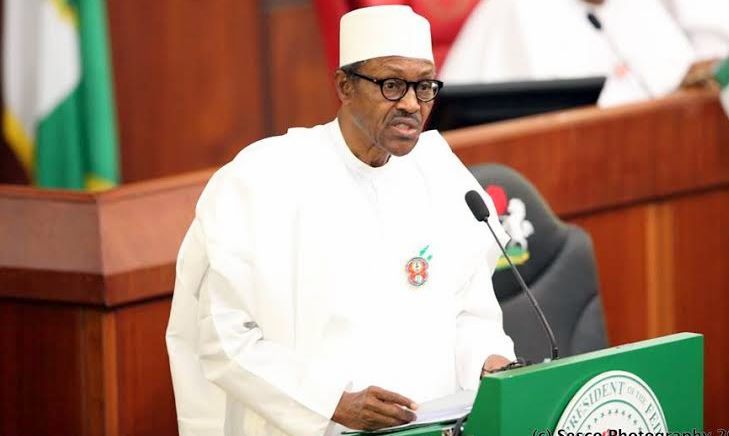
I Share Your Pains, I’ll Ensure Free and Fair Elections In 2023 —- Buhari Delivers Last Independence Day Speech As President [FULL TEXT]
Ahead of next year’s general elections, the President, Major General Muhammadu Buhari (retd.), on Saturday, promised Nigerians that he would ensure free and fair elections come 2023.
Buhari also said he shared the pains of Nigerians occasioned by the spate of insecurity nationwide.
This was as he assured citizens, for the umpteenth time, of his government’s drive to strengthen the security agencies to better “deal with all forms of security challenges.”
In his last independence day speech as president, Buhari said he had been a “victim of unfair electoral processes” in the past, as a result, he would bequeath a robust electoral institution that would ensure the emergence of credible leaders.
He also called for more youth and women’s participation in the electoral cycle.
He said, “Having witnessed at close quarters, the pains, anguish, and disappointment of being a victim of an unfair electoral process, the pursuit of an electoral system and processes that guarantee the election of leaders by citizens remains the guiding light as I prepare to wind down our administration.
“It is for this reason that I have resolved to bequeath a sustainable democratic culture that will remain lasting. The signing of the Electoral Act 2021 as amended with landmark provisions, further assures us of a more transparent and inclusive electoral process.”
He promised that the success recorded in the Anambra, Ekiti, and Osun state governorship elections will be scaled up come 2023.
Here is the full speech of President Muhammadu Buhari on Nigeria’s 62nd independence anniversary.
Fellow Nigerians,
I address you today, with a deep sense of gratitude to God and a high level of appreciation to all Nigerians whose tremendous goodwill gave me the opportunity to provide leadership for our great country at one of the trying times in her history.
2. Conscious that today’s address would be my last on an Independence Day as your President; I speak to the millions of Nigerians, who believed in me, propelled and stood by me in my quest to bequeath a country where all citizens have equal opportunities to achieve their lives desires in a peaceful atmosphere.
3. I am honoured to say that my story in the annals of Nigeria’s history is no household secret. My various attempts, failures and eventual success in being elected as a Democratic President in 2015 was made possible by the majority of Nigerians.
4. When you elected me, I readily acknowledged that the tasks before me were daunting but surmountable because of the growing national consensus that our chosen route to national development was democracy.
5. This democracy was to be anchored on a clear understanding, application and the principles of separation of powers supported by a reformed public service that is more effective.
6. I then pledged to Improve the Economy, Tackle Corruption, and Fight Insecurity and this was further strengthened by my commitment to lift 100 million Nigerians out of poverty in ten years as the central plank of my second term in 2019.
7. To the Glory of God and His Grace as well as the commitment and passion displayed by many Nigerian supporters, we have made appreciable progress in these areas but not yet at our destination.
8. Mindful of the task before us, we took some time in settling down and we re-positioned the Economy by providing strategic interventions in core areas at both the Federal and Sub-National levels.
9. One of the areas where we have made significant progress is in the eradication of deeply entrenched corruption that permeates all facets of our national development.
10. We strengthened the Institutions for tackling corruption and also cultivated international support, which aided the repatriation of huge sums of money illegally kept outside the country.
11. The increasing number of prosecutions and convictions, with associated refunds of large sums of money is still ongoing. Furthermore, we would continue to block opportunities that encourage corrupt practices.
12. In order to address Insecurity, we worked methodically in reducing Insurgency in the North East, Militancy in the Niger Delta, Ethnic and Religious Tensions in some sections of Nigeria along with other problems threatening our country.
13. Our efforts in re-setting the economy manifested in Nigeria exiting two economic recessions by the very practical and realistic monetary and fiscal measures to ensure effective public financial management. In addition, the effective implementation of the Treasury Single Account and cutting down on the cost of governance also facilitated early exits from recessions.
14. Fellow Nigerians, this administration removed several decades uncertainty for potential Investors in the Oil & Gas sector with the passage of the Petroleum Industry Act, 2021. This landmark legislation created opportunities for foreign investments in addition to improving transparency in the management of the sector.
15. Our administration has given the desired priority to the Agricultural Sector through a series of incentives to Micro, Small and Medium Scale Enterprises that resulted in creating millions of jobs. Leading this initiative, the Central Bank of Nigeria’s intervention in a number of areas as well as the Anchor Borrowers Programme had created the required leverages for Nigerians towards self-sufficiency in food and the necessary attraction for farming as a business.
16. The growing contribution of non-oil exports, especially in agriculture, information and communication technology as well as the performing arts to our national economy will enhance our foreign exchange earning capacity.
17. We are confronting current economic challenges such as debt burden, growing inflation, living standards and increasing unemployment accentuated by our growing youthful population. These problems are globally induced and we would continue to ensure that their negative effects are addressed in our policies.
18. This administration will continue to ensure that our fiscal policies are supported by a robust and contemporary monetary policy that recognises our peculiarities in the midst of the growing global economic difficulties.
19. This is evidenced by the recent Monetary Policy Committee decision to maintain all parameters, especially interest rates and marginally increased the Monetary Policy Rate (MPR) from 14% to 15.5% and the Cash Reserve Ratio (CRR) from 27.5% to 32.5%. It is projected that this would further insulate our economy from over exposure to uncertainties at the international market by restraining growth in core inflation.
20. As we continue to de-escalate the security challenges that confronted us at inception of this administration, newer forms alien to our country began to manifest especially in the areas of kidnappings, molestations/killings of innocent citizens, banditry, all of which are being addressed by our security forces.
21. I share the pains Nigerians are going through and I assure you that your resilience and patience would not be in vain as this administration continues to reposition as well as strengthen the security agencies to enable them to deal with all forms of security challenges.
22. At the inception of this administration in 2015, I provided the funding requirements of the security agencies which was also improved in my second tenure in 2019 to enable them to surmount security challenges. We will continue on this path until our efforts yield the desired results.
23. As we put in place all measures to ensure that Nigeria takes her place in the Comity of Nations, we recognize the importance of a well-educated populace as a panacea to most of the challenges we face.
24. We have, therefore, pursued policies and implemented programmes designed to create a literate and proficient society that ensures that citizens are availed with opportunities for life-long achievements.
25. I must confess that I am very pained by the recurring disruption to our tertiary education system and I am using this Independence Day celebration to re-iterate my call for the striking Academic Staff Union of Universities (ASUU) to return to the classroom while assuring them to deal with their contending issues within the limits of the scarce resources available. This administration has made appreciable progress in redressing these issues that have been lingering for over eleven years.
26. The Federal Government will continue to mobilize resources both internationally and nationally towards funding education to ensure that our citizens are well educated and skilled in various vocations in view of the fact that education is a leading determinant of economic growth and employment generation.
27. Fellow Nigerians, we have also improved our health facilities, especially during and after the outbreak of the COVID-19 pandemic, which attracted commendation of the global community.
28. As you are aware, Nigeria was one of the countries that defied global predictions of the socio-economic impacts of the COVID-19 pandemic because of our resilience, commitment and passion with which we individually and collectively managed the pandemic.
29. This administration embarked on addressing critical ecological challenges across the country in order to mitigate the impact of Climate Change manifesting in the form of flood, soil erosion, desertification, air pollution amongst others
30. We will continue to ensure that our infrastructure drive remains the key to Nigeria’s economic growth and for which every Nigerian will feel the impact.
31. The Federal Government is already expanding ports operations to ensure that they provide opportunities for the growth of the Nigerian economy.
32. We have also continued to accelerate our infrastructure development through serviceable and transparent borrowing, improved capital inflow & increased revenue generation by expanding the tax bases and prudent management of investment proceeds in the Sovereign Wealth Fund.
33. To further open up our communities to economic activities, we have continued to boost our railway infrastructure with the completion of a good number of critical railways and at the same time rehabilitating as well as upgrading obsolete equipment.
34. I am pleased to inform my fellow citizens that besides our emphasis on infrastructural development with its attendant opportunities for job creation, employment generation and subsequent poverty reduction, our focused intervention directly to Nigerians through the National Social Investment Programme is also yielding benefits.
35. There is hardly any ward, village or local government in Nigeria today that has not benefited from one of the following: N-Power, trader-moni, market moni, subsidized loans, business grants or Conditional Cash Transfers.
36. All the aforementioned programmes along with various interventions by the National Social Investment programme, direct support to victims of flooding and other forms of disasters have provided succor to the affected Nigerians.
37. Fellow Nigerians, no matter what gains we make, without a good governance system anchored on electing credible leaders on the basis of free, fair, credible and transparent elections, our efforts would not be enough.
38. It is for this reason that I have resolved to bequeath a sustainable democratic culture which will remain lasting. The signing of the Electoral Act 2021 as amended with landmark provisions further assures us of a more transparent and inclusive Electoral Process.
39. Having witnessed at close quarters, the pains, anguish and disappointment of being a victim of an unfair electoral process, the pursuit of an electoral system and processes that guarantee election of leaders by citizens remains the guiding light as I prepare to wind down our administration.
40. You would all agree that the recent elections in the past two years in some states (notably Anambra, Ekiti and Osun) and a few federal constituencies have shown a high degree of credibility, transparency and freedom of choice with the people’s votes actually counting. This I promise would be improved upon as we move towards the 2023 General Elections.
41. As we begin the transition process to another democratically elected government, I want to implore all aspirants to conduct issues-based campaigns devoid of hate speeches as well as other negative and divisive tendencies.
42. I also want to express my wish that we see more female and youth participation in the forthcoming electoral cycle. I am sure that our teeming and energetic youths now realise that violence generally mar elections and so should desist from being used by politicians for this purpose.
43. Reforms in the public sector are already yielding results especially in the delivery of services. On this note, I urge the general public to demand for citizen-centred services from the relevant authorities.
44. On the international front, we have continued to take advantage of our bilateral and multilateral platforms to explore cooperation with friendly countries and partners whenever these areas of cooperation are to the advantage of Nigeria.
45. Fellow Nigerians, in the past few years we have witnessed and overcome a good number of challenges that would ordinarily have destroyed our Nation. However, the indefatigable spirit of the Nigerian people has ensured that we overcome our challenges.
46. It is in this spirit that I call on all of us to individually and collectively bring to the fore in dealing with all our development issues.
47. I was called to serve, along with my team, I saw an opportunity to create a better Nigeria which we have done with the support of Nigerians. Almighty God and the good people of Nigeria supported us in laying a solid foundation for the Nigeria of our dreams.
I thank you all and God bless the Federal Republic of Nigeria.





Ramadan 2026: Let’s Be United, Shina Akanni Urges Muslims.
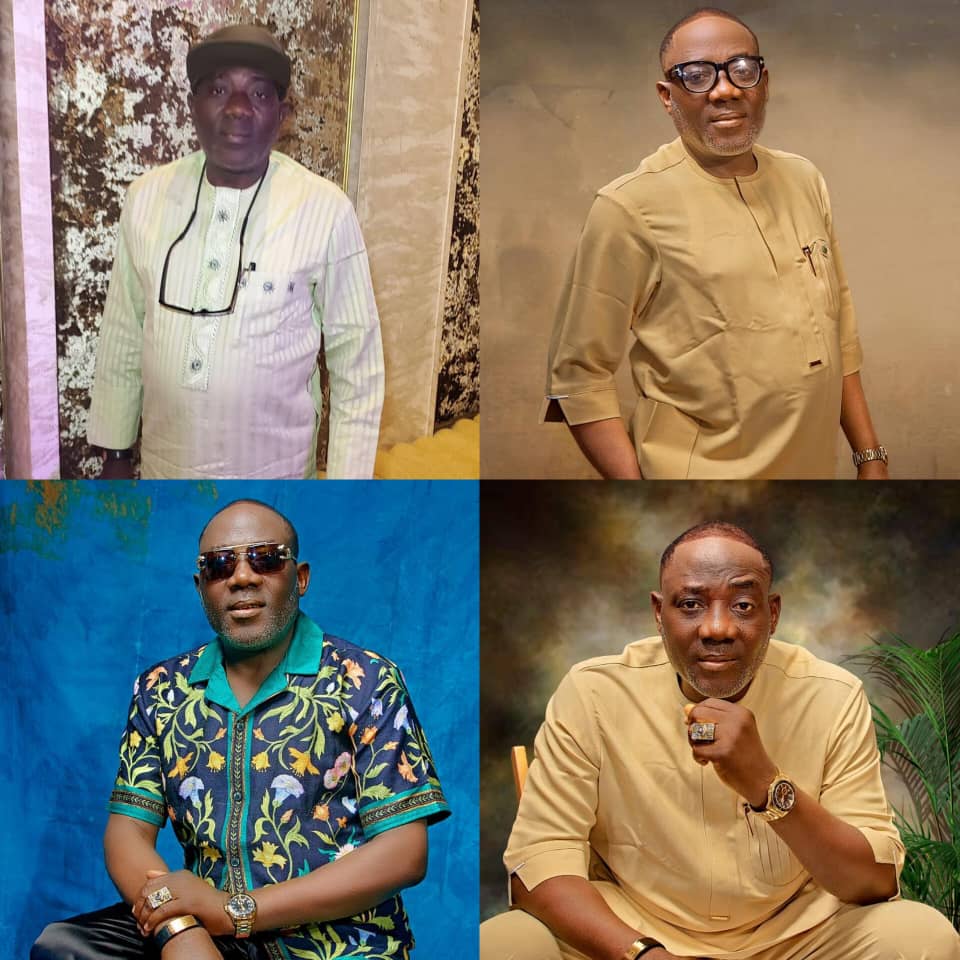
As Muslims all over the world begins the 30 days compulsory fasting and prayer today,top Fuji Musician Aare Sir Shina Akanni Aroworeyin Scorpido has congratulates them for witnessing another month of Ramadan.
Akanni advised them to follow the teachings of the the Holy Prophet Muhammad (SAW) which is peaceful co existence among themselves and their neighbor ‘because Islam is Religion of peace”.
He said the month of Ramadan is an holy month therefore Muslims should try as much as they can to maintain peaceful coexistence among themselves and others and that they should see themselves as ambassador of peace.
While praying for Nigeria,Aare Sir Shina Akanni Aroworeyin Scorpido said he believes that there will be an economic turnaround soon because what’s is happening now are signs of thought times that never last “if we can pecevere things will get better”.
The Scorpido crooner who recently released a hip hop single titled “Magbelo” said he is currently working on a complete album which will be released before the end of the year.
Aare Sir Shina Akanni Aroworeyin Scorpido whose last album ‘ABCD” is still in hot demand said that his next album will be a pot pouri of all kinds of music because his brand of Fuji music is a blend Fuji , Hip-hop,Apala ,Highlife and others.
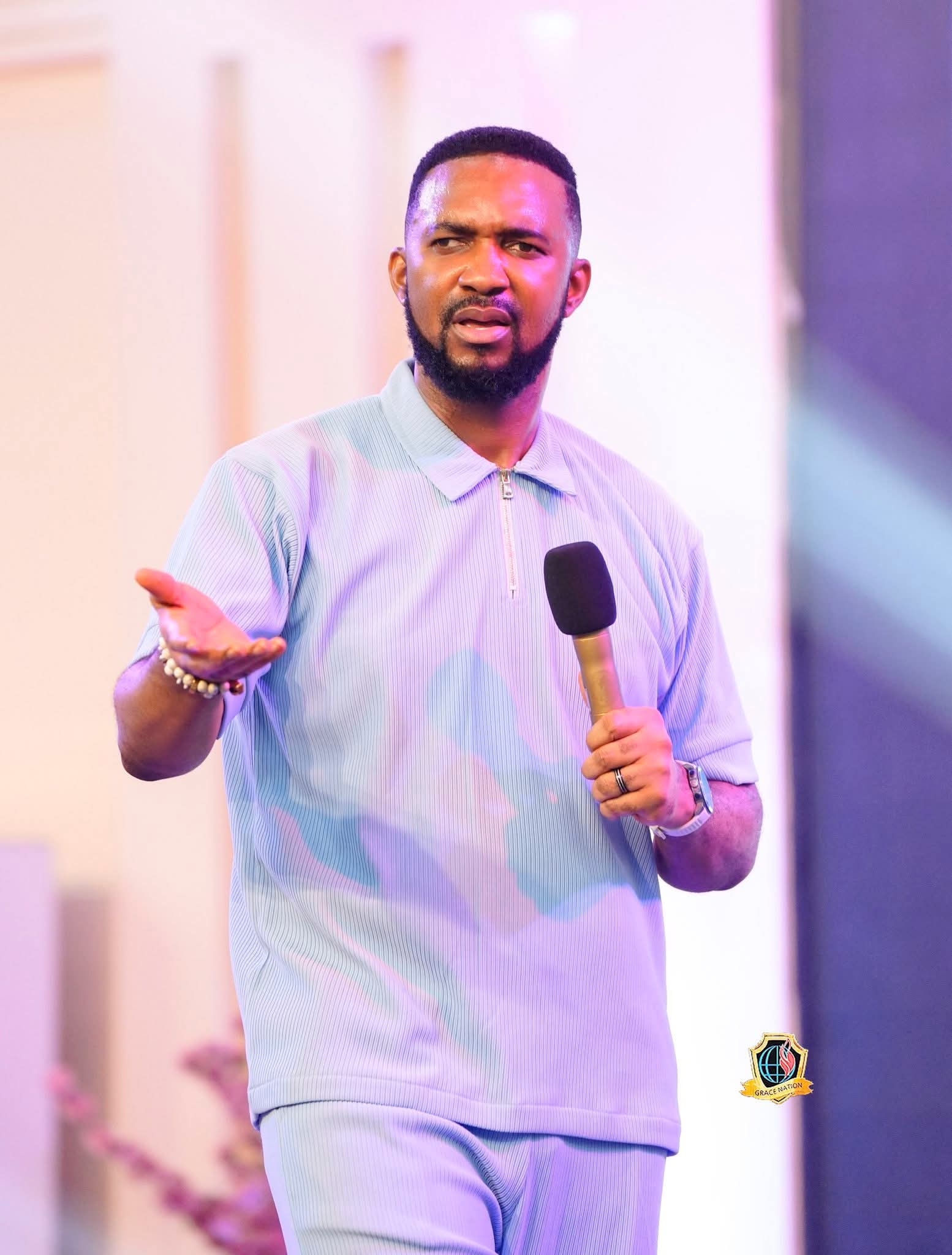
The Enemies Within:
Jonahs Are Not Manageable — Dr. Chris Okafor
…….“To remove Jonah, you must bring Jesus into the matter.”
When a “Jonah” enters a person’s life, confusion, gossip, blackmail, betrayal, and the pull-him-down syndrome often follow. But the moment Jesus Christ is invited into the situation, the storm subsides and stability is restored.
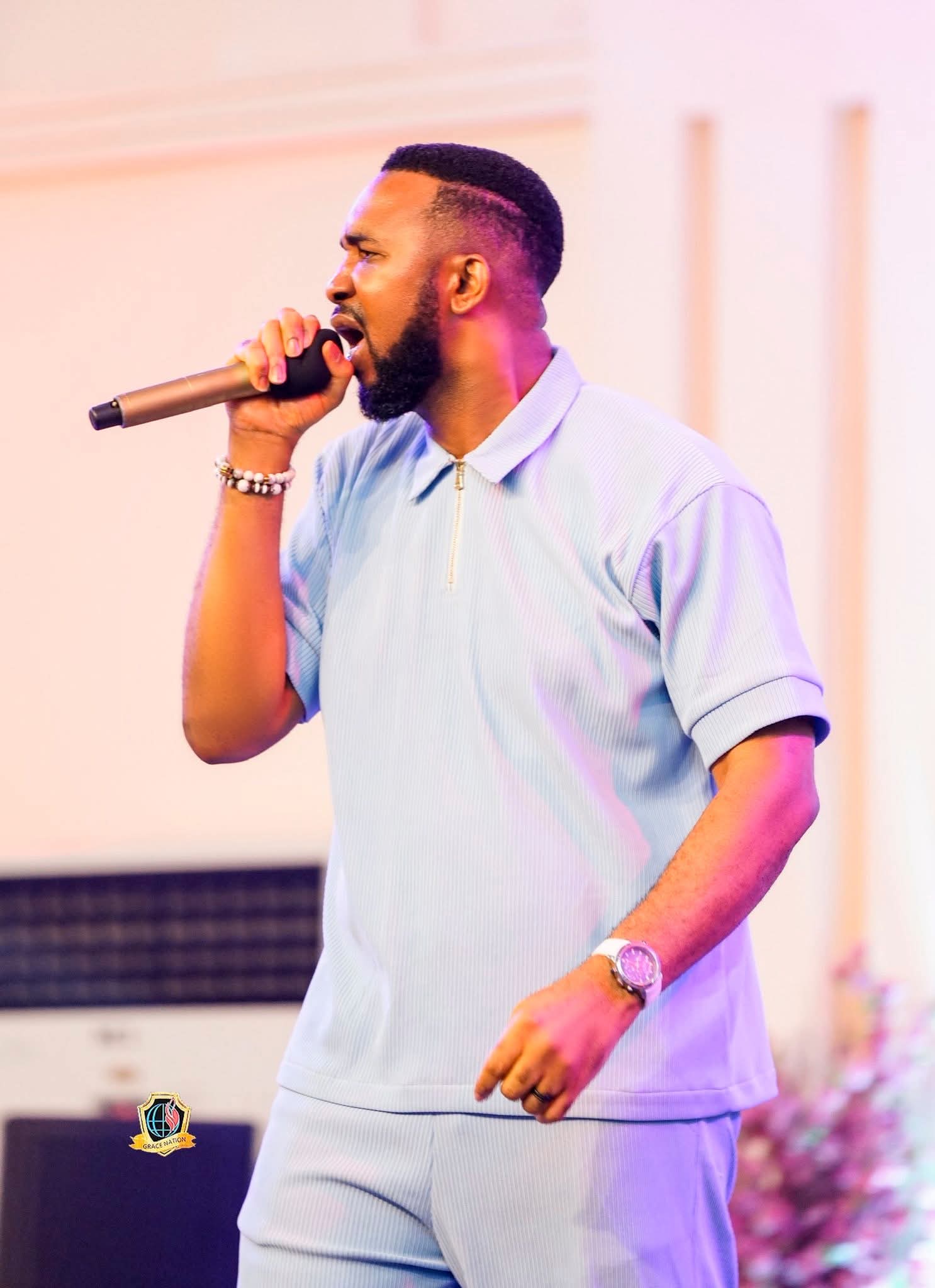
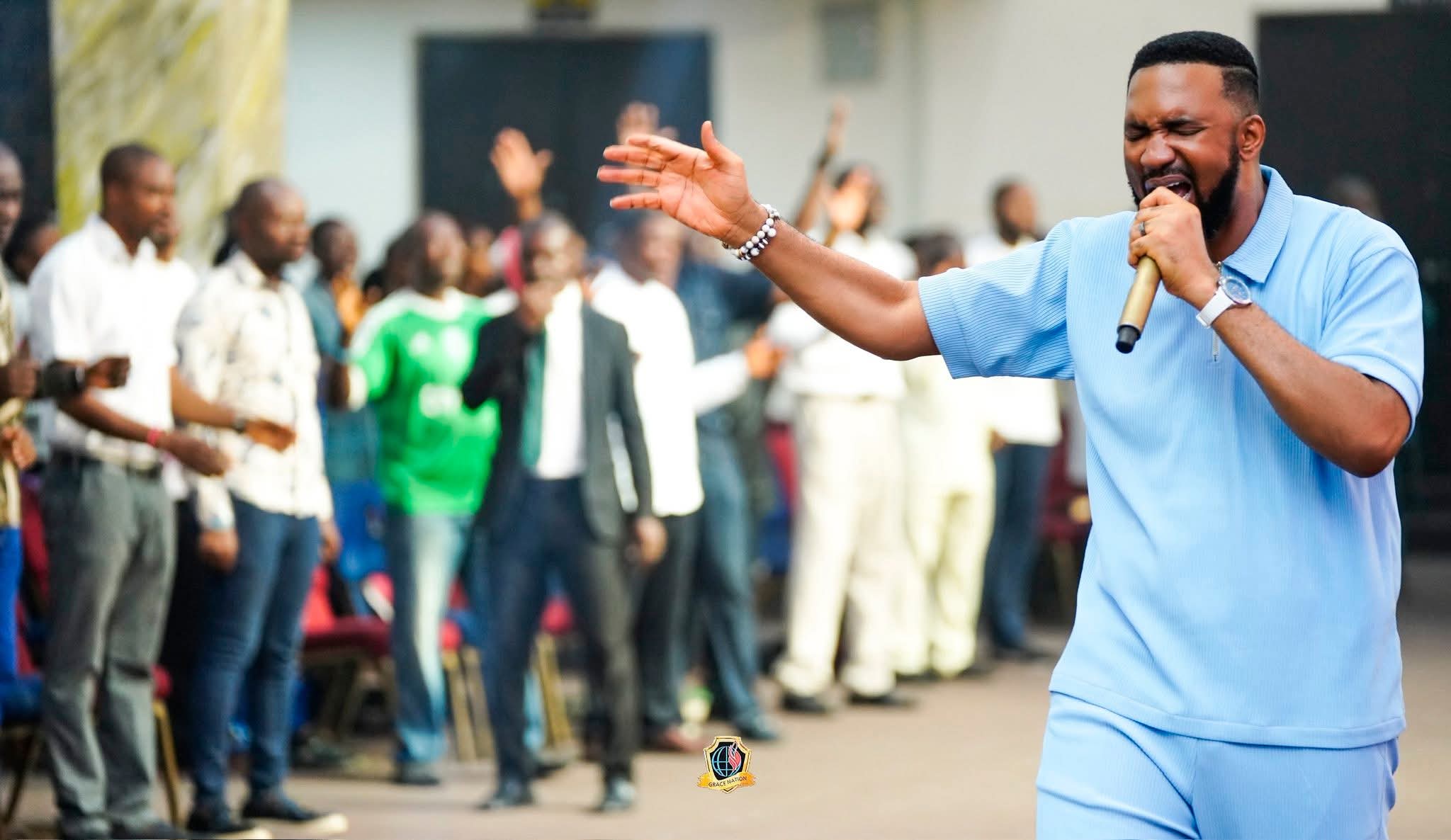
This was the central message delivered by the Generational Prophet of God and Senior Pastor of Grace Nation Global, Dr. Chris Okafor, during the midweek non-denominational Prophetic Healing, Deliverance and Solutions Service (PHDS) held at the international headquarters of Grace Nation Worldwide in Ojodu Berger, Lagos, Nigeria.
The Clergyman also declared that Nothing Happens Without Spiritual Influence
In his sermon titled “The Enemies Within,” Dr. Okafor declared that nothing happens without spiritual involvement. According to him, every visible battle has an invisible root.
Referencing the biblical story of Jonah, the Man of God explained that Jonah’s presence on the ship gave access to a contrary spirit that tormented everyone onboard.
Despite the losses suffered by innocent traders and sailors, the storm persisted because of one man’s disobedience.
However, he noted that when Jesus speaks into a situation, every storm must obey. Just as Christ rebuked the storm and it ceased, so too will the storms in believers’ lives subside when He is invited into their “boat.”
*The Impact of a Jonah*
Dr. Okafor further emphasized that “Jonahs” are difficult to manage. When such individuals are present in one’s circle, progress becomes delayed.
What should ordinarily manifest quickly may be prolonged or frustrated because someone close—someone who understands you deeply—may be operating as a spiritual adversary.
He explained that negative narratives, unnecessary battles, and unexplained setbacks often begin when a “Jonah” gains access to a person’s inner circle.
*The Solution*
“To remove Jonah from the boat of your life,” the Generational Prophet declared, “you must invite Jesus Christ into the matter.”
According to him, when Jesus takes control of the boat, the plans of the enemy are overturned.
What was designed for downfall becomes a testimony. No storm or battle can succeed where Christ reigns, and the enemy is ultimately put to shame.
The midweek service witnessed a strong prophetic atmosphere, with the power of God evident through deliverance, restoration, and divine revelations.
The Generational Prophet ministered deeply in the prophetic, calling out names, villages, and addressing alleged spiritual strongholds, as many lives were reportedly restored—all to the glory of God.
By Sunday Adeyemi
Uncategorized
FROM BORDER TO MARKETS: HOW NIGERIA’S REFORMS ARE REWRITING AND MODERNISING TRADE FACILITATION By O’tega Ogra
FROM BORDER TO MARKETS: HOW NIGERIA’S REFORMS ARE REWRITING AND MODERNISING TRADE FACILITATION
By O’tega Ogra
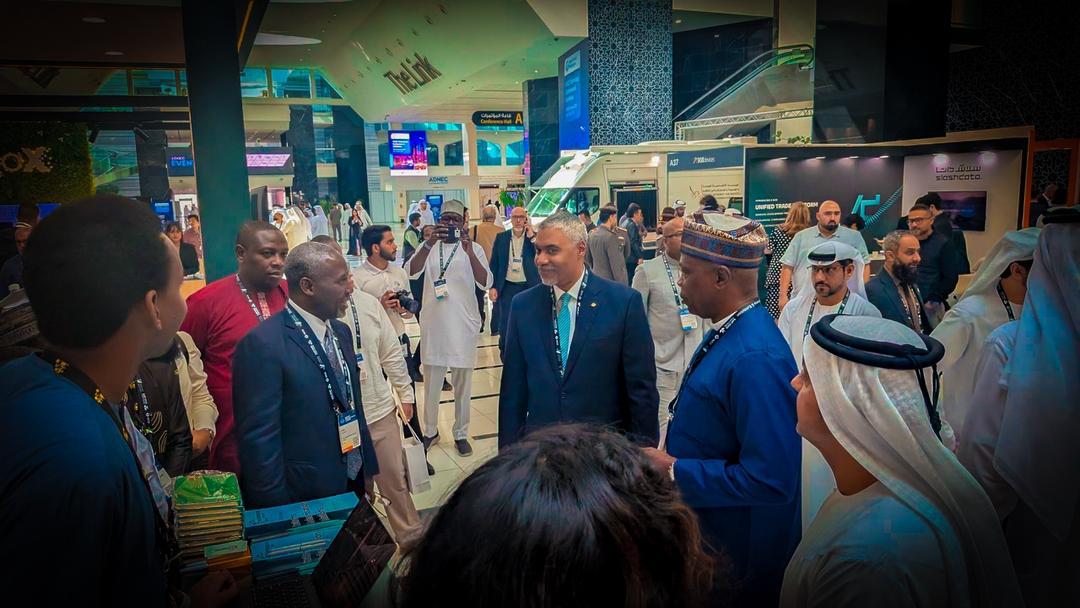
On the surface, the 2026 World Customs Organization (WCO) Technology Conference in Abu Dhabi, held in the last week of January, followed a familiar script: flags, formal sessions, carefully worded speeches. But beneath the choreography, something more consequential was unfolding. As customs chiefs and trade officials compared notes on the future of borders, Nigeria arrived not with theory, but with a working proposition.
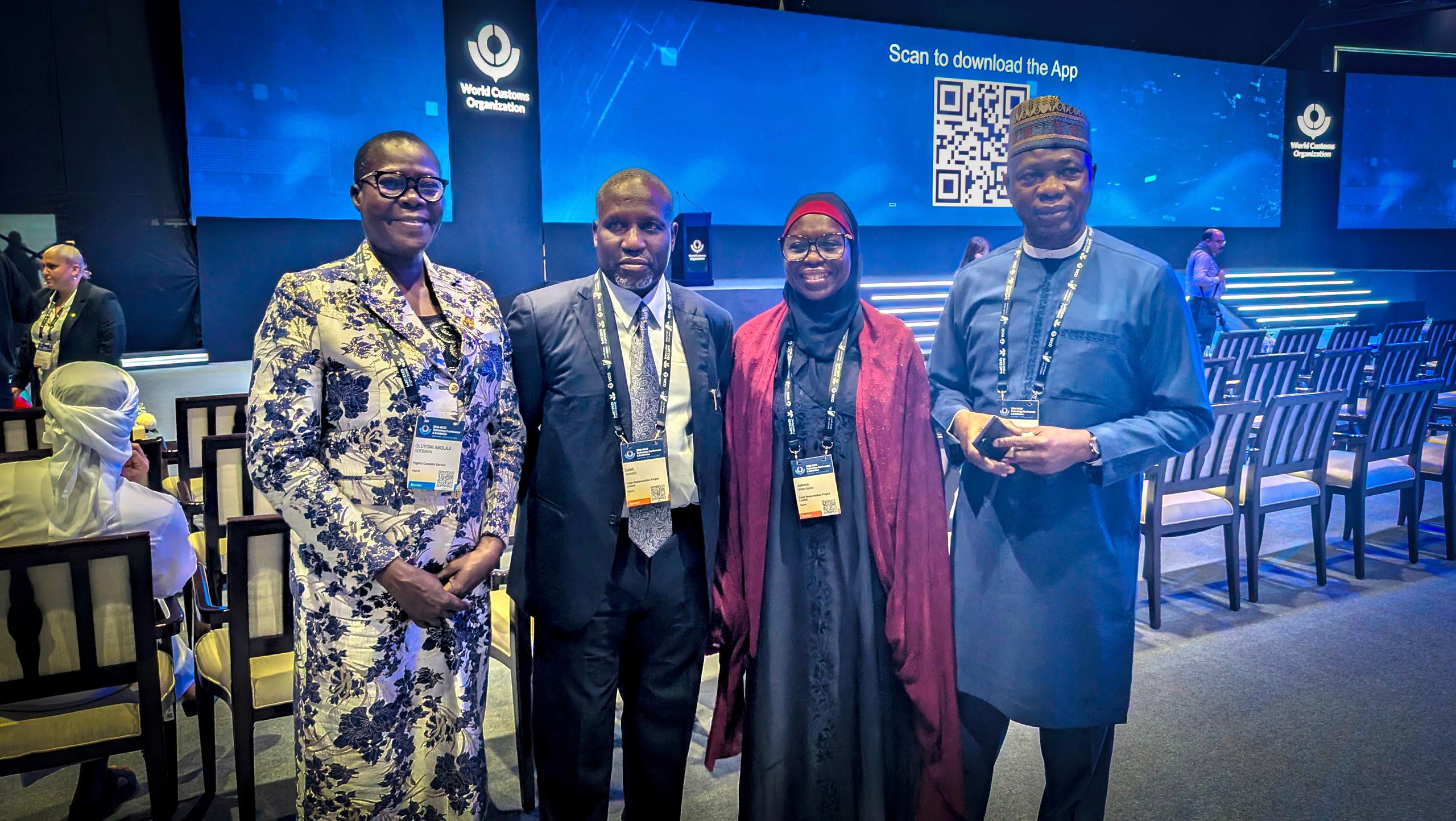
The Nigeria Customs Service (NCS) Modernisation Project, being implemented through Trade Modernisation Project (TMP) Limited, unveiled to a global audience of customs administrators and policy leaders a window into how Africa’s largest economy is confronting one of the most complex challenges in public administration: reforming the machinery of trade while it is still running.
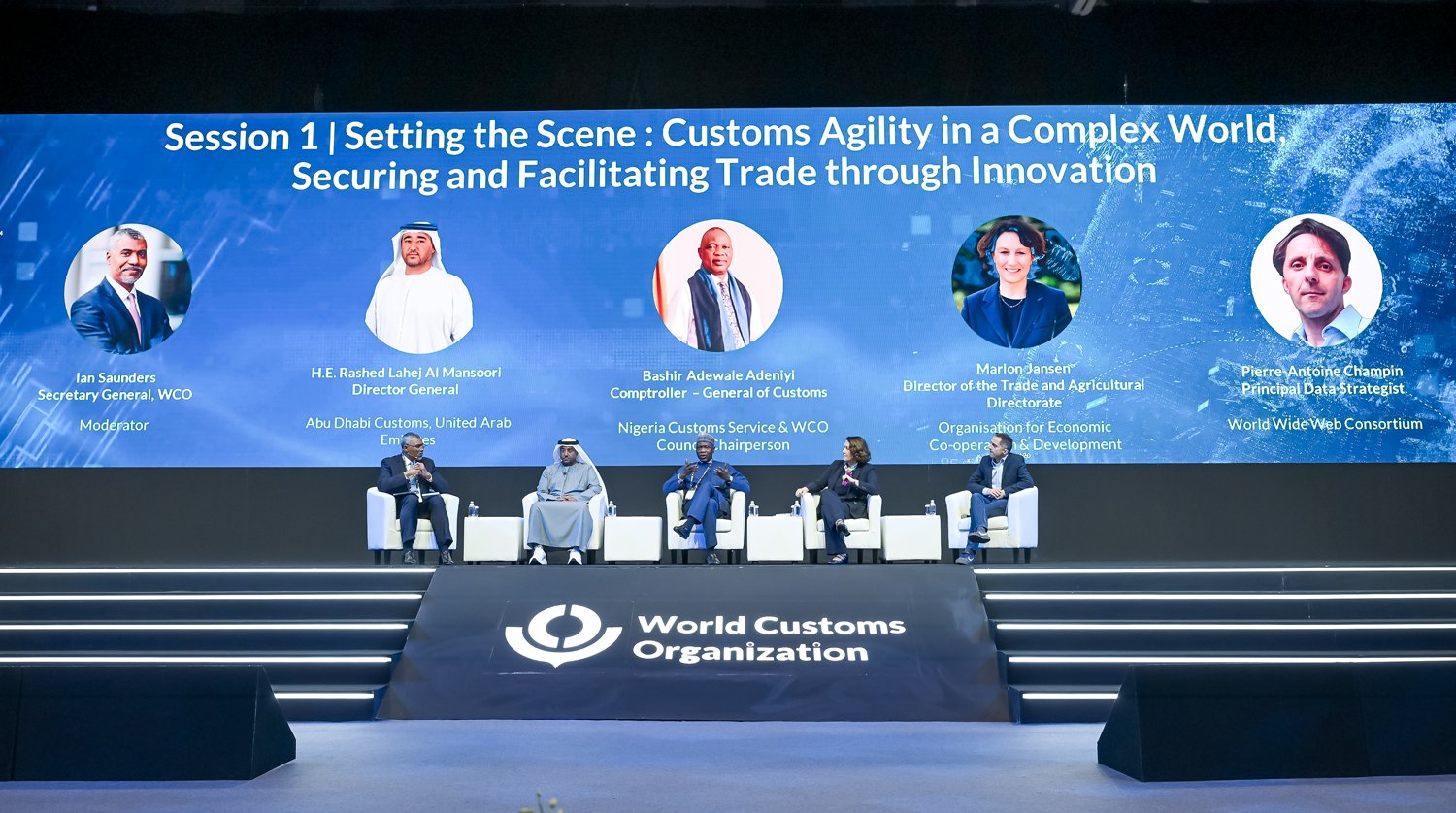
For decades, customs reform was treated largely as a technical exercise—frequent patches here, shoddy fixes there; new software in one corner, revised procedures in another. Nigeria’s presence in Abu Dhabi signalled something different. TMP Limited, working in partnership with the NCS, advanced the argument that trade is a cornerstone of economic development and must be supported by organic, sustainable partner ecosystems. Such ecosystems deliver speed and trust, revenue and credibility, and secure borders without stifling commerce.
That argument resonated in a room increasingly aware that global trade is no longer defined solely by tariffs and treaties, but by data, interoperability, and the quiet efficiency of systems that simply work.
The annual WCO Technology Conference has, in recent years, become a barometer for the direction of global trade governance. This year’s discussions reflected a shared anxiety: supply chains are more fragile, compliance risks are rising, and governments face mounting pressure to collect revenue without discouraging investment. Customs administrations now sit at the intersection of all three.
Nigeria’s response has been to attempt a full reset.
At the heart of this effort is the NCS Modernisation Project, implemented through a Public-Private Partnership (PPP) arrangement with TMP Limited as the concessionaire. The project seeks to replace fragmented technology deployments and manual processes within the Nigeria Customs Service with a single, integrated framework. This is anchored on B’Odogwu, a Unified Customs Management System (UCMS) that brings together cargo clearance, risk management, payments, and inter-agency collaboration. The ambition is sweeping—and so are the stakes.
Alhaji Saleh Ahmadu, OON, Chairman of TMP, framed the initiative as nothing less than an institutional reconstruction, designed to position the NCS at the forefront of global customs administration technology, aligned with international standards and assurance frameworks.
“Digital trade modernisation is not just about upgrading systems,” he told participants in Abu Dhabi. “It is about upgrading trust, predictability, and confidence in how trade flows through our borders.”
That choice of words matters. Nigeria’s economy has long struggled with the perception gap between its size and the ease of doing business. Investors cite delays. Traders complain of opacity. Government points to revenue leakages. In this context, customs reform becomes as much a credibility project as a technical one.
Saleh’s message was timely and direct: modern trade demands modern customs. Data-driven processes, automation, and risk-based controls are no longer luxuries; they are prerequisites for competitiveness in a world where capital moves faster than policy.
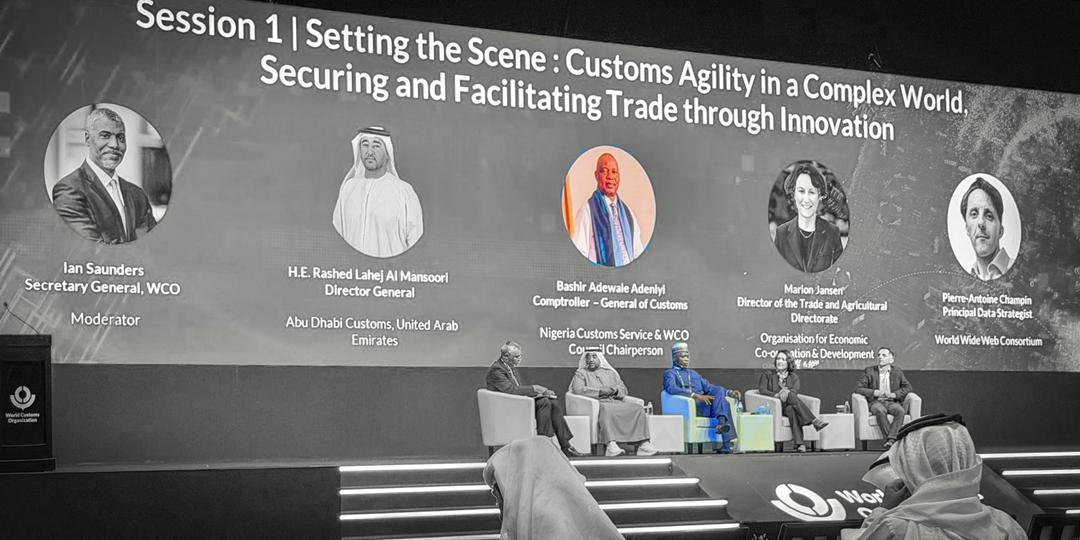
The institutional face of this digital transformation is the Comptroller-General of Customs, Bashir Adewale Adeniyi, who led Nigeria’s delegation to Abu Dhabi. His message reflected a subtle but important shift in how customs leadership now understands its role.
“Customs administrations today must evolve from gatekeepers to facilitators of legitimate trade,” Adeniyi said. “Nigeria’s customs modernisation project reflects our determination to place the Nigeria Customs Service at the centre of national economic transformation.”
It is a familiar refrain globally, but one that carries particular weight in Nigeria, where customs revenue remains a critical pillar of public finance. Automation, Adeniyi argued, is not about weakening control; it is about strengthening it through intelligence rather than discretion.
Risk management systems reduce unnecessary physical inspections. Integrated platforms limit human contact. Data analytics improve compliance targeting. When executed well, the result is faster clearance for compliant traders and tighter scrutiny for high-risk consignments.
In Abu Dhabi, peers from Asia, Europe, and Latin America listened closely to Nigeria’s presentation. Reforming customs in a small, open economy is one thing. Doing so in a market of over 200 million people, home to some of Africa’s busiest ports and its largest economy, is quite another.
Nigeria’s engagement emphasised that customs modernisation is embedded within a broader economic reform agenda under President Bola Ahmed Tinubu, GCFR. Simplifying trade procedures, strengthening revenue assurance, and aligning with international standards form part of a wider effort to reposition the economy for investment-led growth.
What makes the project particularly noteworthy is its insistence on end-to-end coherence. Rather than digitising isolated functions, the reform aims to connect agencies, harmonise data, and reduce duplication across government—an all-of-government approach that acknowledges an uncomfortable truth: trade friction is often created not at the border, but between institutions.
The WCO 2026 Technology Conference offered Nigeria more than a platform; it provided a stress test. Questions from peers were pointed. How will change be sustained across political cycles? How will capacity be built? How will entrenched institutional behaviours be unlearned?
The responses were pragmatic. Reform is being phased. Training programmes are ongoing. International benchmarks are being adopted not as slogans, but as operating standards. There were no claims of perfection—only a clear statement of intent.
“Our engagement here underscores Nigeria’s commitment to international cooperation,” Adeniyi noted. “We are learning, sharing, and contributing to global conversations on the future of customs administration.”
That contribution matters. As Africa moves to deepen regional trade under continental frameworks, customs efficiency will determine whether integration succeeds in practice or remains aspirational on paper. Nigeria’s experience, if successful, could offer a valuable template for other developing economies navigating similar constraints.
In Abu Dhabi, the mood was cautious but curious. Reform fatigue is real in many countries. Yet there was a growing sense that Nigeria’s effort—precisely because of its scale and difficulty—deserves attention.
Borders are rarely glamorous. But they are decisive. In choosing to modernise its borders in public, under global scrutiny, Nigeria is signalling something beyond technical competence. It is signalling seriousness.
And in global trade, seriousness still counts.
O’tega Ogra is Senior Special Assistant to President Bola Ahmed Tinubu, GCFR, responsible for the Office of Digital Engagement, Communications and Strategy in the Presidency.


-

 celebrity radar - gossips6 months ago
Why Babangida’s Hilltop Home Became Nigeria’s Political “Mecca”
-

 society6 months ago
Power is a Loan, Not a Possession: The Sacred Duty of Planting People
-
 society5 months ago
Religion: Africa’s Oldest Weapon of Enslavement and the Forgotten Truth
-

 news6 months ago
THE APPOINTMENT OF WASIU AYINDE BY THE FEDERAL GOVERNMENT AS AN AMBASSADOR SOUNDS EMBARRASSING