
society
Naira Redesign: El‐Rufai Dares Buhari

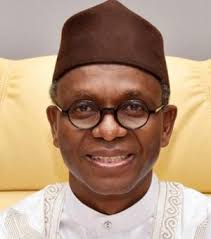
Disregard Buhari continue using all old notes…El-Rufai declares in Kaduna
State Broadcast by Malam Nasir El-Rufai, Governor of Kaduna State, 16th February 2023.
My dear people of Kaduna State,

1. With just about 100 days before leaving office, and elections just round the corner, it was my intention to host another media chat to interact with the people of our state in the next few days. While I still hope to do so, I feel the need to address you all today due to the unprecedentedly cruel situation our people and their livelihoods have been thrown into, particularly in the last two to three weeks by the decisions, actions and inactions of the Federal Government of Nigeria.
2. On behalf of the government of Kaduna State, I wish to express my deepest regret at the needless suffering you are enduring as a result of the prolonged fuel shortage and the difficulties occasioned by the so-called “currency redesign” policy of the Central Bank of Nigeria. We understand your pain. I assure you that as your State Governor, I have been working with my other colleagues to do everything in our power to end these pains.

3. While publicly supporting what appeared to be a beneficial policy, we innocently engaged privately with the President and the leadership of the Central Bank of Nigeria to review the implementation of the policy so as to reduce its negative impact on the lives and livelihoods of our people, and end the pain being inflicted on citizens. In the absence of any progress to modify implementation on the part of the architects, we were forced to go public about two weeks ago, with our concerns and demand that this suffering must stop.
4. We take seriously our duty to protect ordinary people from the consequences of these policy fiascos. The sad fact is that the victims of these mindless policies are the people that elected us. It is their welfare that is being threatened. Many of our people have been left in a situation where the money they put in banks has literally been confiscated, depriving them of the ability to buy food and basic necessities. Our traders cannot sell as much as they used to because their customers have no access to their hard-earned money.
5. We have been officially informed that the currency redesign policy is to reduce money laundering and render useless stashes of high denomination Naira that many politicians and public officers have accumulated through corruption and other illicit activities. As earlier stated, we are fully in support of such a policy and we made this public from the beginning.
6. We had privately expressed concerns about the timing of the currency design policy and the unrealistic timeline for its implementation. We were assured that all steps have been taken to ensure that we avoid the recent experience of India, where implementation of a similar demonetisation policy targeted at politicians ended up hurting the poorest and small businesses the most.
7. In official briefings to the President, the Central Bank of Nigeria constantly alluded to the fact that the policy also targets politicians who have accumulated a huge war chest for vote buying during the elections. It is now clear that the President has been deceived by the Central Bank of Nigeria and some elements in his government into buying into this overarching narrative, in the name of ensuring free and fair elections in 2023.
8. It is important for the people of Kaduna State, and indeed Nigeria, to know that contrary to the public pronouncements and apparent good intentions, this policy was conceived and sold to the President by officials who completely lost out in the Gubernatorial and Presidential Primaries of the APC in June 2022.
9. Once Asiwaju Bola Tinubu emerged as the candidate in June 2022, and subsequently did not pick one of them as his running mate, this currency redesign policy was conceived to ensure that the APC presidential candidate is deprived of what they alleged is a humongous war chest. They also sought to achieve any one or more of following objectives:
a. Create a nationwide shortage of cash so that citizens are incited to vote against APC candidates across the board resulting in massive losses for the Party in all the elections;
b. Ensure that the cash crunch is so serious, along with the contrived and enduring fuel shortage existing since September 2022, that the 2023 Elections do not hold at all, leading to an Interim National Government to be led by a retired Army General;
c. Sustain the climate of shortage of fuel, food and other necessities, leading to mass protests, violence and breakdown of law and order that would provide a fertile foundation for a military take-over;
10. In the pursuit of these objectives, the Central Bank of Nigeria and these other disgruntled Federal officials have so far convinced the President that it is fine for ordinary citizens to be dispossessed of their hard-earned money, and starved if need be, while small and medium-sized businesses are deprived of access to their capital, thereby bringing trade and exchange to a grinding halt. All our efforts to modify implementation of the policy to avoid what we assumed were unintended consequences were unsuccessful. I chose to speak out first as one person that has been particularly close to the President, believing that his actions were motivated by innocence, and mindful of his legacy. I have no regrets for doing my duty in this regard. One day, the President will appreciate what some of us are being insulted for today.
11. Yet, the politicians that the officials have convinced the President to regard as the real targets of the currency redesign policy have not been impeded in any way by it so far. Indeed, two of the presidential candidates, and a running mate of the opposition parties own or have preferred access to some of the licensed banks. For that reason and by various clandestine arrangements, these politicians have access to hundreds of millions of these new notes, while the traders, merchants, students and other citizens are queuing for days to withdraw a few thousand Naira just to buy food and necessaries.
12. Within two to three weeks of implementation, it was clear to everyone that the architects of this policy can see that it is our people that are being terribly affected, and not the politicians. It is quite unfortunate that many politicians who either own banks or have privileged access to money are so insulated from the pains of talakawa that they are recklessly endorsing a policy that is being badly implemented.
13. I am referring here to the comments by the candidate of one of the opposition parties who expressed opposition to the recommendation first of the APC state governors, and subsequently of all the governors under the auspices of the Nigeria Governors Forum that the implementation timeline be extended, to enable the old and new notes to be legal tender side by side until the cash shortage ends.
14. My dear people of Kaduna State. Let me explain how the architects of this policy intentionally designed it to fail. The total currency in circulation in Nigeria was estimated at N3.2 trillion at the end of 2022. According to the Central Bank of Nigeria, N2.1 trillion has been withdrawn as at early February. The CBN claimed that N700bn is the amount of cash needed for their functioning vision of a “cash-less” Nigerian economy. The Chief Economic Adviser to the President, Dr. Doyin Salami disagrees with this estimate, and believes at least N2 trillion of currency needs to be in circulation for our economic sustainability. Other experts variously estimate this to be between N1.2 trillion and above, so the CBN number of N700bn is not realistic.
15. The CBN informed the President at the very beginning that the Mint (NSPMC) has enough capacity to print the needed currency in circulation within the 6-week timeframe for the so-called ‘cash swap’. By its own admission, only N400bn worth of new notes had been printed for CBN as at early February.The current cash shortage was therefore designed from the beginning, the President was lied to about the domestic capacity of the Mint to print, and even if the announced N700bn was printed, it would have been grossly inadequate anyway. Imagine then printing only N400bn, and making most of it unavailable to the banks but passed to favoured entities through special arrangements. How can the CBN collect N2.1 trillion from citizens and print only N400bn? Is this not a clear case of economic sabotage?
16. It is bad economics to so curtail economic activity and the velocity of circulation of money. It is also insensitive to deliberately cause cash shortage and then seek to instigate the public against the mostly innocent commercial banks. Even the most honest and prudent action by banks cannot magically make N400bn to look like N2.1 trillion, or have the same spread and availability like the CBN should have ensured. As a regulator, the CBN should not be seen to be setting up the banking sector as the public enemy to cover up the glaring failure in its design and implementation of the cash swap policy.
17. We have repeatedly appealed to the Federal Government to allow whatever remains of the old notes to circulate concurrently with the new notes. We recommended that the Federal Government should also hasten to ensure that more of the new notes are printed and brought into circulation. We thought that if the Nigerian Mint is incapable of printing the volume of cash needed as it appears, then necessary steps must urgently be taken to get a reliable supply source.
18. There is no reason why the old notes and the new notes should not coexist until the old notes are gradually withdrawn over the years as is done in the United Kingdom, Saudi Arabia and other countries. It is unfortunate that in implementing this policy, Nigeria is departing from global best practise, without any compelling justification. The Kaduna State Government did all these, not in opposition to any person or authority, but because we stand with our people and their interests.
19. When it was clear that our recommendations will not be seriously considered, the Kaduna State Government decided, along with the governments of Kogi and Zamfara States to declare a dispute with the Federal Government. In line with the provisions of the Constitution, we approached the Supreme Court of Nigeria to invoke its original jurisdiction to hear us and the cries of our people. The Court did on February 8th, and ordered that the deadline of February 10th for all the ‘old’ notes ceasing to be legal tender be rescinded until the determination of the suit. This ruling applies to the Federal Government and its agencies like the CBN, and all commercial banks! We are grateful to the Court for this ruling, and we had hoped that compliance by the CBN and the banks would bring relief to our people. It is now clear that the architects of this policy are determined to continue to inflict maximum pain on the citizens to achieve their objectives outlined earlier.
20. It was our hope that the Federal Government of Nigeria would welcome this injunction as an opportunity to mitigate the needless human suffering being experienced and correct its course on this matter. There is no emergency situation that justifies the rushed and seemingly deliberate incompetent execution of this policy. We suggested that compliance with the ruling would include adopting a whole-of-government approach, that involves the agencies of the federal and state governments in modifying the design, execution the implementation of the currency redesign policy.
21. Even when confronted with the facts above, the CBN and its masters remain determined to implement their agenda no matter how much human suffering, death and destruction results. It is clear that the architects of this policy always had objectives that are totally in conflict with public interest, peace and the unity of Nigeria. They neither considered our suggestions in line with the Court order, nor respected the unanimous resolution of the Council of State.
22. It is also quite revealing that the Federal Government and its agencies not only disobeyed the February 8th ruling by continuing to say the February 10th deadline stands. It is shocking to see the blatant violation of the subsisting and continuing order of the Supreme Court that ALL the old and new notes should continue to be legal tender until it gives judgment in the case filed by the Kaduna State Government along with several others.
23. The address by the President earlier this morning limiting the legal tender status of old notes to only N200 amounts to total disregard and disobedience of the ruling of February 8th which was extended further yesterday by the Supreme Court. The misguided action of the Attorney-General to mislead the President into engaging in this public violation of the order of the highest court of the land shows how desperate the policy architects are to cause national chaos, by showing open contempt for the judiciary.
24. The decision to recognise only N200 as legal tender till April that the President announced this morning was offered to the state governments as part of proposals for an out-of-court settlement three days ago. The Federal Government asserted that this was offered because all the ‘old’ N1,000 and N500 notes had been destroyed. We rejected the offer and proved to the officials that not a single higher denomination note had been destroyed. We also believe that circulating N200 only to be inadequate in alleviating the suffering that we see every day. We insisted that all the components of the Supreme Court order should be complied with.
25. But back home, what do we do in Kaduna State? My dear of people of Kaduna State, with the foregoing revelations, it is clear that our peaceful coexistence as a state, and a nation, is being placed under deliberate danger using the intentional combination of fuel and cash supply disruptions. These evil people using the instrumentality of the Federal Government and the President as convenient covers are willing to truncate our democracy because they have personally lost out. They are massively deploying resources and tools to defeat the political party that gave us the platform to serve the country just because they could not impose the candidates of their choice. Let us not help them
26. Let us stay calm and peaceful, and support the lawful means being utilised to solve our problems. On behalf of the Kaduna State Government, I wish to assure you that none of you would lose the money you have in old notes. Let no artificial and illegal deadline frighten you. Whether you live in towns, villages or in our isolated rural communities, do not feel stampeded to deposit your old notes in the banks. Hold on to them. Continue to use them as legal tender as ordered by the Supreme Court of Nigeria. No deadline can render them worthless, ever. The law is on your side. The Central Bank of Nigeria Act, 2007 and the Bills of Exchange Act, both oblige the CBN to recognise your old notes and give you value in new notes whenever you bring them to the CBN, even in the next 100 years.
27. Therefore, as your governor, I wish to assure you that the Kaduna State Government, in collaboration with elected legislators, traditional institution, elected local government councils, markets, and traders associations will help you collect, record, document, collate and deliver all your old notes to the Kaduna branch of the Central Bank on your behalf into the new ones immediately after the elections. We will also ensure the delivery of your new notes to your various locations without any hardship or expense on your part. We shall save you any panic and the stress of a long journey from your community to the CBN office in our state capital, from March until December 2023 if need be.
28. For the avoidance of doubt, all the old and new notes shall remain in use as legal tender in Kaduna State until the Supreme Court of Nigeria decides otherwise. I therefore appeal to all residents of Kaduna State to continue to use the old and new notes side by side without any fear. The Kaduna State Government and its agencies shall seal any facility that refuses to accept the old notes as legal tender and prosecute the owners. If need be, we shall take further consequential actions according to the law.
29. While urging you all not to fall for these antics of the enemies of Nigeria, please be patient and continue to exercise resilience in the face of open provocation and deliberate disinformation. We encourage you to be ready with your PVC to vote in the February 25 Presidential and National Assembly elections. We are doing all we can to ensure that it is peaceful, orderly and hitch-free. I appeal to you to understand the shenanigans of these unpatriotic elements in Abuja and ensure you vote massively for the intended victims of these last-minute policies of needless hardship and incitement of the citizens – our party, the APC and its candidates in all the elections.
30. The Kaduna State Government is making this appeal, and taking all these measures to shield our people from the terrible consequences of the currency redesign policy. We seek to protect our people’s hard-earned money, their ability to engage in trade and exchange and buy what they need. We also seek to protect their civic rights, liberties and freedoms under a democratic dispensation. I call on the people of Kaduna State to remain peaceful and vigilant in the face of brazen attempts to engineer crisis in order to get a pretext for unconstitutional or undemocratic actions.
31. In conclusion, our Presidential Candidate, Asiwaju Bola Ahmed Tinubu has asked me to convey his greetings, empathy and words of encouragement to the good people of Kaduna State. He urges us to remain patient, pray for our country and remain vigilant in our pursuit of Renewed Hope.
Thank you all for listening. God Bless Kaduna State. God Bless the Federal Republic of Nigeria.
Nasir Ahmad El-Rufai, CON
Kaduna, 16th February 2023




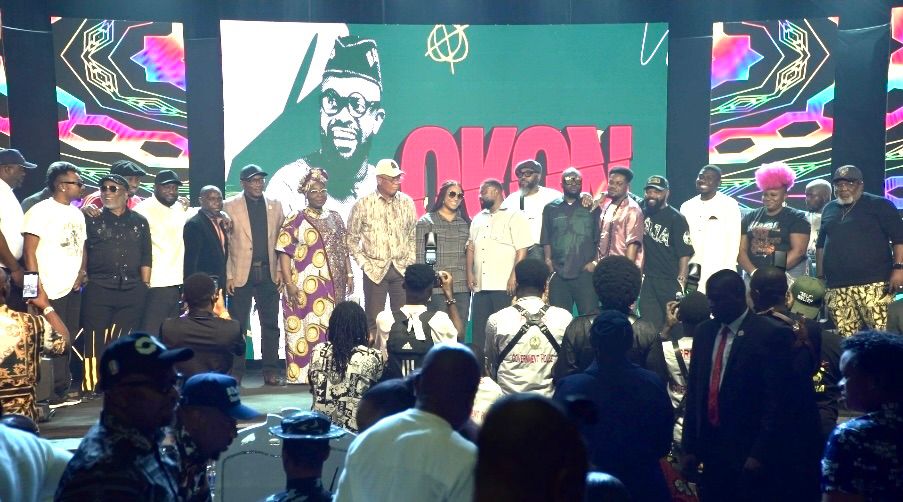
koloman’s: Daddy @pastorumoeno we’re still waiting for your benevolence sir
@igosave @okonlagos @nedu_official @yawnaija @deehumorous @senatorcomedian @akwaibomstategovt

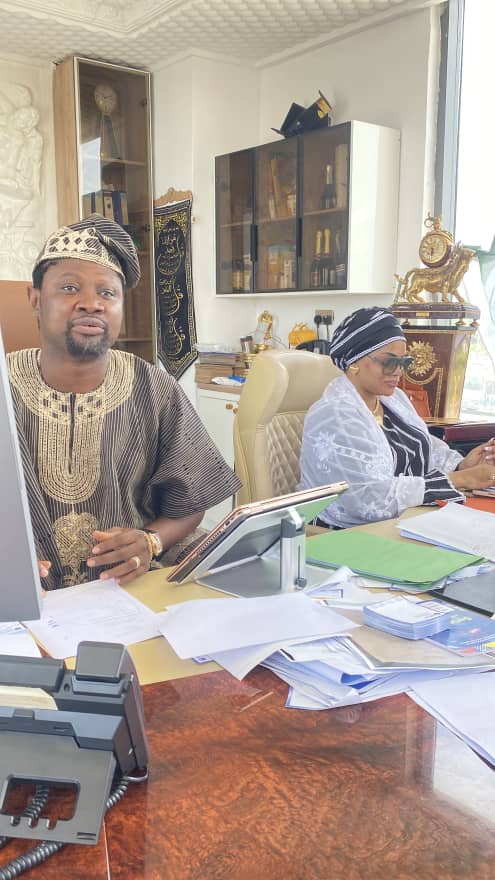
Harmony Garden CEO Empowers Widows with Enhanced Welfare Support
EPE, LAGOS — The Chief Executive Officer of Harmony Garden and Estate Development Limited, Hon. Dr. Saheed Audullahi Mosadoluwa, popularly known as Mr. Ibile, has reaffirmed his commitment to humanitarian service by extending increased welfare support to widows in Epe.
The gesture came during a visit by members of the Widows Association of Nigeria, Epe Branch, who gathered in large numbers on Tuesday to express appreciation for what they described as sustained generosity and life-changing support.
The engagement was marked by emotional testimonies, as several beneficiaries recounted how the initiative has improved their living conditions and restored hope. Many offered prayers for the philanthropist, describing his intervention as timely and impactful amid prevailing economic challenges.
One of the beneficiaries, Mrs. Folorunsho Quadri, commended Dr. Mosadoluwa’s consistent support, noting that the initiative has helped restore dignity among widows in the community. She revealed that members receive ₦100,000 quarterly, alongside a monthly stipend recently increased from ₦10,000 to ₦20,000 to cushion the effects of economic hardship.
According to her, the assistance goes beyond financial relief, providing emotional strength and encouragement for widows striving to rebuild their lives.
Responding, Dr. Mosadoluwa expressed gratitude for the visit and reiterated that his philanthropic activities are rooted in a genuine desire to give back to society. He emphasized that true wealth lies in the positive impact one makes in the lives of others, adding that supporting vulnerable groups remains a core priority.
The real estate developer also addressed concerns surrounding Harmony Garden, assuring the public of the company’s commitment to transparency and integrity, particularly in its land transactions.
He dismissed speculations linking his humanitarian gestures to political ambitions, maintaining that his actions are driven solely by compassion and a sense of social responsibility.
Dr. Mosadoluwa further urged the widows to make judicious use of the support while remaining resilient and hopeful despite life’s challenges.
Observers say the initiative highlights the increasing role of private sector players in complementing government efforts toward social welfare and community development.
Harmony Garden and Estate Development Limited continues to expand its presence in Nigeria’s real estate sector, while strengthening its reputation as a socially responsible organisation dedicated to improving lives.


society
We Die Here” – Court Defied as FGCKOSA Vows All-Out Fight to Save Federal Government College Kano Land
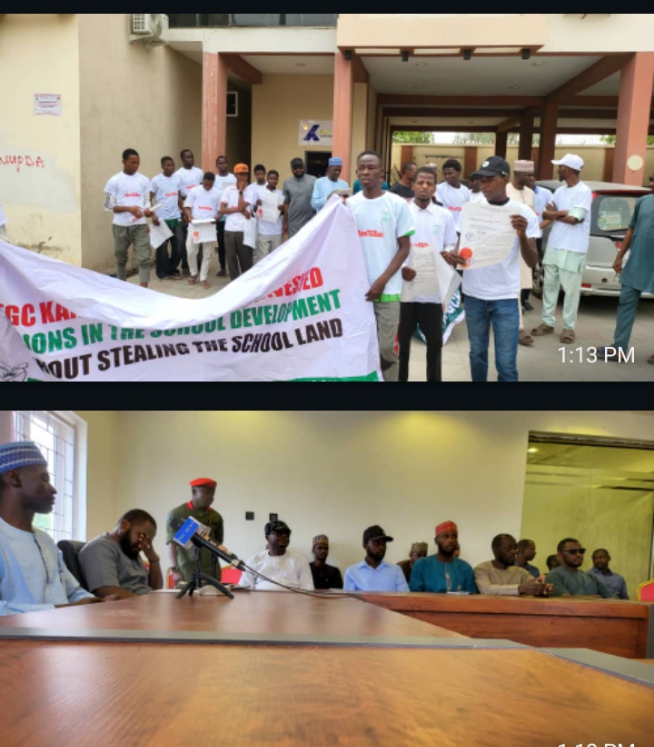
“We Die Here” – Court Defied as FGCKOSA Vows All-Out Fight to Save Federal Government College Kano Land
The Federal Government College Kano Old Students Association (FGCKOSA) has issued a fiery declaration of war against what it calls the illegal encroachment on its alma mater’s land, accusing unnamed parties of continuing construction work in brazen defiance of a court order.
In a passionate press statement released on Wednesday, the association declared that the land of the historic unity school is “not for sale, not for trade, not for negotiation,” and vowed to fight “legally, socially, and institutionally” without retreat or surrender.
According to FGCKOSA, the association acted swiftly after the encroachment came to light, engaging the Federal Ministry of Education, mobilising across media platforms, and securing an ex parte court order in Suit No. K/323/2026 before Honourable Justice Ubale Yusuf Muhammad of the Kano State High Court. The order, served on all parties by Saturday, April 11, 2026, commanded an immediate halt to all activity on the land.
However, the association reports that on Monday, an officer of the Kano State High Court, accompanied by alumni members, visited the site and found workers still present. The court order was served directly to school authorities, yet, FGCKOSA alleges, work has continued unabated.
Describing the act as “a brazen, shameless, and reckless act of impunity,” the association’s national president, Shoyinka Shodunke, said in the statement: “This is not development. This is racketeering. This is not enterprise. This is greed masquerading as progress.”
The statement reminded Nigerians that unity schools are “cradles of leadership, crucibles of character, and cathedrals of national unity,” warning that to violate them is to “vandalise Nigeria’s future.” It called on citizens, the federal government, and the press to declare where they stand, noting that “nations do not collapse from a lack of gold; they collapse when those entrusted with power lose their moral compass.”

FGCKOSA further announced that it has established a foundation to raise funds for upgrading the school’s infrastructure—but stressed that this would be done “without conceding a single inch of land.” The statement ended with a fierce vow drawn from the school’s anthem: “On that glorious day… I vow to revere and thee adore,” adding, “As we say in Nigeria, we die here.”
Shodunke signed off on behalf of the association, declaring: “We will not relent. We will not forget. We will not forgive any assault on our alma mater.”


- Uganda Development Corporation (UDC) to take 82% of Trade ministry budget April 16, 2026
- Merck Foundation marks ‘World Art Day’ through their Film, Song, Media and Fashion Awards 2026 in partnership with Africa’s First Ladies to raise awareness about social & health issues April 15, 2026
- Gabon’s Offshore Comeback: International Oil Companies (IOCs) Return as Exploration Heats Up Ahead of Paris Forum April 15, 2026
- Shell’s Eugene Okpere to Speak at Angola Oil & Gas (AOG) 2026 Amid $1B Angolan Deepwater Drive April 15, 2026
- Oando Joins African Energy Week (AEW) 2026 as Emerald Sponsor as Firm Reports 10% Profit Rise April 15, 2026
- Africa Finance Corporation (AFC) Invests in Dhamana Guarantee Company to Catalyse Local Currency Infrastructure Financing in East Africa April 15, 2026
- WESGRO and Enlit Africa 2026 unite to spotlight the Western Cape’s energy investment opportunity April 15, 2026
- Gianni Merlo re-elected as International Sports Press Association (AIPS) President for sixth and final term in landslide victory April 15, 2026
- African Development Fund approves 1.7 billion CFA francs to boost private sector competitiveness across West African Economic and Monetary Union (WAEMU) countries April 15, 2026
- Knowledge Katti: The Architect Behind Namibia’s Energy Breakthrough April 15, 2026
- Uganda Development Corporation (UDC) to take 82% of Trade ministry budget April 16, 2026
- Merck Foundation marks ‘World Art Day’ through their Film, Song, Media and Fashion Awards 2026 in partnership with Africa’s First Ladies to raise awareness about social & health issues April 15, 2026
- Gabon’s Offshore Comeback: International Oil Companies (IOCs) Return as Exploration Heats Up Ahead of Paris Forum April 15, 2026
- Shell’s Eugene Okpere to Speak at Angola Oil & Gas (AOG) 2026 Amid $1B Angolan Deepwater Drive April 15, 2026
- Oando Joins African Energy Week (AEW) 2026 as Emerald Sponsor as Firm Reports 10% Profit Rise April 15, 2026
- Africa Finance Corporation (AFC) Invests in Dhamana Guarantee Company to Catalyse Local Currency Infrastructure Financing in East Africa April 15, 2026
- WESGRO and Enlit Africa 2026 unite to spotlight the Western Cape’s energy investment opportunity April 15, 2026
-

 news4 months ago
WHO REALLY OWNS MONIEPOINT? The $290 Million Deal That Sold Nigeria’s Top Fintech to Foreign Interests
-

 celebrity radar - gossips3 months ago
Dr. Chris Okafor Returns with Power and Fire of the Spirit -Mounts Grace Nation Altar with Fresh Anointing and Restoration Grace on February 1, 2026
-

 celebrity radar - gossips6 months ago
End of an Era: Nigeria Mourns Evangelist Dr. Uma Ukpai, 80
-

 celebrity radar - gossips4 months ago
Prophet Kingsley Aitafo Releases 2026 Prophecy: ‘Nigeria Will Rise, but the World Must Prepare for Turbulence’