
society
Nigerian Embassy in Austria, Ahamefule and Dr Okonkwo: What went wrong? By Uzoma Ahamefule

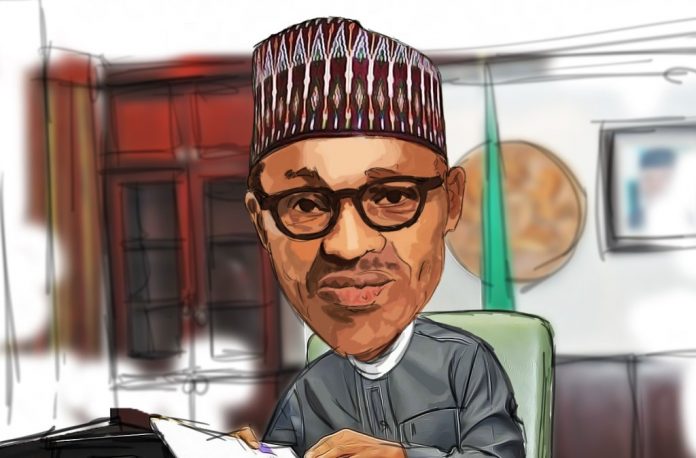
Nigerian Embassy in Austria, Ahamefule and Dr Okonkwo: What went wrong? By Uzoma Ahamefule
Introduction
This is the genesis of what caused confusion within the executives of the National Association of Nigerian Community Austria (NANCA), perplexed the Nigerian community in Austria to the shocking expose of the very high disappointing and poor quality leadership of Dr Jude Okonkwo, Thomson Oliha and the executives of the Nigerian ethnic leaders, and how they lowly mismanaged the complaints against “Mama put” (food vendor) inside the Nigerian Embassy hall in Vienna, the temporary seizure of one’s telephone inside the embassy and the extra charges of €50 and €30/€100 by the embassy from every visa and passport applicant after paying the fees as stipulated online at the Nigerian Immigration Services website etc., and how issues were propelled by NANCA’s incompetence to escalation.
Ordinarily the complaints and many that are to come are issues the executives of NANCA and the Nigerian ethnic leaders should have in unity championed themselves in the interest of Nigerians in Austria they were elected to protect supposedly, but no. Instead Nigerians are witnessing attacks on the image, integrity and reputation of the messenger – Uzoma Ahamefule – through their irrational and laughable communiqués of lies, and the intimidation and persecution of some concerned Nigerians by Ambassador S. D. Umar who unbelievably took their names to the Austrian police.
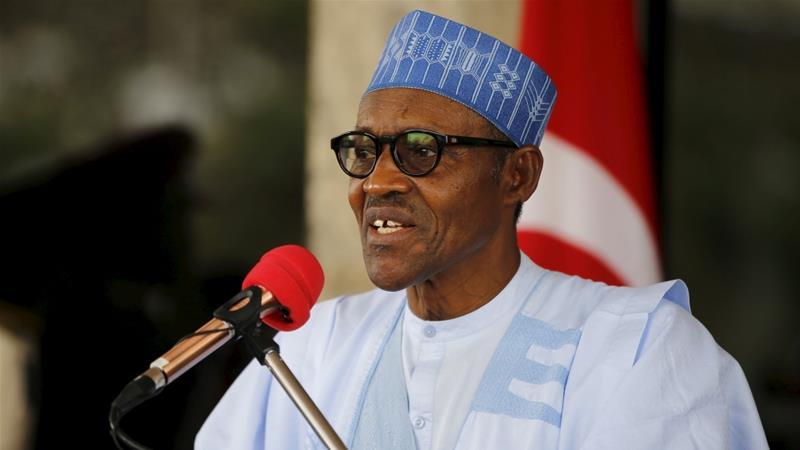
The silly mistakes ethnic leaders made with their communiqués were embarrassing. Some of them are well educated, lived long in Austria and are highly respected people in the society because of the positions they held in some international organisations like UN or are still holding in Austria, and ought to have known better that their actions of suspending Uzoma Ahamefule from NANCA is so shameful because he is not a member of NANCA. Again, that their announcement of restricting his movement is correspondingly awkward because it is not in conformity with the Austrian law, thus they do not have such power they arrogated to themselves to limit anyone’s movement in Austria.
My telephone conversation with Dr Jude Okonkwo, and the beginning of how issues escalated
After my article, “Shocking: The waiting room of the Nigerian Embassy in Vienna, Austria, turns to a ‘Mama put’ joint” was published, Dr Jude Okonkwo called me. He told me that he was not against the content of what I had written, but that I should know that he was the president of Nigerians in Austria. And that he did not understand why I did not want to respect him. He said if it was because he was my friend, or because he was an Igbo man. I told him that I did not really understand how disrespect and being an Igbo man came in here. However, I asked him if he was aware that food was actually being sold at the embassy. He said he was not contesting that but that I should have respected him and come to him first as the Nigerian president to discuss the issue. I then told him that he was not the Ambassador and did not work at the embassy and therefore I did not consider it necessary to see him. I went on and explained to him that I had written the embassy – which I felt was the right place to contact – seeking the audience of Ambassador S. D. Umar to privately discuss on this topic and other issues like I had done with some past ambassadors, but had been ignored. Again, I told him that I did not owe him any explanation nor need his permission to air my view, and that what was important was that whatever I say or write should not infringe on the rights of others and should be true. And I requested if I could call him back because I could not continue. He agreed.
I could not call him that day as I had promised but did so the next day. Immediately he picked my call, the first thing he asked was, and I quote, “Ahamefule, are you ready to apologize now?” And I asked him, ‘Apologize for what?’ He quickly said, “Okay. I know what to do. I will tell them that you are sorry.” I again asked him, ‘You will tell which people that I am sorry’? He replied that I should know that he was the father of all Nigerians here and that if there had been any problem I should have come to him first. I now said to myself that the situation was no longer a joke. Like the story of Nostradamus, “The man who saw tomorrow,” I told him that from my years of reporting as a blogger, my experience told me that he sounded like one that would like to write a rejoinder. I advised him to please not to do that if my assumption of his plan should be correct. I told him to remember that in the past we had a similar problem here in Vienna with the then NANCA president and also the then ambassador and that it did not end well. It was only through the intervention of the then Foreign Affairs Minister late Ambassador Gbenga Ashiru – may his gentle soul rest in peace – that peace was restored between the ambassador and myself, while the then Nigerian ethnic leaders finished up what the minister started and brokered peace between the NANCA president and myself. It was one of the periods we had many ethnic leaders full of wisdom that commanded great respect – from Edo community to Ododuwa, Igbo, Rivers and Esan etc. I told Dr Okonkwo that I would not want a repeat of that again, and that if he had forgotten what had happened that he should please ask.
At this point he reluctantly but clearly told me that he had been under intense pressure. And I asked him, “Under pressure from who? You are not working at the embassy, you are not the spokesperson of the embassy, and you are not the ambassador, so, why should you be under pressure?” I told him that if he should be under pressure, it could imply that he was either perhaps seeking for help or favour from the ambassador or the embassy for that could be a reason he would be under “heavy pressure” like he said to take up the silly assignment of writing a rejoinder to an issue that had not concerned him, and if he should allow himself to be disgraced that I would help to disgrace him more. I then told him that from that moment he should never call me again unless it was something official because I could not trust him anymore. I made it very clear to him that what I wrote were facts that he himself should know, and no reasonable person argues fact, and anything he writes as a rejoinder would be lies and shameful. In his response at this juncture, he sounded very reasonable, and told me that I was very correct. “I am not working at the embassy. I am not the ambassador, and there should not be any reason for me to be disturbed,” he said.
“Okay. I know what to do. I will organize a Zoom meeting inviting you and the ambassador. What do you think?” he asked me. I told him that I did not think anything because I was not part of his organization, therefore what I thought should be irrelevant. He should ask his group. But if he wanted to invite me for a Zoom meeting, he should send an invitation to me stating why he was inviting me, and if I found it worthy that I would respond, and we ended the conversation.
How I extensively tried to avoid the problem we are seeing today
After my discussion with him, I called someone I considered as his close friend in Sankt Pölten and narrated to him my telephone conversation with his friend Dr Okonkwo. I told him that I had advised Okonkwo not to write any rejoinder to an article that had not been addressed to him as a person nor to his office as NANCA president because anything he would write against the facts of what I wrote would be a glaring lie that would not be good to his image, and pleaded with him to kindly call him and advise him to retreat from the envisaged steps of writing a rejoinder. I also called the former NANCA President Nze Louis Asuzu, told him the same thing and equally pleaded for his intervention. He promised to call him and get back to me, which he did. I did not stop there. I painstakingly called seven other persons and also the Igbo Chairman Chris Ajuzie narrated the same conversation I had with Dr Okonkwo and begged them to intervene and persuade him to allow reasons to prevail. All my efforts to avoid the troubles and problems that are happening today were to no avail.
How did I wrong Dr Okonkwo, NANCA and Nigerian ethnic leaders in Vienna?
Please, how did I – Uzoma Ahamefule – wrong the executives of NANCA, Nigerian ethnic leaders in Vienna (Igbo, Yoruba, Edo, Esan, Rivers), Dr Okonkwo and the Igbo Chairman Chris Ajuzie who is another tragedy of a choice as the Chairman of Ndigbo in Austria – which I will elaborate on later?
Why should I be crucified?
Why should some names of Nigerians living in Austria who only amicably and lawfully sought the attention of Ambassador S. D. Umar to discuss the issues affecting Nigerians in Austria be badly projected and given to the Austrian police by the same Ambassador S. D. Umar? What did they do wrong?
Uzoma Ahamefule, a concerned patriotic citizen and a refined African traditionalist, writes from Vienna, Austria.



FRSC@ 38: SHEHU MOHAMMED STEERING NIGERIA’S ROAD SAFETY REVOLUTION TO GREATER HEIGHTS
By Deputy Corps Marshal Bisi Kazeem (Rtd) fsi, MNIM, anipr
When Mallam Shehu Mohammed assumed leadership as Corps Marshal of the Federal Road Safety Corps (FRSC), he inherited not just an institution with history, but a national mandate that touches every family, every highway, and every community in Nigeria. At 38 years, the Corps stands tall as Africa’s model road safety agency, and under his stewardship, that legacy is not merely preserved, it is being boldly redefined.
Nigeria’s highways were once synonymous with fear. Before 1988, the World Health Organisation ranked Nigeria among the most dangerous countries in the world to drive. It was a troubling indictment that demanded courage and clarity of purpose. The establishment of the FRSC under Decree No. 45 of 1988 laid the foundation for reform. But sustaining and advancing that reform across decades requires visionary leadership, the kind now exemplified by Mallam Shehu Mohammed.
Today, under his command, the Corps is consolidating its position as one of the most technologically advanced and operationally efficient law enforcement institutions in Nigeria. With renewed strategic focus, the present leadership has deepened the Safe Systems Approach built on people, processes, and technology, ensuring that safety interventions are not reactive, but preventive and intelligence-driven.
One of the defining hallmarks of his administration is accelerated digital transformation. Within six months, over 3,000 personnel were trained to strengthen operational competence and technological adaptability. More than 95 per cent of the Corps’ administrative and operational processes are automated, supported by over 30 web-based applications that enhance traffic governance nationwide. From the National Crash Reporting Information System (NACRIS) to the upgraded e-ticketing platform, innovation is no longer optional; it is institutional culture.
Emergency response under the current Corps Marshal has become faster and more coordinated, with nationwide response time reduced dramatically from 50 minutes to 15 minutes. The 122 toll-free emergency line and 24-hour National Call Centre continue to serve as lifelines for distressed road users, reflecting a leadership that understands that every second counts.
Strategic stakeholder engagement has equally flourished. Safe corridor initiatives have been strengthened, collaboration with transport unions intensified, and enforcement around articulated vehicles tightened. The result is a significant reduction in tanker-related crashes, a development that speaks to deliberate policy direction and disciplined implementation.
Under Mallam Shehu Mohammed’s leadership, data has become a central pillar of enforcement and planning. Through strengthened collaboration with the National Identity Management Commission, the National Bureau of Statistics, and the Nigeria Customs Service, the Corps has advanced harmonized data systems that support evidence-based interventions. Transparent weekly crash trend reporting now guides targeted deployment and corrective strategies.
Nigeria’s standing on the global stage has also been reinforced. The country remains an active participant in the renewed UN Decade of Action for Road Safety (2021–2030) and continues alignment with international road safety conventions. These achievements build on the solid foundation laid by past leaders from Olu Agunloye and General Haladu Hannaniya to Chief Osita Chidoka, Dr. Boboye Oyeyemi, and Dauda Ali Biu, but under the present Corps Marshal, the momentum has unmistakably intensified.
Operationally, the Corps’ footprint now spans 12 Zonal Commands, 37 Sector Commands, over 300 Unit Commands, over 700 Station Offices, 59 Zebra Emergency Ambulance Points, and presence in all 774 Local Government Areas of Nigeria. Yet beyond physical structures lies a stronger institutional spirit, one driven by discipline, professionalism, and accountability.
From a nation once ranked among the most unsafe for motorists to a continental pacesetter in road safety management, Nigeria’s transformation story is inseparable from the strength of its leadership. At 38 years, FRSC is not simply celebrating longevity; it is celebrating purposeful stewardship.
Mallam Shehu Mohammed represents a generation of reform-minded leadership committed to smarter mobility systems, data-driven enforcement, and people-centered safety administration.
His tenure reflects continuity with courage sustaining the Corps’ proud legacy while boldly steering it toward greater innovation and measurable impact.
The road ahead is demanding. But under his steady command, Nigeria’s highways are safer, its systems smarter, and its future brighter.
Fashion/Lifestyle
Introducing “Atupaglowco” : Where Fragrance Meets Feeling; The Story of Our Beginning
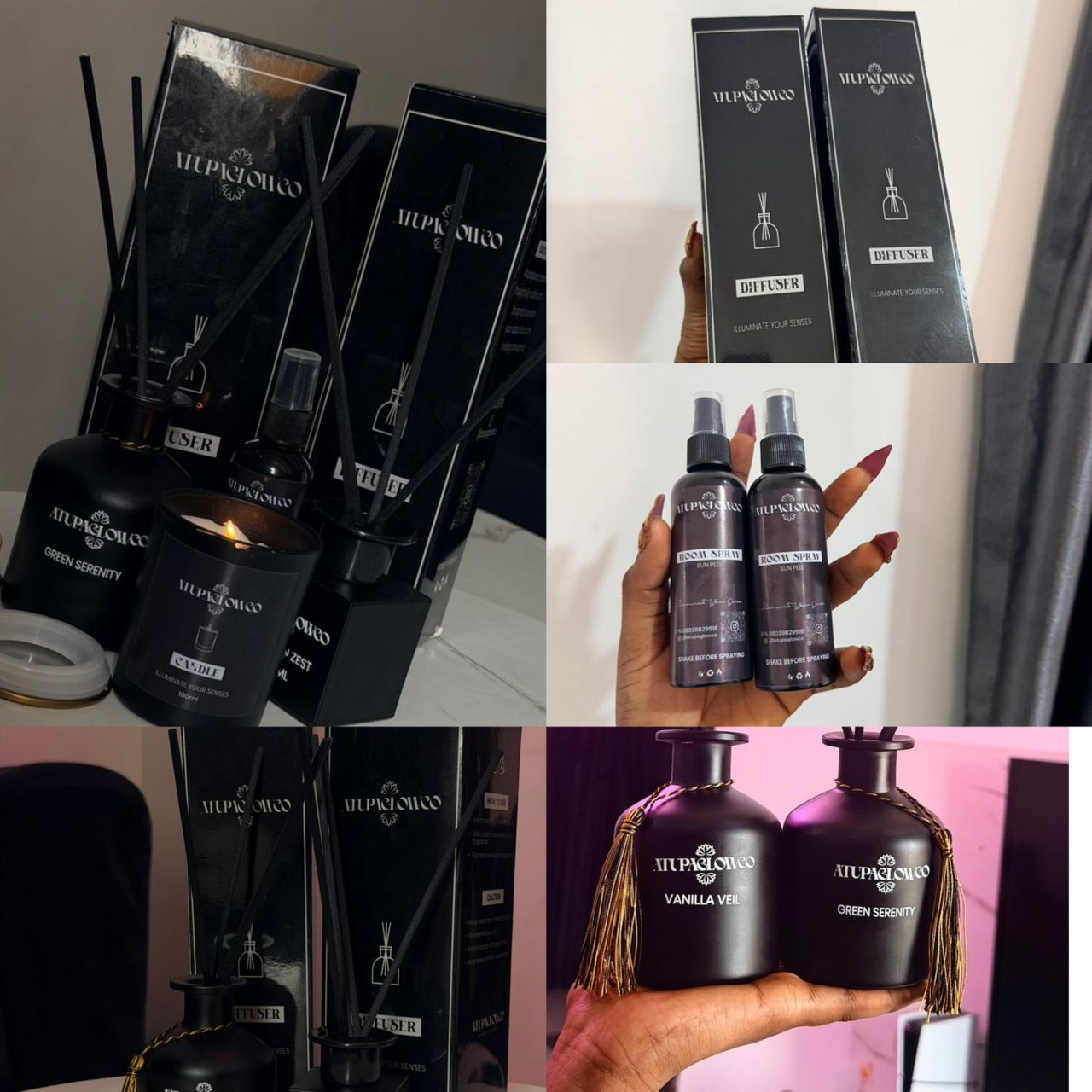
Introducing “Atupaglowco”: Where Fragrance Meets Feeling; The Story of Our Beginning
Every great journey begins with a sense of anticipation. For us, it began with a simple belief that a space should do more than exist, it should speak comfort and glow.
In a world filled with noise, stress, and endless motion, we realized something powerful. Fragrance can transform not just rooms, but moods. A familiar scent can calm anxiety. A warm aroma can turn a house into a home. A gentle glow can bring peace after a long day. This realization gave birth to “Atupaglowco.”
Atupaglowco was not created to sell diffusers, room sprays, or candles. It was created to create experiences. To create moments. To create atmospheres where people can breathe, reflect, and feel whole again.
The name itself represents more than a brand. It represents warmth. It represents light. It represents presence. We remember the early days, the planning, the testing of scents, the moments of doubt, and the moments of excitement. Each candle poured was a step of faith. Each fragrance blended was a piece of our vision coming to life. We weren’t just building products; we were building something meaningful.
Our diffusers were designed to quietly fill spaces with elegance.
Our room sprays were crafted to instantly refresh and revive environments. Our candles were made to bring calm, beauty, and a soft glow into everyday life.
Atupaglowco was born from passion, patience, and purpose. This launch is not just the start of a business. It is the start of a movement to help people create spaces they love. Spaces that inspire rest. Spaces that inspire joy. Spaces that glow.
We believe fragrance is personal. We believe glow is emotional. We believe every space deserves both.
Today, we proudly introduce Atupaglowco to the world.
This is only the beginning.
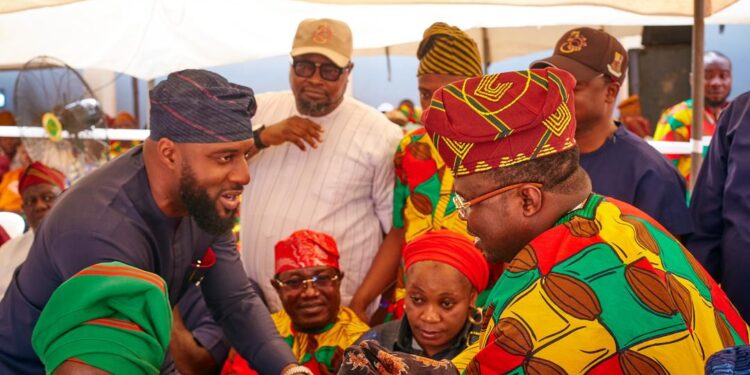
Ajadi Hails Oyo Speaker Ogundoyin at 39, Describes Him as Beacon of Purposeful Leadership
A leading governorship aspirant of the Peoples Democratic Party (PDP) in Oyo State, Ambassador Olufemi Ajadi Oguntoyinbo, has congratulated the Speaker of the Oyo State House of Assembly, Rt. Hon. Adebo Edward Ogundoyin, on the occasion of his 39th birthday, describing him as “a symbol of resilience, maturity and purposeful leadership in Nigeria’s democratic journey.”
In a congratulatory message made available to journalists on Tuesday, Ajadi praised Ogundoyin’s steady rise in public service, noting that his emergence as Speaker at a relatively young age reflects the possibilities of responsible youth leadership when combined with discipline, vision and service.
“Rt. Hon. Ogundoyin’s leadership has shown that age is not a barrier to excellence,” Ajadi said. “At 39, he stands tall as one of the most impactful Speakers in Oyo State’s history—calm, inclusive and deeply committed to democratic ideals.”
Ogundoyin, who represents Ibarapa East State Constituency under the Peoples Democratic Party, has served as Speaker since 2019 and was re-elected to lead the 10th Assembly in June 2023. His tenure has been marked by legislative stability, improved executive–legislative relations and youth-inclusive governance.
Ajadi commended the Speaker for fostering unity within the Assembly and prioritising laws that strengthen grassroots development across Oyo State. “His humility, accessibility and focus on people-oriented legislation have earned him respect beyond party lines,” he said. “He exemplifies the kind of leadership Oyo State needs—one anchored on service, accountability and progress.”
The governorship aspirant further described Ogundoyin as a rallying point for young Nigerians aspiring to public office. “In a country searching for credible leaders, Ogundoyin’s story offers hope,” Ajadi added. “He has shown that when young leaders are trusted with responsibility, they can deliver stability and results.”
Ajadi wished the Speaker many more years of good health, wisdom and greater service to Oyo State and Nigeria at large, praying that his leadership journey continues to inspire a new generation of public servants.
Ogundoyin, one of the youngest Speakers in Nigeria, has continued to attract goodwill messages from political leaders, civil society actors and constituents, as Oyo State marks another year in the life of a lawmaker widely regarded as a steady hand in the state’s legislative affairs.


-

 celebrity radar - gossips6 months ago
Why Babangida’s Hilltop Home Became Nigeria’s Political “Mecca”
-

 society6 months ago
Power is a Loan, Not a Possession: The Sacred Duty of Planting People
-

 news6 months ago
THE APPOINTMENT OF WASIU AYINDE BY THE FEDERAL GOVERNMENT AS AN AMBASSADOR SOUNDS EMBARRASSING
-
 society5 months ago
Religion: Africa’s Oldest Weapon of Enslavement and the Forgotten Truth