
Business
A Businessman and His Siren: Tunde Ayeni Refutes News of His Fatal Return to Gail Fajembola

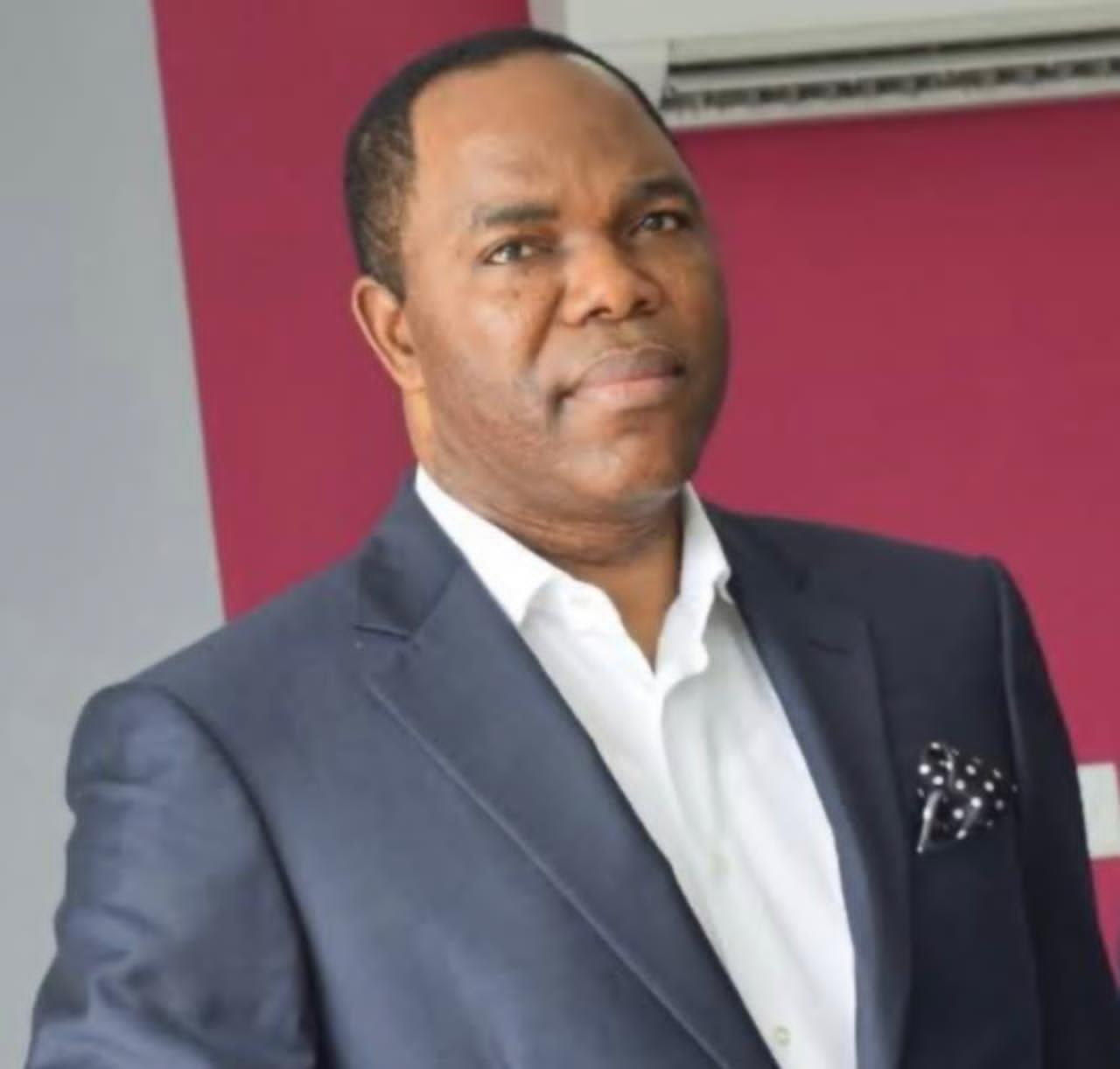
A Businessman and His Siren: Tunde Ayeni Refutes News of His Fatal Return to Gail Fajembola
The allure of forbidden passion often carries a price, and for Dr. Tunde Ayeni, the once-revered businessman whose rise and fall mirrors the trajectory of a Greek tragedy, the cost has been steep.
Amid the ruins of financial embarrassment, public disgrace, and familial strain, Ayeni has frantically disassociated himself from speculations of his purported return into the arms of the arms of Gail Fajembola, a woman whose name is synonymous with scandal.
In a bid to distance himself from Gail and their controversial past together, Ayeni went as far as instructing his property firm to notify tenants of a choice Ikoyi property that Gail should no longer be allowed to use the address for correspondence. “Dr. Ayeni has nothing to do with Gail’s relocation to Nigeria,” a source close to him declared. “He is focused on growing his businesses and spending quality time with his family and true friends.” Yet, despite these denials and calculated efforts to sanitize his image, insiders whisper of a rekindled liaison between the embattled businessman and his former mistress.
This revelation comes as a shock to many who recall Ayeni’s vehement disassociation from Gail years ago. Back then, he publicly vowed to sever all ties with her, swearing on his children’s lives that he would never return to the woman whose influence nearly dismantled his business empire and marriage. The reasons for this oath were both public and damning: Gail, with her extravagant lifestyle and insatiable demands, had drawn Ayeni into a vortex of corruption and financial impropriety that nearly consumed him.
The Return of the Femme Fatale
Gail Fajembola’s return to the Nigerian social scene, after a five-year sojourn in the United Kingdom, has been met with both intrigue and suspicion. Described by some as a “femme fatale” with a penchant for seducing powerful men, her arrival in Abuja has reignited whispers of her alleged connection to Ayeni. Sources suggest that Gail’s relocation may not be as innocent as claimed, with many speculating that her return signals a calculated move to reclaim her position in Ayeni’s life.
The woman once vilified for the chaos she sowed in Ayeni’s world seems undeterred by past scandals. Gail’s critics describe her as a chameleon—a master manipulator who has left a trail of broken relationships and tarnished reputations in her wake. Despite this, Ayeni appears to remain ensnared by her charms, prompting questions about what compels him to rekindle a relationship that has cost him so dearly.
A Scandalous. History
Gail’s romantic history reads like a cautionary tale of ambition and audacity. Her past liaisons include some of Nigeria’s most prominent men, from a former Senate President to influential oil industry magnates. Yet it is her relationship with Ayeni that has proven the most enduring—and destructive.
During their initial affair, Gail’s extravagant demands reportedly drained Ayeni’s finances and drew him into a web of questionable dealings. Her influence was so pervasive that Ayeni found himself under investigation by the Economic and Financial Crimes Commission (EFCC), with allegations of embezzlement and financial misconduct dominating headlines. The fallout left Ayeni’s reputation in tatters, his businesses struggling to recover, and his family in disarray.
In the years that followed their breakup, Ayeni’s public declarations of remorse and determination to rebuild his life were seen as an attempt at redemption. He sought to distance himself from Gail, focusing on salvaging what remained of his legacy. However, recent developments suggest that Ayeni’s resolve has faltered, raising questions about his judgment and the nature of his relationship with the woman who nearly destroyed him.
Gail’s Calculated Return
Observers note that Gail’s return to Nigeria coincides with a period of significant upheaval in Ayeni’s life. Once a high-flying billionaire, Ayeni’s financial empire has reportedly been reduced to a shadow of its former self. With mounting debts and diminishing influence, Ayeni’s renewed association with Gail appears both illogical and self-destructive.
For Gail, however, the motivations seem clear. Known for her ability to manipulate powerful men, she has often been described as a “hunter”—a woman who thrives on the wealth and influence of her targets. Critics argue that her return is a calculated move to regain access to Ayeni’s resources, despite his precarious financial state.
The Anatomy of Obsession
What drives Ayeni’s apparent inability to break free from Gail’s grasp? Psychologists might label it as a classic case of compulsive attachment, a destructive bond fueled by a mix of passion, vulnerability, and dependency. Others see it as a testament to Gail’s unparalleled skill in exploiting the weaknesses of her partners, drawing them into a cycle of desire and destruction.
For Ayeni, the consequences of this renewed liaison could be dire. Already besieged by financial woes and public skepticism, his decision to re-engage with Gail risks alienating his family and further tarnishing what remains of his reputation. His critics have been unsparing in their condemnation, describing him as a “shameless man” who has returned to his vomit, defying both logic and morality.
Gail, too, has faced harsh judgment, with detractors labeling her as a woman devoid of dignity. Her willingness to endure public humiliation for another chance at affluence has only reinforced her reputation as a manipulative figure, willing to go to any lengths to achieve her goals.
The story of Tunde Ayeni and Gail Fajembola serves as an admonition about the perils of unchecked desire and the corrosive effects of scandal. Their relationship, a volatile mix of passion, ambition, and self-destruction, offers a stark reminder of the dangers of succumbing to temptation.
For Ayeni, the stakes could not be higher. His continued association with Gail risks sealing his fate as a man undone by his own desires. For Gail, the narrative is one of relentless ambition and calculated opportunism, a woman whose pursuit of power and influence knows no bounds.
As their story continues to unfold, one thing is certain: the saga of Tunde Ayeni and Gail Fajembola is far from over. Whether it ends in redemption or ruin, it will undoubtedly remain a stark reminder of the high cost of forbidden love.
Findings reveal that to ensure a clean break from this past relationship, Tunde Ayeni’s property firm recently wrote to the occupants of one of his choice properties in Victoria Island to inform them that Gail Fajembola should no longer be allowed to use the address as her mailing address and should no longer receive her mails through the office address. The correspondence was firm in its assertion that the business mogul and his company no longer have anything to do with Gail. ( letter attached).
To further lend credence to the position that the relationship has since been consigned to the backyard of history, another source disclosed that Dr Ayeni, nowadays, often makes it clear to confidants and close business associates that he was done with the past social life and that the new chapter of his life is focused on expanding and deepening his business interests.
When contacted on the Gail relocation issue and the allegation that he facilitated it, the businessman said: “When will you guys leave me alone and stop disturbing me over mundane issues. I have made it clear, and it is in the media space: I’m done with all these issues of this relationship, that relationship. I have moved on, and I’m not looking back. What you are asking is in the realms of the past, and I’m now focused on the present and the future. Spare me, please. “t and the future. Spare me, please.”






Fidelity Bank grows gross earnings by 38% to N434.95b in Q1
Fidelity Bank Plc recorded 37.9 per cent growth in gross earnings to N434.95 billion in first quarter 2026 as the international commercial bank continued to expand its core banking market share.
Interim report and accounts of Fidelity Bank for the three months ended March 31, 2026 released at the Nigerian Exchange (NGX) showed that gross earnings rose from N315.42 billion in first quarter 20025 to N434.95 billion in first quarter 2026, representing an increase of 37.9 per cent.
The top-line performance was driven by impressive growth in the bank’s core business operations with interest incomes rising by 22.8 per cent to N314.48 billion in first quarter 2026 as against N256.10 billion in first quarter 2025.
With net interest income at N180.97 billion, the bank closed the period with profit before tax of N92.48 billion. After taxes, net profit stood at N74.47 billion for the three-month period. Earnings per share remained high at N5.69, underlining the capacity of the bank to reward its shareholders.
The balance sheet of the bank also emerged stronger. Total assets crossed the N11 trillion mark to N11.35 trillion by March 2026 compared with N10.46 trillion recorded in December 2025. Customers’ deposits increased from N6.89 trillion to N7.38 trillion. Total equity rode on the back of earnings growth to a 27.5 per cent increase from N1.09 trillion in December 2025 to N1.39 trillion by March 2026.
The first quarter 2026 results further consolidated the strong earnings outlook of the bank, which had successfully completed its recapitalisation amidst impressive earnings performance in 2025.
Fidelity Bank had recorded double-digit growths in interest and non-interest incomes as well as key balance sheet items during the year ended December 31, 2025.
The audited report showed that gross earnings rose from N1.04 trillion in 2024 to N1.52 trillion in 2025, an increase of 45.6 per cent. Interest and similar incomes had grown by 38.7 per cent from N803.1 billion in 2024 to N1.11 trillion in 2025. Fees and commission incomes also rose by 44.7 per cent from N78.4 billion to N113.4 billion. The bank recorded net profit after tax of N242.4 billion in 2025.
The bank’s balance sheet emerged stronger with total assets rising by 18.6 per cent to N10.46 trillion in 2025 as against N8.82 trillion in 2024. Customer deposits increased by 16.1 per cent from N5.94 trillion to N6.89 trillion, reflecting continued franchise strength and an improved funding profile. Net loans and advances meanwhile declined by 2.4 per cent to N4.28 trillion in 2025 as against N4.39 trillion in 2024, attributable to customers paying down on their mature obligations.
The bank had in 2025 strengthened its capital position, with eligible capital rising to N561 billion, above the regulatory minimum of N500 billion for banks with international authorisation. In addition, capital adequacy had remained robust, with Capital Adequacy Ratio of 30.94 per cent by December 2025 as against 23.47 per cent by December 2024.
Managing Director, Fidelity Bank Plc, Dr. Nneka Onyeali-Ikpe, said the first quarter 2026 results reinforced the bank’s strong and resilient business model.
She noted that with the remarkable success of its recapitalisation programme and continuing expansion, Fidelity Bank has entered a new era of growth and impressive returns.
“We are on a stronger footing and confident that we will set new growth records that are reflective of our legacy and the future we are working on,” Onyeali-Ikpe said.
Business
Dangote Refinery Ends Nigeria’s Era of Fuel Import Dependence, Boosts GDP, FX Earnings — EIU
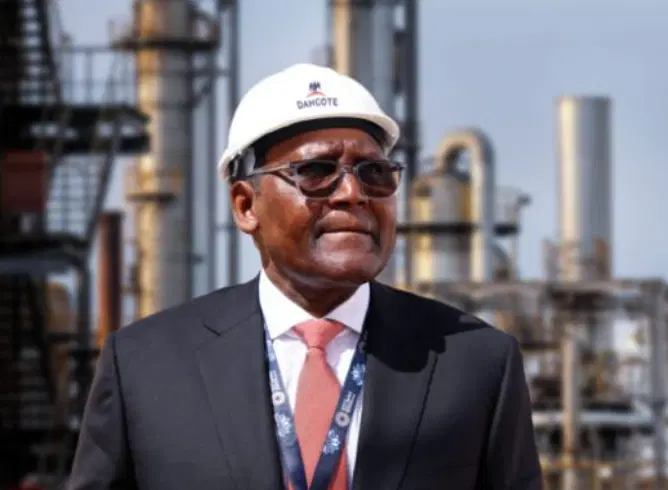
Dangote Refinery Ends Nigeria’s Era of Fuel Import Dependence, Boosts GDP, FX Earnings — EIU
The operational ramp up of the 650,000 barrels per day Dangote Petroleum Refinery & Petrochemicals is fundamentally reshaping Nigeria’s downstream oil sector, significantly reducing the country’s dependence on imported refined petroleum products and strengthening its external position, according to the Economist Intelligence Unit (EIU).
In its latest assessment on Nigeria’s fuel market and regulatory environment, the EIU said the refinery has already transformed a sector that was previously characterised by heavy reliance on imported fuel despite Nigeria being Africa’s largest crude oil producer. The report noted that the refinery met nearly 80 per cent of domestic petrol demand in April and produced enough volumes to satisfy local consumption requirements as operations approached full capacity.
The EIU described Nigeria’s downstream petroleum sector before the refinery as “long dysfunctional”, noting that the country had remained almost entirely dependent on costly imported fuel while producing nearly 1.5 million barrels of crude oil daily.
According to the report, the emergence of the refinery has reduced import dependence, improved domestic fuel availability and strengthened Nigeria’s balance of payments position through lower import demand and rising exports of refined petroleum products.
“The gradual ramp up of the 650,000 barrel/day Dangote refinery since May 2023 has transformed Nigeria’s long dysfunctional downstream sector,” the report stated. “The country’s main refineries, all state owned, had been inoperative for years and Nigeria was almost entirely reliant on costly imported fuel.”
The research and analysis division of The Economist Group, London added that the refinery’s attainment of full operational capacity and its planned expansion would further support Nigeria’s economic growth and foreign exchange earnings over the medium term.
“Meanwhile, the attainment of full capacity at, and an increase in exports from, the Dangote refinery will support real GDP growth and foreign exchange earnings in 2026 and 2027 and beyond, as a planned doubling of the plant’s output comes on stream around the end of the decade,” it added.
Industry analysts said the refinery is increasingly positioning Nigeria as an emerging refining and export hub, altering energy trade flows across Africa and reducing the vulnerability associated with fuel import dependence.
The EIU noted that the refinery’s expansion has coincided with major reforms in Nigeria’s downstream sector, including the removal of fuel subsidies and the introduction of market driven pricing mechanisms.
The report, however, said the transition from a state dominated fuel import structure to large scale domestic refining has triggered resistance from interests linked to the old import regime.
The latest tensions emerged following the decision by the Nigerian Midstream and Downstream Petroleum Regulatory Authority to relax restrictions on petrol imports despite the refinery’s growing capacity to meet domestic demand.
Dangote Industries subsequently initiated legal action, arguing that continued import approvals undermine domestic refining investments and conflict with the objectives of the Petroleum Industry Act, which seeks to encourage local refining capacity and reduce import dependence.
Analysts noted that the availability of large-scale domestic refining capacity has improved Nigeria’s energy security and reduced exposure to external supply shocks and foreign exchange volatility.
The Centre for the Promotion of Private Enterprise also cautioned against unrestrained importation of petroleum products, warning that such a policy could weaken Nigeria’s industrialisation drive and discourage investments in domestic refining.
Chief Executive Officer of CPPE, Muda Yusuf, said continued dependence on imported fuel had historically contributed to pressure on foreign reserves, exchange rate instability and fiscal leakages.
The refinery’s growing impact is also being reflected in Nigeria’s broader macroeconomic indicators. Earlier this month, S&P Global Ratings cited increased domestic refining capacity and rising hydrocarbon exports among the major factors supporting Nigeria’s sovereign credit rating upgrade – the first in 14 years.
Beyond Nigeria, analysts said the refinery is increasingly being viewed as a strategic industrial asset for Africa, where many countries remain heavily dependent on imported fuel despite rising demand for transportation, manufacturing, and power generation.
Business
BREAKING: Court Dismisses $19.6 Million Claim Against NNPCL — Rules Contract Scope Cannot Be Changed Orally
BREAKING: Court Dismisses $19.6 Million Claim Against NNPCL — Rules Contract Scope Cannot Be Changed Orally
In a landmark ruling on Friday, May 22, 2026, the Federal Capital Territory High Court in Abuja threw out a $19.6 million lawsuit filed by Alternate Dimensions Ventures Ltd against the Nigerian National Petroleum Company Limited (NNPCL), affirming a key legal principle: a written contract cannot be expanded through oral agreements or conduct.
Alternate Dimensions had sought $19,600,000 in professional fees, claiming the scope of its Direct Sale, Direct Purchase (DSDP e-pro) contract with NNPCL was orally expanded. Represented by counsel Patrick Peter, the firm argued it was entitled to the revised sum for services rendered under the alleged new terms.
But NNPCL, through its lawyer Ituah Imhanze of KENNA LP, pushed back sharply, arguing that parties are bound exclusively by the clear terms of their written agreement. Imhanze contended that without any written amendment, the claim was legally unsound, and the court agreed.
Delivering judgment, Justice Hamza Mu’azu upheld NNPCL’s defense, stating that the contract was unambiguous and that no evidence was adduced during the trial, which supported the alleged scope expansion. The court further found that NNPCL fully complied with all contractual terms and committed no breach.
Dismissing the suit as meritless, Justice Mu’azu reinforced the doctrine of sanctity of contract: any amendment to a written agreement must be express, unequivocal, and documented, not implied or verbal.
The ruling spares NNPCL from the S19.6 million claim and also a floodgate of similar potential liabilities.


- Economic Community of West African States (ECOWAS) has Deployed a Technical Mission to Observe the Legislative and Local Elections of May 31, 2026 in Guinea May 31, 2026
- President Herminie Attends Seychelles Football Federation (SFF) Cup Final and Presents Trophy to Bazar Brothers FC May 31, 2026
- ‘You are not alone’: World Health Organization (WHO) chief vows to stand with Democratic Republic of the Congo (DR Congo) through Ebola outbreak May 31, 2026
- United Arab Emirates (UAE) Expresses Solidarity with Kenya and Conveys Condolences over Victims of Girls’ School Dormitory Fire May 31, 2026
- Pitcher Awards Announces 2026 Winners, Marking a Landmark Year for Pan‑African Creativity May 30, 2026
- Ghana Commemorates 78th International Day of United Nations Peacekeepers May 30, 2026
- South Africa: President Ramaphosa receives second interim report of Madlanga Commission May 30, 2026
- Asmara Marathon 2026 to be held May 30, 2026
- Powerful call for dialogue and compromise to secure peace in South Sudan issued on International Peacekeepers Day May 30, 2026
- Over 1,000 Participants Join Rwenzori Marathon Activation Run in Mombasa May 30, 2026
- Economic Community of West African States (ECOWAS) has Deployed a Technical Mission to Observe the Legislative and Local Elections of May 31, 2026 in Guinea May 31, 2026
- President Herminie Attends Seychelles Football Federation (SFF) Cup Final and Presents Trophy to Bazar Brothers FC May 31, 2026
- ‘You are not alone’: World Health Organization (WHO) chief vows to stand with Democratic Republic of the Congo (DR Congo) through Ebola outbreak May 31, 2026
- United Arab Emirates (UAE) Expresses Solidarity with Kenya and Conveys Condolences over Victims of Girls’ School Dormitory Fire May 31, 2026
- Pitcher Awards Announces 2026 Winners, Marking a Landmark Year for Pan‑African Creativity May 30, 2026
- Ghana Commemorates 78th International Day of United Nations Peacekeepers May 30, 2026
- South Africa: President Ramaphosa receives second interim report of Madlanga Commission May 30, 2026
-

 news6 months ago
WHO REALLY OWNS MONIEPOINT? The $290 Million Deal That Sold Nigeria’s Top Fintech to Foreign Interests
-

 society4 weeks ago
SOCIAL MEDIA IS NOT A BATTLEFIELD COMMAND – WHY THE NIGERIAN ARMY’S ACTION AGAINST JUSTICE CRACK IS A NATIONAL SECURITY IMPERATIVE
-

 celebrity radar - gossips4 months ago
Dr. Chris Okafor Returns with Power and Fire of the Spirit -Mounts Grace Nation Altar with Fresh Anointing and Restoration Grace on February 1, 2026
-

 celebrity radar - gossips6 months ago
Prophet Kingsley Aitafo Releases 2026 Prophecy: ‘Nigeria Will Rise, but the World Must Prepare for Turbulence’