
society
A LESSON FROM THE PAST: THE HIGH COST OF HOSPITALITY

A LESSON FROM THE PAST: THE HIGH COST OF HOSPITALITY.
By George Omagbemi Sylvester | Published by SaharaWeeklyNG.com
“How Nigeria’s Historical Amnesia Is Opening the Door to a Dangerous Future.”
History is not just a COLLECTION of OLD STORIES; it is a mirror. A nation that refuses to look into that mirror does not only forget where it is coming from; it blindly walks into the very dangers its ancestors once confronted. Nigeria, regrettably, is a perfect example of this self-inflicted blindness. We trivialize history, we suppress facts and we pretend that ancient patterns no longer matter. Though history does not expire. It repeats itself (brutally) when ignored.

As philosopher George Santayana warned, “Those who cannot remember the past are condemned to repeat it.” Today, Nigeria stands on the edge of that repetition, replaying a script written over 200 years ago, which is the tragic CONSEQUENCES of HOSPITALITY.
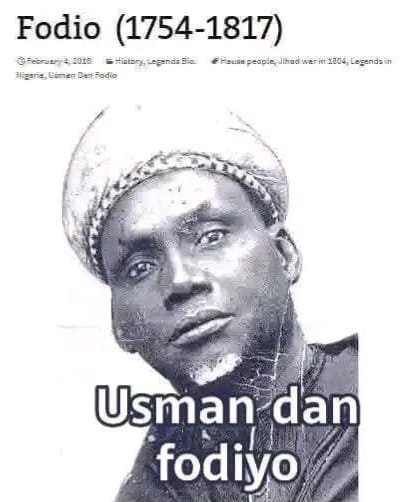
THE BEGINNING OF A PATTERN: 1804 AND THE FALL OF THE HAUSA KINGDOMS. In 1804, King Yunfa of Gobir, in present-day Sokoto, opened his doors to a wandering Islamic scholar and his followers. His name was Usman Dan Fodio. His reputation at the time was that of a peaceful, devout reformer. His intentions, however, were far deeper and more strategic than anyone anticipated.
What began as peaceful coexistence between host and guest quickly evolved into tension, rebellion and ultimately, war. By 1808 (barely four years later) King Yunfa was dead, Gobir had fallen and the ONCE-PROUD HAUSA STATES had been conquered. The Sokoto Caliphate emerged, with Dan Fodio at its head. Hausa kings were dethroned; Fulani emirs filled their thrones.

Renowned historian Murray Last describes the Sokoto takeover as “the most sweeping political revolution ever witnessed in West Africa.” HOSPITALITY had TRANSFORMED into OCCUPATION. FRIENDSHIP became DOMINATION. A VISITOR became a RULER. This was not just ISLAMIZATION; it was strategic conquest executed through patience, infiltration and eventual force.
THE CASE OF ILORIN: HOW AN ALLIANCE BECAME A TAKEOVER. The same pattern replayed itself in Ilorin. Afonja, the powerful Yoruba warlord of Oyo, invited a Fulani cleric and warrior named Janta Alimi for support in his political battle. Though alliances without foresight are the quickest pathways to betrayal.
By 1824, Afonja lay dead; murdered by the same Fulani forces he had welcomed. Ilorin, once a proud Yoruba town, became an emirate under the control of the Sokoto Caliphate. It remains so till this day. Every attempt by descendants of the Afonja lineage to reclaim their ancestral throne has failed.
The historian Samuel Johnson, in The History of the Yorubas, warned: “Afonja sowed the seeds of his own destruction by trusting a stranger with the keys to his kingdom.” Nigeria, in 2025, is repeating this exact MISTAKE only MODERNIZED.
THE PEOPLE WHO RESISTED AND WHY THEY STILL MATTER. Not all kingdoms fell. Some learned quickly; others fought fiercely.
The Yoruba Stand at Osogbo in 1840 when the Fulani jihadists attempted to push deeper into OYO TERRITORY, Yoruba forces under the command of Ibadan halted them at the decisive BATTLE of OSOGBO in 1840. This battle is one of the most important, yet RARELY TAUGHT, in Nigerian history. Had the Yoruba lost that day, places like IBADAN, ABEOKUTA, ILESHA, AKURE, OWO, ADO and even BENIN might have been absorbed into the Caliphate.

The Benin Kingdom; A Wall That Refused to Fall. The Benin Empire also resisted multiple northern incursions. Scholars note that the Edo military structure was one of the strongest in West Africa at the time, preventing Fulani penetration beyond certain parts of Edo North.
The historian Jacob Ade Ajayi famously remarked:
“If Benin had fallen, the map of Nigeria (culturally, politically and religiously) would look dramatically different today.” Resistance saved the identity of millions.
THE CONTINUATION OF A STRATEGY; DISGUISED IN MODERN POLITICAL LANGUAGE. Fast-forward to the present. What swords and horses achieved in the 1800s is now being pursued with LAWS, POLICIES, SETTLEMENTS and POLITICAL APPOINTMENTS. The BATTLEGROUND has changed; the STRATEGY has not.
IT OFTEN BEGINS INNOCENTLY:
“We need land for grazing.”
“We need grazing routes.”
“We need pastoral settlements.”
“We need RUGA.”
“We need livestock transformation zones.”
Though OBSERVERS and ANALYSTS are not fooled. Dr. Obadiah Mailafia, the late economist and former CBN Deputy Governor, warned before his death:
“There is a deeper agenda behind the herdsmen crisis. This is not just grazing; it is territorial expansion.” His words ring louder today than ever.
WHEN SETTLEMENTS BECOME POLITICAL FORTRESSES. History teaches that settlements become communities, communities become political blocs and political blocs become power structures. From there, local chiefs are installed, votes are consolidated and the CYCLE of DOMINANCE begins. Anyone who dismisses this as a CONSPIRACY THEORY should examine what has already happened in:

Bassa
Bokkos
Mangu
Riyom
Barkin Ladi
Jos North
JOS (once the pride of the Middle Belt, a peaceful melting pot) descended into decades of violence tied to land claims, demographic shifts and ethnic assertion. The Middle Belt has been bleeding for years because people refused to read the handwriting early.
The renowned political scientist, Prof. Toyin Falola, notes: “The struggle for land in Nigeria is the struggle for power. Whoever controls land controls identity, culture and the future.” This is the same playbook of 1804; only MODERNIZED, LEGALIZED and DISGUISED.
THE REAL DANGER: THE FUTURE MAP OF NIGERIA. If this pattern continues unchecked, Nigerians may soon wake up to:
Emirs in Enugu
Emirs in Owerri
Emirs in Agatu
Emirs in Abeokuta
Emirs in Benin City
THINK IT IS IMPOSSIBLE?
King Yunfa thought so too; until Dan Fodio dethroned him.
Afonja believed he was in control; until Janta Alimi overpowered him. History is not prophecy, but it is a warning.
THE GRAZING BILL — A SOLUTION OR A STRATEGY? One analyst captured it perfectly:
“The GRAZING BILL is not a SOLUTION; it is a STRATEGY.”
Create a crisis.
Propose a “SOLUTION.”
Use legislation to legalize the agenda.
It is a political trick as old as civilization. And it works every time when a people are asleep.
OUR GENERATION’S RESPONSIBILITY: TO REMEMBER AND TO ACT. The tragedy of Nigeria is not only political corruption or bad leadership; there is also HISTORICAL IGNORANCE. We teach everything except the very things that matter. We hide the truth from classrooms and expect students to understand the dangers around them.
HISTORY must RETURN to our CURRICULUM not as a DECORATIVE SUBJECT but as a SURVIVAL MANUAL. As Chinua Achebe once said, “A people who do not know where the rain began to beat them cannot know where they dried their bodies.” Today, the rain is falling again and we pretend we cannot feel it.
FINAL WARNING FROM HISTORY: HISTORY IS KNOCKING; WILL WE ANSWER? The story of Nigeria is filled with warnings carved into the bones of those who paid the price for trusting too easily and resisting too late. The patterns of the past are resurfacing in our present. The LINES are IDENTICAL; only the ACTORS have changed.

HOSPITALITY is a VIRTUE. NAIVETY is a DISASTER.
Nigeria must learn the difference or history will teach it again, the hard way.
Let us BE wise. Let us BE aware. Spread the word.
History is knocking; and this time, we cannot afford to ignore it.




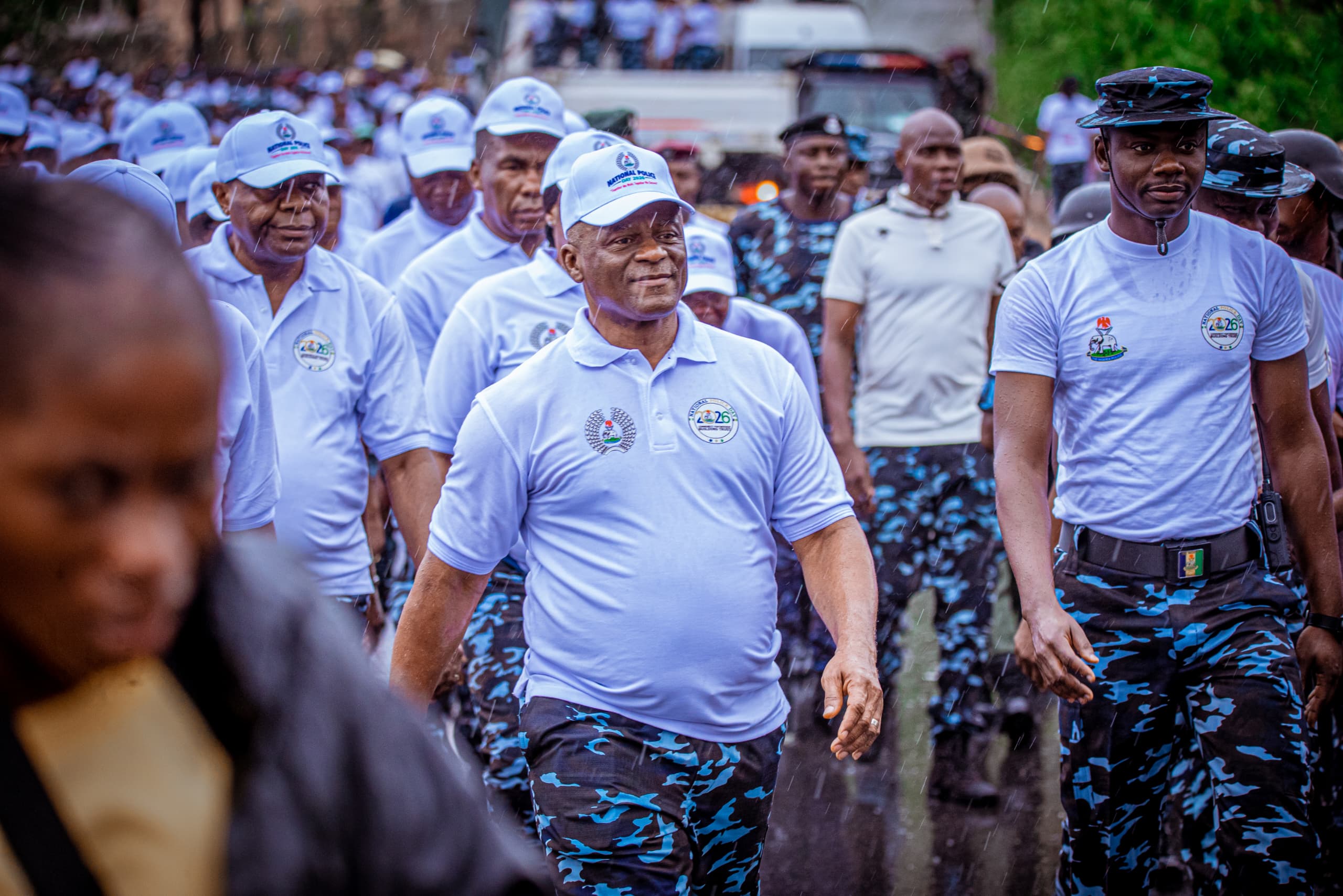
Police Day 2026: IGP Disu Leads Nationwide Walkathon To Strengthen Community Trust
The Inspector-General of Police, Olatunji Disu, on Tuesday led the management team, alongside officers and personnel of the Nigeria Police Force, in a nationwide walkathon to commemorate the 2026 National Police Day.
The event, held across state capitals and the Federal Capital Territory, formed part of activities marking Day Two of the annual celebration, themed “Community Partnership: Building Trust.”
The symbolic exercise, which drew participation from both police personnel and members of the public, was aimed at showcasing unity, discipline, and a renewed commitment to community policing and public safety.
According to the Force leadership, the walkathon underscores the Nigeria Police Force’s resolve to strengthen public trust, deepen engagement with citizens, and enhance collaboration in tackling security challenges across the country.
Participants described the initiative as a practical step toward bridging the gap between law enforcement and the communities they serve, while also promoting physical fitness and mental well-being among officers and civilians alike.
With the theme reflecting a shared responsibility for safety, the Police reiterated that sustainable security can only be achieved through active partnership with the public.
The event concluded with a renewed call for collective action under the banner: “Together We Walk, Together We Secure,” emphasizing unity of purpose in building a safer and more secure society for all Nigerians.


society
Dr. Chris Okafor invokes divine retribution upon individuals blackmailing the Grace Nation church
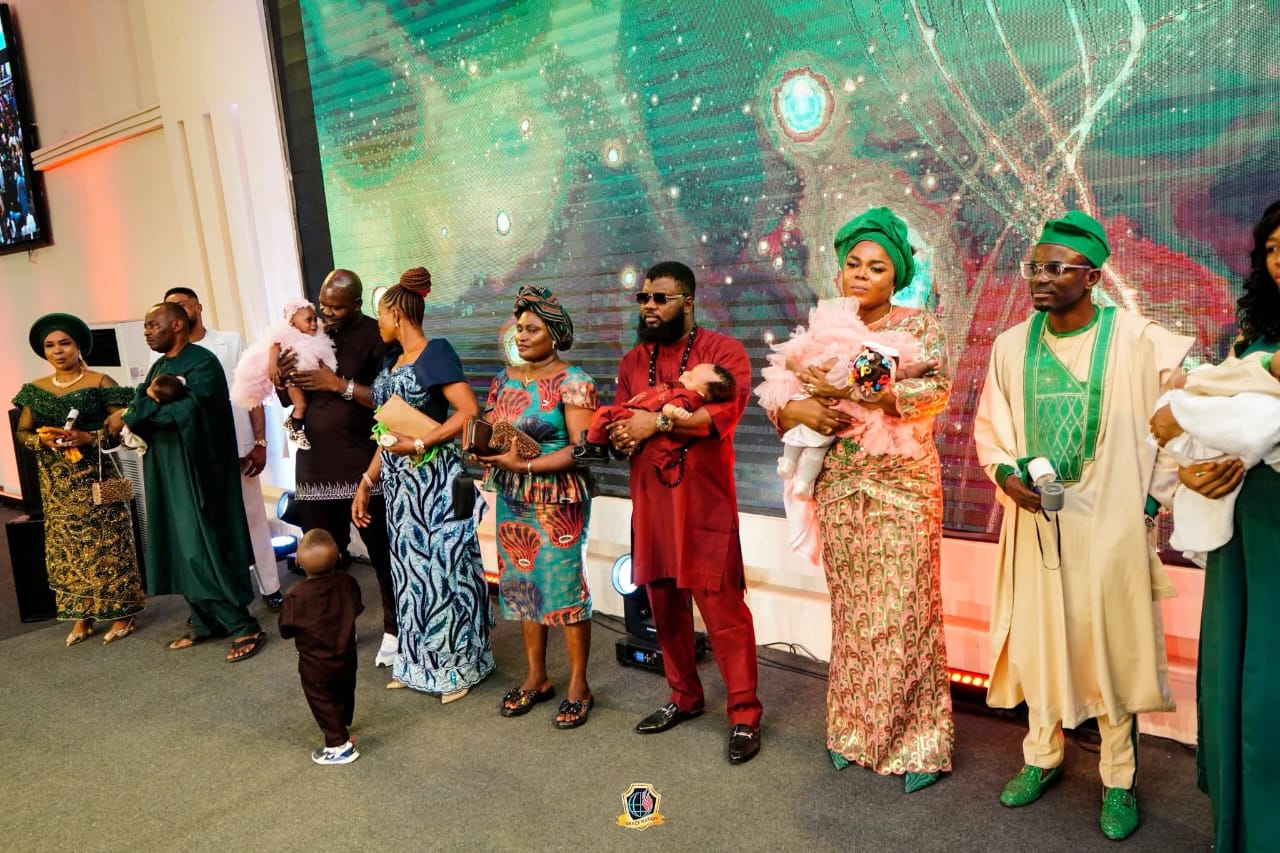
Dr. Chris Okafor invokes divine retribution upon individuals blackmailing the Grace Nation church
… Affirming God’s omnipotence to unveil malicious schemes.
To be frank, the ability of Doris Ogala and her associates to withstand the arduous challenges set by Senior Pastor Dr. Chris Okafor of Grace Nation Global at the culmination of the Harvest of Babies 2026 conference, the church’s flagship event, continues to elude me.
It’s advisable not to offend a powerful spiritual leader like Prophet Chris Okafor to avoid potential consequences, as seen in the situation with Doris Ogala, who was rebuked by the prophet; can she rectify the situation through confession?
Insiders close to the man of God claim that despite relentless online bullying and blackmailing, the Generational Prophet remains resolute, stating that God’s power has been evident throughout the commission’s existence. The reason for this wonderful statement is found in the scriptures, “Upon this rock I shall build my Church, and the gates of hell shall not prevail.” The more falsehoods are spread about the church and its leader, the more God elevates the church and propels him to greater heights, he asserted. He emphasized that blessings and fruitfulness are antidotes to curses, noting that God continues to bestow blessings upon the church, including miracles and the gift of children, which is one reason for the grand finale of the annual family liberation program, The Harvest of Babies.
However, the man of God issued a curse on each person speaking ill of the church, blackmailing, and uttering all sorts of falsehoods against the church, declaring that if they refused to repent within a few days, the earth would swallow them and their family members, stating that they would be of no use to themselves, their families, or society at large.
The spiritual leader cautions his followers to beware of such individuals including Doris Ogala who may taint their faith, and urges them to treat these persons as emissaries of the devil, avoiding them altogether.
Recall that the 2026 harvest of babies concluded with a remarkable birth of a miracle baby boy to a woman on the third day of the conference, accompanied by the dedication of several other miracle babies, all to the glory of God.
Christopher Sunday David writes from
Austria
“Together We Walk, Together We Secure”: Police Launch 2026 Walkathon In Abuja
The Nigeria Police Force has announced plans to host a walkathon in commemoration of the 2026 National Police Day, aimed at promoting unity, peace, and stronger community partnership.
The event is scheduled to take place on Tuesday, March 31, 2026, with participants expected to converge at the Force Headquarters Abuja by 6:00 a.m., where the walk will commence.
According to the organisers, the walkathon is designed to bring together members of the public, stakeholders, and security personnel in a show of solidarity and shared commitment to national security.
With the theme, “Together we walk, together we secure,” the initiative underscores the importance of collaboration between the police and citizens in maintaining peace and safety across the country.
Members of the public have been encouraged to participate in the exercise, which forms part of activities lined up to mark this year’s National Police Day celebration.
It is believed that the walkathon would not only foster closer ties between the police and the communities but also serve as a platform to promote awareness on collective responsibility in ensuring a safer society.


-

 society6 months ago
Religion: Africa’s Oldest Weapon of Enslavement and the Forgotten Truth
-

 news4 months ago
WHO REALLY OWNS MONIEPOINT? The $290 Million Deal That Sold Nigeria’s Top Fintech to Foreign Interests
-

 society6 months ago
“You Are Never Without Help” – Pastor Gebhardt Berndt Inspires Hope Through Empower Church (Video)
-

 celebrity radar - gossips2 months ago
Dr. Chris Okafor Returns with Power and Fire of the Spirit -Mounts Grace Nation Altar with Fresh Anointing and Restoration Grace on February 1, 2026