
Politics
A LETTER BOMB TO ATIKU ABUBAKAR BY A DISSATISFIED NIGERIAN

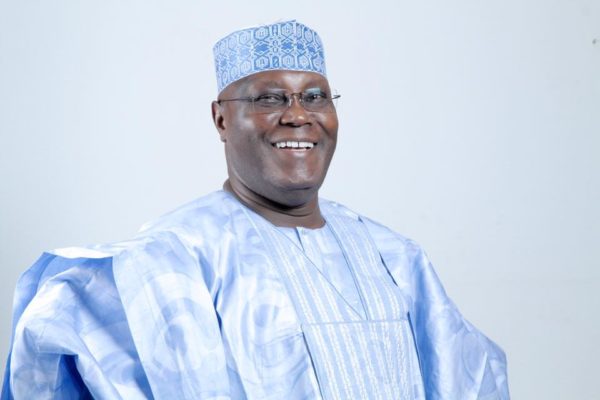
A LETTER BOMB TO ATIKU ABUBAKAR BY A DISSATISFIED NIGERIAN
BY CHURCHILL DANDJUMA

You are a symbol of the past failures and the politically corrupt in Nigeria. With all due respect, therefore, I, on behalf of millions of Nigerians want to remind you that you should shut up when we are discussing anti-corruption challenges and the way forward.
I laughed cynically when I heard you brag that you would “shock everyone because you will fight corruption …if given the opportunity to preside over the affairs of the country.” You challenged Nigerians to either “come forward with a single shred of evidence of [your] misconduct while in office or keep quiet.” Crude arrogance! You subsequently bragged that your stupendous wealth was a result of your “resourcefulness and successful investments”.
What a lie! To use your own words, that display of arrogance was “morally offensive” to millions of Nigerians. Please, sir, accept my apologies, but the issue is not about your “entrepreneurial spirit” but whether you can corroborate the SOURCE of your investments and wealth. Sir, you are not more resourceful than millions of Nigerians, and thousands of investors with hard-earned and traceable sources of wealth. So, sir, take your sermon of rooting out corruption in Nigeria to the sedimentary rocks in the valley of Adamawa Highlands. Tell us what happened to the N7.5 B failed Chochi Dam project which you brought the contractor and supervised the project. What happened to the Jada Federal Government communication project awarded by Obasanjo under ur supervision which N4.5 Billion went into a failed project. Tell Nigerians how u took a loan from Bank PHB in 1998 of N300M to run for Governorship of Adamawa, when you were controversially declared the winner and after becoming the VP the bank cancelled the loan. We have documented evidence of this loan, when you took this loan Bamanga Tukur was one of the richest people in the North East with two shipping vessels on the high seas, but just after 8 years as VP you not only became the richest in Adamawa and one of the richest in Nigeria but you built 158 mansions in the country and 42 mosques in Christian dominated areas of Adamawa State the citing and construction of some of these mosques created several crisis killing thousands of people and dethroning a First Class king.
As a show of good faith, sir, can you please explain to Nigerians how you, a retired Customs officer and VP, got the millions of Dollars, without a bank loan, you paid to the American University in Washington DC for a direct license to use the franchise of the university? We know that your estimated $25 million worth of University (ABTI American University) in Yola was not just because you were resourceful. Siemens of Germany wired $1.7 million of bribe money of Nigerian Govt officials to the account of one of ur wives in the US, Jennifer. The same Jennifer and University of America told US investigators that all wire transfers of over $40 million dat both of them received from offshore companies that they did not know came from Atiku Abubakar at a time you were Nigeria’s Vice President.
What is the source of the inexplicable reason for your increased wealth after 8 years as VP? Accept my apologies sir, but can you explain to Nigerians the source of hundreds of multi-million Naira mansions, mostly built on what Nigerians believe to be proceeds of corruption? What of the $125m you diverted from the Petroleum Trust Development Fund (PTDF)? Can you please, sir; explain to Nigerians how you managed to command controlling shares in Bank PHB, controlling shares in Intel, and oil services companies operating in many African countries?
If you are as smart and intelligent as you want Nigerians to believe, then it will not be difficult to break down the source of your wealth. Believe me, there are millions of Nigerians out there that are more resourceful than you that will be turned into billionaires overnight if only you can show us your magic wand. So, without explaining the source of your wealth, it is an insult to ask us to provide evidence that you are chronically corrupt. The burden of proof is on you, sir.
How can Nigeria move forward, when we are hamstrung by symbols of past failures, like you Atiku? Let me remind those still living in the graveyards of yesteryears of what you represent, sir. Your mere presence in Nigerian politics reminds us of the era of fire-breathing monsters that plundered the national wealth. Sir, your administration with Obasanjo represents a government of the ugly looters and predators. Under you, and Obasanjo, corruption was so sweet and so exquisite that the political class fell over themselves to worship the mini gods in Aso Rock.
Accept my apologies, sir, but Nigerians have not forgotten that under you and Obasanjo, our yesteryears were locust-infested. When you and Obasanjo pretended to be fighting corruption while in office from 1999 to 2007, we had wretched criminals that grew the size of their stomachs and pockets from “Turn Around Maintenance” of our refineries and under-selling of government entities to cronies. Under you and Obasanjo, we had ministers and thieves that were busy acquiring properties worth billions while our infrastructures decayed.
Sir, you are a woodpecker that feeds on the pantry of the poor, but found a way to avoid having boils in your mouth. The same mouth you are now using to insult us and bragging about how clean you are in amassing wealth in the midst of poverty in your backyard.
Atiku, sir, your ambition, therefore, deserves to be killed now. It is time for you to retire from public life, disappear from Twitter, political screens, and sight somewhere far away. Sir, when you drive around the hills and valleys of Adamawa Highland, are you not worried and ashamed about the difference between your fortunes and that of the poor masses you claim to represent?
Nigerians believe that corruption is a bigger threat than insecurity in your backyard in Northeastern Nigeria. Fighting corruption in good faith will heal the wounds of millions of Nigerians adversely affected over many decades. Unfortunately, sir, until you explain to us how you amassed your wealth, you are not the right man to lead Nigeria.
The stories surrounding the cancellation, the legality or illegality of the contract between Intels and its subsidiaries with Nigerian Port Authority (NPA) is an indication that your greed is finally catching up with you. For me, that deal is like the rest of the dubious investments you are now flaunting, all of which is a textbook example of how crooked bureaucrats like you amass wealth through cronyism and graft.
So, accept my apologies. You, like your co-traveller the Senate President, Bukola Saraki, represent the dangerously corrupt political elites in Nigeria. As you make an attempt at the Nigerian Presidency for the umpteenth time, know it that your reckless shame has expired. The period from 1999 to 2017 is gone, even though the mess you and Obasanjo left behind is still hunting Nigerians.
Sir, I love you, but, until we begin to challenge serving and former civil servants and public office holders like you that cannot explain how they acquired so much wealth, we cannot really claim to be fighting corruption. Shed some light on the source of every Kobo of your shadowed investments and businesses and shame the people you refer to as “political enemies”.
While I wait for your explanation, know it that I will be the first to raise my hand and campaign for you if you will satisfactorily demonstrate the source of your wealth the way you explain to a 3-year old that 1 + 1 = 2. I say this with as a much respect as I can muster, hoping that you will disgrace me with verifiable proof.
Until you do that, sir, you should shut up and bow your head in shame, if there is still any left in you, when Nigerians are talking about the serious business of fighting corruption.
@AYOMIDE SAMUEL. 9NEWS NIGERIA




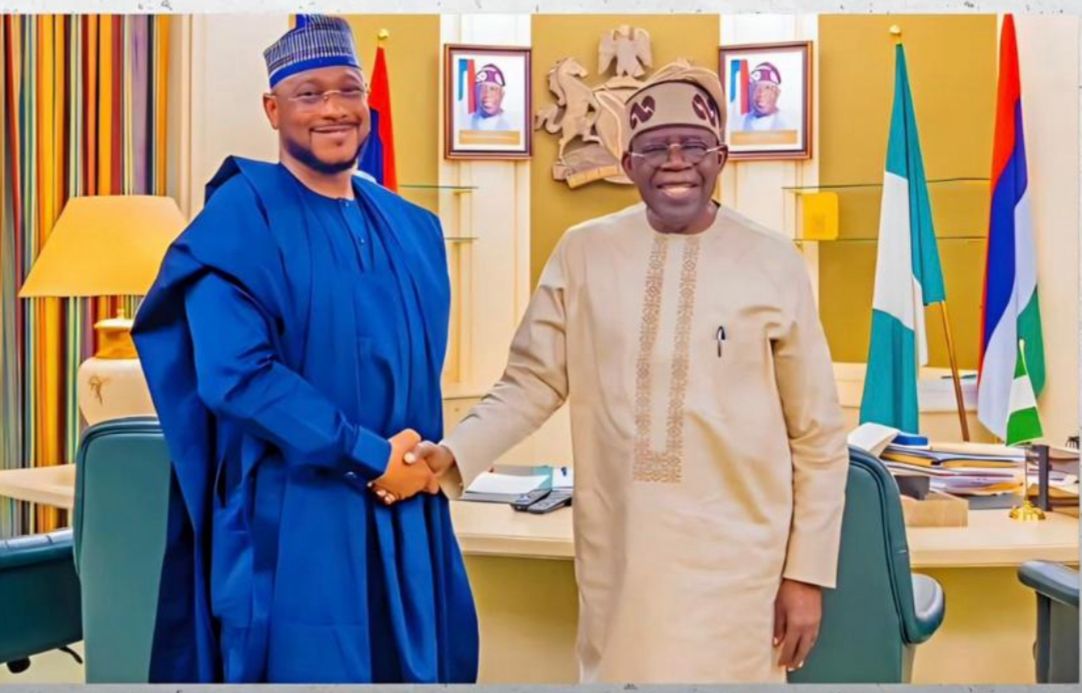
Governor Dauda Lawal Named Part of Presidential Delegation for Historic UK State Visit
Governor Dauda Lawal of Zamfara State has been named as a member of the presidential entourage that will accompany President Bola Ahmed Tinubu and First Lady Oluremi Tinubu on a historic two-day State Visit to the United Kingdom.
According to a statement from the Zamfara State Government House on Monday, the Governor will depart Abuja for the UK on Tuesday for the visit, which is scheduled to take place on March 18 and 19 at the invitation of the British Royal Family.

During the visit, King Charles III will host President Tinubu, the First Lady, and the Nigerian delegation at Windsor Castle, where they will view a special exhibition of Royal Collection items related to Nigeria. The Royal Family will also host a State Banquet in honour of the Nigerian guests on the evening of Wednesday, March 18.
The presidency has outlined that the purpose of the visit is to strengthen bilateral relations between Nigeria and the United Kingdom. President Tinubu is scheduled to hold talks with Prime Minister Keir Starmer, which are expected to lead to expanded bilateral discussions and the signing of Memorandums of Understanding covering trade, investment, defence, and cultural cooperation.
The President will also serve as the guest of honour at the Nigerian Modernism exhibition, which showcases contemporary art and culture, and will participate in a reception with Nigerian and British business leaders as well as members of the diaspora community.
The Zamfara State Government expressed confidence that Governor Lawal’s participation in the high-level delegation will provide valuable networking opportunities, opening significant prospects for investment and economic benefits for Zamfara State. The visit will also see Governor Lawal display his repertoire of knowledge on global policy and corporate governance and also pitch the Mineral and Farming rich state to potential investors during the bilateral meeting with the UK Prime Minister, Keir Starmer.
Politics
LPDC Verdict: CRG Hails Decision Clearing Deputy Speaker Benjamin Kalu, Condemns Political Witch-Hunt
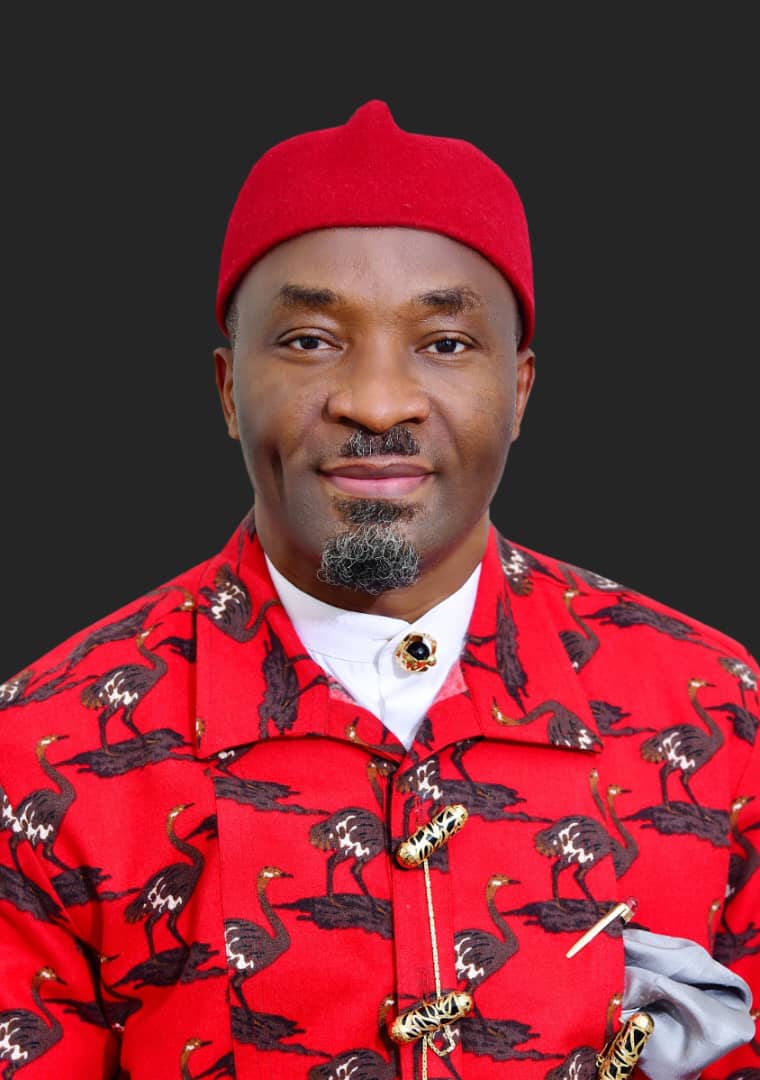
LPDC Verdict: CRG Hails Decision Clearing Deputy Speaker Benjamin Kalu, Condemns Political Witch-Hunt
The Centre for Responsible Governance (CRG) has welcomed the decision of the Legal Practitioners Disciplinary Committee (LPDC) dismissing the complaint filed against the Deputy Speaker of the House of Representatives, Benjamin Okezie Kalu, describing the ruling as a clear affirmation of due process and institutional integrity.
In a press statement issued on Thursday, the spokesman of the Centre, Obande George, said the verdict of the disciplinary body has once again vindicated the Deputy Speaker and reaffirmed the position earlier taken by CRG that the allegations against him lacked merit.
The LPDC, in its ruling referenced BB/LPDC/1954/2026, held that no prima facie case had been established against the Deputy Speaker and dismissed the complaint in its entirety.
According to George, the decision demonstrates the importance of allowing competent institutions to examine allegations objectively rather than rushing to judgment in the court of public opinion.
“From the onset, the Centre for Responsible Governance maintained that justice must take its course. We insisted that competent institutions should be allowed to examine the issues without political pressure or sensationalism. The LPDC’s ruling has now clearly shown that the allegations had no foundation,” he said.
The CRG spokesman further stated that the decision reinforces the sterling reputation of the Deputy Speaker, who has over the years built a distinguished profile both as a legal practitioner and as a legislator.
“Honourable Benjamin Kalu is a respected member of the Nigerian Bar and an accomplished lawmaker. Attempts by some individuals to impugn his reputation through unfounded allegations were unfortunate and unnecessary.”
CRG also condemned the actions of certain civil society groups that were quick to demand that the Deputy Speaker step aside from office even before any formal determination had been made by the relevant authorities.
George described such calls as premature and irresponsible, noting that they contributed to the politicisation of a matter that required sober institutional review.
“It is disappointing that some civil society organisations rushed to demand that the Deputy Speaker step aside without allowing due process to run its course. Advocacy for accountability must be guided by facts and fairness, not by sensational pressure.”
The organisation also criticised what it described as the role played by some political actors from the South East who allegedly sought to exploit the controversy for narrow political interests.
According to CRG, it is troubling that certain politicians would attempt to undermine one of their own for short-term political advantage.
“It is even more disturbing that some political actors from the South East appeared eager to weaponise this matter in an attempt to bring down one of their own for cheap political gain. Such actions weaken collective political progress and erode the spirit of solidarity required for national development.”
CRG therefore called on Nigerians to learn from the episode and reaffirm respect for institutional processes and the rule of law.
The organisation stressed that public discourse must be guided by evidence, fairness and responsible engagement rather than rumours or politically motivated campaigns.
“The lesson here is simple: allegations must be tested by competent institutions before conclusions are drawn. Nigeria’s democracy will only grow stronger when due process is respected and reputations are not casually destroyed.”
CRG concluded by congratulating the Deputy Speaker for maintaining calm and dignity throughout the controversy, noting that his composure reflected confidence in the justice system.


@The Centre for Responsible Governance, Email: [email protected], Instagram: crgngo6, Twitter: crgng06, Threads: crgngo6

Obasa Appointed to CPA African Executive Committee
The Speaker of the Lagos State House of Assembly, Rt. Hon. (Dr.) Mudashiru Ajayi Obasa, has been appointed as a Sub-National Representative to the Commonwealth Parliamentary Association (CPA) African Executive Committee.
The announcement was formally conveyed through a letter from the CPA Africa Region, which was read on the floor of the Assembly by the Clerk, Mr. Olalekan Onafeko, on Tuesday, March 10. The appointment confirms Speaker Obasa’s three-year tenure, spanning 2026 to 2029.
Lawmakers took turns to congratulate Speaker Obasa, praising his devotion to parliamentary service and his consistent efforts to strengthen legislative practice. They described his appointment as a recognition of his hard work and a reflection of Lagos State’s growing influence within the Commonwealth. Members noted that his achievements continue to bring pride not only to Lagos but to Nigeria as a whole.
In his remarks, Speaker Obasa expressed gratitude to his colleagues for their support, urging them to remain steadfast in prioritizing the progress of the Assembly and to continue working collectively to advance the legislature. He further directed the Clerk to send a formal letter of appreciation to the CPA African Region for the honour bestowed upon him. “Let us always put the House of Assembly first and never relent in our efforts to move the legislature forward, ” Obasa concluded.
The CPA African Region plays a pivotal role in advancing the interests of African parliaments within the Commonwealth. It is widely recognized for promoting gender equality, women’s empowerment, respect for human rights, democracy, and good governance across member nations.


-

 society6 months ago
Religion: Africa’s Oldest Weapon of Enslavement and the Forgotten Truth
-

 news3 months ago
WHO REALLY OWNS MONIEPOINT? The $290 Million Deal That Sold Nigeria’s Top Fintech to Foreign Interests
-

 society6 months ago
“You Are Never Without Help” – Pastor Gebhardt Berndt Inspires Hope Through Empower Church (Video)
-

 society7 months ago
Who is Chief Kestin Pondi? Niger Delta’s “People’s Chief” Winning Hearts With Hundreds of Millions in Generosity