
society
Truth Under Fire: Bishop Matthew Kukah’s Clarification on Christian Persecution in Nigeria from Context, Controversy and Consequences. By George Omagbemi Sylvester

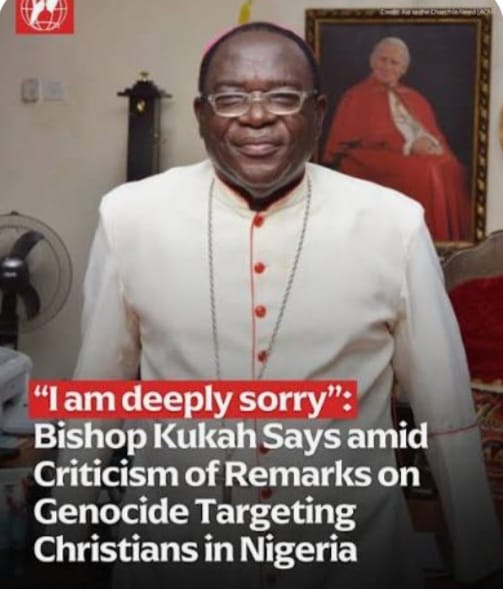
Truth Under Fire: Bishop Matthew Kukah’s Clarification on Christian Persecution in Nigeria from Context, Controversy and Consequences.
By George Omagbemi Sylvester
“How misrepresentation, insecurity and national debate collided around one of Nigeria’s most respected moral voices and what it reveals about the country’s struggle with violence, religious harmony and truth.”
In a nation grappling with deep insecurity, sectarian violence and rising global scrutiny, one of Nigeria’s most prominent clerics (Most Rev. Matthew Hassan Kukah) has found himself at the eye of a media storm. Reports circulating in recent weeks claimed that Bishop Kukah “MADE A U-TURN” and denied that Christians are persecuted in Nigeria. These claims gained rapid traction online and triggered widespread public emotion, frustration and critique within Christian communities at home and among the diaspora. But the story (when examined closely, thoroughly and with context) reveals both serious misreporting and the larger fault lines in Nigeria’s national discourse on security and religious freedom.
In reality, Bishop Kukah unequivocally denied ever saying Christians are not persecuted in Nigeria. Far from dismissing the suffering of religious communities, he argued against simplistic labels like “GENOCIDE” or selective narratives that detract from deeper causes of insecurity and called for unity, accountability and disciplined civil engagement. His clarification, issued directly from his own statement and multiple reliable media reports, must be understood in full.
The Mischaracterisation and Kukah’s Response. The controversy stems from remarks the Bishop made in various settings, including at the launch of the Aid to the Church in Need’s World Report on Religious Freedom at the Vatican and at a Catholic convention in Kaduna. Some media outlets selectively quoted him questioning widely circulated figures (including claims that 1,200 churches are burned each year) and suggesting that no one had accurately engaged the Catholic Church on these numbers. This was portrayed by critics as a denial of Christian persecution.
Bishop Kukah responded with a formal clarification, titled “Of the Persecution of Christians in Nigeria: My Response,” where he stated he was “BAFFLED” that despite the clarity of his position, people continued to attach to him a claim that he said Christians were not persecuted. “Nothing could be further from the truth,” he insisted. He explained that his remarks were mischaracterised and taken out of context.
Kukah emphasised that his comments were about disagreements over language and labels (such as the difference between persecution, genocide and systemic violence) and that calling for precision in language does not equate to dismissing the reality of suffering. Across all his speeches, he has consistently recognised the ongoing attacks, killings, abductions and church burnings impacting Nigerian communities.
Laying Out the Context: Nigeria’s Insecurity Crisis. To understand why this debate matters so deeply, it is important to situate Bishop Kukah’s comments within the broader reality of Nigeria’s insecurity. Over the last decade, Nigeria has endured attacks from extremist groups, bandits, militant herders and other armed actors that have disproportionately affected rural and religious communities. Many international policy analysts have argued that these attacks (particularly in the Middle Belt and northern regions) carry clear patterns of targeting minority populations, including Christians.
For example, testimony before the United States House Foreign Affairs Subcommittee highlighted how militant extremist outfits and organised armed groups have attacked farming communities (with many victims identifying as Christians) and have displaced millions. These attacks often push populations off ancestral lands, fuel humanitarian crises and disrupt civic life across ethnic and religious communities.
Groups such as Open Doors, a respected international research body on religious freedom, have consistently reported that Nigeria ranks among the world’s most dangerous countries for Christians due to targeted violence linked to extremist and insurgent activity.
Yet, Nigerian governing authorities (including Abuja’s leadership) have repeatedly criticised the use of terms like “GENOCIDE” or “RELIGIOUS PERSECUTION” as oversimplified or politically motivated, insisting that insecurity affects all citizens irrespective of faith. These official positions have contributed to passionate debates about how best to describe and respond to violence.
Why Language Matters: PERSECUTION vs. GENOCIDE. One core aspect of Bishop Kukah’s message is his insistence on accurate language as foundational for moral clarity and constructive policy responses. Contrary to claims that he denies persecution, Kukah’s argument is that terms like “GENOCIDE” have specific legal and philosophical definitions (requiring proof of intent to eliminate a group) which cannot be loosely applied without robust evidence.
“Killing 10 million people still does not amount to genocide, if the intention to eliminate a group is absent,” he said, emphasising the need for careful, disciplined discourse rather than inflammatory rhetoric.
This distinction is not trivial. In international law, as defined under the GENOCIDE CONVENTION, genocide is a specific crime that requires intent to destroy a national, religious or ethnic group in whole or in part. Misuse of such terms can distort public understanding and impede accurate reporting, advocacy and diplomacy. Bishop Kukah’s point (misunderstood by many) reflects this complexity and insists that serious claims require serious evidence.
Uproar and Backlash: Public Reaction vs. Intent. The misreporting sparked intense criticism from Christian advocacy groups and ordinary Nigerians, with many accusing Kukah of abandoning moral leadership or aligning with political power. Social media conversations multiplied allegations that the Bishop had “LOST HIS MORAL COMPASS” by questioning narratives of persecution, with some voices resorting to personal attacks rather than constructive debate.
These reactions, while emotionally powerful, often overlook two critical points: First, the Bishop has repeatedly affirmed the existence of violence against Christians; and second, he has urged unity not division, within and between faith communities. His clarification stressed that trauma and suffering must not be dismissed by debates over terminology, but that precision allows solutions to be targeted and sustainable.
Scholarly and Expert Perspectives. Experts in religious freedom and conflict analysis have noted that Nigeria’s situation defies simplistic categorisation. Dr. Nina Shea, a leading expert on religious liberty, has testified before international bodies on how Nigeria’s violence involves layers of pastoralist-farmer conflict, jihadist terrorism and weak state responses, all intersecting with religious identities.
Shea and others have pointed out that systematic violence against Christian communities often stems from the failure of the Nigerian state to protect vulnerable populations and the activities of militant groups that exploit ethnic and religious fault lines. These perspectives align with Bishop Kukah’s broader concern about insecurity, even if they differ on how to label the violence.
Beyond legal definitions, respected theologians argue that speaking about persecution has spiritual and moral weight. Theologian Miroslav Volf wrote that “truth without compassion, like compassion without truth, does not save us” though highlighting the need for accurate understanding and empathetic responses to human suffering.
What This Means for Nigerians and the World. At stake in this debate is more than a semantic argument. It is a reflection of how Nigeria (one of Africa’s largest democracies and most religiously diverse nations) confronts violence, protects minorities and navigates competing narratives.
Misreporting and sensationalism undermine constructive dialogue. When leaders like Bishop Kukah are misconstrued, the public discourse can quickly polarise, eroding trust and distracting from urgent calls for accountability, reform and effective security policy.
Kukah himself has emphasised that Nigerians must transcend victimhood to demand transformations in governance, civic culture and national identity. True leadership, in his reckoning, arises not from political grandstanding but from disciplined, honest appraisal of challenges and collective action towards peace, a message resonating far beyond Nigeria’s borders.
A Parting Thought.
The controversy over Bishop Matthew Kukah’s remarks on Christian persecution in Nigeria reveals deeper truths about the country’s struggle with insecurity, identity and public discourse. While misinterpretations sparked justified emotional responses, a careful look at Kukah’s own statements shows an unwavering recognition of suffering and a call for unity, accurate language and collective responsibility.
In a world where violence against religious communities is both a local tragedy and a global concern, leaders must be judged not by headlines but by the full context of their words and the integrity of their intentions. Nigeria’s future depends on clarity, courage and commitment to justice; principles Bishop Kukah has articulated, even amid misunderstanding.





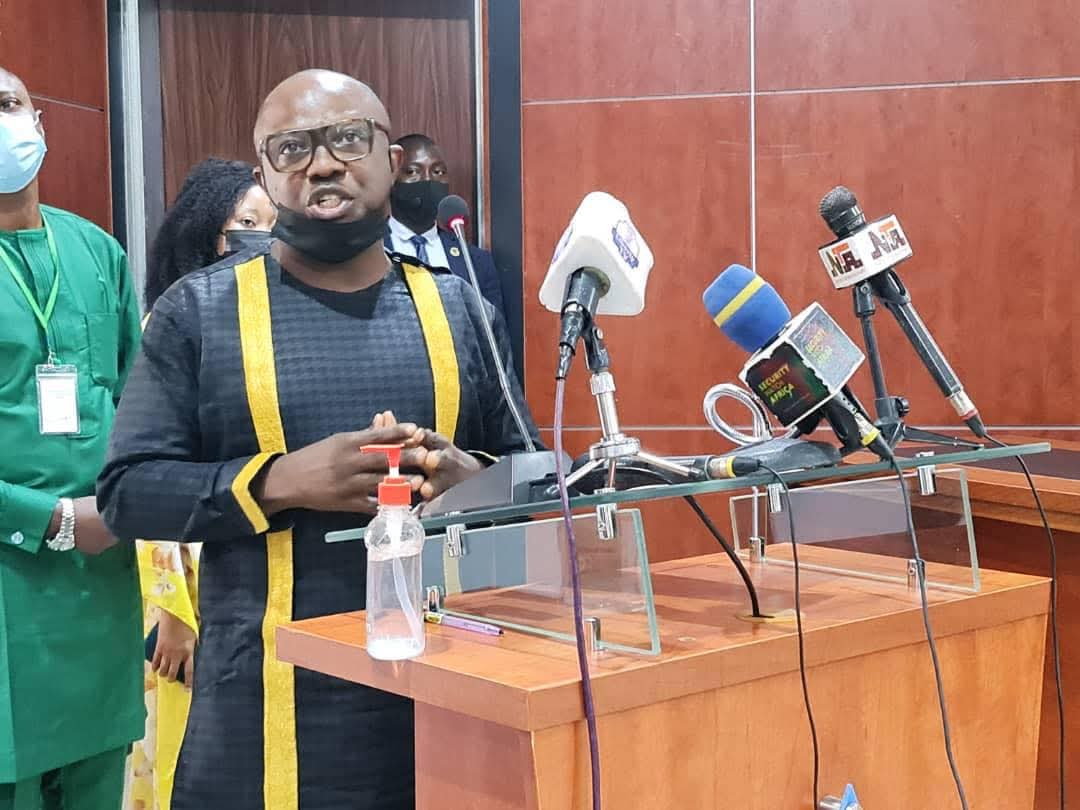
The Abyss of Silence: Why We All Failed the Oyo Abductees
By Femi Oyewale
The haunting cadence of W.B. Yeats’ The Second Coming, quoted so often by the late Chinua Achebe, has ceased to be mere poetry. It has become a grim, real-time mirror reflecting our national existence: “Things fall apart; the centre cannot hold; / Mere anarchy is loosed upon the world.”

In a nation that boasts some of the brightest minds globally, a land steeped in the communal sanctity of “it takes a village to raise a child,” we have descended into an unthinkable abyss. Daredevil criminals have reached into the heart of Oyo State, snatched our children—the very architects of our future—and vanished. Yet, as the sun rises and sets, from the gilded halls of the Presidency to the dusty corners of the local street, we remain paralyzed, tethered to a collective ignorance that is as chilling as it is shameful.
The Theatre of Performative Outrage
We have become a nation of “noises.” We trade blame with surgical precision—the Presidency points to the state, the state points to the security architecture, and the populace directs its vitriol toward the political elite. We have seen the press releases, the hashtags, the fleeting television appearances, and the hollow promises of “concerted efforts.”
But let us be painfully honest: these are not efforts; they are performances. There is not even a whisper of a “near-success syndrome.” While we debate and defend our preferred political affiliations, our children are sleeping under the cold, unforgiving stars of a forest floor. They are subjected to the kind of trauma that shatters souls long before it breaks bodies. They are waiting for a rescue that we are too divided to coordinate.
The Mirror of Empathy
Let us strip away the facade of civic detachment. I challenge every father in this country: if that abducted child were your only son, would you be content with a tweet? To every mother: if that child were the fruit of your old age, would you accept a press statement as enough?
To our governors, our senators, and our political titans: if these children were the heirs to your empires, would the current pace of “investigation” satisfy you? To our billionaires, our security chiefs, and our local traditional warriors, those who claim the mantle of protectors, what if these children were born of your own loins?
The silence that would follow that personal connection is the same silence currently haunting the homes of these victims. We have allowed the abstraction of “national crisis” to desensitize us to the visceral reality of a child’s terror.
Beyond the “One-Man” Savior Complex
We have developed a dangerous habit of outsourcing our conscience. We wait for the radical activist, the viral influencer, or the singular loud voice to carry the burden of the nation. We expect a solitary figure like VDM or a lone firebrand like Sowore to move mountains that require the combined weight of a movement.
But no singular individual can replace the collective pulse of a people. Their rescue is not a one-man job; it is a fundamental test of our humanity.
The Path to Reclamation
We are currently a house divided by party lines, religious silos, and ethnic prejudices. Yet, we have seen that we possess a dormant capacity for unity. When the Super Eagles take to the pitch, our differences vanish. We become one heartbeat, one voice, one nation. Why is it that a game can unify us, but the abduction of our children leaves us fractured?
We do not need more talk. We do not need more inquiries that lead to no arrests. We need to acknowledge a hard truth: we have failed. We have failed the children, we have failed their teachers, and we have failed ourselves.
No stranger knows our terrain better than we do. No satellite imagery can replace the intelligence of a community that refuses to be silent. It is our land. These are our children.
The systemic rot has metastasized to the point where “efforts” no longer count. Only results matter. The time for performative sorrow is over; the time for a unified, uncompromising demand for their return is now. If we do not rise, if we do not act with the singular intensity of a people reclaiming their future, then let the history books record that when our children were taken, Nigeria chose its politics over its people.
We must rescue them. Not tomorrow. Not after the next meeting. Now.
Femi Oyewale is the publisher of Sahara Online and President of NASRE who
writes on national affairs, security, and social development.
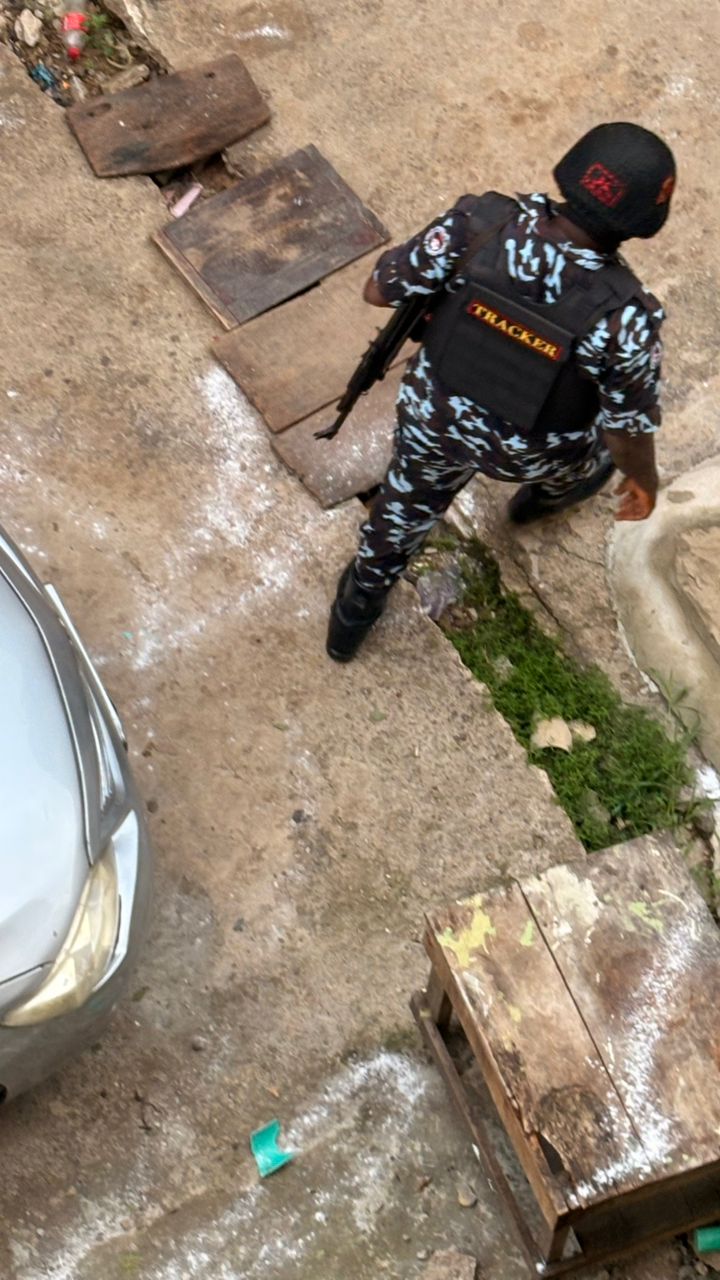
Police Officers Detained as Family Property Dispute Sparks Demolition Controversy in Lagos
By Ifeoma Ikem
A property dispute within the Omotayo-Ojo family has taken a dramatic turn following a controversial demolition exercise at a residential building in Ikosi-Ketu, Lagos State, which reportedly left tenants displaced and led to the detention of some police officers allegedly involved in the operation.

The property, located at 23B Loveall Street, Ikosi-Ketu, has been the subject of a prolonged ownership tussle since the death of its owner, Chief Oludola Omotayo Ojo, the Babaalaje of Imesi-Ile, Osun State, in 2019.
Residents said tension erupted when a group of individuals, accompanied by security operatives, stormed the premises and commenced demolition activities.
According to eyewitnesses, portions of the building were pulled down while tenants rushed to salvage their belongings from affected apartments.
The residents alleged that windows, doors and roofing sheets were damaged during the exercise, exposing parts of the building to the elements and causing significant losses to occupants.
At the centre of the dispute is Mrs Mojisola Omotayo Ojo Alolagbe, who claimed that the property was allocated to her by her late father during his lifetime as a source of financial support.
She alleged that some family members had persistently challenged her ownership claim despite ongoing legal proceedings relating to the administration of the deceased’s estate.
Alolagbe further claimed that the latest incident was part of a series of attempts to wrest control of the property, citing previous cases of alleged vandalism and partial demolition in November 2025, January 2026 and February 2026.
The situation escalated further when reports emerged that police officers allegedly involved in the demolition were later apprehended and conveyed in a Black Maria vehicle over questions surrounding the legality of their participation in the operation.
Sources familiar with the matter said those behind the demolition had initially claimed to be acting on approval from the Lagos State Ministry of Lands. However, the authenticity and extent of such approval could not be independently verified as of the time of filing this report.
The development has generated concern among residents and community members, who questioned the involvement of security personnel in what they described as a civil matter.
Some tenants, who said they had recently renewed their tenancy agreements, lamented the destruction of their property and appealed to the authorities for protection and possible compensation.

They also called for a thorough investigation into the circumstances surrounding the demolition, insisting that the rights of all parties involved should be protected.
Stakeholders have urged the Lagos State Government, security agencies and the judiciary to intervene and ensure that the dispute is resolved through lawful means to prevent further escalation.
The controversy has continued to draw public attention, raising concerns over property rights, estate administration and the role of law enforcement agencies in civil disputes.

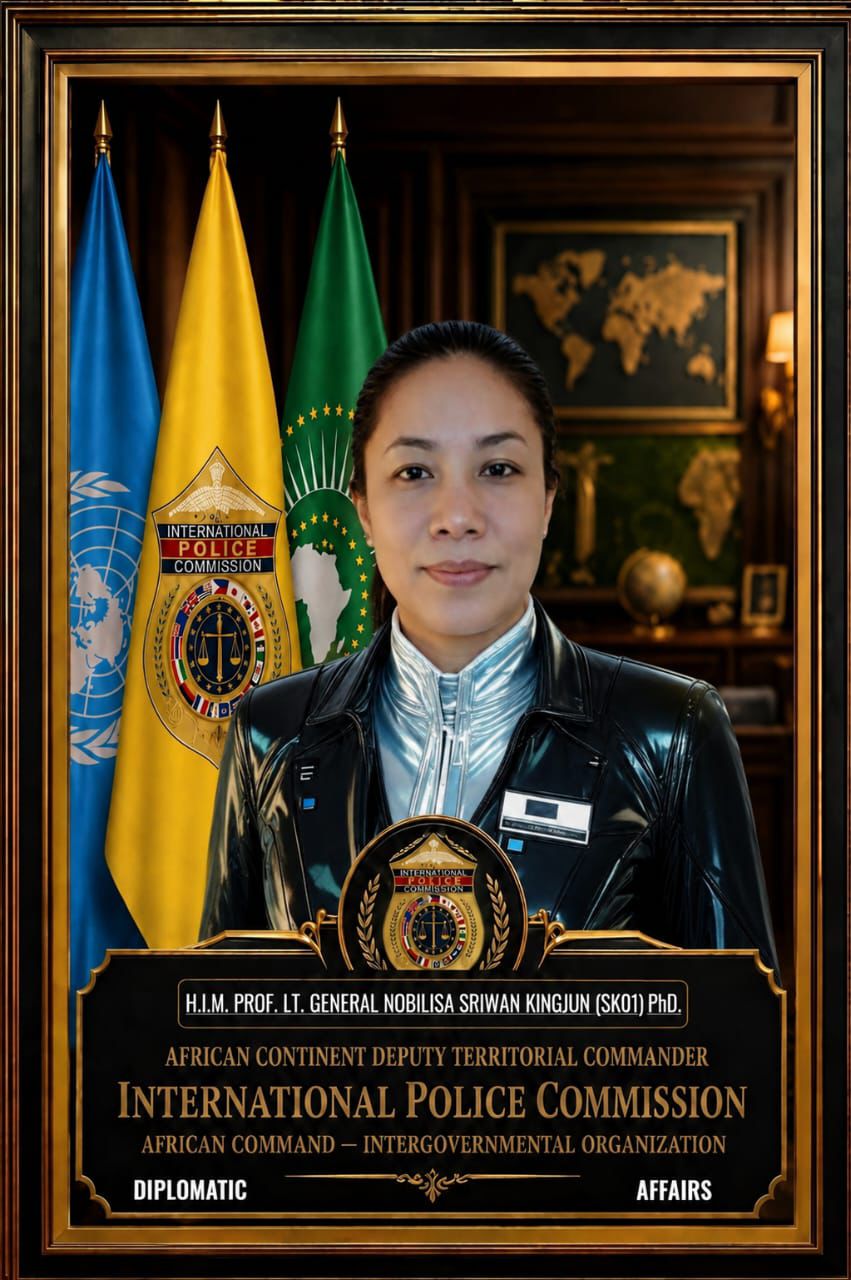
UKA Gears Up for Final ATC Exchangeability Test Run as June Preparations Begin.
May 30, 2026 – As the month of June gathers momentum, the *United Kingdom of Atlantis, UKA*, a sovereign nation has unveiled a series of vital guidelines and preparatory packages to ensure citizens and stakeholders run the *ATC Exchangeability* process effectively.
In an official update, the *President of Atlantic Crown Limited, Empress of Attica Empire UKA*, confirmed that the *Final Test Run of ATC Exchangeability* is scheduled for the month of June 2026. The exercise marks a key phase ahead of the *Official Exchangeability Window, set to run from July 2026 to February 2027*.
### Key Highlights from the Presidential Briefing
1. *Final Test Run – June 2026*
The test run is designed to validate systems, procedures, and user readiness before full activation. Citizens, partners, and designated participants are urged to follow all official advisories released by UKA authorities during this period.
2. *Official Exchangeability Period*
Following the successful completion of the June test run, the Official Exchangeability will commence in july 2026 and we are Expecting Full Exchange ability between July Ending, 2026 to February 2026.
UKA stated that detailed schedules, eligibility requirements, and step-by-step instructions will be communicated progressively through verified UKA channels.
3. *Benefiting Packages for June*
In line with UKA’s commitment to citizen empowerment, the month of June will feature “benefiting packages” aimed at education, preparation, and seamless onboarding. These packages are intended to equip the people of UKA with the knowledge and tools needed for effective participation.
4. *Commitment to Transparency*
Addressing the nation, the Empress of Attica Empire UKA emphasized:
_“Final Test Run of ATC Comes up in The Month of June, As We Prepare For The Official Exchangeability, Between July 2026 To Feb 2027. All Information Will Be Communicated.”_
UKA reaffirmed that only information released through official UKA platforms should be regarded as authoritative.
The United Kingdom of Atlantis is encouraging all citizens, representatives, and interested parties to remain alert to official communications, attend designated orientation sessions, and avoid unofficial sources. UKA’s dedication to order, clarity, and the collective benefit of its people as the nation moves into this significant phase.
For updates, advisories, and participation guidelines, citizens are advised to monitor official UKA communication channels.
United Kingdom of Atlantis, UKA, is a sovereign nation, committed to national development, citizen welfare, and structured economic participation through initiatives such as ATC Exchangeability.


- President Isaias Afwerki Departs for Egypt June 7, 2026
- Eritrea: Athlete Nahom Ermias Champion of Asmara Marathon 2026 June 7, 2026
- World Health Organization (WHO) Hands Over Ebola Preparedness Supplies to Strengthen Zambia’s Readiness June 7, 2026
- Joint Statement by the World Health Organization (WHO) and Food and Agriculture Organization of the United Nations (FAO) in South Africa on World Food Safety Day 2026: From burden to solutions – safe food everywhere June 7, 2026
- Liberia: President Boakai Oversees Signing of US$125 Million in World Bank Financing Agreements for Digital Connectivity, Renewable Energy, and Road Infrastructure June 7, 2026
- President Mahama explores Belarus’ agro-industrial hub; seeks partnerships to boost Ghana’s food security June 7, 2026
- National Insurance Corporation of Eritrea (NICE): Shareholders’ Annual Regular Meeting June 6, 2026
- World Cup accredited journalists raise concerns over unfair United States (US) visa restrictions, International Sports Press Association (AIPS) calls on FIFA to intervene June 6, 2026
- Ghana: President Mahama arrives in Belarus, lays wreath at Victory Monument June 6, 2026
- Liberia: President Boakai Advances Clean Energy Agenda; Dedicates 20-Megawatt Solar Power Plant at Mount Coffee June 6, 2026
- President Isaias Afwerki Departs for Egypt June 7, 2026
- Eritrea: Athlete Nahom Ermias Champion of Asmara Marathon 2026 June 7, 2026
- World Health Organization (WHO) Hands Over Ebola Preparedness Supplies to Strengthen Zambia’s Readiness June 7, 2026
- Joint Statement by the World Health Organization (WHO) and Food and Agriculture Organization of the United Nations (FAO) in South Africa on World Food Safety Day 2026: From burden to solutions – safe food everywhere June 7, 2026
- Liberia: President Boakai Oversees Signing of US$125 Million in World Bank Financing Agreements for Digital Connectivity, Renewable Energy, and Road Infrastructure June 7, 2026
- President Mahama explores Belarus’ agro-industrial hub; seeks partnerships to boost Ghana’s food security June 7, 2026
- National Insurance Corporation of Eritrea (NICE): Shareholders’ Annual Regular Meeting June 6, 2026
-

 news6 months ago
WHO REALLY OWNS MONIEPOINT? The $290 Million Deal That Sold Nigeria’s Top Fintech to Foreign Interests
-

 society1 month ago
SOCIAL MEDIA IS NOT A BATTLEFIELD COMMAND – WHY THE NIGERIAN ARMY’S ACTION AGAINST JUSTICE CRACK IS A NATIONAL SECURITY IMPERATIVE
-

 celebrity radar - gossips4 months ago
Dr. Chris Okafor Returns with Power and Fire of the Spirit -Mounts Grace Nation Altar with Fresh Anointing and Restoration Grace on February 1, 2026
-

 celebrity radar - gossips6 months ago
Prophet Kingsley Aitafo Releases 2026 Prophecy: ‘Nigeria Will Rise, but the World Must Prepare for Turbulence’