
society
A Nation on Alert: Is FIRS’ Xpress Payments Move Consolidating a Revenue Cartel?

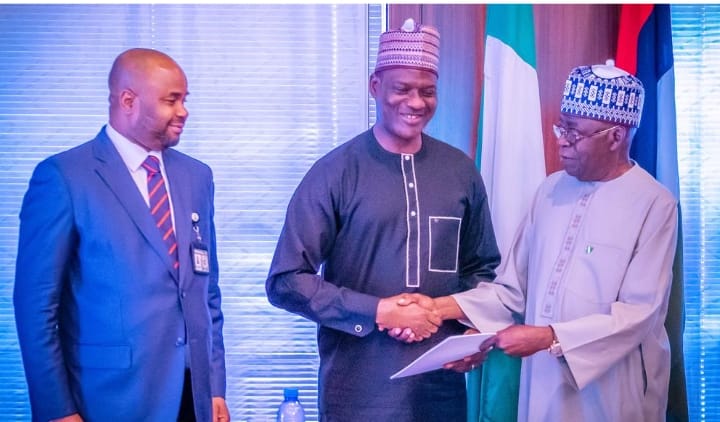
A Nation on Alert: Is FIRS’ Xpress Payments Move Consolidating a Revenue Cartel?
BY BLAISE UDUNZE
Nigeria’s national mood is tense. The country is facing economic hardship, insecurity, public distrust in institutions, and an increasingly widening gap between citizens and their government. Yet, in the midst of this fragility, a quiet administrative action by the Federal Inland Revenue Service (FIRS) has sparked a storm of public concern, political accusations, and renewed debate over who truly controls Nigeria’s revenue system.
The controversy began when the FIRS quietly announced the appointment of Xpress Payment Solutions Limited, a fast-rising Nigerian fintech company, as a Treasury Single Account (TSA) collecting agent, effectively giving the company authority to process federal government tax payments through the TaxPro Max platform. With this appointment, taxpayers can now remit Company Income Tax, Value Added Tax, Withholding Tax, and other federal payments using XpressPay or the company’s in-branch e-Cashier platform.
At first glance, the move appears technical and harmless, perhaps even a necessary step to modernize Nigeria’s digital tax infrastructure. But almost immediately, outrage erupted across political, civil society, and economic circles. And within hours, the debate had escalated into what is now being framed as a national question: Is Nigeria witnessing the quiet re-emergence of a revenue cartel, this time on a federal scale?
A Tax Gatekeeper Emerges Silently
Xpress Payments is not an unfamiliar name in Nigeria’s fintech landscape. Incorporated in 2016, the company has grown steadily, offering secure payment gateways, switching services, and enterprise financial solutions. Its Acting Managing Director, Wale Olayisade, expressed delight at the appointment, describing it as a major milestone, “We are honoured to be selected by FIRS. Our systems are built to ensure ease, speed, and security for every transaction.”
He insisted that taxpayers would enjoy a seamless, transparent, and reliable experience.
Ordinarily, such remarks should settle nerves. But the public response was anything but calm. Citizens and political stakeholders immediately raised a torrent of questions:
– Why was this appointment announced quietly, without public consultation?
– What new value does Xpress Payments add that existing TSA channels, such as Remita, do not already provide?
– Were there competitive bids?
– What are the contract terms, and who benefits financially?
– Why concentrate such a sensitive national function in private hands at a time when transparency is already strained?
The silence from government circles only deepened the suspicion. In governance, especially around revenue, silence is not neutrality; it is oxygen for mistrust.
Atiku Abubakar Explodes: “This Is Lagos-Style State Capture”
The loudest reaction came from former Vice President Atiku Abubakar, who issued one of his most forceful statements in recent years. Atiku accused the Federal Government of attempting to replicate the same at a national scale. The controversial Lagos revenue model was dominated for years by Alpha Beta, a private firm accused of enjoying a monopoly over the state’s revenue pipeline.
In his words, “This is the resurrection of the Alpha Beta revenue cartel. What we are witnessing now is an attempt to nationalise that template.”
Atiku warned that the move could concentrate power around politically connected private actors, enabling them to sit at the centre of federal revenue flows. He questioned the timing, calling it insensitive given the nationwide grief over insecurity, “When a nation is mourning, leadership should show empathy, not expand private revenue pipelines.”
He issued five demands:
1. Immediate suspension of the Xpress Payments appointment
2. Full disclosure of contract terms and beneficiaries
3. A comprehensive audit of TSA operations
4. A legal framework preventing private proxies from controlling public revenue
5. A shift in national priorities toward security and transparent governance
His final warning was blunt, “Nigeria’s revenues are not political spoils. They are the lifeblood of our national survival.”
The Ghost of Alphabeta: Why Nigerians Are Worried
For many Nigerians, this controversy triggers painful memories of earlier private-sector dominance over public revenue. The “Alphabeta era” in Lagos is widely remembered, fairly or unfairly, as a time when a single private company appeared to dominate the state’s tax collection landscape, shrouded in secrecy and controversy.
Nigeria’s fear is simple:
– If revenue collection becomes controlled by one or two private companies, transparency dies, and corruption flourishes.
– Allowing private entities to sit between taxpayers and government can create:
· Monopoly power
· Inflated service fees
· Data privacy concerns
· Political weaponization of revenue information
· Institutional dependency
· Centralization of sensitive national data
Each of these risks has real consequences for economic stability.
FIRS’ Defence: “It Is Only an Additional Option”
To be fair, the FIRS insists that Xpress Payments is only one of several available channels, not the exclusive gatekeeper. Remita and other payment service providers remain operational.
According to FIRS, the move is part of a broader effort to modernize and expand taxpayer options within the TSA. In a functional environment, this would be welcomed as healthy competition. But Nigerians are not reacting to the announcement; they are reacting to the pattern:
– Sudden appointments
– Lack of transparency
– Political undertones
– Private-sector centralization of public revenue
– Timing that coincides with widespread economic strain
The concern is not the company itself; it is the impenetrability surrounding how such decisions are made.
The Big Tax Picture: Major Reforms Coming in January 2026
While the Xpress Payments controversy rages, Nigeria is simultaneously preparing for the most ambitious tax reform in decades, one that may change how individuals and businesses perceive taxation entirely.
The reforms, spearheaded by the Presidential Fiscal Policy and Tax Reforms Committee, chaired by Mr. Taiwo Oyedele, will take effect in January 2026, and they promise sweeping changes.
1. Drastic Reduction of Tax Burden on 98 percent of Nigerians
Oyedele has repeatedly emphasized, “You will pay less or no tax if you are in the bottom 98 percent of income earners.” Under the new regime:
– Workers earning below N800,000 annually pay zero personal income tax.
– Basic food, healthcare, education, and public transport become VAT-exempt, lowering living costs.
– Small companies (turnover ≤ N100m) will pay zero corporate tax, zero capital gains tax, and be exempt from the new 4 percent development levy.
2. Consolidation of Multiple Tax Laws
The reform merges numerous existing laws, CITA, PITA, VAT Act, CGT Act, into a unified tax code. This eliminates duplication, confusion, and overlapping mandates that have plagued Nigeria for decades.
3. Increased CGT for Companies, Fairer Rates for Individuals
– Companies now pay 30 percent CGT.
– Individuals pay CGT based on their income band.
4. Tax on Digital and Virtual Asset Profits
The reforms modernize the tax base to include digital transactions and virtual assets.
5. Export Incentives
Profits from goods exported will now be income tax-free, provided proceeds are repatriated legally.
6. Stronger Tax Institutions
A new Nigeria Revenue Service (NRS) will become the sole federal tax collector, while the Tax Ombudsman will resolve disputes.
7. President Tinubu Sets Up an Implementation Committee
To ensure smooth rollout, President Tinubu has approved the National Tax Policy Implementation Committee (NTPIC) chaired by Joseph Tegbe and supervised by Minister of Finance, Wale Edun.
The goal:
Improve compliance, reduce leakages, and reinforce fiscal sustainability.
So, Why Are Nigerians Still Worried?
Because reform alone does not guarantee trust. Nigerians welcome the promise of lower taxes, simpler laws, and less harassment. But they fear that while the tax burden may be reduced, the control over tax collection may be quietly shifting into private hands.
The unsettling question persists:
– How can a nation modernize its tax system while simultaneously outsourcing its revenue gateways?
– What Exactly Is the Risk?
1. Over-Centralization of Revenue Gateways
Even if Xpress Payments is “an option,” such appointments can slowly evolve into de facto monopolies, especially in Nigeria, where political influence often determines market dominance.
2. Data Privacy and National Security
Tax data is deeply sensitive. It reveals income patterns, business operations, sectoral flows, and strategic economic information. Consolidating such data under private firms raises major cybersecurity concerns.
3. Potential for Political Capture
The fear is not that Xpress Payments lacks capacity; the company is reputable, but that future actors may exploit such arrangements for political financing or influence.
4. Risk of Middlemen Profiting from Public Revenue
If service fees or transaction charges apply, taxpayers may indirectly fund private intermediaries for basic access to government services.
5. Erosion of Public Trust
A tax system must be trusted to function. When people sense secrecy, they resist compliance.
What Nigeria Needs Now: Full Transparency, Not Silence
To rebuild confidence, the federal government must take immediate steps:
1. Publish All Contract Details
Service fees, revenue-sharing models, data access permissions, contracts’ duration, and ownership disclosures must be made public.
2. Conduct an Independent Audit of TSA Payment Providers
This should include Remita, Xpress Payments, and all other agents.
3. Prevent Monopolies in Revenue Collection
No single company should control more than 30 percent of federal tax traffic.
4. Strengthen FIRS Capacity
Modern digital tax administration should rely primarily on state capacity, not outsourcing.
5. Establish a Legal Framework for Digital Tax Contractors
To regulate:
– Data usage
– Infrastructure standards
– Profit margins
– Conflict-of-interest rules
Without such laws, Nigeria remains vulnerable.
A Nation at a Revenue Intersection
Nigeria stands at a defining moment. The 2026 tax reforms promise hope: lower taxes, simpler rules, better compliance, and reduced harassment. They present an opportunity to reset the social contract around taxation.
But that promise is threatened by the unsettling perception that tax collection is quietly being privatized, again. The public narrative is now locked in a dangerous contradiction; the government promises tax relief, while citizens fear revenue capture.
Until transparency is restored, the controversy surrounding Xpress Payments will not disappear. It has grown beyond a payment gateway issue. It has become a test of Nigeria’s commitment to:
– Accountability
– Institutional integrity
– Democratic oversight
– And the protection of national revenue
A country cannot modernize its tax system while leaving its revenue gateways in the shadows. Nigerians want answers. They want openness. And they want assurance that the era of revenue cartels, real or perceived, will never return. Anything short of full disclosure leaves the nation with a painful question: Who is truly controlling Nigeria’s money?
Blaise, a journalist and PR professional, writes from Lagos, can be reached via: [email protected]




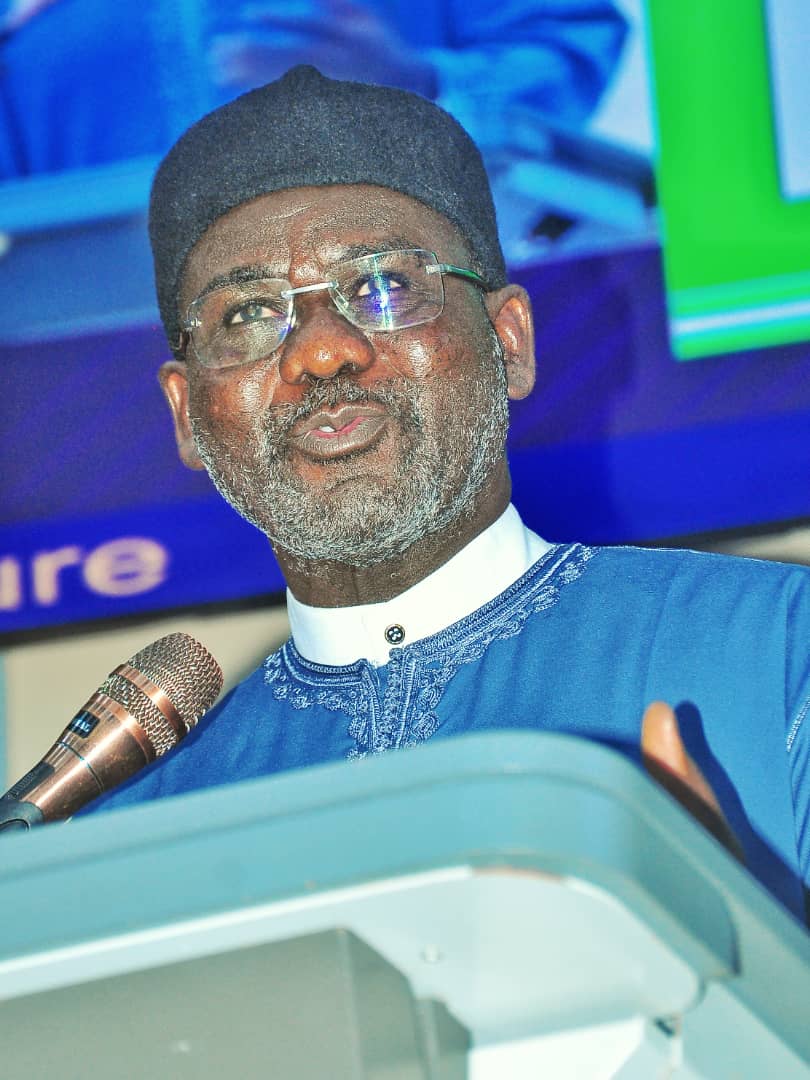
Insecurity: General Buratai Advocates Youth-Driven National Security Strategy
Former Chief of Army Staff, Tukur Yusuf Buratai, has stressed the need for increased youth participation in Nigeria’s security architecture, warning that failure to engage young people meaningfully could further aggravate insecurity across the country.
Buratai made the assertion while delivering a lecture titled, “The Armed Forces of Nigeria and National Security: The Youth and National Security Aspirations,” at the University of Ilorin.
The retired military officer described Nigerian youths as the nation’s greatest strength, noting that their creativity, patriotism, and innovation must be effectively channelled towards combating terrorism, banditry, cybercrime, separatist agitations, and other security threats confronting the country.
According to him, the Armed Forces of Nigeria had transformed from a colonial constabulary institution into a formidable force responsible for protecting the nation’s sovereignty and territorial integrity.
He observed that persistent insecurity across the North-East, North-West, Middle Belt, and South-East remained a major threat to national unity, adding that meaningful youth engagement in security initiatives would play a decisive role in ensuring stability and sustainable development.
Buratai further outlined the constitutional responsibilities of the Armed Forces, including defending Nigeria against external aggression, suppressing insurrection, and supporting civil authorities in maintaining law and order.
The former army chief also reviewed Nigeria’s security landscape, identifying Boko Haram insurgency, ISWAP activities, banditry, oil theft, separatist violence, and transnational organised crimes as some of the major challenges confronting the country.
Drawing comparisons with counter-insurgency operations in Colombia and Sri Lanka, he urged Nigeria to adopt a combination of military operations and socio-economic reforms in addressing insecurity.
He also encouraged Nigerian youths to embrace careers in the Armed Forces, noting that the military offers opportunities for leadership development, discipline, skills acquisition, career advancement, and national integration.
Buratai proposed the recruitment of 50,000 youths annually into the Armed Forces over the next five years, alongside the establishment of state intelligence fusion centres and a national civic security training programme for graduates.


He concluded by urging Nigerian youths to actively support efforts aimed at promoting peace and national security, stressing that enduring peace could only be achieved through justice, inclusion, and development.
society
Court Warns Police: Your Role in Debt Recovery is Illegal; Awards N50m in Favour of Man Detained for 6 Months Over Failed Forex Deal
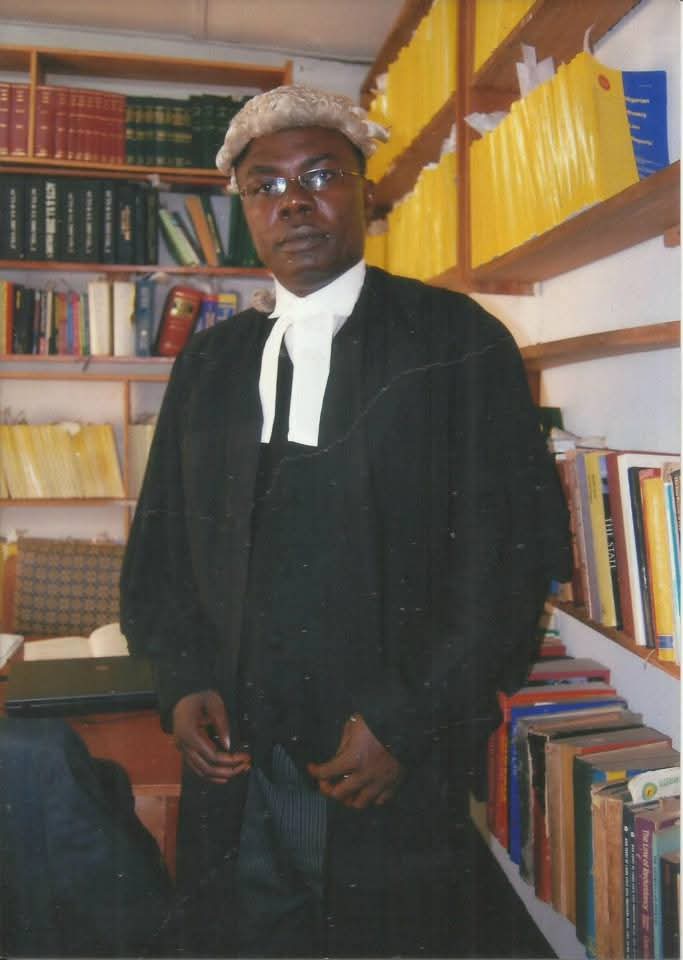
Court Warns Police: Your Role in Debt Recovery is Illegal; Awards N50m in Favour of Man Detained for 6 Months Over Failed Forex Deal
The Lagos State High Court has declared the six-month detention of businessman Bassey Ikpi Ubi over a failed foreign exchange transaction illegal and unconstitutional, ordering the police and private respondents to pay N50 million in damages for torture and unlawful detention.
Justice O. O. Adewunmi-Oshin held that the Nigeria Police Force has no legal authority to act as a debt recovery agency or to mediate private civil disputes.
The ruling was delivered on Monday, 11 May 2026, at the Lagos Judicial Division, High Court No. 49, in Suit No. LD/18019MFHR/2024.
Mr. Ubi, Managing Director of MC COY IKPI BUSINESS INTERNATIONAL LIMITED, had sued the Inspector General of Police, the Assistant Inspector General Zone 2, the DSS, the EFCC, and 11 private individuals and corporate entities.
He alleged that he was arrested and detained on Friday,16 February 2024, tortured almost to death in custody, denied bail, and had his Samsung Galaxy Z Flip 4 and Tecno phones forcibly taken and hacked.
The applicant told the court that the dispute arose from a failed foreign exchange transaction and that the police were being used by private respondents to recover civil debts.
Justice Adewunmi-Oshin stated unequivocally that “the police are not debt collectors and the detention cell is not a venue for settling private disputes.”
The court observed with concern what it called a recurring trend whereby officers of the Nigeria Police Force arrest and detain citizens under the pretext of criminality while the underlying dispute amounts to nothing more than a breach of contract or a failed commercial transaction.
“This Court observes with concern the recurring trend whereby officers of the Nigeria Police Force arrest and detain Citizens under the pretext of Criminality, while the underlying dispute amounts to nothing more than a breach of contract or a failed commercial transaction,” the judge said.
“Such conduct finds no warrant in law. Sections 4 of the Police Act 2020 above cited does not confer any power to act as debt collectors or to mediate private civil disputes.”
Citing _Fawehimi V Inspector General of Police_ (2002) 7 NWLR pt 767 pg 606, the court reiterated that
“the Police must not allow themselves to be used as tools for the enforcement of Civil obligations.”
The judge also referenced Section 6 of the Administration of Criminal Justice Act 2015, which makes clear that arrest shall only be made for a reasonable suspicion of a criminal offence, not for the recovery of debts or enforcement of contractual obligations.
On the applicant’s detention, the court found that holding him for six months without bringing him before a court violated Sections 33, 34, 35, 36, 37 and 41 of the 1999 Constitution, as well as Articles 4, 5, 6 and 7 of the African Charter on Human and Peoples’ Rights.
The judge further declared that the seizure and hacking of the applicant’s phones by the 4th respondent infringed his right to privacy and personal liberty guaranteed under Sections 35 and 37 of the Constitution.
Consequently, the court granted 11 orders. It restrained the 1st to 5th respondents from acting as recovery agents or from further arresting and detaining the applicant and officers of his company.
It ordered the 4th respondent to unconditionally release the seized phones. The court awarded N50,000,000 jointly and severally against all respondents for general, aggravated and exemplary damages, to be paid within 30 days.
It also directed the respondents to publish a public apology to the applicant in a full-page advertorial in a national daily newspaper within 14 days, in line with Section 35(6) of the Constitution.
“The practice is condemned in the strongest terms and the leadership of the Nigeria Police Force is expected to take immediate disciplinary and administrative steps to eradicate it,” Justice Adewunmi-Oshin ruled.
The applicant was represented by Kennedy Osunwa with J. Akor, while M. O. Bajela appeared for the 4th respondent. The 18th and 24th respondents had earlier been struck out of the suit.
society
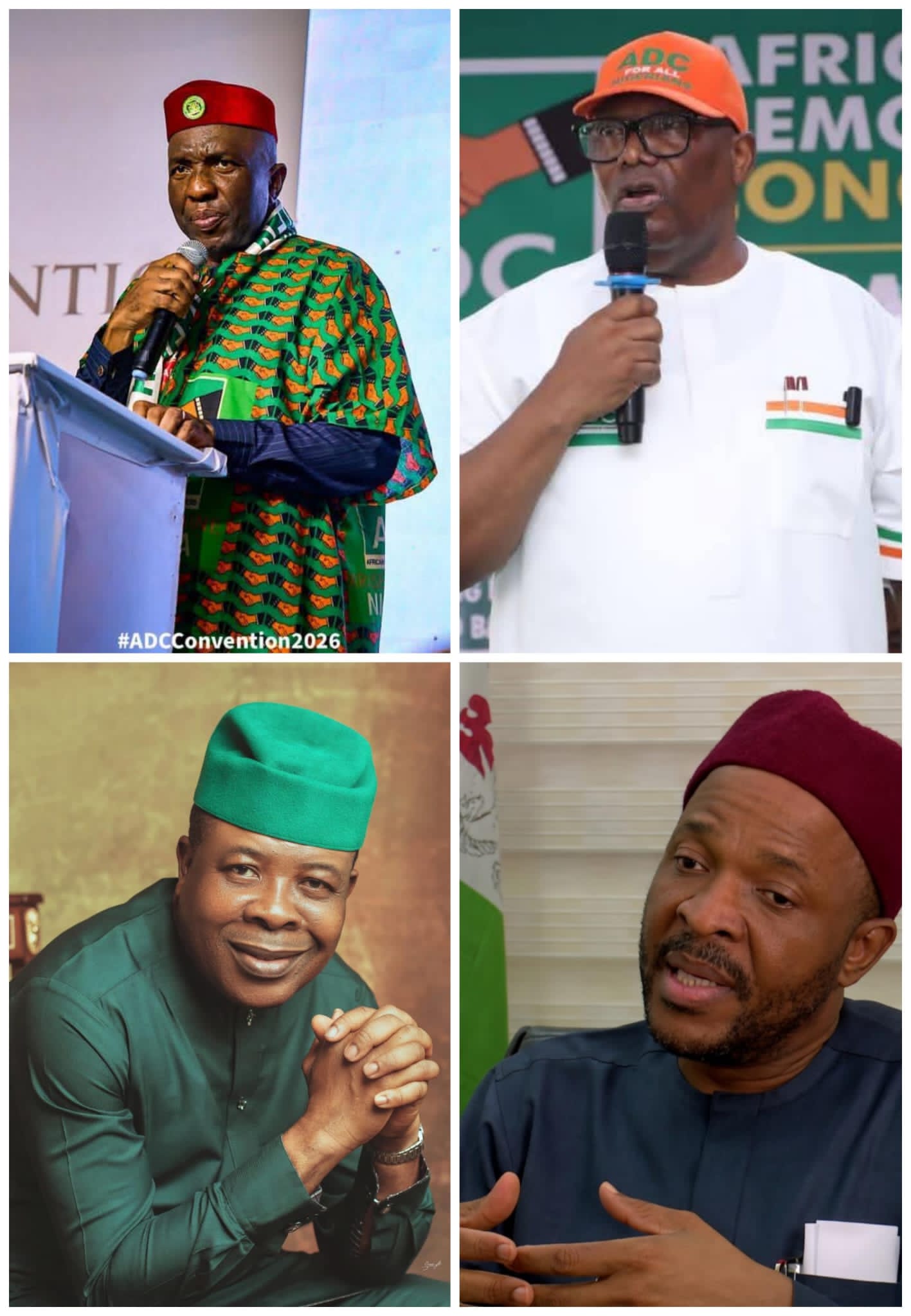
2027 PRESIDENTIAL POLL: Nwosu, Akobundu, Ihedioha, Nwajiuba, Ikeobasi- Political Juggernauts Who Will Lead ADC To Landslide Victory In The South East
2027 PRESIDENTIAL POLL: Nwosu, Akobundu, Ihedioha, Nwajiuba, Ikeobasi- Political Juggernauts Who Will Lead ADC To Landslide Victory In The South East
Barely eight months to the all-important Nigerian presidential election billed for Saturday, January 16, 2027, below are the who is who in the South East, the political heavyweights and juggernauts who will lead the main opposition African Democratic Congress (ADC), to a landslide victory across the five South East States of Abia, Anambra, Ebonyi, Enugu, and Imo States.
1. Chief Ralph Nwosu: He is the founding National Chairman of the main opposition ADC. Nwosu beat Mr. Peter Obi during the 2002 guber primaries of the All Progressives Grand Alliance (APGA), but was asked to step down for Obi, by the revered leader of the Igbo nation, Chief Chukwuemeka Odumegwu Ojukwu.
2. Senator Augustine Akobundu: He is Senator representing Abia Central Senatorial District in the Nigerian Senate, since 2023. He has just won the ADC primary ticket ahead of the 2027 Senatorial election billed for January 16, 2027.
3. H.E. Rt. Hon. Emeka Ihedioha: He was the former Deputy Speaker of the House of Representatives (2011-2015), and former Governor of Imo State (2019-2020). Ihedioha was illegitimately ousted from office by the Supreme Court led by CJN Kudirat Motonmori Olatokunbo Kekere-Ekun. The Supreme Court illegally smuggled APC candidate Hope Uzodimma who came a distant 4th to become Governor through the backdoor.
4. Chief Emeka Nwajiuba: He was the former Minister of State for Education (2019-2022). He contested the APC Presidential primaries in 2022. Nwajiuba speaks Hausa fluently and is very close to the Buhari/Katsina Northern political bloc.
5. Chief Ikeobasi Mokelu: He was the Minister of Information under the administration of General Sanni Abacha. He is a political juggernaut who is very close to Kashim Imam, Zango Daura, and even His Excellency Atiku Abubakar.
Among other eminent political juggernauts and heavyweights, the abovementioned are the men of timber and caliber who will lead the ADC charge across the South East Geo-Political Zone, going into the 2027 Presidential election.
Our team of eminent young political scientists and investigative journalists have done our backgrounders on these men, and can state unequivocally and emphatically that they got the verified capacity to lead the ADC to a landslide victory across the five South East States, next year.
It’s against this backdrop that we the leaders and members of Afa Igbo Efuna Worldwide call on His Excellency Atiku Abubakar- @atiku, and the Senator David Mark-led @ADCNig leadership to without any iota of doubt shop for a Vice Presidential candidate, among these qualified Igbo leaders from the South East Geo-Political Zone, on or before June 31, 2026.


- Countries in the Horn of Africa and Yemen recommit to ending variant poliovirus May 23, 2026
- Seychelles: President Visits Police and Fire Services in Final Stop on La Digue Tour May 23, 2026
- United Nations World Food Programme (WFP) scales up emergency Ebola response in eastern Democratic Republic of the Congo (DRC) to contain risk of regional crisis May 23, 2026
- Economic Community of West African States (ECOWAS) Inspection Team Visits ECOWAS Stabilisation Support Mission in Guinea Bissau May 23, 2026
- Member States advance regional coordination on Bundibugyo Ebola response May 23, 2026
- World Health Organization (WHO) Supports Zambia to Strengthen Access to Mental Health Medicines and Services May 23, 2026
- Brazzaville 2026 African Development Bank Group (AfDB) Annual Meetings to focus on mobilising Africa’s development financing at scale May 22, 2026
- Morocco: African Development Bank Group and OCP Group Sign €450 Million Partial Credit Guarantee to Accelerate Industrial Transition May 22, 2026
- South Sudan: Leaders of tomorrow take center-stage at lively debates on gender equality and democracy in Pibor May 22, 2026
- Seychelles and Bangladesh hold Constructive Talks on Cooperation and International Engagement May 22, 2026
- Countries in the Horn of Africa and Yemen recommit to ending variant poliovirus May 23, 2026
- Seychelles: President Visits Police and Fire Services in Final Stop on La Digue Tour May 23, 2026
- United Nations World Food Programme (WFP) scales up emergency Ebola response in eastern Democratic Republic of the Congo (DRC) to contain risk of regional crisis May 23, 2026
- Economic Community of West African States (ECOWAS) Inspection Team Visits ECOWAS Stabilisation Support Mission in Guinea Bissau May 23, 2026
- Member States advance regional coordination on Bundibugyo Ebola response May 23, 2026
- World Health Organization (WHO) Supports Zambia to Strengthen Access to Mental Health Medicines and Services May 23, 2026
- Brazzaville 2026 African Development Bank Group (AfDB) Annual Meetings to focus on mobilising Africa’s development financing at scale May 22, 2026
-

 news5 months ago
WHO REALLY OWNS MONIEPOINT? The $290 Million Deal That Sold Nigeria’s Top Fintech to Foreign Interests
-

 society3 weeks ago
SOCIAL MEDIA IS NOT A BATTLEFIELD COMMAND – WHY THE NIGERIAN ARMY’S ACTION AGAINST JUSTICE CRACK IS A NATIONAL SECURITY IMPERATIVE
-

 celebrity radar - gossips4 months ago
Dr. Chris Okafor Returns with Power and Fire of the Spirit -Mounts Grace Nation Altar with Fresh Anointing and Restoration Grace on February 1, 2026
-

 celebrity radar - gossips5 months ago
Prophet Kingsley Aitafo Releases 2026 Prophecy: ‘Nigeria Will Rise, but the World Must Prepare for Turbulence’