
society
Abubakar Kabir Bichi: Honouring Excellence and Service* By Philip Agbese

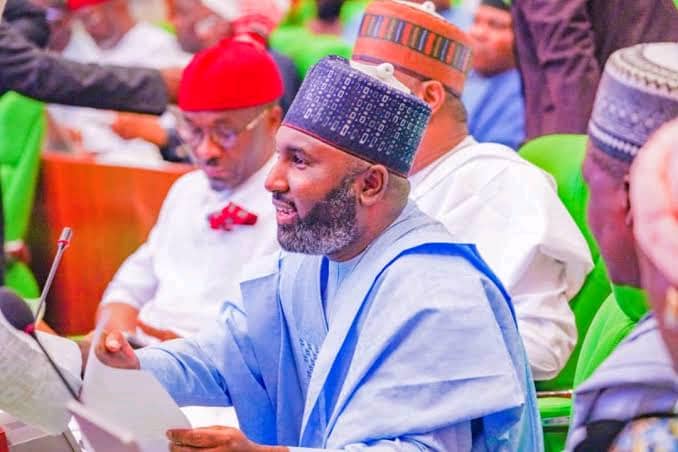
*Abubakar Kabir Bichi: Honouring Excellence and Service*
By Philip Agbese
The recent honorary doctorate conferred on Hon. Abubakar Kabir Bichi, alongside notable figures like First Lady H.E. Senator Remi Tinubu, Senate President Godswill Akpabio, and Senator Aliyu Wammako, is a well-deserved recognition of their exceptional contributions across various fields.

The conferment of this honour by the Federal University of Dutsin Ma (FUDMA) raises awareness of the positive impact that members of the 10th House of Representatives are making in their communities and the nation at large.
Conferring an honorary degree is a gesture of appreciation for an individual’s commitment to meaningful societal impact. In the case of Hon. Bichi, his recognition highlights his unwavering dedication to community service and academic advancement. According to the vice chancellor, Prof. Armaya’u Bichi, the lawmaker’s contributions include the construction of two faculties, two residence halls, and two lecture halls, reflecting his commitment to enhancing higher education. These tangible assets aim to improve the academic environment, providing future students with essential resources for success and fostering long-term excellence at FUDMA.
Hon. Bichi’s achievements extend beyond infrastructure; he has consistently advocated for, and financially supported students from Bichi Federal Constituency. Notably, he contributed N16,874,996.55 to cover tuition for over 1,000 students at a college in his constituency during the 2019/2020 academic year. In a nation where access to education can be hindered by financial constraints, Hon. Bichi’s interventions have opened doors for countless youth.
Recently, he provided scholarships to 21 constituents to study in Malaysia, where they will pursue an 18-month program in Engineering, Computing Science, and Technology at Universiti Teknologi Malaysia (UTM), one of the country’s top-ranked universities. Additionally, he sponsored 59 science and technical students from SS1 to SS3, providing them with educational kits, and recruited 150 temporary classroom teachers along with 50 Islamiyya teachers to teach in various schools across the local government area. He also approved salary increments for the first batch of 106 teachers. These actions underscore his dedication to the growth of his constituency and represent a significant transformation in Nigeria’s educational sector.
For Hon. Abubakar Bichi, building a thriving constituency goes beyond fulfilling his representative duties; it reflects a deep commitment to creating lasting change. In just about two years in office, his efforts have positively impacted countless lives, fostering growth and opportunities while enhancing the quality of life in his town and surrounding communities.
From tackling infrastructure challenges to addressing human capital concerns, he consistently makes significant strides toward progress. Through his investments in people and structures, he has established a leadership model that prioritises grassroots growth and community empowerment. Undoubtedly, he has also become an inspiration to his colleagues in the House of Representatives and to Nigeria’s youth seeking role models of positive change.
The honorary doctorate awarded to Hon. Bichi also serves as a testament to the collective achievements of the 10th House of Representatives. His recognition, alongside that of other esteemed individuals, highlights a shared commitment to national advancement. This sentiment was echoed by the recent conferment of the Grand Commander of the Order of the Niger (GCON)—one of Nigeria’s highest honours for those who have made significant contributions to the country—on Speaker Abbas Tajudeen by President Bola Ahmed Tinubu.
On October 1, President Tinubu, in his 64th Independence Anniversary broadcast, conferred the Commander of the Federal Republic (CFR) award on the Speaker and Deputy President of the Senate, leading to controversies regarding the Speaker’s eligibility for higher honours. Hon. Bichi’s persuasive efforts and the united stance of the 10th House members ultimately resulted in President Tinubu granting the GCON to Speaker Abbas, correcting what had been a historical oversight.
Recognised for fostering success through collaboration, the support and encouragement he received from his fellow members exemplify a collective acknowledgment that transcends individual accomplishments, embodying the spirit of the House as a whole. This event also underscores the unity and resolve within the House of Representatives, reinforcing its role as a pillar of support for the nation and its leaders while shaping Nigeria’s democratic future.
Alongside Hon. Bichi, First Lady Remi Tinubu, Senate President Godswill Akpabio, and Senator Aliyu Wammako also received accolades for their exemplary service. H.E. Senator Remi Tinubu facilitated the safe release of kidnapped female students from FUDMA, demonstrating her commitment to security and social justice, leading the institution to name a 36-bed female hostel in her honour. Senate President Akpabio received an honorary doctorate in Political Science for his leadership and support of FUDMA’s expansion, while Senator Wammako was recognised for his efforts to enhance security in an area plagued by insecurity.
These honours serve as a reminder to Nigerians of the immense potential of their leaders to effect positive change in society. By recognising these distinguished individuals, FUDMA has set a precedent for honouring leaders who go above and beyond their official duties to create lasting impact, encouraging others that every effort to improve society will be acknowledged in due time.
Hon. Abubakar Kabir Bichi exemplifies transformational leadership through his work in community development, education, and human empowerment. His vision for his constituency aligns with the aspirations of a renewed Nigeria, where leaders are not only expected to fulfill their mandates, but also actively advocate for and implement solutions to community challenges.
For Hon. Bichi, education is not merely a sector but the foundation for societal development. His initiatives—funding scholarships, building educational facilities, and championing accessible quality education—demonstrate a profound understanding of the transformative power of education, especially in regions where financial barriers hinder access.
The conferment of an honorary doctorate upon Hon. Abubakar Bichi is therefore, a fitting tribute to a man who has dedicated his career to improving the lives of those around him. This honour, alongside President Tinubu’s GCON award to Speaker Abbas, recognises leaders who serve with integrity, commitment, and vision. It underscores that true leadership requires not only rhetoric but tangible, meaningful contributions to society.
Hon. Abubakar Bichi has truly exemplified what it means to serve with purpose, prioritise self-development over self-aggrandisement, and teach others how to use their positions of power and influence for the public good. His honorary doctorate represents more than just personal achievement; it embodies the journey toward a Nigeria where leaders are valued for their dedication, celebrated for their contributions, and recognised for uplifting the oppressed.
*_Philip Agbese, MHR is the Deputy Spokesman of the 10th House of Representatives, writing from Abuja._*




society
GEN CHRISTOPHER GWABIN MUSA SUPPORT INITIATIVE EXTENDS WARM BIRTHDAY FELICITATIONS TO PRESIDENT TINUBU ON 74TH BIRTHDAY
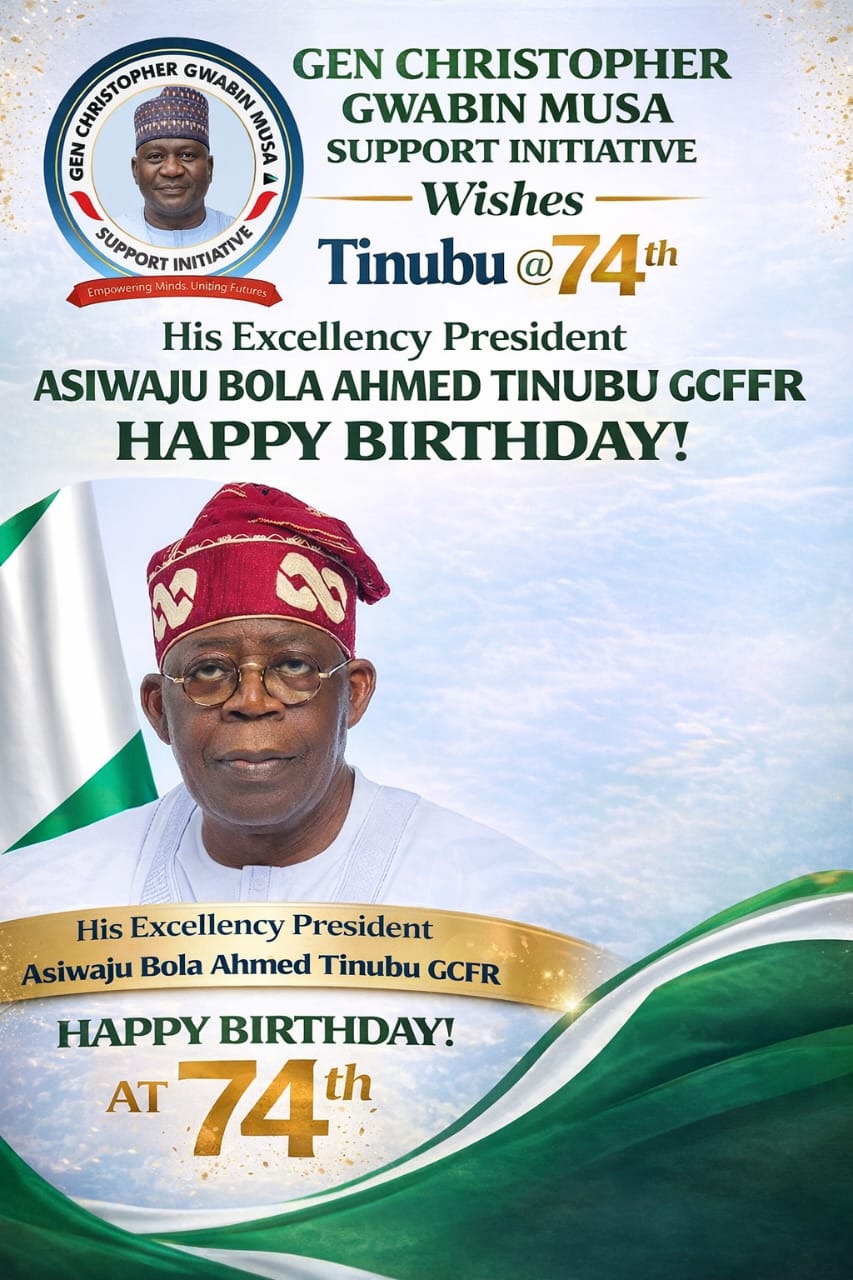
GEN CHRISTOPHER GWABIN MUSA SUPPORT INITIATIVE EXTENDS WARM BIRTHDAY FELICITATIONS TO PRESIDENT TINUBU ON 74TH BIRTHDAY
The Gen Christopher Gwabin Musa Support Initiative has extended heartfelt congratulations to His Excellency President Asiwaju Bola Ahmed Tinubu, GCFR, on the occasion of his 74th birthday.
In a statement released to the press, the Initiative conveyed warm wishes for the President’s personal well-being and for his continued leadership of the nation. The statement, signed by the Convener, Ibrahim Dahiru Danfulani, Sadaukin Garkuwan Keffi/Betara Biu, expressed hope that the coming year would bring the President “renewed strength and more wisdom in guiding the nation.”
The statement further noted that the Grand Patron of the Initiative, His Excellency Gen Christopher Gwabin Musa, OFR, Minister of Defence of the Federal Republic of Nigeria, joined in celebrating the milestone. It added, “Wishing Your Excellency continued good health, vitality, and determination as you lead the country towards greater unity and progress.”
The message underscores support for President Tinubu’s administration and its national objectives, marking the birthday as an occasion to reaffirm commitment to the nation’s unity and advancement under his stewardship.
society
Dominion City to Host Global Camp Meeting, “2 Nights of Glory” 2026 in Lagos, Enugu …Calls for Moral Renewal
*Dominion City to Host Global Camp Meeting, “2 Nights of Glory” 2026 in Lagos, Enugu
…Calls for Moral Renewal
Lagos – Dominion City has announced plans to host its annual Global Camp Meeting alongside a special “2 Nights of Glory” gathering in April 2026, with events scheduled to be held simultaneously in Lagos and Enugu.
The week-long programme is expected to draw tens of thousands of participants onsite and millions of virtual attendees from across the globe.
The Global Camp Meeting will run from Wednesday, April 1 to Monday, April 6, featuring daily sessions at 8:00 a.m. and 5:00 p.m. The “2 Nights of Glory” is slated for Friday, April 3 and Saturday, April 4 at the Golden Heart Place, Km 22 Lekki-Epe Expressway, beside Lagos Business School, Ajah, Lagos.
Organised by Dominion City, a global church focused on raising transformational leaders, the conference will centre on revival, spiritual renewal, and practical teachings. This year’s theme, “Redigging the Wells of Our Fathers,” underscores a call to return to foundational values and principles.
Speaking ahead of the event, Nobbert Onaga, President, Golden Heart Foundation and Senior Pastor, DC Lagos & Europe, emphasised the need for moral reawakening as a pathway to national transformation. He described the Church as “the pillar and foundation of truth,” noting that the conference aims to confront moral decline and restore core values within society.
“We are going back to foundational truths that established the Church. These truths will help repair societal damage and reposition the Church as a source of hope and light,” Onaga said.
Also speaking, Shola Olapade, Senior Pastor of Dominion City Headquarters, highlighted the Church’s role in addressing ethical and cultural challenges, particularly among young people. He added that the programme would go beyond spiritual teachings to include sessions on artificial intelligence, innovation, business, media, arts, and career development.
“We are equipping people not just spiritually, but with relevant 21st-century skills to thrive in today’s world,” Olapade noted.
The conference will feature teachings and ministrations from a lineup of international ministers, including Dr. David Ogbueli, Dr. Charles Ndifon, Andres Bisonni, Pastor Randy Mitchell, Apostle Ikechukwu Peter Nnajiofor, Dr. Ferdinand Nweke, Apostle Ben Hanyani Ndobe, Evangelist Dan Scott, and Dr. Chiefo Ejiofobiri.
Music ministrations will also be led by notable gospel artists such as Grace Idowu, Rhema Onuoha, Once More Six, David Nkennor, Anthony Kani, and GUC.
Organisers disclosed that over 30,000 participants are expected to attend in person, with free transportation provided from designated locations across Lagos to ease access. In addition, free medical services will be offered daily, building on previous outreaches that benefited over 1,700 people.
To ensure safety and order, more than 200 traffic marshals will be deployed in collaboration with relevant authorities.
Beyond its spiritual impact, organisers project that the event will stimulate local economic activity across hospitality, transportation, and retail sectors.
The Global Camp Meeting remains a key platform for spiritual impartation, leadership development, and societal transformation, aligning with Dominion City’s mission to equip believers to influence their communities positively.
Participation is open to the public, with registration available online for both physical and virtual attendance. //END.//
*PHOTO CAPTIONS:*
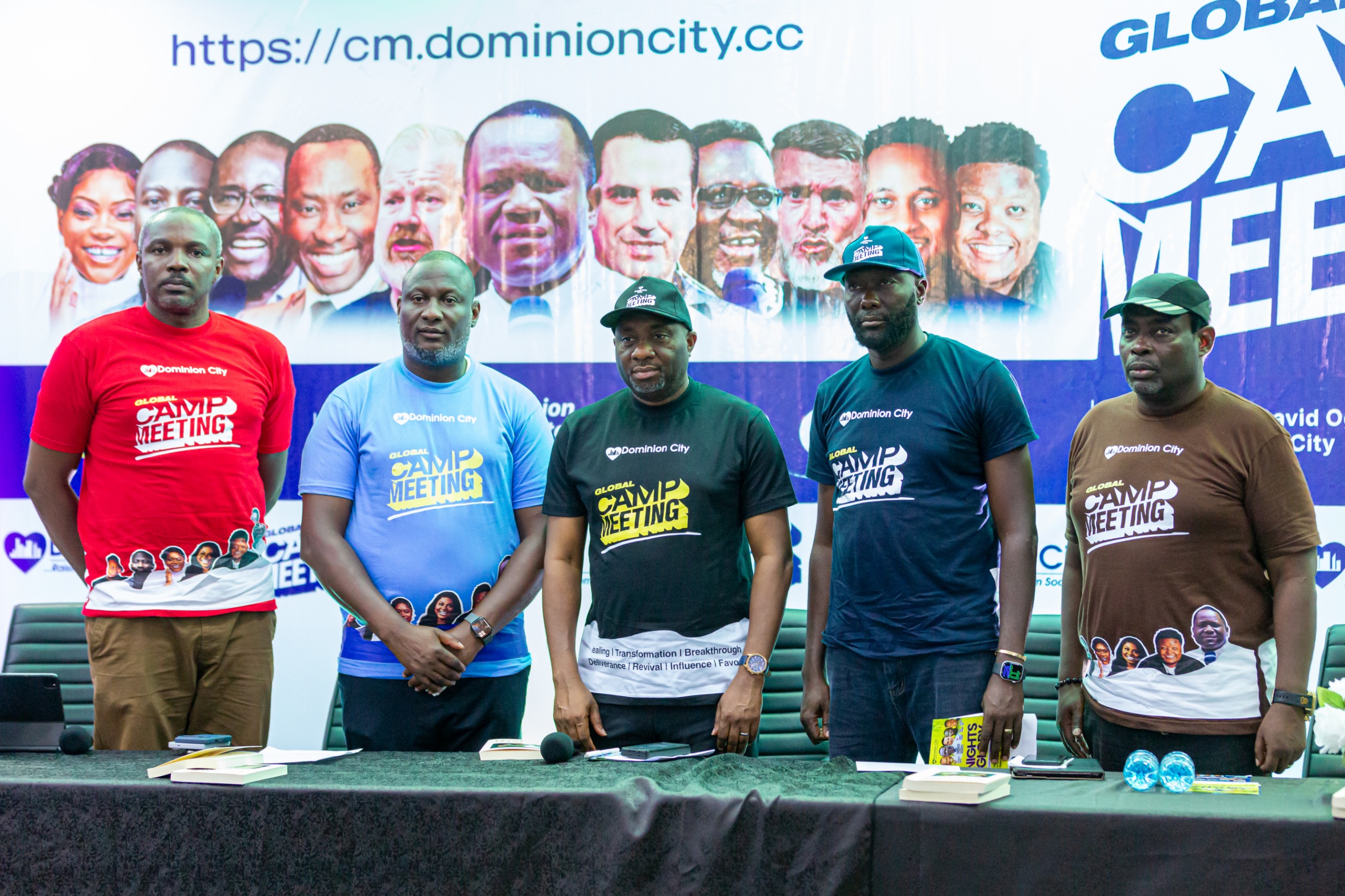
L-R: Dr. Godwin Efobi, Head, Medical Team, Dominion City Headquarters (DCHQ); Pastor Shola Olapade, Senior Pastor, DCHQ; Pastor Nobbert Onaga, President, Golden Heart Foundation and Senior Pastor, DC Lagos & Europe; Pastor Chuks Anochie, Head of Security and Traffic Control, Dominion City Headquarters (DCHQ), Camp Meeting 2026; Pastor Josh Tim Vaduchi, Head of Event & Programmes, DCHQ, during the press briefing of the forthcoming Global Camp Meeting, held the weekend of 2026 at the Dominion City Headquarters (DCHQ), Lagos.
L-R: Pastor Chuks Anochie, Head of Security and Traffic Control, Dominion City Headquarters (DCHQ), Camp Meeting 2026; Pastor Shola Olapade, Senior Pastor, DCHQ; Pastor Nobbert Onaga, President, Golden Heart Foundation and Senior Pastor, DC Lagos & Europe; Dr. Godwin Efobi, Head, Medical Team, DCHQ; and Pastor Josh Tim Vaduchi, Head of Event & Programmes, during the press briefing of the forthcoming Global Camp Meeting, held over the weekend in 2026 at the Dominion City Headquarters (DCHQ), Lagos.
society
Oloworo of Oworosoki Kingdom, Oba Babatunde Saliu, Felicitates President Bola Ahmed Tinubu at 74
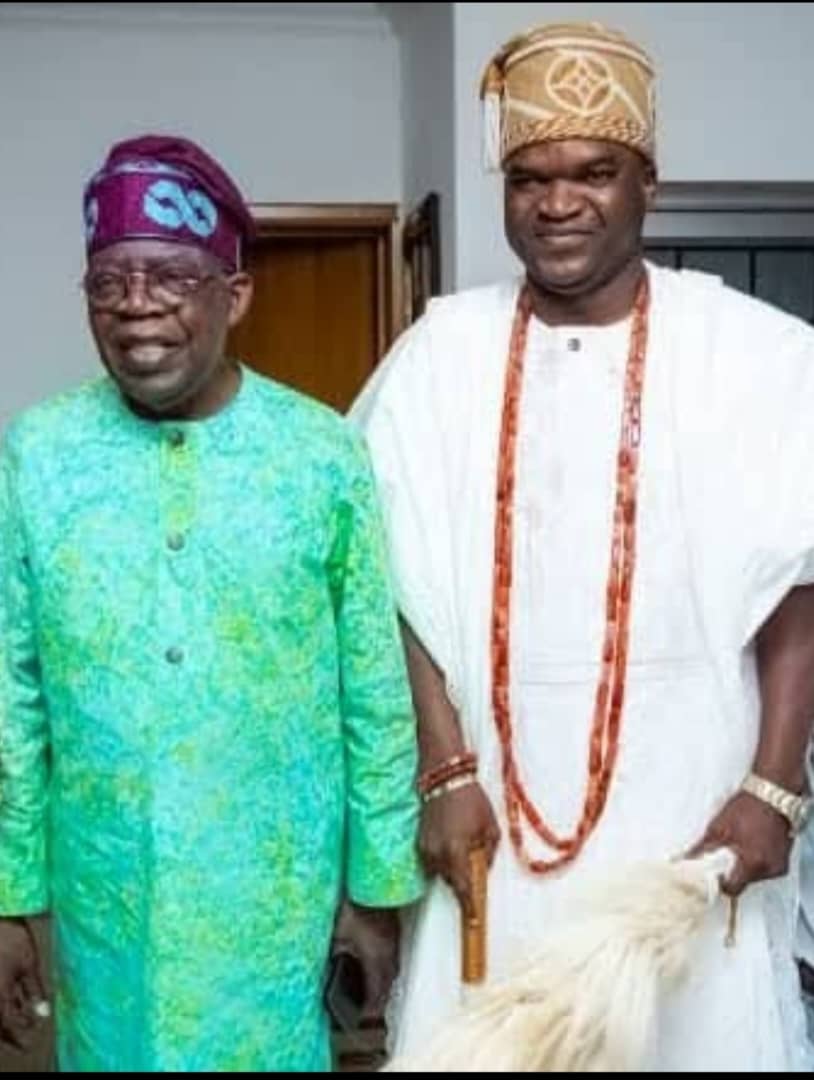
Oloworo of Oworosoki Kingdom, Oba Babatunde Saliu, Felicitates President Bola Ahmed Tinubu at 74
By Adeyemi Obadimu
The Oloworo of Oworosoki Kingdom, His Royal Majesty, Oba Babatunde Saliu, Elebo II, has extended warm felicitations to the President of the Federal Republic of Nigeria, Bola Ahmed Tinubu, GCFR, on the occasion of his 74th birthday.
In a goodwill message issued from his palace, the revered monarch described President Tinubu as a visionary statesman, a courageous reformer, and an indefatigable democrat whose lifelong commitment to nation-building continues to shape Nigeria’s progress.
Oba Babatunde Saliu praised the President’s unwavering dedication to public service, noting that his leadership has ushered in a new phase of economic reform, infrastructural renewal, and institutional strengthening across the country.
According to the monarch, the President’s Renewed Hope Agenda has begun yielding tangible relief and renewed confidence among citizens, reflecting his determination to reposition Nigeria for sustainable growth and prosperity.
“President Bola Ahmed Tinubu has demonstrated exceptional resilience, strategic foresight, and a deep love for Nigeria. His administration’s bold initiatives are laying the foundation for long-term national transformation. At 74, he remains steadfast in his resolve to build a stronger, more united, and economically vibrant nation,” the monarch stated.
Oba Babatunde further commended the President’s legacy of leadership, describing him as a bridge-builder, a mentor to many leaders, and a symbol of democratic stability. He acknowledged the President’s decades of sacrifice and contribution to the advancement of democracy in Nigeria.
On behalf of the Oworosoki Kingdom, the royal father prayed for divine wisdom, sound health, and renewed strength for the President to successfully complete the noble reforms and developmental strides he has embarked upon for the benefit of all Nigerians.
“As Your Excellency marks 74 remarkable years, we pray that Almighty God grants you long life, continued wisdom, and the fortitude to steer our great nation toward greater heights. May your days be filled with strength and grace as you continue to serve Nigeria with distinction,” Oba Babatunde Saliu added.
President Bola Ahmed Tinubu clocks 74 as a leader whose enduring influence, bold reforms, and steadfast patriotism remain central to Nigeria’s ongoing journey of national renewal.


-

 society6 months ago
Religion: Africa’s Oldest Weapon of Enslavement and the Forgotten Truth
-

 news4 months ago
WHO REALLY OWNS MONIEPOINT? The $290 Million Deal That Sold Nigeria’s Top Fintech to Foreign Interests
-

 society6 months ago
“You Are Never Without Help” – Pastor Gebhardt Berndt Inspires Hope Through Empower Church (Video)
-

 celebrity radar - gossips2 months ago
Dr. Chris Okafor Returns with Power and Fire of the Spirit -Mounts Grace Nation Altar with Fresh Anointing and Restoration Grace on February 1, 2026