
society
Abuja Under Siege: When the Capital’s Promise Becomes a Hunting Ground. By George Omagbemi Sylvester | Published by SaharaWeeklyNG.com


Abuja Under Siege: When the Capital’s Promise Becomes a Hunting Ground.
By George Omagbemi Sylvester | Published by SaharaWeeklyNG.com
Power, pomp and paranoia – Nigeria’s seat of government is being hollowed out by crime.
Abuja was designed to be Nigeria’s safest city, a meticulously planned capital where power, diplomacy and order converge. It was built to stand apart from the chaos of Lagos and the volatility of other Nigerian regions. Yet today, this “CITY of PEACE” is steadily transforming into a hunting ground for kidnappers, robbers and violent opportunists who stalk its highways and suburbs with audacious confidence.

Between January and December 2024, the Federal Capital Territory (FCT) Police Command recorded over 1,400 reported crimes, including 268 armed robberies, 104 kidnappings and hundreds of other violent incidents. While officials claim there has been a “15% DECLINE in CRIME” compared to 2023, most residents feel the opposite, that the fear on Abuja’s streets is not receding but mutating into something more menacing.
“When citizens no longer feel safe in the capital, it is not just a security failure – it is a failure of governance itself.”
~ Prof. Etannibi Alemika, criminologist, University of Jos
The irony is striking: the city that houses the Presidential Villa, the National Assembly and the Supreme Court has itself become a theater of lawlessness. From the affluent districts of Maitama and Asokoro to the densely populated suburbs of Kubwa, Gwagwalada and Kuje, insecurity now transcends class, geography and status.
The Rise of “ONE-CHANCE” Criminality.
Among Abuja’s most terrifying trends is the surge in “one-chance” robberies, a crime where unsuspecting commuters board vehicles that appear legitimate, only to be assaulted, robbed or even abducted en route. These syndicates operate with precision, exploiting rush-hour desperation and the gaps in urban surveillance.

“Abuja is no longer the sanitized capital it once was,” says security analyst Kabir Adamu of Beacon Consulting. “The city’s rapid expansion has outpaced its policing capacity. Criminals have learned to adapt faster than our systems can respond.”
This adaptation is visible everywhere. Satellite towns such as Lugbe, Karu, Nyanya and Dei-Dei are hotspots, where kidnappings often go unreported due to fear or lack of trust in the police. Even near heavily guarded areas, brazen robberies have occurred, challenging the illusion that power offers protection.
The Politics of Fear and Failure.
The insecurity in Abuja is not an isolated outbreak; it is a symptom of systemic decay. The capital’s policing architecture has become reactive rather than proactive, a cycle of deploying special units after tragedies rather than preventing them.

Following a wave of kidnappings early this year, the FCT Administration announced the creation of new tactical teams. Yet within weeks, another series of abductions hit the Bwari axis and Gwagwalada. The pattern is painfully clear: TEMPORARY MEASURES THAT COLLAPSE ONCE MEDIA ATTENTION FADES.
“The crisis of Abuja is not a lack of guns; it is a lack of governance.”
~ George O. Sylvester
The FCT’s unique status as a federal territory has also complicated accountability. Local area councils lack the autonomy and resources to implement long-term crime-prevention strategies. Meanwhile, federal agencies overlap and sometimes compete for jurisdiction, creating a bureaucratic fog that criminals exploit.
Economic Desperation: The Hidden Driver.
Crime does not rise in a vacuum. Abuja’s glittering skyline hides deep social inequality. Unemployment among youths in the FCT stood at over 33% in 2024, according to the National Bureau of Statistics. The rapid urban influx has outstripped housing, education and employment infrastructure, leaving thousands of young men idle, angry and susceptible to criminal networks.
Dr. Jide Ojo, a public affairs analyst, warns that “until the socioeconomic foundations are addressed, the police will always be chasing shadows.” In his view, sustainable security cannot exist where basic livelihoods are collapsing.
A City Losing Its Moral Centre.
Abuja’s insecurity has eroded not just safety but confidence in state institutions. When diplomats require armed convoys to attend official events, when residents crowd online forums to warn each other of unsafe roads and when families begin setting curfews for fear of abduction, the symbolism of the capital as the “SEAT of ORDER” collapses.
The effects ripple through the economy: fewer investors, reduced nightlife and an unquantifiable psychological cost. The Abuja Chamber of Commerce and Industry (ACCI) estimates that insecurity has contributed to a 20% drop in small business activity across FCT suburbs in the past year.

“Fear is bad for business and right now, Abuja’s economy is being taxed by terror.”
~ Muda Yusuf, Economist & CEO, Centre for the Promotion of Private Enterprise
What Must Be Done.
Intelligence-Led Policing:
Abuja’s security apparatus must move beyond random patrols. A data-driven approach (using surveillance technology, integrated command centres and neighborhood intelligence networks) is crucial.
Community Partnership:
Community policing should be institutionalised. Local vigilance groups can be formalised and trained to complement the police under strict oversight.
Accountability and Reform:
Corruption within security ranks must be confronted head-on. A 2024 CLEEN Foundation report found that over 40% of Nigerians distrust police response due to alleged collusion and bribery. Without reform, no amount of hardware will help.
Socioeconomic Interventions:
Government must invest in urban employment schemes, vocational training, and affordable housing to address root causes. Crime feeds on desperation; hope is its antidote.
Transparency:
Security briefings should become regular, honest, and data-backed — not propaganda exercises. Citizens deserve clarity, not spin.
A Capital at a Crossroads.
Every great city mirrors its country’s soul. Abuja’s current descent reflects Nigeria’s broader struggle between governance and collapse, promise and paralysis. If the capital (the heart of political power) cannot guarantee safety, what message does that send to Kano, Port Harcourt or Jos?
As the late Chinua Achebe warned in The Trouble with Nigeria, “The trouble with Nigeria is simply and squarely a failure of leadership.” Today, that failure echoes across Abuja’s darkened streets and deserted highways.
If this crisis is not reversed, the city will not just lose its peace, it will lose its purpose. A nation that cannot secure its capital cannot claim sovereignty. Abuja must rise again, not by rhetoric, but by reform and relentless resolve.




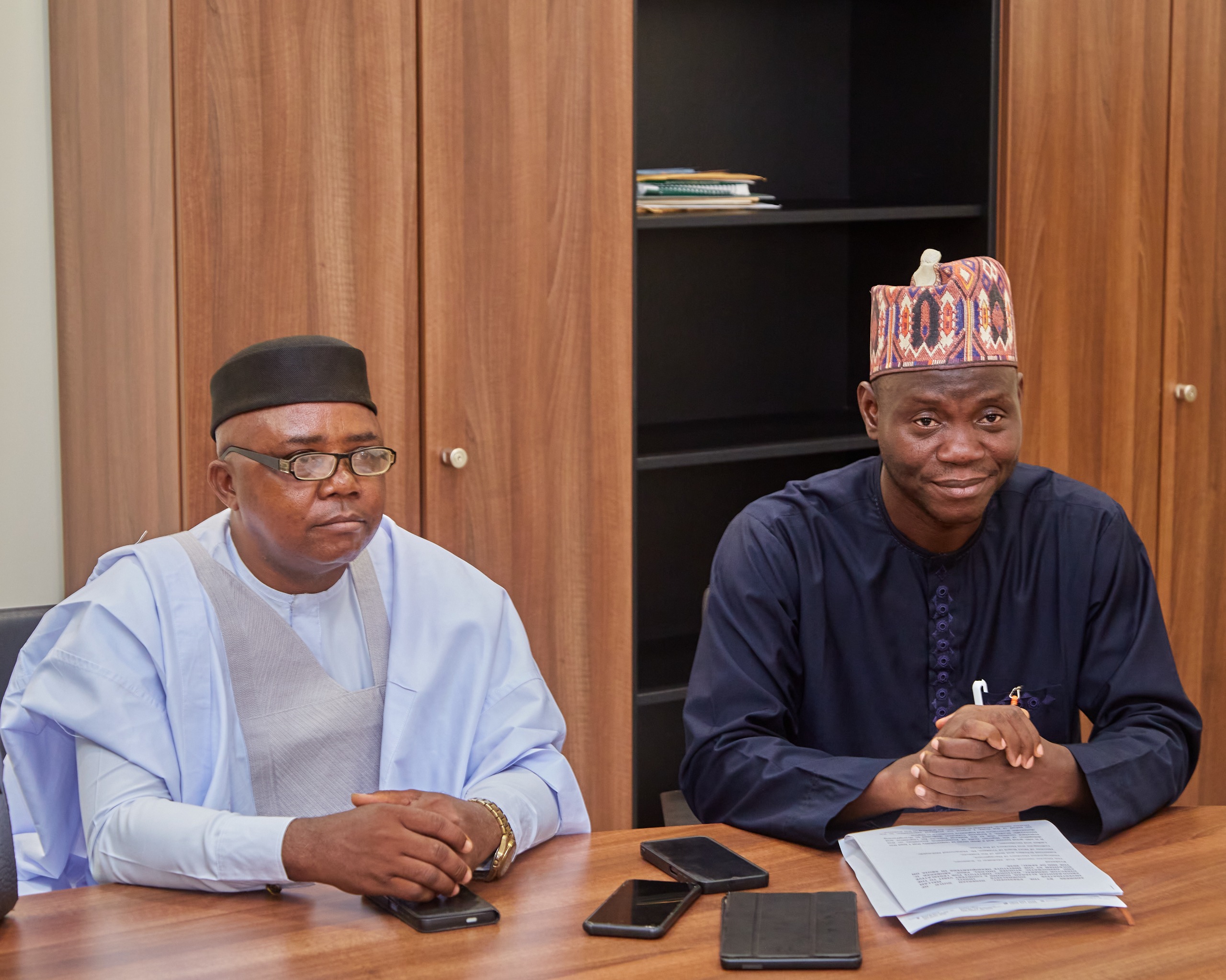
Democratic Accountability in Focus as NGIJ Courts NILDS for Strategic Collaboration
The Nigerian Guild of Investigative Journalists (NGIJ) has sought a strategic partnership with the National Institute for Legislative and Democratic Studies (NILDS) to enhance legislative reporting, strengthen democratic accountability, and promote evidence-based journalism in Nigeria.
The proposal was made during a courtesy visit by the NGIJ delegation, led by its President, Mallam Abdulrahman Aliagan, to the Institute’s headquarters in Abuja.
The Director-General of NILDS, Professor Abubakar O. Suleiman, was represented at the meeting by the Director of Legal Services, Professor Ibrahim Danwanka. Also in attendance were the Special Adviser to the DG on Media, Mr. Muhammad Abdulkadir and the Director of Information, Mr. Emmanuel Atakpo.
Speaking during the visit, Aliagan described the engagement as a strategic step toward building synergy between investigative journalism and legislative research institutions. He commended the leadership of Professor Suleiman for transforming NILDS into a leading centre for legislative studies and democratic governance in Africa.
“This visit is not merely ceremonial—it is deeply strategic. NGIJ and NILDS share a common vision of strengthening democracy, promoting accountability, and deepening good governance in Nigeria,” Aliagan said.
He explained that while NILDS advances democratic governance through research and legislative capacity development, NGIJ complements these efforts through investigative journalism and public-interest reporting.
Aliagan highlighted the Guild’s activities across the country, particularly its Governance Assessment Visits conducted in Kogi, Bayelsa, Ondo, Kwara, Osun, and Kaduna states, noting that such engagements have improved public discourse and strengthened accountability at the subnational level.
“Our mission is to promote ethical investigative journalism, strengthen transparency in governance, and build capacity for data-driven reporting that connects citizens with democratic institutions,” he said.
The NGIJ President also proposed collaboration in areas such as training on legislative processes, joint research and publications, policy dialogues, data sharing, and fellowship programmes for journalists and researchers.
He further informed the Institute of the Guild’s plan to host the Dele Giwa Memorial Annual Lecture on Investigative Journalism in June as part of activities marking Democracy Day. The Guild requested that Professor Suleiman serve as keynote speaker and sought approval to use NILDS’ auditorium for the event.
“We are confident that your presence and intellectual contribution will greatly enrich the discourse and lend national significance to the event,” Aliagan added.
Responding on behalf of the Director-General, Professor Danwanka welcomed the proposal and described the initiative as timely and beneficial to national development. He commended NGIJ for its commitment to accountability journalism and its recognition of the Institute’s growing impact.
“If there is any institution journalists need to collaborate with, it is NILDS.
Legislative reporting requires specialised knowledge that many journalists currently lack,” Danwanka said.
He explained that NILDS was established by an Act of Parliament in 2011 and later expanded in 2017 to include broader responsibilities covering democratic institutions and civil society organisations.
According to him, the Institute has grown significantly under Professor Suleiman’s leadership, expanding from four departments to eleven, with increased staff strength and wider national, regional, and continental visibility.
Danwanka noted that NILDS currently provides research and capacity-building support not only to Nigeria’s legislature but also to parliaments across West Africa and other parts of the continent, including Kenya, Zimbabwe, Malawi, Ghana, and Togo.
“Legislature is a specialised field. Even experts from other disciplines must acquire knowledge of its processes to report it accurately. That is where NILDS comes in,” he said.
He assured the NGIJ delegation that all requests presented during the visit, including collaboration proposals, the use of the Institute’s facilities, and the invitation to the DG would be communicated for necessary action.
Danwanka also acknowledged NGIJ’s commendation of the appointment of Mr. Abdulkadir as Special Adviser on Media, describing the recognition as thoughtful and well-deserved.
The meeting ended with both parties expressing optimism about establishing a formal framework for collaboration, with a shared commitment to strengthening democratic institutions and improving governance through knowledge-driven journalism.
“This engagement marks the beginning of a sustainable partnership that will advance legislative excellence and investigative journalism in Nigeria,” Danwanka said.


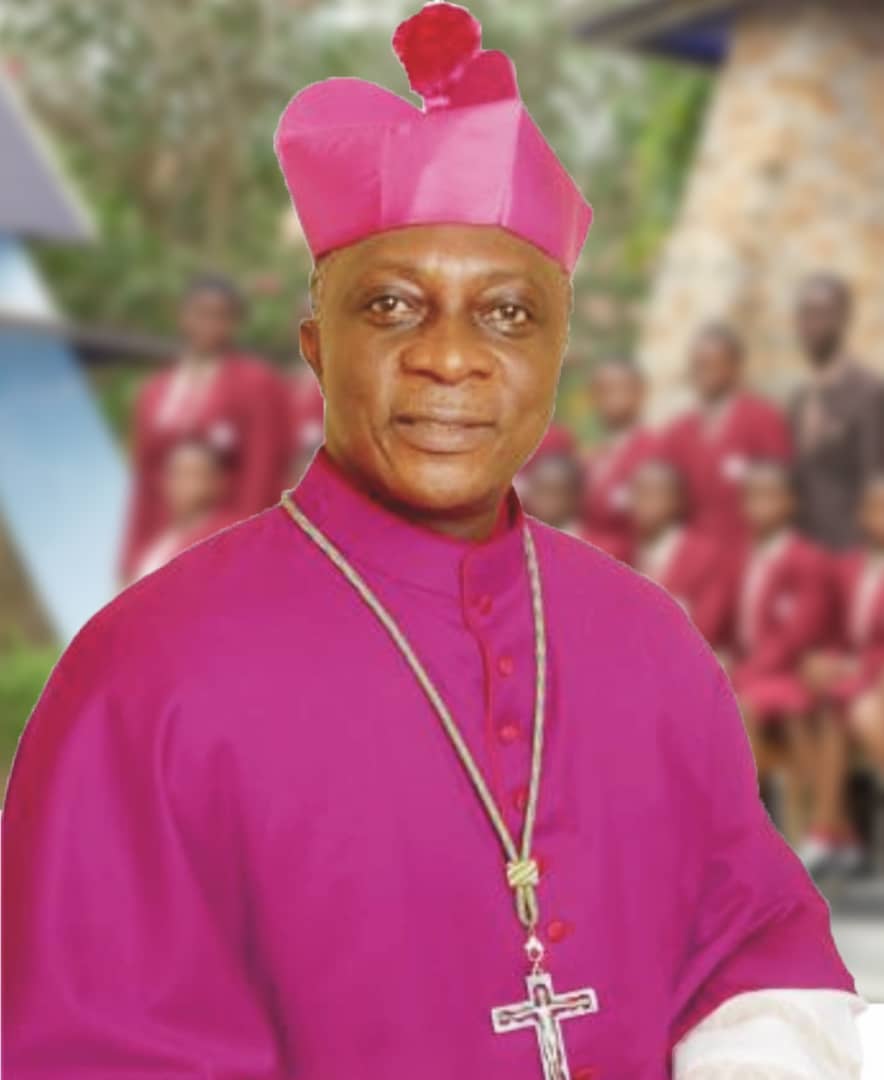
GOVERNMENT MUST TACKLE NATION’S PRESSING CHALLENGES — BISHOP MARTINS URGES AT CHRISM MASS
By Ifeoma Ikem
The Holy Cross Cathedral, Lagos, was filled with joy, reverence, and renewed commitment on Holy Thursday as Catholic faithful across the metropolis gathered for the annual Chrism Mass — a solemn celebration marking the institution of the priesthood, the Holy Eucharist, and the blessing of sacred oils used throughout the liturgical year.

During the ceremony, the Catholic Archbishop of Lagos, Most Rev. Adewale Martins, described the Chrism Mass as a profound moment in the life of the Church.
He noted that it offers priests an opportunity to renew their vows and reflect on the centrality of the Eucharist, which he emphasized remains the heartbeat of the Catholic faith.
Addressing national issues, Bishop Martins acknowledged the government’s ongoing efforts to tackle Nigeria’s current challenges.
However, he stressed the need for more decisive and accelerated interventions, particularly in securing lives and easing the economic burdens confronting citizens.
He congratulated priests on their feast day and reflected on the rising influence of digital evangelization. While recognizing that many people now “inhabit online spaces,” he warned clergymen to handle social media with caution, discipline, and fidelity to Church teachings. According to him, digital influence must never overshadow spiritual integrity.
“The oils blessed today are not simply symbols; they speak of being set apart by a mark not earned, not crafted, but given,” he said. “As we renew our promises, we do not recreate ordination; we awaken memory. We were not ordained to build profiles but to bear Christ.”
He further noted that the digital world has become a place where people “gather, argue, celebrate, confess, misunderstand, and sometimes encounter truth.” For this reason, he said the Church recognizes the need to take the Gospel into that space without compromising its authenticity.
In his homily, Rev. Fr. Paul Akin-Otiko, Chaplain of St. Thomas More Catholic Chaplaincy, University of Lagos, emphasized the enduring significance of the Chrism Mass as an ancient tradition where sacred oils are consecrated.
He urged priests to pray fervently for the sick using the blessed oils, reminding them that true healing comes from God.
Fr. Akin-Otiko encouraged clergy to remain selfless, warning them never to turn the Church into a source of personal gain.
He stressed that their primary duty is the salvation of souls and the welfare of the people entrusted to them.
Monsignor John Aniagwu took a moment to appreciate Anthony Cardinal Olubunmi Okogie for his fatherly guidance and exemplary leadership. He prayed for God’s continued blessings, asking that all present be granted good health to witness many more Chrism Masses.
The highlight of the ceremony was the renewal of vows by hundreds of priests, who reaffirmed their commitment to lives of dedication, chastity, and obedience to the Church and their bishop — an act that drew heartfelt applause from the congregation.
The celebration concluded with songs of thanksgiving, joy, and renewed devotion.
society
Liberian Leaders, Citizens Bear Witness as Apostle Suleman Hosts Two-Day Power-Packed Crusade
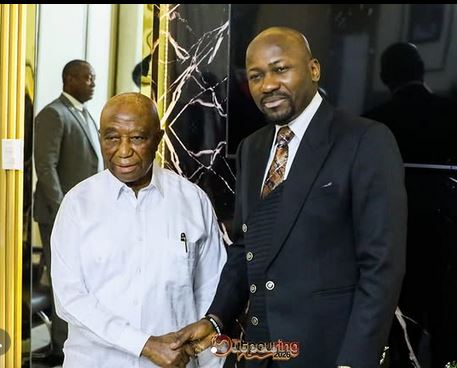
Liberian Leaders, Citizens Bear Witness as Apostle Suleman Hosts Two-Day Power-Packed Crusade
It was testimonies galore on Tuesday, March 31, the first day of the famous servant of God and founder of the Omega Fire Ministries (OFM) worldwide, Apostle Johnson Suleman’s power-packed two-day crusade. The event documented impactful moments with the Gospel and miracles, emphasizing the power of faith and the tangible confirmation of God’s Word through signs and wonders. It was equally an atmosphere of miraculous healing, restoration of lives, and the strengthening of faith.
At the crusade, which was held at the SKD Sports Stadium in Paynesville City, and themed, “Liberia Outpouring Crusade” witnessed testimonies of impact and miracles with participants experiencing instant healing of various kinds of challenges.
Apostle Suleman’s first port of call was Paynesville, the office of Liberian government’s president, Mr. Joseph Nyuma Boakai, who received him in an audience with his junior ministers. Apostle Suleman, who also met with the vice-president, Mr. Jeremiah Kpan Koung, was welcomed by the Liberian leader’s office as part of the president’s ongoing engagements with religious leaders aimed at fostering spiritual support for national development.
The president expressed profound appreciation to Apostle Suleman for the visit and continued prayers and intercessions by men and women of God on behalf of Liberia, emphasizing his firm belief that sustained spiritual guidance and prayer remain vital to the transformation and progress of the nation.
During the visit, Apostle Suleman offered prayers for President Boakai, his cabinet and the Liberian nation, invoking divine alignment, wisdom, and insight in Liberia’s path toward growth and stability. He prayed that the Almighty God would position Liberia for relevance and fulfillment of its national destiny.
Apostle Johnson Suleman, an evangelist who knows no bounds of where preaching the gospel comes to a stop, visited Liberia prepared with the message, compelling power of the Gospel and the work of the Holy Spirit, and bringing people to a point of decision where they surrendered their lives to Christ.
Aside from being prophetic and timely, OFM sources disclosed that the servant of God’s visit underscores the importance of faith-based partnerships in supporting governance and national renewal efforts.


-

 society7 months ago
Religion: Africa’s Oldest Weapon of Enslavement and the Forgotten Truth
-

 news4 months ago
WHO REALLY OWNS MONIEPOINT? The $290 Million Deal That Sold Nigeria’s Top Fintech to Foreign Interests
-

 society6 months ago
“You Are Never Without Help” – Pastor Gebhardt Berndt Inspires Hope Through Empower Church (Video)
-

 celebrity radar - gossips2 months ago
Dr. Chris Okafor Returns with Power and Fire of the Spirit -Mounts Grace Nation Altar with Fresh Anointing and Restoration Grace on February 1, 2026