
Business
Access Holdings: Imprints of a Thriving Banking Powerhouse


Access Holdings: Imprints of a Thriving Banking Powerhouse, By Bolaji Israel
Access Holdings has continued to evolve and reinforce its corporate stature as a formidable force in Nigeria’s financial sector, demonstrating capacity for relentless growth, resilience and ambition through strategic expansion and innovative approaches. The entity owes its significant bulk to the Access Bank Group, supported by other allied services firms.
Also known as Access Corporation, the group has grown over the last 35 years to emerge as Nigeria’s largest financial holding company, offering services such as commercial banking, lending, payment, insurance, and asset management.
Though Access started off as a corporate bank, it swiftly expanded into personal and business banking in 2012, solidifying its role as a well rounded financial solutions provider.
In his memoir, ‘Leaving the Tarmac: Buying a Bank in Africa, ‘ Aigboje Aig-Imoukhuede detailed how himself and his partner, Herbert Wigwe walked the delicate path of buying Access Bank and never looked back since.
The bank’s acquisition in March 2022 by the maverick duo of Aig-Imoukhuede and Wigwe, which changed its entire growth, profit and branding trajectory as well as its merger with Diamond Bank in 2019 which shot up its customer base to over 42 million, granting it a status of the largest bank in Africa by customer base and the largest in Nigeria by assets, form a part of its remarkable and turnaround milestone.
With a keen focus on digitisation-driven growth and customer satisfaction, it has not only solidified its status in Nigeria but has also set its sights on becoming a formidable player in the international banking arena.
The group’s growth and expansion drive has been marked by a series of strategic acquisitions and mergers aimed at enhancing its market presence and delivering value to customers. In 2021, Access Bank acquired African Banking Corporation (ABC Holdings), a move that significantly bolstered its operations in Southern Africa. This acquisition allowed Access Bank to enter markets such as Botswana, Mozambique, and Zambia, thereby enhancing its regional footprint and customer base.
In addition to its African ventures, Access Holding has been eyeing opportunities in Europe and Asia. Recent announcements highlight the bank’s interest in potential partnerships and acquisitions that could facilitate its entry into these lucrative markets. The bank’s management has stated, “We are committed to diversifying our operations and exploring new markets that align with our growth strategy.”
The results of the expansion efforts have been promising. For the year ending 2023, Access Holding reported a staggering 300 percent growth in profit after tax to N612.4 billion, from N204.1 billion in 2022. This represents the largest profit ever recorded by the company, under the leadership of its late co-founder, Herbert Wigwe.
It revenue soared by 80% to N2.6 trillion, from N1.4 trillion in 2022 while assets rose by 78% to N26.7 trillion, from N14.99 trillion in 2022, marking a significant growth trajectory that positions Access Holding as one of Nigeria’s largest and most influential banks.
Leading Force in Financial Sector
Access Holding’s influence in the financial sector extends beyond its impressive growth metrics. The bank has taken on a leading role in advocating for financial inclusion and economic empowerment across Nigeria and Africa. Through various initiatives, Access Holdings is committed to providing access to banking services for underserved populations, thereby contributing to the broader goal of economic development.
The bank’s emphasis on technology and innovation has positioned it as a leader in the digital banking space, setting benchmarks for other financial institutions to follow. By continuously enhancing its service offerings and embracing new technologies, Access Holding is shaping the future of banking in Nigeria and beyond.
Innovations and Technological Advancements
Access has prioritized innovation as a cornerstone of its growth strategy. Over the past two years, the bank has invested heavily in upgrading its technology infrastructure to provide customers with seamless and efficient banking experiences. The launch of a robust digital banking platform is a clear testament to this commitment. The improved platform allows customers to perform a wide range of transactions, from fund transfers to bill payments, all from the convenience of their mobile devices.
The bank’s mobile banking app has also seen significant upgrades, incorporating features such as biometric authentication, personalized financial insights, and enhanced security protocols. These innovations have resulted in a marked increase in user engagement, with over 10 million active users reported in 2024.
Moreover, Access has revitalized its Point of Sale (POS) services to cater to the growing demand for cashless transactions. The bank has deployed thousands of POS terminals across Nigeria, facilitating secure and efficient payment solutions for businesses and consumers alike.
Leadership and Succession
The unfortunate demise of Dr Herbert Wigwe, CFR, the Company’s founding Group Chief Executive Officer and former Group Managing Director of its flagship subsidiary, Access Bank Plc on Friday, February 9, 2024, in a helicopter accident in the United States of America, would have constituted a permanent clog for any company without a formidable structure.
Access Holdings has however been able to rise above the dark moment and steadied the ship with the return of Aigboje Aig-Imoukhuede as Chairman and emergence of Bolaji Agbede as GCEO. The swift realignment is a clear testament to the group’s ability to deftly manage succession.
Growth Outlook and Ambition
Access growth results and targets highlight its ambitious nature. The banking group aims to achieve a market capitalization of ₦10 trillion by 2025, with plans to expand its customer base to over 50 million across its operational territories. This ambition is supported by strategic partnerships and potential mergers, not only within Nigeria but globally.
Analysts have noted that Access Holdings is well-positioned to capitalise on the growing demand for financial services across Africa and beyond. With a solid foundation and an eye on expansion, the bank is poised to become a leading financial institution on the global stage.
The landscape of mergers and acquisitions in the banking sector has been vibrant, and Access Holdings is keen on exploring potential opportunities. In Nigeria, the banking industry has witnessed a wave of consolidation, with several banks seeking to enhance their market positions through strategic mergers. Access has expressed interest in potential acquisitions that align with its growth strategy, particularly in the areas of technology and customer service.
Globally, the banking group is also exploring partnerships that can facilitate its entry into new markets. The management has indicated that Access Holding is open to collaborating with fintech companies and other financial institutions that can complement its service offerings and enhance customer value.
Awards and Commendations
Access Corp’s commitment to excellence and innovation has earned it numerous accolades over the past year. The bank was recognized as the “Best Bank in Nigeria” at the Global Finance Awards, a prestigious honour that underscores its leadership position in the industry. Additionally, the bank received the “Most Innovative Bank” award at the African Banking Awards, highlighting its commitment to embracing technology and improving customer experiences.
These awards reflect a solid dedication to maintaining high standards of service and its ability to adapt to the rapidly changing financial landscape.
Access Holdings trajeectory stands as a testament to what can be achieved through strategic expansion, innovation, and effective leadership. With its aggressive growth strategy, commitment to technological advancement, and dedication to customer satisfaction, it is firmly establishing itself as a thriving banking conglomerate.





Fidelity Bank grows gross earnings by 38% to N434.95b in Q1
Fidelity Bank Plc recorded 37.9 per cent growth in gross earnings to N434.95 billion in first quarter 2026 as the international commercial bank continued to expand its core banking market share.
Interim report and accounts of Fidelity Bank for the three months ended March 31, 2026 released at the Nigerian Exchange (NGX) showed that gross earnings rose from N315.42 billion in first quarter 20025 to N434.95 billion in first quarter 2026, representing an increase of 37.9 per cent.
The top-line performance was driven by impressive growth in the bank’s core business operations with interest incomes rising by 22.8 per cent to N314.48 billion in first quarter 2026 as against N256.10 billion in first quarter 2025.
With net interest income at N180.97 billion, the bank closed the period with profit before tax of N92.48 billion. After taxes, net profit stood at N74.47 billion for the three-month period. Earnings per share remained high at N5.69, underlining the capacity of the bank to reward its shareholders.
The balance sheet of the bank also emerged stronger. Total assets crossed the N11 trillion mark to N11.35 trillion by March 2026 compared with N10.46 trillion recorded in December 2025. Customers’ deposits increased from N6.89 trillion to N7.38 trillion. Total equity rode on the back of earnings growth to a 27.5 per cent increase from N1.09 trillion in December 2025 to N1.39 trillion by March 2026.
The first quarter 2026 results further consolidated the strong earnings outlook of the bank, which had successfully completed its recapitalisation amidst impressive earnings performance in 2025.
Fidelity Bank had recorded double-digit growths in interest and non-interest incomes as well as key balance sheet items during the year ended December 31, 2025.
The audited report showed that gross earnings rose from N1.04 trillion in 2024 to N1.52 trillion in 2025, an increase of 45.6 per cent. Interest and similar incomes had grown by 38.7 per cent from N803.1 billion in 2024 to N1.11 trillion in 2025. Fees and commission incomes also rose by 44.7 per cent from N78.4 billion to N113.4 billion. The bank recorded net profit after tax of N242.4 billion in 2025.
The bank’s balance sheet emerged stronger with total assets rising by 18.6 per cent to N10.46 trillion in 2025 as against N8.82 trillion in 2024. Customer deposits increased by 16.1 per cent from N5.94 trillion to N6.89 trillion, reflecting continued franchise strength and an improved funding profile. Net loans and advances meanwhile declined by 2.4 per cent to N4.28 trillion in 2025 as against N4.39 trillion in 2024, attributable to customers paying down on their mature obligations.
The bank had in 2025 strengthened its capital position, with eligible capital rising to N561 billion, above the regulatory minimum of N500 billion for banks with international authorisation. In addition, capital adequacy had remained robust, with Capital Adequacy Ratio of 30.94 per cent by December 2025 as against 23.47 per cent by December 2024.
Managing Director, Fidelity Bank Plc, Dr. Nneka Onyeali-Ikpe, said the first quarter 2026 results reinforced the bank’s strong and resilient business model.
She noted that with the remarkable success of its recapitalisation programme and continuing expansion, Fidelity Bank has entered a new era of growth and impressive returns.
“We are on a stronger footing and confident that we will set new growth records that are reflective of our legacy and the future we are working on,” Onyeali-Ikpe said.
Business
Dangote Refinery Ends Nigeria’s Era of Fuel Import Dependence, Boosts GDP, FX Earnings — EIU
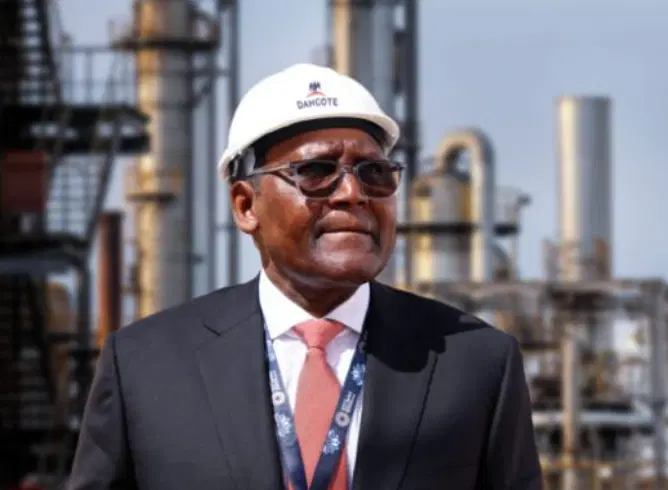
Dangote Refinery Ends Nigeria’s Era of Fuel Import Dependence, Boosts GDP, FX Earnings — EIU
The operational ramp up of the 650,000 barrels per day Dangote Petroleum Refinery & Petrochemicals is fundamentally reshaping Nigeria’s downstream oil sector, significantly reducing the country’s dependence on imported refined petroleum products and strengthening its external position, according to the Economist Intelligence Unit (EIU).
In its latest assessment on Nigeria’s fuel market and regulatory environment, the EIU said the refinery has already transformed a sector that was previously characterised by heavy reliance on imported fuel despite Nigeria being Africa’s largest crude oil producer. The report noted that the refinery met nearly 80 per cent of domestic petrol demand in April and produced enough volumes to satisfy local consumption requirements as operations approached full capacity.
The EIU described Nigeria’s downstream petroleum sector before the refinery as “long dysfunctional”, noting that the country had remained almost entirely dependent on costly imported fuel while producing nearly 1.5 million barrels of crude oil daily.
According to the report, the emergence of the refinery has reduced import dependence, improved domestic fuel availability and strengthened Nigeria’s balance of payments position through lower import demand and rising exports of refined petroleum products.
“The gradual ramp up of the 650,000 barrel/day Dangote refinery since May 2023 has transformed Nigeria’s long dysfunctional downstream sector,” the report stated. “The country’s main refineries, all state owned, had been inoperative for years and Nigeria was almost entirely reliant on costly imported fuel.”
The research and analysis division of The Economist Group, London added that the refinery’s attainment of full operational capacity and its planned expansion would further support Nigeria’s economic growth and foreign exchange earnings over the medium term.
“Meanwhile, the attainment of full capacity at, and an increase in exports from, the Dangote refinery will support real GDP growth and foreign exchange earnings in 2026 and 2027 and beyond, as a planned doubling of the plant’s output comes on stream around the end of the decade,” it added.
Industry analysts said the refinery is increasingly positioning Nigeria as an emerging refining and export hub, altering energy trade flows across Africa and reducing the vulnerability associated with fuel import dependence.
The EIU noted that the refinery’s expansion has coincided with major reforms in Nigeria’s downstream sector, including the removal of fuel subsidies and the introduction of market driven pricing mechanisms.
The report, however, said the transition from a state dominated fuel import structure to large scale domestic refining has triggered resistance from interests linked to the old import regime.
The latest tensions emerged following the decision by the Nigerian Midstream and Downstream Petroleum Regulatory Authority to relax restrictions on petrol imports despite the refinery’s growing capacity to meet domestic demand.
Dangote Industries subsequently initiated legal action, arguing that continued import approvals undermine domestic refining investments and conflict with the objectives of the Petroleum Industry Act, which seeks to encourage local refining capacity and reduce import dependence.
Analysts noted that the availability of large-scale domestic refining capacity has improved Nigeria’s energy security and reduced exposure to external supply shocks and foreign exchange volatility.
The Centre for the Promotion of Private Enterprise also cautioned against unrestrained importation of petroleum products, warning that such a policy could weaken Nigeria’s industrialisation drive and discourage investments in domestic refining.
Chief Executive Officer of CPPE, Muda Yusuf, said continued dependence on imported fuel had historically contributed to pressure on foreign reserves, exchange rate instability and fiscal leakages.
The refinery’s growing impact is also being reflected in Nigeria’s broader macroeconomic indicators. Earlier this month, S&P Global Ratings cited increased domestic refining capacity and rising hydrocarbon exports among the major factors supporting Nigeria’s sovereign credit rating upgrade – the first in 14 years.
Beyond Nigeria, analysts said the refinery is increasingly being viewed as a strategic industrial asset for Africa, where many countries remain heavily dependent on imported fuel despite rising demand for transportation, manufacturing, and power generation.
Business
BREAKING: Court Dismisses $19.6 Million Claim Against NNPCL — Rules Contract Scope Cannot Be Changed Orally
BREAKING: Court Dismisses $19.6 Million Claim Against NNPCL — Rules Contract Scope Cannot Be Changed Orally
In a landmark ruling on Friday, May 22, 2026, the Federal Capital Territory High Court in Abuja threw out a $19.6 million lawsuit filed by Alternate Dimensions Ventures Ltd against the Nigerian National Petroleum Company Limited (NNPCL), affirming a key legal principle: a written contract cannot be expanded through oral agreements or conduct.
Alternate Dimensions had sought $19,600,000 in professional fees, claiming the scope of its Direct Sale, Direct Purchase (DSDP e-pro) contract with NNPCL was orally expanded. Represented by counsel Patrick Peter, the firm argued it was entitled to the revised sum for services rendered under the alleged new terms.
But NNPCL, through its lawyer Ituah Imhanze of KENNA LP, pushed back sharply, arguing that parties are bound exclusively by the clear terms of their written agreement. Imhanze contended that without any written amendment, the claim was legally unsound, and the court agreed.
Delivering judgment, Justice Hamza Mu’azu upheld NNPCL’s defense, stating that the contract was unambiguous and that no evidence was adduced during the trial, which supported the alleged scope expansion. The court further found that NNPCL fully complied with all contractual terms and committed no breach.
Dismissing the suit as meritless, Justice Mu’azu reinforced the doctrine of sanctity of contract: any amendment to a written agreement must be express, unequivocal, and documented, not implied or verbal.
The ruling spares NNPCL from the S19.6 million claim and also a floodgate of similar potential liabilities.


- Pitcher Awards Announces 2026 Winners, Marking a Landmark Year for Pan‑African Creativity May 30, 2026
- Ghana Commemorates 78th International Day of United Nations Peacekeepers May 30, 2026
- South Africa: President Ramaphosa receives second interim report of Madlanga Commission May 30, 2026
- Asmara Marathon 2026 to be held May 30, 2026
- Powerful call for dialogue and compromise to secure peace in South Sudan issued on International Peacekeepers Day May 30, 2026
- Over 1,000 Participants Join Rwenzori Marathon Activation Run in Mombasa May 30, 2026
- World Health Organization (WHO) actively participated in the 2nd Summit on Healthcare Integration in Portuguese-speaking countries May 30, 2026
- Annual Meetings (AM) 2026: “Africa has what It takes” - Experts call for stronger financial systems to help Africa mobilise capital at scale May 30, 2026
- Eritrea Participates at Organization of African, Caribbean and Pacific States Meetings May 30, 2026
- Annual Meetings 2026 (AM2026): African Development Bank Group’s 2025 Annual Report Highlights Strong Results and a New Chapter for Africa’s Transformation May 29, 2026
- Pitcher Awards Announces 2026 Winners, Marking a Landmark Year for Pan‑African Creativity May 30, 2026
- Ghana Commemorates 78th International Day of United Nations Peacekeepers May 30, 2026
- South Africa: President Ramaphosa receives second interim report of Madlanga Commission May 30, 2026
- Asmara Marathon 2026 to be held May 30, 2026
- Powerful call for dialogue and compromise to secure peace in South Sudan issued on International Peacekeepers Day May 30, 2026
- Over 1,000 Participants Join Rwenzori Marathon Activation Run in Mombasa May 30, 2026
- World Health Organization (WHO) actively participated in the 2nd Summit on Healthcare Integration in Portuguese-speaking countries May 30, 2026
-

 news6 months ago
WHO REALLY OWNS MONIEPOINT? The $290 Million Deal That Sold Nigeria’s Top Fintech to Foreign Interests
-

 society4 weeks ago
SOCIAL MEDIA IS NOT A BATTLEFIELD COMMAND – WHY THE NIGERIAN ARMY’S ACTION AGAINST JUSTICE CRACK IS A NATIONAL SECURITY IMPERATIVE
-

 celebrity radar - gossips4 months ago
Dr. Chris Okafor Returns with Power and Fire of the Spirit -Mounts Grace Nation Altar with Fresh Anointing and Restoration Grace on February 1, 2026
-

 celebrity radar - gossips6 months ago
Prophet Kingsley Aitafo Releases 2026 Prophecy: ‘Nigeria Will Rise, but the World Must Prepare for Turbulence’