
society
Actress-Turned-Singer Hayjay Drops Spirit-Lifting Gospel Album “Gboluwaga”

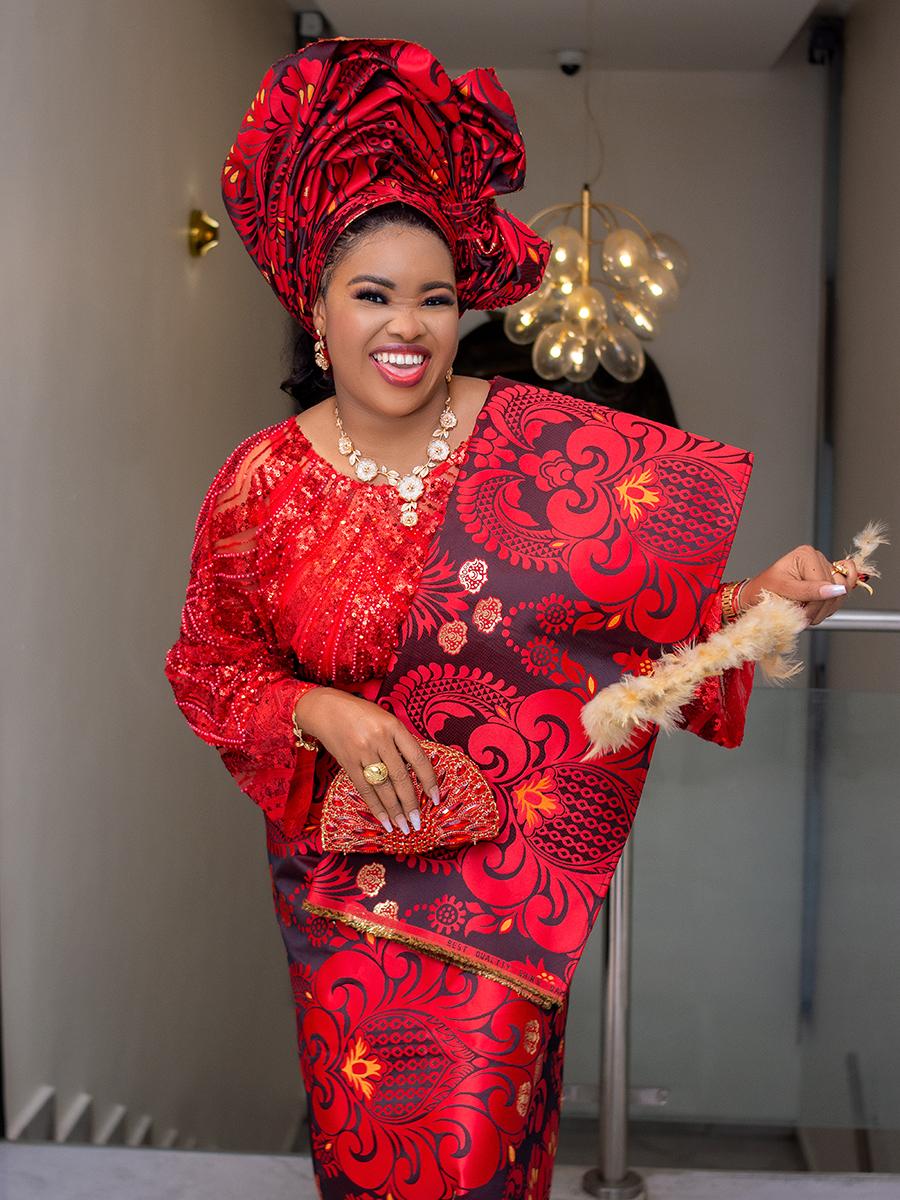
Actress-Turned-Singer Hayjay Drops Spirit-Lifting Gospel Album “Gboluwaga”
Versatile Nollywood actress, producer, and fashion designer, Titilayo Akinwale, popularly known as Hayjay, has officially ventured into the world of gospel music with the release of her debut track titled “Gboluwaga.”
The talented entertainer, who is well-known for her creativity both on-screen and in the fashion world as the CEO of Hayjay Fashion House, took her fans by surprise as she shared news of her latest artistic journey into gospel music.

According to reports, Hayjay recently stormed the studio to record her spirit-lifting track, centered around faith, gratitude, and divine inspiration. Her debut album “Gboluwaga” was officially released on October 30, 2025, and is now available for streaming and download across all major digital platforms.
“Let this sound lift your spirit,” she wrote while announcing the release on her social media pages, urging fans and music lovers to listen, download, and share the message of hope and praise embedded in the songs.
Fans can access the album via her official music link https://youtu.be/pOk6Z1V2zww?si=fJzcWZNNO1AWsc0e.
The actress-turned-singer, known for her roles in several hit Yoruba movies such as Atupa Emi, Ungrateful, and Ibeere, revealed that her transition into gospel music stems from a place of gratitude to God for His faithfulness in her life and career.

With “Gboluwaga”, Hayjay delivers not just a collection of songs, but a heartfelt expression of worship that is already resonating with gospel music lovers worldwide.
Her fans and colleagues in the entertainment industry have since taken to social media to congratulate her on this new chapter, applauding her for boldly combining acting, fashion, and now music, in her ever-expanding creative journey.





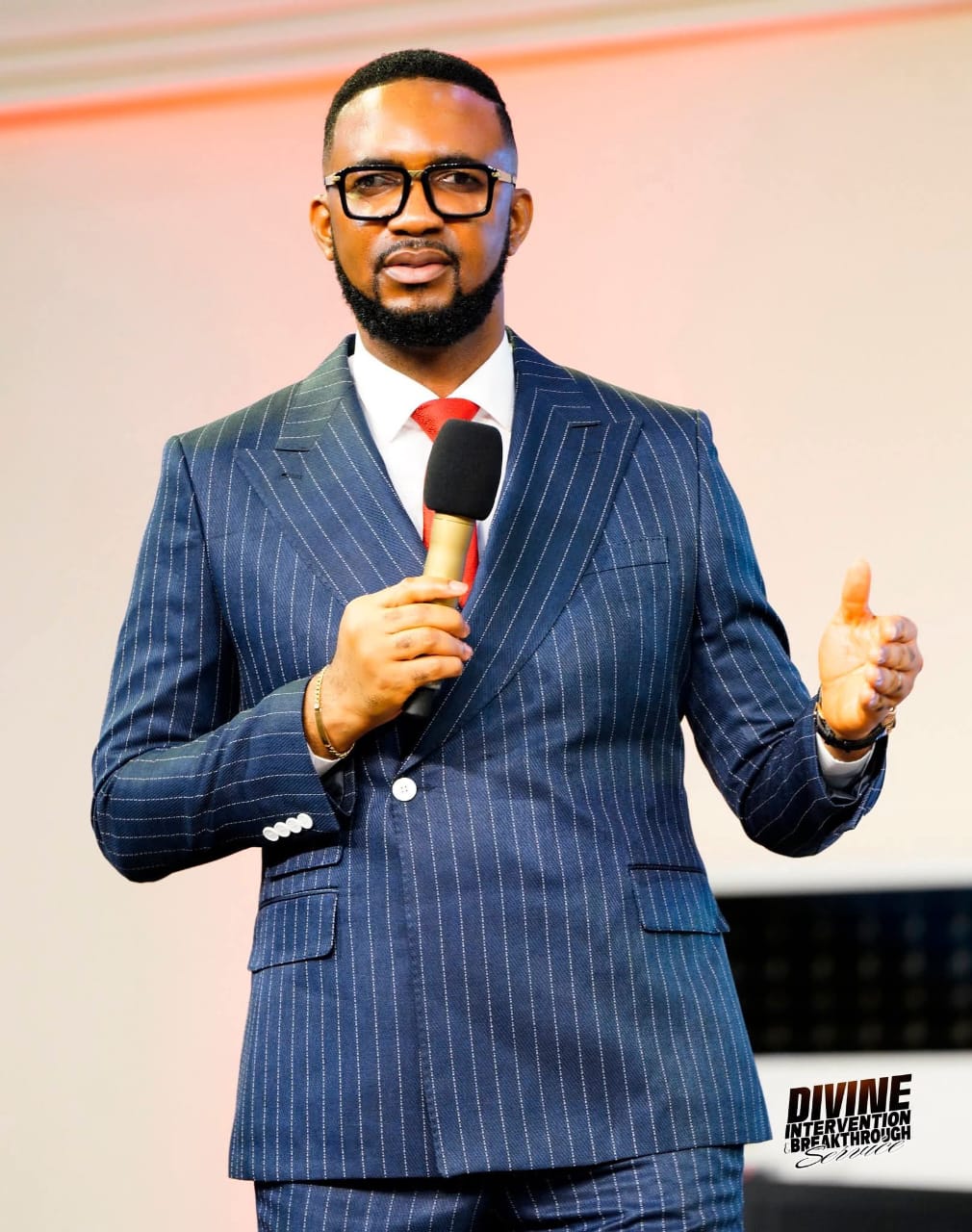
Dishonouring Fathers Pollutes Your Source and Limits Destiny — Dr. Chris Okafor
“A father’s blessing is tied to your breakthrough and can change life’s patterns.”
Dishonouring one’s father—whether biological or spiritual—can disrupt the source of a person’s blessings and hinder progress in life. According to the Generational Prophet of God and Senior Pastor of Grace Nation Global, Christopher Okafor, honouring one’s father is a spiritual principle that preserves destiny and unlocks divine favour.
Dr. Okafor made this statement during the Sunday Divine Intervention and Breakthrough Service held on March 15, 2026, at the international headquarters of Grace Nation Worldwide in Ojodu Berger, Lagos, Nigeria.
The Power of a Father’s Blessing
In his teaching, the cleric described a father as a spiritual source.
According to him, when individuals respect and honour their source, they create a pathway for blessings, stability, and the fulfillment of their inheritance in life.
“One of the most dangerous practices for a believer is dishonouring a father,” he said.
“When the source is honoured, life flows well and destiny is preserved.”
He warned that when a father releases a negative declaration, it can become difficult for a person to experience lasting success, regardless of their level of hard work or skill.
“You may be hardworking,” he noted, “but if the source is polluted, progress can become difficult.”
Patterns Passed Through Families
Continuing his sermon in the series “Patterns – Part 2,” Dr. Okafor explained that many individuals struggle with recurring challenges within their families.
He suggested that hostility, blackmail, or disrespect toward authority figures may sometimes reflect deeper unresolved patterns within family lineages.
According to him, such patterns can affect a person’s progress until they are consciously addressed.
Breaking Negative Patterns
The preacher emphasized that the blessing of a father can interrupt negative family cycles.
Regardless of the patterns affecting a family, he said, a sincere blessing from a father figure has the spiritual authority to shift circumstances and open new paths for success.
He further advised believers to live responsibly, follow divine instructions, and remain prayerful.
“When you honour your fathers and walk in obedience,” he said, “God releases guidance and answers prayers speedily.”
Service Announcement
Meanwhile, Grace Nation Worldwide has announced that its annual flagship family liberation conference, “Harvest of Babies 2026,” will hold in the last week of March at the church’s international headquarters in Ojodu Berger, Lagos.
According to church officials, the conference is designed for couples and individuals trusting God for the fruit of the womb. The event is expected to attract participants from different parts of the world seeking spiritual support and prayer for miracle children.
Dr. Okafor encouraged expectant parents and families believing for children to participate in the prophetic gathering, expressing faith that God will bring transformation and testimonies to many lives.



ADC Unveils Opposition Strategy as Obi, Atiku, Amaechi Move to Challenge Tinubu in 2027
By George Omagbemi Sylvester
“Opposition heavyweights explore coalition strategy under the African Democratic Congress as political analysts debate whether a united front can realistically challenge President Bola Ahmed Tinubu in the 2027 presidential election.”
Peter Obi, Atiku Abubakar, and Rotimi Amaechi are working together under the platform of the African Democratic Congress (ADC) as part of a coordinated political effort aimed at defeating Bola Ahmed Tinubu and the ruling All Progressives Congress (APC) in the 2027 Nigerian presidential election, according to party insiders who revealed the strategy in Abuja in March 2026.

https://www.stanbicibtcbank.com/nigeriabank/personal/products-and-services/all-loans/stanbic-ibtc-mreif-home-loans
The ADC leadership disclosed that the three prominent political figures (each of whom commands significant national followership) are currently holding consultations, building a broad opposition coalition, and harmonising political structures across Nigeria’s six geopolitical zones. The objective, according to the party, is to create a unified opposition front capable of challenging the electoral dominance of the APC, which has controlled Nigeria’s presidency since 2015.
Party officials said the collaboration represents a deliberate attempt to replicate the successful coalition strategy that defeated the then-ruling party in 2015, when several opposition blocs merged to form the APC and ultimately removed the People’s Democratic Party (PDP) from power after sixteen years. Analysts say the ADC coalition hopes to reverse that historical pattern by bringing together major opposition figures under a single political platform before the 2027 elections.
According to political insiders, the discussions among Obi, Atiku and Amaechi revolve around three key pillars: coalition building, electoral strategy, and national policy alternatives designed to appeal to voters dissatisfied with Nigeria’s economic direction and governance challenges. The ADC reportedly believes that combining Obi’s youth-driven support base, Atiku’s political networks across northern Nigeria, and Amaechi’s organisational influence within the political establishment could create a formidable opposition alliance.
Political scientist Prof. Pat Utomi argued that coalition politics may be the only realistic path for opposition forces seeking to defeat an incumbent government in Nigeria. According to him, “Opposition fragmentation has always been the ruling party’s greatest advantage. A coalition changes the arithmetic of Nigerian politics.”
Similarly, constitutional lawyer Femi Falana (SAN) observed that the emerging alliance reflects a broader democratic pattern. “In many democracies, opposition parties must cooperate to challenge incumbents effectively. What matters is whether such cooperation produces credible alternatives for voters,” Falana said in a recent public lecture on electoral reform.
However, not all analysts believe the coalition will automatically translate into electoral victory. Political commentator Dr. Jide Ojo noted that Nigeria’s electoral politics is shaped by regional balancing, party structures, and grassroots mobilisation, factors that may complicate the opposition’s strategy. “Coalitions are powerful, but they only work when ideological differences are managed and when leadership ambitions are carefully negotiated,” he explained.
The question of who will eventually emerge as the coalition’s presidential candidate remains one of the most sensitive issues. Both Obi and Atiku previously contested the presidency in the 2023 election, while Amaechi (former governor of Rivers State and former Minister of Transportation) also ran in the APC presidential primaries that produced Tinubu as candidate. Negotiations over the presidential ticket are therefore expected to become a central issue as coalition talks progress.
Political historian Dr. Sam Amadi, former chairman of the Nigerian Electricity Regulatory Commission, believes the coalition’s success will depend on whether it can present a clear national vision rather than merely an anti-Tinubu agenda. According to him, “Nigerians are not only interested in defeating incumbents; they want to know what comes after. A coalition must offer policy credibility.”
Meanwhile, supporters of the ruling APC dismiss the coalition as politically exaggerated. Some party leaders argue that the opposition alliance lacks cohesion and may eventually collapse under internal rivalry. They maintain that President Tinubu still commands strong political structures nationwide and remains well-positioned ahead of the 2027 race.
Despite the skepticism, the emerging ADC coalition has already intensified political discussions across the country. For many observers, the alliance represents the first serious attempt to reshape Nigeria’s opposition landscape since the 2023 general election.
Whether the collaboration between Obi, Atiku and Amaechi will ultimately succeed in unseating Tinubu remains uncertain. What is clear, however, is that the battle for Nigeria’s 2027 presidency has quietly begun, with coalition politics once again emerging as a decisive factor in the nation’s democratic trajectory..


society
UNIPGC AFRICA Seals Strategic Partnership with Greenvillage Empowerment Foundation for Capacity Building Initiatives Spearheaded by the Governor of Tana River County, Kenya

*UNIPGC AFRICA Seals Strategic Partnership with Greenvillage Empowerment Foundation for Capacity Building Initiatives Spearheaded by the Governor of Tana River County, Kenya
In a significant step toward strengthening sustainable development and leadership capacity across Africa, *UNIPGC AFRICA* has officially sealed a strategic partnership with *Greenvillage Empowerment Foundation (GVEF)* to implement impactful capacity-building projects. The initiative is spearheaded by the Governor of Tana River County, Republic of Kenya.
The partnership was formalized through the signing of a *Memorandum of Understanding (MoU)* by key representatives of both organizations. Signatories to the agreement include *H.E. Amb. Jonathan Ojadah*, Global President of the United Nations International Peace and Governance Council (UNIPGC); *Amb. Jase Carlos Sousa,* Member of the UNIPGC Supreme Council; and *H.E. Maj. (Rtd.) Dr. Dhadho Godhana*, Executive Governor of Tana River County.
The MoU establishes a robust framework of cooperation between *UNIPGC* and *GVEF* reflecting a shared vision and strong alignment of values in promoting sustainable development, peace, and inclusive governance across Africa.
Under the agreement, both organizations will collaborate on a wide range of development initiatives, including the promotion of *democracy and good governance*, *climate change education and environmental sustainability*, *health promotion through water, sanitation and hygiene (WASH), Youth capacity building through Robust Film Production Ecosystem, sports development and gender equality and empowerment of marginalized communities*.
The partnership will also actively support and advance the *United Nations Sustainable Development Goals (UNSDGs)*.
As part of the collaboration, UNIPGC and GVEF have committed to establishing effective channels for joint action through the design and implementation of programs and projects that address shared development priorities. These initiatives will focus on strengthening leadership capacity, promoting inclusive participation in governance, and enhancing community-based development efforts.
Furthermore, the partnership will encourage mutual institutional support, enabling both organizations to provide *technical expertise, strategic guidance, and moral support* toward the successful implementation of their initiatives.
This landmark collaboration marks a major milestone in advancing cross-sector partnerships aimed at fostering *sustainable development, social inclusion, and transformational leadership across Africa*, while reinforcing the collective commitment of both organizations to achieving the *United Nations Sustainable Development Goals*


-

 society6 months ago
Religion: Africa’s Oldest Weapon of Enslavement and the Forgotten Truth
-

 news3 months ago
WHO REALLY OWNS MONIEPOINT? The $290 Million Deal That Sold Nigeria’s Top Fintech to Foreign Interests
-

 society6 months ago
“You Are Never Without Help” – Pastor Gebhardt Berndt Inspires Hope Through Empower Church (Video)
-

 Business7 months ago
GTCO increases GTBank’s Paid-Up Capital to ₦504 Billion