Connect with us

society

ACVPN paid courtesy visit to State Criminal Investigative Department DCP office, Panti

Published

on

ACVPN paid courtesy visit to State Criminal Investigative Department DCP office, Panti
ACVPN paid courtesy visit to State Criminal Investigative Department DCP office, Panti By Ifeoma Ikem


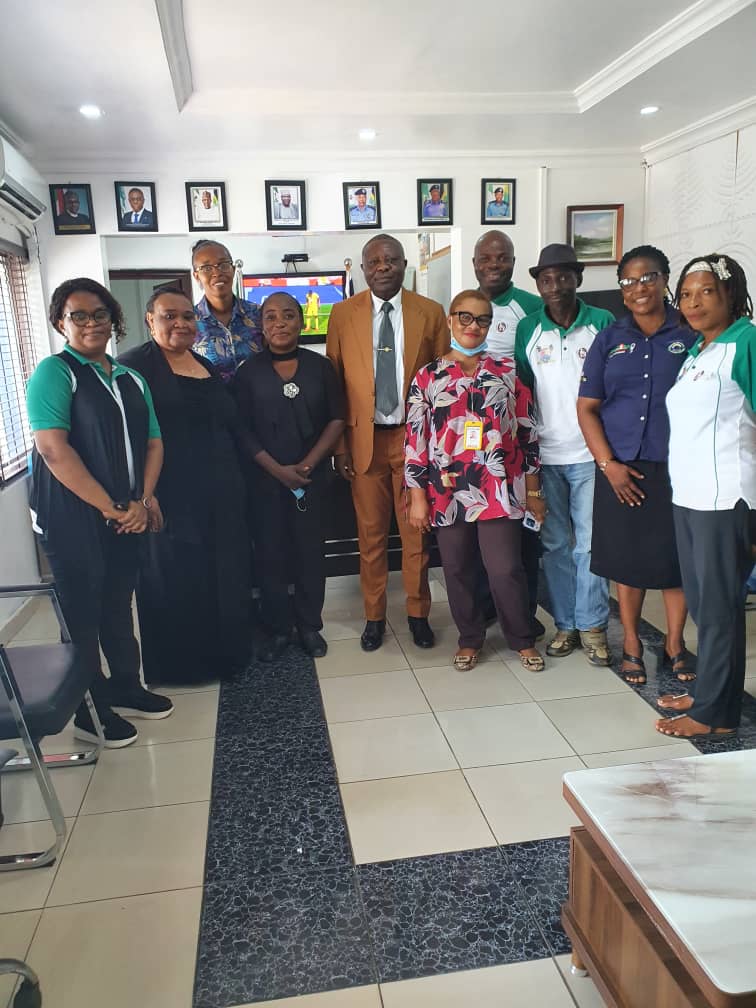
A Non Governmental Organisation NGO, Its Advocates For Children and Vulnerable Persons Network (ACVPN), has paid a Courtesy/Advocacy visit to the office of the Deputy Commissioner of Police DCP Kayode Adegoke Office.

The said visit was formal introduction of ACVPN members and also appreciate the good office and cooperation ACVPN received on its cases through the Gender/Anti-Human Trafficking unit SCID Panti right from the assumption of office of DCP Adegoke officer in charge of the State Criminal Investigation Department SCID Panti,Lagos.

Chief Operating Officer of the advocate, Comrade Ebenezer Omejalile,who led the member during the courtesy,said It was an avenue to collaborate and work together to fight against domestic violence,rape,assaults on children and vulnerable persons in society in and out of the state.

“We are happy the way our cases that are reported in Panti is being treated and we want the relationship to continued like that,he opined.

Ebenezer threw the open discussion to members who interestingly contributed, which was a robust discussion of concerns raised by members ,DCP Adegoke immediately addressed all grey areas which led to a fruitful and harmonious discussion.

Advocate used the medium to appreciate CSP Margaret Ighodalo, the OC gender/anti human trafficking unit SCID Panti, for her dedication,hardwork and fearlessness,an officer who makes sure justice always prevail.

While commending the ACVPN ,DCP Kayode Adegoke, encouraged the member tremendous tireless work in ensuring justice is duly served to the oppressed persons in the society.

He urged every member to continue and never get discouraged in it’s quest to get Justice for both abused and vulnerable Persons in the society.

According to him,there’s a lot of oppression in the society especially those who think they can oppress the voiceless, but it’s in the place of ACVPN members and other’s organizations who ensures that justice is duly served

ACVPN team members that visited the DCP Adegokes office comprises of its Legal Head Mrs.Abiodun Kolawole aka Iya Gani, Media Head Madam Juliana Francis New Telegraph Newspaper, Radio One 103.5 FM Mrs. Florence Ubajekewe and Ifeoma Ikem Saharaweekly Online ,Admin Executive Mrs. Remilekun Thompson,Head Rescue/ Referral Comrade Okanlawon Oluwatoyin aka Oklahgogo, ACVPN Case Manager Mrs. Aderemi Olubunmi Blessing from PAHFIN NGO.

ACVPN paid courtesy visit to State Criminal Investigative Department DCP office, Panti

religion

Apostle Johnson Suleman: Firebrand of Faith, Prophet to the Nations, Voice to a Generation

Published

on

Apostle Johnson Suleman: Firebrand of Faith, Prophet to the Nations, Voice to a Generation

Apostle Johnson Suleman: Firebrand of Faith, Prophet to the Nations, Voice to a Generation


By Femi Oyewale


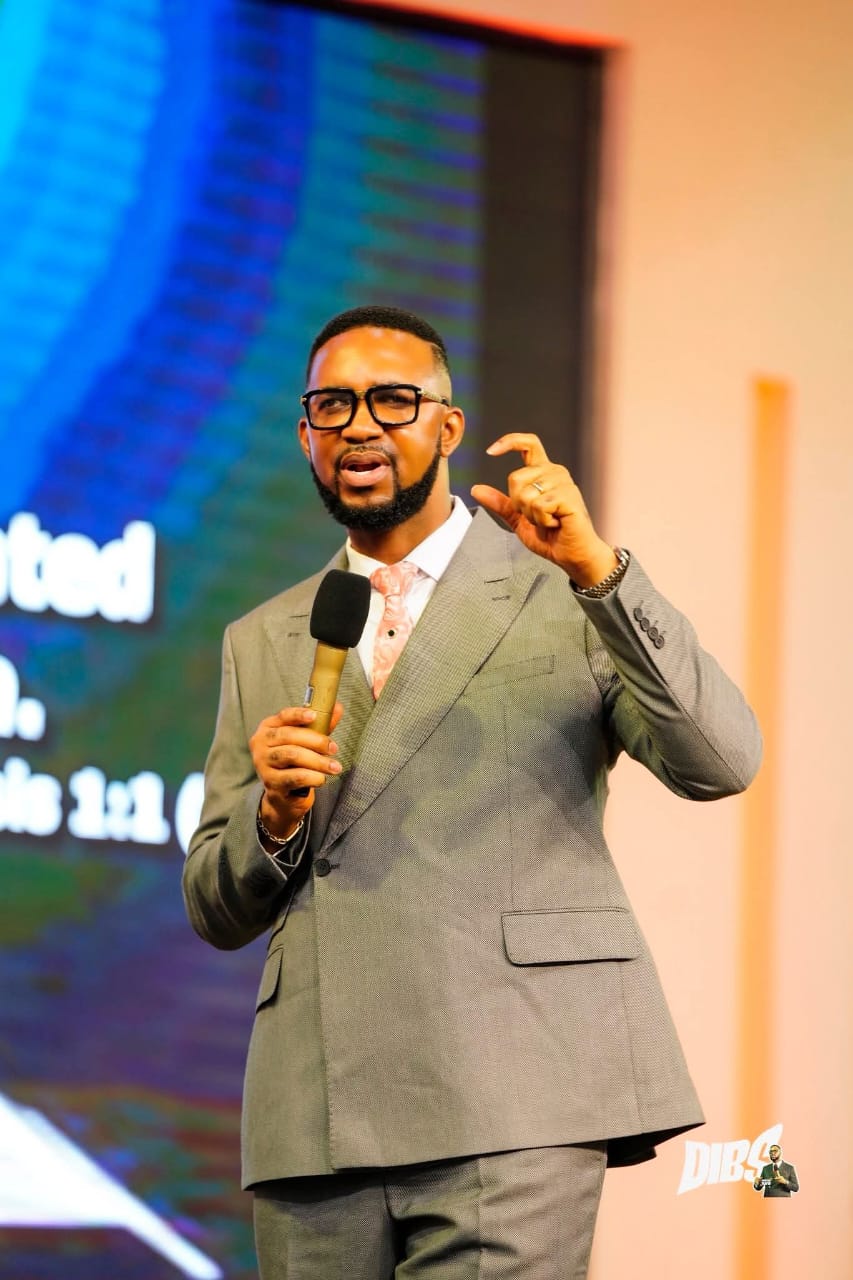
In the beginning, there was just one man with a burning vision. Today, that man has become a global force whose voice thunders across continents, whose prayers ignite miracles, and whose mission is transforming destinies worldwide. He is Apostle Johnson Suleman, the fiery Restoration Apostle, the humanitarian preacher, and the global trailblazer reshaping the Christian faith for a new generation.


Apostle Johnson Suleman: Firebrand of Faith, Prophet to the Nations, Voice to a Generation


From Auchi to the World


Born in Auchi, Edo State, Nigeria, Apostle Suleman’s rise from humble beginnings to international prominence is nothing short of remarkable. What started as a divine calling has now evolved into a global mandate, reaching millions through Omega Fire Ministries International (OFM).


His story is the classic tale of vision meeting conviction—of a man who dared to believe God not just for himself, but for nations. From a modest congregation, OFM has spread like wildfire, with branches in Africa, Europe, Asia, the Americas, and beyond.


The Man & The Mission


Apostle Johnson Suleman: Firebrand of Faith, Prophet to the Nations, Voice to a Generation


To know Suleman is to understand passion—passion for God, for people, and transformation. He lives by one mantra: populate Heaven, depopulate Hell.


His pulpit is a battlefield, his voice a trumpet, his words a sword. Through his fiery sermons, prophetic declarations, and healing crusades, countless men and women testify of divine encounters—cancers healed, destinies restored, impossibilities overturned.


But beyond the pulpit lies the heart of a humanitarian. Suleman’s mission has always extended beyond preaching. He funds scholarships for the underprivileged, empowers widows with homes, sets up businesses for struggling families, and supports countless orphans. In times of crisis, he has sent relief materials across regions, proving that true ministry is not only heard—it is seen.


The Impact


Step into one of his crusades, and the atmosphere tells its own story. Stadiums overflow. Multitudes gather, hungry for hope. From London to Houston, Dubai to Johannesburg, crowds testify to healings, deliverance, and restoration.


Through Celebration TV and other digital platforms, Suleman’s voice penetrates homes, villages, and cities, giving access to millions who may never step into a physical church. His boldness in confronting social ills and speaking truth to power has also established him as a fearless voice beyond the church walls.


The Global Moves


Apostle Suleman is not just a Nigerian voice—he is a global phenomenon. His recent international crusades draw audiences in their tens of thousands, breaking barriers of race, culture, and language.


From prophesying to presidents to laying hands on ordinary citizens, his message is universal: God still speaks, God still heals, God still restores.


Each global tour solidifies his place as one of the most influential Christian leaders of the 21st century. He is as comfortable commanding a crowd in Chicago as he is in Accra, as bold in Paris as he is in Abuja.


The Legacy in Motion


Apostle Johnson Suleman is more than a preacher—he is a movement. A man consumed by vision, driven by compassion, and equipped with an anointing that refuses to be confined by borders.


From Auchi to America, from pulpits to palaces, from widows to world leaders, his impact is undeniable. And as the Restoration Apostle continues to blaze trails across nations, one thing is certain: his legacy is still unfolding, and his global moves have only just begun.


Continue Reading

society

Senator Musa’s Legacy of Intellect, Compassion and Delivery

Published

on

Senator Musa’s Legacy of Intellect, Compassion and Delivery By Suleiman Adamu

Senator Musa’s Legacy of Intellect, Compassion and Delivery

By Suleiman Adamu

In Nigeria’s dynamic democratic landscape, where leadership often teeters between self-interest and public service, few figures emerge as true exemplars of covenantal representation. Senator Mohammed Sani Musa, CON, affectionately known as “Musa 313,” stands as a beacon of intellectual rigour, empathy, and impactful delivery. Representing Niger East Senatorial District, he has woven a legacy of legislative excellence and grassroots development that resonates far beyond the confines of his constituency, touching the heart of Nigeria’s democratic aspirations.

Great leaders are not born of chance; they are shaped by discipline, preparation, and an unrelenting commitment to progress. Senator Musa embodies this truth. A proud son of Niger State, he embarked on an academic journey that laid the foundation for his remarkable career. At Ahmadu Bello University, Zaria, he earned a Bachelor of Science in Business Administration, specialising in Banking and Finance, in 1990. This degree was not merely a credential but a springboard for his intellectual evolution.

Driven by a thirst for knowledge, he pursued further studies at global institutions, securing a Postgraduate Diploma in Public Policy and Management from the University of London and a Postgraduate Certificate in International Management from the University of Liverpool. These academic milestones equipped him with a nuanced understanding of governance, economics, and institutional reform, moulding him into a technocrat with a worldview enriched by comparative models of development.

Long before he stepped into the political arena, Musa was already a thinker whose ideas were informed by global perspectives and a deep appreciation for systemic change. Senator Musa is no ordinary parliamentarian. His presence reverberates from the hallowed chambers of the National Assembly in Abuja to the dusty roads of rural Niger East. He is a statesman whose intellectual sophistication is matched by his accessibility and empathy, a rare blend that allows him to connect with both policymakers and ordinary citizens.

His nickname, “Musa 313” is a symbol of trust and familiarity, a proof of the bond he has forged with his people. Unlike many legislators whose names fade beyond roll calls, Musa has etched his mark on the annals of parliamentary relevance since his election in 2019. As Chairman of the Senate Finance Committee, he shoulders one of the most critical roles in Nigeria’s legislative framework. His committee oversees fiscal discipline, appropriation, and national planning—responsibilities that demand precision, foresight, and patriotism.

Under his leadership, oversight reports and finance bills are scrutinised with meticulous care, earning him the confidence of Nigerians who see in him a guardian of the nation’s economic integrity. Musa’s legislative contributions are profound and far-reaching. His sponsorship of transformative bills reflects a mind attuned to both the immediate needs of his constituents and the structural challenges facing Nigeria.

Among his notable legislative efforts is the Bill to Regulate and Formalise Employment of Domestic Workers, Interns, and Other Informal Sector Employees (SB 629, 2025), currently in its second reading. Another landmark proposal is the National Rural Employment Guarantee Bill of 2021, a bold initiative to combat rural unemployment and foster economic inclusion in Nigeria’s hinterlands. The Critical Infrastructure Protection Bill of 2021 addresses the pressing need to safeguard Nigeria’s assets against sabotage and insecurity, a critical issue in a nation grappling with infrastructural challenges.

Musa’s vision for education is evident in the National University of Health and Medical Sciences, Suleja Bill, which aims to bolster medical training and healthcare delivery. His Loan Recovery Regulation Bill of 2020 seeks to sanitise the banking sector, while the Constitutional Court of Nigeria Bill of 2020 underscores his commitment to constitutionalism. The Constituency Delimitation Centre Bill of 2020 further demonstrates his dedication to strengthening democratic representation.

Each of these bills reveals a legislator who thinks locally but legislates nationally, addressing the unique needs of Niger East while tackling Nigeria’s broader developmental imperatives. Yet, for Senator Musa, legislation is not an end in itself but a means to transform lives. He understands that parliamentary privilege must translate into tangible progress for his constituents. In Niger East, his interventions are a testament to this philosophy, touching every facet of human development.

In education, Musa recognises that knowledge is the ladder by which societies ascend. He has renovated classrooms and constructed a principal’s office at Government Technical College, Minna, ensuring that students learn in dignified environments. His establishment of an ICT Centre in Ija Gwari, Tafa LGA, is a forward-thinking investment in the digital economy, empowering rural youths to compete in a technology-driven world. His scholarship programs, spanning primary, secondary, and tertiary levels, have opened doors for countless students, with international undergraduate opportunities in China and India offering a global stage for Niger East’s brightest minds. These initiatives are not mere gestures but structural investments in the future, ensuring that the next generation is equipped to lead.

Senator Musa’s Legacy of Intellect, Compassion and Delivery
By Suleiman Adamu

In healthcare, Musa’s mantra of “Health is Wealth” guides his efforts to improve lives. Across the nine local government areas of Niger East, he has facilitated the installation of solar power and generators in primary healthcare centers, ensuring that immunisation, maternal care, and rural treatments are not hampered by power outages. His commitment to maintenance ensures these facilities remain functional, bringing dignity and reliability to healthcare delivery.

In agriculture, the lifeline of Niger East, Musa’s benevolence shines through. He has distributed 10,000 bags of grain to alleviate hunger and provided farm implements and fertilisers to rural farmers, boosting productivity and food security. His tailoring empowerment scheme for 100 youths is a deliberate effort to catalyse cottage industries, fostering economic self-reliance and preserving the region’s agrarian heritage.

Musa’s infrastructure projects further illustrate his responsiveness to his people’s needs. In Ginyin Village, Shiroro LGA, he constructed a solar borehole, delivering clean, safe water to residents who once struggled for this basic necessity. A 1km road in Kuta, Shiroro LGA, has improved connectivity, while electrification projects, including 500KVA transformers in Iwa Gurara and other communities, have brought light to darkened villages.

The renovation of Sukeja Town Hall has provided a communal space for gatherings, reinforcing social cohesion. Each project—water for the thirsty, light for the darkened, roads for the isolated—reflects Musa’s ability to listen and act, addressing the immediate needs of his people while laying the foundation for long-term progress. What sets Senator Musa apart is his embodiment of the qualities that define an uncommon parliamentarian: intellectual grounding, legislative productivity, constituency visibility, empathy, and national relevance.

He is not a populist chasing fleeting applause but a leader who feels the pulse of his people and synchronises it with national priorities. While others may settle for episodic empowerment, Musa builds a systematic architecture of development, weaving together education, healthcare, agriculture, and infrastructure into a cohesive vision for Niger East.

In just two years in the 10th Senate, he has redefined parliamentary responsibility, proving that senators need not be absentee representatives or mere voices in the capital. His work is a bridge between law-making and life-building, a testament to his refusal to divorce policy from people.

Musa’s impact extends beyond Niger East. His legislative efforts address national challenges, from unemployment to infrastructure security, positioning him as a statesman of national consequence. His ability to balance local needs with Nigeria’s broader aspirations makes him a model for aspiring leaders. Niger East is fortunate to have him; Niger State takes pride in his achievements, and Nigeria is enriched by his service.

To honour Senator Musa 313 is to recognise a rare fusion of intellect, compassion, and delivery—a leader who has rewritten the narrative of representation. His contributions are luminous chapters in Nigeria’s democratic journey, illuminating the path for others to follow.

*Adamu PhD is a researcher writing from UniAbuja.

Continue Reading

society

Power is a Loan, Not a Possession: The Sacred Duty of Planting People

Published

on

Power is a Loan, Not a Possession: The Sacred Duty of Planting People.

By George Omagbemi Sylvester for SaharaWeeklyNG.com

Power is not an inheritance. It is not a birthright. It is not even a possession. Power, in its truest form, is a loan temporary, conditional, and transient. It is entrusted to individuals by people, institutions or circumstances, but it always comes with an expiry date. The tragedy of our world, however, is that too many leaders behave as though power is eternal. They clutch onto it, abuse it, weaponize it and in the end, leave nothing behind but ruins, regret and ridicule.

The French philosopher Voltaire once remarked: “With great power comes great responsibility.” But in our era, we must go further: with great power comes the obligation to plant people. To plant people is to empower them, mentor them, uplift them and prepare them for a time when you are no longer in the spotlight. For one day, inevitably, the motorcades will vanish, the applause will fade and the titles will turn into footnotes. What will remain is the impact you left on human lives.


The Fragility of Power: Why No One Holds It Forever.

History, politics and life itself have shown that power is fleeting. Even the most feared emperors and the most influential presidents eventually yield to time. The Roman Empire, once stretching across continents, collapsed. The mighty Pharaohs of Egypt, who believed themselves divine, are remembered today only as names etched on tombs. Closer to home, African military dictators who once ruled with iron fists now live in obscurity, some begging for relevance in old age.


Former U.S. President Barack Obama put it sharply: “The arc of history is long, but it bends toward justice.” What he meant is that no matter how powerful you think you are, time has a way of humbling everyone. Leaders who imagine themselves irreplaceable soon discover the bitter truth: power is seasonal and every season changes.


This is why the greatest leaders are those who use their moment not to build monuments to themselves but to build people. Because monuments crack, but people remember.

Power is a Loan, Not a Possession: The Sacred Duty of Planting People.
By George Omagbemi Sylvester for SaharaWeeklyNG.com

Leadership Beyond Tenure: Planting People as Legacy.

Leadership, in its essence, is not measured by the number of years spent in office but by the number of lives transformed in that period. Nelson Mandela, who ruled South Africa for just one term, remains immortal in global memory not because he clung to office but because he planted people and values. He mentored a new generation of South African leaders, built institutions and showed the world that humility is the highest form of power.

John C. Maxwell, the world-renowned leadership expert, insists: “The greatest legacy a leader can leave is having developed other leaders.” The logic is simple; TITLES DIE, but PEOPLE LIVE ON. The greatest misuse of power, therefore, is to leave people the same (or worse) than you met them.

The Tragedy of Hoarded Power.
When power is hoarded instead of shared, the result is decay. Leaders who suppress others to protect their dominance always end up isolated. They mistake fear for loyalty, but once they step down, the very people who applauded them disappear. History is full of such examples.

Idi Amin of Uganda, Mobutu Sese Seko of Zaire and Sani Abacha of Nigeria all wielded absolute power in their days. But what became of them? Their regimes collapsed in disgrace. They planted no people, built no successors and left their nations bleeding. Today, they are remembered not for greatness but for tyranny.

Contrast this with leaders like Lee Kuan Yew of Singapore, who invested heavily in education, youth empowerment and national capacity-building. Though gone, he planted a nation of thinkers and innovators. Singapore, once a poor fishing island, is now a first-world economy, proof that planting people outlives personal reign.

Why Planting People Matters in All Spheres of Life.

This principle is not limited to politics. In business, religion and community leadership, those who succeed in developing people extend their influence far beyond their lifetimes. Steve Jobs, the co-founder of Apple, understood this. Though a perfectionist, he invested in building a strong leadership culture at Apple. That is why, years after his death, Apple continues to thrive.

In religion, Jesus Christ is perhaps the greatest example of planting people. He never built a palace or wrote a book. Instead, He invested in twelve disciples, ordinary men who later carried His message to the ends of the earth. Over two thousand years later, His influence remains unmatched, because He planted people, not monuments.

The Reality Check: What Happens When Power Ends.

We must never forget: the applause will fade. The titles will become past tense. The security convoys will vanish. The table will empty. At that point, what will remain is not the office you once occupied but the lives you touched.

The 20th-century historian Lord Acton’s timeless warning remains true: “Power tends to corrupt and absolute power corrupts absolutely.” Yet, there is a caveat often ignored; power can also elevate, if used rightly. It can inspire, empower and transform. The leader who recognizes this truth plants seeds in people while their influence lasts, because they know they will not hold it forever.

The Call to Leaders: Plant People While You Can.

To every leader (political, corporate, spiritual or community-based) the call is urgent: plant people while your voice still carries weight. Mentor the youth, empower the voiceless and create platforms for others to rise. While your hand still holds the pen, sign opportunities into others’ lives. Because one day, the pen will no longer be yours to hold.

The Nigerian novelist Chinua Achebe once wrote: “One of the truest tests of integrity is its blunt refusal to be compromised.” The integrity of leadership is tested not by the ability to acquire power, but by the willingness to share it, to empower others and to leave behind a generation better prepared than the one before.

A Personal Reflection.

Every society that has risen to greatness has done so on the back of leaders who planted people. Japan invested in education after World War II and became a global economic giant. Rwanda, under Paul Kagame, rose from genocide by investing in its people, particularly women and the youth. The evidence is overwhelming: leaders who plant people never die; their names are written in the hearts of men.

Conversely, leaders who hoard power, suppress others and treat their positions as private empires often face tragic endings. They die lonely, forgotten or mocked, not because they didn’t once have power, but because they failed to use it meaningfully.

Final Word: Power as a Loan, Legacy as an Obligation.
At the end of the day, the truth remains eternal: power is a loan, not a possession. It is lent for a while and must be returned. But while it is in your hands, you have the sacred duty to plant people.

The applause will fade. The convoys will vanish. The spotlight will dim, but the people you lifted will carry your name across generations. They will become your greatest reference long after the titles are gone.

So, use power wisely. Not to silence, not to oppress, not to immortalize yourself, but to plant others. Because when all is said and done, people are the only legacy that never dies.

Power is a Loan, Not a Possession: The Sacred Duty of Planting People.
By George Omagbemi Sylvester for SaharaWeeklyNG.com

Continue Reading

Cover Of The Week

Trending