
Business
Adeduntan: There is Significant Opportunity for Consolidation in Banking Sector

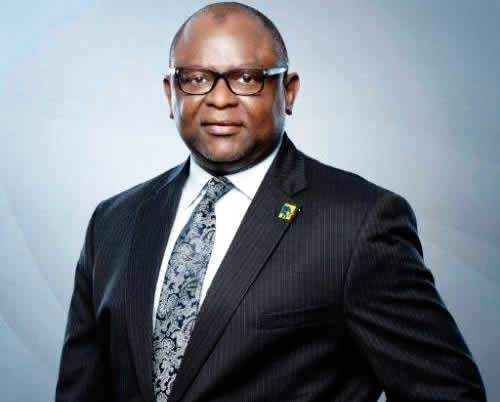

The Managing Director/CEO of First Bank of Nigeria Limited and Subsidiaries, Dr. Adesola Adeduntan, in this interview reveals that with about 12,000 agents across the entire network, the distribution of its automated teller machines across the country, the bank has built a solid foundation upon which it can rapidly grow its business and that the financial institution will continue to be a dominant player in the retail banking segment of the industry. Obinna Chima, Goddy Egene and Nume Ekeghe present the excerpts:
There was a major development in the banking industry some days ago, which saw Access Bank and Diamond Bank signing a business combination agreement. How did you receive the news considering that it is one that is going to shift the balance of power and ranking in the banking industry, and for FirstBank being one of the industry leaders, are you prepared to cope with the emerging competition in the industry?
We have had two waves of consolidation in the market. The first was in 2004-2005 which was orchestrated by Professor Chukuma Soludo. The second wave happened between 2009 under Governor Lamido Sanusi which was what saw to the acquisition of Intercontinental Bank by Access Bank. So, we have seen two big waves and there have been other minor waves. And if you also look at the number of tier 1 banks we have today in Nigeria, that is compare the size FirstBank, GTBank, Access Bank, Zenith Bank and the United Bank for Africa, when you put them on an African landscape, our banks are actually quite small. That is the truth.
In fact, from the last statistics I reviewed, there was no Nigerian bank in the top 10 banks in Africa. When you then realise the fact that Nigeria has the largest economy in Africa, but we are not in the top ten banks, that tells you two things: Firstly, that there is a significant opportunity for growth for banks but secondly opportunities for further consolidation. So what is contemplated by the merger agreement between Access Bank and Diamond Bank is not strange. For operators like us who have been watching this strategic landscape, it was not unexpected. For banks and indeed any institution or any business venture, you do have two opportunities or two key options of growth. You can decide to grow organically or you can decide to grow inorganically, which is what Access Bank is doing.
You may now go further to look at the tier 1 banks. There are banks in the tier 1 bucket who have never done any M&A and GTBank and Zenith Bank stand out. FirstBank has done one or two relatively small M&A which in reality you can take out. So it would appear that just looking at the market, that banks like FirstBank, GTBank and Zenith have perfected the act of growing organically. Whereas when you look at Access Bank, the bank was a major beneficiary of 2004/2005 consolidation in the industry. As at that time, they acquired Marina International Bank, Commercial Bank Credit Lyonnais, so they were a very key participant in that wave. In the second wave which happened between 2011, they were also a big beneficiary bank. So what I’m saying is that broadly speaking, there are banks that have perfected the act of growing organically and there are banks that have also perfected the act of growing inorganically. Nothing precludes one, and none is mutually exclusive.
What does it mean for the industry? I think it is very good. I think for the size of our economy, we actually require bigger banks. Like I said, there is no Nigerian bank in the top 10 banks in Africa whereas Nigeria is the largest economy. So it is kind of counter intuitive and that scenario is wrong. The top four banks in Africa are South African and that speaks to the strength of South African banks. If our economy is bigger than that of South Africa, naturally you would expect that we should have bigger banks and even if not bigger, but to become comparable in terms of size to those banks. I think we are on a journey it is an industry that would continue to see growth from my perspective. Like I said earlier, people can choose a path on how to grow and all they can also choose both.
But with this development, do you foresee FirstBank also adopting an inorganic growth strategy in the medium term, considering the intensive competition we expect to too in the industry?
As an institution, you always have the option of organic versus inorganic growth. Unlike two of the tier 1 banks that have never been involved in any M&A activity, we have a history in M&A. Also, a bigger part of our history is actually growing our businesses on our own. So what that says is that both capabilities are inherent in our DNA and are available to us. What we would do continuously as a management working under the guidance of our board is to re-evaluate our position. And to say what are the growth opportunity for us, either inorganic or organic growth.
What is the update on your African subsidiary, are they now profitable?
I’m happy to announce to you that we have fully recapitalised our subsidiary in Ghana. You would recall that in the course of 2017, the Bank of Ghana announced a significant increase in the minimum pay up capital for all banks operating in Ghana. I’m happy to inform you today that FirstBank Nigeria own 100 percent of FBN Ghana. We have fully recapitalised FBN Ghana and we are now fully compliant with the new minimum capitalisation. What we done with our subsidiary is that we have basically reposition all of them and they have moved from where I would call them net taker of resources, we have broken even and as we journey in 2019 we expect growth and an increasing contribution to the groups profitability.
Last year, you had expectations for your bank, were your economic projections and expectations for the bank met and how will you describe 2019?
You would recall that the Nigerian economy was recently in a recession and we came out of the recession in 2017 and what consistently the key operators have said is that the recovery remains fragile. However, we have recovered and we are recovering. When you look at the growth that has been recorded in the course of 2018 you sit back and say we could have done more but, if the growth was also not well orchestrated the way it has always been orchestrated, we could have also slipped back. So for me, I would give the economy a pass mark.
As we move into 2019, the expectations are that things may be a bit slow on the back of the elections and given the fact that naturally, key players, especially on the fiscal side of the economy, would be focussing on re-elections.
But post that, the projections that I have seen are all quite positive and they all speak to the fact that the expected growth should be higher than what we recorded in the course of 2018.
For FirstBank, we started a massive transformation program in 2017 and 2019 is the end of that strategic cycle. That plan is focused on transforming the entire business with the work stream focusing on the way we serve our customers and around innovation. There are projects around reigniting the passion of our people, there are projects around strengthening our technology platform and there are projects also around save guarding our assets which is essentially risks management. We are quite delighted from the progress we have made over the last two years and we believe that in the course of 2019, we would have accomplished all the critical components 2017-2019 strategic agenda. We are also looking forward to 2019 because with what we are doing; we have basically built a new foundation to enable our bank to run more as digital bank rather than a branch led institution. Today, based on what we are doing, more than 80 per cent of our customer-initiated transactions are actually carried out on alternative channels.
That means, 80 per cent of our transactions happen on Firstonline which is done online, Firstmobile which is done with your mobile phones and USSD which is done on both smart and basic phone. That for us is our star product because today we are the clear leader in that segment of the economy. We currently have almost 6.3 million customers processing transactions on our USSD platform. If you look at Firstmobile, we are a very close to number two, with over 2.5 million of our customers processing transactions. We process very close to 25 per cent of the industry volume in terms of transactions. We are quite delighted with what we have achieved so far. We are basically building the foundation and we believe our next cycle would be around significant growth on the back of the fact that we have fixed the foundation and we trust the foundation that we have built that it would enable to grow rapidly and we are going into 2019 with that highly optimistic mode.
You predicted growth for the economy in 2019, with the recent interest rate hike in the US, don’t you think this would affect Nigeria’s growth trajectory next year?
You need to sit back and look at the impact of the US on the global economy. The reality of it is that because of the size of the US economy and also because for all practical intent, a chunk of global trade is denominated in the US dollars. So, whatever happens in the US economy because it has a vibrating impact across the entire world, affects other economies. So when US interest rates go up, it does have an impact on everybody. Don’t forget that whether as a country or as a financial institution, we all are going into the international capital market to borrow money. So when interest rates go up, the implication is that when you want to tap that market again, you have to go at a higher rate. Because the question the investors would always ask is why they would want to take emerging market risks when they can also get a decent return within their own economy.
The simple answer is that it would impact economies that are US-dependent, Nigeria being a key one. But globally, any action or inaction in the US has a significant impact because of the size of the US economy on the global space.
One issue manufacturers and some businesses complained about in 2018 is the tight Monetary Policy Rate (MPR), how did that impact on your operations during the year?
The Central Bank of Nigeria (CBN) Monetary Policy Rate stance has always been tight. So what I would say is that it was not unexpected. If you look at the major pronouncement of the Monetary Policy Committee (MPC) throughout the year actually retained for the most part all the key MPC matrices. So it is something we have all been dealing with and would continue to deal with. But you need to also understand the contest which the CBN has adopted those measure and that is also equally very important.
Firstbank is the cashcow of FBN Holdings. What are you doing in terms of risk management as well as to ensure you deliver maximum returns to shareholders?
I alluded to it when I spoke about the projects and all the transformation work we are doing. You are right; Firstbank is a big entity within FBN Holdings and the largest. Part of the work stream I earlier mentioned is one that focuses on safeguarding our assets. We have done a lot of work around our risk management. For example, when we started this journey about three years ago, we recruited a new Chief Risk Officer (CRO), we revamped the credit risk system, we have implemented a new risk management solution and in fact we have also implemented one now that has reached a very advanced stage. And what you see if you have been monitoring the NPL ratio for FBN holdings, of which FirstBank is substantial contributor to that, you would see that it is a dropped materially. We still have some wave but we are quite optimistic that by the time we are wrapping up our current strategic cycle by December 2019, we would be single digit which is quite significant.
What are some of the initiatives taken by the bank to drive financial inclusion, especially in the area agency banking?
Agency banking is one of the most successful initiatives we have introduced over the last 12- 18 months. Indeed, over the last year, we now have close to 12,000 agents across the entire network. Our agents are present in all local government in Nigeria except for one or two local governments. And what means is that when you layer that over 700 operating branches and we also have the largest distribution and network of ATM of about close to 3000. So that makes FirstBank a bank with the largest distribution network as far as financial services is concerned and that is quite significant. With the kind of foundation, we have built; we are confident that we have built a solid foundation upon which we can now rapidly grow our business. And that was speaking to the distribution network and to the revamped risk management system within our institution.
Looking at the retail business space, what is FirstBank going to do differently in 2019, to ensure you remain one of the leaders in that segment of the market?
Remember my response to the issue of agency banking. Agency banking is actually targeted at the unbanked and the people at the base of the pyramid. Our star product; USSD banking I referred to where I currently said we have customers in the excess of 6.2 million is also targeted at people at that level. So a combination of our agency banking and it is still growing. I mentioned that we currently have about 12,000 agents and we do have a growth projection around that but equally important is the fact that our USSD continues to grow. The reason why we have been quite successful with that is that you don’t need to have an expensive phone to be able to transact. Once you have a basic phone and you are able to send an SMS then that automatically becomes a tool to which you can transact. So a combination of growing our agent network and our very solid and rapidly growing USSD banking for us remains the winning formula in ensuring we have more people at the bottom base of the pyramid.
Don’t also forget that we operate from over 700 branches and our mobile banking called Firstmobile is actually the second in the industry today and we would continue to also focus on that and that is focused more on the middle income earner.
Sustainability banking is one the areas the CBN is asking banks to embed, what are you doing in this area?
FirstBank is committed to Global Sustainability as it is an area we have been very active in over the years. For many years, we partnered with Lagos Business School on its Sustainability centre. In addition to this, we are a member of The United Nations Disarmament Commission (UNDC). Internally as a bank, we have the right policies, the right framework and when we are going into projects that we believe would fall into sustainability; there are certain things that we look out for as part of our transactions or credit review. For example, when we look at a credit, we look at the environmental impact and analysis. We would now often ask questions on how projects would impact on the environment; if it would result in flooding or displacing people and what plans do you have to ensure that the environment is not destroyed or degraded on the back the project you are doing. So it is a critical part of what we watch out for.
There is a perception about Firstbank as not appealing to the younger generation, what are you doing to do to attract a younger generation?
That used to be the case some three to five years ago. I don’t have the statistics readily available now, but I would tell you that even from an internal perspective, more than 75 per cent of our workforce is less than 40 years. So that is a very young workforce. In the course of 2018 alone, and no other bank has done anything near that, FirstBank recruited 700 fresh graduates to join our workforce. Mind you, the maximum entry age is 27 so that gives you an idea of what you have done. And as I am speaking with you; we have advertised that we want to bring in younger people. So we are carrying out massive refreshment of talent and injecting a lot of young people at the base of our institution. If you also look at our customer profile within the retail statistics, I also know that between the age of 18 to 45 that is the age bracket between which the majority of our customers are. It is a perception issue that we have been working on and perception takes a while before you can completely change. So whether you are looking at our staffing or our retail base, we are actually indeed a very youthful bank.
Do you think the budget proposal presented can drive growth?
Yes.
What is your outlook for 2019, and what message do you have for customers of Firstbank?
We are quite optimistic about 2019 despite the fact that there is an expectation of a slowdown in the first half of the year on the back of elections. I did mention that GDP growth expectation based on IMF predictions is actually better than 2018.
For us at FirstBank, 2019 is also a very significant year for us. By March next year, our bank would be 125 years old and that is quite significant. We are by far the oldest financial institution in Nigeria and in the entire West Africa. But we are old in terms of age and if we have a large chunk of our customers that are youths. So we are old in terms of age but very youthful in terms of operations.
You would also notice that in the course of 2018 we launched our financial laboratory which we call First Digital laboratory whose essence is to do research for our new products and innovations. For example, today we are the only bank doing Whatsapp Banking. So this is an institution that is old but in terms innovation, culture it is youthful.
To our teaming customers, FirstBank has always been there, we would continue to be there for them and more importantly, we intend to take our game to the next level in terms of innovation, quality of customer service, in terms of our ability to provide customer with necessary support to grow their business.





Fidelity Bank grows gross earnings by 38% to N434.95b in Q1
Fidelity Bank Plc recorded 37.9 per cent growth in gross earnings to N434.95 billion in first quarter 2026 as the international commercial bank continued to expand its core banking market share.
Interim report and accounts of Fidelity Bank for the three months ended March 31, 2026 released at the Nigerian Exchange (NGX) showed that gross earnings rose from N315.42 billion in first quarter 20025 to N434.95 billion in first quarter 2026, representing an increase of 37.9 per cent.
The top-line performance was driven by impressive growth in the bank’s core business operations with interest incomes rising by 22.8 per cent to N314.48 billion in first quarter 2026 as against N256.10 billion in first quarter 2025.
With net interest income at N180.97 billion, the bank closed the period with profit before tax of N92.48 billion. After taxes, net profit stood at N74.47 billion for the three-month period. Earnings per share remained high at N5.69, underlining the capacity of the bank to reward its shareholders.
The balance sheet of the bank also emerged stronger. Total assets crossed the N11 trillion mark to N11.35 trillion by March 2026 compared with N10.46 trillion recorded in December 2025. Customers’ deposits increased from N6.89 trillion to N7.38 trillion. Total equity rode on the back of earnings growth to a 27.5 per cent increase from N1.09 trillion in December 2025 to N1.39 trillion by March 2026.
The first quarter 2026 results further consolidated the strong earnings outlook of the bank, which had successfully completed its recapitalisation amidst impressive earnings performance in 2025.
Fidelity Bank had recorded double-digit growths in interest and non-interest incomes as well as key balance sheet items during the year ended December 31, 2025.
The audited report showed that gross earnings rose from N1.04 trillion in 2024 to N1.52 trillion in 2025, an increase of 45.6 per cent. Interest and similar incomes had grown by 38.7 per cent from N803.1 billion in 2024 to N1.11 trillion in 2025. Fees and commission incomes also rose by 44.7 per cent from N78.4 billion to N113.4 billion. The bank recorded net profit after tax of N242.4 billion in 2025.
The bank’s balance sheet emerged stronger with total assets rising by 18.6 per cent to N10.46 trillion in 2025 as against N8.82 trillion in 2024. Customer deposits increased by 16.1 per cent from N5.94 trillion to N6.89 trillion, reflecting continued franchise strength and an improved funding profile. Net loans and advances meanwhile declined by 2.4 per cent to N4.28 trillion in 2025 as against N4.39 trillion in 2024, attributable to customers paying down on their mature obligations.
The bank had in 2025 strengthened its capital position, with eligible capital rising to N561 billion, above the regulatory minimum of N500 billion for banks with international authorisation. In addition, capital adequacy had remained robust, with Capital Adequacy Ratio of 30.94 per cent by December 2025 as against 23.47 per cent by December 2024.
Managing Director, Fidelity Bank Plc, Dr. Nneka Onyeali-Ikpe, said the first quarter 2026 results reinforced the bank’s strong and resilient business model.
She noted that with the remarkable success of its recapitalisation programme and continuing expansion, Fidelity Bank has entered a new era of growth and impressive returns.
“We are on a stronger footing and confident that we will set new growth records that are reflective of our legacy and the future we are working on,” Onyeali-Ikpe said.
Business
Dangote Refinery Ends Nigeria’s Era of Fuel Import Dependence, Boosts GDP, FX Earnings — EIU
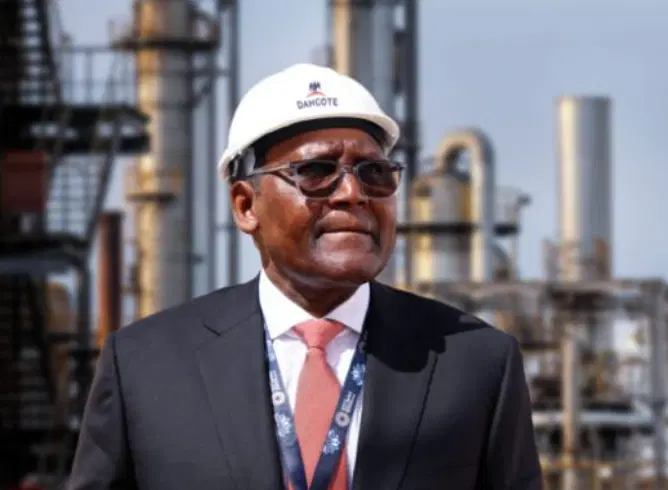
Dangote Refinery Ends Nigeria’s Era of Fuel Import Dependence, Boosts GDP, FX Earnings — EIU
The operational ramp up of the 650,000 barrels per day Dangote Petroleum Refinery & Petrochemicals is fundamentally reshaping Nigeria’s downstream oil sector, significantly reducing the country’s dependence on imported refined petroleum products and strengthening its external position, according to the Economist Intelligence Unit (EIU).
In its latest assessment on Nigeria’s fuel market and regulatory environment, the EIU said the refinery has already transformed a sector that was previously characterised by heavy reliance on imported fuel despite Nigeria being Africa’s largest crude oil producer. The report noted that the refinery met nearly 80 per cent of domestic petrol demand in April and produced enough volumes to satisfy local consumption requirements as operations approached full capacity.
The EIU described Nigeria’s downstream petroleum sector before the refinery as “long dysfunctional”, noting that the country had remained almost entirely dependent on costly imported fuel while producing nearly 1.5 million barrels of crude oil daily.
According to the report, the emergence of the refinery has reduced import dependence, improved domestic fuel availability and strengthened Nigeria’s balance of payments position through lower import demand and rising exports of refined petroleum products.
“The gradual ramp up of the 650,000 barrel/day Dangote refinery since May 2023 has transformed Nigeria’s long dysfunctional downstream sector,” the report stated. “The country’s main refineries, all state owned, had been inoperative for years and Nigeria was almost entirely reliant on costly imported fuel.”
The research and analysis division of The Economist Group, London added that the refinery’s attainment of full operational capacity and its planned expansion would further support Nigeria’s economic growth and foreign exchange earnings over the medium term.
“Meanwhile, the attainment of full capacity at, and an increase in exports from, the Dangote refinery will support real GDP growth and foreign exchange earnings in 2026 and 2027 and beyond, as a planned doubling of the plant’s output comes on stream around the end of the decade,” it added.
Industry analysts said the refinery is increasingly positioning Nigeria as an emerging refining and export hub, altering energy trade flows across Africa and reducing the vulnerability associated with fuel import dependence.
The EIU noted that the refinery’s expansion has coincided with major reforms in Nigeria’s downstream sector, including the removal of fuel subsidies and the introduction of market driven pricing mechanisms.
The report, however, said the transition from a state dominated fuel import structure to large scale domestic refining has triggered resistance from interests linked to the old import regime.
The latest tensions emerged following the decision by the Nigerian Midstream and Downstream Petroleum Regulatory Authority to relax restrictions on petrol imports despite the refinery’s growing capacity to meet domestic demand.
Dangote Industries subsequently initiated legal action, arguing that continued import approvals undermine domestic refining investments and conflict with the objectives of the Petroleum Industry Act, which seeks to encourage local refining capacity and reduce import dependence.
Analysts noted that the availability of large-scale domestic refining capacity has improved Nigeria’s energy security and reduced exposure to external supply shocks and foreign exchange volatility.
The Centre for the Promotion of Private Enterprise also cautioned against unrestrained importation of petroleum products, warning that such a policy could weaken Nigeria’s industrialisation drive and discourage investments in domestic refining.
Chief Executive Officer of CPPE, Muda Yusuf, said continued dependence on imported fuel had historically contributed to pressure on foreign reserves, exchange rate instability and fiscal leakages.
The refinery’s growing impact is also being reflected in Nigeria’s broader macroeconomic indicators. Earlier this month, S&P Global Ratings cited increased domestic refining capacity and rising hydrocarbon exports among the major factors supporting Nigeria’s sovereign credit rating upgrade – the first in 14 years.
Beyond Nigeria, analysts said the refinery is increasingly being viewed as a strategic industrial asset for Africa, where many countries remain heavily dependent on imported fuel despite rising demand for transportation, manufacturing, and power generation.
Business
BREAKING: Court Dismisses $19.6 Million Claim Against NNPCL — Rules Contract Scope Cannot Be Changed Orally
BREAKING: Court Dismisses $19.6 Million Claim Against NNPCL — Rules Contract Scope Cannot Be Changed Orally
In a landmark ruling on Friday, May 22, 2026, the Federal Capital Territory High Court in Abuja threw out a $19.6 million lawsuit filed by Alternate Dimensions Ventures Ltd against the Nigerian National Petroleum Company Limited (NNPCL), affirming a key legal principle: a written contract cannot be expanded through oral agreements or conduct.
Alternate Dimensions had sought $19,600,000 in professional fees, claiming the scope of its Direct Sale, Direct Purchase (DSDP e-pro) contract with NNPCL was orally expanded. Represented by counsel Patrick Peter, the firm argued it was entitled to the revised sum for services rendered under the alleged new terms.
But NNPCL, through its lawyer Ituah Imhanze of KENNA LP, pushed back sharply, arguing that parties are bound exclusively by the clear terms of their written agreement. Imhanze contended that without any written amendment, the claim was legally unsound, and the court agreed.
Delivering judgment, Justice Hamza Mu’azu upheld NNPCL’s defense, stating that the contract was unambiguous and that no evidence was adduced during the trial, which supported the alleged scope expansion. The court further found that NNPCL fully complied with all contractual terms and committed no breach.
Dismissing the suit as meritless, Justice Mu’azu reinforced the doctrine of sanctity of contract: any amendment to a written agreement must be express, unequivocal, and documented, not implied or verbal.
The ruling spares NNPCL from the S19.6 million claim and also a floodgate of similar potential liabilities.


- Joint Statement by the World Health Organization (WHO) and Food and Agriculture Organization of the United Nations (FAO) in South Africa on World Food Safety Day 2026: From burden to solutions – safe food everywhere June 7, 2026
- Liberia: President Boakai Oversees Signing of US$125 Million in World Bank Financing Agreements for Digital Connectivity, Renewable Energy, and Road Infrastructure June 7, 2026
- President Mahama explores Belarus’ agro-industrial hub; seeks partnerships to boost Ghana’s food security June 7, 2026
- National Insurance Corporation of Eritrea (NICE): Shareholders’ Annual Regular Meeting June 6, 2026
- World Cup accredited journalists raise concerns over unfair United States (US) visa restrictions, International Sports Press Association (AIPS) calls on FIFA to intervene June 6, 2026
- Ghana: President Mahama arrives in Belarus, lays wreath at Victory Monument June 6, 2026
- Liberia: President Boakai Advances Clean Energy Agenda; Dedicates 20-Megawatt Solar Power Plant at Mount Coffee June 6, 2026
- African Union (AU) Commission Chairperson mourns Passing of the Former Angola Minister of Foreign Affairs June 6, 2026
- Economic Community of West African States (ECOWAS) Welcomes Students on an Educational Visit to Its Headquarters June 6, 2026
- Seychelles: President Patrick Herminie attended Official Opening of Rise and Shine Day Care Centre at Mont Fleuri June 6, 2026
- Joint Statement by the World Health Organization (WHO) and Food and Agriculture Organization of the United Nations (FAO) in South Africa on World Food Safety Day 2026: From burden to solutions – safe food everywhere June 7, 2026
- Liberia: President Boakai Oversees Signing of US$125 Million in World Bank Financing Agreements for Digital Connectivity, Renewable Energy, and Road Infrastructure June 7, 2026
- President Mahama explores Belarus’ agro-industrial hub; seeks partnerships to boost Ghana’s food security June 7, 2026
- National Insurance Corporation of Eritrea (NICE): Shareholders’ Annual Regular Meeting June 6, 2026
- World Cup accredited journalists raise concerns over unfair United States (US) visa restrictions, International Sports Press Association (AIPS) calls on FIFA to intervene June 6, 2026
- Ghana: President Mahama arrives in Belarus, lays wreath at Victory Monument June 6, 2026
- Liberia: President Boakai Advances Clean Energy Agenda; Dedicates 20-Megawatt Solar Power Plant at Mount Coffee June 6, 2026
-

 news6 months ago
WHO REALLY OWNS MONIEPOINT? The $290 Million Deal That Sold Nigeria’s Top Fintech to Foreign Interests
-

 society1 month ago
SOCIAL MEDIA IS NOT A BATTLEFIELD COMMAND – WHY THE NIGERIAN ARMY’S ACTION AGAINST JUSTICE CRACK IS A NATIONAL SECURITY IMPERATIVE
-

 celebrity radar - gossips4 months ago
Dr. Chris Okafor Returns with Power and Fire of the Spirit -Mounts Grace Nation Altar with Fresh Anointing and Restoration Grace on February 1, 2026
-

 celebrity radar - gossips6 months ago
Prophet Kingsley Aitafo Releases 2026 Prophecy: ‘Nigeria Will Rise, but the World Must Prepare for Turbulence’
You must be logged in to post a comment Login
You must log in to post a comment.