
celebrity radar - gossips
Adesola Adeduntan: Banker with Midas Touch Gets Global Recognition


First Bank of Nigeria Limited has under its Chief Executive Officer, Dr. Adesola Adeduntan positioned the brand as a clear leader in promoting financial inclusion in Nigeria. The bank has continually reached the underbanked and un-banked population to reduce poverty, bolster economic growth and development of Nigeria. These milestones have earned Adeduntan the 2019 Cranfield University Distinguished Alumnus of the Year Award. The Award is the School’s highest honour and recognises his significant success within the banking industry and sector while upholding the highest standards in business practice.
The 21st century has been remarkable in many aspects. It witnessed the rise of a global economy and increase in power of private enterprise that gives individuals power to run businesses successfully.
It is a century where visionary men dared, achieved and moved longstanding businesses to enviable heights. These private sector leaders succeeded where others feared to try.
Dr. Adesola Adeduntan, the Chief Executive Officer of First Bank of Nigeria Limited and Subsidiaries is one of such leaders.
Adeduntan who took the role to run one of Nigeria’s biggest Tier-1 bank since January 1, 2016 has kept in on a path of sustainable growth and contributions to the nation’s domestic economy.
Prior to his appointment, he was an Executive Director and Chief Financial Officer for the Bank since 2014 when he was appointed to the Board of the Bank. Before joining FirstBank in 2014, Adeduntan was a Director and the pioneer Chief Financial Officer/Business Manager of Africa Finance Corporation (AFC).
He has served as a Senior Vice-President & Chief Financial Officer at Citibank Nigeria Limited, a Senior Manager in the Financial Services Group of KPMG Professional Services and a Manager at Arthur Andersen Nigeria, among other exciting career paths.
The bank chief with several years of banking experience has contributed immensely to sustaining FirstBank’s position as a leading Tier-1 bank in the Nigerian financial services space.
Adeduntan is the recipient of the 2019 Cranfield University Distinguished Alumnus of the Year Award, United Kingdom. The Award is the School’s highest honour and recognises those individuals who have achieved significant success within their industry and sector while upholding the highest standards in business practise.
The astute banker has carved a niche for himself by positioning the FirstBank brand as a clear leader in promoting financial inclusion in Nigeria given the significant strides the bank has made in reaching the underbanked and un-banked population designed to reduce poverty and importantly bolster economic growth and development of Nigeria.
As a global thought leader, Adeduntan is well-sought after and has shared his experience and expertise at notable events across the world espousing and even envisioning financial inclusion in the next 125 years.
These events include the 2019 Ethical Finance Conference in the UK which had in attendance over 500 leading finance practitioners from all over the world including with Sarah Breeden, Bank of England; Dame Susan Rice, Banking Standards Board; Gary Gillespie, Chief Economist, Scottish Government; a keynote speaker at 2019 University of Edinburgh Sustainable Business in Africa Forum; The Africa CEO Forum 2018, Abidjan; the London School of Economics and Political Science (LSE) Annual State of Nigeria Conference as well as 2019 LSE Africa Summit.
Adeduntan has won other laurels due to his sustained professional achievements; significant economic and social impact; leadership qualities as well as a role model. These include the 2018 African Banker of the Year in African Leadership Magazine Persons of the Year Award in South Africa.
Analysts believe that the award of the 2019 Cranfield University Distinguished Alumnus of the Year Award, United Kingdom to Adeduntan was in recognition of key milestones the bank has achieved under his leadership.
Agent Banking Milestones
First Bank has under Adeduntan expressed its commitment to continue to drive financial inclusion through its over 37,000 Firstmonie Agent Network present in 99 per cent of the 774 local government areas and has processed over N2 trillion through the initiative.
FirstBank’s Firstmonie service provides financial/banking solutions to rural and semi-urban locations across the country. Such solutions include account opening, cash deposit, cash withdrawals, airtime purchase, bill payments and much more. Through this channel, the bank is committed to providing convenient services that engender and provides ease of access to banking products, thereby saving time and travel costs for users of the network.
While speaking at the Firstmonie Agent Banking National Award ceremony, held in Lagos, Adeduntan said the firstmonie agent network is a channel through which the bank expresses its unalloyed commitment and passion to promote opportunities of financial services for every Nigerian , especially within the low-income segment.
He said: “The initiative has witnessed several changes in the operating structure and value proposition of FirstBank. In December 2017, the bank ran a pilot test with over 400,000 transactions processed and following the success of the first run, it re-launched in 2018.”
According to Adeduntan, through Firstmonie, the bank has remained at the forefront of driving nation-wide inclusion, given our belief that access to financial services is part of lifting people out of poverty and fostering collective national economic development.
Adeduntan said: “The key strengthen of the bank’s services is to look at the gaps in the society and develop products and services that address the gap. As an integral part of our strategy, we believe in working with the CBN to improve financial inclusion index of the country. We would, at FirstBank, assist Nigeria to address poverty and hunger, thereby promoting security of life and property. Because when people are gainfully employed, the implication is that they will think less of crime,” he said.
Banking with Technology
Banking and technology are becoming inseparable. FirstBank under Adeduntan is driving growth and customer services with technology. The 2019 Financial Technology (Fintech) Summit organised by the bank was an opportunity for the bank to emphasise the need for technology in e-business, digital offering, agent banking, wholesale/ transaction banking, retail/consumer lending and Small and Medium Enterprises (SMEs) productivity.
He noted that as a Tier-1 lender, which celebrated its 125th anniversary last March, the bank had been able to maintain its leadership position in the industry by leveraging technology to offer innovative solutions through its product offerings.
According to him, the theme of the summit, “Banking + Tech = Solving Real Problems,” reflects the reality that technology can be applied to add value in all spheres of life. He pointed out that despite the remarkable progress recorded by Nigerian banks through the use technology, there is still a lot to be done in that regard.
Adeduntan said FirstBank remained committed to putting its customers first with excellent financial services and devising new ways of effectively meeting customers’ financial needs.
“Customer experience and innovation are key in our approach to satisfying our customers. As a leading banking services solutions provider, FirstBank has continued to set the pace in the financial services industry, coming up with new initiatives to provide financial products and services with greater speed, accountability and efficiency. Evidently, Financial technology is causing positive disruption in the financial services industry. The impact of technology in lifestyle business and other areas of today’s customer is huge. We are therefore following global trends in collaborating with Fintechs and other big technology companies on several transformational initiatives to be able to satisfy our customers’ needs,” Adeduntan stated.
Cash-less banking milestones/ Youth Empowerment
FirstBank is also under the current leadership, taking advantage of the opportunities created by cash-less banking to innovate and give value to customers. The bank has introduced the Visa Multi Currency Card, an All-in One-Card and first of its kind to be offered by any financial institution in Nigeria. This card can be linked to four currencies: Naira, United States dollar, Euro and British Pounds Sterling accounts.
With the Visa Multi-Currency card, FirstBank customers – within and outside Nigeria – can now enjoy the luxury of having their local and foreign denominated accounts in any currency, linked to a single debit card. The Visa Multi-Currency Card is designed to ease the daily cashless transactional needs of customers regardless of where they are across the world.
The bank is also taking its financial inclusion and youth empowerment drives to institutions of higher learning, targeting the students in financial institutions in its XploreFirst Savings Account campaign.
In alignment with its financial inclusion drive, FirstBank has completed a campaign for rewarding its youth segment customers for using their FirstBank’s XploreFirst Savings accounts and encouraging healthy savings. The promo, which kicked off last October 1 ended on March 30, this year.
XploreFirst account was designed for students between 18 and 29. A minimum amount of N1,000 is required to open the account and account holders are to maintain a balance of N200.
FirstBank recognises the impact of a healthy savings culture in promoting financial inclusion among individuals, especially the youth. And with the saying, the youth are the leaders of tomorrow, we believe that with XploreFirst account, the youth are well positioned to take the lead in their financial activities through the exciting benefits the account offers.
Industry Position
Adeduntan said despite the regulatory headwinds and business shocks, FirstBank’s fundamentals have remained very strong with the group’s asset quality.
He said the bank has under his leadership, focused on loan and remedial management, voluntary reduction of Single Obligor Limit (SOL) and increased board oversight by significantly raising the bars of credit approvals through the Board Credit Committee to remain viable despite the daunting business environment.
Adeduntan said the lender has over the years built an enduring brand that is immediately recognisable as dynamic, dependable, lasting and innovative.
“And we have completed millions of transactions, received billions of deposits and given out trillions of loans and advances- that’s what makes us a bank. But it’s the smiles, the laughs, the handshakes and the spontaneous hugs from the satisfied customers that keep us going and make us part of the community we serve and a member of the world we live in,” he stated in a statement to mark the bank’s 125 years of operation.
Adeduntan said: “Our heritage as the nation’s foremost and largest developmental financial institution is apparent in the Group’s contributions to economic growth and development. Our developmental philosophy is reflected in our business policy and is self-evident in the composition of our loan book as diversified in the nation’s major economic development sectors. These include agriculture, manufacturing, oil & gas, services and public sector, among others.
“As a firm believer in the brand Nigeria and a pioneer in national development, we took a patriotic bet on the country in 2015, consistent with our century-long commitment to nation building as a fundamental pillar of sustainable business development. As at the time we took the measured risks, in line with business realities, it was universally acknowledged as bold business moves as well as a private institution’s obligation to support focused national development.”





Beauty Meets Glamour as Olaide Ogunyemi Opens New Studio in Mushin
Popular Nollywood actress and professional makeup artiste, Olaide Ogunyemi Oluwayemisi aka Damilola, has expanded her footprint in the beauty industry with the grand opening of her new makeup studio in Lagos.
The talented thespian, who is also the Chief Executive Officer of @Dobc_makeovers_andmore, officially unveiled the ultra-modern beauty space last Thursday, April 2, 2026, in a colourful ceremony filled with glamour, fashion, and pageantry.
Strategically located at 101 Palm Avenue, right beside FitPlus and Sparklight Hospital in Mushin area of Lagos, the new studio is designed to offer top-notch beauty services, reflecting Ogunyemi’s commitment to excellence and professionalism in the ever-growing makeup industry.
The opening ceremony attracted friends, colleagues from the Nollywood industry, beauty enthusiasts, and well-wishers who came out in large numbers to celebrate the entrepreneur’s latest milestone. Guests were treated to a vibrant atmosphere that showcased creativity, style, and the evolving standards of the beauty business in Lagos.
Speaking at the event, Ogunyemi expressed her excitement and gratitude, noting that the new studio represents years of hard work, dedication, and passion for her craft. She reaffirmed her commitment to delivering premium beauty services while empowering aspiring makeup artistes.
The launch of the studio further cements her reputation as a dynamic force, successfully blending her career in Nollywood with a thriving beauty brand.
With this latest development, Olaide Damilola Ogunyemi continues to inspire many young entrepreneurs, proving that talent, consistency, and vision remain key drivers of success in Nigeria’s creative and business landscape.


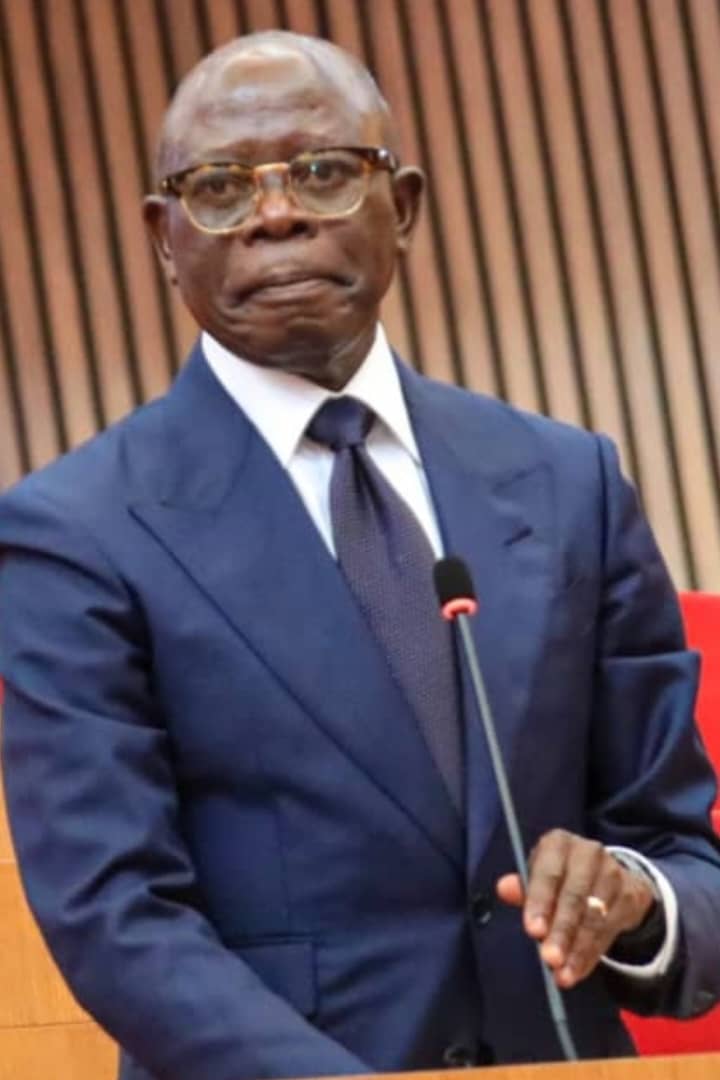
Daniel Eromosele Eulogize Adams Oshiomole as he turns 74 years
Today, I celebrate an exceptional leader, a fearless voice for the people, and a man whose life has remained a symbol of courage, sacrifice, and unwavering commitment to justice—Distinguished Comrade Senator Adams Aliu Oshiomhole.

Your journey has been nothing short of inspiring. From your days as a vibrant labour leader to your impactful tenure as the Executive Governor of Edo State, and now as a respected Senator of the Federal Republic, you have consistently demonstrated what it means to serve with integrity, strength, and purpose. Your contributions to the growth of our nation and the development of Edo State remain indelible and deeply appreciated.
You have not only built structures and institutions but have also built people. I am personally a beneficiary of your leadership, your guidance, and your belief in empowering others. Your influence in my life has been profound, and I remain grateful for the opportunities and inspiration you have given me.
On this special day, I celebrate not just your achievements, but the man you are—resilient, principled, and ever committed to the progress of Nigeria and her people.

May this new year bring you renewed strength, greater wisdom, good health, and more remarkable accomplishments. May your legacy continue to shine brighter with each passing year.
Happy Birthday, sir. Wishing you many more fruitful and impactful years ahead.
celebrity radar - gossips
Accolades to Empress Genevieve Wining as she Celebrate birthday in Grand style

Accolades to Empress Genevieve Wining as she Celebrate birthday in Grand style
Emmanuel Clement
Vilnius, Lithuania – The Grand Hotel Vilnius will host a grand birthday celebration in honor of Her Majesty The Empress Genevieve Wining of the United Kingdom of Atlantis (UKA) on April 4th, 2026.
The four-day event promises to be an extravagant affair, marking the special birthday of Empress Genevieve Wining. The celebration will take place at the prestigious Grand Hotel Vilnius, Lithuania, renowned for its luxurious ambiance and exceptional service.

According to the event flyer, the birthday celebration will be a spectacular occasion, fitting for an empress. Guests can expect an elegant setting adorned with golden accents, sparkling champagne, and festive decorations, creating a regal atmosphere befitting the occasion.
The Empress Genevieve Wining of UKA is expected to grace the event, which will include various festivities and celebrations in her honor. The occasion aims to bring together dignitaries, followers, and guests to commemorate the empress’s birthday with grandeur and joy.
For media inquiries, accreditation, or further information about the birthday celebration of The Empress Genevieve Wining of UKA, please contact the event organizers.
Courtesy of His Excellency Emperor Prof. Solomon Wining. UKA


-

 society7 months ago
Religion: Africa’s Oldest Weapon of Enslavement and the Forgotten Truth
-

 news4 months ago
WHO REALLY OWNS MONIEPOINT? The $290 Million Deal That Sold Nigeria’s Top Fintech to Foreign Interests
-

 society6 months ago
“You Are Never Without Help” – Pastor Gebhardt Berndt Inspires Hope Through Empower Church (Video)
-

 celebrity radar - gossips2 months ago
Dr. Chris Okafor Returns with Power and Fire of the Spirit -Mounts Grace Nation Altar with Fresh Anointing and Restoration Grace on February 1, 2026