
Politics
ADP Candidate Gbadamosi Steals Show As Lagos Governorship Candidates Debate

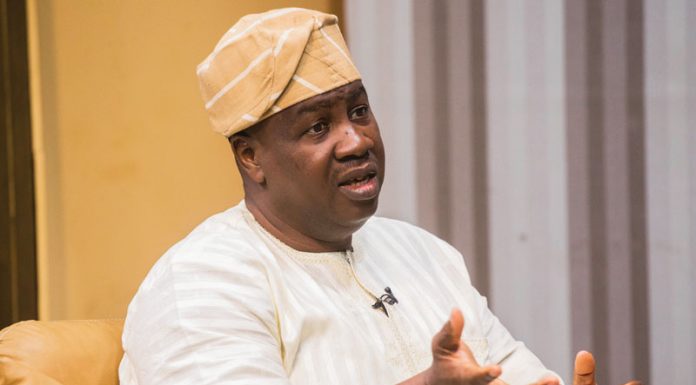

The candidate of the Action Democratic Party (ADP), Babatunde Gbadamosi, was the dark horse that wowed members of the audience in Saturday’s Lagos gubernatorial election debate, as he spoke confidently of his plans if elected governor of the country’s commercial capital.
Mr Gbadamosi, who was a member of the Peoples Democratic Party (PDP) before defecting to the ADP, received rave reviews of his performance in the debate, which was organised by The Platform, a civic discussion initiative of the Covenant Christian Centre.
The interview which was moderated by British-Nigerian Christian broadcaster, Victor Oladokun, had in attendance alongside Mr Gbadamosi, the candidate of the ruling All Progressives Congress (APC), Babajide Sanwo-Olu, the PDP candidate, Jimi Agbaje, and the candidate of the Alliance for Democracy (AD), Owolabi Salis.
Mr Gbadamosi started off on a somewhat shaky note when he was asked about what he would do in his first hundred days in office if elected. He explained that he would try increasing the salaries of civil servants in the state, but he did not explain how he would raise the additional fund needed to do this.
He, however, bounced back from the initial flutter, arguing that his priority will be to boost the infrastructural shortfall of the state by building rail lines to all the exit points of the state, opening up water transportation and the movement of container by barges instead of through the roads to cut the infamous Lagos traffic.
The ADP candidate, who berated the ruling party in the state for lack of prudence in running the state finances, said he would bring his experience from the private sector in handling the spending of state funds.
According to him, he would be able to do this because he “does not have a godfather”, which was a snide remark on the candidate of the ruling APC, Mr Sanwo-Olu, who enjoys the backing of a former governor of the state, Bola Tinubu, generally believed to be the de facto political leader of the state.
Mr Gbadamosi also correctly fact-checked the APC candidate after he falsely stated that the state government was transparent and publishes its budgets. Mr Gbadamosi pointed out that the state budget website no longer existed stating that the government is known for being opaque rather than open. He said if elected into office he would operate an open government.
He berated the current government for being unable to complete its light rail project in 10 years and wondered why the state was paying for it from its purse when it could have welcomed the private sector to finance the project. He also said at a cost of almost $1 billion, the light rail project was too expensive.
He said he would open up the state waterways and improve tourism as a means of growing the state tax revenue if elected into office.
In all, he was the most eloquent of the candidate on display. The figures and data he quoted were mostly correct. He also cited examples of what was being done in other places with similar demographics like Lagos such as Singapore and Ethiopia.
Score 8/10
Sanwo-Olu
Mr Sanwo-Olu, as the candidate of the ruling party, which has been in power for 20 years in the state, unsurprisingly was put on the defensive throughout the debate. But he did a fairly good job of shaking off the attacks from other candidates and in fact, on a couple of occasions, was on the offensive.
He spoke about his experience as a banker and public officer. He said he would bring the experience garnered from being a three-time commissioner in the state in running the state effectively.
He promised to tackle the traffic gridlock in the city and especially promised to solve the perennial gridlock in the Apapa area of the state.
The APC candidate said he would be a listening governor and regularly hold town hall meetings across the state to discuss some of the pressing problems of the state.
Babajide Sanwo-Olu (Photo Credit: Twitter handle)
He said the problems with funds in the state would be solved if more people pay taxes. According to him, out of the possible 16 million taxable people in the state, only 800,000 actually pay taxes. He said he would work towards capturing more people into the tax bracket.
Mr Sanwo-Olu promised to double the state’s health budget from its present 9 per cent to 18-20 per cent. He said he would focus on health insurance for all inhabitants of the states and his priority will be improving primary healthcare.
Mr Sanwo-Olu, however, spent a lot of time talking about his educational qualifications and his experience as a commissioner. Though he put a spirited fight especially when other candidates suggested he was a stooge of Mr Tinubu; but like flies feeding off the wounded ears of a dog, hard as he tried, he was unable to shake off the attack.
He lied that Lagos was transparent and received several rebuttals from other debaters over the claim. Also, some of his responses sounded like he was berating the manner his party has run the state.
Score 6/10
Agbaje
Perhaps the most disappointing candidate of the night was the PDP candidate. His disappointment may not have come from the weakness of his responses as it did from the fact that they were usually below par from what was expected of him. He stammered several times and his responses cross the time given each candidate to respond.
Also, the unexpected brilliance of Mr Gbadamosi appeared to have stolen Mr Agbaje’s thunder. The candidate who was running for the third time may have been hurt by the familiarity of his responses.
On solving the traffic problems of the state, he said he would fix potholes, and innovate the traffic control by installing radar-controlled traffic lights in the state. He said he would strengthen the state traffic control agency, LASTMA, to be more efficient.
Mr Agbaje said he would provide leadership as he is not a stooge. He said rather than ask people to pay more taxes he would open up the state for more businesses in order to capture new taxpayers.
Jimi Agbaje (Centre) is a during the Lagos Governorship debate (Photo Credit: Twitter handle)
He promised to improve the school system with technology and more internet broadband in the state would encourage more students to learn to code and become tech savvy.
He said he would make local governments more efficient by making them independent of the state government. He also promised to expand the road and extend the railway system to other parts of the state to reduce vehicular traffic on the road.
Score 5/10
Salis
The AD candidate, who is no stranger to running for the position of governor, having run three previous times, promised to cut the state from the control of Mr Tinubu. He said he would work to eradicate violence by purging the pockets of gangs across the state.
He, no doubt, provided comic relief during the debate with his somewhat awkward mannerism. And he welcomed a lot of jeers from the audience and criticism from those commenting on social media when he said he was going to build a subway in the city. His said he would appoint 50 special assistants that will help him see to the development of local governments in the state. His response here left many people wondering what would happen to the appointed local government officials.
He promised to take back the wealth of the people of Lagos from those he said have hijacked it and use it to develop the state.
Score: 4/10




Politics
APC Group Endorses Fubara for 2027, Calls on Tinubu and APC to Prioritise Performance Over Politics in Backing Governor’s Second Term Ambition
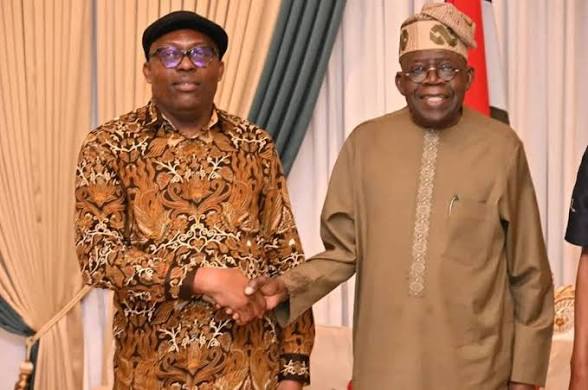
*APC Group Endorses Fubara for 2027, Calls on Tinubu and APC to Prioritise Performance Over Politics in Backing Governor’s Second Term Ambition*
The APC National Vanguard has appealed to President Bola Ahmed Tinubu and the leadership of the All Progressives Congress (APC) to support a second term in office for Siminalayi Fubara, citing what it described as “impressive and verifiable developmental strides” across Rivers State.
In a statement issued on Thursday by its National President, Dr Gbenga Salam (JP), the group said its position followed an extensive assessment tour of key infrastructure and public service projects executed under the Fubara administration.
The APC National Vanguard said the appeal was based strictly on performance, arguing that governance outcomes should outweigh partisan considerations, particularly in a state as economically significant as Rivers.
“We respectfully urge President Bola Ahmed Tinubu and the leadership of the All Progressives Congress to support the continuity of Governor Siminalayi Fubara beyond his current tenure, in recognition of his commitment to development, prudent resource management, and people-focused governance,” the statement read.
According to the group, its delegation visited multiple project sites across the state, observing ongoing and completed works spanning road construction, urban renewal, and public infrastructure upgrades.
It noted that the scale and distribution of these projects reflect a deliberate effort by the state government to extend development beyond traditional urban centres and into underserved communities.
“Our findings from the tour reveal a government that is not only active but intentional in its development agenda. The execution of capital projects across various parts of Rivers State demonstrates a clear understanding of the needs of the people and a commitment to addressing them,” Dr Salam said.
The group particularly commended what it described as prudent financial management by the administration, noting that the projects reviewed showed evidence of careful planning and efficient allocation of resources.
“At a time when economic pressures are evident across the country, it is commendable that the Rivers State government has managed its resources in a way that delivers visible and impactful development without signs of fiscal recklessness,” the statement added.
The APC National Vanguard further observed that despite political tensions in the state, the Fubara administration has maintained focus on governance, ensuring continuity in project execution and service delivery.
The group argued that such stability is critical for sustained development and should be encouraged rather than disrupted.
“Leadership must ultimately be judged by results. In Rivers State, there is clear evidence of progress—projects that are not only announced but executed, and policies that translate into real benefits for citizens,” Dr Salam noted.
The group warned that discontinuity in leadership could stall ongoing projects and reverse gains already recorded, stressing the importance of allowing a performing administration to consolidate its achievements.
“Rivers State is at a pivotal stage where continuity will allow for the completion of ongoing initiatives and the deepening of development gains. Supporting Governor Fubara for a second term is, therefore, a decision in the best interest of the people,” the statement said.
In addition to its call on the APC leadership, the group reaffirmed its support for President Tinubu, expressing confidence in his administration’s broader economic and governance reforms.
The APC group urged Nigerians to remain supportive of efforts aimed at stabilising the economy and strengthening public institutions.
“We reiterate our endorsement of President Bola Ahmed Tinubu for a second term in office, in recognition of his leadership and commitment to national development. With sustained support, the administration can consolidate its reform agenda for the benefit of all Nigerians,” Dr Salam added.
The APC National Vanguard concluded by calling on political actors to prioritise development and public interest over partisan divides, insisting that governance should always be guided by performance and accountability.
“Where leadership demonstrates prudence, delivers development, and remains focused on the welfare of the people, it deserves continuity. This is the position we have reached after a careful and independent assessment of Rivers State,” the statement added.
*Renewed Hope Ambassadors Step Into the Next Phase
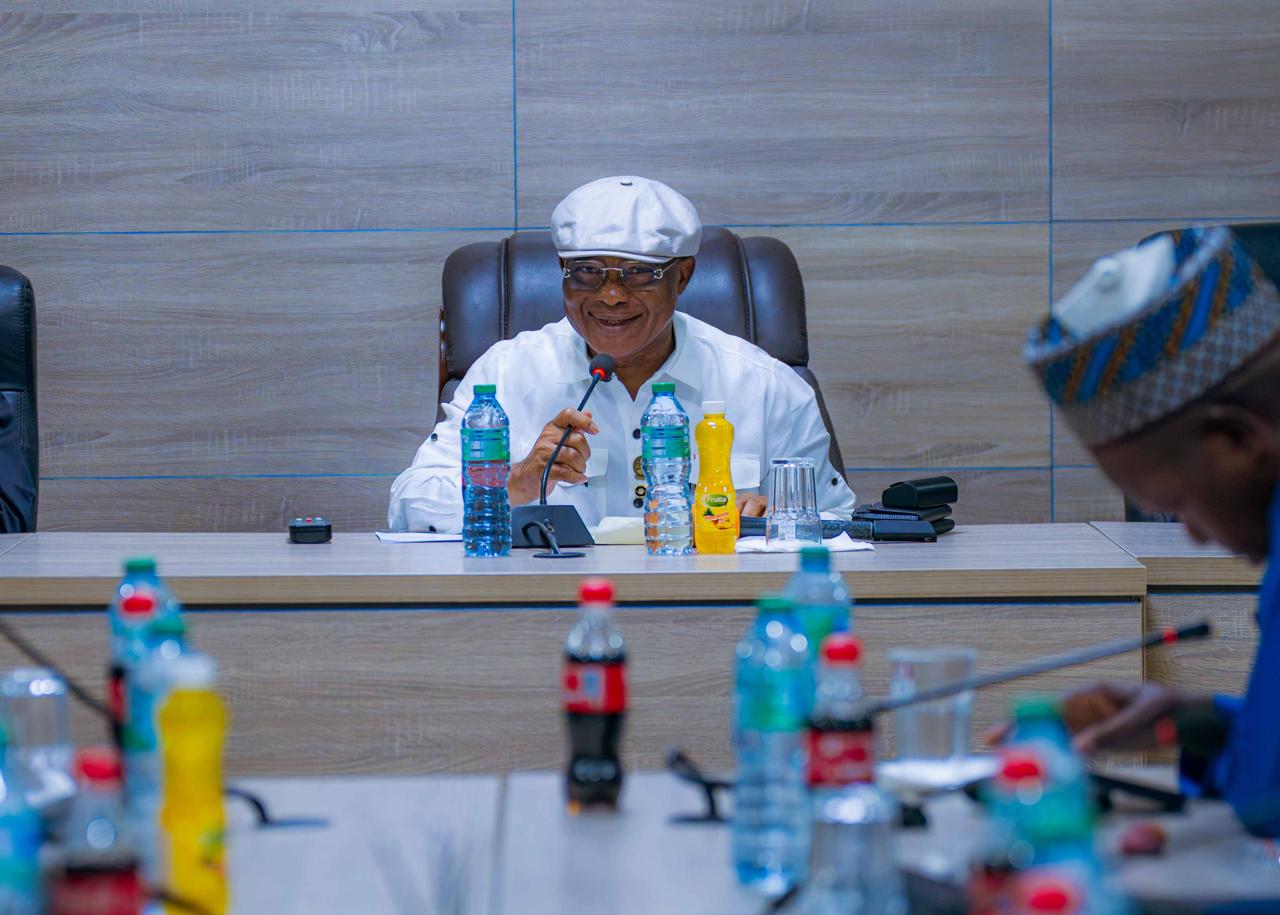
Fresh from the successful APC 2026 National Convention, the Renewed Hope Ambassadors National, Zonal, and State leadership gathered in Abuja over the weekend, for its fourth strategic meeting, setting the tone for nationwide grassroots activation ahead of 2027.
Chaired by Governor Hope Uzodinma (Imo State) the Director General and National Coordinator of the Renewed Hope Ambassadors, alongside Deputy Director-General, Governor Uba Sani of Kaduna State, and Governor Inuwa Yahaya of Gombe State as Secretary, the session reinforced one clear direction: One Party. One Message. One Mobilization whilst also laying out a strategic roadmap for the activation of the network across all communities in Nigeria.
Backed by the strength of 31 APC-led states, the Renewed Hope Agenda is taking Bola Ahmed Tinubu’s message of progress and reform to every corner of Nigeria.
From bold economic restructuring to initiatives like NELFUND, the increase in the national minimum wage from ₦30,000 to ₦70,000, and strategic investments in critical sectors, including PNiCGI, the mission remains clear: helping Nigerians understand both the purpose and the progress of the Renewed Hope vision.
This is coordination at scale. This is grassroots engagement with purpose. This is the next phase of Renewed Hope with One Party, One Message, and One Mobilisation framework
#RenewedHopeAmbassadors #APC #WeAreAPC


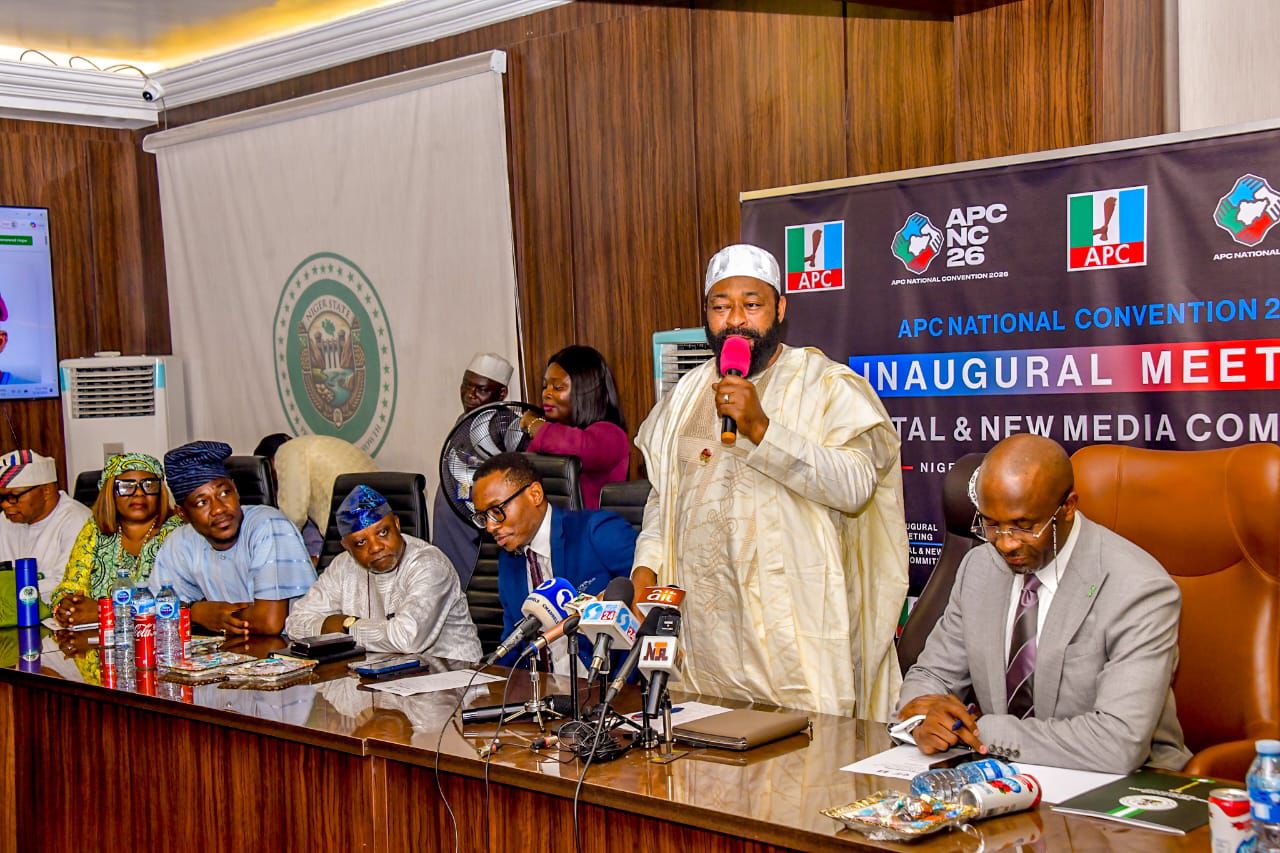
Governor Bago Inaugurates APC Digital Media Sub-Committee Ahead of National Convention.
Governor Umaru Bago has inaugurated the Digital Media Sub-Committee for the forthcoming National Convention of the All Progressives Congress (APC), scheduled to hold on March 27 and 28, 2026 in Abuja.
Chairing the sub-committee, Governor Bago tasked members with the responsibility of effectively communicating the party’s manifesto to the public.
He emphasized the need to leverage social media platforms to highlight the achievements and ongoing efforts of President Bola Ahmed Tinubu, noting that communication gaps have posed challenges that must now be decisively addressed.
The Co-Chair of the sub-committee, Hon. Benjamin Kalu, Deputy Speaker of the House of Representatives, echoed the Governor’s position, urging members to project the activities of both the party and the government to a broader audience.
He called for a deliberate and coordinated effort to showcase the party’s achievements and policy direction, stressing the importance of shaping a compelling and consistent narrative across all digital platforms.
Delivering a presentation to the committee, Otega Ogra, SSA to the President on New Media, who serves as Secretary of the sub-committee, outlined strategic focus areas to guide the team’s operations.
His presentation highlighted communication priorities and actionable steps to achieve the committee’s mandate and strengthen the party’s digital engagement.


-

 society6 months ago
Religion: Africa’s Oldest Weapon of Enslavement and the Forgotten Truth
-

 news4 months ago
WHO REALLY OWNS MONIEPOINT? The $290 Million Deal That Sold Nigeria’s Top Fintech to Foreign Interests
-

 society6 months ago
“You Are Never Without Help” – Pastor Gebhardt Berndt Inspires Hope Through Empower Church (Video)
-

 celebrity radar - gossips2 months ago
Dr. Chris Okafor Returns with Power and Fire of the Spirit -Mounts Grace Nation Altar with Fresh Anointing and Restoration Grace on February 1, 2026
You must be logged in to post a comment Login
You must log in to post a comment.