
society
Africa’s Endless Leadership Curse: Why West, Central and East Africa Remain Trapped in Under Development

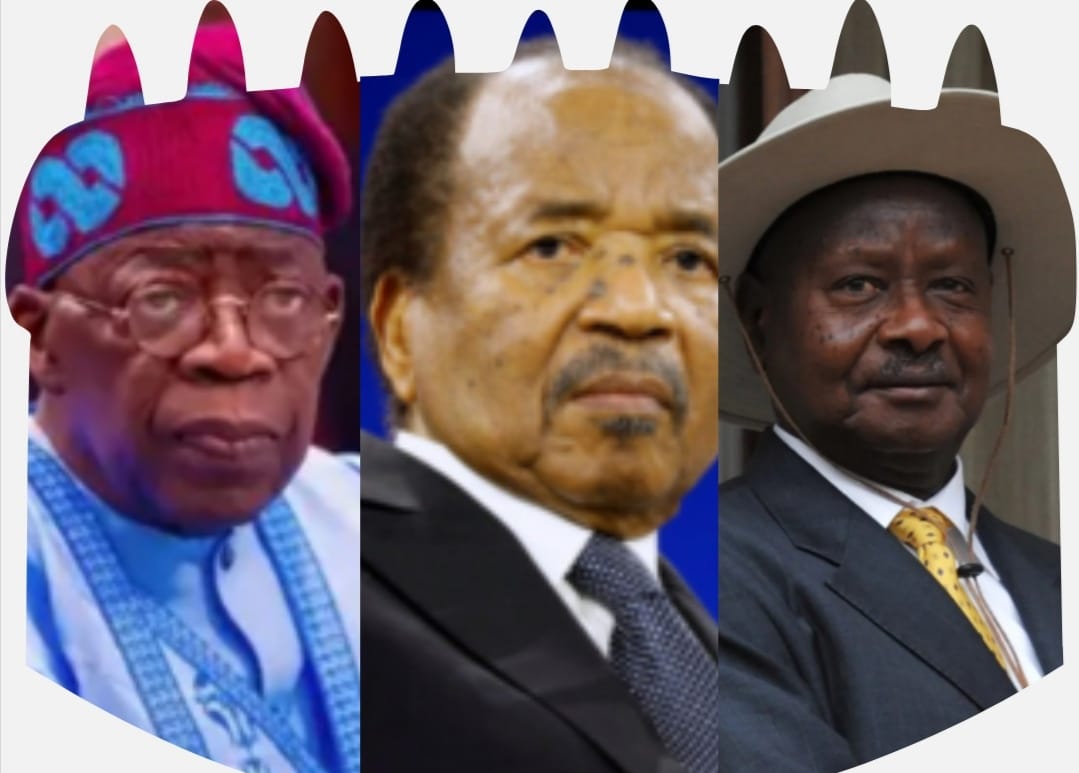
Africa’s Endless Leadership Curse: Why West, Central and East Africa Remain Trapped in Under Development.
George Omagbemi Sylvester | Published by SaharaWeeklyNG.com
“Decades of independence, trillions in natural wealth; yet Africa bleeds under recycled leaders, weak institutions and visionless governance.”
Introduction: The Paradox of Plenty.
More than six decades after independence, Africa remains a continent of contradictions; endowed with immense natural and human resources yet crippled by poverty, corruption and political inertia. From Nigeria’s REVOLVING-DOOR LEADERSHIP to Cameroon’s LONG-STANDING DICTATORSHIP under Paul Biya and Uganda’s near FOUR-DECADE RULE by Yoweri Museveni, Africa’s story reads like a broken record of promises betrayed. The tragedy is not that Africa lacks talent or resources. It is that it lacks visionary leadership and institutional accountability. As the late Chinua Achebe wrote in his classic The Trouble with Nigeria (1983), “The trouble with Nigeria is simply and squarely a failure of leadership.” That timeless diagnosis captures the state of most African nations today, a leadership vacuum sustained by GREED, TRIBALISM and a CULTURE of IMPUNITY.

The Mirage of Independence.
When NIGERIA GAINED INDEPENDENCE IN 1960, it was seen as the BEACON of BLACK HOPE and a nation destined to lead Africa into a new era of prosperity. Similarly, UGANDA and CAMEROON emerged from colonial rule with optimism and promise. Yet, independence merely replaced white rulers with black elites who preserved colonial structures of exploitation.
Since 1979, Nigeria has witnessed over a dozen leadership transitions (from Shehu Shagari to Muhammadu Buhari and now Bola Ahmed Tinubu) yet none have broken the chains of poverty, insecurity and infrastructural decay. Over 200 million Nigerians still share less than 5,000 megawatts of electricity, an amount that powers a single suburb in Johannesburg or London.
Cameroon’s story is even more tragic. Paul Biya, who became president in 1982, is now 92 years old and remains one of the world’s LONGEST-SERVING heads of state. He has ruled mostly from Switzerland, earning the nickname “the ABSENTEE PRESIDENT.” Meanwhile, Yoweri Museveni of Uganda, who seized power in 1986, has altered the constitution twice to abolish term and age limits. Under his regime, dissent is criminalized, opposition silenced and political offices turned into hereditary possessions.
According to Transparency International’s 2024 Corruption Perceptions Index, Nigeria ranked 145th, Cameroon 154th, and Uganda 142nd out of 180 countries and there are proofs that corruption remains INSTITUTIONALIZED not INCIDENTAL.
LEADERSHIP without VISION: The Heart of the Problem.

Africa’s political elite mistake longevity for leadership and charisma for competence. In advanced democracies, continuity means institutional strength; in Africa, it means autocracy. Angela Merkel ruled Germany for sixteen years and left behind a legacy of stability, innovation and fiscal discipline. By contrast, Biya and Museveni’s combined 81 years in power have produced neither industrial transformation nor human capital development.
Professor P.L.O. Lumumba, a respected Kenyan scholar, once said, “Africa is a continent of rulers, not leaders; men who love power more than they love their people.” This statement reflects the psychological foundation of Africa’s crisis, leaders see power as PROPERTY not RESPONSIBILITY.
In Nigeria, leadership recycling has reached absurd proportions. The same politicians who failed in the 1980s still dominate public life today under new party labels. The result is a stagnant political system where innovation is suffocated and accountability absent.

Dr. Ngozi Okonjo-Iweala, Director-General of the World Trade Organization, once observed, “You cannot continue doing the same thing and expect different results. Africa must reform its governance if it must progress.” Yet, the message falls on deaf ears.
The Economic Tragedy of Political Greed.
Africa’s natural wealth is staggering. The continent holds 60% of the world’s arable land, 30% of mineral reserves and 12% of global oil reserves. Nigeria alone has earned over $1 trillion in oil revenue since the 1970s. Yet, the World Bank’s 2024 data shows that over 90 million Nigerians live in extreme poverty. Uganda’s GDP per capita hovers around $1,100, while Cameroon’s remains below $1,600.
Why this paradox? African leaders have chosen CONSUMPTION over PRODUCTION and LUXURY over LEGACY. National budgets are bloated with political overheads while critical sectors like education, health and research receive crumbs. In Nigeria, lawmakers earn one of the world’s highest legislative salaries, with over ₦300 billion spent annually on the National Assembly, yet public schools and hospitals crumble.
In Uganda, billions are spent on presidential security and propaganda while citizens struggle with inflation and unemployment. In Cameroon, decades of centralized power have turned state institutions into extensions of the presidency. Economist Jeffrey Sachs put it bluntly: “Africa’s greatest tragedy is not poverty but the failure of leadership to convert resources into opportunities.”
The Colonial Hangover.
Beyond politics, Africa’s backwardness is rooted in psychological colonization. Many POST-INDEPENDENCE LEADERS INHERITED COLONIAL MENTALITIES; VALUING FOREIGN VALIDATION OVER DOMESTIC INNOVATION. The West and more recently, China, continue to exploit this dependency through AID TRAPS and DEBT DIPLOMACY.
In the Central African region, Chinese loans have financed infrastructure projects that often end in debt crises, while Western corporations plunder resources in exchange for political patronage. The African Union (AU), which should serve as a continental watchdog, has become a gentleman’s club for autocrats. It condemns coups but tolerates constitutional manipulations and rigged elections.
Professor Ali Mazrui once noted, “Africa is the only continent where political independence preceded economic independence.” This imbalance explains why Africa remains economically enslaved despite political sovereignty. Without economic liberation and institutional autonomy, political freedom is a mirage.
The Regional Breakdown: West, Central and East Africa’s Failures.
The uneven development across Africa reflects the different degrees of dysfunction in its regions.

West Africa: plagued by COUPS, TERRORISM and ECONOMIC INSTABILITY. From Mali to Niger and Burkina Faso, military takeovers reflect citizens’ frustration with civilian incompetence. Nigeria, despite being the regional giant, faces WIDESPREAD INSECURITY, INFLATION and GOVERNANCE COLLAPSE.
Central Africa: dominated by DYNASTIC RULERS like Biya (Cameroon), Nguesso (Congo) and Obiang (Equatorial Guinea). These regimes suppress dissent, rig elections and loot state coffers with impunity.
East Africa: projected as stable but largely AUTOCRATIC. Museveni’s Uganda and Kagame’s Rwanda showcase controlled democracies where opposition is tolerated only in theory.
According to the Mo Ibrahim Index of African Governance (2024), the West, Central and East African blocs score the lowest in rule of law, participation and accountability. Citizens’ rights are routinely violated and media freedom is heavily restricted.
The cost of this failure is staggering. The United Nations Development Programme (UNDP) estimates that Africa loses $88 billion annually to illicit financial flows, mostly driven by corruption and capital flight; money that could have built schools, hospitals, industries and done good for its nations.
The Second Liberation: A Call to Conscience.
Africa’s first liberation freed it from colonial rule. The second must free it from corrupt elites and intellectual laziness. Change will not come through foreign aid or borrowed policies but through citizens’ awakening and institutional reform.
The new generation must rise beyond ethnicity and partisan loyalties. Youth must understand that democracy is not about voting every four years but about holding power accountable every day. Civil societies, journalists and reform-minded leaders must form coalitions that challenge the old order.
As Nelson Mandela declared, “Sometimes it falls upon a generation to be great; you can be that great generation.” That call is urgent now more than ever. Africa cannot continue to romanticize its potential while squandering its future.
Final Word: The Courage to Lead.
Africa’s tragedy is not a curse from the gods; but a self-inflicted wound. The continent’s leaders have consistently failed to build nations beyond their tribes and ambitions. Until leadership becomes a duty, not a privilege (until institutions become stronger than individuals) Africa will remain a giant crawling on its knees.
History has shown that no nation develops by accident. LEADERSHIP, ACCOUNTABILITY and VISION are the engines of progress. From Singapore under Lee Kuan Yew to South Korea under Park Chung-hee, nations have transformed through discipline and purpose. Africa must learn this lesson or remain a byword for failure.
As George Omagbemi Sylvester concludes,
“Africa is not cursed; it is simply cursed by those who rule it. Until the throne becomes a place of service and not self-worship, our liberation remains incomplete.”




celebrity radar - gossips
Accolades to Empress Genevieve Wining as she Celebrate birthday in Grand style

Accolades to Empress Genevieve Wining as she Celebrate birthday in Grand style
Emmanuel Clement
Vilnius, Lithuania – The Grand Hotel Vilnius will host a grand birthday celebration in honor of Her Majesty The Empress Genevieve Wining of the United Kingdom of Atlantis (UKA) on April 4th, 2026.
The four-day event promises to be an extravagant affair, marking the special birthday of Empress Genevieve Wining. The celebration will take place at the prestigious Grand Hotel Vilnius, Lithuania, renowned for its luxurious ambiance and exceptional service.

According to the event flyer, the birthday celebration will be a spectacular occasion, fitting for an empress. Guests can expect an elegant setting adorned with golden accents, sparkling champagne, and festive decorations, creating a regal atmosphere befitting the occasion.
The Empress Genevieve Wining of UKA is expected to grace the event, which will include various festivities and celebrations in her honor. The occasion aims to bring together dignitaries, followers, and guests to commemorate the empress’s birthday with grandeur and joy.
For media inquiries, accreditation, or further information about the birthday celebration of The Empress Genevieve Wining of UKA, please contact the event organizers.
Courtesy of His Excellency Emperor Prof. Solomon Wining. UKA
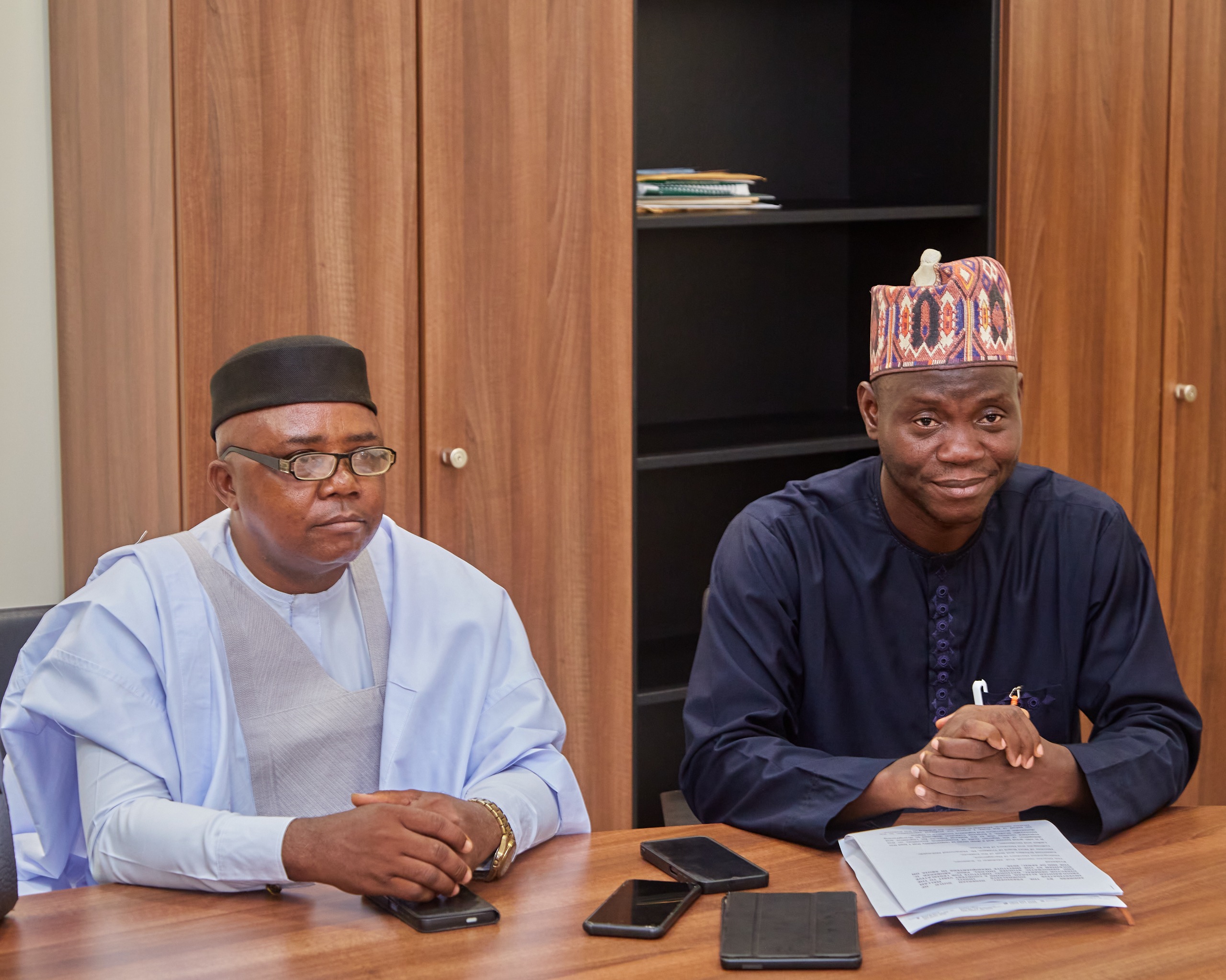
Democratic Accountability in Focus as NGIJ Courts NILDS for Strategic Collaboration
The Nigerian Guild of Investigative Journalists (NGIJ) has sought a strategic partnership with the National Institute for Legislative and Democratic Studies (NILDS) to enhance legislative reporting, strengthen democratic accountability, and promote evidence-based journalism in Nigeria.
The proposal was made during a courtesy visit by the NGIJ delegation, led by its President, Mallam Abdulrahman Aliagan, to the Institute’s headquarters in Abuja.
The Director-General of NILDS, Professor Abubakar O. Suleiman, was represented at the meeting by the Director of Legal Services, Professor Ibrahim Danwanka. Also in attendance were the Special Adviser to the DG on Media, Mr. Muhammad Abdulkadir and the Director of Information, Mr. Emmanuel Atakpo.
Speaking during the visit, Aliagan described the engagement as a strategic step toward building synergy between investigative journalism and legislative research institutions. He commended the leadership of Professor Suleiman for transforming NILDS into a leading centre for legislative studies and democratic governance in Africa.
“This visit is not merely ceremonial—it is deeply strategic. NGIJ and NILDS share a common vision of strengthening democracy, promoting accountability, and deepening good governance in Nigeria,” Aliagan said.
He explained that while NILDS advances democratic governance through research and legislative capacity development, NGIJ complements these efforts through investigative journalism and public-interest reporting.
Aliagan highlighted the Guild’s activities across the country, particularly its Governance Assessment Visits conducted in Kogi, Bayelsa, Ondo, Kwara, Osun, and Kaduna states, noting that such engagements have improved public discourse and strengthened accountability at the subnational level.
“Our mission is to promote ethical investigative journalism, strengthen transparency in governance, and build capacity for data-driven reporting that connects citizens with democratic institutions,” he said.
The NGIJ President also proposed collaboration in areas such as training on legislative processes, joint research and publications, policy dialogues, data sharing, and fellowship programmes for journalists and researchers.
He further informed the Institute of the Guild’s plan to host the Dele Giwa Memorial Annual Lecture on Investigative Journalism in June as part of activities marking Democracy Day. The Guild requested that Professor Suleiman serve as keynote speaker and sought approval to use NILDS’ auditorium for the event.
“We are confident that your presence and intellectual contribution will greatly enrich the discourse and lend national significance to the event,” Aliagan added.
Responding on behalf of the Director-General, Professor Danwanka welcomed the proposal and described the initiative as timely and beneficial to national development. He commended NGIJ for its commitment to accountability journalism and its recognition of the Institute’s growing impact.
“If there is any institution journalists need to collaborate with, it is NILDS.
Legislative reporting requires specialised knowledge that many journalists currently lack,” Danwanka said.
He explained that NILDS was established by an Act of Parliament in 2011 and later expanded in 2017 to include broader responsibilities covering democratic institutions and civil society organisations.
According to him, the Institute has grown significantly under Professor Suleiman’s leadership, expanding from four departments to eleven, with increased staff strength and wider national, regional, and continental visibility.
Danwanka noted that NILDS currently provides research and capacity-building support not only to Nigeria’s legislature but also to parliaments across West Africa and other parts of the continent, including Kenya, Zimbabwe, Malawi, Ghana, and Togo.
“Legislature is a specialised field. Even experts from other disciplines must acquire knowledge of its processes to report it accurately. That is where NILDS comes in,” he said.
He assured the NGIJ delegation that all requests presented during the visit, including collaboration proposals, the use of the Institute’s facilities, and the invitation to the DG would be communicated for necessary action.
Danwanka also acknowledged NGIJ’s commendation of the appointment of Mr. Abdulkadir as Special Adviser on Media, describing the recognition as thoughtful and well-deserved.
The meeting ended with both parties expressing optimism about establishing a formal framework for collaboration, with a shared commitment to strengthening democratic institutions and improving governance through knowledge-driven journalism.
“This engagement marks the beginning of a sustainable partnership that will advance legislative excellence and investigative journalism in Nigeria,” Danwanka said.


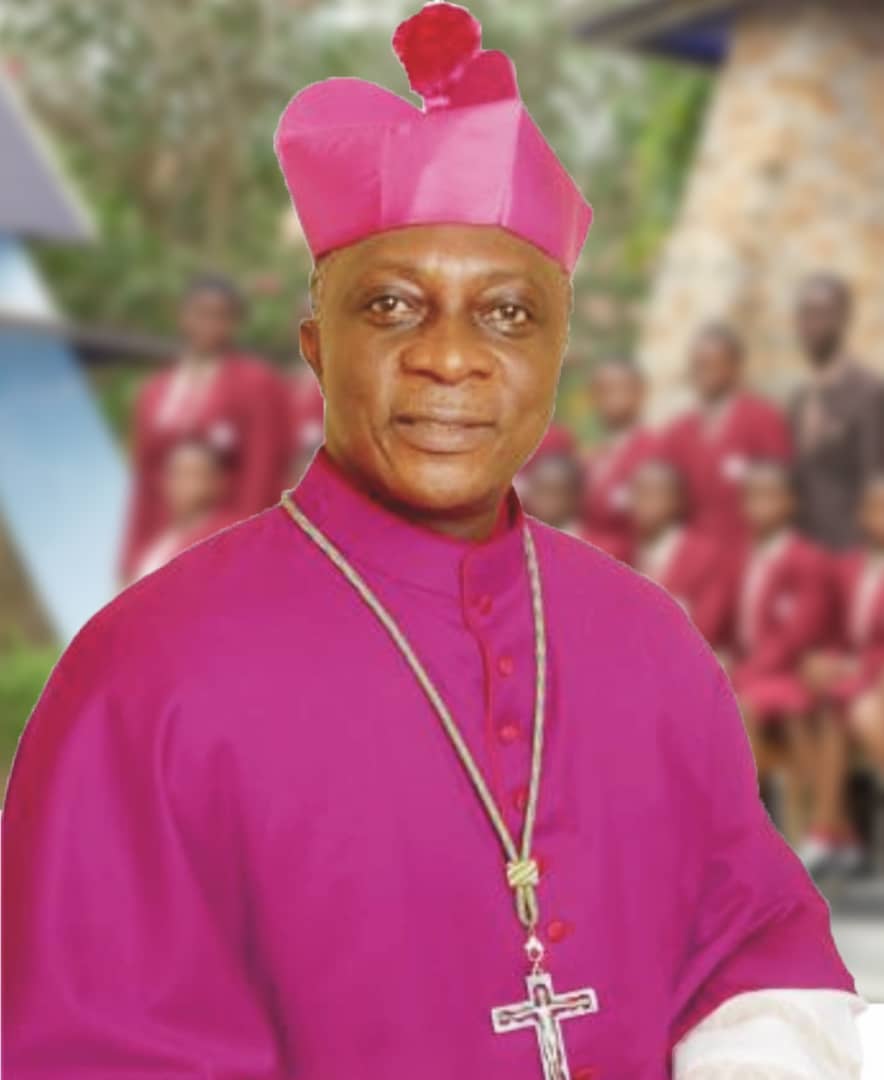
GOVERNMENT MUST TACKLE NATION’S PRESSING CHALLENGES — BISHOP MARTINS URGES AT CHRISM MASS
By Ifeoma Ikem
The Holy Cross Cathedral, Lagos, was filled with joy, reverence, and renewed commitment on Holy Thursday as Catholic faithful across the metropolis gathered for the annual Chrism Mass — a solemn celebration marking the institution of the priesthood, the Holy Eucharist, and the blessing of sacred oils used throughout the liturgical year.

During the ceremony, the Catholic Archbishop of Lagos, Most Rev. Adewale Martins, described the Chrism Mass as a profound moment in the life of the Church.
He noted that it offers priests an opportunity to renew their vows and reflect on the centrality of the Eucharist, which he emphasized remains the heartbeat of the Catholic faith.
Addressing national issues, Bishop Martins acknowledged the government’s ongoing efforts to tackle Nigeria’s current challenges.
However, he stressed the need for more decisive and accelerated interventions, particularly in securing lives and easing the economic burdens confronting citizens.
He congratulated priests on their feast day and reflected on the rising influence of digital evangelization. While recognizing that many people now “inhabit online spaces,” he warned clergymen to handle social media with caution, discipline, and fidelity to Church teachings. According to him, digital influence must never overshadow spiritual integrity.
“The oils blessed today are not simply symbols; they speak of being set apart by a mark not earned, not crafted, but given,” he said. “As we renew our promises, we do not recreate ordination; we awaken memory. We were not ordained to build profiles but to bear Christ.”
He further noted that the digital world has become a place where people “gather, argue, celebrate, confess, misunderstand, and sometimes encounter truth.” For this reason, he said the Church recognizes the need to take the Gospel into that space without compromising its authenticity.
In his homily, Rev. Fr. Paul Akin-Otiko, Chaplain of St. Thomas More Catholic Chaplaincy, University of Lagos, emphasized the enduring significance of the Chrism Mass as an ancient tradition where sacred oils are consecrated.
He urged priests to pray fervently for the sick using the blessed oils, reminding them that true healing comes from God.
Fr. Akin-Otiko encouraged clergy to remain selfless, warning them never to turn the Church into a source of personal gain.
He stressed that their primary duty is the salvation of souls and the welfare of the people entrusted to them.
Monsignor John Aniagwu took a moment to appreciate Anthony Cardinal Olubunmi Okogie for his fatherly guidance and exemplary leadership. He prayed for God’s continued blessings, asking that all present be granted good health to witness many more Chrism Masses.
The highlight of the ceremony was the renewal of vows by hundreds of priests, who reaffirmed their commitment to lives of dedication, chastity, and obedience to the Church and their bishop — an act that drew heartfelt applause from the congregation.
The celebration concluded with songs of thanksgiving, joy, and renewed devotion.


-

 society7 months ago
Religion: Africa’s Oldest Weapon of Enslavement and the Forgotten Truth
-

 news4 months ago
WHO REALLY OWNS MONIEPOINT? The $290 Million Deal That Sold Nigeria’s Top Fintech to Foreign Interests
-

 society6 months ago
“You Are Never Without Help” – Pastor Gebhardt Berndt Inspires Hope Through Empower Church (Video)
-

 celebrity radar - gossips2 months ago
Dr. Chris Okafor Returns with Power and Fire of the Spirit -Mounts Grace Nation Altar with Fresh Anointing and Restoration Grace on February 1, 2026