
society
Africa’s Real Struggle: RELIGION, TRIBALISM and POLITICAL ROT. Our Greatest Enemies Are Within


Africa’s Real Struggle: RELIGION, TRIBALISM and POLITICAL ROT. Our Greatest Enemies Are Within. (Opinion)
By George Omagbemi Sylvester | Published by SaharaWeeklyNG.com
In 2025, Africa continues to bleed not from the lashes of colonialism, but from self-inflicted wounds of religious fanaticism, tribal bigotry and unchecked political greed. While the continent has achieved independence from colonial rule decades ago, it remains mentally enslaved, economically pillage and socially disoriented by the very people who swore to liberate it. THE PAINFUL TRUTH IS: AFRICA’S BIGGEST PROBLEM IS NOT THE WEST. IT IS AFRICANS.

Religion Without Righteousness. Across Africa today, mega-churches rise like castles, even in the midst of HUNGER-STRICKEN and POVERTY-RAVAGED COMMUNITIES. The new “holy war” is not spiritual but economic. Factories are being converted into religious centers, while jobs vanish into thin air. Clergymen live in obscene opulence, flying private jets and owning fleets of luxury cars, while their followers sleep in makeshift shacks. Instead of producing goods, we now mass-produce prayers.
Nigeria, for example, has more churches per capita than most countries in the world, yet it ranks among the poorest nations globally. The 2024 World Bank data shows that over 71 million Nigerians live in extreme poverty. Contrast this with the net worth of some religious leaders who rank among Africa’s richest individuals. Pastor David Oyedepo is reportedly worth over $150 million, according to Forbes estimates, while many of his congregants survive on less than a dollar a day. This is not faith. This is fraud wrapped in holy garments.

Religious manipulation has replaced colonial indoctrination. Clergy no longer challenge power; they dine with politicians. They bless looters and prophesy victory for criminals in exchange for favors. As Professor Patrick Lumumba rightly said, “Africans have become so religious that they cannot question their religious leaders even when they are clearly wrong.” The pulpit is no longer a sacred place for the truth; it has become a political podium for lies, deception and control.
Tribalism is Africa’s Terminal Cancer. We chant unity in public and sow division in private. In every African election, tribal loyalty often supersedes competence. Nations like Nigeria, South Sudan, Ethiopia, Cameroon and the Democratic Republic of Congo are fragmented along ethnic and tribal lines. Rwanda, once torn apart by the Hutu-Tutsi genocide of 1994, serves as a tragic reminder of what tribalism can cost.
Despite our education, tribal thinking remains deeply entrenched. In Nigeria, the “WE versus THEM” narrative has crippled national cohesion. In South Africa, xenophobia cloaked in tribal solidarity continues to target fellow Africans under the guise of nationalism. In Ethiopia, the Tigray conflict revealed how fragile the union is when tribal supremacy becomes weaponized.
As former UN Secretary-General Kofi Annan once said, “We may have different religions, different languages, different colored skin, but we all belong to one human race.” Sadly, Africa has yet to internalize this.

Tribalism is not cultural pride, it is cultural ignorance when it becomes exclusionary. It stifles innovation, undermines meritocracy and empowers mediocrity. It fuels electoral violence, promotes nepotism, and discourages inter-ethnic cooperation.
Politics of Plunder, Not Progress. Perhaps the greatest tragedy in Africa is its breed of leaders who are GREEDY, SELFISH and UNAPOLOGETICALLY CORRUPT. From state houses to parliaments, political power has become a license to loot. The idea of public service is extinct; what remains is private enrichment under public titles.
Based on the Global Financial Integrity (GFI) report, Africa loses over $88.6 billion annually in illicit financial flows. Most of this money ends up in European banks, offshore tax havens and luxury real estate in Dubai, London and other parts of Europe. While hospitals rot and schools collapse, politicians siphon billions to buy yachts and castles overseas.
In Angola, former President José Eduardo dos Santos and his daughter Isabel reportedly siphoned over $2.1 billion of public wealth. In Nigeria, the late General Sani Abacha looted more than $5 billion, with billions still being recovered decades later. South Africa’s Jacob Zuma presided over what became globally known as “state capture,” a monumental abuse of power by private interests, notably the Gupta family.
These are not isolated incidents; they represent a continent-wide disease. From Zimbabwe’s Mugabe to Equatorial Guinea’s Obiang Nguema, Africa’s leaders have perfected the art of staying in power through manipulation, oppression and division.
As Chinua Achebe warned in his classic The Trouble with Nigeria, “The trouble with Nigeria is simply and squarely a failure of leadership.” That statement remains painfully accurate across the entire continent.
When Will the Healing Begin?
Africa does not need pity. It needs action. We need to stop blaming colonialism for problems created and perpetuated by Africans. Yes, the colonial past was brutal and exploitative, but six decades after independence, the excuse has expired.
The healing begins when: We hold our religious leaders accountable.
The gospel is not a business model. Mosques and churches should be taxed if they become profit-making enterprises. Religious institutions must return to their roles as moral compasses not financial empires.
We dismantle tribal politics. The media, civil society and schools must lead the campaign to promote national identity over tribal loyalty. Young people must be taught to value competence, vision and ethics; not TRIBE or TONGUE.
We prosecute and shame corrupt leaders. Anti-corruption must go beyond political slogans. We must reform our judiciary, empower civil society and adopt technology to track public funds. Leaders must be treated as servants not kings.
We invest in education and critical thinking.
An INFORMED CITIZEN is a DANGEROUS CITIZEN to CORRUPT RULERS. Schools must teach civic responsibility, not just pass exams. As Thomas Jefferson said, “An educated citizenry is a vital requisite for our survival as a free people.”
We must love Africa enough to stay and build.
The exodus of Africa’s best minds to Europe and America must be reversed. Brain drain is not just an economic issue but also a moral one. Who will fix Africa if everyone runs away?
The Time is Now. Africa has the youngest population in the world, with over 60% under the age of 25. This is our greatest hope and greatest risk. If empowered, this generation can rebuild the continent. If ignored, they can burn it down. As Nelson Mandela said, “Young people must take it upon themselves to ensure that they receive the highest education possible so that they can represent us well in the future as future leaders.”
The mirror does not lie. Africa’s true enemy is not COLONIALISM, EUROPE or AMERICA. The true enemy is the preacher selling lies for tithes, the tribal chief selling division for loyalty and the politician selling the future for foreign accounts.
It is time to stop praying for change and start acting for it. Let the healing start. Let the chains we placed on ourselves be broken; by us.

Written by George Omagbemi Sylvester
Published by SaharaWeeklyNG.com




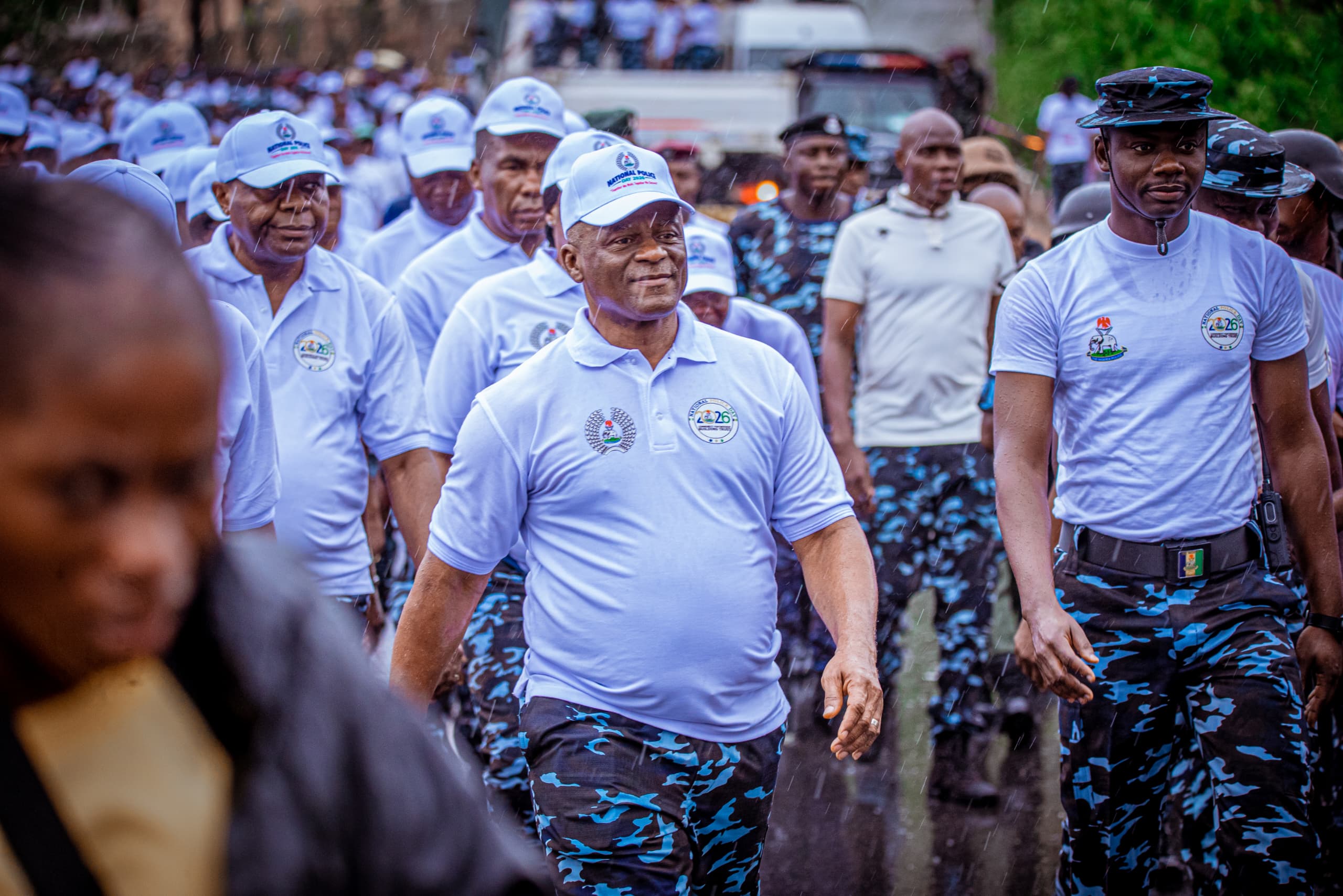
Police Day 2026: IGP Disu Leads Nationwide Walkathon To Strengthen Community Trust
The Inspector-General of Police, Olatunji Disu, on Tuesday led the management team, alongside officers and personnel of the Nigeria Police Force, in a nationwide walkathon to commemorate the 2026 National Police Day.
The event, held across state capitals and the Federal Capital Territory, formed part of activities marking Day Two of the annual celebration, themed “Community Partnership: Building Trust.”
The symbolic exercise, which drew participation from both police personnel and members of the public, was aimed at showcasing unity, discipline, and a renewed commitment to community policing and public safety.
According to the Force leadership, the walkathon underscores the Nigeria Police Force’s resolve to strengthen public trust, deepen engagement with citizens, and enhance collaboration in tackling security challenges across the country.
Participants described the initiative as a practical step toward bridging the gap between law enforcement and the communities they serve, while also promoting physical fitness and mental well-being among officers and civilians alike.
With the theme reflecting a shared responsibility for safety, the Police reiterated that sustainable security can only be achieved through active partnership with the public.
The event concluded with a renewed call for collective action under the banner: “Together We Walk, Together We Secure,” emphasizing unity of purpose in building a safer and more secure society for all Nigerians.


society
Dr. Chris Okafor invokes divine retribution upon individuals blackmailing the Grace Nation church
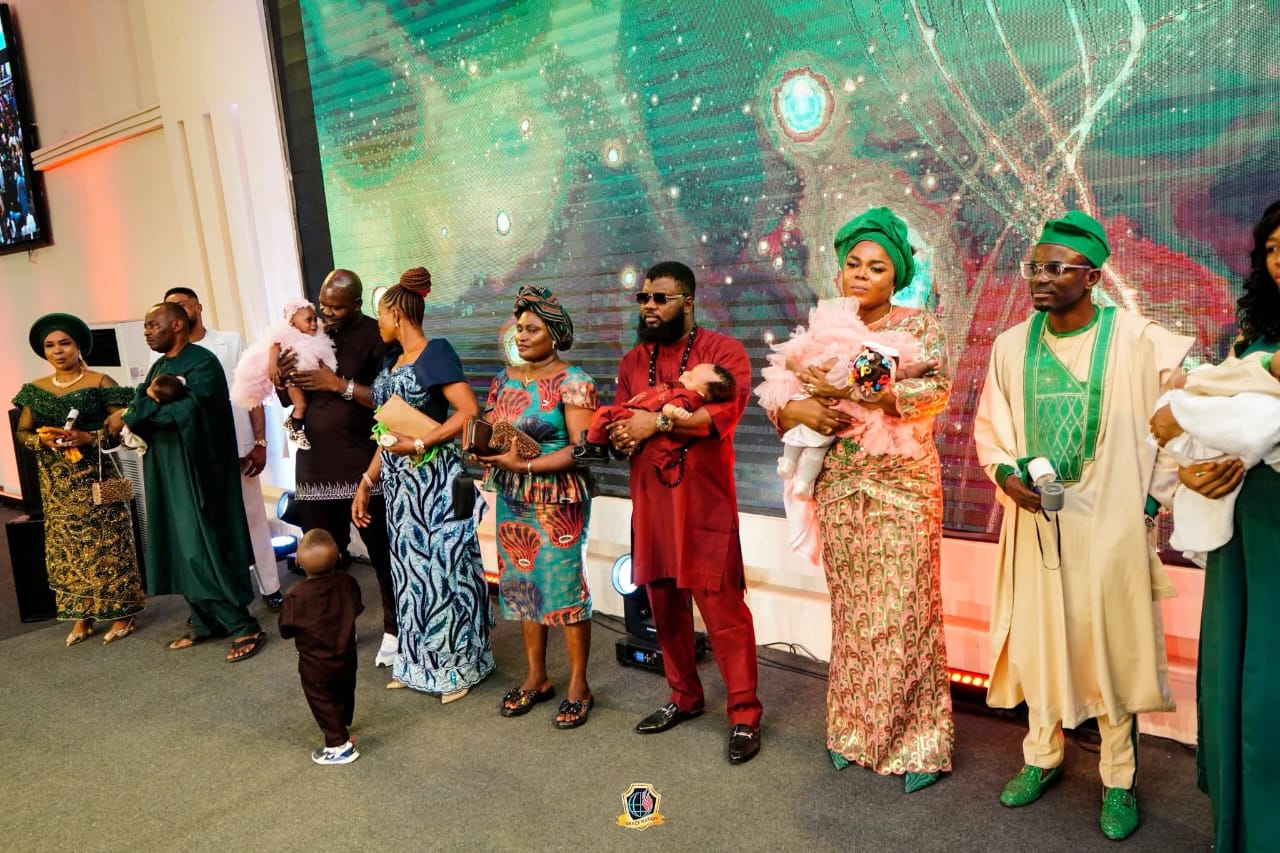
Dr. Chris Okafor invokes divine retribution upon individuals blackmailing the Grace Nation church
… Affirming God’s omnipotence to unveil malicious schemes.
To be frank, the ability of Doris Ogala and her associates to withstand the arduous challenges set by Senior Pastor Dr. Chris Okafor of Grace Nation Global at the culmination of the Harvest of Babies 2026 conference, the church’s flagship event, continues to elude me.
It’s advisable not to offend a powerful spiritual leader like Prophet Chris Okafor to avoid potential consequences, as seen in the situation with Doris Ogala, who was rebuked by the prophet; can she rectify the situation through confession?
Insiders close to the man of God claim that despite relentless online bullying and blackmailing, the Generational Prophet remains resolute, stating that God’s power has been evident throughout the commission’s existence. The reason for this wonderful statement is found in the scriptures, “Upon this rock I shall build my Church, and the gates of hell shall not prevail.” The more falsehoods are spread about the church and its leader, the more God elevates the church and propels him to greater heights, he asserted. He emphasized that blessings and fruitfulness are antidotes to curses, noting that God continues to bestow blessings upon the church, including miracles and the gift of children, which is one reason for the grand finale of the annual family liberation program, The Harvest of Babies.
However, the man of God issued a curse on each person speaking ill of the church, blackmailing, and uttering all sorts of falsehoods against the church, declaring that if they refused to repent within a few days, the earth would swallow them and their family members, stating that they would be of no use to themselves, their families, or society at large.
The spiritual leader cautions his followers to beware of such individuals including Doris Ogala who may taint their faith, and urges them to treat these persons as emissaries of the devil, avoiding them altogether.
Recall that the 2026 harvest of babies concluded with a remarkable birth of a miracle baby boy to a woman on the third day of the conference, accompanied by the dedication of several other miracle babies, all to the glory of God.
Christopher Sunday David writes from
Austria
“Together We Walk, Together We Secure”: Police Launch 2026 Walkathon In Abuja
The Nigeria Police Force has announced plans to host a walkathon in commemoration of the 2026 National Police Day, aimed at promoting unity, peace, and stronger community partnership.
The event is scheduled to take place on Tuesday, March 31, 2026, with participants expected to converge at the Force Headquarters Abuja by 6:00 a.m., where the walk will commence.
According to the organisers, the walkathon is designed to bring together members of the public, stakeholders, and security personnel in a show of solidarity and shared commitment to national security.
With the theme, “Together we walk, together we secure,” the initiative underscores the importance of collaboration between the police and citizens in maintaining peace and safety across the country.
Members of the public have been encouraged to participate in the exercise, which forms part of activities lined up to mark this year’s National Police Day celebration.
It is believed that the walkathon would not only foster closer ties between the police and the communities but also serve as a platform to promote awareness on collective responsibility in ensuring a safer society.


-

 society6 months ago
Religion: Africa’s Oldest Weapon of Enslavement and the Forgotten Truth
-

 news4 months ago
WHO REALLY OWNS MONIEPOINT? The $290 Million Deal That Sold Nigeria’s Top Fintech to Foreign Interests
-

 society6 months ago
“You Are Never Without Help” – Pastor Gebhardt Berndt Inspires Hope Through Empower Church (Video)
-

 celebrity radar - gossips2 months ago
Dr. Chris Okafor Returns with Power and Fire of the Spirit -Mounts Grace Nation Altar with Fresh Anointing and Restoration Grace on February 1, 2026