
celebrity radar - gossips
AFRIKA SHRINE REPRESENTS CULTURE, STRENGTH, MUSIC OF THE CONTINENT- MACRON …Visit Will Open New Vista Of Cooperation Between France And Lagos- Ambode …Insists State Remains Undeniable Destination For Business, Pleasure In Africa

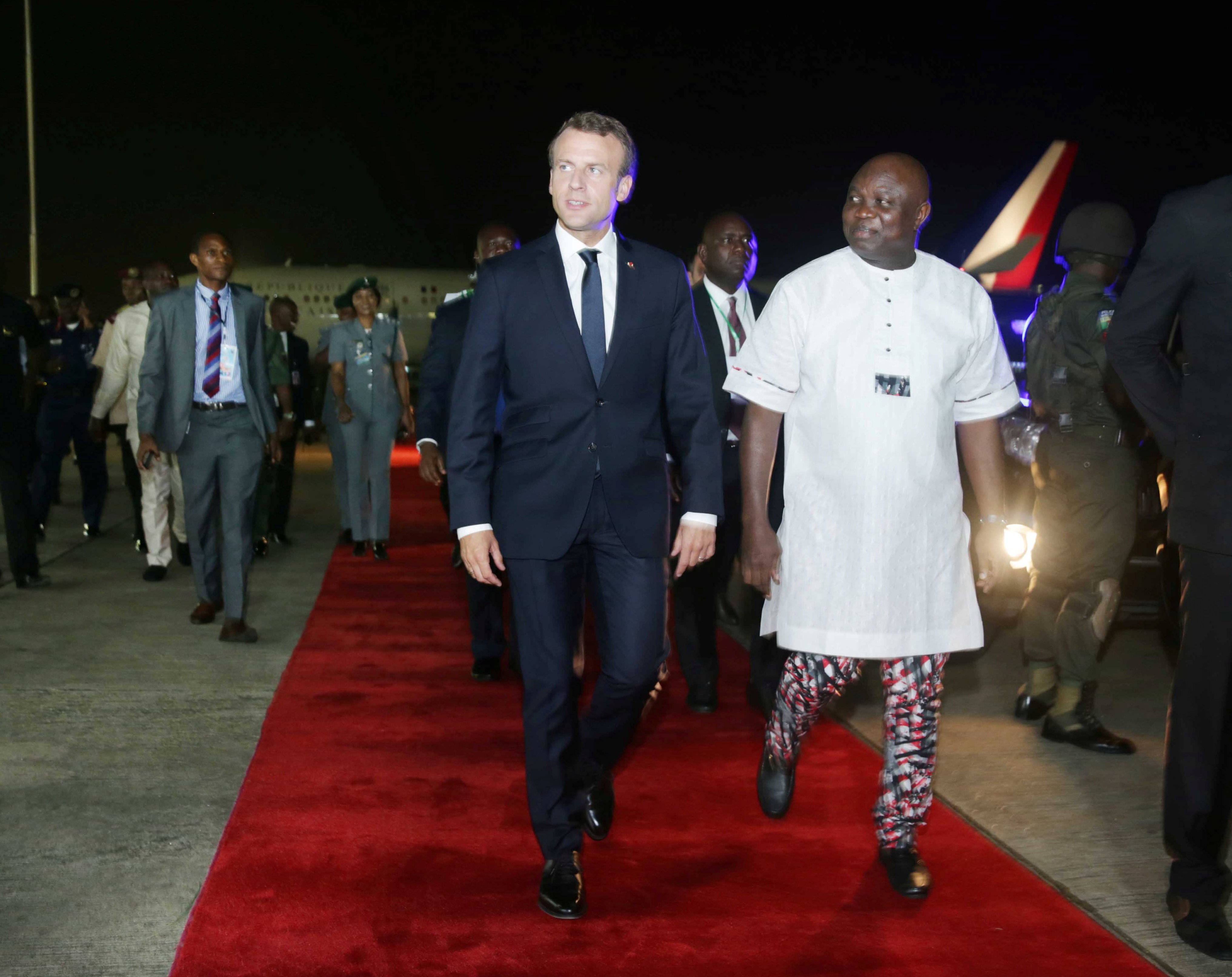


President of France, Mr. Emmanuel Macron on Tuesday night made a historic visit to the Afrika Shrine, home of the late Afrobeat legend, Fela Anikulapo Kuti, describing it as an iconic centre for the propagation of African culture, strength and music.
Macron, who spoke at the New Afrika Shrine in Agidingbi, Ikeja, Lagos, at an event tagged ‘Celebration of African Culture’ to inaugurate the African Cultural Season 2020, said he was glad to be back to the Afrika Shrine, adding that he still holds fond memories of the place since his first visit back in 2002.
“I discovered Nigeria and a lot of my friends are here. I discovered Nigeria and I discovered Lagos and I discovered the shrine. This place is an iconic place and it is a place where the best of music is given. I have to say my main memories about this place are friends, proud people, proud of their culture, proud of their art and music. I have a very different view of Africa than a lot of other people in Europe,” he said.
Macron stressed the need for Africa and Europe, especially France to build a new commonality, adding that “this new commonality is not based on what is important for Europeans but what is important for Africa, about their culture, how they build their culture and promote the culture and which places are important for them about their culture. Being here, I do recognize their culture and respect their views. This place is important for Africa and their culture and that is why I am here.”
He also disclosed plans to host the African Cultural Season 2020 in France, which he said, would be about promoting African culture in Europe, adding that the event was going to be for Africa and by African artistes.
“It will include people with fashion, African movies, new generation of artistes will be coming from Africa and it will be organized by them to show Europe and France” the real culture of Africa.
“The event will be financed by African leaders. It will not be sponsored by France or European businesses, but by African businesses, it is brand new. This season is a unique one and it will be the new face of Africa in Europe organize by Africans, providing what you like and what you have here,” he said.
At the official unveiling of Alliance Francaise, a French Cultural Centre in Lagos on Wednesday, Macron said the development was part of the measures to scale up the relationship between France and Nigeria, while also specifically offering the commitment of the government and people of France to development of infrastructural projects in Lagos.
“Thanks very much for being here; thanks very much for making this possible and to Mr Governor, we spoke yesterday and this morning together in the car. Going to shrine together yesterday and going to French Alliance now. It’s much more quite, much more calm and reasonable but at the end of the day, I think both of us (Governor Ambode and I) did share the same views that we can do tremendous things together.
“Your State – Lagos, is one of the main challenges of not just Nigeria but the whole of Africa. I mean this huge city, there is tremendous challenge about how to make people living together in peace, in a better place and I want France to be part of this story and I do want my country and my people being part of this experience. It means belonging same values, sharing cultures, languages, literatures, music, movies, building together projects, having common economic projects and so on, and this eco system will be not just possible but stronger staying in this place,” Macron said.
Earlier, Lagos State Governor, Mr. Akinwunmi Ambode while welcoming President Macron to the State, expressed optimism that the historic visit will go a long way to break any barriers between Nigeria and France as well as foster greater collaboration for economic, social and cultural growth.
The Governor said the State Government was delighted to host Macron, a well respected global leader, adding that it would also signal a new era between both countries, especially for Lagos where talents in the arts and creative industry abound.
“On behalf of the government and good people of Lagos State, I welcome His Excellency, President Emmanuel Macron, President of France, to the commercial and cultural capital of Nigeria and indeed West Africa.
“We are delighted and honoured to be hosting a President of one of the world’s Super Powers; a permanent member of the United Nation’s Security Council with veto rights, a prominent member of the G8 and the World Trade Organisation and a champion of Global Climate Change.
The Governor said he was particularly delighted that Macron’s visit to Lagos began on a cultural and entertainment note, adding that the French Cultural Centre and Alliance Française based in the State had always been an asset to its cultural landscape in the same way that Trace Television had also become an invaluable addition to its music and entertainment sphere.
Governor Ambode said he was very optimistic Macron’s visit and activities would boost the State’s quest to become the culture and entertainment capital of Africa, just as he said that the State Government would seek to establish collaborations with France and play an integral part of the Year 2020 African Cultural Season in Paris as envisioned by President Macron.
“With the exceptional characteristics of our State as the most populous, vibrant and indeed the fifth richest economy on the African continent, Lagos is the undeniable destination for business and pleasure in Africa. The new Lagos experience is being enhanced daily as we continue to create an enduring infrastructural and security architecture for the business of tourism and cultural arts to thrive. This also creates a platform for our local talents to feel a sense of belonging and encouragement.
“Mr. President, this momentous State Visit shall signal the dawn of a new era between France and Nigeria especially for the myriad of talents that have made Lagos their home,” the Governor said.
He said Macron’s emergence as the President of France has inspired many youths in Nigeria, who constitute 60 percent of the country’s population, adding that Lagos was providing avenues for youths to explore their creativity and talents.
There were also Art Exhibition, Fashion Show, display of Nollywood scenes, presentation of a painting of Fela to Macron by Governor Ambode as well as pencil frame artwork of Macron done by 11-old old Kareem Olamilekan drawn within two hours.
Highpoints of the night include sterling performances by dance group, Footprints of David, music artistes, Yemi Alade, Charlotte Dipanda from Kenya and a scintillating performance by Femi Kuti to bring the event to a close.
SIGNED
HABIB ARUNA
CHIEF PRESS SECRETARY
JULY 4, 2018




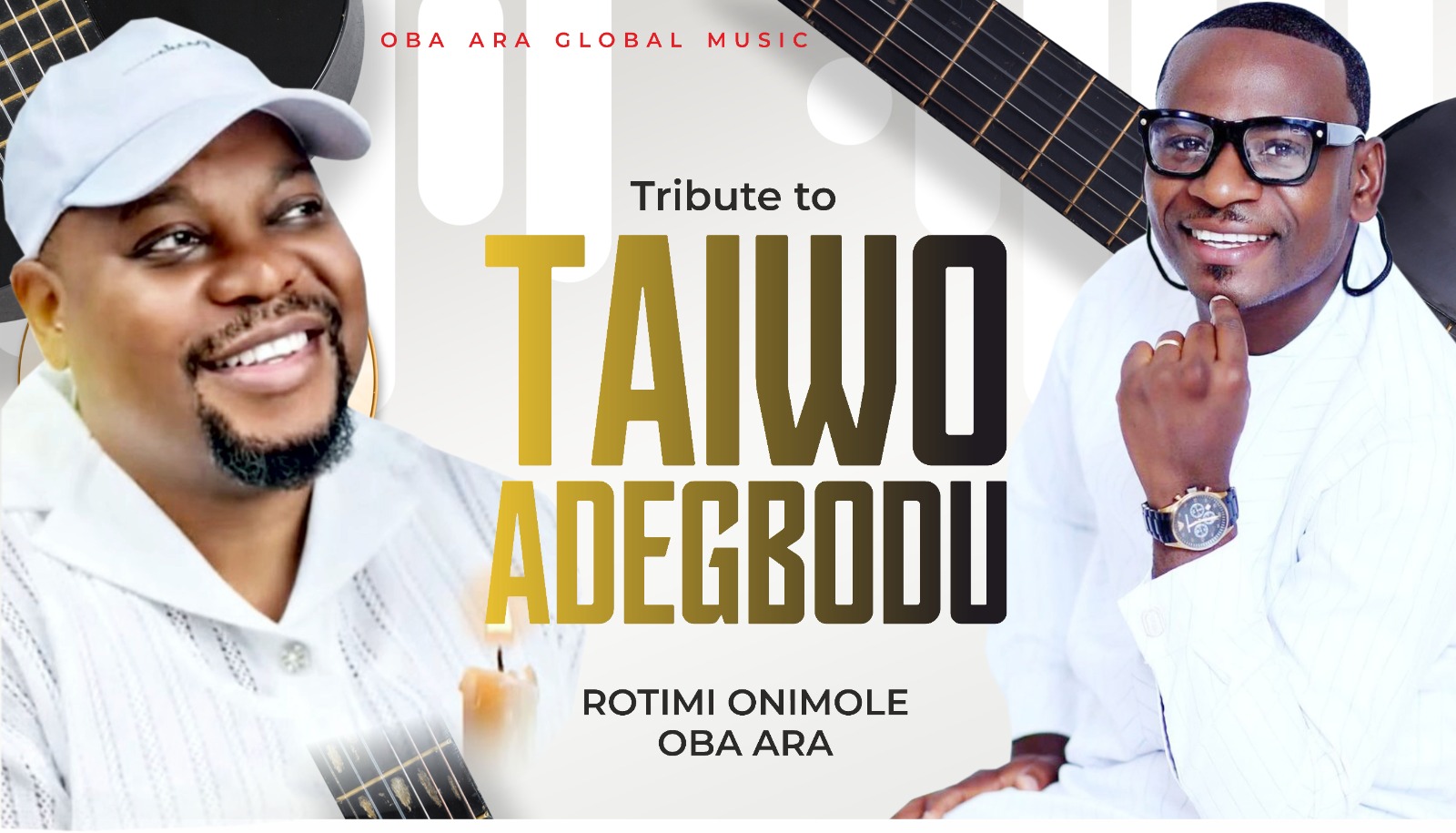
Oba Ara Releases Emotional Tribute to Late Taiwo Adegbodu
Taofik Afolabi
The gospel music community continues to grieve the painful loss of Taiwo Adegbodu, a beloved figure whose sudden departure left a deep void among fans, colleagues, and loved ones. In response to this loss, renowned gospel minister Rotimi Onimole, popularly known as Oba Ara, has released a moving tribute song that captures both the sorrow of the moment and the enduring legacy of the late singer.
Oba Ara, a proud son of Isale Eko, channels raw emotion throughout the song, using heartfelt lyrics and soul-stirring melodies to reflect on his personal connection with Taiwo Adegbodu. In the tribute, he openly expresses how deeply the news of Adegbodu’s passing shook him, describing it as a painful and unexpected loss that is difficult to come to terms with.
The song goes beyond mourning, it celebrates the life, ministry, and impact of Taiwo Adegbodu. Oba Ara highlights the late artist’s dedication to spreading the gospel through music, his inspiring voice, and the spiritual influence he had on many within and beyond Nigeria. Through powerful verses, he paints a picture of a man who lived for God and touched countless lives through his ministry.
Listeners have described the tribute as both comforting and deeply emotional, as it resonates with the collective grief of the gospel music community. It serves as a reminder that although Taiwo Adegbodu is no longer physically present, his music, message, and legacy will continue to live on.
In honoring his late colleague, Oba Ara not only pays his respects but also offers a source of healing for fans and fellow ministers, using music as a tool to process grief and celebrate a life well lived.
celebrity radar - gossips
Buratai, Fagbemi , Shagaya, Olofa, Others Eulogise Olowu Kuta’s Olori On 60th Birthday, Foundation Launch
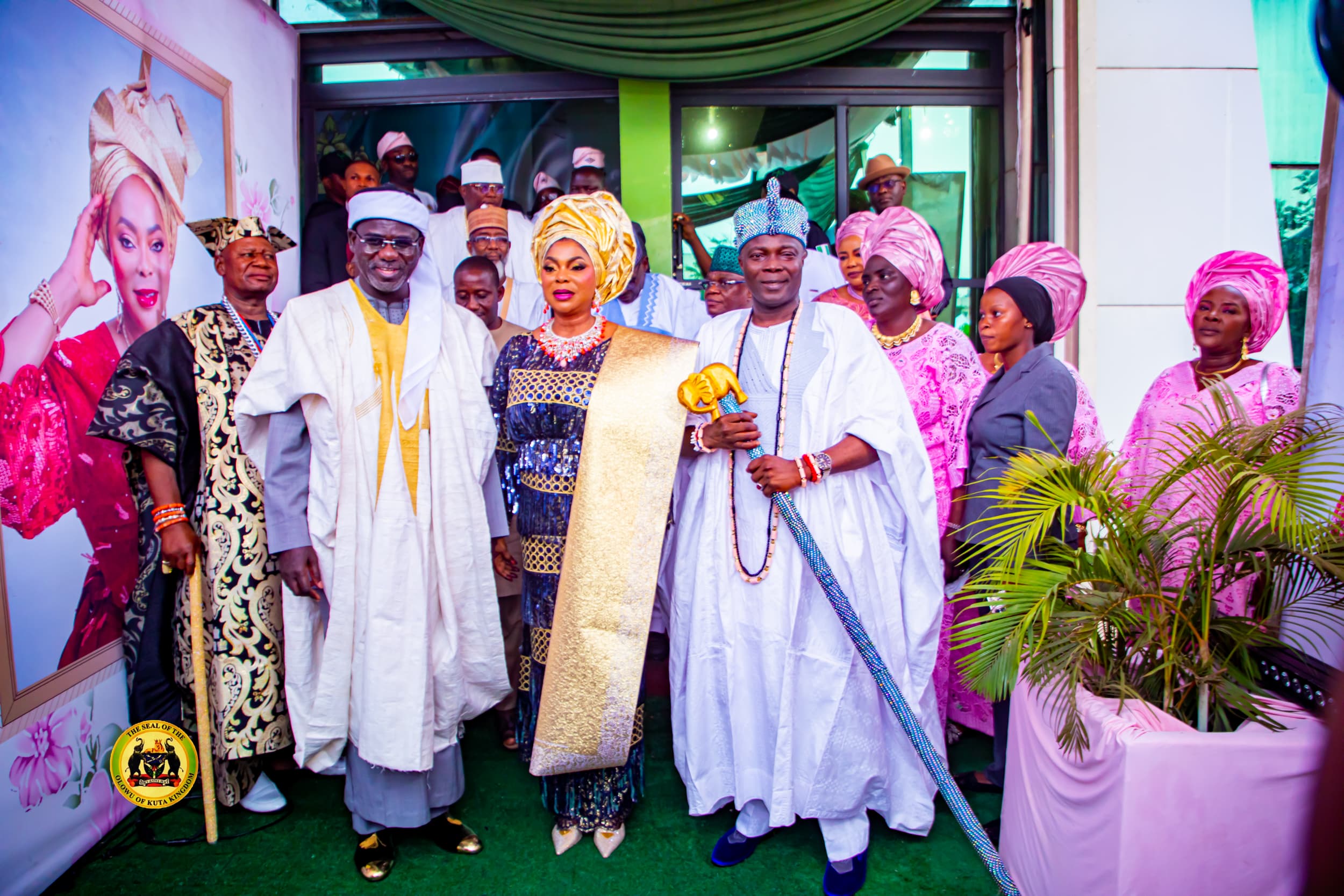
Buratai, Fagbemi , Shagaya, Olofa, Others Eulogise Olowu Kuta’s Olori On 60th Birthday, Foundation Launch
Eminent personalities across the Nigeria stormed the TFK Event Centre, Bala Mohammed Way, Guzape, Abuja, to celebrate the 60th birthday of Olowu Kuta’s Olori, Queen Jumai Amoke and her Foundation Launch on Saturday 28, March 2026.

From former Chief of Army Staff, Lt Gen TY Buratai rtd, to the Minister of Justice and Attorney-General of the Federation, Prince Lateef Fagbemi; Olofa of Offa, HRM Oba Mufutau Gbadamosi. Even top businesswoman and socialite, Chief (Mrs) Bola Shagaya, was in attendance.


Other dignitaries were newly promoted Deputy Inspector-General of Police and former AIG Zone 2 , Lagos , Adegoke Fayoade, Major General Abdumalik, Major General Samuel Adebayo rtd (Fmr CDI);
Major General Anthony Omozoje rtd (Fmr Copp);
Alhaji Tajudeen Owoyemi (Asiwaju of Offa and CEO Radisson Hotel Nigeria;
Dr Waheed Olagunju, former managing director of Bank of Industry, Oniba of Iba, Lagos State, HRM Oba Dr Suleiman Raji ;
Justice Falola, Olu of Ile-Ogbo , Oba Adetoyese amongst many traditional rulers and captains of industry too numerous to mention.
Speaking at the occasion, the Chief Host, Olowu of Kuta, HRM Oba Dr Adekunle Oyelude Makama, CON , Tegbosun iii, who is also the husband of the celebrant commended Queen Jumai for ‘ her slender arms full of kindness’ to establish such humanitarian Foundation, ‘Amoke Children and mother in Need Foundation’ at a time Nigerians are going through economic crisis occassioned by the global meltdown.
Olowu also commended her steadfastness and love for the less privileged and downtrodden.
The monarch refrenced the task before his wife’s humanitarian gesture said her best is yet to come.
” Olori Amoke Jumai, I celebrate you. You will celebrate 70, 80, 90 and continue to shine as you continue to put a smile on people’s faces. I love you, “Olowu Kuta added.
To Lt Gen Buratai, a former army chief and former Nigerian Ambassador to Benin Republic, the reward of hard work is more work.
Buratai, who also doubles as Balogun Agba of Owu Kuta, a chieftaincy title reserved for a generalismo congratulated Queen Jumai for attaining the age of 60 in good health.
The retired army General said he’s not surprised by the turn out of eminent personalities across the country to celebrate the Olowu Kuta’s Olori because she merited it through her hospitality to all, adding that Allah the most merciful, most beneficial would accept all her act of ibadah.
The minister of Justice, Prince Fagbemi, was full of praises for Queen Jumai for deeming it fit to have a place in her heart to accommodate the needy and less privileged in ‘our society.’
Prince Fagbemi urged the guests to contribute generously to support the Foundation in order to continue to alleviate poverty and put a smile on the faces of the people.
” I congratulate you on your 60th birthday and Foundation Launch. I wish you many happy returns of the day and many more fruitful services to the country and motherland”, Prince Fagbemi added.
The celebrant, Queen Jumai who was grining from ear to ear thankfully said she was excited by the turn out and the response of the people to her foundation.
Queen Jumai, however, promised to continue to use her resources and donations received for the good of the needy and less privileged in the society.
” I want to appreciate my own Kabiesi Olofa of Offa , for his presence and im I’m using him as a point of contact to all other Kabiesis present here, the minister of justice and Attorney-General, you’re welcome, sir; Mrs Bola Shagaya, I salute your enterprise, Lt Gen Buratai, I’m grateful, sir; DIG Fayoade, Justice Falola and other dignitaries too numerous to mention, I thank you, all. To my darling husband, Kabiesi Olowu , I thank you immensely for your support. And to my family and friends, I thank you , all. E se pupo!”, she said.
celebrity radar - gossips
Adron Homes Elevates Cultural Pride as Dignitaries Grace 39th Lisabi Festival in Abeokuta
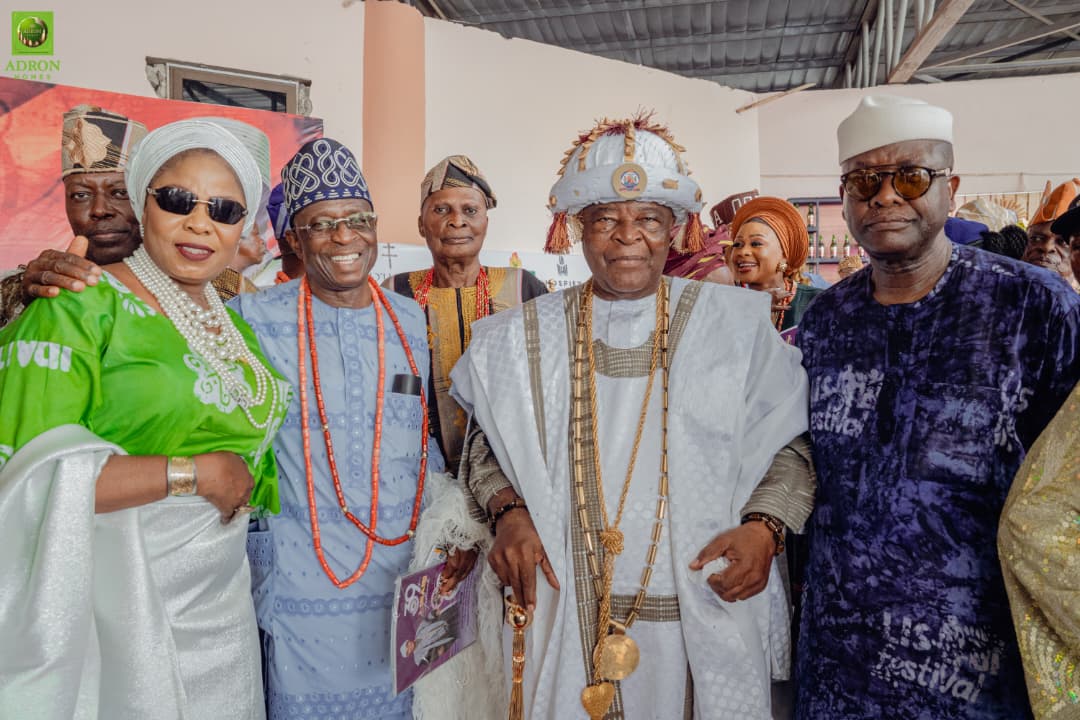
Adron Homes Elevates Cultural Pride as Dignitaries Grace 39th Lisabi Festival in Abeokuta
The ancient city of Abeokuta came alive in a grand display of culture, history, and unity as dignitaries from across Nigeria converged at the iconic Ake Palace Ground for the 39th edition of the Lisabi Festival, an annual celebration deeply rooted in the Egba people’s heritage.
The event, proudly supported by Adron Homes and Properties Limited, witnessed an impressive parade of distinguished personalities, traditional rulers, government officials, business leaders, and cultural enthusiasts, all captured in vibrant pictures that tell the story of a people united by history and pride.
From richly adorned monarchs in regal attire to elegantly dressed guests reflecting the depth of Yoruba tradition, the images from the festival encapsulate moments of honour, reverence, and celebration. Each photograph portrays not just faces, but influence, leaders, and stakeholders who continue to shape cultural preservation and community development.
At the heart of the celebration was the revered Oba Adedotun Aremu Gbadebo, whose presence underscored the festival’s significance as a symbol of Egba resilience and identity. Surrounding him were eminent dignitaries whose attendance further amplified the prestige of the event.
Adron Homes and Properties Limited stood out prominently, not only as a sponsor but as a key driver of cultural sustainability. Through its strategic support, the company reinforced its commitment to preserving indigenous heritage while fostering community engagement. The brand’s visibility across the venue and within the pictorial highlights reflects a deliberate alignment with culture, tradition, and people-centered development.
Beyond real estate, Adron Homes has continued to position itself as a cultural partner, investing in platforms that celebrate history and strengthen communal bonds. Its involvement in the Lisabi Festival is a testament to its broader vision of building not just homes, but legacies rooted in identity and pride.
The 39th Lisabi Festival, as captured through the lens of dignitaries in attendance, is more than an event, it is a narrative of continuity. And through its unwavering support, Adron Homes has once again set the pace, demonstrating that corporate institutions can play a vital role in sustaining the cultural heartbeat of a people.
As the echoes of drums fade and the colours of the festival linger in memory, one thing remains clear: the story told through these images is one of unity, heritage, and the enduring partnership between tradition and progress.


-

 society6 months ago
Religion: Africa’s Oldest Weapon of Enslavement and the Forgotten Truth
-

 news4 months ago
WHO REALLY OWNS MONIEPOINT? The $290 Million Deal That Sold Nigeria’s Top Fintech to Foreign Interests
-

 society6 months ago
“You Are Never Without Help” – Pastor Gebhardt Berndt Inspires Hope Through Empower Church (Video)
-

 celebrity radar - gossips2 months ago
Dr. Chris Okafor Returns with Power and Fire of the Spirit -Mounts Grace Nation Altar with Fresh Anointing and Restoration Grace on February 1, 2026
You must be logged in to post a comment Login
You must log in to post a comment.