
Politics
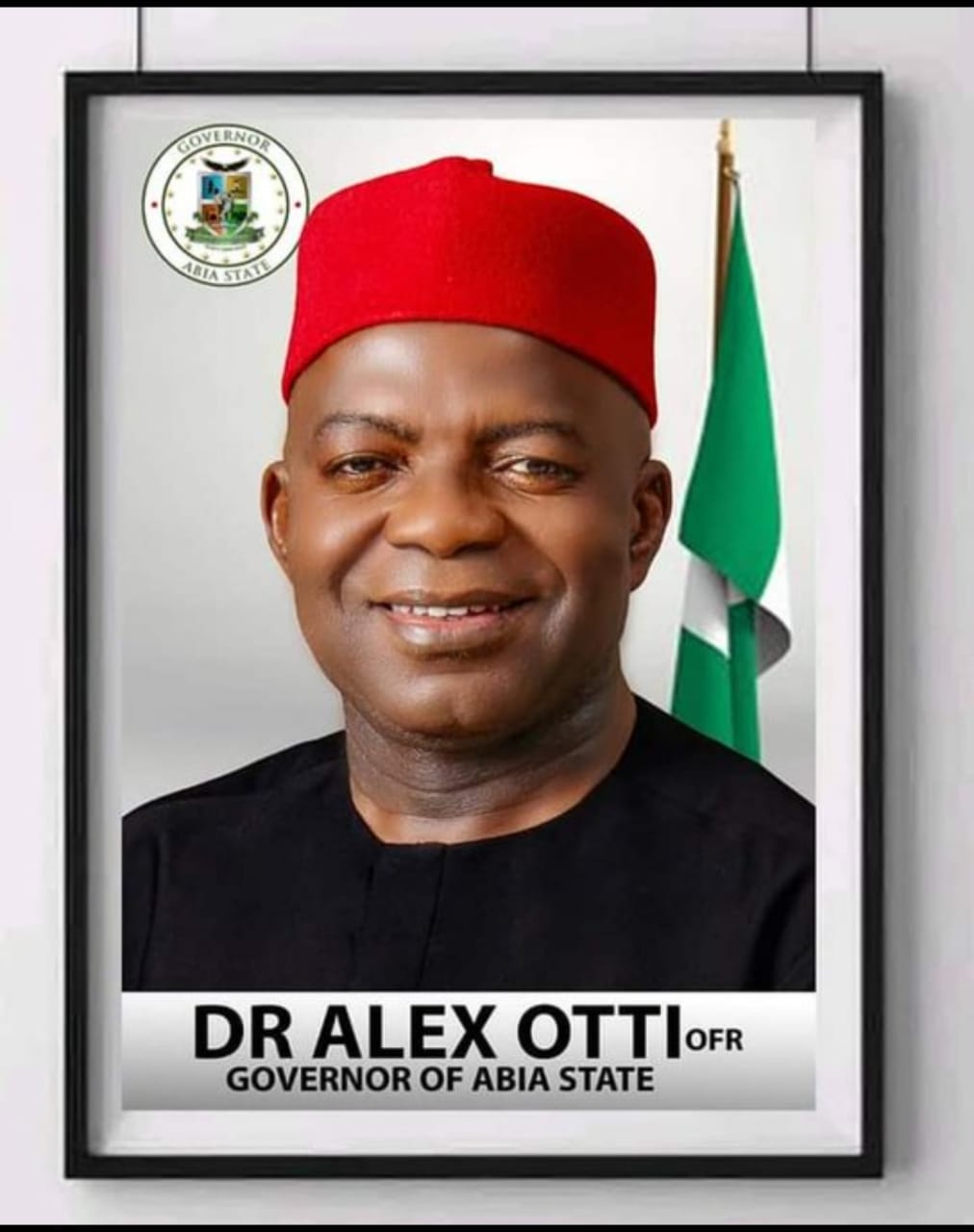
Alex Otti In Trouble As APC Vows To Take Over Abia In 2027

Alex Otti In Trouble As APC Vows To Take Over Abia In 2027
By George Omagbemi Sylvester
The political atmosphere in Abia State is heating up, and the temperature is rising rapidly. The All Progressives Congress (APC) has fired a direct political missile at Governor Alex Otti, vowing with unshakable resolve to take over the Government House in Umuahia come 2027. It is no longer business as usual. The sleeping giant of the opposition in the state claims to be wide awake, and the battle for the soul of Abia has begun in earnest.

The APC chieftains, speaking in Umuahia last week, declared unequivocally that they are on a mission to “rescue Abia from economic stagnation and elitist governance.” Their choice of words was deliberate and direct—a sharp criticism of Otti’s leadership style, which many within and outside the state describe as more cosmetic than transformational.
A Wake-Up Call for Labour Party
Alex Otti, a former bank executive and celebrated technocrat, rode to power under the Labour Party’s banner in 2023, buoyed by the Peter Obi wave and a strong anti-establishment sentiment among the electorate. His emergence was seen as a break from decades of political recycling in Abia. But less than two years into his tenure, the narrative has begun to shift.

Critics argue that Otti has failed to address the core structural and socio-economic issues affecting the state. While flyovers, road rehabilitation, and civil service audits dominate his press briefings, many say these are mere surface-level interventions. The youth remain unemployed, the SMEs suffocating under harsh taxes, and rural areas neglected.
The APC’s bold declaration should not be taken lightly. The party, which has federal might and a national structure, is poised to exploit every misstep of the current administration. According to Chief Ikechi Emenike, a prominent APC stakeholder in Abia, “We are going to dismantle this Labour Party experiment in 2027. What is going on in Abia today is not governance—it is a reality show.”
History and the Winds of Political Change
Abia’s political history has largely been dominated by the PDP until the Labour Party disrupted the power structure in 2023. However, the euphoria of change is being quickly eroded by a growing sense of disillusionment. Political observers note that Otti’s technocratic governance style often clashes with the everyday realities of the average Abian.
The APC is capitalizing on this disconnect. They are rebranding and reorganizing. Several prominent politicians from both PDP and LP have reportedly begun secret talks with the APC ahead of 2027. As the legendary political thinker Niccolò Machiavelli wrote in The Prince, “It is better to be feared than loved, if you cannot be both.” The APC seems to be adopting this posture—less of diplomacy, more of political conquest.
Governance Under Scrutiny
The Labour Party-led administration in Abia cannot afford to ignore the mounting criticisms. While Governor Otti has been praised for promoting transparency and tackling ghost workers, many still argue that the state’s economy is shrinking. According to data from the National Bureau of Statistics (NBS), Abia ranked 24th out of 36 states in Internally Generated Revenue (IGR) in 2024—a sharp contrast to the governor’s media claims of economic transformation.
In the words of Nobel Laureate Joseph Stiglitz, “Development is not about highways and flyovers; it is about improving the lives of the people.” If the APC succeeds in framing the current administration as elitist and disconnected, they may very well succeed in 2027.
The Power of Political Messaging
The APC’s strategy is clear: target the grassroots. With over 70% of Abians living in rural communities, a political party that ignores them does so at its peril. According to Professor Chidi Odinkalu, a respected human rights activist, “Democracy must begin at the village square.” Unfortunately, many in Abia’s hinterlands claim they haven’t seen any difference since Otti assumed office.
Former President Barack Obama once said, “You can put lipstick on a pig, but it’s still a pig.” The APC seems to be deploying this line of attack: no matter how beautified Umuahia looks, if the people in Arochukwu, Bende, and Umunneochi still drink muddy water and send their children to roofless schools, the government has failed.
A Divided Opposition, or a Formidable Force?
The only potential setback for the APC is internal disunity. The party has suffered from factionalism in the past. But recent moves suggest a consensus is building around the goal of reclaiming Abia. If the party can field a charismatic candidate with both grassroots and elite appeal, Governor Otti may be in serious trouble.
Dr. Ngozi Okonjo-Iweala, Director-General of the World Trade Organization, once stated, “Leadership is not about titles or positions. It is about impact, influence, and inspiration.” This is a powerful reminder that political branding alone cannot win elections. Performance must meet perception.
The People Hold the Key
No political calculation is complete without considering the voters. The people of Abia will ultimately decide who governs them. The 2023 elections demonstrated that they are tired of recycled politics. But what they want now is not just change—but results.
Dr. John Campbell, former U.S. Ambassador to Nigeria, wrote in his book Nigeria: Dancing on the Brink, “Nigerians are not asking for miracles. They are asking for basic decency in governance.” The people of Abia want working hospitals, functioning schools, a vibrant economy, and jobs—not press releases or photo-ops.
Looking Ahead: 2027 and Beyond
With less than two years to the next election, political movements will intensify. The APC’s message of reclaiming Abia must be matched with credible plans, not just political rhetoric. They must offer an alternative that resonates with ordinary people. For now, Governor Otti still holds the mandate, but his political honeymoon is clearly over.
Former U.S. President Dwight D. Eisenhower once warned, “Leadership is the art of getting someone else to do something you want done because he wants to do it.” Governor Otti must reconnect with the aspirations of the masses or risk being dethroned by a more tactically grounded opposition.
As 2027 approaches, the state will likely witness a fierce electoral battle—one not just of personalities, but of ideologies, performance, and public trust. If the APC maintains its current momentum and strategic clarity, then indeed, Alex Otti may be in serious political trouble.
Conclusion
The vow by the APC to take over Abia in 2027 is more than political talk; it is a signal of war. A war of narratives, of performance, and of perception. Governor Alex Otti must rise above press conferences and elite commendations. He must return to the streets, listen to the people, and correct the course of his administration. The time of political grace is gone. Now begins the time of political reckoning.
As the popular African proverb goes, “The man who fetches firewood infested with ants invites lizards to his home.” If Governor Otti does not change direction quickly, the lizards of opposition may soon overrun his political household.




AMBO and the Osun Governorship Race: Assessing the Man, the Politics and the Vision
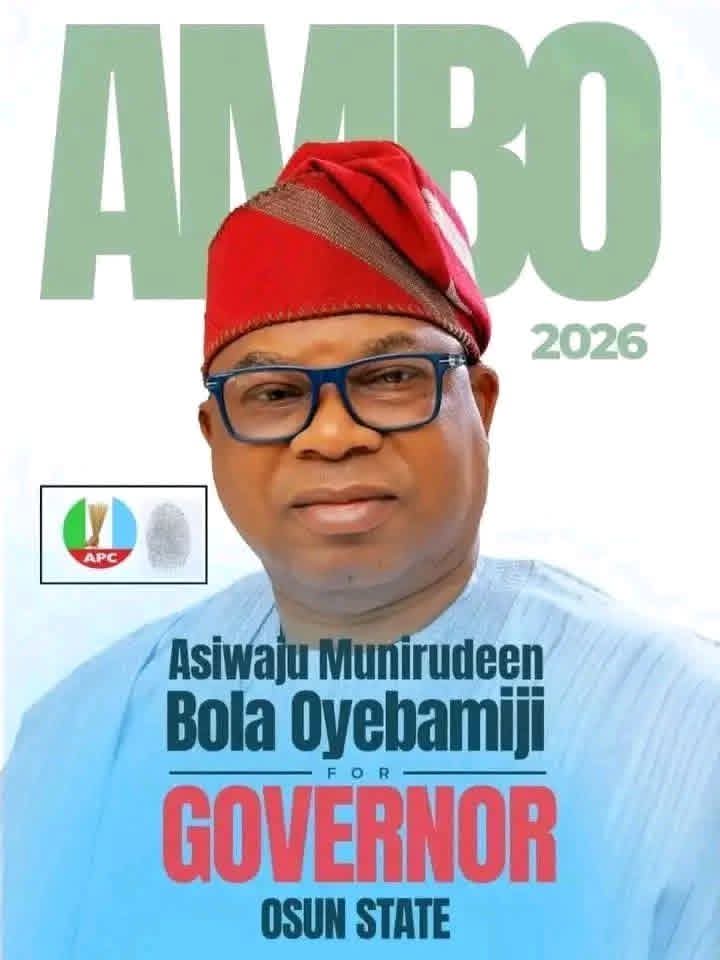
As political activities gather momentum ahead of the 2026 Osun State governorship election, a public affairs commentator, Oluseyi Olonade, has described the emergence of Asiwaju Munirudeen Bola Oyebamiji, popularly known as AMBO, as a significant development in the state’s political landscape.
In an article titled “Oyebamiji: The Man, The Politics and The Aspiration,” Olonade argued that the All Progressives Congress governorship hopeful possesses the character, experience and vision needed to reposition Osun State for sustainable growth.
According to the writer, Oyebamiji’s appeal stems from his extensive background in the banking sector, where he spent nearly three decades working with institutions including Wema Bank, Trans International Bank, Spring Bank and Enterprise Bank.
A native of Ikire in Irewole Local Government Area, Oyebamiji was described as a technocrat whose experience in corporate governance, finance and risk management has shaped his approach to public administration.
The article noted that his public service journey gained prominence in 2012 when he was appointed to oversee the then Osun State Investment Company Limited. Under his leadership, the organisation was reportedly restructured and transformed into Omoluabi Holdings Limited.
The writer further highlighted Oyebamiji’s tenure as Commissioner for Finance under successive APC administrations, where he was credited with managing the state’s finances during challenging economic periods.
Olonade also referenced Oyebamiji’s appointment as Managing Director of the National Inland Waterways Authority, describing it as further evidence of his administrative and leadership capabilities.
The article contrasted Oyebamiji’s governance philosophy with that of the current administration in Osun State, arguing that the APC aspirant favours institutional reforms, economic diversification and fiscal discipline.

According to the writer, Oyebamiji’s proposed agenda includes strengthening transparency in government spending, expanding internally generated revenue, attracting private-sector investments and promoting industrial and agricultural development.
The article also highlighted youth empowerment, entrepreneurship development and digital skills acquisition as key components of his vision for the state.
Olonade concluded that the forthcoming governorship election would present voters with a choice between different approaches to governance, expressing confidence that Oyebamiji’s experience and developmental agenda make him a strong contender in the race.
*Oselu Tiwa nTiwa Endorses Oriyomi Hamzat for Oyo Governorship*
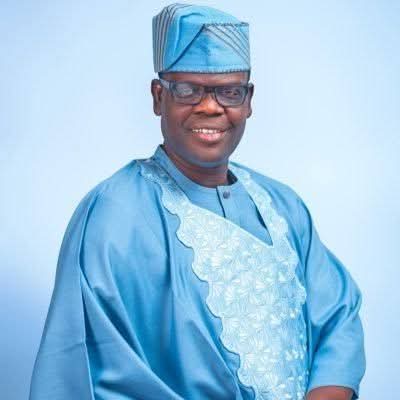
A sociopolitical support group in Oyo State, Oselu Tiwa nTiwa, has declared its support for Alhaji Oriyomi Hamzat as the authentic governorship candidate of the Accord Party ahead of the forthcoming governorship election in the state.
The group made its position known in a statement jointly signed by its President, Mr. Adewale Oluwaseyi and Secretary, Alh. Adebayo Oyewole, on Thursday, describing Hamzat as a grassroots figure with strong connection to the people and a track record of humanitarian interventions across Oyo State.

According to the group, the endorsement followed what it described as careful observation of Hamzat’s leadership qualities, compassion and dedication to the welfare of ordinary citizens.
“Oriyomi Hamzat has consistently demonstrated empathy, courage and selfless commitment to humanity. Through his numerous interventions in the lives of ordinary citizens, he has become a symbol of hope to many families and communities,” the statement read.
Oselu Tiwa nTiwa also appealed to the national leadership of the Accord Party to prioritise the long-term future and electoral growth of the party in its decision-making process.
The group noted that Hamzat’s candidacy presents an opportunity for the party to strengthen its grassroots support base and expand its political relevance across Oyo State.
“We respectfully appeal to the National Leadership of the Accord Party to look beyond immediate political calculations and consider the bigger picture, the future growth, stability and electoral success of the party in Oyo State and beyond,” the statement added.
The group further expressed confidence in the leadership of the party, saying it believes the party’s national officers and stakeholders would take decisions that reflect fairness, inclusiveness and the collective interest of members.
While calling on party loyalists to remain calm and united, Oselu Tiwa nTiwa said continued consultations among stakeholders would help strengthen the Accord Party ahead of the election.
Signed:
Alh. Adebayo Oyewole,
Secretary.
Atiku Set To Clinch ADC Presidential Ticket, Leads Amaechi, Hayatu-Deen In 34 States
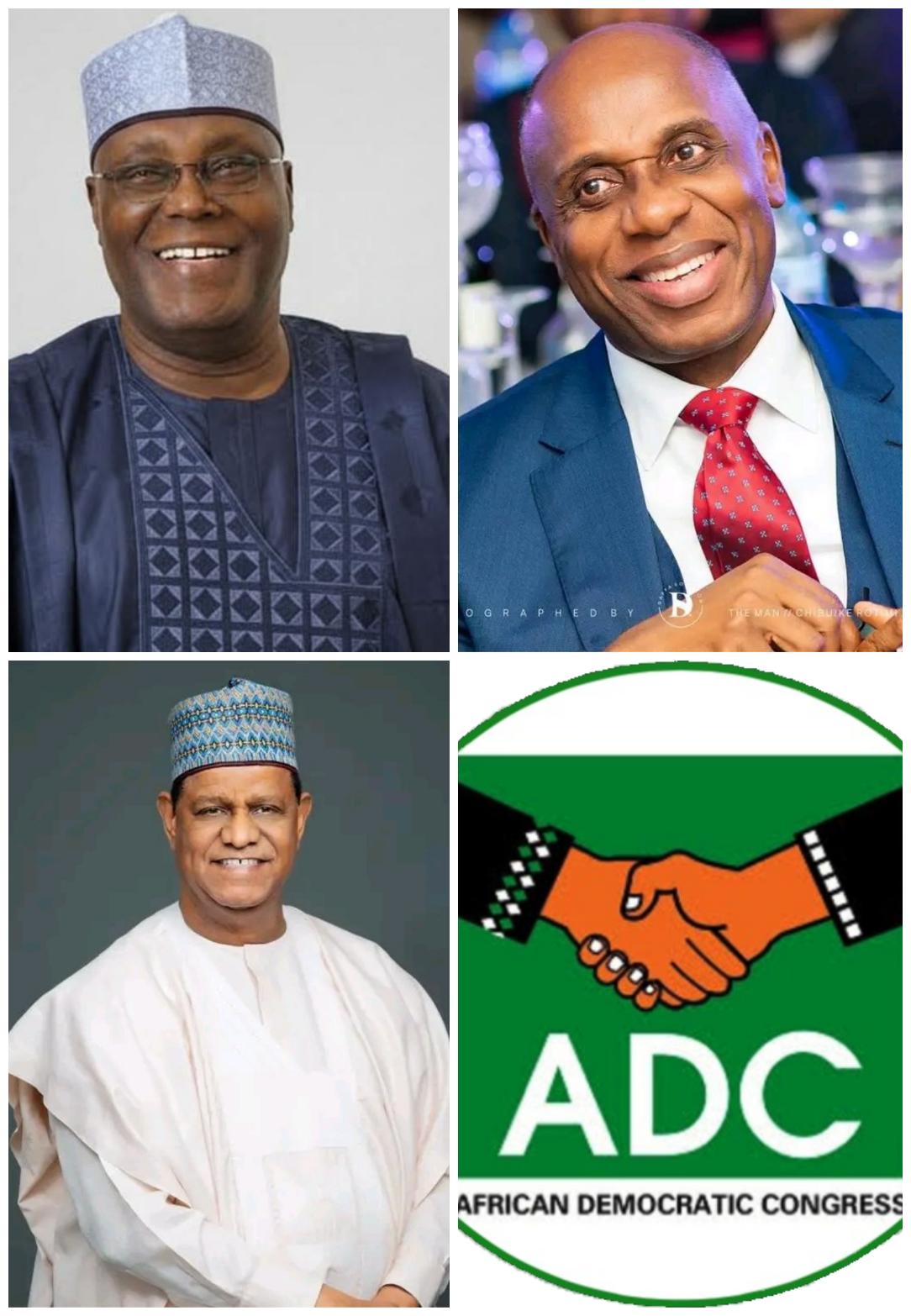
Former Vice President of Nigeria and frontline presidential aspirant of the African Democratic Congress (ADC), Atiku Abubakar, is projected to emerge winner of the party’s presidential primaries, according to impeccable sources in Abuja.
The primaries, conducted across over 8,000 wards in the 36 states of the federation and the Federal Capital Territory, reportedly placed Atiku far ahead of his closest rivals — former Rivers State Governor, Rotimi Amaechi, and former Chairman of the Nigerian Economic Summit Group, Mohammed Hayatu-Deen.

Highly placed party insiders disclosed that Atiku is currently leading in 34 states, including the FCT, after securing dominance across the 19 Northern states, the five South-East states, and the six South-West states, while also maintaining a strong showing in at least three states in the South-South geopolitical zone.
The sources added that the outcome reflects what they described as “an overwhelming nationwide acceptance” of the former vice president within the opposition party ahead of the 2027 general election.
Meanwhile, the ADC leadership has invited members of the press to the official announcement of the final collated results scheduled for 11:00 a.m. on Tuesday, May 26, 2026, in Abuja.
The declaration of results is expected to be broadcast live on ARISE Television and two other major television stations, while also being livestreamed on the party’s official social media platforms on X and Facebook.
Speaking ahead of the announcement, the founding National Chairman of the ADC, Chief Ralph Nwosu, said the decision to televise the exercise live was aimed at promoting transparency and democratic accountability.
“We want millions of Nigerians at home and in the Diaspora to witness democracy in action,” Nwosu said.
He further revealed that the party leadership would encourage all three presidential aspirants to publicly embrace a peace accord and commit themselves to working together in unity for the party’s success.
According to him, the move is necessary to strengthen internal cohesion and position the ADC for victory in the presidential election scheduled for January 16, 2027.
Details later.


- When women farm better, Eswatini eats better June 3, 2026
- Togo Hosts the 8th Annual Forum of National Volunteer Agencies in the Economic Community of West African States (ECOWAS) Region June 3, 2026
- Indigenous Peoples gravely vulnerable to Ebola epidemic, warn United Nations (UN) independent experts June 3, 2026
- Meeting between Parliamentary Vice-Minister ONISHI and His Excellency (H.E.) Mr. Cosgrow, Principal Minister and Minister for Agriculture, Fisheries and Blue Economy of Seychelles June 3, 2026
- Eritrea: Construction of Elementary School in Gogni Sub-Zone June 3, 2026
- African Union Commission (AUC) Chairperson His Excellency (H.E.) Mahmoud Ali Youssouf highlighted thePermanent Representatives’ Committee (PRC) critical role in advancing the Union’s agenda and laying the groundwork for the forthcoming Mid-Year Coordination Meeting (MYCM) June 3, 2026
- Eritrea: Eighth Grade National Examination Commences June 3, 2026
- Many Africans see justice system as unequal, costly, and slow, Afrobarometer survey reveals June 3, 2026
- Prof. Benedict Oramah to Chair Finance Summit as African Energy Week (AEW) 2026 Prepares for Major Deal Flow June 3, 2026
- The Islamic Development Bank (IsDB) Group Affiliates to Host the 14th Private Sector Forum in Baku, Azerbaijan (16-19 June 2026) June 3, 2026
- When women farm better, Eswatini eats better June 3, 2026
- Togo Hosts the 8th Annual Forum of National Volunteer Agencies in the Economic Community of West African States (ECOWAS) Region June 3, 2026
- Indigenous Peoples gravely vulnerable to Ebola epidemic, warn United Nations (UN) independent experts June 3, 2026
- Meeting between Parliamentary Vice-Minister ONISHI and His Excellency (H.E.) Mr. Cosgrow, Principal Minister and Minister for Agriculture, Fisheries and Blue Economy of Seychelles June 3, 2026
- Eritrea: Construction of Elementary School in Gogni Sub-Zone June 3, 2026
- African Union Commission (AUC) Chairperson His Excellency (H.E.) Mahmoud Ali Youssouf highlighted thePermanent Representatives’ Committee (PRC) critical role in advancing the Union’s agenda and laying the groundwork for the forthcoming Mid-Year Coordination Meeting (MYCM) June 3, 2026
- Eritrea: Eighth Grade National Examination Commences June 3, 2026
-

 news6 months ago
WHO REALLY OWNS MONIEPOINT? The $290 Million Deal That Sold Nigeria’s Top Fintech to Foreign Interests
-

 society1 month ago
SOCIAL MEDIA IS NOT A BATTLEFIELD COMMAND – WHY THE NIGERIAN ARMY’S ACTION AGAINST JUSTICE CRACK IS A NATIONAL SECURITY IMPERATIVE
-

 celebrity radar - gossips4 months ago
Dr. Chris Okafor Returns with Power and Fire of the Spirit -Mounts Grace Nation Altar with Fresh Anointing and Restoration Grace on February 1, 2026
-

 celebrity radar - gossips6 months ago
Prophet Kingsley Aitafo Releases 2026 Prophecy: ‘Nigeria Will Rise, but the World Must Prepare for Turbulence’