
society
Alleged Anti-Tinubu Comment: Buratai Denies ‘Fake’ Report, Reaffirms Loyalty to APC

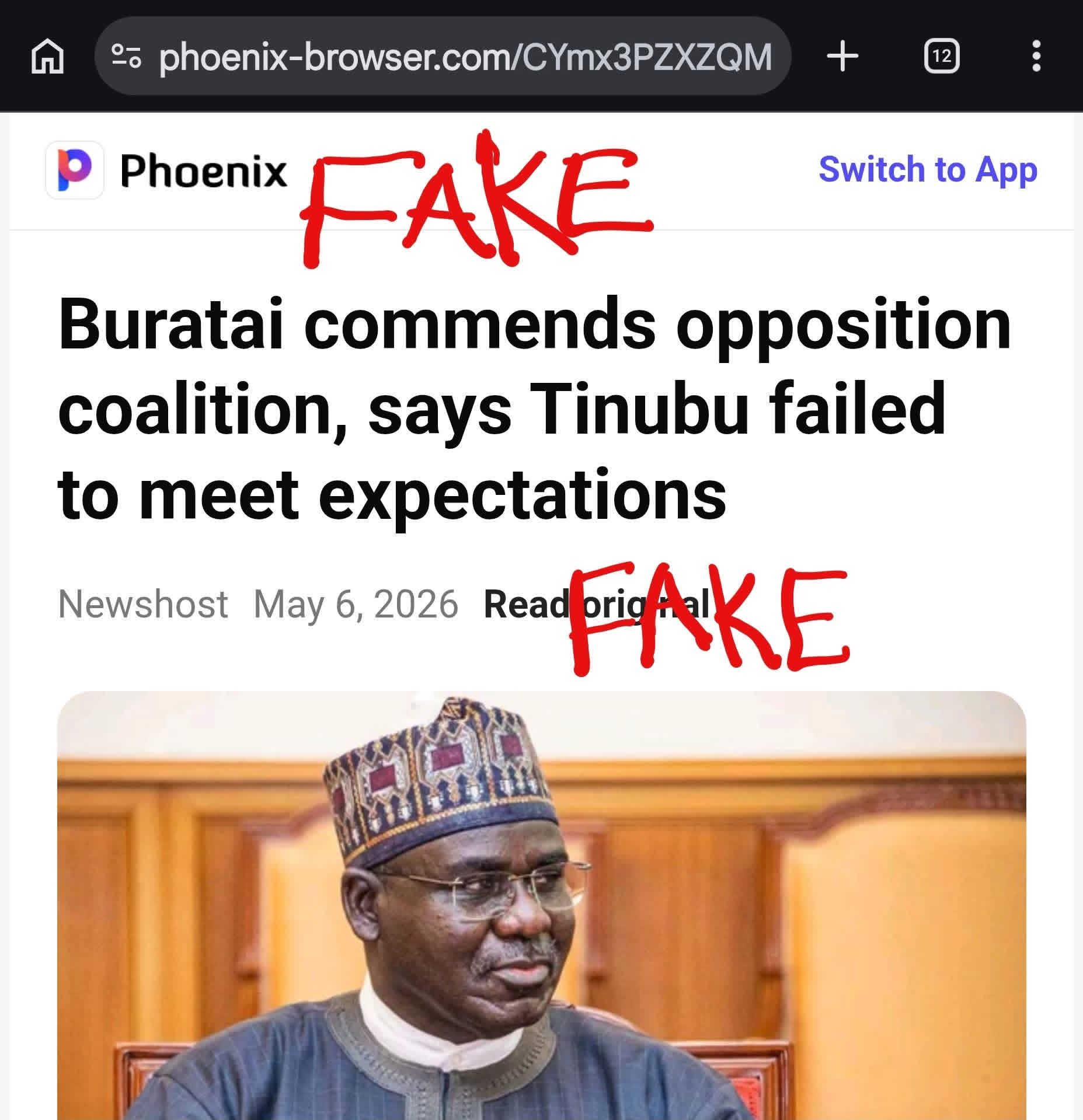
Alleged Anti-Tinubu Comment: Buratai Denies ‘Fake’ Report, Reaffirms Loyalty to APC





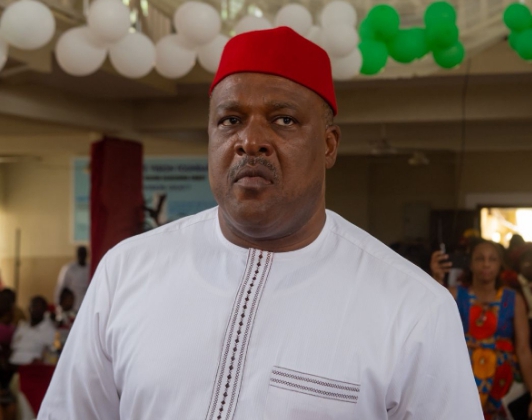
inside a Growing Revolt Over Nigerias Unity Schools: Why Humphrey Nwafor Is Marching
By : Murphy Ajibade Alabi
On Saturday, May 9, 2026, the usually fluid rhythm of Lagos, Abuja and Kano will make room for something more deliberate: an awareness walk and rally led by alumni of Nigerians famed Unity Schools. One of those alumni is Humphrey Nwafor, President of the Lagos Chapter of the Federal Government College Kano Old Students Association (FGCKOSA), a man whose calm delivery masks a deeply structured critique of government policy.
When we met, Nwafor was neither incendiary nor sentimental. He was precise almost surgical in how he framed the issue.
This is not a protest against reform, he began. It is a protest against how reform is being executed.
The Fault Line: Reform vs. Asset Stripping
For years, multilateral institutions such as the World Bank have advocated for a shift in how public institutions particularly schools are managed in developing economies. The argument is straightforward: government ownership often breeds inefficiency, while private sector participation introduces discipline, capital, and accountability.
Nwafor does not reject this premise. In fact, he embraces it.
I agree that these schools need a new funding and management model, he told me. That conversation is long overdue.
But his agreement ends where current policy begins.
What is happening now is not reform. It is asset stripping disguised as Public-Private Partnership.
His contention is that the ongoing PPP concessions involving Unity Schools some of which include land swaps and commercial developmentsfail a basic economic test: they do not eliminate governments financial burden. Instead, they reduce the asset base of the schools while leaving funding obligations largely intact.
That is not sustainability. That is liquidation, he said flatly.
A Question of Value
Unity Schoolsfederal secondary institutions established to foster national integrationare not just educational facilities. Many sit on expansive parcels of land, some in increasingly valuable urban corridors. Several are over 50 years old and have produced generations of Nigerias elite across sectors.
Nwafor sees this not as a liability, but as an under-leveraged asset.
These schools have alumni networks embedded in global corporations, multinationals, and financial institutions. You are talking about individuals and organizations with the capacity for structured, long-term investment through Corporate Social Responsibility (CSR) and philanthropic vehicles.
He leaned forward slightly.
Why sell land when you havent even activated your most obvious capital pool?
The Numbers Behind the Argument
To illustrate his point, Nwafor pointed to Nigerias banking sector, which has posted record profits in recent years. While he did not cite a specific figure during our conversation, industry reports indicate that the combined profits of major Nigerian banks in 2025 run into trillions of naira.
His proposal is mathematically simple:
If just 0.5% of banking sector profits were systematically channeled into Unity Schools, the funding gap would effectively disappear.
The implication is stark: the problem may not be a lack of resources, but a failure of coordination.
USOSA: The Alternative Model
At the core of Nwafors argument is an institution many outside the Unity School ecosystem may not fully appreciate: the Unity Schools Old Students Association (USOSA), an umbrella body representing alumni across these federal schools.
USOSA was built on a very clear idea, he explained. That government does not have to fund these schools indefinitely. There is a credible alternativestructured alumni-led management.
This model, he argues, is a truer expression of Public-Private Partnership than what is currently being implemented.
You hand over operational responsibility to a body that has emotional, historical, and reputational equity in the schools. Government becomes the regulator. Alumni bring funding, governance, and a competitive mindset.
That last point is critical.
When schools are run by their alumni, performance becomes personal. Every school wants to outperform the other. That is how you drive excellence.
The Process Problem
Beyond policy disagreements, what appears to animate Nwafor most is the processor lack thereof. According to him, the Federal Ministry of Education constituted a committee in June 2025 to develop PPP guidelines for Unity Schools. Yet, USOSAarguably the most relevant stakeholderwas excluded.
They did not invite us. They did not consult us. They did not even share the final guidelines.
What followed, he says, was even more troubling.
They proceeded to sign 18 PPP concession deals for 18 schoolswithout public notice, without stakeholder engagement, without asking a basic question: is there a better alternative?
The frustration here is not rhetorical; it is procedural. In governance terms, the absence of transparency and stakeholder inclusion undermines both legitimacy and long-term viability. Even formal correspondence from alumni bodies underscores this concern, citing lack of transparency, stakeholder exclusion, and deviation from established PPP guidelines as central objections.
Nwafors summary is blunt: Who works like that?
Why He Is Marching
For Nwafor, Saturdays march is not symbolicit is strategic.
This is an awareness walk. We are trying to force a national conversation.
He is particularly focused on reaching one audience: President Bola Ahmed Tinubu.
My greatest hope is that the President hears usnot as critics, but as stakeholders offering a better solution.
His appeal is framed less as opposition and more as course correction.
If the true objective is to reduce the financial burden on government and improve these schools, then we are presenting a model that does bothwithout destroying value.
The Stakes
At stake is more than land or policy. It is the future governance model of a network of institutions that has, for decades, played a quiet but significant role in Nigerias nation-building.
The governments current path suggests a belief in private capital as the primary solution. Nwafors counterproposal does not reject that beliefit redirects it.
From external investors to internal stakeholders.
From asset liquidation to asset optimization.
From opaque concessions to participatory governance.
As Lagos, Abuja and Kano prepare for the march, one thing is clear: this is not a nostalgia-driven defense of the past. It is a contest over the architecture of the future. And Humphrey Nwafor intends to make sure it is not decided quietly.
society
“WE WILL NOT BE SILENT”: NANS OGUN AXIS DECLARES PROTEST, ORDERS BOYCOTT OF MTN & DSTV OVER XENOPHOBIC ATTACKS
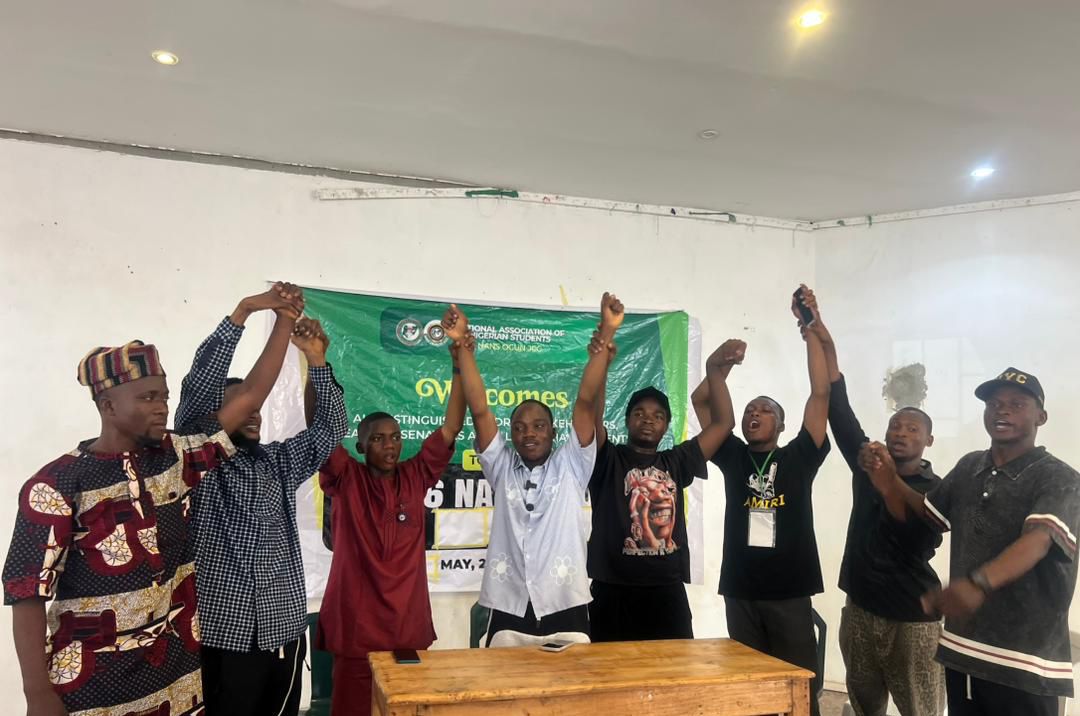
“WE WILL NOT BE SILENT”: NANS OGUN AXIS DECLARES PROTEST, ORDERS BOYCOTT OF MTN & DSTV OVER XENOPHOBIC ATTACKS
The National Association of Nigerian Students (NANS), Ogun State Joint Campus Committee (JCC), has issued a fiery and uncompromising warning over the renewed xenophobic attacks against Nigerians in South Africa, declaring that Nigerian students will no longer sit idle while their compatriots are brutalized, humiliated, and hunted.
In a strongly worded and protest-driven statement, NANS Ogun JCC described the attacks as “barbaric, disgraceful, and a direct assault on the dignity of Nigerians,” vowing to mobilize students across the state for mass action to stop if the violence does not stop immediately.
The association announced its readiness to stage coordinated protests and has directed Nigerian students to begin an immediate boycott of major South African-owned businesses, including MTN and DSTV, as a clear message against what it called “systematic hostility and dangerous silence.”
“This is no longer a time for polite diplomacy. Nigerians are being attacked, their businesses destroyed, their lives threatened—and we are expected to remain calm? No. Not anymore,” the statement declared.
NANS Ogun Axis blasted what it described as a shameful double standard, pointing out that while South African companies continue to rake in massive profits in Nigeria under peaceful and protected conditions, Nigerians in South Africa are subjected to relentless violence and discrimination.
“It is an insult of the highest order. Nigerians have shown tolerance, hospitality, and brotherhood. What we receive in return is hatred and bloodshed. This hypocrisy will be resisted,” the statement read.
The student body made it clear that Nigerians are not second-class citizens on the African continent and will not continue to be treated as expendable victims.
Raising alarm over the safety of Nigerian students and youths abroad, NANS warned that the continued attacks pose a serious threat to their lives, dreams, and future, stressing that no Nigerian should have to live in fear for simply seeking better opportunities.
While reaffirming its belief in African unity, the association insisted that unity without justice is meaningless. It condemned xenophobia in its entirety but emphasized that the continuous targeting of Nigerians in South Africa must be confronted with decisive action—not empty rhetoric.
NANS Ogun JCC issued a direct and uncompromising demand to the South African government and its security agencies to immediately clamp down on perpetrators, protect Nigerians and other African nationals, and bring those responsible to swift justice. It warned that failure to act would be seen as deliberate negligence or silent endorsement.
The association also took a swipe at South African businesses operating in Nigeria, accusing them of benefiting from Nigerian goodwill while remaining mute in the face of injustice against Nigerians in their home country.
“You cannot continue to profit from Nigeria and remain silent while Nigerians are being attacked. That silence is loud, and it is unacceptable,” the statement added.
NANS Ogun Axis warned that the planned boycott and protests are only the beginning of a broader, lawful, and democratic resistance if urgent steps are not taken.
“Let it be clear—we are not begging for respect, we are demanding it. If our people are not safe, then business as usual cannot continue. Enough is enough.”
The association concluded with a strong message: African brotherhood cannot survive on one-sided tolerance, and respect must be mutual, enforced, and non-negotiable.


Signed:
Comrade Olabode Farouq Success
Chairman,
NANS JCC Ogun Axis.

Concerned Uniry Schools Alumni Storm Lagos, Abuja, Kano Over ‘Secret’ Land Swap Deal
LAGOS, NIGERIA – A nationwide confrontation is brewing as members of several old students of Unity School known as Federal Government Coleges move from quiet concern to open resistance over what they describe as a “secretive” land swap deal threatening the assets of Nigeria’s Federal Unity Colleges.
On Saturday, May 9, over 4,000 alumni are expected to flood the streets of Lagos, Abuja, and Kano in a coordinated awareness walk, branded under the rallying call “Pro Unitate – Better Together.” The protest targets a controversial Public-Private Partnership (PPP) arrangement at Federal Government College (FGC) Kano, which proposes swapping approximately 30 hectares of school land for N8.5 billion in infrastructure upgrades . According to sources, this is said to be one of 18 such PPP concessions already entered into by the FME without any consultation with the alumni of these schools.”
The deal, approved by the Infrastructure Concession Regulatory Commission and awarded to Pluck Global Construction Company, would see the developer renovate classrooms, build hostels, and construct a health centre in exchange for prime land bordering the 53-year-old institution, land alumni estimate is worth over N36 billion .
For many within Alumnus of these schools, the issue goes beyond property, it strikes at the very soul of a system designed to unite a diverse nation. But the fiercest opposition comes directly from Kano, where the deal has ignited a firestorm.
“This is not just about land or infrastructure. It is about preserving a national idea,” said Shoyinka Shodunke, Global President of the FGC Kano Old Students Association (FGCKOSA). Speaking to journalists ahead of the protest, Shodunke did not mince words regarding the government’s decision to exclude stakeholders.
“Unity Schools were established as symbols of excellence, integration, and nation-building. Any action that diminishes their integrity reflects a troubling disregard for the power of education as a driver of national progress,” Shodunke stated .
He described the proposed PPP project as a fundamental threat to the institution’s legacy, warning that the introduction of a mixed-use residential and commercial estate sharing boundaries with the school exposes students to avoidable risks.
“The land identified for this project is meant for learning, not for a residential or commercial estate. Introducing a mixed-use development adjacent to the school erodes the controlled environment required for effective learning,” Shodunke added .
In a detailed petition to President Bola Tinubu, which has now garnered thousands of signatures across all Unity Schools, the alumni argue that the process lacked transparency. They noted that they were never consulted, despite having collectively invested billions of naira in the college over the years without taking a single plot of land in return .
Shodunke further revealed that the association has already established a dedicated foundation and plans to launch a N5 billion development fund in June 2026, insisting that credible, mission-aligned funding alternatives exist without compromising the school’s integrity .
As the May 9 walks in Lagos, Abuja, and Kano draw near, the Federal Ministry of Education has yet to issue an official response to the petitions. However, the developers have insisted that the deal followed due process .
For Shodunke, the walk is a final warning. “We will not relent in pursuing all lawful and legal avenues to overturn this illegal arrangement,” he declared . Alumni warn that any attempt to proceed with the land swap while legal challenges and protests are pending will be met with massive civil resistance.


- Six months to go to Dakar 2026: International Olympic Committee (IOC) Young Leaders ready to turn Olympic values into action May 6, 2026
- Hytera Powers Seamless Communication for World Athletics Relays Gaborone 26 May 6, 2026
- Critical Minerals Africa Group Welcomes New Advisory Board Members, Strengthening Strategic Leadership Across Policy, Finance, and Global Affairs May 6, 2026
- RS Supports Sustainable Power Solutions Delivered by Sharps Electrical in Botswana May 6, 2026
- Ninth round of India-Sudan Foreign Office Consultations May 5, 2026
- Daqo examines moving renewable power reliably from source to load May 5, 2026
- Uganda: Parliament approves Shs1.1 trillion supplementary expenditure May 5, 2026
- Heirs Energies Joins African Energy Week (AEW) 2026 as Gold Sponsor as Starlink-Powered Oilfields Drive Digital Expansion May 5, 2026
- Etu Energias Joins African Energy Week (AEW) 2026 as Gold Sponsor Amid Asset Consolidation in Angola May 5, 2026
- Mitrelli Lays First Stone for Mbanza Congo Centrality in Angola, Advancing Integrated Urban Development Ahead of Global Housing Debate at 13th World Urban Forum (WUF13) May 5, 2026
- Six months to go to Dakar 2026: International Olympic Committee (IOC) Young Leaders ready to turn Olympic values into action May 6, 2026
- Hytera Powers Seamless Communication for World Athletics Relays Gaborone 26 May 6, 2026
- Critical Minerals Africa Group Welcomes New Advisory Board Members, Strengthening Strategic Leadership Across Policy, Finance, and Global Affairs May 6, 2026
- RS Supports Sustainable Power Solutions Delivered by Sharps Electrical in Botswana May 6, 2026
- Ninth round of India-Sudan Foreign Office Consultations May 5, 2026
- Daqo examines moving renewable power reliably from source to load May 5, 2026
- Uganda: Parliament approves Shs1.1 trillion supplementary expenditure May 5, 2026
-

 news5 months ago
WHO REALLY OWNS MONIEPOINT? The $290 Million Deal That Sold Nigeria’s Top Fintech to Foreign Interests
-

 society2 days ago
SOCIAL MEDIA IS NOT A BATTLEFIELD COMMAND – WHY THE NIGERIAN ARMY’S ACTION AGAINST JUSTICE CRACK IS A NATIONAL SECURITY IMPERATIVE
-

 celebrity radar - gossips3 months ago
Dr. Chris Okafor Returns with Power and Fire of the Spirit -Mounts Grace Nation Altar with Fresh Anointing and Restoration Grace on February 1, 2026
-

 celebrity radar - gossips5 months ago
Prophet Kingsley Aitafo Releases 2026 Prophecy: ‘Nigeria Will Rise, but the World Must Prepare for Turbulence’