
society
ALLEGED FRAUD IN LEKKI WATERFRONT DEAL : HOW ABUJA HIGH COURT ORDERED SEALING OF DISPUTED PROPERTY

ALLEGED FRAUD IN LEKKI WATERFRONT DEAL : HOW ABUJA HIGH COURT ORDERED SEALING OF DISPUTED PROPERTY
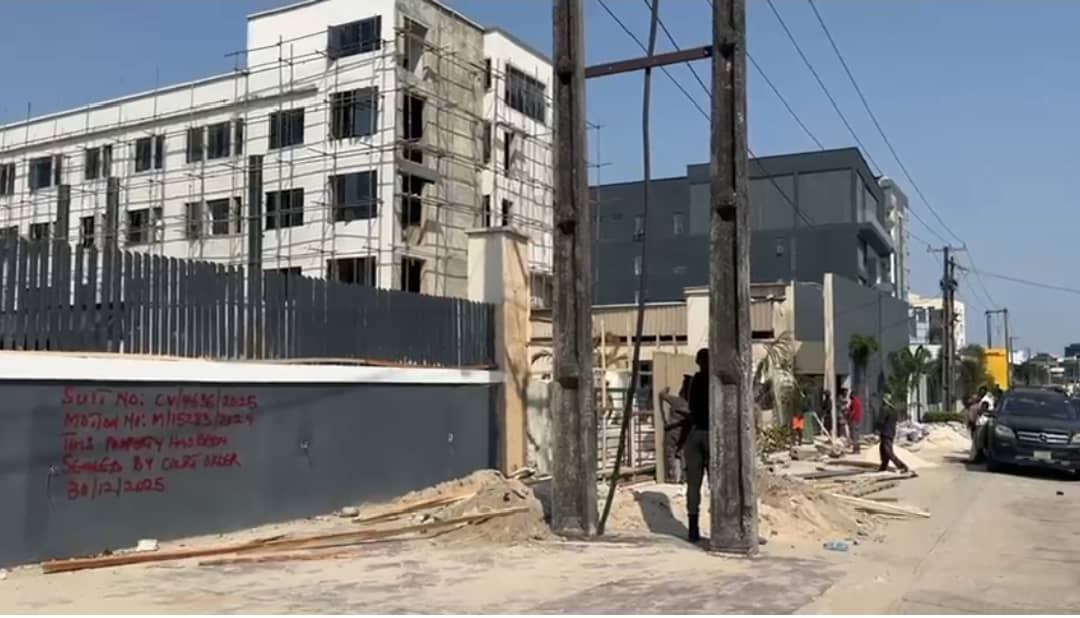
Contrary to misleading reports and narratives circulating in some quarters regarding the sealing of a disputed waterfront property within the Lekki Peninsula Scheme, Lagos, fresh facts have emerged to clarify the circumstances that led to the court action, the involvement of law enforcement agencies and the role of Lagos State regulatory authorities.
The claimant, Mr. Henry Ugonna Orabuchi has explained that the legal steps taken were a measure of last resort, prompted by what he described as glaring inconsistencies, regulatory violations, and potential fraud surrounding the transaction involving the disputed land.
Background of the Transaction:
Mr. Orabuchi was introduced to Mr. Elvis Emecheta Eze sometime in 2022 by an agent who presented Mr. Emecheta is the owner of a waterfront property located in Lekki, Lagos. He was informed that a substantial portion of the land was waterlogged and that Mr. Emecheta was seeking a financial partner to sand-fill the area, after which the reclaimed land would be sold at the rate of ₦800,000 per square meter.
Following negotiations, Mr. Orabuchi entered into a formal agreement to purchase 3,000 square meters of the reclaimed land for a total consideration of ₦2.4 billion. During the course of the transaction, Mr. Emecheta further requested an additional ₦100 million to fast track the process, which Mr. Orabuchi obliged in good faith. The agreement was executed based on documents presented by Mr. Emecheta, including a Lagos State Certificate of Occupancy (C of O) over the main property, abutting the waterfront.
It was expressly represented that Mr. Orabuchi’s Governor’s consent over the reclaimed portion would be derived from the root of- title of the main property.
Mr. Orabuchi stated that the main property, which already had a developed structure, provided the only access to the waterfront being reclaimed. This made the main property and the reclaimed waterfront land physically, legally, and commercially inseparable, a fact clearly captured in the contract of sale.
It was further agreed that access to the reclaimed land would be created through the main property, including the construction of an access road leading from the existing structure to the waterfront portion.
Regulatory Issues and Red Flags:
Under the agreement, Mr. Emecheta undertook to sand-fill the waterlogged area and perfect all necessary documentation within 17 months, with assurances that the root of title already enjoyed Lagos State Governor’s Consent.
However, following the sand-filling exercise, officials of the Lagos State Government reportedly conducted an assessment and confirmed that only 6,700 square meters of land was legally recognised as having been reclaimed by Mr. Emecheta. Rather than accept and regularise the assessment, Mr. Emecheta allegedly rejected the report, insisting on reclaiming up to 10,000 square meters through the federal government.
During this period, Mr. Emecheta reportedly engaged the services of agents to start marketing the whole reclaimed water front property without releasing and perfection of title documents for Mr Henry Orabuchi, rather, portions of the said property was fraudulently assigned to Lord of Hosts Miracle Church and other business operators.
It is important to question the motives behind the actions of Mr. Elvis Emecheta, who failed to release the relevant title documents to the genuine and legitimate purchaser, Mr. Henry Orabuchi, yet assigned same to a church owner and other business enterprises.
Mr. Orabuchi consiquently alleged that Mr. Emecheta acted deviously by deliberately stalling the title perfection process, thereby evading full performance of his obligations under the contract of sale.
Further investigations revealed that most of the structures erected on the said property by Mr. Elvis Emecheta was constructed without valid planning and proper documentation, which contravened the lagos state building regulations hence, the Lagos State Building Control Authority (LASBCA) moved in to remove the illegal structures during its regulatory assessment exercise. These developments, Mr. Orabuchi stated, directly contradicted earlier representations made to him and raised serious concerns regarding the legality, ownership, and extent of the land.
Law Enforcement and Court Intervention:
Faced with material inconsistencies, regulatory breaches, and the risk of substantial financial loss, Mr. Orabuchi demanded that proper legal steps be taken to perfect the title to the disputed land in order to avoid sanctions or penalties from relevant government agencies that could frustrate the contract of sale duly executed by both parties
Prior to instituting the suit, Mr. Orabuchi petitioned the Office of the Inspector-General of Police (IGP) against Mr. Elvis Emecheta for Obtaing money by false pretenses, criminal breach of trust, cheating, and conduct likely to cause the breach of the peace. After reviewing the petition, the IGP directed that the matter be referred to Zone 2 Police Command Headquarters onikan Lagos for discreet investigation.
While investigation was still ongoing at the Zone 2 command Headquarters for his criminal culpability, Mr Emecheta allegedly petitioned the IGP monitoring unit Abuja in order to pervert the cause of justice on the matter contrary to the extant directives of the IGP on duplication of cases.
To avoid conflicting investigations, the IGP reportedly redirected the Monitoring Unit Abuja to step aside and allow Zone 2 command to conclude its investigation
Despite the clear directives from the IGP, officers attached to the monitoring units, Abuja continues to threaten and harassed Mr Henry Orabuchi, which necessitated the civil action instituted at the federal high court Abuja in suit No: FCT/HC/CV/ 4636/2025 against the officers attached to the Monitoring unit Abuja and other parties, seeking the protection of his fundamental rights and the preservation of the property in dispute.
Based on his application, the court granted an ex parte order directing the sealing of the disputed property and the suspension of all activities on the premises pending the hearing and determination of the matter. The order was issued specifically to prevent a breach of public peace and to forestall any breakdown of law and order.
Subsiquently, the said property was sealed strictly in accordance with the court order by the appropriate enforcement agents.
Mr. orabuchi urged the general public to disregard the false narratives been peddled by Mr Elvis Emecheta and his team designed to whip up sentiment, he concluded by warning the members of the public and other prospective investors to be wary of Mr. EMECHETA’s nefarious activities and exercise extreme caution in any dealings with him in order not to fall victim.





US-Based Society Lady, Fehintola-Brat Extends Eid-El-Kabir Greetings To Muslims
United States based fahionista of class, Chief (Mrs) Ayoola Fehintola-Brat has extended a warm greetings to Muslim faithful all over the world on the occasion of the 2026 Eid-El-Kabir celebration.
Fehintola-Brat who is the Balogun Egbe Obaneye Obinrin Akile Ijebu, and the Yeye Asofin of Idenaland in her message to Journalists urged Muslim to continually uphold the enduring values of sacrifice, obedience, faith, and compassion, which are central to the significance of Eid-El-Kabir festival.
A quiet philantropist whose humanitarian services has won her several laurels urged Muslims to use the spiritual occasion to pray for the peace co-existence of Nigerians regardless of religious, social and political leanings stressing that the oneness of the country should not be underplay.
In a related development, she expressed her felicitations to all sons and daughters of Ijebuland on the forthcoming Ojude Oba 2026 celebration, tasking age-groups otherwise known as Regbregbe to be more proactive in giving back to their immediate communities.
According to her, the beauty of the age-groups in Ijebuland is the need to contribute immensely to the development of the land in no small means. “This we will continue to achieve with God on our side”, she concluded.
Sallah: Obasa Felicitates Muslim Ummah, Commends Nigerians for APC Primaries Turnout
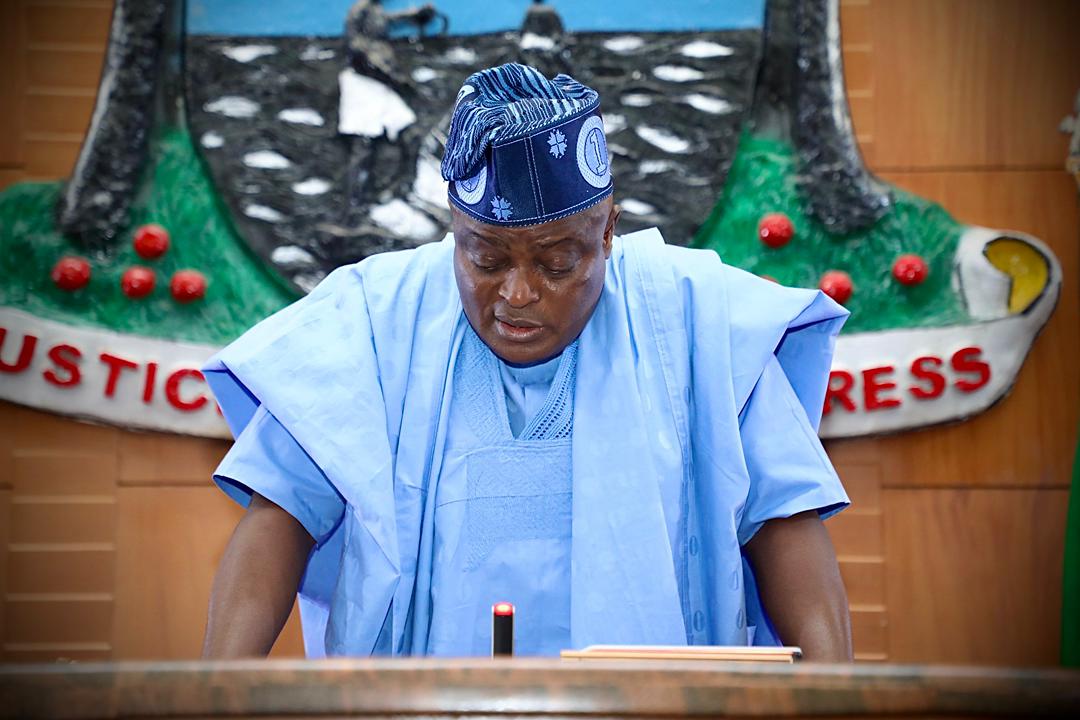
The Speaker of the Lagos State House of Assembly, Rt. Hon. Mudashiru Obasa has extended warm felicitations to Muslims in Lagos State and across Nigeria on the occasion of Eid al-Adha.
In a statement released by his Chief Press Secretary, Mr. Dave Agboola, Obasa described the festival as a season of sacrifice, reflection, and gratitude, urging the faithful to continue to uphold the values of peace, unity, and love that strengthen the nation.
He noted that the celebration of Eid al-Adha is not only a spiritual milestone but also a reminder of the importance of togetherness and collective responsibility in building a stronger society.
He, likewise, emphasized that the festival provides an opportunity for Nigerians to renew their commitment to national progress and to support leadership that prioritizes development and prosperity.
Obasa, however, commended Nigerians, particularly members of the All Progressives Congress (APC), for their massive turnout during the recently concluded party primaries. He described the participation as a clear demonstration of the people’s confidence in the government of President Bola Ahmed Tinubu and their belief in the administration’s vision for a greater Nigeria.
“The APC primaries have shown the resilience of our democracy and the confidence Nigerians have in the leadership of President Bola Ahmed Tinubu and the Renewed Hope Agenda. This is a strong message that our people are ready to continue supporting policies that will drive growth and prosperity,” Obasa stated.
The Speaker further encouraged Muslims to celebrate responsibly, stressing that the joy of Eid should be accompanied by prayers for the continued peace and progress of Lagos State and Nigeria.
“As you celebrate with family and loved ones, may this season bring joy, peace, and prosperity to your homes. Let us remain united in our resolve to build a stronger nation,” he added.
On behalf of the Lagos State House of Assembly, Obasa wished all Muslims a happy and fulfilling Eid al-Adha celebration.

ABEOKUTA FILM FESTIVAL AT ILEYA
Kayshow Multimedia a filmmaking and Media organization this year 2026 holds its annual Abeokuta film festival at the Ake Palace in Abeokuta.
Alake of Egba land, Ọba Michael Adedotun Arẹmu Gbadebo has graciously endorsed the Free Training of Egba Youths on Film and Arts and the Entertainment of the the People with a FREE FILM SHOW at the AKE PAVILION. as part of the ABEOKUTA FILM FESTIVAL 2.0.
The Convener of the Film Festival Honorable Kehinde Soaga says this year’s event promises to be more exciting as distinguished personalities are sure to attend.
This includes the honorable Minister for Art Culture and Creative Economy in Nigeria, Barr. Hannatu Musa Musawa, Ààrẹ Lai Labode, Sen. Ibikunle Amosun and other special guests.
The event will feature Film, Cultural Dance Cultural foods and Award Ceremony.
The general public is hereby invited to the Free film show at the Abeokuta film festival at the Alake Palace Pavilion on Thursday 28th of May 2026 by 4:00 p.m.
Only well dressed is the Entry. The Abeokuta Film Festival is an annual event taking place in the capital city of Ogun State state.


- Qrent says delaying Information Technology (IT) refresh cycles may be increasing operational risk for businesses in Africa May 27, 2026
- Dentons’ Iyunola Adekanye Appointed to African Mining Week (AMW) Advisory Board May 27, 2026
- United Nations (UN) Women Liberia and Partners Convene for Spotlight Initiative 2.0 Women’s Economic Empowerment Inception Meeting May 27, 2026
- African Mining Week (AMW) to Host Central Bank Governors Roundtable as Monetary Authorities Deepen Role in Mining Sector Growth May 27, 2026
- Eritrea: Diaspora Nationals Celebrate Independence Day Anniversary May 27, 2026
- Africa Unveils Landmark Humanitarian Coordination Platform to Strengthen aligned Response to Humanitarian Crises May 27, 2026
- Seychelles: President Herminie Engages with Police and Fire Services on Praslin May 27, 2026
- Issue 3 of Mining Review Africa now available for free download May 27, 2026
- NOV Joins African Energy Week (AEW) 2026 as Gold Sponsor Amid Africa’s Offshore Expansion Push May 26, 2026
- African Union of Broadcasting (AUB) and United Nations University Institute for Water, Environment and Health (UNU-INWEH) Launch Landmark Webinar Series on Africa’s Water Crisis, Starting June 2, 2026 May 26, 2026
- Qrent says delaying Information Technology (IT) refresh cycles may be increasing operational risk for businesses in Africa May 27, 2026
- Dentons’ Iyunola Adekanye Appointed to African Mining Week (AMW) Advisory Board May 27, 2026
- United Nations (UN) Women Liberia and Partners Convene for Spotlight Initiative 2.0 Women’s Economic Empowerment Inception Meeting May 27, 2026
- African Mining Week (AMW) to Host Central Bank Governors Roundtable as Monetary Authorities Deepen Role in Mining Sector Growth May 27, 2026
- Eritrea: Diaspora Nationals Celebrate Independence Day Anniversary May 27, 2026
- Africa Unveils Landmark Humanitarian Coordination Platform to Strengthen aligned Response to Humanitarian Crises May 27, 2026
- Seychelles: President Herminie Engages with Police and Fire Services on Praslin May 27, 2026
-

 news5 months ago
WHO REALLY OWNS MONIEPOINT? The $290 Million Deal That Sold Nigeria’s Top Fintech to Foreign Interests
-

 society3 weeks ago
SOCIAL MEDIA IS NOT A BATTLEFIELD COMMAND – WHY THE NIGERIAN ARMY’S ACTION AGAINST JUSTICE CRACK IS A NATIONAL SECURITY IMPERATIVE
-

 celebrity radar - gossips4 months ago
Dr. Chris Okafor Returns with Power and Fire of the Spirit -Mounts Grace Nation Altar with Fresh Anointing and Restoration Grace on February 1, 2026
-

 celebrity radar - gossips6 months ago
Prophet Kingsley Aitafo Releases 2026 Prophecy: ‘Nigeria Will Rise, but the World Must Prepare for Turbulence’