
society
Nigeria in Flames: How the Kidnapping of a Kwara Monarch Exposes the Government’s Failure to Tackle Insecurity

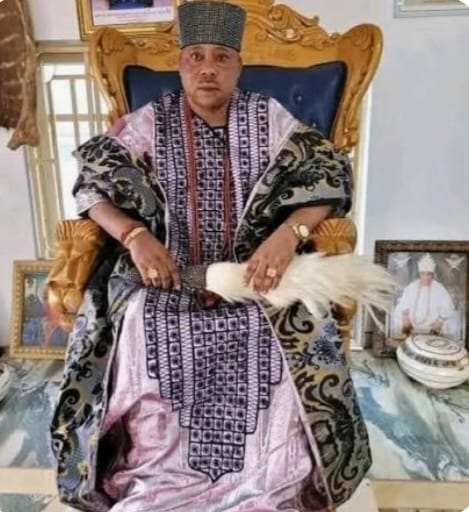
Nigeria in Flames: How the Kidnapping of a Kwara Monarch Exposes the Government’s Failure to Tackle Insecurity.
By George Omagbemi Sylvester | saharaweeklyng.com
“A Nation Held Hostage by Criminal Networks While Leadership Watches.”
On the evening of December 31, 2025, a chilling reminder of Nigeria’s descent into ungovernable chaos played out in Kwara State. Armed men (suspected terrorists and bandits) stormed the royal palace in Aafin, Ile-Ere, Ifelodun Local Government Area, shooting sporadically and seizing control with ruthless precision. In what should have been a festive New Year’s Eve, gunfire replaced celebration as Oba Simeon Olaonipekun, the traditional ruler of Aafin and one of his sons, Olaolu, a serving NYSC member, were abducted by hoodlums. The queen, Felicia Olaonipekun, was shot in the arm but survived the brutal onslaught.

This audacious palace invasion is not a distant headline, but it is a searing indictment of the Nigerian state’s paralysis in the face of a mounting insecurity crisis that stretches from the North-East insurgency to apparently peaceful Yoruba heartlands. The fact that both royal leadership and families are now targets signifies a decay in the social contract between the government and the people.
A Nation Under Siege: The Facts on the Ground. According to eyewitness accounts, about eight armed men arrived around 8:00 p.m., firing shots and breaking down palace doors. They demanded to see the traditional ruler and his wife, demonstrating a predetermined and chilling intent. With only two local vigilantes on duty, the palace was defenseless, resulting in the horrifying kidnap of both monarch and son.
The attackers spoke fluent English, a detail that suggests a level of organisation and sophistication beyond ordinary criminals. In a nation where even elite institutions like palaces are vulnerable, it is painfully clear that whatever security architecture exists has collapsed at the grassroots.
Government Inaction: The Root of a National Catastrophe. Nigeria’s security crisis isn’t an isolated event, it is a systemic failure repeated in community after community. Critics have long warned that criminals, bandits and terrorist networks exploit weak governance, corruption and fractured intelligence systems to operate with virtual impunity.
One security analyst noted, “When you cannot protect a village, you cannot protect a capital.” This is no longer rhetorical; it is a stark reality. The abduction of a traditional ruler (a symbol of community stability and heritage) is not just criminality. It is a testament to a government that has surrendered terrain to terror and lawlessness.

Since the start of the Tinubu administration in 2023, insecurity across Nigeria has expanded, with kidnappings, raids and shootings reported from the Northeast to the Northwest, Central Belt, and now Kwara South. Scholars point out that 3,964 abductions were recorded during this period, a number so staggering that it defies rational governance.
The Kwara attack echoes earlier incidents where monarchs were targeted with lethal brutality and also including a February 2024 attack where a Kwara monarch was killed and his wife abducted.
Why the Government Must Be Held Accountable?
1. Security Architecture Has Collapsed
Nigeria’s security architecture, once conceived to safeguard communities, is now fragmented and ineffectual. Local vigilantes, constitutionally limited and under-equipped, are overpowered by heavily armed gangs. Police response is slow and often reactionary, not preventive. The result: citizens are left isolated, unprotected and afraid.
Prominent Nigerian sociologist Dr. Akin Oyebode has argued, “A government that cannot safeguard its people forfeits its primary obligation.” In this case, the Kwara palace attack makes Oyebode’s point not abstract but devastatingly real.
2. Poor Intelligence and Corruption Are Enablers.
A recurring theme in Nigeria’s security failure is the absence of reliable intelligence and rampant corruption within security institutions. When intelligence is commodified or manipulated, criminal networks gain early warning and manoeuvrability, making police and military forces perpetually reactive, never proactive.
A senior retired general once said, “You can have the best army in the world, but if you don’t know where the enemy sleeps, you’ll fight perpetually with one eye closed.” Nigeria’s intelligence blind spots have become battlefields where terrorists win ground every day.
3. Lack of Political Will and Clear Strategy.
Instead of a coherent national security strategy, successive administrations have offered rhetoric rather than results. There are isolated successes (yes) but no sustained, nationwide plan to tackle the root causes of insecurity: unemployment, poverty and marginalisation.
Political will is not shown in press releases; it is shown in boots on the ground, empowered community protection systems and accountable security institutions. In Kwara, ordinary citizens have had to pay ransoms for kidnapped traditional rulers without meaningful government intervention which is a humiliation of the state that must shake every Nigerian to the core.
The High Price of Insecurity. The human cost of this crisis is incalculable: families shattered, communities in fear and cultural institutions desecrated. Economically, insecurity chokes investment, cripples agriculture, discourages tourism and diverts precious resources from development to survival.
Every market stall that closes early, every farmer too afraid to tend his land at dawn and every youth who chooses flight over fight is a nation unravelling.
Renowned African security expert Professor Funmi Adewale once said, “Security is more than the absence of war; it is the presence of justice, opportunity and protection.” By this measure, Nigeria is failing catastrophically.
What Must Be Done To stem this tide, Nigeria needs urgent, bold and radical reforms:
Reform and empower community security with oversight; equip vigilantes with training, arms and proper integration with formal forces.
Rebuild intelligence networks and also invest in technology, human intelligence and anti-corruption within security agencies.
Address root causes; launch national employment and education programs targeting youth susceptible to recruitment by criminal networks.
Restore public trust; transparent investigations, accountability for failures, and justice for victims must become non-negotiable.
The Way Forward: A Call to Action. The abduction of Oba Simeon Olaonipekun and his son is not simply another headline. It is a symbol of Nigeria’s unraveling and a wake-up call demanding courage, honesty and decisive leadership.
If a king’s palace can be invaded under the nose of law enforcement, what hope does the common citizen have? The government must know that inaction is complicity and that Nigeria’s future depends on the ability of its leaders to protect the vulnerable, secure the peace, and restore the confidence of the people.
The time for empty words has long passed. Nigeria must act (boldly, honestly, and swiftly) before the fire of insecurity consumes the very soul of the nation.






UKA Gears Up for Final ATC Exchangeability Test Run as June Preparations Begin.
May 30, 2026 – As the month of June gathers momentum, the *United Kingdom of Atlantis, UKA*, a sovereign nation has unveiled a series of vital guidelines and preparatory packages to ensure citizens and stakeholders run the *ATC Exchangeability* process effectively.
In an official update, the *President of Atlantic Crown Limited, Empress of Attica Empire UKA*, confirmed that the *Final Test Run of ATC Exchangeability* is scheduled for the month of June 2026. The exercise marks a key phase ahead of the *Official Exchangeability Window, set to run from July 2026 to February 2027*.
### Key Highlights from the Presidential Briefing
1. *Final Test Run – June 2026*
The test run is designed to validate systems, procedures, and user readiness before full activation. Citizens, partners, and designated participants are urged to follow all official advisories released by UKA authorities during this period.
2. *Official Exchangeability Period*
Following the successful completion of the June test run, the Official Exchangeability will commence in july 2026 and we are Expecting Full Exchange ability between July Ending, 2026 to February 2026.
UKA stated that detailed schedules, eligibility requirements, and step-by-step instructions will be communicated progressively through verified UKA channels.
3. *Benefiting Packages for June*
In line with UKA’s commitment to citizen empowerment, the month of June will feature “benefiting packages” aimed at education, preparation, and seamless onboarding. These packages are intended to equip the people of UKA with the knowledge and tools needed for effective participation.
4. *Commitment to Transparency*
Addressing the nation, the Empress of Attica Empire UKA emphasized:
_“Final Test Run of ATC Comes up in The Month of June, As We Prepare For The Official Exchangeability, Between July 2026 To Feb 2027. All Information Will Be Communicated.”_
UKA reaffirmed that only information released through official UKA platforms should be regarded as authoritative.
The United Kingdom of Atlantis is encouraging all citizens, representatives, and interested parties to remain alert to official communications, attend designated orientation sessions, and avoid unofficial sources. UKA’s dedication to order, clarity, and the collective benefit of its people as the nation moves into this significant phase.
For updates, advisories, and participation guidelines, citizens are advised to monitor official UKA communication channels.
United Kingdom of Atlantis, UKA, is a sovereign nation, committed to national development, citizen welfare, and structured economic participation through initiatives such as ATC Exchangeability.
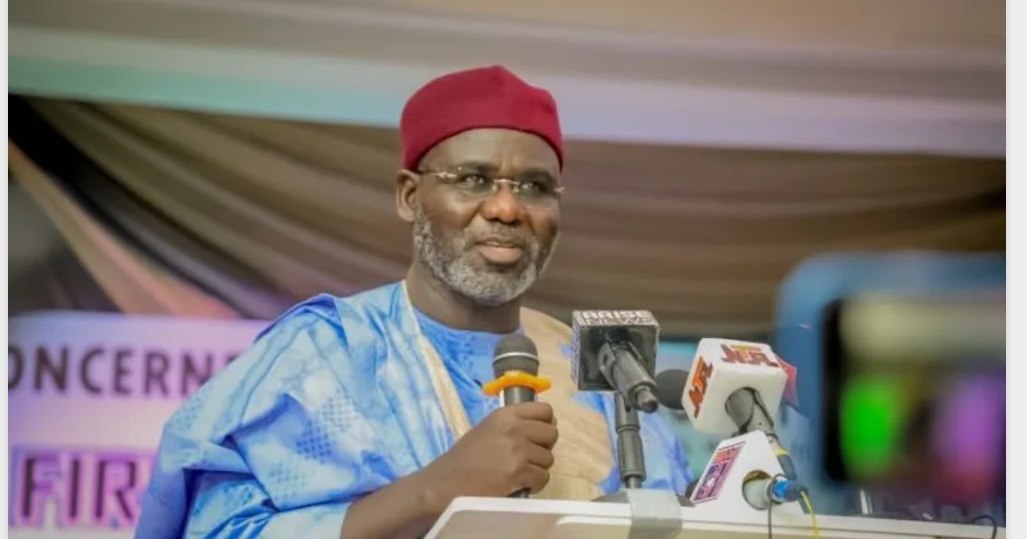
Three Years On, General Buratai Hails Tinubu’s Economic, Security Achievements
Former Chief of Army Staff, Lt. Gen. Tukur Buratai (retd.), has commended President Bola Ahmed Tinubu for what he described as bold economic reforms and improved security efforts as the President marks three years in office.
In a goodwill message on Thursday to commemorate Tinubu’s third anniversary as President and Commander-in-Chief of the Armed Forces, Buratai said the administration had taken courageous decisions that would leave a lasting impact on Nigeria’s development.

According to him, President Tinubu broke a long-standing cycle that had hindered national growth by removing fuel subsidy and implementing foreign exchange reforms aimed at stabilising the naira and strengthening the economy.
He noted that the reforms were beginning to yield positive results, citing the global acceptance of Nigerian debit cards, the gradual revival of local refineries, access to student loans, and ongoing road and infrastructure projects across the country.
“The FCT Administration has also recorded remarkable progress, completing major road projects that remained unfinished for over 16 years,” Buratai stated.
The former army chief also praised the administration’s security efforts, saying renewed military offensives against insurgents, terrorists and bandits had led to notable successes across various parts of the country.
He specifically lauded recent joint operations involving Nigerian and United States forces against Boko Haram and ISWAP in the North-East, as well as intensified counter-banditry operations in the North-West.
“We have seen notorious ISWAP commanders being neutralised. I congratulate the Commander-in-Chief, the Minister of Defence, the Chief of Defence Staff, the Service Chiefs, the Inspector-General of Police and heads of intelligence agencies for their efforts,” he said.
Buratai, however, acknowledged that challenges remained, stressing the need for more aggressive military operations and intelligence-driven strategies in the coming year.
While urging Nigerians to remain hopeful, he said celebrating the President’s achievements did not amount to ignoring the difficulties facing the nation.
“Because you truly care, you have shown the courage to trade short-term comfort for long-term hope. Nigerians need your reassurances, and that is why we remain optimistic and full of confidence,” he added.
The retired military officer reaffirmed his support for the Tinubu administration and expressed confidence that the foundation being laid by the government would deliver a brighter future for the country.
He also prayed for God’s guidance, wisdom, strength and good health for the President as he continues to lead Nigeria.

NUT Raises Alarm Over Continued Captivity of Abducted Oyo Pupils, Teachers
The Nigeria Union of Teachers has expressed deep concern over the continued captivity of pupils and teachers abducted during an attack on schools in the Ahoro-Esinle and Yawota communities in Oriire Local Government Area of Oyo State.
In a statement issued on Saturday, the Oyo State wing of the union described the situation as increasingly distressing, particularly following the emergence of a video allegedly released by the abductors showing the victims pleading for their freedom.
The union said the footage had heightened fears over the welfare of the abducted pupils and teachers, describing their ordeal as heartbreaking and unacceptable.

According to the NUT, no child or teacher deserves to be subjected to such traumatic experiences, adding that the prolonged captivity of the victims has continued to inflict psychological pain on their families, colleagues and the wider education community.
The union called on the Federal Government, Oyo State Government and relevant security agencies to intensify efforts towards securing the immediate and safe release of the victims.
“This is not a moment for hesitation. It is a moment for coordinated, intelligence-driven efforts to ensure the immediate and safe release of all abducted pupils and teachers,” the statement read.
While acknowledging ongoing interventions by security agencies and government authorities, the union stressed that time was of the essence, warning that every additional day in captivity deepens the trauma suffered by the victims.
The NUT urged security operatives to strengthen surveillance, improve community intelligence gathering and deploy all necessary operational and diplomatic measures to facilitate the rescue of the abductees.
It also appealed to traditional rulers, community leaders and residents to support rescue efforts by providing credible information that could assist security agencies.
“The safety of our children and teachers must remain a collective priority,” the union stated.
Reaffirming its support for the families of the victims, the NUT pledged continued solidarity and prayers while advocating safer learning environments across the country.
The statement was jointly signed by the Chairman of the Oyo State NUT, Comrade Hassan Ajibola Fatai, and the Secretary, Comrade Salami Olukayode.


- Pitcher Awards Announces 2026 Winners, Marking a Landmark Year for Pan‑African Creativity May 30, 2026
- Ghana Commemorates 78th International Day of United Nations Peacekeepers May 30, 2026
- South Africa: President Ramaphosa receives second interim report of Madlanga Commission May 30, 2026
- Asmara Marathon 2026 to be held May 30, 2026
- Powerful call for dialogue and compromise to secure peace in South Sudan issued on International Peacekeepers Day May 30, 2026
- Over 1,000 Participants Join Rwenzori Marathon Activation Run in Mombasa May 30, 2026
- World Health Organization (WHO) actively participated in the 2nd Summit on Healthcare Integration in Portuguese-speaking countries May 30, 2026
- Annual Meetings (AM) 2026: “Africa has what It takes” - Experts call for stronger financial systems to help Africa mobilise capital at scale May 30, 2026
- Eritrea Participates at Organization of African, Caribbean and Pacific States Meetings May 30, 2026
- Annual Meetings 2026 (AM2026): African Development Bank Group’s 2025 Annual Report Highlights Strong Results and a New Chapter for Africa’s Transformation May 29, 2026
- Pitcher Awards Announces 2026 Winners, Marking a Landmark Year for Pan‑African Creativity May 30, 2026
- Ghana Commemorates 78th International Day of United Nations Peacekeepers May 30, 2026
- South Africa: President Ramaphosa receives second interim report of Madlanga Commission May 30, 2026
- Asmara Marathon 2026 to be held May 30, 2026
- Powerful call for dialogue and compromise to secure peace in South Sudan issued on International Peacekeepers Day May 30, 2026
- Over 1,000 Participants Join Rwenzori Marathon Activation Run in Mombasa May 30, 2026
- World Health Organization (WHO) actively participated in the 2nd Summit on Healthcare Integration in Portuguese-speaking countries May 30, 2026
-

 news6 months ago
WHO REALLY OWNS MONIEPOINT? The $290 Million Deal That Sold Nigeria’s Top Fintech to Foreign Interests
-

 society4 weeks ago
SOCIAL MEDIA IS NOT A BATTLEFIELD COMMAND – WHY THE NIGERIAN ARMY’S ACTION AGAINST JUSTICE CRACK IS A NATIONAL SECURITY IMPERATIVE
-

 celebrity radar - gossips4 months ago
Dr. Chris Okafor Returns with Power and Fire of the Spirit -Mounts Grace Nation Altar with Fresh Anointing and Restoration Grace on February 1, 2026
-

 celebrity radar - gossips6 months ago
Prophet Kingsley Aitafo Releases 2026 Prophecy: ‘Nigeria Will Rise, but the World Must Prepare for Turbulence’