
Politics
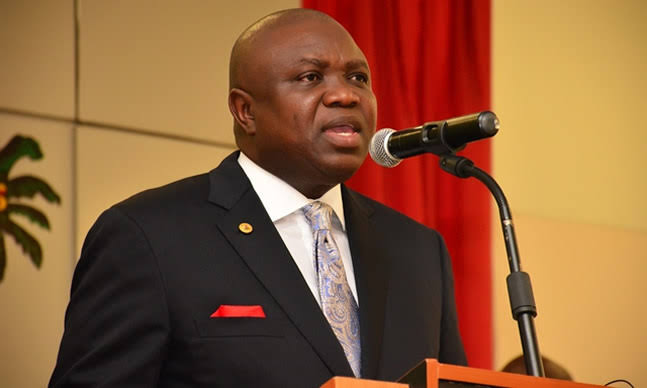
Ambode’s ambition of return and Seyi Tinubu’s political trajectory BY IDOWU AJANAKU

Ambode’s ambition of return and Seyi Tinubu’s political trajectory
BY IDOWU AJANAKU
Quote:
” Leadership is something you earn, something you are chosen for”
-Ben Roethlisberger
The strong and solid factors that always stand a candidate’s ambition in good stead within the socio–political dynamics of a local community, state or federal government level include vision, character, commitment, and consistency or call it constancy of purpose.That is especially so with regards to that person’s guiding philosophies, principles and purposefulness, if driven by humility, integrity, honesty of purpose all within the perspective of the larger picture.

Good enough, it would be a point of reference if such a person has held a public position before and distinguished himself in terms of performance. That precisely, underscores the relevance of the recent media mention of the political ambition of the former governor of Lagos state, Akinwumi Ambode to return to that same pedestal of power, some eight years after he lost that bid to continue in office. Though that wave of interest is currently gathering momentum there are still some hurdles and hitches to scale over. That is where that of the young entrepreneur and politician, who happens to be heir to the throne of the political juggernaut and incumbent President Ahmed Tinubu comes into the unfolding picture. He is none other than the affable, resourceful and dynamic Seyi Tinubu.
Periscoped from a personal perspective, one can objectively describe him as ” a smart and enterprising” man who has learnt the ropes from his father. Indeed, he deserves to be applauded for the noble and notable role he played as a dependable catalyst to see his father’s presidential ambition to the light of day.
Ever since, he has deployed similar energy by galvanizing the youths across the nooks and crannies of the country to actively support the “Renewed Hope” agenda. This is a commendable initiative, is it not? Of course, it is. Ahead of the 2027 presidential election therefore, he is well admonished to channel such support towards achieving his father’s reelection.That is, instead of dissipating such as a candidate to become the Lagos State governor. That would provide a positive political leverage for Ambode’s return to power. If done, Ambode will have the opportunity to put in place measures and mechanisms to lubricate the political engine for Seyi to compete for and eventually become the governor come the year 2031 when his father would be completing his tenure. That would be a more interesting scenario. And that brings us back to Ambode’s ambition for the 2027 gubernatorial race. Like it or not, his remarkable achievements over his first term in office, speak volumes.
According to seasoned analysts, and as attested to by the opinion of millions of residents of the state of aquatic splendor, the iconic economist from the backwaters of Epe literally wrote his name in gold while the governor. There are empirical evidences on ground traversing the sectors of infrastructure, security, food security through healthcare delivery, education, transportation to entertainment. In fact, he left Lagos much better in terms of the Human Development indices ( HDI ) than he met it.
For instance, it would interest the reader to know, or be reminded that it was during Ambode’s tenure that the hitherto long-winding and seemingly intractable traffic congestion challenge was frontally tackled. That came about with the construction of his signature jubilee flyover bridges at places such as Abule-Egba, Ajah and that at Pen Cinema junction, as they came into being.
Interestingly, the mere mention of the name “Ambode” and the appreciative Lagosians will reel out the construction and rehabilitation of 500 roads across the five districts of the ever – busy cosmopolitan city of Lagos. In fact, the people of Alimosho Local Government Area, LGA would remain grateful for the well- paved roads with modern drainage system. And those at Ojodu-Berger axis have been enjoying the solution to the once asphyxiating traffic jam that characterized the area sparking fisticuffs between the transporters and the commuters. Yet, there are more noteworthy projects to remember Ambode for.
From the reconstructed Murtala Muhammed International Airport road converted from 4 to 10- lane highway, with ramp bridge and flyover to the 21st Century iconic Oshodi Transport Interchange equipped
with three terminals, 18 lifts as well as CCTv cameras the handwriting of impactful governance are there for all to see, to admire and to appreciate. It is so inspiring that Ambode was able to build on the achievements of his predecessors to rid Oshodi as the popular den of hardened criminals. But there is more to the feats achieved under Ambode’s tenure to gladden the heart of patriots.
Lest we forget, with regards to reinforcement of security in the city with ever bubbling population, Ambode granted N6.6 billion for security agents though belonging to the federal government. He signed into law the Lagos Neighborhood Safety Corps. In addition was the Lagos State Properties Protection Law to protect the land owners from the nefarious activities of the notorious land grabbers.
And on transportation the Bus Reform Initiative enhanced public transportation with 5,000 new buses, out of which 434 buses boosted the busy Ikorodu corridor.
Furthermore, in the critical health sector under Ambode, the popular Ayinke House was transformed from an 80- bed facility into the ultra – modern 170-bed Specialist Centre. Also, the LASUTH complex was equipped with a helipad for medical emergency and the nation’s first ever DNA forensic centre.
Apart from the popular Lake Rice that came up as the Lagos-Kebbi rice project which boosted food security with cheaper and safer rice, Ambode ensured that the people of Lagos were made happier with the building of theatres in Alimosho,Badagry, Ikeja and Epe. That was with the Eko Theatre project in the entertainment sector. One could go on and on. But all these highly commendable achievements remind us of the wise words of Joe DiMaggio who stated that: “ A person always doing his or her best becomes a natural leader, just by example”.
So, as events unfold in the coming years, if there is one man to be considered worthy of the prestigious post of the governorship of the Centre of Excellence he should be Akinwumi Ambode. He has been there before, did his best and must have learnt from his mistakes in the volatile politicking landscape. Good enough, he has weathered the storm, kept his cool in the midst of it all without casting aspersion on his political traducers. As he aptly stated, back in September 2018 while asking for Second Term: ” I ask you to believe again and together, let us achieve more…to build a secure and prosperous Lagos state driven by a vibrant economy, supported by quality service, equity and justice”.

AJANAKU, was a former special adviser on information and strategy to Gov. Ambode




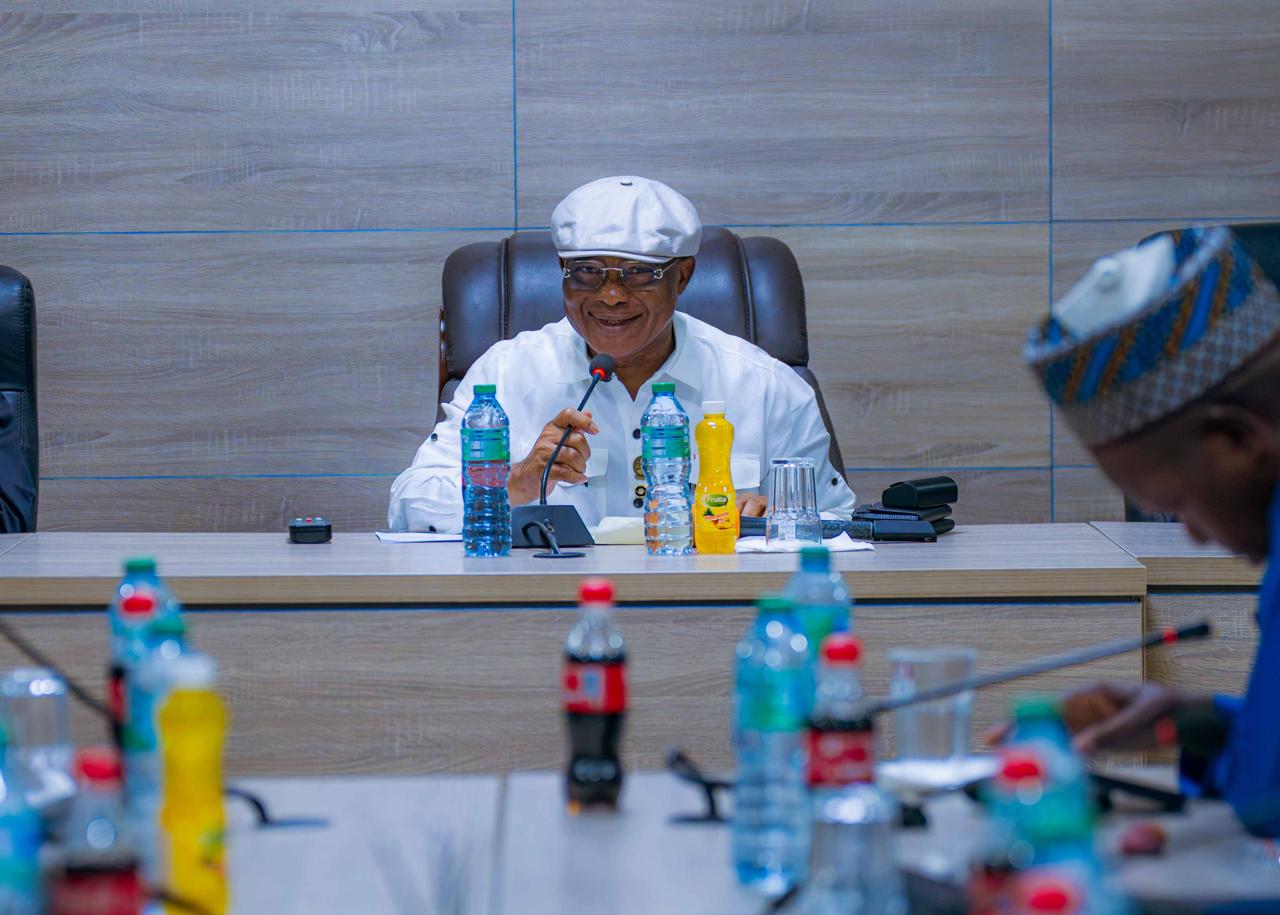
*Renewed Hope Ambassadors Step Into the Next Phase
Fresh from the successful APC 2026 National Convention, the Renewed Hope Ambassadors National, Zonal, and State leadership gathered in Abuja over the weekend, for its fourth strategic meeting, setting the tone for nationwide grassroots activation ahead of 2027.
Chaired by Governor Hope Uzodinma (Imo State) the Director General and National Coordinator of the Renewed Hope Ambassadors, alongside Deputy Director-General, Governor Uba Sani of Kaduna State, and Governor Inuwa Yahaya of Gombe State as Secretary, the session reinforced one clear direction: One Party. One Message. One Mobilization whilst also laying out a strategic roadmap for the activation of the network across all communities in Nigeria.
Backed by the strength of 31 APC-led states, the Renewed Hope Agenda is taking Bola Ahmed Tinubu’s message of progress and reform to every corner of Nigeria.
From bold economic restructuring to initiatives like NELFUND, the increase in the national minimum wage from ₦30,000 to ₦70,000, and strategic investments in critical sectors, including PNiCGI, the mission remains clear: helping Nigerians understand both the purpose and the progress of the Renewed Hope vision.
This is coordination at scale. This is grassroots engagement with purpose. This is the next phase of Renewed Hope with One Party, One Message, and One Mobilisation framework
#RenewedHopeAmbassadors #APC #WeAreAPC


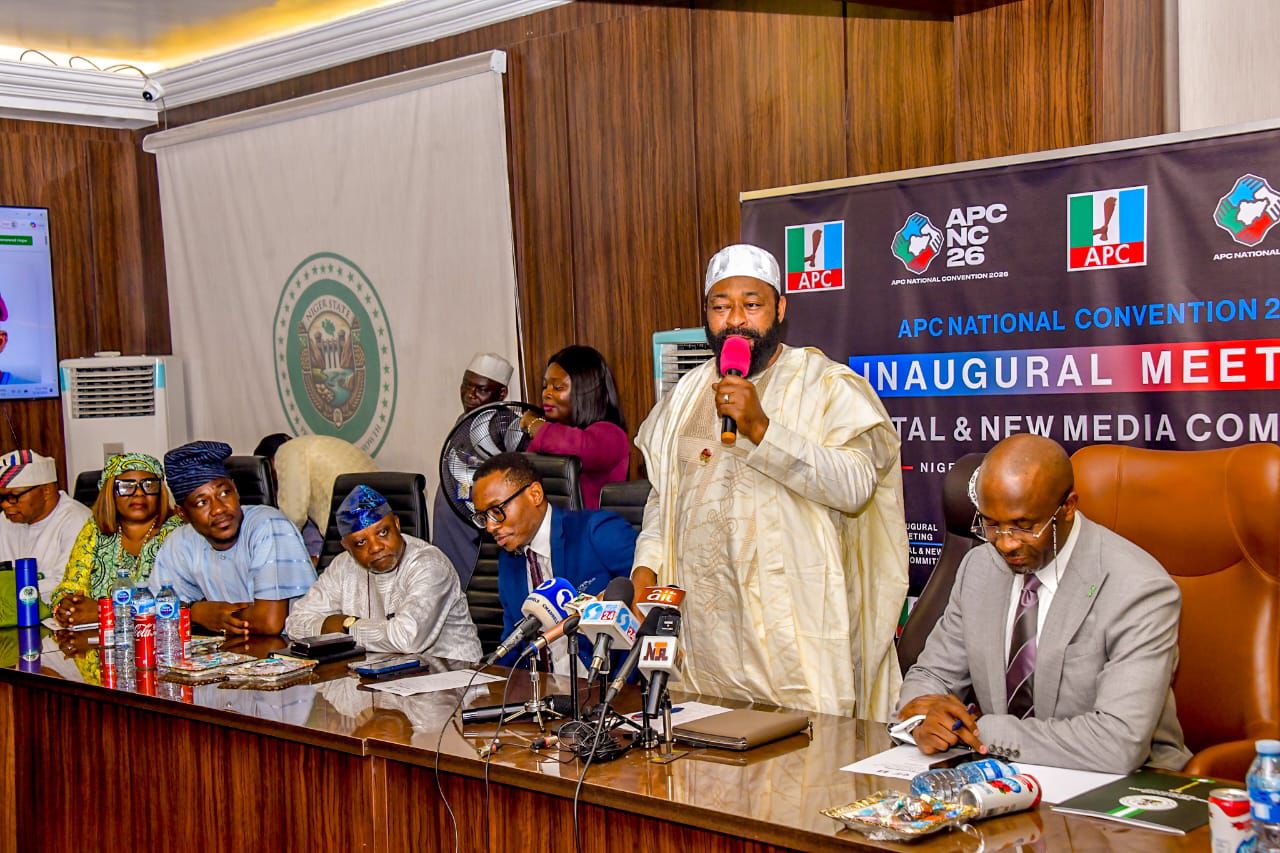
Governor Bago Inaugurates APC Digital Media Sub-Committee Ahead of National Convention.
Governor Umaru Bago has inaugurated the Digital Media Sub-Committee for the forthcoming National Convention of the All Progressives Congress (APC), scheduled to hold on March 27 and 28, 2026 in Abuja.
Chairing the sub-committee, Governor Bago tasked members with the responsibility of effectively communicating the party’s manifesto to the public.
He emphasized the need to leverage social media platforms to highlight the achievements and ongoing efforts of President Bola Ahmed Tinubu, noting that communication gaps have posed challenges that must now be decisively addressed.
The Co-Chair of the sub-committee, Hon. Benjamin Kalu, Deputy Speaker of the House of Representatives, echoed the Governor’s position, urging members to project the activities of both the party and the government to a broader audience.
He called for a deliberate and coordinated effort to showcase the party’s achievements and policy direction, stressing the importance of shaping a compelling and consistent narrative across all digital platforms.
Delivering a presentation to the committee, Otega Ogra, SSA to the President on New Media, who serves as Secretary of the sub-committee, outlined strategic focus areas to guide the team’s operations.
His presentation highlighted communication priorities and actionable steps to achieve the committee’s mandate and strengthen the party’s digital engagement.


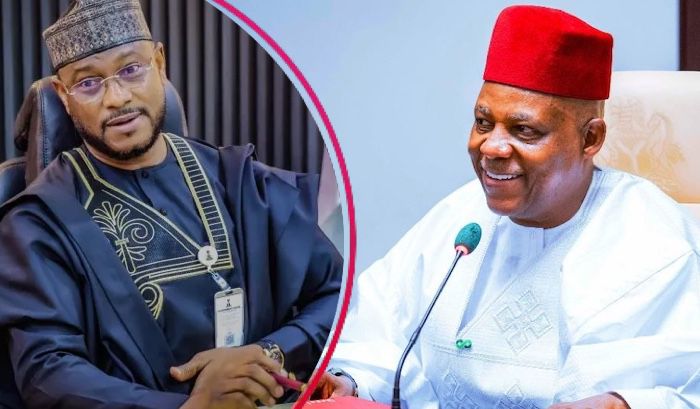
VP Shettima Set to Lead Delegation to Zamfara as Governor Dauda Lawal Formally Joins APC
The Zamfara State chapter of the All Progressives Congress (APC) has finalized plans to receive Vice President Kashim Shettima for the formal defection and reception of Governor Dauda Lawal into the ruling party, scheduled to take place on Tuesday.
State APC Chairman, Tukur Danfulani Maikatako, disclosed this during a high-level stakeholders’ meeting held in Gusau, the state capital. He noted that the Vice President would be joined by the party’s national leadership to mark what he described as a landmark political realignment in the state.
Maikatako expressed the party’s excitement over Governor Lawal’s return, recalling that Zamfara had historically been an APC stronghold and that the Governor was previously a bona fide member of the party before his earlier exit.
“We all know that Zamfara has long been one of the APC’s stronghold states, where the defected Governor was once a bona fide member. Now that he has decided to return home, having been satisfied that the APC remains his second choice after the one he left for obvious reasons,” Maikatako stated.
The Chairman called on all party faithful across the 147 wards in the state’s 14 local government areas to turn out en masse to honour the Vice President’s visit. He emphasized that the event was strategically positioned to bolster the party’s popularity and strengthen its structures ahead of the 2027 general elections.
In a strong appeal for unity, Maikatako urged members to set aside all factional tendencies, stressing that the APC remained one political family with shared goals, particularly the ambition to make Zamfara and Nigeria great again.
Echoing similar sentiments, a former state APC Chairman, Lawal M. Liman, appealed to members to cascade the message to their wards and local government areas. He reinforced the need for cohesion, noting that the party’s collective strength would be critical to achieving success in future elections.

All eyes are now on Gusau as the ruling party prepares for a high-profile political gathering expected to further consolidate its influence in Zamfara State.


-

 society6 months ago
Religion: Africa’s Oldest Weapon of Enslavement and the Forgotten Truth
-

 news4 months ago
WHO REALLY OWNS MONIEPOINT? The $290 Million Deal That Sold Nigeria’s Top Fintech to Foreign Interests
-

 society6 months ago
“You Are Never Without Help” – Pastor Gebhardt Berndt Inspires Hope Through Empower Church (Video)
-

 celebrity radar - gossips2 months ago
Dr. Chris Okafor Returns with Power and Fire of the Spirit -Mounts Grace Nation Altar with Fresh Anointing and Restoration Grace on February 1, 2026