
society
AMBODE’S DISTINCTIVE LEAP IN TODAY’S ALIMOSHO POLITICAL HIERARCHY By Michael Popoola Ajayi

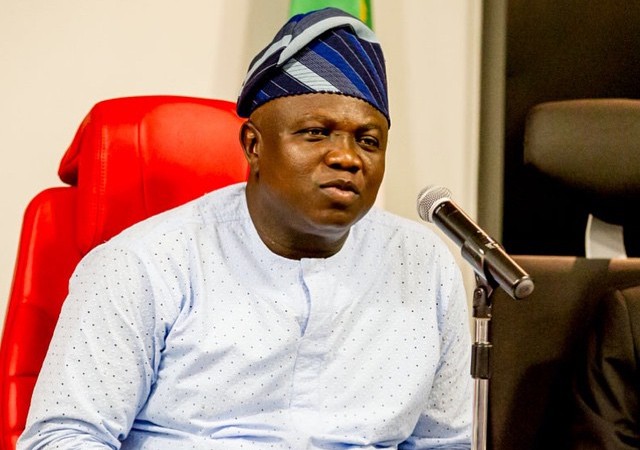
Alimosho Local Government Area of Lagos State as one of the largely sub urban LGA in the state is a relatively very distinguished area in the Lagos polity. This assertion is certainly not just for its massive population with over 700 polling units, second only to Mushin’s over 800 plus. Also, because of being one of Nigeria’s largest Federal constituencies. For these reasons the area occupied a premium place in the Lagos State political calculations. Its ever-expanding population has over the years made every politician see the area as a major issue in winning a considerable vote in elections both at the state and the federal levels.
In this regards political stakeholders at both the state and Local government levels are at one time or the other creating and developing strategies to sustain their political hold and relevance in the state. Therefore a political hegemony has naturally evolved in the area like many other clustered and significant political constituencies across the land. But, what makes Alimosho a relatively unique and interesting case study is its aforementioned distinguished features and landmarks.
The current political hegemony in Alimosho got a zest during the reign of former Lagos State governor, Asiwaju Bola Tinubu when the then Commissioner of works, RaufAregbesola now Osun state Governor provided the leadership and the incentives to torpedo Ayo Akinyemi, Baba Elediye, Alhaji Orelope led leadership.
The era witnessed an attempt to lay a foundation towards infrastructural development and growth of the area. A number of landmark projects were initiated to open up the wide terrain. More importantly, the era also brought about the influx of both old new politicians into The Bola Ahmed Tinubu Campaign Group, BATCO, which later mutated to The MANDATE Group.
Consequently, Asiwaju’s teeming political disciples who traditionally spring up as a result of his efficacious political dominion in the state especially the controlling leadership in Alimosho began to see themselves as a major force in the state political hegemony and strategically position themselves in the area’s political hierarchy for relevance and pecuniary benefits and accordingly devise means to climb up to and sustain at the top echelon of the hierarchy. In a demonstration of total loyalty to Asiwaju, the area was soon nicknamed ASIWAJU’S COUNTRY in order to maintain their political ascendancy and also to create an impression that wherever Asiwaju turns politically there they are.
However, since Asiwaju and Fashola’s intervention in the area, none of the government functionaries, political leaders and stakeholders, who identified with the area have been able to make much meaningful impact like the current governor of the state, Mr. Akinwunmi Ambode.
Since his assumption of duty as Governor on May 29th 2015, Ambode has never left any one in doubt that he is committed to the progress of the state most especially the neglected sub urban local Government areas and in this, the infrastructural development and growth of Alimosho Area of the state is paramount. Made up of a Local Government Area and five Local Council Development Areas, Ambode’s government has hence become a resounding blessing for the people of Alimosho. To most political analysts and keen watchers, his giant strides here have greatly endeared him to the entire citizenry of this area and beyond.
According to Olufemi Akanbi who wrote in the Vanguard of July 9th 2017 said; “having lived in Alimosho virtually all my life and I am getting to 60 years, I must say that the transformation that has taken place in the area in two years of Akinwunmi Ambode’s administration is unprecedented. I say this with all sense of responsibility as a man of God and a resident who has directly benefited from the Midas touch of the governor.
At the inception of his administration, Ambode promised to run an all-inclusive government where no area is left behind in the scheme of things and true to his words, the hitherto forgotten Alimosho has been positively affected in many ways and the man at the helm of affairs in the Centre of Excellence is still poised to do more.”
Truly, as Akanbi wrote in 2017 that Ambode was poised to do more; the governor actually lived up to the expectation of the people. He has continued to upgrade the quality and infrastructure. This is evident in the hundreds of kilometre of roads he has constructed across Alimosho’s one local government and five local council development areas, where the Abule Egba fly over, Ijegun-Isheri-Osun-Isolo Road, Idimu-Ejigbo Road (Phase II), New Market Road, Camp Davies/Ishefun Roads, and the newly inaugurated 21 roads and two bridges in the area are very momentous. The roads and the bridges were unprecedented, and have tremendously eased commuting within the communities and across to the neighboring Ogun state.
Evidently, with the current attention of the state government on Alimosho and the enhancement of the welfare of the people, the residents continue to express serious doubts that they may not have had it better if Ambode were from the constituency.
Therefore if membership and leadership of the Alimosho hegemony is a function of the level of contributions to growth and development, Ambode has earned himself a place of pride among the people, with a distinctive leap far ahead of all entrenched leadership of the area.
It is convenient to conclude that Ambode is second only to his leader, Asiwaju Bola Tinubu in Alimosho hegemonic political hierarchy today.
Comrade Michael Popoola Ajayi writes from Centre for Democracy and Socio-Economic Rights (CEDESER), Lagos





NASRE: Building A Safety Net For Nigeria’s Journalists
At a time when Nigeria’s media industry is strained by economic uncertainty, job instability, and shrinking newsroom resources, the Nigerian Association of Social and Resourceful Editors (NASRE) is redefining professional solidarity. More than a network of editors, it is emerging as a critical support system for journalists navigating an increasingly precarious landscape.
Founded on the principles of welfare, solidarity, and professional growth, NASRE has positioned itself as a responsive and forward-looking body within the media ecosystem. While many professional associations remain focused on advocacy and training, NASRE distinguishes itself by combining these roles with direct and practical support for journalists and their families.
At the core of its mission is a clear proposition that no journalist should be abandoned in times of need. Through financial assistance, targeted outreach, and sustained engagement, the association has supported members facing hardship, as well as widows and families of deceased practitioners. These largely understated interventions have steadily earned NASRE credibility and respect across the industry.
The organisation’s approach reflects a keen awareness of the pressures confronting media professionals, including irregular pay, job insecurity, and limited institutional backing. In such an environment, NASRE’s welfare initiatives are not merely charitable, they are essential.
Beyond welfare, the association is investing in professional resilience. Through collaboration, networking, and knowledge-sharing platforms, it is equipping editors and practitioners to remain competitive in a rapidly evolving digital media space, where adaptability is no longer optional.
Headquartered in Lagos, NASRE continues to broaden its reach, attracting a growing membership united by the need for a more responsive and supportive professional community. Its expansion signals a shift in expectations within the industry, away from symbolic affiliations towards institutions that deliver measurable value.
For many observers, NASRE represents a necessary evolution, a professional body anchored not just in ideals, but in impact. By combining empathy with structure, it offers a model of what media associations can become in challenging times.
As the industry continues to evolve, organisations like NASRE may prove indispensable. In a profession devoted to telling society’s stories, it is ensuring that the storytellers themselves are not left behind.
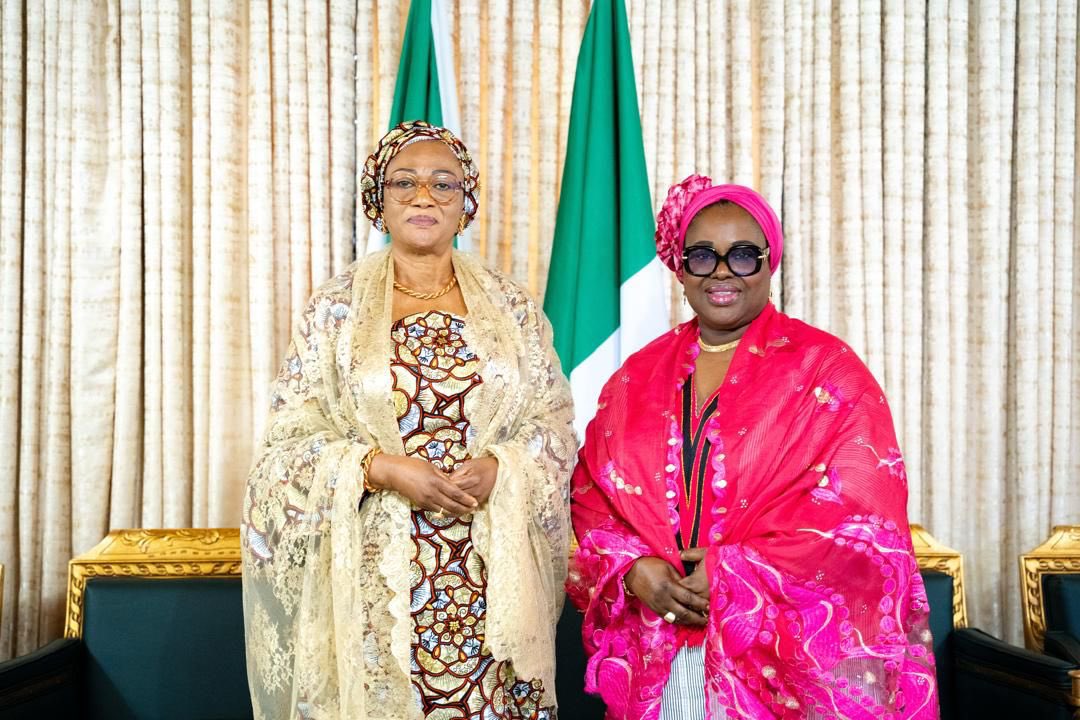
Oluremi Tinubu Hosts Wife of New IGP, Talks Welfare, Empowerment for Police Families
The First Lady of the Federal Republic of Nigeria, Senator Oluremi Tinubu, today welcomed Mrs. Mutiat Disu, wife of the Inspector General of Police, at the State House in Abuja.

During the meeting, the First Lady encouraged Mrs. Disu to continue championing the welfare and wellbeing of police officers’ families, especially through impactful support for their wives.
Speaking after the meeting, Mrs. Mutiat Disu shared her excitement about partnering with the First Lady’s Renewed Hope Initiative (RHI), noting that she is ready to leverage its programs to empower police officers’ wives across the country.
Mrs. Disu, who also serves as the National President of the Police Officers’ Wives Association (POWA), described the meeting as insightful and inspiring. She emphasized her commitment to using RHI platforms to improve healthcare, welfare, and economic empowerment for POWA members nationwide.
“The purpose of this visit is to tap into her wealth of experience and explore how POWA can benefit from her programs,” she said.
She added that her engagement with the First Lady has already provided valuable direction, especially in areas of social intervention and healthcare support for police families.
“I’m ready to work closely with Mama to ensure our women benefit fully, especially since RHI focuses on uplifting women, and POWA is largely made up of women.”
Mrs. Disu assumed leadership of POWA following the appointment of Tunji Disu as Inspector General of Police on February 24, 2026, succeeding Kayode Egbetokun.
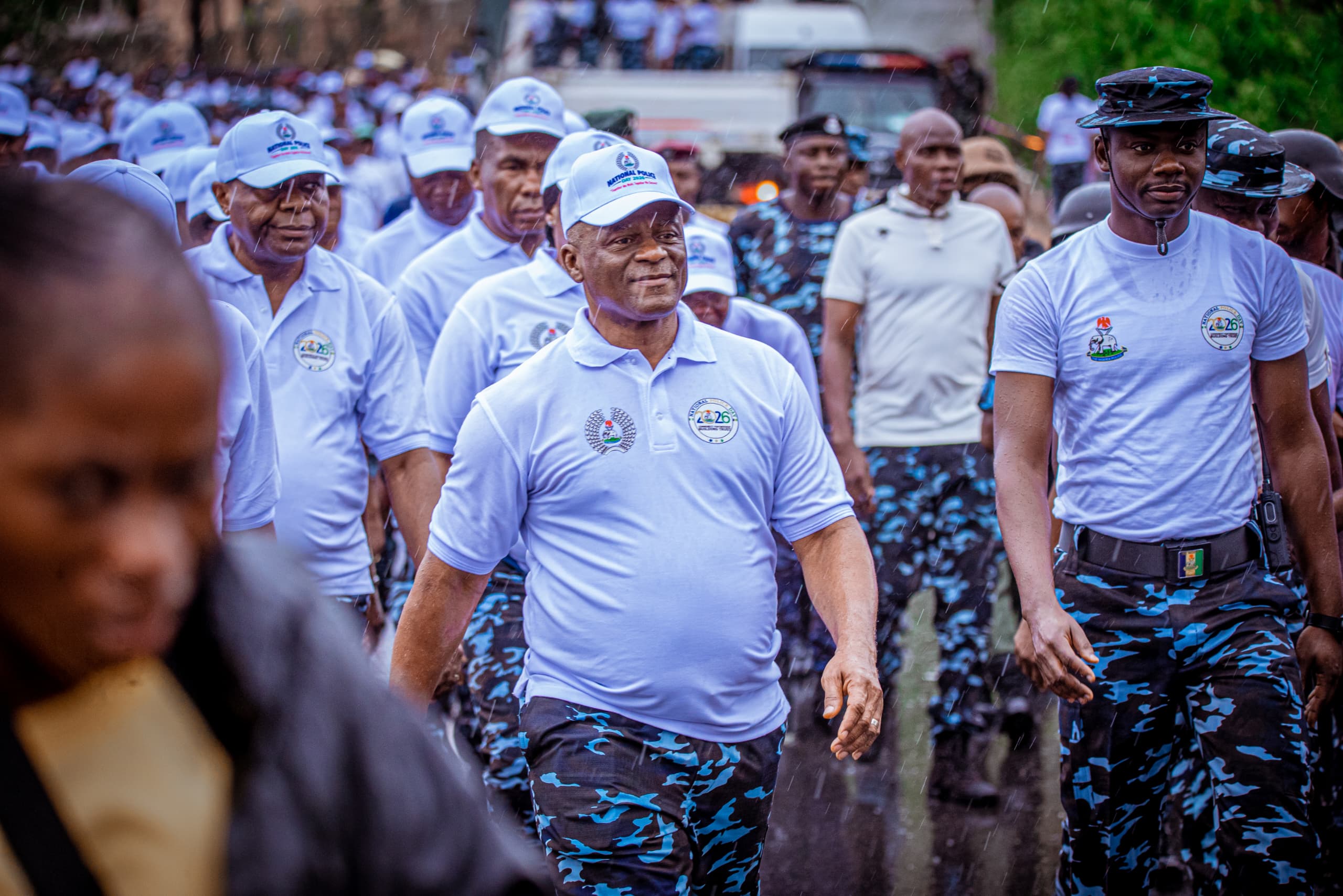
Police Day 2026: IGP Disu Leads Nationwide Walkathon To Strengthen Community Trust
The Inspector-General of Police, Olatunji Disu, on Tuesday led the management team, alongside officers and personnel of the Nigeria Police Force, in a nationwide walkathon to commemorate the 2026 National Police Day.
The event, held across state capitals and the Federal Capital Territory, formed part of activities marking Day Two of the annual celebration, themed “Community Partnership: Building Trust.”
The symbolic exercise, which drew participation from both police personnel and members of the public, was aimed at showcasing unity, discipline, and a renewed commitment to community policing and public safety.
According to the Force leadership, the walkathon underscores the Nigeria Police Force’s resolve to strengthen public trust, deepen engagement with citizens, and enhance collaboration in tackling security challenges across the country.
Participants described the initiative as a practical step toward bridging the gap between law enforcement and the communities they serve, while also promoting physical fitness and mental well-being among officers and civilians alike.
With the theme reflecting a shared responsibility for safety, the Police reiterated that sustainable security can only be achieved through active partnership with the public.
The event concluded with a renewed call for collective action under the banner: “Together We Walk, Together We Secure,” emphasizing unity of purpose in building a safer and more secure society for all Nigerians.


-

 society6 months ago
Religion: Africa’s Oldest Weapon of Enslavement and the Forgotten Truth
-

 news4 months ago
WHO REALLY OWNS MONIEPOINT? The $290 Million Deal That Sold Nigeria’s Top Fintech to Foreign Interests
-

 society6 months ago
“You Are Never Without Help” – Pastor Gebhardt Berndt Inspires Hope Through Empower Church (Video)
-

 celebrity radar - gossips2 months ago
Dr. Chris Okafor Returns with Power and Fire of the Spirit -Mounts Grace Nation Altar with Fresh Anointing and Restoration Grace on February 1, 2026
You must be logged in to post a comment Login
You must log in to post a comment.