
celebrity radar - gossips
Amotekun: Are the Yoruba States in Nigeria asking for sovereignty?


By Jimoh Ibrahim OFR, CFR
Amotekun: The six states of the Yoruba ethnic group of the Federal Republic of Nigeria recently demanded from Nigeria Government more power to control security in their region and despite the Nigeria Police Force, the Military already in place, the Yoruba state now set up the Amotekun paramilitary forces.
The question remains: could this be the security arm of the proposed ‘Oduduwa Republic’ in the face of the Federal Republic of Nigeria?
Again, the Biafra Republic attempted a failed succession from the Federal Republic of Nigeria despite support from some states from the international society.The author is worried about the consequences of a failed demand for sovereignty for a second time in Nigeria.Yes, before 1648 a territorial state is a mere joke, nothing in a state beyond the authority of the hegemon, the emperor, the king, and the fiefs.In the mid 15th century, both England and France enjoyed relative territorial sovereignty.Europe during the same period was dotted with hundreds of different politice, overlapping jurisdictions, a low degree of differentiation between public and private realms, and divided loyalties. The papal system ended with the Pope as the head of Christendom. King Henry Charles the V11 challenged the Pope authority to regain the England states but what is more “what pleases the King has the force of law” and “what the King will the law will” the trajectory of the display of power is traceable to the divided loyalty of the peasant in the Feudal State and the Anglo Saxony 15 century.The geo-centric political movement in the international society of the power play lasted and beyond the period of the medieval time.
The emphasis here is that the demand for sovereignty is not a straight journey and could start as a play of asking where my loyalty belongs.And, the interesting choice of an answer in the Yoruba State: loyalty to the Federal Government of Nigeria, the Ooni of Ife (the Hegemon of the Yoruba States), and other similar Kings, the Governors, or completely with the Amotekun.There appears to be a divided loyalty. A choice is not an offence against the state but a pathway for legitimate demand for sovereignty.What is to follow is meetings for discussion if the demand for sovereignty is mutual.Again, so, as it was in the Peace of Augsburg 1555 where the principle of cuius regio, eius religio that the religion of the sovereign would be the religion of the subject.This further explained the imperativeness of divided loyalty to the religion of Buhari as Nigeria hegemon, to say the least, cannot be the religion of the Nigerian subjects. So, the hegemon gradually loses power to the peasant as it was in the feudal state. How will it be said that the religion of Ooni of Ife the Yoruba hegemon (and to say the least, Obatala, Orunmila, Ayelala) is the religion of the Amotekun states?No one even in the days of the military will ever succeed in the imposition of the religion of the hegemon on the Federal Republic of Nigeria because of the potential implications this may arrest immediately Valtellina sovereignty which is the ability of the state to determine its political structure and domestic sovereignty the state ability to control its population and territorial jurisdiction.Where a domestic policy in the States of Nigeria respect the Peace of Augsburg we may be inviting situation very close to Syria or Democratic Republic of Congo (God forbid). It is safe to say that Amatekun state cannot put in place the golden rule of cuius regio, eius religio.If there is nothing too good to borrow from the Peace of Augsburg, what of the famous peace of Westphalia 1648. In the historical context and the evolution of the international society, the trajectory for the sole of territorial state retained the attention of the geocentric society in the following order: Life of Confucius 551-479, Greeks victorious against Persia 490-480, Kautilya writes Arthasastra Circa 250, the idea of war mentioned in Hindu Code 200, Rome destroyed Carthage, its great historical enemy 146, Permanent division of Roman empire 395 CE, the life of Mohammed, founder of Islam 570- 632, Council of Constance 1414-18, Ottoman Empire capture Constantinople 1453, Ottoman-France treaty against Habsburgs 1553, Life of Grotius father of international law 1585-1645 and the Peace of Westphalia ends the thirty years war.I will not be talking about an event from the treaty of Utrecht 1713 or the American war of independence from 1776 to 2011 intervention in the Libyan conflict or the ongoing political insurgency in Syria.This is, to say the least, that if Amatekun desires to gain sovereignty it can be a very long walk of centuries to freedom and the price we may not be able to pay. The primary lesson can be learned from the surrender deed of the Biafra Republic to Nige ria Olusegun Obasanjo in 1967.Despite the international sovereignty and recognition enjoyed by the Biafra Republic from Gabon, Haiti, Ivory Coast, Tanzania, and Zambia. There was support from Israel, France, Spain, Portugal, Norway, Rhodesia, South Africa, and Vatican City.In the end, Biafra made a U-return to the Federal Republic of Nigeria. I want to hold that Amotekun state is not until.
, for sovereignty in the face of the Federal Republic of Nigeria, we hold off of the inseparable nature of the state role in security matters.And, it is the last respite the state can offer her citizen when all hope is lost. It is now to thank the Buhari led Federal Government for her generosity in allowing AMATEKUN to be.We defend our view because not even the Peace of Westphalia offers justice. If the state of Amatekun is justifying the demand for justice on the ground or footing of justice becoming sovereign does not represent justice.Again, sovereignty itself is not absolute and it all depends on the capacity to control political structure, ability to control the free flow of ideas, goods, and people across the border and acceptance by other sovereign states with sufficient capacity to take over with the legitimacy of control over the domestic affairs.No nation of the world could completely satisfy the Stephen Krasner (2002) metric conditions above. Yes, and as observed by Jean Jacques Rousseau, the Peace of Westphalia established a degree of order at the international level, by discouraging states from interfering in another state affair or the internal affairs of another nation and the use of force.The events of 551-479 Life of Confucius, to the peace of Westphalia 1648 offer opportunities like the English school will say, for acceptable behaviours to crystalise to sovereignty as an institution. What is more, at least it saw to the end of the caliphate and the papacy in the international system and encourages the power of the state as a defined institution.
The Pope will never forget the damages done to her by the peace of Westphalia 1648 and her loss of control of the State of England. Good to also see that Islam also developed its distinctive understanding of international society. Let develop a basic understanding of our inevitable living together in Nigeria rather than creating sovereignty within sovereignty! Yes, Amatekun is desirable if it is to help the Nigerian Government to solve the incredible problem in the interest of all but not certainly for the demand for sovereignty.We cannot accept to have the crises that went global in our hands again.(Thanks to M. Cox and Professor Campanaro)
Jimoh Ibrahim CFR





King of the Screen: Why Odunlade, Muyiwa, Femi Adebayo Remain Yoruba Movie Giants
The Yoruba movie industry has continued to produce legendary talents whose influence stretches beyond Nigeria to global audiences. Over the years, some actors have distinguished themselves through consistency, versatility, box office success, and cultural impact.
Among the numerous stars in Nollywood’s Yoruba sector, three actors have remained dominant figures whose names constantly resonate with fans and filmmakers alike — Odunlade Adekola, Muyiwa Ademola, and Femi Adebayo.

Odunlade Adekola: The Street King of Yoruba Cinema
Popularly regarded as one of the most entertaining actors in Nollywood, Odunlade Adekola has built a unique reputation through his energetic delivery, comic timing, emotional depth, and strong connection with grassroots audiences.
From comedy to action and emotional family dramas, the actor has consistently proven his versatility in blockbuster productions. His ability to interpret diverse roles effortlessly has made him a household name across Nigeria.
Industry observers believe his dominance on social media platforms, where his movie clips frequently go viral, has further strengthened his popularity among younger audiences.
Beyond acting, Odunlade has also contributed immensely to mentoring upcoming talents and expanding the commercial value of Yoruba films.
Muyiwa Ademola: The Master Storyteller

For many lovers of indigenous movies, Muyiwa Ademola remains one of the finest storytellers the Yoruba film industry has produced.
Widely respected for producing emotional and morally driven movies, the actor earned massive recognition through classic productions that focused on family values, culture, betrayal, perseverance, and societal lessons.
His calm delivery, deep scripts, and originality have kept him relevant despite changing trends in the entertainment industry.
Film critics often describe Muyiwa Ademola as one of the few actors whose productions combine entertainment with strong cultural education, making his movies timeless among older and younger viewers alike.
Femi Adebayo: The Modern-Day Box Office Force

Femi Adebayo has successfully combined traditional Yoruba storytelling with modern cinematic excellence, helping to project indigenous films to international audiences.
The actor, filmmaker, and producer has recorded major successes with high-budget productions that gained attention on streaming platforms and cinemas.
Known for his professionalism and attention to detail, Femi Adebayo has continued to push Yoruba movies beyond local boundaries while preserving cultural identity.
Entertainment analysts say his ability to blend culture, technology, and quality production has positioned him among the leading faces shaping the future of Yoruba cinema.
Growing Global Influence
The success of these actors reflects the increasing acceptance of indigenous Nigerian content globally. With streaming platforms creating wider access to local movies, Yoruba actors are now gaining international recognition and attracting new audiences.
Fans and stakeholders in the entertainment industry believe the contributions of Odunlade Adekola, Muyiwa Ademola, and Femi Adebayo have not only sustained Yoruba culture through film but have also elevated Nollywood’s global reputation.
celebrity radar - gossips
Eid-el-Kabir: Olowu of Kuta Urges Peace, Unity, Selflessness Among Nigerians
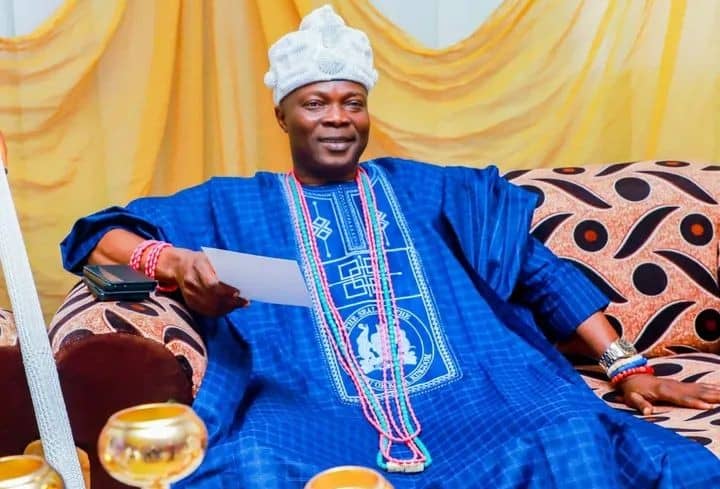
Eid-el-Kabir: Olowu of Kuta Urges Peace, Unity, Selflessness Among Nigerians
The Olowu of Kuta, HRM Oba Dr. Hammed Makama Oyelude, CON, Tegbosun III, has called on the Muslim Ummah and all Nigerians to make peace, unity, and selflessness their guiding principles as the world marks this year’s Eid-el-Kabir celebration.
In his Sallah message, the revered monarch described Eid-el-Kabir as a “highly spiritual occasion that demands dedication, commitment, and selflessness.”
Oba Makama said the period should be used to reflect on societal happenings and promote messages of hope and unity without inciting provocation.
He urged Nigerians to live together harmoniously, irrespective of religious, political, or tribal affiliations, stressing that politicians should exercise restraint and avoid inflammatory rhetoric ahead of the 2027 general elections.
“What should be uppermost in the mind of every patriotic Nigerian is **‘Country first,’” he said.
The monarch also appealed to citizens to remain vigilant in the face of insecurity, reassuring that the armed forces and paramilitary agencies are working round the clock to ensure a smooth and peaceful celebration.
“The price wise men pay for eternal liberty is vigilance. I urge everyone to celebrate moderately and extend a helping hand to the less privileged, widows, and orphans, embracing them as our brothers and sisters,” Olowu Makama added.
He concluded by wishing all Nigerians a peaceful and fulfilling Eid-el-Kabir celebration.
celebrity radar - gossips
Oba Babatunde Saliu Elebo II Felicitates Muslims on Eid-el-Kabir Celebration
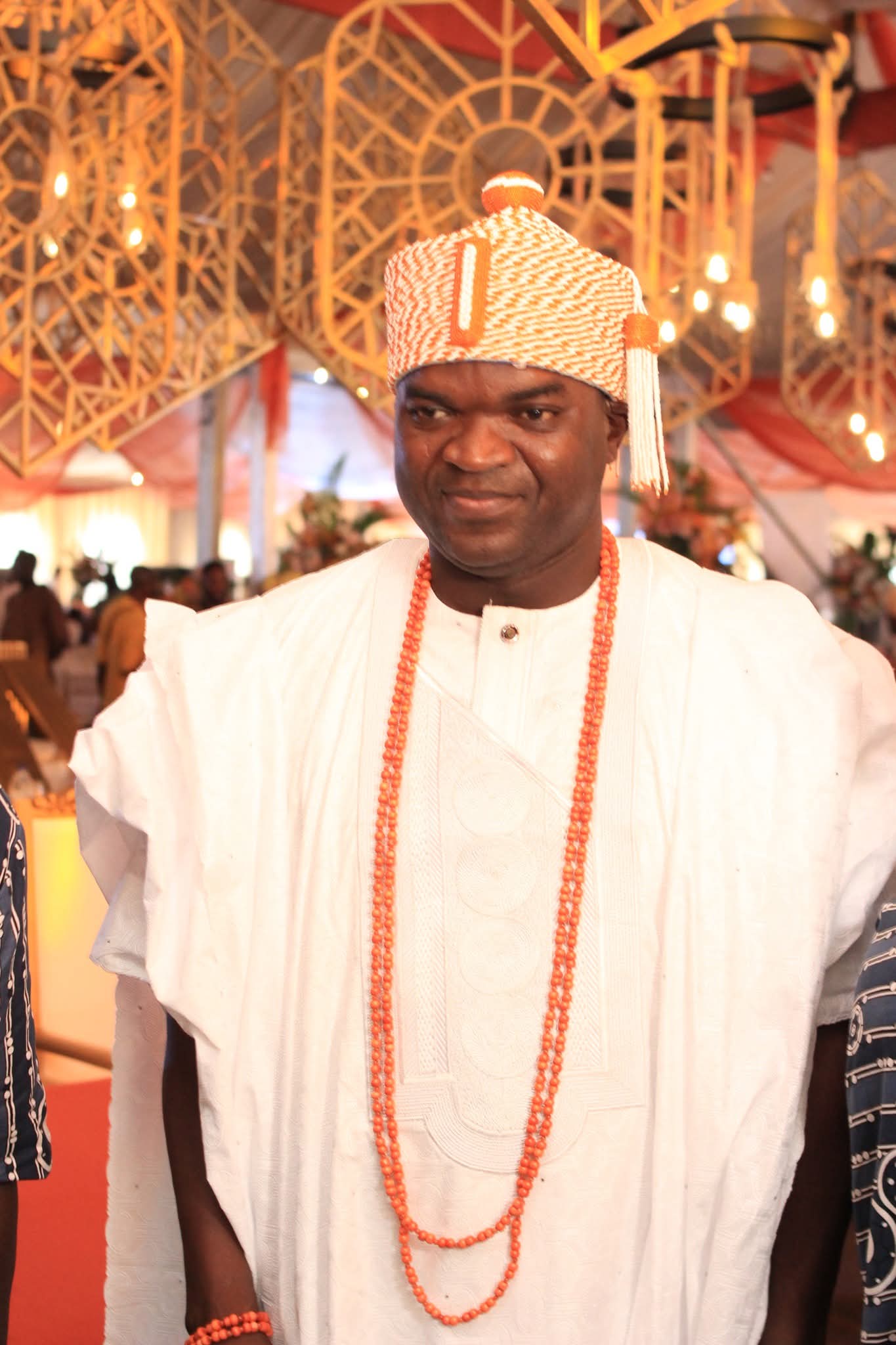
Oba Babatunde Saliu Elebo II Felicitates Muslims on Eid-el-Kabir Celebration
By Adeyemi Obadimu Veron
The Oloworo of Oworosoki Kingdom, Oba Babatunde Saliu Elebo II, has extended warm greetings and heartfelt felicitations to Muslims across Nigeria and the world at large on the joyous occasion of the 2026 Eid-el-Kabir celebration.
In a statement made available to Newsmen, the revered monarch urged Muslims to embrace the true teachings of Islam by promoting peace, love, unity, sacrifice, and compassion during and after the festive period.
Oba Babatunde Saliu Elebo II noted that Eid-el-Kabir, also known as Salah, remains one of the most significant celebrations in Islam as it symbolizes total obedience, faith, and devotion to Almighty Allah, drawing inspiration from the unwavering sacrifice of Prophet Ibrahim (Abraham), who demonstrated complete submission to the will of God.
According to the monarch, the Holy Qur’an teaches believers the importance of righteousness, kindness to humanity, tolerance, and support for the less privileged in society. He emphasized that the season should serve as a reminder for all Nigerians to live in harmony irrespective of religion, ethnicity, or political differences.
The royal father further called on Muslims to use the sacred period to pray fervently for peace, stability, economic growth, and sustainable development in Nigeria, stressing that national progress can only thrive in an atmosphere of unity and mutual understanding.
Oba Saliu also encouraged the faithful to extend hands of generosity to widows, orphans, and vulnerable members of society, noting that the essence of Eid-el-Kabir goes beyond celebration and feasting, but also reflects the spirit of sharing and caring for humanity as instructed in the Qur’an.
While wishing Muslims a peaceful and memorable Eid celebration, the Oloworo of Oworosoki prayed for divine blessings, prosperity, good health, and continued harmony in homes and communities.
“May this year’s Eid-el-Kabir strengthen our faith, deepen our love for one another, and bring renewed hope and abundant blessings to our nation,” the monarch stated.


- Economic Community of West African States (ECOWAS) has Deployed a Technical Mission to Observe the Legislative and Local Elections of May 31, 2026 in Guinea May 31, 2026
- President Herminie Attends Seychelles Football Federation (SFF) Cup Final and Presents Trophy to Bazar Brothers FC May 31, 2026
- ‘You are not alone’: World Health Organization (WHO) chief vows to stand with Democratic Republic of the Congo (DR Congo) through Ebola outbreak May 31, 2026
- United Arab Emirates (UAE) Expresses Solidarity with Kenya and Conveys Condolences over Victims of Girls’ School Dormitory Fire May 31, 2026
- Pitcher Awards Announces 2026 Winners, Marking a Landmark Year for Pan‑African Creativity May 30, 2026
- Ghana Commemorates 78th International Day of United Nations Peacekeepers May 30, 2026
- South Africa: President Ramaphosa receives second interim report of Madlanga Commission May 30, 2026
- Asmara Marathon 2026 to be held May 30, 2026
- Powerful call for dialogue and compromise to secure peace in South Sudan issued on International Peacekeepers Day May 30, 2026
- Over 1,000 Participants Join Rwenzori Marathon Activation Run in Mombasa May 30, 2026
- Economic Community of West African States (ECOWAS) has Deployed a Technical Mission to Observe the Legislative and Local Elections of May 31, 2026 in Guinea May 31, 2026
- President Herminie Attends Seychelles Football Federation (SFF) Cup Final and Presents Trophy to Bazar Brothers FC May 31, 2026
- ‘You are not alone’: World Health Organization (WHO) chief vows to stand with Democratic Republic of the Congo (DR Congo) through Ebola outbreak May 31, 2026
- United Arab Emirates (UAE) Expresses Solidarity with Kenya and Conveys Condolences over Victims of Girls’ School Dormitory Fire May 31, 2026
- Pitcher Awards Announces 2026 Winners, Marking a Landmark Year for Pan‑African Creativity May 30, 2026
- Ghana Commemorates 78th International Day of United Nations Peacekeepers May 30, 2026
- South Africa: President Ramaphosa receives second interim report of Madlanga Commission May 30, 2026
-

 news6 months ago
WHO REALLY OWNS MONIEPOINT? The $290 Million Deal That Sold Nigeria’s Top Fintech to Foreign Interests
-

 society4 weeks ago
SOCIAL MEDIA IS NOT A BATTLEFIELD COMMAND – WHY THE NIGERIAN ARMY’S ACTION AGAINST JUSTICE CRACK IS A NATIONAL SECURITY IMPERATIVE
-

 celebrity radar - gossips4 months ago
Dr. Chris Okafor Returns with Power and Fire of the Spirit -Mounts Grace Nation Altar with Fresh Anointing and Restoration Grace on February 1, 2026
-

 celebrity radar - gossips6 months ago
Prophet Kingsley Aitafo Releases 2026 Prophecy: ‘Nigeria Will Rise, but the World Must Prepare for Turbulence’