
celebrity radar - gossips
AN OPEN LETTER TO PASTOR T. B. JOSHUA BY DELE MOMODU


AN OPEN LETTER TO PASTOR T. B. JOSHUA
BY DELE MOMODU
My dear Prophet, I’m very certain this letter must come to you as a big surprise. But that is the nature of this column. It is in the character of Pendulum to swing in the direction least anticipated. Today, it has chosen to navigate itself towards you, my dear man of God.For avoidance of doubt, please, permit me to quickly explain a point so that mischief-makers may not attribute spurious motives to this epistle. I’m not a member of your congregation. I have never been. You and I have never discussed religion or worship. I have never approached you for special prayers or miracles. But I have been a great fan of yours nonetheless, for very exceptional reasons. I shall explain in a jiffy why I admire you warts and all.No human being is perfect, and I’m sure that includes you, despite being a man of God. I’ve read and heard torrents of good and bad tales about you. But didn’t I read and hear a deluge of fairy-tales about our Lord and Saviour, Jesus Christ, your overall Master? It is normal for human beings to concoct true and imaginary tales about newsmakers. You have been a subject and victim of such incredible rumour-mongering over the decades that I have known you. Some have alleged that you are not a genuine disciple of God. They’ve alleged that you are fetish and use native jazz to heal miracle-seekers. Some have even called your miracles mere optical illusions. That you are nothing short of a magician but these myriad of detractors have never diminished your popularity globally.I have continued to marvel at your awesome powers as demonstrated to the naked eyes on television, and two or more conclusions have emerged. If you use juju or whatever power to heal people, then it is positive healing. We all turn to doctors, pharmacists, surgeons and others in the days of medical challenges. The drugs we take emanate from herbs, local or foreign. The Indians and the Chinese in particular have been much wiser than us by developing their medicine to international standards. I have tried acupuncture in my adventurous days in Dubai and London. There is nothing wrong if God has given you special access to the secrets of herbs and roots. What makes it even more remarkable and extraordinary is that you escalate and amplify every miracle of yours with loud shouts of the name of Jesus. You’ve never called the names of other Gods or even witches and wizards on the pulpit. There are always local and international visitors to your synagogue of God. None has ever reported that he or she stumbled on an esoteric shrine perchance.In fact, you have been a major source of foreign exchange earnings for Nigeria. It is difficult to imagine how many religious tourists pour into your church daily from different parts of the world. I’ve travelled extensively in Africa and beyond. There is hardly a flight I’ve flown on, especially in Africa, that I’ve not encountered your sworn and ardent followers. They love you endlessly and swear by your name. Many of them are distinguished personalities, well-educated and intelligent and not ignoramuses as many may wish to suggest. Presidents have attested to your miracles. I will mention one very good example that I am familiar with.Long before the 2008 presidential election that ushered in President John Evans Atta-Mills in Ghana, you had called me one early morning to ask my opinion and projection ahead of the election. I remember telling you that Nana Akufo-Addo was tipped and favoured to win. Your response was that I was wrong and that God was going to perform a miracle for Professor Atta-Mills. True, the ways of God are not the ways of man. You went all out in your support for Atta-Mills, like you always do for people and causes you champion, and he actually won the election.I was pleasantly surprised when you called me one early Sunday morning to invite me to the Synagogue. You said you remember how you had called me to support the aspiration of Atta-Mills and the useful tips I gave. Now that the man had won, he was coming for a thanksgiving service in your church and you felt it was only proper for me to be invited to attend. The service had ended by the time I meandered my way to Ikotun-Egbe, but I was fortunate and happy to meet Professor Atta-Mills in one of the private apartments you keep for your august visitors. I sat with Prof and probed him a bit about why he had travelled all the way to Nigeria in search of spiritual fortification. He told me in clear terms that he was not a buffoon and that as a Professor he was expected to act on empirical facts and not on raw sentiment or emotion.Professor Atta-Mills said you had told him certain things that could never have been guess-work. For, example, he said you predicted with mathematical accuracy the unusual pattern and direction the election was going to take, the controversy that was going to come with it and the precise date the final verdict was going to be delivered, and they all came to pass. He said man being a natural doubter of things unseen should nevertheless not discountenance reality in the face of obvious facts. He said he was convinced that God was truly using you and he had no choice than to return to the Synagogue and publicly proclaim the power of God that had made the impossible possible through your intervention and intercession.Let me now go to the relationship between us spanning nearly two decades. How did our paths cross? If my memory serves me right, I was approached by one of your media aides at the time, Jide Oshokoya, formerly of Today’s Choice magazine, who said you would like to meet with me. To cut a long story short, I accepted the invitation with mixed feelings. You had been much maligned by your traducers that I did not even know what to believe anymore. But as a good student of philosophy, I chose not to be as paranoid and sceptical as the French philosopher, Rene Descartes, who went to the extreme of doubting his own existence. I was prepared to meet you with an open mind but with every caution in case your intention was to turn me into a church member.We met at the appointed time, after waiting for a while in a small restaurant on the ground floor before I was taken upstairs by your female staff. I felt a kind of tremor around you as everyone around was awestruck by you. The first thing I noticed was your simplicity and humility. You wore a round-neck t-shirt on top of jeans. We exchanged pleasantries and you told me how much you loved the creativity and originality that you saw in Ovation International magazine. I was flattered. You asked how much it would cost to be featured in such a high quality magazine and once we agreed on the figure you instantly booked 5,000 copies to be sent from our printers in London to the church. I was deeply touched because you did not beg for freebies. Many of our friends do not see media as business. They treat us as lambs of God who carry away the burden of the world, the main reason many media empires collapse ever before they are built.Let me reiterate at this juncture that you’re a good man for being such a sympathetic benefactor. I never imagined the extent of your generosity until the magazines arrived from England and I asked when we could deliver to you. You shocked me to the marrow as you told me to send only ten copies and go ahead to distribute the remaining thousands of copies through our extensive network and make more money from it. What occurred to me immediately was your native intelligence. Only a sagacious and visionary person would have understood that it was better to spread the publication to every part of Nigeria than restricting it to only church members. Let me say thank you again for that huge support at a time we needed it. I do not forget favours, ever!You have probably forgotten the next thing you did for us. Soon afterwards, I got another invitation from you, which I gladly honoured. As soon as we sat down, you told me you were in trouble with your beautiful and humble wife, and I asked why? You said your wife queried why she was not featured in the Ovation International magazine edition that had you on the cover. You told me you were surprised because she’s too introverted and had never asked for any form of publicity. I noticed that most of the time she was mingling freely with church workers and the congregation. She never acted like a Queen or First Lady of the church and this endeared her to me. You informed me the only remedy was for me to do another cover in our next edition for both of you. That was how you became probably the only family to feature back to back on our cover. I returned to London and produced an even better cover.Our friendship grew in leaps and bounds. Though we did not see frequently, sometimes for years, we regularly phoned each other and bonded like brothers. Anytime you saw some wonderful news about me, you called to congratulate and appreciate me despite your breath-taking schedules. The most superlative of our encounters was in 2010 when you heard of my Presidential dream. You did not fold your arms to watch me from afar. I had just boarded a flight from J F Kennedy Airport in New York when my phone rang and you were on the line. “Alagba, where are you?”, you asked in your usual caring voice. I told you I was on a flight from America to London, and you told me to see you as soon as I arrived in Lagos. I was greatly humbled when you said you wished to discuss my presidential bid.I visited you late one night and spent less than ten minutes, or so, with you. You told me I had no chance of winning the 2011 presidential election but encouraged me to go all the way. You assured me the experience would be very useful and that I would remain very relevant in the affairs of Nigeria, thereafter. Such a man of wisdom you are, Sir. You came in with two carrier bags and you told me they contained your financial contribution. Months later, you invited me again to your home and gave me further assistance despite knowing I could not win that election. You propelled me towards my goal and did not use the excuse of failure to discourage me. You earned my respect.Let me give one more example of your uncommon love for fellow beings. About two years ago, I had to undergo cataract operations in London. The surgery went well and I was recuperating when suddenly, I received a call from you in the dead of the night. “Alagba, I have just heard about your eye problems.”, you said in that calm voice. I replied the operations were very successful and was grateful for your concern. You offered to offset the bills and I replied that few friends who heard about my ordeal, like Governor Akinwunmi Ambode, Tony Elumelu, Femi Otedola and Tokunbo Afikuyomi had all offered to assist. You still insisted on adding your widow’s mite. You texted repeatedly to ask for an account despite my reluctance. God will never desert you.I have written all these examples as my personal testimonial to you. In a country where many try to hide behind one finger, I wish to stand tall and tell the world that you are a good man, even if others think or say otherwise. I have read that you wish to abandon Nigeria and migrate to Israel. It will never happen. You cannot and should not allow your enemies run you out of town. God has been very kind to you. Just look back and see your journey from way back in Ondo State. What more can God do for any man who has served him loyally and fervently like you have done.My dear man of God, I align my voice with those who plead that you remain in Nigeria. I have chosen to do so publicly because I believe it is necessary.You will see me very soon at your door.All the best, in Jesus’ mighty name.ThisDay.




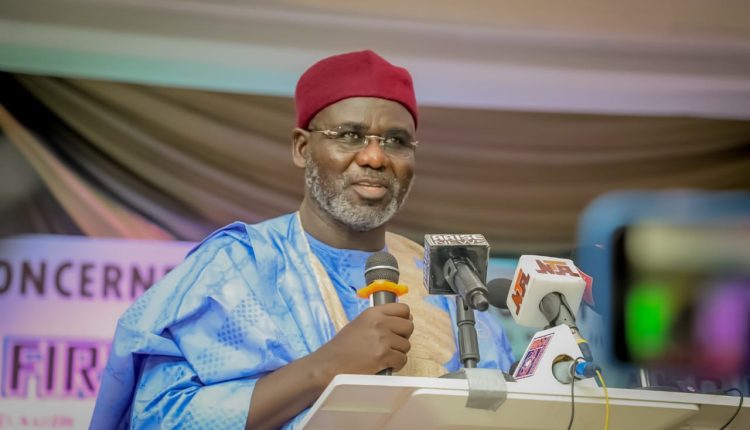
BURATAI URGES ECOWAS UNITY, CALLS FOR RETURN OF SAHEL STATES AT VON FORUM
ABUJA – In a powerful appeal for regional stability, former Chief of Army Staff, Lt. Gen. TY Buratai (rtd), has called on ECOWAS and the African Union (AU) to prioritize the return of the Association of Sahel States (AES) to ensure the survival of West African integration.
Speaking Thursday at the Voice of Nigeria (VON) Forum 2026 in Abuja, Buratai warned that the region’s progress could become a “mirage” without the inclusion of Mali, Burkina Faso, and Niger Republic.
A Legacy of Sacrifice

Buratai highlighted Nigeria’s historic role as the “unshakable anchor” of the sub-region. He pointed to Nigeria’s decades of leadership in ECOMOG missions across Liberia, Sierra Leone, The Gambia, and Guinea-Bissau as evidence of the nation’s commitment.
”Nigeria has sacrificed and invested in blood, treasure, and diplomacy to defend democracy,” Buratai stated. “Our stability is inseparable from the security of our neighbours.”
The Path to Unity
The General urged ECOWAS to deepen its engagement with the African Union to bridge the current diplomatic rift with the AES nations. He emphasized that the collective security of West Africa depends on a unified front, noting that democracy and regional safety are “two sides of the same coin.”
”The unity of ECOWAS cannot be complete without Mali, Burkina Faso, and Niger Republic. Without unity, progress in the region may be a mirage,” Buratai cautioned.
Celebrating 51 Years of VON
The forum also served as a celebration of Voice of Nigeria’s 51st anniversary. Buratai lauded the broadcaster as a “Nigerian voice with an African heart,” praising its professionalism and pan-African vision.
He paid tribute to veteran journalists, including the late Mohammed Okorejor and retired director Ben Shamang, while commending the current Director General for revitalizing the agency.
The retired General concluded his message with a call to strengthen regional institutions, urging leaders to honor the legacy of ECOWAS through renewed cooperation and institutional integrity.
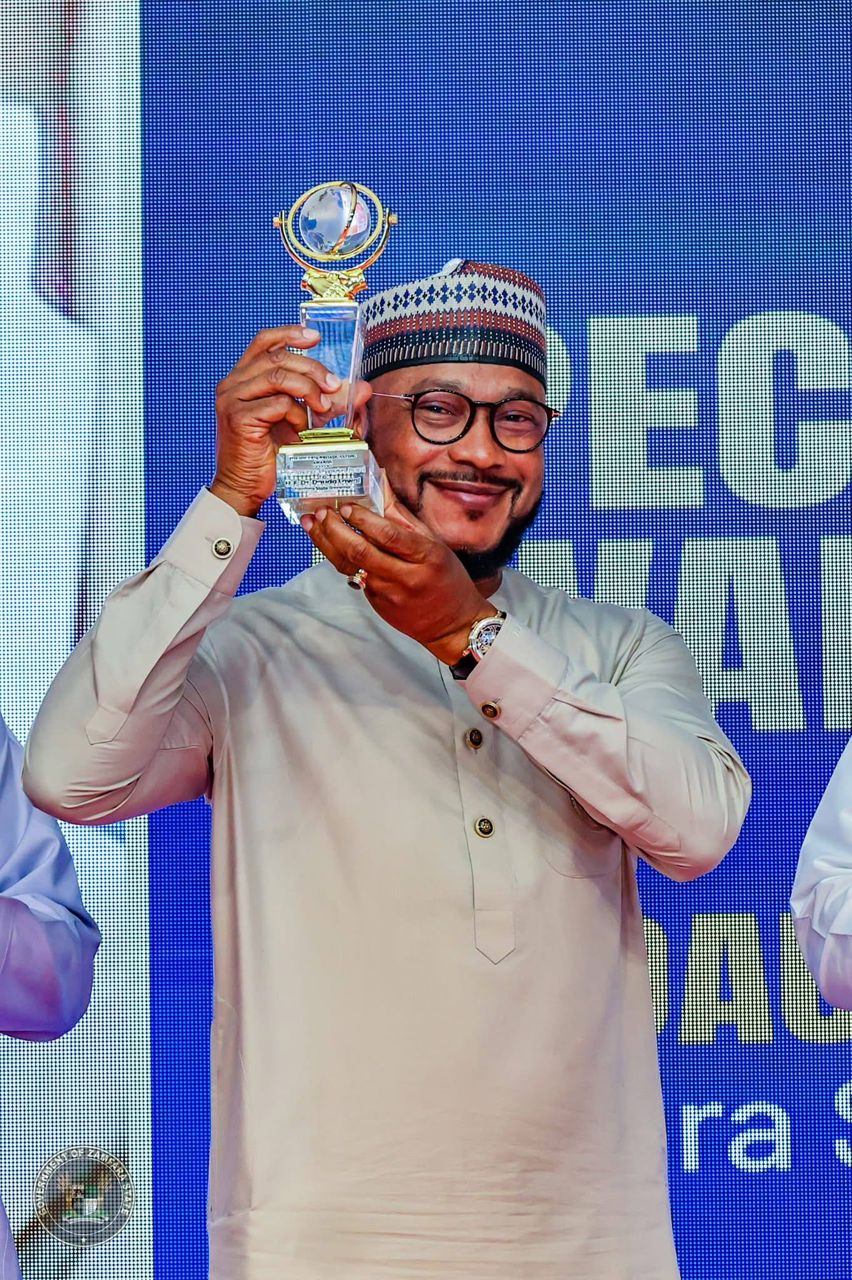
GOV. LAWAL WINS BON GOVERNOR OF THE YEAR FOR ZAMFARA’S INFRASTRUCTURE
The Broadcasting Organisations of Nigeria (BON) has awarded Governor Dauda Lawal the Infrastructure Governor of the Year honour for his administration’s giant strides in the Urban Renewal project across Zamfara.
The governor received the award at the second edition of the Broadcasting Organisations of Nigeria (BON) held at the NAF conference centre, Abuja.
A statement by the governor’s spokesperson, Sulaiman Bala Idris, revealed that the BON acknowledged Zamfara state’s unprecedented and transformative achievements in infrastructure, recognising excellence beyond the broadcasting industry.
He added that Governors Bassey Otu of Cross River and Uba Sani of Kaduna, the minister of information and national orientation, Mohammed Idris, along with John Momoh, Shyngle Wigwe, Abubakar Jijiwa, and Sa’a Ibrahim, were among the prominent Nigerians honoured at the 2026 Nigeria Broadcasting Awards.
The statement read in parts, “The Broadcasting Organisation of Nigeria, an umbrella body for public and private broadcasters in Nigeria, was established in 1973 to promote the interests of the broadcasting industry and ensure high standards in media practices.
“The organisation conducted a thorough months-long selection process aimed at recognising professional excellence and raising standards for media practice across Nigeria.
“The Awards Selection Committee was chaired by Dr Danladi Bako, former Director-General of the National Broadcasting Commission (NBC). The awards panel included veterans and representatives from the Advertising Regulatory Council of Nigeria (ARCON) and the NBC..

“The selection committee cited numerous reasons for awarding Governor Dauda Lawal, notably his significant progress across sectors, particularly for transforming Gusau into a modern State Capital.
“Zamfara has witnessed unprecedented achievements under Governor Dauda Lawal, including the historic construction of a modern International Airport in the State.
“Apart from urban renewal projects, as well as the construction and outfitting of General Hospitals, Governor Dauda Lawal’s administration has built, refurbished, and equipped over 800 schools across the 14 local government areas of the State.

“This recognition by the highest broadcasting authority in Nigeria will motivate the governor to dedicate more effort to his mission to serve and rebuild Zamfara state.”
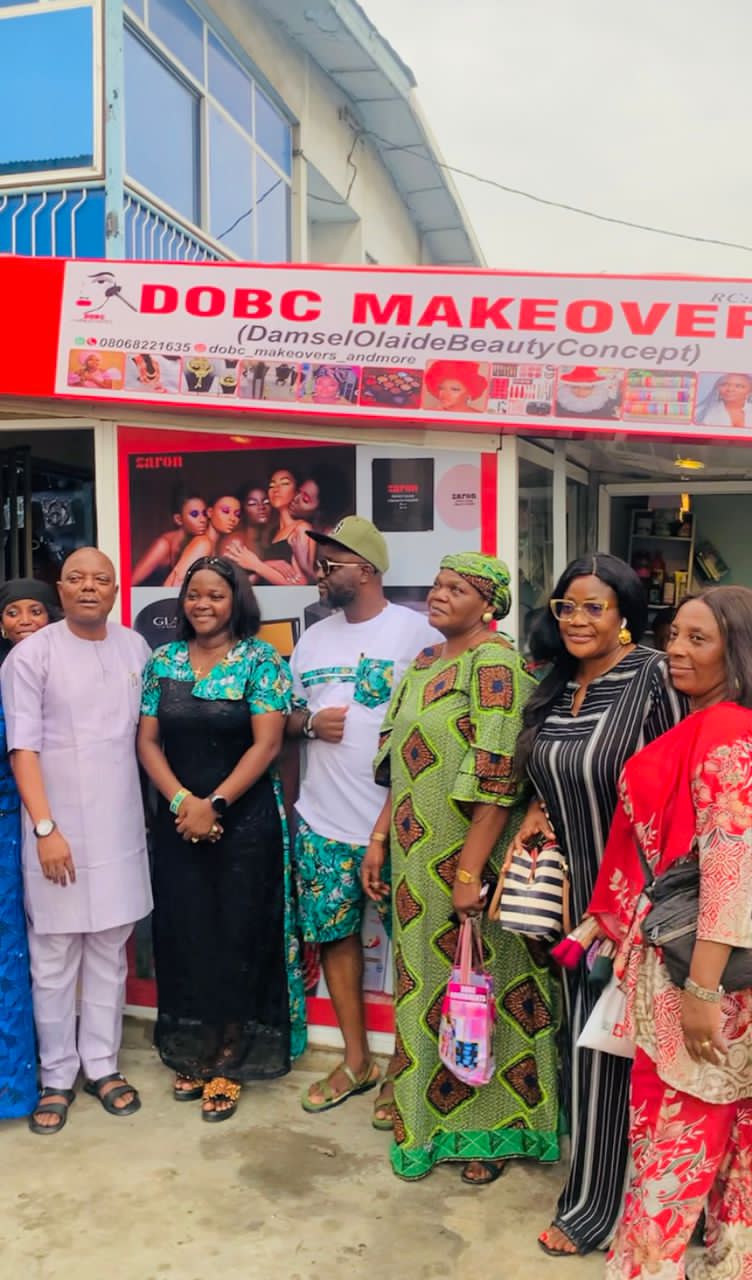
Beauty Meets Glamour as Olaide Ogunyemi Opens New Studio in Mushin
Popular Nollywood actress and professional makeup artiste, Olaide Ogunyemi Oluwayemisi aka Damilola, has expanded her footprint in the beauty industry with the grand opening of her new makeup studio in Lagos.
The talented thespian, who is also the Chief Executive Officer of @Dobc_makeovers_andmore, officially unveiled the ultra-modern beauty space last Thursday, April 2, 2026, in a colourful ceremony filled with glamour, fashion, and pageantry.
Strategically located at 101 Palm Avenue, right beside FitPlus and Sparklight Hospital in Mushin area of Lagos, the new studio is designed to offer top-notch beauty services, reflecting Ogunyemi’s commitment to excellence and professionalism in the ever-growing makeup industry.
The opening ceremony attracted friends, colleagues from the Nollywood industry, beauty enthusiasts, and well-wishers who came out in large numbers to celebrate the entrepreneur’s latest milestone. Guests were treated to a vibrant atmosphere that showcased creativity, style, and the evolving standards of the beauty business in Lagos.
Speaking at the event, Ogunyemi expressed her excitement and gratitude, noting that the new studio represents years of hard work, dedication, and passion for her craft. She reaffirmed her commitment to delivering premium beauty services while empowering aspiring makeup artistes.
The launch of the studio further cements her reputation as a dynamic force, successfully blending her career in Nollywood with a thriving beauty brand.
With this latest development, Olaide Damilola Ogunyemi continues to inspire many young entrepreneurs, proving that talent, consistency, and vision remain key drivers of success in Nigeria’s creative and business landscape.


- Century Group Joins African Energy Week (AEW) 2026 as Floating Production Storage and Offloading (FPSO) Partner, Showcasing Regional Offshore Expansion April 10, 2026
- Climate Litigation Surge Reshapes Energy Policy as Africa Seeks Stronger Legal Voice April 10, 2026
- ES-KO Secures Five-Year Catering & Facilities Management Contract Renewal with TotalEnergies EP Congo April 10, 2026
- Beyond the Court: The Kalahari Conference Solidifies its Status as Africa’s Premier Sports & Lifestyle Destination April 10, 2026
- Africa Sports Unified Launches Pan-African Sports Deals Tracker to Improve Market Visibility and Decision-Making April 10, 2026
- Nigeria and Senegal Must Follow Ghana and Mozambique Against Exclusionary Practices April 10, 2026
- Sheraton Nouakchott marks the entry of Marriott International in Mauritania April 10, 2026
- Eritrea: Seminar to Nationals in Nairobi and Its Environs April 10, 2026
- African financial institutions call for coordinated financing solutions to unlock Africa’s digital transformation April 9, 2026
- African Energy Chamber (AEC) Supports Perenco Partnership to Advance Industry 4.0 Skills in Central Africa April 9, 2026
- Century Group Joins African Energy Week (AEW) 2026 as Floating Production Storage and Offloading (FPSO) Partner, Showcasing Regional Offshore Expansion April 10, 2026
- Climate Litigation Surge Reshapes Energy Policy as Africa Seeks Stronger Legal Voice April 10, 2026
- ES-KO Secures Five-Year Catering & Facilities Management Contract Renewal with TotalEnergies EP Congo April 10, 2026
- Beyond the Court: The Kalahari Conference Solidifies its Status as Africa’s Premier Sports & Lifestyle Destination April 10, 2026
- Africa Sports Unified Launches Pan-African Sports Deals Tracker to Improve Market Visibility and Decision-Making April 10, 2026
- Nigeria and Senegal Must Follow Ghana and Mozambique Against Exclusionary Practices April 10, 2026
- Sheraton Nouakchott marks the entry of Marriott International in Mauritania April 10, 2026
-

 news4 months ago
WHO REALLY OWNS MONIEPOINT? The $290 Million Deal That Sold Nigeria’s Top Fintech to Foreign Interests
-

 society7 months ago
“You Are Never Without Help” – Pastor Gebhardt Berndt Inspires Hope Through Empower Church (Video)
-

 celebrity radar - gossips2 months ago
Dr. Chris Okafor Returns with Power and Fire of the Spirit -Mounts Grace Nation Altar with Fresh Anointing and Restoration Grace on February 1, 2026
-

 celebrity radar - gossips4 months ago
Prophet Kingsley Aitafo Releases 2026 Prophecy: ‘Nigeria Will Rise, but the World Must Prepare for Turbulence’
You must be logged in to post a comment Login
You must log in to post a comment.