
Politics
Another four years of wasted presidency beckons Tunde Odesola

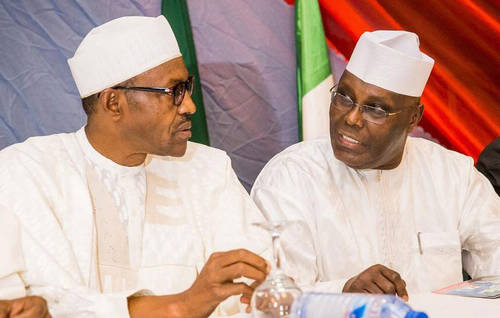


If Nigeria had a surname, Disaster would’ve been a fitting fit. She would’ve come to be known as Nigeria Disaster – a befitting reflection of who she truly is. Just like the US is called the United States of America and Britain goes by the family names, Great Britain and United Kingdom. Or what do you call a country without a soul; a judiciary waltzing with corruption, a scandalous legislature and a woeful executive? It’s an absolute disaster when an oilrig produces water, a soldier ant scares a soldier, and a 20-year-journey is all about motion without movement.
February 17 is my birthday. May it not turn a sad day, I pray.
February 16 is the day Nigeria would go into labour and the world would hold their breath to see the fruit of her four-year pregnancy. The baby will be an ‘abiku’, I can loudly predict. It will never be a newborn. Because the seeds that fertilized the eggs shot forth from the loins of two genetically-deformed fathers claiming the same baby. The first father, Mallam Ethnic Bigot, forcefully led the rape of Nigeria over three decades ago. The baby from that painful coitus was not only malformed, it died at infancy. Today, the mallam is an epitome of flawless inefficiency. The other father, Mallam Bureau de Change, shot into limelight in the new era. The babies he helped father on two occasions were born blind, deaf, dumb and dead. If these two principalities had fathered ‘abikus’ in the past, one would expect Nigeria to get a young and virile man to roll in the hay with her, in the hope that the product of the union would be a bouncing baby, either a boy or a girl. But with a surname that is Disaster, our dog can’t do more than eat its vomit while our pig gets the mud for a bed.
February 17 is the day after the Nigerian presidential election. I pray blood doesn’t rain down on the country in the preceding days of the election, on the D-Day and the days after. I pray February 16 won’t be a day Nigeria’s most famous scapegoat, Mr Devil, would walk the Nigerian space shopping for heads, limbs and innards. Because I know the election will never be complete without bloodshed! And the blood to be shed won’t be that of the current impotent tenants of Aso Rock or the rapacious prodigals craving a comeback after 16 years of revelry ruination. I fear as February 16 crawls on us like the tarantula, spurning its intricate web over the paralyzed eagle.
Today, I remember the late Tai Solarin, the atheist, whose baptismal name was Augustus. In 1952, as the principal of Molusi College, Ijebu Igbo, Ogun State, Solarin cancelled morning prayers and religious studies as a subject in the school. His ‘re-education’ campaign didn’t go down well with the Ijebu Igbo community, where his brother was also a reverend. After his apostasy ran into an opposition, he quit the job to establish and run, with his late co-atheist wife, Sheila, the illustrious 8,000-student capacity Mayflower School, Ikenne. Stinking and stagnant religiosity didn’t emigrate to Nigeria from Jerusalem and Arabia on the back of a camel yesterday, it was birthed in the maternity ward of culture contact that imposed colonial imperialism over an unfortunate race.
Despite her globally renowned slogans, ‘In God we trust’, and ‘God bless America’, United State’s elementary, middle and high schools don’t teach religious studies, yet the country respects God and human diversity. Nigeria, where the loudest noise pollution booms from churches and mosques – in form of worship, disdains God and humanity. I know that thousands of the students that attended Solarin’s school were the children and wards of bishops, pastors, sheikhs and imams across Nigeria. But I’m still curious to know why many Nigerian devil-is-a-liar believers sent their children to the school of the popular pagan. Was that hypocrisy, acceptant realism or tolerance?
In his New Year wish for Nigerians on January 1, 1964, Solarin said, “May your road be rough!” Solarin’s greeting, which was contained in a letter, preaches vision, hard work, determination and resilience. When Nigeria was setting out on her democratic journey 20 years ago, little did she know that she was on the road to nowhere. If someone had predicted in 1999 that the democratic dispensation, after 20 years, would produce pains instead of gains and division instead of dividends, Nigerians would’ve disagreed. Today, the country stands regrettably on the threshold of another historic election, ruing two decades of waste, unfulfilled promises and paradise lost. From the impunity, selfishness and greed of the Olusegun Obasanjo-Atiku Abubakar years to the short-lived, static Musa Yar’Adua-Goodluck Jonathan years and the legitimized corruption of the Jonathan-Namadi Sambo years, to the Muhammadu Buhari-Yemi Osinbajo know-nothing era, it is certain that all the four successive leaderships that have steered the ship of the Nigerian state since 1999 should have, at best, headed roadside shops selling padlocks, nails and hoes, and not come anywhere near the corridors of power because the masses, whom democracy seeks to promote, have been utterly dehumanized by them.
If not that our surname is Disaster, the Obasanjo-Atiku administration wouldn’t have mishandled the Bakassi peninsula crisis and lost the whole of the oil-rich region to Cameroon. The administration wouldn’t have mismanaged billions of dollars on non-provided infrastructure, corruptly impeached successive senate presidents, defied court orders and criminally sought a third term. But for our surname that is Disaster, Patience Jonathan wouldn’t have forfeited N1.04bn to the government and still struts about freely today. A confirmation of our Disaster surname is the nepotistic Buhari-Osinbajo lame-duck presidency, whose perpetually ‘unaware’ arrowhead, Buhari, should have long retired from politics and be at home treating his undisclosed infirmities. Our Disaster surname is the reason why several indicted and some jailed members of the Peoples Democratic Party are shamelessly mounting podiums to campaign today. It’s the reason why Atiku said he would continue with the policies of the Obasanjo years if elected. It’s the same reason why people hail the Buhari-Osinbajo government despite obvious incompetence, underachievement and lopsided anti-corruption fight.
While Nigeria’s political class stockpiles funds, arms and ammunition for the war of February 16, 2019, a look at how election is conducted outside the country would bury our surname, Disaster, in shame. An Ilora-born Nigerian living in the US, Femi Ojewole, shares his voting experience: “Voting in the US is a pleasurable experience; you’re free to take pictures with people and the electoral officers, and the whole voting is done in about three minutes. You’re even given candies to eat after voting. No policeman in sight, no stampede and your vote is counted by the computer, which immediately shows that your vote is accepted.
“Electronic accreditation had been sent to all citizens earlier in order for them to know where to vote. Early voting, which is voting before the election day, is permitted; all you need to do is go to the courthouse nearest to you and vote. This is for those who may not be available to vote on election day or who don’t want to wait till election day.”
No gift of clairvoyance is needed to reach the following conclusions:
· Atiku will fault the outcome of the election if Buhari wins and vice versa
· Life will continue to be short and brutish under either of the two
· Politicians will defect to the winning party after the election
The above-mentioned conclusions are easy to reach because there’s no evidence to show that we’ve learnt anything from the pitfalls of our past. The docile and largely uninformed masses have not helped matters either, acquiescing to the manipulative whims of the political class.
Indeed, our road has been rough, very rough and disastrous.
(Published in The PUNCH of Monday, February 4, 2019)mail: [email protected]




Politics
APC Group Endorses Fubara for 2027, Calls on Tinubu and APC to Prioritise Performance Over Politics in Backing Governor’s Second Term Ambition
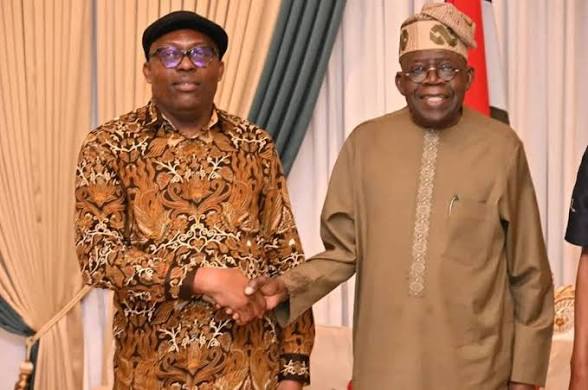
*APC Group Endorses Fubara for 2027, Calls on Tinubu and APC to Prioritise Performance Over Politics in Backing Governor’s Second Term Ambition*
The APC National Vanguard has appealed to President Bola Ahmed Tinubu and the leadership of the All Progressives Congress (APC) to support a second term in office for Siminalayi Fubara, citing what it described as “impressive and verifiable developmental strides” across Rivers State.
In a statement issued on Thursday by its National President, Dr Gbenga Salam (JP), the group said its position followed an extensive assessment tour of key infrastructure and public service projects executed under the Fubara administration.
The APC National Vanguard said the appeal was based strictly on performance, arguing that governance outcomes should outweigh partisan considerations, particularly in a state as economically significant as Rivers.
“We respectfully urge President Bola Ahmed Tinubu and the leadership of the All Progressives Congress to support the continuity of Governor Siminalayi Fubara beyond his current tenure, in recognition of his commitment to development, prudent resource management, and people-focused governance,” the statement read.
According to the group, its delegation visited multiple project sites across the state, observing ongoing and completed works spanning road construction, urban renewal, and public infrastructure upgrades.
It noted that the scale and distribution of these projects reflect a deliberate effort by the state government to extend development beyond traditional urban centres and into underserved communities.
“Our findings from the tour reveal a government that is not only active but intentional in its development agenda. The execution of capital projects across various parts of Rivers State demonstrates a clear understanding of the needs of the people and a commitment to addressing them,” Dr Salam said.
The group particularly commended what it described as prudent financial management by the administration, noting that the projects reviewed showed evidence of careful planning and efficient allocation of resources.
“At a time when economic pressures are evident across the country, it is commendable that the Rivers State government has managed its resources in a way that delivers visible and impactful development without signs of fiscal recklessness,” the statement added.
The APC National Vanguard further observed that despite political tensions in the state, the Fubara administration has maintained focus on governance, ensuring continuity in project execution and service delivery.
The group argued that such stability is critical for sustained development and should be encouraged rather than disrupted.
“Leadership must ultimately be judged by results. In Rivers State, there is clear evidence of progress—projects that are not only announced but executed, and policies that translate into real benefits for citizens,” Dr Salam noted.
The group warned that discontinuity in leadership could stall ongoing projects and reverse gains already recorded, stressing the importance of allowing a performing administration to consolidate its achievements.
“Rivers State is at a pivotal stage where continuity will allow for the completion of ongoing initiatives and the deepening of development gains. Supporting Governor Fubara for a second term is, therefore, a decision in the best interest of the people,” the statement said.
In addition to its call on the APC leadership, the group reaffirmed its support for President Tinubu, expressing confidence in his administration’s broader economic and governance reforms.
The APC group urged Nigerians to remain supportive of efforts aimed at stabilising the economy and strengthening public institutions.
“We reiterate our endorsement of President Bola Ahmed Tinubu for a second term in office, in recognition of his leadership and commitment to national development. With sustained support, the administration can consolidate its reform agenda for the benefit of all Nigerians,” Dr Salam added.
The APC National Vanguard concluded by calling on political actors to prioritise development and public interest over partisan divides, insisting that governance should always be guided by performance and accountability.
“Where leadership demonstrates prudence, delivers development, and remains focused on the welfare of the people, it deserves continuity. This is the position we have reached after a careful and independent assessment of Rivers State,” the statement added.
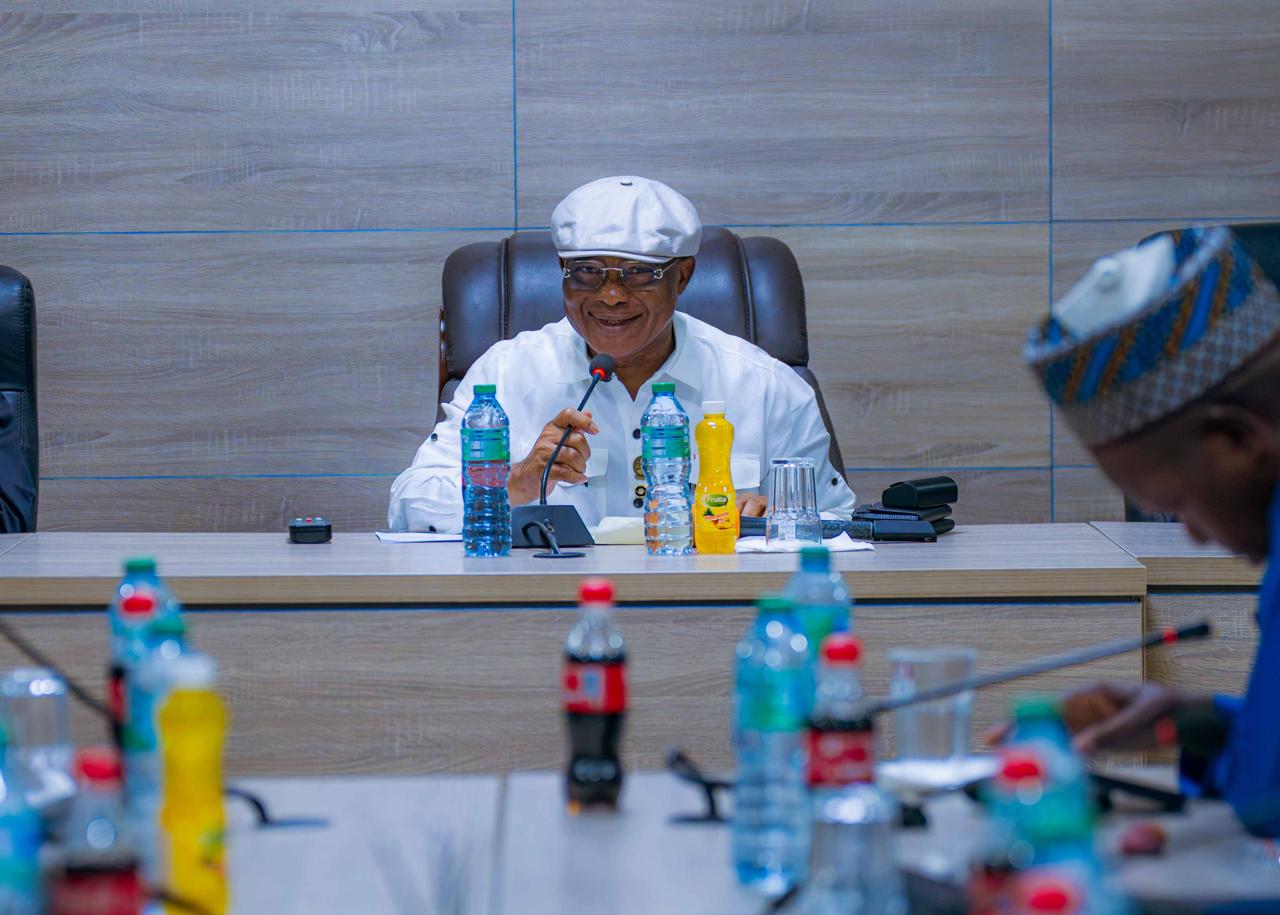
*Renewed Hope Ambassadors Step Into the Next Phase
Fresh from the successful APC 2026 National Convention, the Renewed Hope Ambassadors National, Zonal, and State leadership gathered in Abuja over the weekend, for its fourth strategic meeting, setting the tone for nationwide grassroots activation ahead of 2027.
Chaired by Governor Hope Uzodinma (Imo State) the Director General and National Coordinator of the Renewed Hope Ambassadors, alongside Deputy Director-General, Governor Uba Sani of Kaduna State, and Governor Inuwa Yahaya of Gombe State as Secretary, the session reinforced one clear direction: One Party. One Message. One Mobilization whilst also laying out a strategic roadmap for the activation of the network across all communities in Nigeria.
Backed by the strength of 31 APC-led states, the Renewed Hope Agenda is taking Bola Ahmed Tinubu’s message of progress and reform to every corner of Nigeria.
From bold economic restructuring to initiatives like NELFUND, the increase in the national minimum wage from ₦30,000 to ₦70,000, and strategic investments in critical sectors, including PNiCGI, the mission remains clear: helping Nigerians understand both the purpose and the progress of the Renewed Hope vision.
This is coordination at scale. This is grassroots engagement with purpose. This is the next phase of Renewed Hope with One Party, One Message, and One Mobilisation framework
#RenewedHopeAmbassadors #APC #WeAreAPC


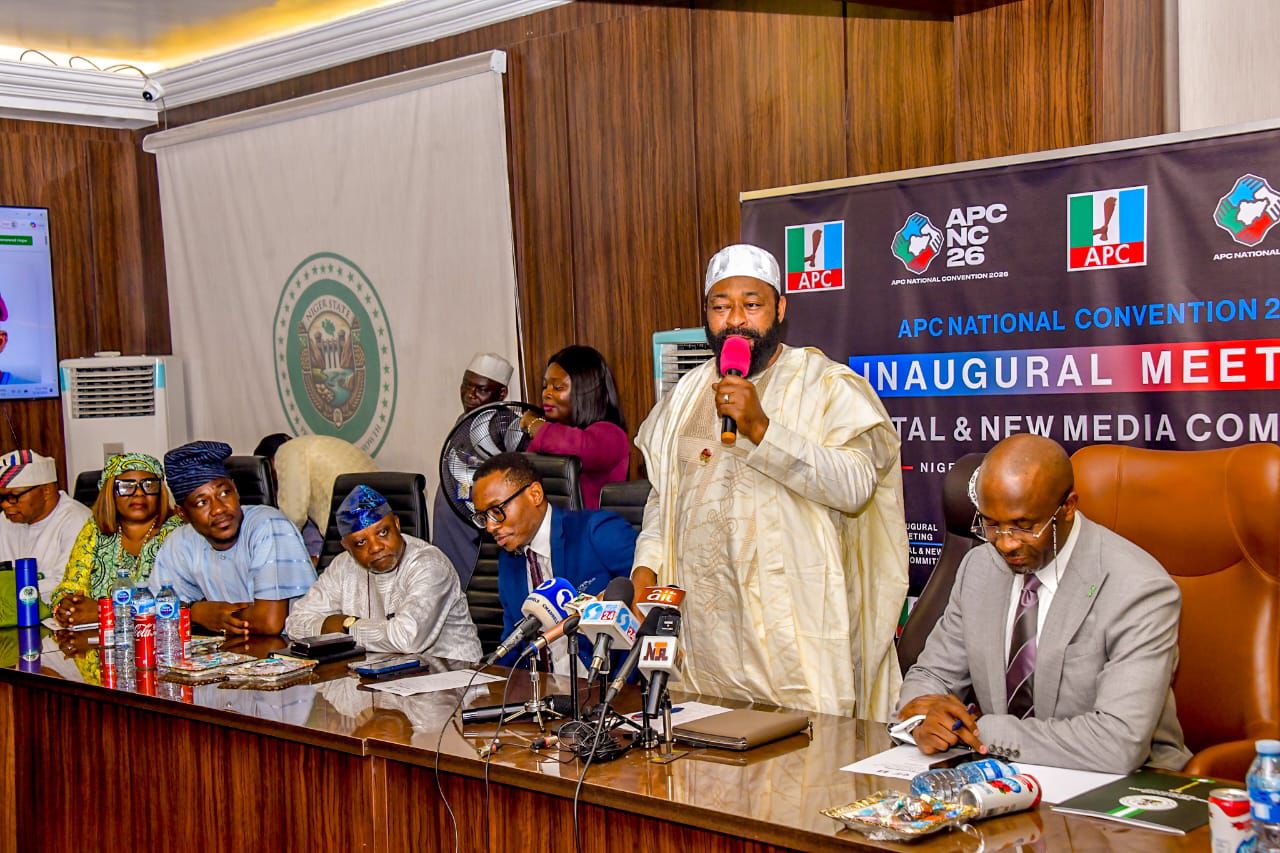
Governor Bago Inaugurates APC Digital Media Sub-Committee Ahead of National Convention.
Governor Umaru Bago has inaugurated the Digital Media Sub-Committee for the forthcoming National Convention of the All Progressives Congress (APC), scheduled to hold on March 27 and 28, 2026 in Abuja.
Chairing the sub-committee, Governor Bago tasked members with the responsibility of effectively communicating the party’s manifesto to the public.
He emphasized the need to leverage social media platforms to highlight the achievements and ongoing efforts of President Bola Ahmed Tinubu, noting that communication gaps have posed challenges that must now be decisively addressed.
The Co-Chair of the sub-committee, Hon. Benjamin Kalu, Deputy Speaker of the House of Representatives, echoed the Governor’s position, urging members to project the activities of both the party and the government to a broader audience.
He called for a deliberate and coordinated effort to showcase the party’s achievements and policy direction, stressing the importance of shaping a compelling and consistent narrative across all digital platforms.
Delivering a presentation to the committee, Otega Ogra, SSA to the President on New Media, who serves as Secretary of the sub-committee, outlined strategic focus areas to guide the team’s operations.
His presentation highlighted communication priorities and actionable steps to achieve the committee’s mandate and strengthen the party’s digital engagement.


-

 society6 months ago
Religion: Africa’s Oldest Weapon of Enslavement and the Forgotten Truth
-

 news4 months ago
WHO REALLY OWNS MONIEPOINT? The $290 Million Deal That Sold Nigeria’s Top Fintech to Foreign Interests
-

 society6 months ago
“You Are Never Without Help” – Pastor Gebhardt Berndt Inspires Hope Through Empower Church (Video)
-

 celebrity radar - gossips2 months ago
Dr. Chris Okafor Returns with Power and Fire of the Spirit -Mounts Grace Nation Altar with Fresh Anointing and Restoration Grace on February 1, 2026
You must be logged in to post a comment Login
You must log in to post a comment.