
Business
Apostle Johnson Suleman Takes Miracle And Deliverance To Ibadan, Lagos, Anambra, Drags Gospel Star, Chris Morgan, To South Africa




The General Overseer of Omega Fire Ministries, Worldwide, Apostle Johnson Suleman, recently had the Switzerland and Italy editions of his ongoing ‘Raw Power Crusade’ that were huge success. A charity agent, Suleman’s evangelistic missions have taken him to all the continents of the world.
On his recent visitation to Bologna, Northern Italy, the acclaimed Oracle of God declares that his movements and activities since he met Christ have remained divinely, because, “on His instructions, I have been teaching, healing, delivering, restoring and imparting preachers and people of the world through the conferences and crusades. And just as it has been happening with us by the special grace of God, the Restoration Crusade at Bologna in Northern Italy was a galaxy and compendium of power and testimonies. This was a conference where people from various continents of the world were influenced positively by the new anointing. At the Bologna crusade, countless cases written off by the doctors and forgotten by medical science, through Jesus’ mighty power, were reversed and given a new directive to live and function again. There are other conferences coming like the Restoration crusade at Ibadan between September 27 and 28, the International Ministers Conference in October, which is a 2-day conference for Ministers of God from over 70 nations around the world, the Raw Power USA in October, the Restoration train hits Liberia as the largest and biggest crusade ever in Africa comes up in Monrovia on the 10th and 11th October, and the Onitsha Restoration in November.”
This week Tuesday, the healing and miracle train will storm the ancient city of Ibadan. The Oracle of God, on the two-day crusade, says, Ibadan will remain manifest in the Glory of God during and after the programme.
“There are two things that pain causes; you either cry or you fight. If you cry, you will cry again; but if you fight, you will win. By this great gathering coming up, Ibadan is ready to take its destiny by hand and conquer the opposition as we pray and teach the principles to win the battles of life and restore all glories through Christ Jesus. The People of Western Nigeria, particularly Oyo State, will be having one of the best opportunities to experience the hand of God as we bring the Ibadan Restoration Crusade. Whatever has been done against the city, it will be undone,” he vows.
On the Anambra Restoration Crusade that comes up between November 8th and 9th in Onitsha, Suleman says it will win Anambra victory and will give it’s generations rest forever. “There are challenges no doubt, but only one major breakthrough can answer all the questions from one’s mouth. That is our mission in Anambra.”
On 13th and 14th October, ‘The Undeniable with Apostle Johnson Suleman’ will hit Tafawa Balewa Square in Lagos. “It’s a promised comeback that will be revealing in glory and testimonies. In October, Suleman’s OFM headquarters would be moving temporarily to Lagos for the second huge part of its Restoration mission. “Lagos is work in progress.” “The last experience was a huge success, but when we came with Raw Power Lagos then, we promised to return with the next bigger part of the crusade, which we tag National Fire and Miracle Night. We are fulfilling that promise by 13th and 14thof October as we are storming Lagos with the biggest revival vigil the city is yet to witness in recent time. It’s going to be an all night long of testimonies to His power, grace and miracles. These conferences are ordained by God and are packaged in such a way that they deliver on the divine promise of manifestations, healings, deliverances, restorations, accurate prophetic utterances, and more”, he affirms.
The best time a minister can ever have is, when he has the opportunity to be taught, trained and exposed to eternal truths for ministerial exploits. This is the aim behind the ‘Minister Without Blemish’ conference of 4th and 5th October 2016 that promises a refreshed, revived spirit of exploits on servants of God from the world over.
Anytime God wants to take a people out of adversities into a new life, He sends a prophet to do it. Suleman, between 10th and 11th October, will take the crusade to Liberia where he believes “her enemies are set to give way as God’s end time battle axe against wickedness and afflictions descends” during the Monrovia for Liberia Restoration Crusade.
At the Tulsa Raw Power Conference of 18th and 19th October in Oklahoma, Suleman promises two things; problems will give way and God will position the people of Tulsa for Greatness.
It was Apostle Suleman’s third apostolic visit to South Africa in this year alone. The conference had a convergence of people from all parts of South Africa including Johannesburg, Pretoria, Capetown, Limpopo, Durban and more. Also, people from US, the UK, Liberia, Nigeria, Cameroon, Ghana, Kenya, Namibia, Swaziland, Zimbabwe, Zambia, Lesotho, Botswana, Angola, DR Congo and other African nations attended. On the team of Suleman also were the Nigeria born inspirational Gospel music singer, Chris Morgan, and South African Gospel music stars, Israel Mosehla and Hlengiwe Mhlaba, including female Gospel singer, Vicky Vilakazi.
The Conference which held at the prestigious Mosaiek Teatro in Fairland, Randburg, recorded several miracles. The deaf heard, the bling regained sights, the cripple walked, and barren wombs were opened. Following the healing session, Apostle Suleman dazzled a lady 1000 U.S. Dollars through his charity foundation, ‘Touch of Love.’
On the charity front, the latest of Apostle Suleman’s humanitarian gesture went to a group of three young Gospel artistes who he blessed with cash gifts. The promising three whose band goes by the name, Fikky, Tyme and Prayer Point, attended the last Sunday Drama Carnival at the Auchi international worship centre, in the company of a friend to say thank you to the Apostle who has been of consistent support to their career from time. As the event ended, the young rap acts smiled home with the sum of N300, 000 cash. Besides, extraordinary miracles were also recorded during the event.
On a regular basis and, according to him, as directed by God, Suleman, demonstrates his heart of giving and Spirit of Love for the people. Only recently, out of compassion and appreciation for dedication to service, the cleric gave out a range of up-to-date luxury machines to workers and members in his ministry. The gifts include two SUVs and two cars worth over N20m, a Lexus 350 to one Dr. Olisa Emeke, a pioneer member.
Characteristics of Suleman whose favourite maxim is ‘the secret to pastoral prosperity is to stop depending on tithes and offerings, and become givers’, he also dazed a Poly student, Victor Apebuamhe, a cobbler an ND 1 student of Architecture Poly, with a Honda saloon car worth N2 million and N250,000 cash gifts.
Another church member, Mr. Afedume, an usher and father of eight children, during that Sunday service, also got a Sienna car and cash gifts.
An award winning Nollywood actor, Emmanuel Emoabino a.k.a. Emma Blaq, is also one of the beneficiaries of Johnson Suleman’s large heartedness. Emma, who discovered his talent in Ghana and has been nursing the dream to build a film village in Nigeria, got from Suleman N1.6 million cash to boost his dream project, plus a Peugeot 206 Convertible car.
Also, Suleman extended his caring gesture to the Federal Polytechnic, Auchi, by promising a 700-room, self-contained blocks of building to the institution at a reduced price. The groundbreaking event for the project billed to be completed in seven months has since taken place. After Auchi, Suleman promised to extend the innovation to two capital cities, Benin City and Ibadan.
Few weeks back, while on ministration visit to America, Suleman once again demonstrated his love and compassion on those not as privileged as he is when he paid a surprise visit to an American orphanage, The Methodist Services, Philadelphia. There he donated $7,000 cash and items worth $4,500. He also gave out $1,500 to a baby girl during the US visit.
Speaking on his regular giving schemes, Apostle Suleman whose Omega Fire Ministries has headquarters in 49 countries, with several charitable outreaches, says, “I don’t do this to please the world. I do it to please God. This is my own way of conforming to God’s set standards for His prophets.”
On government/citizens relationship, Suleman appeals for mutual trust and understanding more on the part of the leaders. According to him, “when there are no people there is no government. In the first place, if there are no people who would the government rule or lead? People of a community or a nation are to obey the government of the land. In democratic setting, every government comes to power because the people under voted them based on the sweet promises made to the people, if it happens that there is deviation, the people should write the government through their representatives but if that fails, they should cry to God.
So how can the people benefit from the change promised by their government? From the spiritual view, Suleman offers an alternative while lining out the leadership responsibilities. “The only thing that is constant on earth is change. Change may be for the better or for the worse, whichever one it is change. In my opinion, a real change in Nigeria should be that: There were no job opportunities before for graduates but employment opportunities are everywhere now. Roads were very bad before but all road networks are good now. Government functionaries were looting the treasury and corruption is everywhere before, but no more looting of treasury and corruption now.We used to import nearly everything before including toothpick but our country is now a producing nation not a consuming nation again and that our Gross Domestic Product (GDP) has increased. People are dying before because of inadequate health facilities but well equipped hospitals everewhere now etc. All these would be a change to me. As for how Christians can enjoy change in truth is by following after righteousness in truth which exalt a nation including Nigeria according to Proverb 14:34.”
Over the years, despite glaring samples, there are people that are still unconvinced about the efficacy of miracles. This situation, Suleman attributes to lack of in-depth understanding of the workings of God as well as “misguided information and opinions about prophets and the Word.” “But the truth”, he says, “is, God uses His prophets to corrects, directs, instructs, encourage and imparts His children. Where there are no prophets, there confusion reigns. Prophetic encounters bring answers to all forms of want as God opens the root causes as well as the solutions to several life-long and generational challenges through His prophets. The world cannot do without prophetic intervention.”




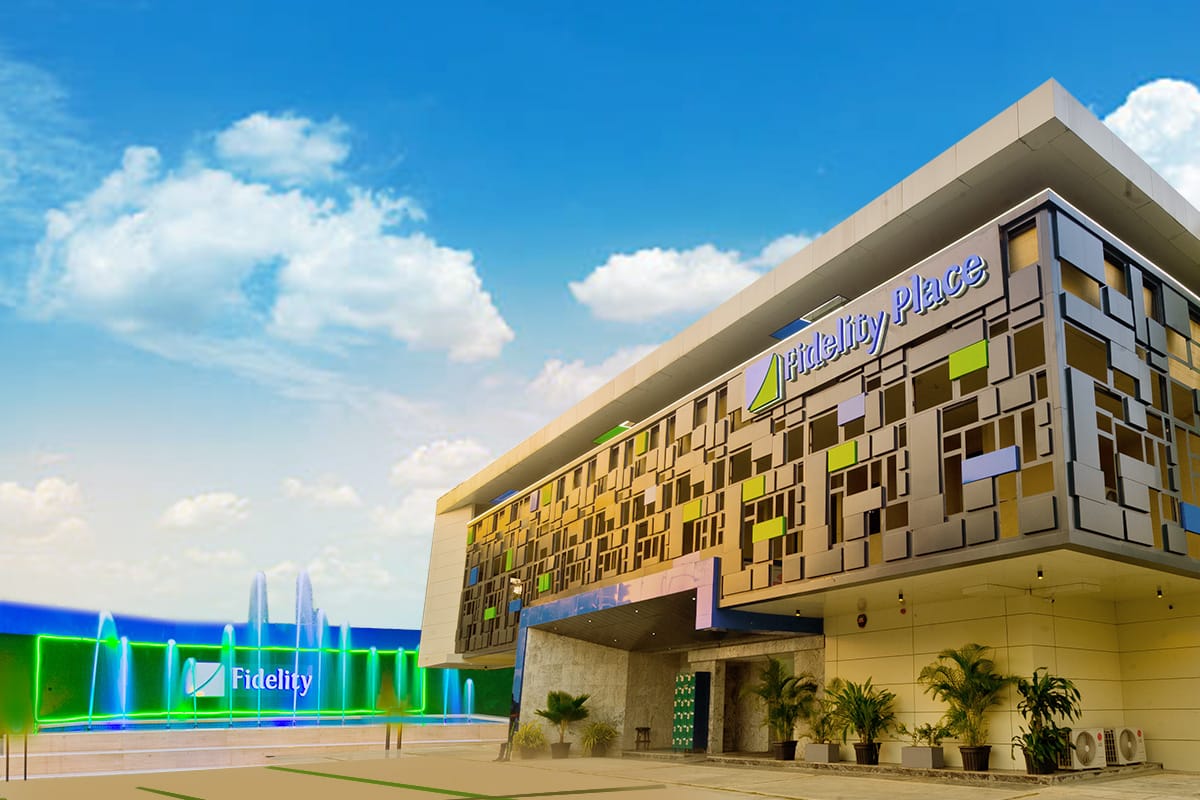
Fidelity Bank grows gross earnings by 38% to N434.95b in Q1
Fidelity Bank Plc recorded 37.9 per cent growth in gross earnings to N434.95 billion in first quarter 2026 as the international commercial bank continued to expand its core banking market share.
Interim report and accounts of Fidelity Bank for the three months ended March 31, 2026 released at the Nigerian Exchange (NGX) showed that gross earnings rose from N315.42 billion in first quarter 20025 to N434.95 billion in first quarter 2026, representing an increase of 37.9 per cent.
The top-line performance was driven by impressive growth in the bank’s core business operations with interest incomes rising by 22.8 per cent to N314.48 billion in first quarter 2026 as against N256.10 billion in first quarter 2025.
With net interest income at N180.97 billion, the bank closed the period with profit before tax of N92.48 billion. After taxes, net profit stood at N74.47 billion for the three-month period. Earnings per share remained high at N5.69, underlining the capacity of the bank to reward its shareholders.
The balance sheet of the bank also emerged stronger. Total assets crossed the N11 trillion mark to N11.35 trillion by March 2026 compared with N10.46 trillion recorded in December 2025. Customers’ deposits increased from N6.89 trillion to N7.38 trillion. Total equity rode on the back of earnings growth to a 27.5 per cent increase from N1.09 trillion in December 2025 to N1.39 trillion by March 2026.
The first quarter 2026 results further consolidated the strong earnings outlook of the bank, which had successfully completed its recapitalisation amidst impressive earnings performance in 2025.
Fidelity Bank had recorded double-digit growths in interest and non-interest incomes as well as key balance sheet items during the year ended December 31, 2025.
The audited report showed that gross earnings rose from N1.04 trillion in 2024 to N1.52 trillion in 2025, an increase of 45.6 per cent. Interest and similar incomes had grown by 38.7 per cent from N803.1 billion in 2024 to N1.11 trillion in 2025. Fees and commission incomes also rose by 44.7 per cent from N78.4 billion to N113.4 billion. The bank recorded net profit after tax of N242.4 billion in 2025.
The bank’s balance sheet emerged stronger with total assets rising by 18.6 per cent to N10.46 trillion in 2025 as against N8.82 trillion in 2024. Customer deposits increased by 16.1 per cent from N5.94 trillion to N6.89 trillion, reflecting continued franchise strength and an improved funding profile. Net loans and advances meanwhile declined by 2.4 per cent to N4.28 trillion in 2025 as against N4.39 trillion in 2024, attributable to customers paying down on their mature obligations.
The bank had in 2025 strengthened its capital position, with eligible capital rising to N561 billion, above the regulatory minimum of N500 billion for banks with international authorisation. In addition, capital adequacy had remained robust, with Capital Adequacy Ratio of 30.94 per cent by December 2025 as against 23.47 per cent by December 2024.
Managing Director, Fidelity Bank Plc, Dr. Nneka Onyeali-Ikpe, said the first quarter 2026 results reinforced the bank’s strong and resilient business model.
She noted that with the remarkable success of its recapitalisation programme and continuing expansion, Fidelity Bank has entered a new era of growth and impressive returns.
“We are on a stronger footing and confident that we will set new growth records that are reflective of our legacy and the future we are working on,” Onyeali-Ikpe said.
Business
Dangote Refinery Ends Nigeria’s Era of Fuel Import Dependence, Boosts GDP, FX Earnings — EIU
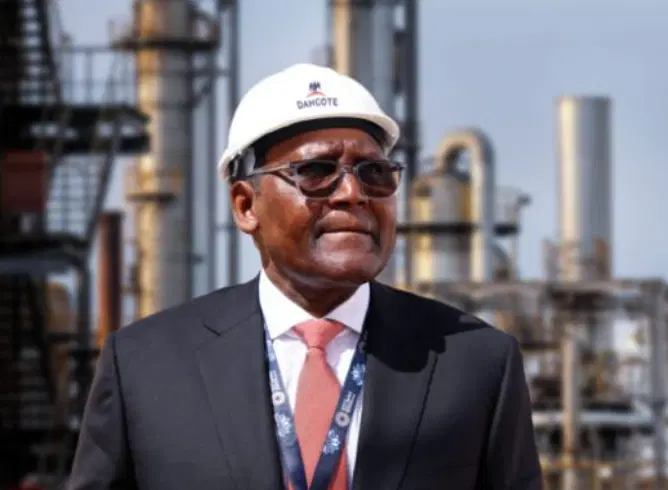
Dangote Refinery Ends Nigeria’s Era of Fuel Import Dependence, Boosts GDP, FX Earnings — EIU
The operational ramp up of the 650,000 barrels per day Dangote Petroleum Refinery & Petrochemicals is fundamentally reshaping Nigeria’s downstream oil sector, significantly reducing the country’s dependence on imported refined petroleum products and strengthening its external position, according to the Economist Intelligence Unit (EIU).
In its latest assessment on Nigeria’s fuel market and regulatory environment, the EIU said the refinery has already transformed a sector that was previously characterised by heavy reliance on imported fuel despite Nigeria being Africa’s largest crude oil producer. The report noted that the refinery met nearly 80 per cent of domestic petrol demand in April and produced enough volumes to satisfy local consumption requirements as operations approached full capacity.
The EIU described Nigeria’s downstream petroleum sector before the refinery as “long dysfunctional”, noting that the country had remained almost entirely dependent on costly imported fuel while producing nearly 1.5 million barrels of crude oil daily.
According to the report, the emergence of the refinery has reduced import dependence, improved domestic fuel availability and strengthened Nigeria’s balance of payments position through lower import demand and rising exports of refined petroleum products.
“The gradual ramp up of the 650,000 barrel/day Dangote refinery since May 2023 has transformed Nigeria’s long dysfunctional downstream sector,” the report stated. “The country’s main refineries, all state owned, had been inoperative for years and Nigeria was almost entirely reliant on costly imported fuel.”
The research and analysis division of The Economist Group, London added that the refinery’s attainment of full operational capacity and its planned expansion would further support Nigeria’s economic growth and foreign exchange earnings over the medium term.
“Meanwhile, the attainment of full capacity at, and an increase in exports from, the Dangote refinery will support real GDP growth and foreign exchange earnings in 2026 and 2027 and beyond, as a planned doubling of the plant’s output comes on stream around the end of the decade,” it added.
Industry analysts said the refinery is increasingly positioning Nigeria as an emerging refining and export hub, altering energy trade flows across Africa and reducing the vulnerability associated with fuel import dependence.
The EIU noted that the refinery’s expansion has coincided with major reforms in Nigeria’s downstream sector, including the removal of fuel subsidies and the introduction of market driven pricing mechanisms.
The report, however, said the transition from a state dominated fuel import structure to large scale domestic refining has triggered resistance from interests linked to the old import regime.
The latest tensions emerged following the decision by the Nigerian Midstream and Downstream Petroleum Regulatory Authority to relax restrictions on petrol imports despite the refinery’s growing capacity to meet domestic demand.
Dangote Industries subsequently initiated legal action, arguing that continued import approvals undermine domestic refining investments and conflict with the objectives of the Petroleum Industry Act, which seeks to encourage local refining capacity and reduce import dependence.
Analysts noted that the availability of large-scale domestic refining capacity has improved Nigeria’s energy security and reduced exposure to external supply shocks and foreign exchange volatility.
The Centre for the Promotion of Private Enterprise also cautioned against unrestrained importation of petroleum products, warning that such a policy could weaken Nigeria’s industrialisation drive and discourage investments in domestic refining.
Chief Executive Officer of CPPE, Muda Yusuf, said continued dependence on imported fuel had historically contributed to pressure on foreign reserves, exchange rate instability and fiscal leakages.
The refinery’s growing impact is also being reflected in Nigeria’s broader macroeconomic indicators. Earlier this month, S&P Global Ratings cited increased domestic refining capacity and rising hydrocarbon exports among the major factors supporting Nigeria’s sovereign credit rating upgrade – the first in 14 years.
Beyond Nigeria, analysts said the refinery is increasingly being viewed as a strategic industrial asset for Africa, where many countries remain heavily dependent on imported fuel despite rising demand for transportation, manufacturing, and power generation.
Business
BREAKING: Court Dismisses $19.6 Million Claim Against NNPCL — Rules Contract Scope Cannot Be Changed Orally
BREAKING: Court Dismisses $19.6 Million Claim Against NNPCL — Rules Contract Scope Cannot Be Changed Orally
In a landmark ruling on Friday, May 22, 2026, the Federal Capital Territory High Court in Abuja threw out a $19.6 million lawsuit filed by Alternate Dimensions Ventures Ltd against the Nigerian National Petroleum Company Limited (NNPCL), affirming a key legal principle: a written contract cannot be expanded through oral agreements or conduct.
Alternate Dimensions had sought $19,600,000 in professional fees, claiming the scope of its Direct Sale, Direct Purchase (DSDP e-pro) contract with NNPCL was orally expanded. Represented by counsel Patrick Peter, the firm argued it was entitled to the revised sum for services rendered under the alleged new terms.
But NNPCL, through its lawyer Ituah Imhanze of KENNA LP, pushed back sharply, arguing that parties are bound exclusively by the clear terms of their written agreement. Imhanze contended that without any written amendment, the claim was legally unsound, and the court agreed.
Delivering judgment, Justice Hamza Mu’azu upheld NNPCL’s defense, stating that the contract was unambiguous and that no evidence was adduced during the trial, which supported the alleged scope expansion. The court further found that NNPCL fully complied with all contractual terms and committed no breach.
Dismissing the suit as meritless, Justice Mu’azu reinforced the doctrine of sanctity of contract: any amendment to a written agreement must be express, unequivocal, and documented, not implied or verbal.
The ruling spares NNPCL from the S19.6 million claim and also a floodgate of similar potential liabilities.


- Africa: UNAIDS calls for renewed global solidarity as UN Secretary-General’s report warns that AIDS is not over and fragile gains are at risk June 4, 2026
- Eritrea: Vocational training provided to college students June 4, 2026
- World Bank Group Launches Ten-Year Strategy to Drive Jobs and Prosperity in Uganda June 4, 2026
- Prof Oramah’s appointments to the Royal African Society Patronage and Kenya’s National Infrastructure Fund herald continued recognition of his global leadership and pan-African impact June 4, 2026
- Africa Finance Corporation Raises Record US$2 Billion Syndicated Loan in Landmark Show of Confidence in Transformational Infrastructure Strategy June 4, 2026
- Libya Energy & Economic Summit (LEES) 2027 to Define Libya’s Next Phase of Energy Expansion in Tripoli June 4, 2026
- Uganda: President delivers State of the Nation Address today June 4, 2026
- United Nations High Commissioner for Refugees (UNHCR): Refugees in Eastern and Southern Africa remain in exile for nearly 16 years June 4, 2026
- 85% of Ministry of Food and Agriculture's (MoFA) 2026 Budget Released to Boost Food Production — Deputy Finance Minister June 4, 2026
- Deputy (Dep.) Finance Minister Courts Investors to Transform Ghana’s rice Economy June 4, 2026
- Africa: UNAIDS calls for renewed global solidarity as UN Secretary-General’s report warns that AIDS is not over and fragile gains are at risk June 4, 2026
- Eritrea: Vocational training provided to college students June 4, 2026
- World Bank Group Launches Ten-Year Strategy to Drive Jobs and Prosperity in Uganda June 4, 2026
- Prof Oramah’s appointments to the Royal African Society Patronage and Kenya’s National Infrastructure Fund herald continued recognition of his global leadership and pan-African impact June 4, 2026
- Africa Finance Corporation Raises Record US$2 Billion Syndicated Loan in Landmark Show of Confidence in Transformational Infrastructure Strategy June 4, 2026
- Libya Energy & Economic Summit (LEES) 2027 to Define Libya’s Next Phase of Energy Expansion in Tripoli June 4, 2026
- Uganda: President delivers State of the Nation Address today June 4, 2026
-

 news6 months ago
WHO REALLY OWNS MONIEPOINT? The $290 Million Deal That Sold Nigeria’s Top Fintech to Foreign Interests
-

 society1 month ago
SOCIAL MEDIA IS NOT A BATTLEFIELD COMMAND – WHY THE NIGERIAN ARMY’S ACTION AGAINST JUSTICE CRACK IS A NATIONAL SECURITY IMPERATIVE
-

 celebrity radar - gossips4 months ago
Dr. Chris Okafor Returns with Power and Fire of the Spirit -Mounts Grace Nation Altar with Fresh Anointing and Restoration Grace on February 1, 2026
-

 celebrity radar - gossips6 months ago
Prophet Kingsley Aitafo Releases 2026 Prophecy: ‘Nigeria Will Rise, but the World Must Prepare for Turbulence’
You must be logged in to post a comment Login
You must log in to post a comment.