
Politics
Appointments: Between Gbajabiamila and the merchants of falsehood By Seyi Bakare

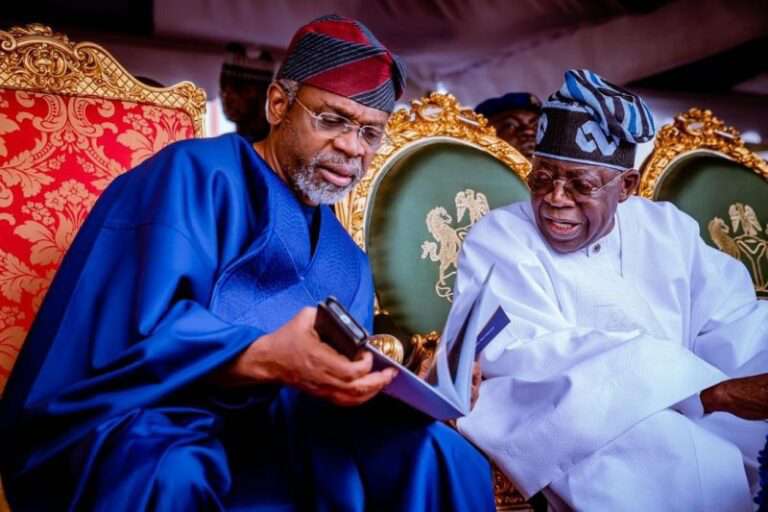
Appointments: Between Gbajabiamila and the merchants of falsehood
By Seyi Bakare
GBAJABIAMILA – FALSEHOOD is not a noble tactic, but some people don’t care. And the reason is not hard to see: ambition, vaulting ambition. People who want to have anything by force, especially political power and privileges, do not care whose name is soiled, whose family is wrecked, and whose reputation is tainted: their preoccupation is self-interest writ large.
And that, quite simply, is why the Chief of Staff to the President, Rt. Hon Femi Gbajabiamila, is currently the subject of acerbic attacks by certain political actors. These naysayers have literally allocated preternatural powers to the distinguished public servant and consistently lay at his doorsteps, blame for their inability to occupy appointive office at the moment. They do not care for the fact that, as our elders say, positions come at the time destined (makan makan loye’ekan), and that “the position that has reached the people of Iwo will still reach the people of Ede.” Clearly, everybody cannot be a minister. But it has become a fad for anyone who lobbied for ministerial position but did not get it to blame it on the Chief of Staff!
Such people, to read what their foot soldiers publish daily in the media, believe that it is Gbajabiamila, and not the president acting in consultation with the leadership of the All Progressives Congress (APC), the governors and other key stakeholders in the polity, that appointed ministers and board chairmen, etc, etc. They are deliberately attacking Gbajabiamila, spreading falsehood against him just to discredit him and threaten his position simply because they missed out on the ministerial and other lists. The polity, they proclaim with vigour, has become Gbajanised, except that this so-called Gbajanization has no basis in reality!!

Happily, though, Nigerians are not buying the falsehood, and that’s why sociocultural groups like the Arewa Youth Forum and Ohanaeze Youth Movement have called on Nigerians to ignore the accusations thrown at Gbajabiamila over the constitution of boards of government agencies. The youth groups in a statement by their leaders, Kabiru Yusuf, Nwabueze Obi and Ekwem Eucharia, said those attacking Hon. Gbajabiamila are just envious of progress of President Tinubu’s administration, and spreading lies to derail the Renewed Hope Agenda. They therefore appealed to Nigerians to ignore the detractors, saying that the Chief of Staff is well experienced and capable of carrying out his duties.
Fake news has a way of gaining traction where left to fester. It is no surprise, then, that the lawmaker representing Ikeja Federal Constituency, James Faleke, has had to disclaim the falsehood that he got a directive from President Tinubu to compile a new list of persons for appointment as board members of government agencies and parastatals. Faleke, the Chairman, House Committee on Finance, made the denial in a post via his Twitter account, putting a lie to the claim that President Tinubu rejected a list of board members submitted to him by some aides and ordered him to compile a fresh list of APC members who worked for his victory. With this clarification, you would think the merchants of falsehood would cut the President and his able Chief of Staff some slack. Alas, that’s decidedly not the case!
No one who is familiar with Gbajabiamila’s antecedents as a public servant with a sterling record and a stickler for truth, fairness and due process would entertain the absurdities ascribed to him for a second. The Surulere, Lagos-born politician cum technocrat comes to the present assignment fully qualified. He had been in the House of Reps for two decades (2003-2023), boasting a record of unblemished service. As lawmaker par excellence, he held many sensitive positions, including that of Leader of the Opposition, an era during which he gave such a good account of himself, articulating his opposition to oppression, bad governance and maladministration with unique candour. And when eventually he assumed the position of Speaker in the last dispensation, he used the position to build unity and love across political tendencies, leaving imperishable legacies on the sands of time.
In any case, throughout his sojourn in public service, he has been a very close and loyal disciple of the president. Indeed, one of the sterling qualities that made him head and shoulders above his peers was that he was a bridge builder par excellence, a force for competence, integrity and people-centred lawmaking. Gbajabiamila commanded such a level of respect from his colleagues that he was often referred to as a Speaker of Speakers and a leader of leaders. He welded together, new and old members of the Green Chamber, many of whom transited to the Senate while some emerged as ministers, placing Project Nigeria above partisan pursuits.
In appointing the distinguished lawmaker as Chief of Staff, President Bola Ahmed Tinubu took his track record and the actualization of his Renewed Hope agenda into consideration. The National Assembly, let us recall, is a strategic organ of the democratic state; it serves checks and balance functions over other arms of government, performs oversight functions, makes laws and appropriates money to various ministries and parastatals. The 360 members of the Green Chamber and the 109 members of the Red Chamber represent the people of Nigeria. They screen and approve ministers before their assumption of office, and they invite ministers and their lieutenants to the legislative chamber for questioning over issues that need clarifications. It is a no-brainer, therefore, that any government that wants to succeed needs somebody who understands the workings of that arm of government, and pray, who is better suited for that role than a former Speaker, a lawmaker of two decades standing?
As Chief of Staff, Gbajabiamila’s job is a very challenging one. He should be allowed to do his job in peace. Casting needless aspersions on him won’t cut it. It’s too early to seek to derail the Tinubu administration with blatant falsehood. The media should be wary of the desperadoes planting negative stories against an innocent public officer. Fairness is more than a slogan.
Bakare sent this piece from C27 Winning Clause Estate, Gwarimpa, Abuja




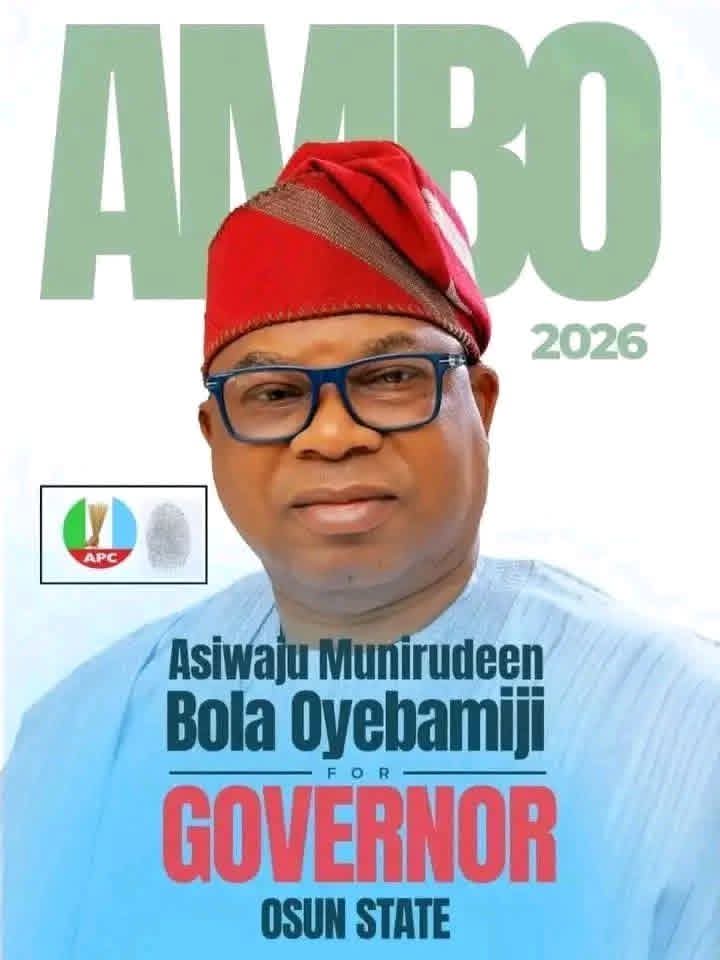
AMBO and the Osun Governorship Race: Assessing the Man, the Politics and the Vision
As political activities gather momentum ahead of the 2026 Osun State governorship election, a public affairs commentator, Oluseyi Olonade, has described the emergence of Asiwaju Munirudeen Bola Oyebamiji, popularly known as AMBO, as a significant development in the state’s political landscape.
In an article titled “Oyebamiji: The Man, The Politics and The Aspiration,” Olonade argued that the All Progressives Congress governorship hopeful possesses the character, experience and vision needed to reposition Osun State for sustainable growth.
According to the writer, Oyebamiji’s appeal stems from his extensive background in the banking sector, where he spent nearly three decades working with institutions including Wema Bank, Trans International Bank, Spring Bank and Enterprise Bank.
A native of Ikire in Irewole Local Government Area, Oyebamiji was described as a technocrat whose experience in corporate governance, finance and risk management has shaped his approach to public administration.
The article noted that his public service journey gained prominence in 2012 when he was appointed to oversee the then Osun State Investment Company Limited. Under his leadership, the organisation was reportedly restructured and transformed into Omoluabi Holdings Limited.
The writer further highlighted Oyebamiji’s tenure as Commissioner for Finance under successive APC administrations, where he was credited with managing the state’s finances during challenging economic periods.
Olonade also referenced Oyebamiji’s appointment as Managing Director of the National Inland Waterways Authority, describing it as further evidence of his administrative and leadership capabilities.
The article contrasted Oyebamiji’s governance philosophy with that of the current administration in Osun State, arguing that the APC aspirant favours institutional reforms, economic diversification and fiscal discipline.

According to the writer, Oyebamiji’s proposed agenda includes strengthening transparency in government spending, expanding internally generated revenue, attracting private-sector investments and promoting industrial and agricultural development.
The article also highlighted youth empowerment, entrepreneurship development and digital skills acquisition as key components of his vision for the state.
Olonade concluded that the forthcoming governorship election would present voters with a choice between different approaches to governance, expressing confidence that Oyebamiji’s experience and developmental agenda make him a strong contender in the race.
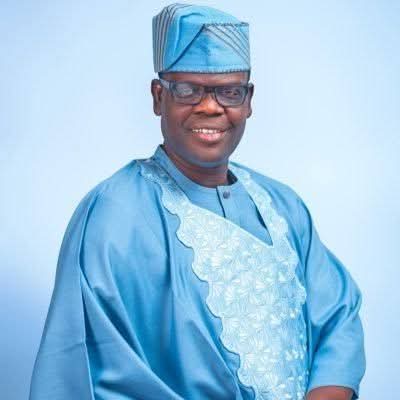
*Oselu Tiwa nTiwa Endorses Oriyomi Hamzat for Oyo Governorship*
A sociopolitical support group in Oyo State, Oselu Tiwa nTiwa, has declared its support for Alhaji Oriyomi Hamzat as the authentic governorship candidate of the Accord Party ahead of the forthcoming governorship election in the state.
The group made its position known in a statement jointly signed by its President, Mr. Adewale Oluwaseyi and Secretary, Alh. Adebayo Oyewole, on Thursday, describing Hamzat as a grassroots figure with strong connection to the people and a track record of humanitarian interventions across Oyo State.

According to the group, the endorsement followed what it described as careful observation of Hamzat’s leadership qualities, compassion and dedication to the welfare of ordinary citizens.
“Oriyomi Hamzat has consistently demonstrated empathy, courage and selfless commitment to humanity. Through his numerous interventions in the lives of ordinary citizens, he has become a symbol of hope to many families and communities,” the statement read.
Oselu Tiwa nTiwa also appealed to the national leadership of the Accord Party to prioritise the long-term future and electoral growth of the party in its decision-making process.
The group noted that Hamzat’s candidacy presents an opportunity for the party to strengthen its grassroots support base and expand its political relevance across Oyo State.
“We respectfully appeal to the National Leadership of the Accord Party to look beyond immediate political calculations and consider the bigger picture, the future growth, stability and electoral success of the party in Oyo State and beyond,” the statement added.
The group further expressed confidence in the leadership of the party, saying it believes the party’s national officers and stakeholders would take decisions that reflect fairness, inclusiveness and the collective interest of members.
While calling on party loyalists to remain calm and united, Oselu Tiwa nTiwa said continued consultations among stakeholders would help strengthen the Accord Party ahead of the election.
Signed:
Alh. Adebayo Oyewole,
Secretary.
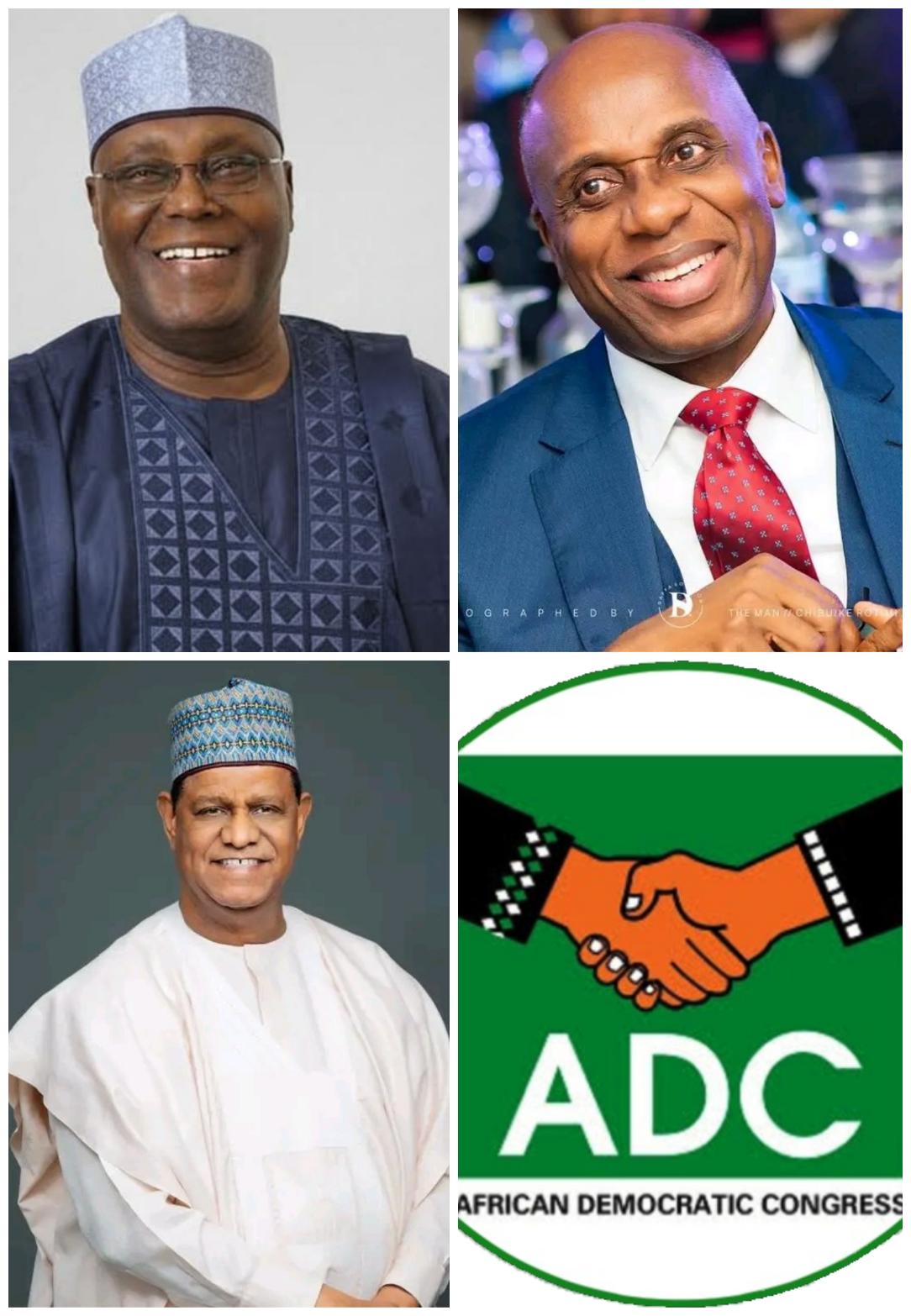
Atiku Set To Clinch ADC Presidential Ticket, Leads Amaechi, Hayatu-Deen In 34 States
Former Vice President of Nigeria and frontline presidential aspirant of the African Democratic Congress (ADC), Atiku Abubakar, is projected to emerge winner of the party’s presidential primaries, according to impeccable sources in Abuja.
The primaries, conducted across over 8,000 wards in the 36 states of the federation and the Federal Capital Territory, reportedly placed Atiku far ahead of his closest rivals — former Rivers State Governor, Rotimi Amaechi, and former Chairman of the Nigerian Economic Summit Group, Mohammed Hayatu-Deen.

Highly placed party insiders disclosed that Atiku is currently leading in 34 states, including the FCT, after securing dominance across the 19 Northern states, the five South-East states, and the six South-West states, while also maintaining a strong showing in at least three states in the South-South geopolitical zone.
The sources added that the outcome reflects what they described as “an overwhelming nationwide acceptance” of the former vice president within the opposition party ahead of the 2027 general election.
Meanwhile, the ADC leadership has invited members of the press to the official announcement of the final collated results scheduled for 11:00 a.m. on Tuesday, May 26, 2026, in Abuja.
The declaration of results is expected to be broadcast live on ARISE Television and two other major television stations, while also being livestreamed on the party’s official social media platforms on X and Facebook.
Speaking ahead of the announcement, the founding National Chairman of the ADC, Chief Ralph Nwosu, said the decision to televise the exercise live was aimed at promoting transparency and democratic accountability.
“We want millions of Nigerians at home and in the Diaspora to witness democracy in action,” Nwosu said.
He further revealed that the party leadership would encourage all three presidential aspirants to publicly embrace a peace accord and commit themselves to working together in unity for the party’s success.
According to him, the move is necessary to strengthen internal cohesion and position the ADC for victory in the presidential election scheduled for January 16, 2027.
Details later.


- Joint Statement by the World Health Organization (WHO) and Food and Agriculture Organization of the United Nations (FAO) in South Africa on World Food Safety Day 2026: From burden to solutions – safe food everywhere June 7, 2026
- Liberia: President Boakai Oversees Signing of US$125 Million in World Bank Financing Agreements for Digital Connectivity, Renewable Energy, and Road Infrastructure June 7, 2026
- President Mahama explores Belarus’ agro-industrial hub; seeks partnerships to boost Ghana’s food security June 7, 2026
- National Insurance Corporation of Eritrea (NICE): Shareholders’ Annual Regular Meeting June 6, 2026
- World Cup accredited journalists raise concerns over unfair United States (US) visa restrictions, International Sports Press Association (AIPS) calls on FIFA to intervene June 6, 2026
- Ghana: President Mahama arrives in Belarus, lays wreath at Victory Monument June 6, 2026
- Liberia: President Boakai Advances Clean Energy Agenda; Dedicates 20-Megawatt Solar Power Plant at Mount Coffee June 6, 2026
- African Union (AU) Commission Chairperson mourns Passing of the Former Angola Minister of Foreign Affairs June 6, 2026
- Economic Community of West African States (ECOWAS) Welcomes Students on an Educational Visit to Its Headquarters June 6, 2026
- Seychelles: President Patrick Herminie attended Official Opening of Rise and Shine Day Care Centre at Mont Fleuri June 6, 2026
- Joint Statement by the World Health Organization (WHO) and Food and Agriculture Organization of the United Nations (FAO) in South Africa on World Food Safety Day 2026: From burden to solutions – safe food everywhere June 7, 2026
- Liberia: President Boakai Oversees Signing of US$125 Million in World Bank Financing Agreements for Digital Connectivity, Renewable Energy, and Road Infrastructure June 7, 2026
- President Mahama explores Belarus’ agro-industrial hub; seeks partnerships to boost Ghana’s food security June 7, 2026
- National Insurance Corporation of Eritrea (NICE): Shareholders’ Annual Regular Meeting June 6, 2026
- World Cup accredited journalists raise concerns over unfair United States (US) visa restrictions, International Sports Press Association (AIPS) calls on FIFA to intervene June 6, 2026
- Ghana: President Mahama arrives in Belarus, lays wreath at Victory Monument June 6, 2026
- Liberia: President Boakai Advances Clean Energy Agenda; Dedicates 20-Megawatt Solar Power Plant at Mount Coffee June 6, 2026
-

 news6 months ago
WHO REALLY OWNS MONIEPOINT? The $290 Million Deal That Sold Nigeria’s Top Fintech to Foreign Interests
-

 society1 month ago
SOCIAL MEDIA IS NOT A BATTLEFIELD COMMAND – WHY THE NIGERIAN ARMY’S ACTION AGAINST JUSTICE CRACK IS A NATIONAL SECURITY IMPERATIVE
-

 celebrity radar - gossips4 months ago
Dr. Chris Okafor Returns with Power and Fire of the Spirit -Mounts Grace Nation Altar with Fresh Anointing and Restoration Grace on February 1, 2026
-

 celebrity radar - gossips6 months ago
Prophet Kingsley Aitafo Releases 2026 Prophecy: ‘Nigeria Will Rise, but the World Must Prepare for Turbulence’