
Politics
Appraising Fubara’s One-Year Footprints in Rivers* By Tony Uwakwe

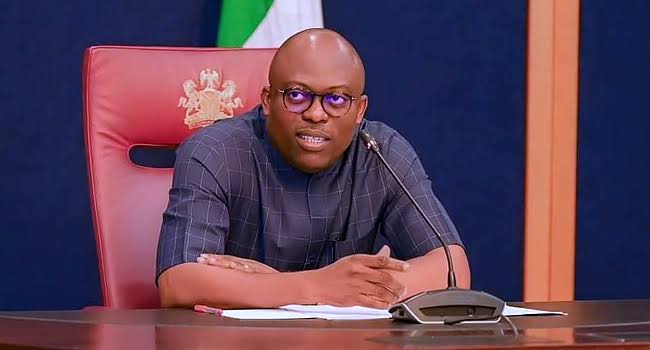
Appraising Fubara’s One-Year Footprints in Rivers
After the storm comes the calm; this is the case of Rivers State under Governor Siminalayi Fubara. In one year, he threaded on a path not many would dare. His message was consistent with the oath of office to serve the people, not individuals. In one year, he has recorded incredible feats despite all the distractions.

Governor Siminalayi Fubara is a man who has the interest of the people of Rivers State at heart. According to him, if he has to fight so that the people can be liberated, so be it. He has done this much in the last year in office and has commendable projects to show for it.
Rivers people are indeed indebted to him for braving the odds to free the state from the clutches of a select few who see the resources of the state as their birthright. This is indeed a worthy cause, and I can say that the governor has written his name in gold regarding the history of Rivers State.
The achievements recorded in one year remain outstanding. The state has remained a beehive of activities in critical sectors. As a fact, almost all sectors of the state are receiving the deserved attention. This only happens when a leader puts the people’s interests first and above personal interests.
Rivers State remains a good example that other states should emulate. Only when our leaders put the people’s interest at heart will our quest for sustainable growth and development remain a mirage.
Many commentaries have been written about his modest achievements in office. It is a testament to his passion and dedication to turn around the state’s fortunes. He is not given to grandstanding. It is not an attribute that relates to his personality. The reason is simple. Rivers people deserve more due to the economic resources in the state.
At the clock of four years in office, the people of Rivers state will nickname him the “Special One” who came, saw and conquered. From all indications, Rivers state shall be great again, and the people will line up solidly behind him should he seek re-election.
It would be a formality because his records would speak for him, and the only choice the people would have is to give him the mandate to consolidate his efforts towards making the state great again.
I recall that someone mentioned that Governor Fubara is a magician. I agree because only a magician does what he has done in one year in office despite the challenges he encountered. He was resolute with his blueprint for development. Many would have buckled if faced with such situations. But not Fubara because he has a brave heart and came prepared to do what is right, as evident in the numerous projects commissioned in the state.
Roads across the local government areas in the state are receiving attention. Under his leadership, health care for rural dwellers has also received adequate attention, as well as in the educational sector.
The beauty of Governor Fubara’s one year in office is that he has been able to douse ethnic tension in the state. He has made Rivers people realize that though tongues differ, there is one Rivers state. This is also remarkable and a disconnect from previous administrations that entrenched ethnicity in governance and gave birth to ethnic tension in the state. This, we must admit, gave birth to insecurity in the state.
Under Governor Fubara, the case is now different. Rivers people were united in one voice to fight for a just cause in the interest of the state. Various ethnic groups embraced one another because the governor was not selective in the development of the state. It is instructive to state that places that deserve interventions are given attention, not of their location or ethnicity.
I salute the courage of Governor Siminalayi Fubara in hitting the ground running in piloting the affairs of the state in the last year. His mission was clear: he wanted a state its indigenes would proudly call home. He has achieved this much in one year in office. It remains unprecedented in the annals of the state.
The fact that Rivers state has abundant resources, yet the people are lacking, is an anomaly that Governor Fubara is addressing given the proper support and cooperation. At this point, there is no doubt he has performed creditably well in one year in office.
The country needs braver hearts like Governor Fubara to address its myriad challenges. He has redefined leadership by exhibiting courage in the face of adversity. This is an attribute that the majority of those in leadership positions lack.
The Rivers example should reverberate across the country. It is an example of courage, dedication and passion. These attributes are necessary for translating our hopes and aspirations into tangible realities. I doff my hat to the governor of Rivers State. He is a man on a mission. And posterity will be kind to him.
There is nothing more to say than that Rivers State is on the path to greatness with Governor Siminalayi Fubara at the helm of affairs. It is what it is.
Uwakwe is a public affairs analyst writing from Abuja.




Obasa Warns Dissidents as Agege Affirms Hamzat as APC governorship candidate
Speaker of the Lagos State House of Assembly, Rt. Hon. Mudashiru Obasa, has issued a strong warning to dissidents within the All Progressives Congress, APC, that are spreading false reports about the House of Assembly primaries held Wednesday, May 20 across all the wards in the local government.
Supervising officers from the Independent National Electoral Commission (INEC) announced the immediate past Executive Chairman of Agege Local Government Area, High Chief Ganiyu Kola Egunjobi, and Barrister. Azeez Oladapo Ninalowo as winners of Agege Constituencies I and II respectively. Egunjobi polled 10, 126 votes while Ninalowo scored 12, 455 votes. Both candidates had earlier emerged as consensus aspirants during a caucus meeting of the party presided over by Speaker Obasa last Tuesday.
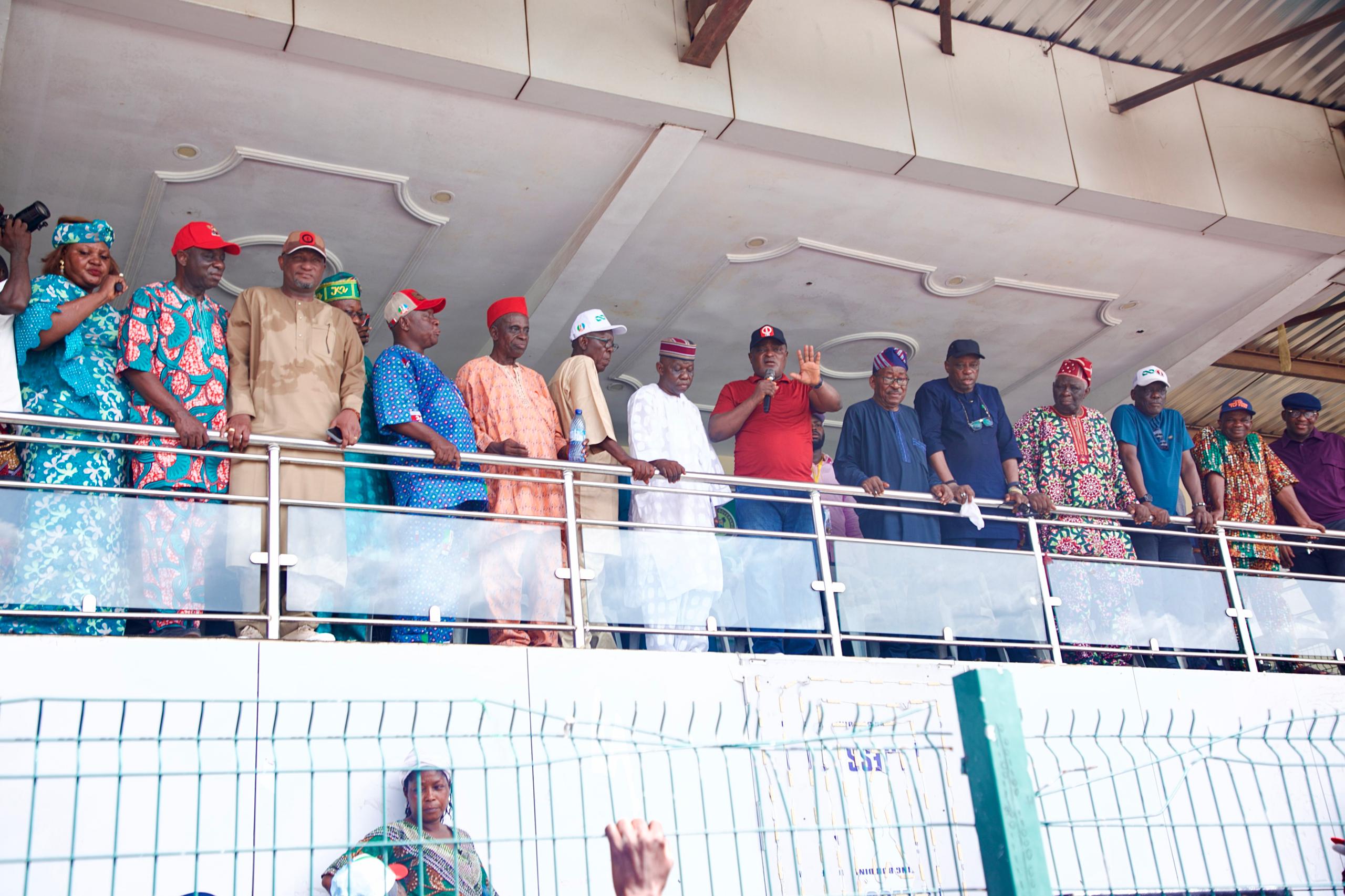
Obasa spoke at the Agege Stadium earlier today, Thursday, May 21, as the APC faithful and stakeholders converged in their thousands to affirm incumbent deputy governor, Dr Obafemi Hamzat, as the consensus candidate of the party in the 2027 governorship election.
Speaking on the outcome of the primaries, Obasa declared: “We’ve done everything according to the dictates of the party. Dr Obafemi Kadiri Hamzat is our governorship candidate. Senator Idiat Adebule is our candidate in the Lagos West Senatorial District, and Mudashiru Obasa is the candidate for Agege Federal Constituency in the House of Representatives. Collectively, we have decided and we are standing by the decision of our members.”
He commended INEC and security agencies “for helping us to have a free, fair, and transparent exercise devoid of violence and disorderliness.” The Speaker also praised party members for their loyalty and steadfastness, stating: “Agege is always here for the party. We are always present. When you are a member of a party, you should always participate in all its activities. Why will anyone who isn’t here claim to be part of us?
“You can’t be absent from all primaries and still claim that you are with us. We have conducted House of Representatives, Senate, House of Assembly, and Governorship primaries, yet some disgruntled party members have consistently stayed away. It is not possible. They are not part of us.”
Further, Obasa said: “We should be mindful of the people we send to represent us in any position. If they disregard us, we will wait until their tenure expires and remove them. The beauty of any political structure is continuity. Agege remains a shining example of a well-structured political organisation at the local government level.
“Nothing was done by subterfuge; everything was done in the open. INEC, DSS, Police, the media, and party leaders were all present. There’s nothing to fear. If anybody is initiating fake reports, let them continue. Anybody who has a problem should go and challenge the result in court. After the general election, maybe they will wake up,” he added.
With Hamzat’s candidacy sealed and Obasa drawing a hard line against internal dissent, Agege has sent a clear message: the APC’s fortress stands on loyalty and discipline, and those unwilling to march in step will be left behind as the party advances toward 2027.


Politics
The All Progressives Congress (APC) in Edo State deserves commendation for the peaceful, transparent, and highly successful conduct of its primary elections across the various elective positions
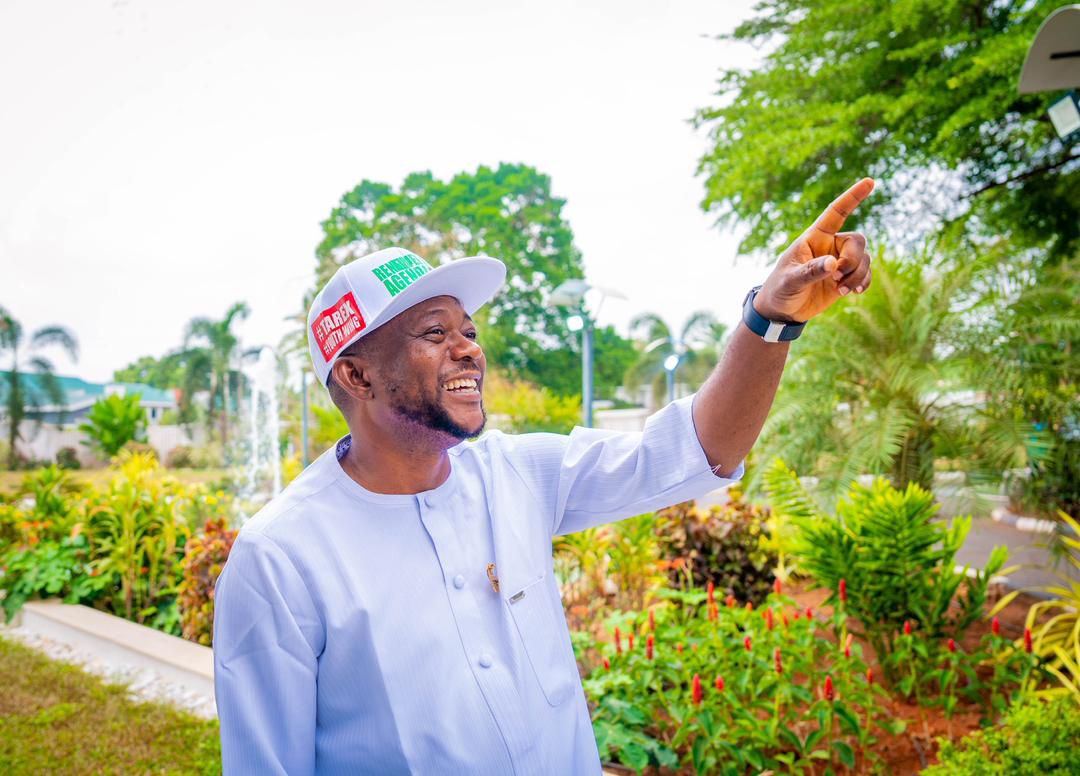
The All Progressives Congress (APC) in Edo State deserves commendation for the peaceful, transparent, and highly successful conduct of its primary elections across the various elective positions,
……ranging from the State House of Assembly to the House of Representatives and the Senate.
The victories recorded so far are not just individual triumphs, but collective victories for the party, democracy, and the good people of Edo State. The process has once again demonstrated the maturity, strength, and internal democratic values of our great party.
Special appreciation must also go to His Excellency, the Executive Governor of Edo State, Senator Monday Okpebholo whose wisdom, leadership, fairness, and large-heartedness ensured the conduct of rancour-free primaries that have left party members satisfied and proud of the APC family.
As we look forward with great optimism to the presidential primary tomorrow, we remain confident that the same spirit of unity, peace, and brotherhood will prevail.
Congratulations to all the winners. As leaders entrusted with the confidence of the party, we urge them to be magnanimous in victory, extend hands of fellowship to other contestants, and work together in the overall interest of the APC and the progress of Edo State.
Together, we shall continue to build a stronger, united, and victorious party.
Politics
Governor Dauda Lawal Emerges APC Consensus Governorship Candidate for Zamfara 2027 Election
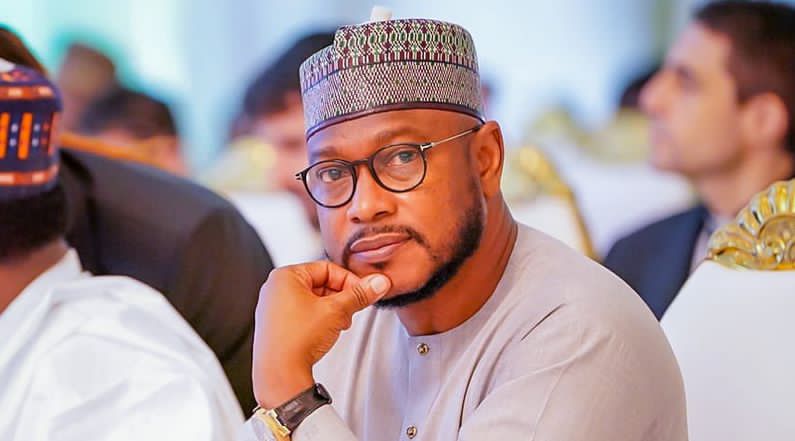
Governor Dauda Lawal Emerges APC Consensus Governorship Candidate for Zamfara 2027 Election
Governor Dauda Lawal Ph.d has officially emerged as the governorship candidate of the All Progressives Congress (APC) for the 2027 election in Zamfara State, following a consensus arrangement adopted by the party for its primaries.
The governor secured the ticket after party members and supporters gathered across various wards to endorse him as the APC’s flagbearer for the forthcoming election. The consensus model, which allowed party stakeholders to unite behind a single candidate, was embraced as a strategy to avoid a contentious primary and strengthen internal cohesion ahead of the 2027 polls.
Speaking with journalists shortly after the exercise, Governor Lawal expressed profound gratitude to party members for the confidence reposed in him. He reaffirmed his commitment to the people of Zamfara, pledging to consolidate ongoing developmental projects aimed at improving the lives of residents across the state.
“I am deeply honored by the trust and support of our party faithful,” Lawal said. “We will not relent in our efforts to deliver meaningful development, enhance security, and create opportunities for all citizens of Zamfara State.”
His emergence underscores the party’s push to build continuity and strong leadership in the northwest region.
Political analysts note that the adoption of consensus candidate signals the APC’s preference for unity and reduced internal friction as the party prepares for the next electoral cycle.


- Strengthening Zambia’s Readiness for Health Emergencies: From Surveillance to Pandemic Preparedness May 21, 2026
- Economic Community of West African States (ECOWAS) Strengthens Regional Integration Through Cross-Border Cooperation Stakeholders’ Meeting in Abuja, Nigeria May 21, 2026
- Senegal Retains Title as Overall Champion at ECOWAS African Wrestling Tournament (TOLAC 14) May 21, 2026
- Eritrea: Diaspora Nationals Celebrate Independence Day Anniversary May 21, 2026
- Seychelles: President Herminie Visits District Administration Office and Library on La Digue May 21, 2026
- Egypt: President El-Sisi Meets Tunisian Minister Mohamed Ali Nafti May 21, 2026
- Joint statement welcoming the Republic of Togo’s announcement on Visa facilitation for African nationals May 21, 2026
- Advancing Regional Political Commitment and Cross Border Coordination for Ebola Preparedness and Response May 21, 2026
- Morocco: African Development Bank commits €200 Million to boost employability and develop future skills May 21, 2026
- Société Nationale des Pétroles du Congo (SNPC) Targets Global Operator Status as African Energy Chamber (AEC) Engagement Reinforces Congo’s Energy Ambitions May 21, 2026
- Strengthening Zambia’s Readiness for Health Emergencies: From Surveillance to Pandemic Preparedness May 21, 2026
- Economic Community of West African States (ECOWAS) Strengthens Regional Integration Through Cross-Border Cooperation Stakeholders’ Meeting in Abuja, Nigeria May 21, 2026
- Senegal Retains Title as Overall Champion at ECOWAS African Wrestling Tournament (TOLAC 14) May 21, 2026
- Eritrea: Diaspora Nationals Celebrate Independence Day Anniversary May 21, 2026
- Seychelles: President Herminie Visits District Administration Office and Library on La Digue May 21, 2026
- Egypt: President El-Sisi Meets Tunisian Minister Mohamed Ali Nafti May 21, 2026
- Joint statement welcoming the Republic of Togo’s announcement on Visa facilitation for African nationals May 21, 2026
-

 news5 months ago
WHO REALLY OWNS MONIEPOINT? The $290 Million Deal That Sold Nigeria’s Top Fintech to Foreign Interests
-

 society3 weeks ago
SOCIAL MEDIA IS NOT A BATTLEFIELD COMMAND – WHY THE NIGERIAN ARMY’S ACTION AGAINST JUSTICE CRACK IS A NATIONAL SECURITY IMPERATIVE
-

 celebrity radar - gossips4 months ago
Dr. Chris Okafor Returns with Power and Fire of the Spirit -Mounts Grace Nation Altar with Fresh Anointing and Restoration Grace on February 1, 2026
-

 celebrity radar - gossips5 months ago
Prophet Kingsley Aitafo Releases 2026 Prophecy: ‘Nigeria Will Rise, but the World Must Prepare for Turbulence’