society
Atlantis Crown e-Currency Holders Declared ‘Officially Secured’ by United Kingdom of Atlantis (UKA)
*Atlantis Crown e-Currency Holders Declared ‘Officially Secured’ by United Kingdom of Atlantis (UKA)*
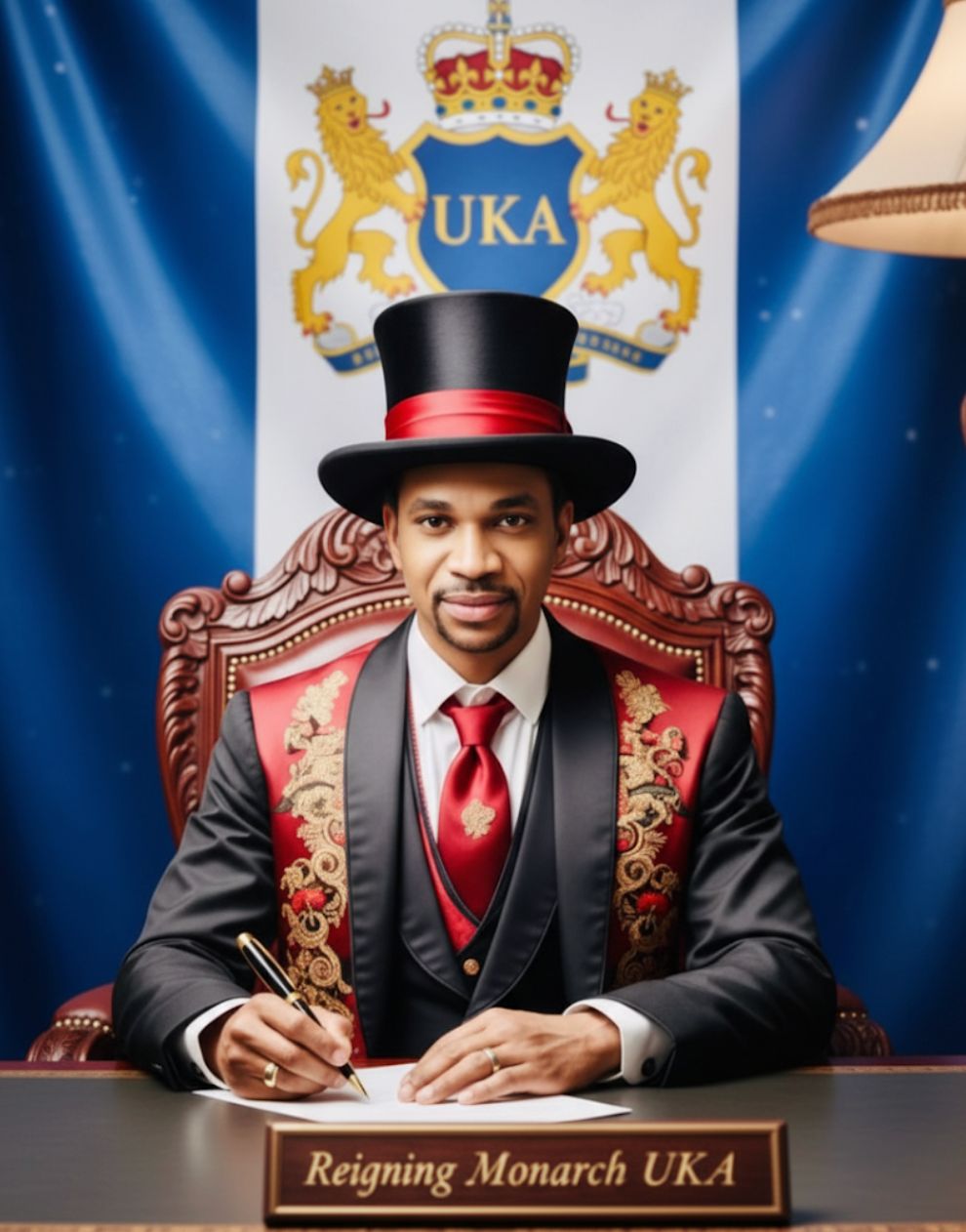
The United Kingdom of Atlantis (UKA), operating from its headquarters at the Diamond Castle, has issued a global declaration affirming the security of all holders of the Atlantis Crown (ATC) e-Currency worldwide.
The announcement, made public today, emphasizes the robust backing and humanitarian mission driving the digital currency.
The ATC, a digital medium of exchange, is reportedly powered by the ambitious 5 Billion Humanitarian Project, which aims to support and build humanity globally. The initiative leverages thousands of affiliated non-governmental organizations (NGOs) across the globe, which are utilizing the ATC in their outreach efforts to communities.
The currency is also supported by a network of approved currency exchange points, referred to as the Bureau De Change (BDC) merchants.Leadership and Global Reach.
The UKA highlighted its organizational structure for managing the ATC, with Mr. Treasure Enyan reportedly heading the critical department overseeing the currency’s exchangability and trade.
Other key departments mentioned include the Orientation department, led by the Chairperson National Orientation Agency, Rt Hon Mama Felicia, the British DG of ATC, the DG of UKA, while the Director General, Nigeria, 5 Billion Humanitarian Project, Queen (Dr) Amaka Cordelia
The UKA claims that the ATC’s reach now spans all seven continents. Officials leading various global departments have been certified to onboard new members and facilitate transactions using the digital currency. Mission to ‘Free People from Poverty’
In a statement following the declaration, Dr. Solomon Winnings, Chairman of the United Kingdom of Atlantis, stressed the protective measures in place for the currency’s members.
“Under the act of the throne, the members are protected and secured under the act of the UKA,” Dr. Winnings stated, urging people globally to embrace this time of empowerment.
He further announced that he has activated and directed Secretary General His Excellency Amb Collins Peter Oliver to immediately “kick-start the operation all over the world,” Rt Hon Treasure Iyan, and to all affiliates of the throne and the government of the uka, underscoring the organization’s core objective. “Our mission is to free people from poverty,” Dr. Winnings concluded.
The declaration marks a significant move by the United Kingdom of Atlantis to reassure global stakeholders regarding the stability and security of its proprietary digital currency.
society
Applauding Tinubu’s Upstream Prosperity Through Strategic PIA Implementation
By Aminu Adamu Aminu
The restoration of hope for Nigerians and the effectiveness of the Petroleum Industry Act (PIA) in delivering tangible, evidence-based, and progressive reforms are no longer matters of doubt or mere sloganeering among Nigerians and residents. These are not empty campaign promises but the reality of a new political order—a game-changer reshaping narratives, particularly in the petroleum sector, where the Nigerian Upstream Petroleum Regulatory Commission (NUPRC) is championing transformative reforms.
What began two years ago, upon President Bola Ahmed Tinubu’s assumption of office, as an ambitious plan has evolved into a practical force, changing lives and transforming the nation with numerous tangible benefits.
President Tinubu’s administration has made significant strides in restoring hope to Nigeria’s oil and gas sector, fast-tracking the implementation of the PIA, and yielding measurable, positive results.
At the core of NUPRC’s reforms is an unwavering commitment to transparency, which has strengthened the PIA’s legal framework, leading to remarkable improvements in reporting obligations and host community provisions. These reforms, driven by strategic regulatory leadership and robust presidential backing, have significantly boosted oil production, steadily increasing Nigeria’s crude oil output to an all-time high exceeding 1.7 million barrels per day.
This achievement has restored investor confidence, attracting international oil companies (IOCs) back to Nigeria and encouraging direct foreign investment with renewed optimism. Through deliberate and proactive efforts, the NUPRC has fostered an environment of fruitful engagement and collaboration rooted in shared values.
This has enhanced the enforcement of improved metering systems, a decisive clampdown on oil theft, and the promotion of decarbonization. These initiatives reflect a forward-thinking agenda aligned with global standards and best practices, fostering international trade and reinforcing Nigeria’s energy independence.
The multifaceted positive impacts on Nigeria’s economy have stimulated growth, stabilized the exchange rate, and bolstered investor confidence, attracting foreign investment pledges totaling approximately $50.8 billion. An improved balance of trade has resulted in a trade surplus of about N3.42 trillion in the fourth quarter of 2024, alongside consistent GDP growth. This has led to increased revenue allocations to subnational governments and local government councils, enabling them to clear salary arrears and debts, improve citizen welfare, and invest in social services and infrastructure. These developments have further boosted economic growth and consolidated the administration’s gains.
The Renewed Hope agenda also seeks to resolve lingering industrial disputes, creating a more stable and attractive investment environment. This facilitates an energy transition aimed at ensuring the long-term sustainability of Nigeria’s oil and gas sector.
The notable increase in transparency, accountability, and efficiency within the industry has improved regulatory oversight and community engagement, fostering a more favorable and robust business environment. This is evident in the substantial investment pledges, including the aforementioned $50.8 billion in foreign investment commitments.
Beyond stabilizing the exchange rate, reducing inflation, and increasing government revenue, Nigeria’s Eurobond issuance in late 2024 attracted over $9 billion in orders—four times the subscription level—demonstrating strong investor confidence in the nation’s economy.
This success reflects a consistent commitment to policy continuity, inclusivity, stakeholder engagement, and a strong emphasis on maintaining transparency and accountability in the PIA’s implementation.
Given the critical role of these reforms in shaping Nigeria’s trajectory, concerted efforts have ensured a profound impact. The reforms have moved the country far from its pariah days, establishing transparent licensing rounds. Recent bid rounds and concession awards, such as the 57 Petroleum Prospecting License (PPL) awards in 2022, the 2022 Mini-Bid Round, and the 2024 Licensing Round, were executed with unprecedented transparency and competitiveness, drawing exceptional investor participation.
The pragmatic implementation of the PIA has also led to a strategic 28 Field Development Plans Initiative, securing $18.2 billion in investment commitments. This initiative is expected to unlock 1.4 billion barrels of oil and 5.4 trillion cubic feet of gas. Additionally, rig counts have risen significantly, from 8 in 2021 to 43 as of September 2025, signaling a substantial increase in exploration and production activities.
In the words of Engr. Gbenga Komolafe, Chief Executive of NUPRC, “With the Petroleum Industry Act as our foundation, reinforced by bold Presidential Executive Orders and transformative regulatory initiatives, we are not just opening our doors to investment; we are building a world-class upstream oil and gas environment that rewards ambition, innovation, and responsibility.”
Given this resolute determination, as demonstrated by the effective implementation of the PIA through the NUPRC, President Bola Ahmed Tinubu is undeniably steering Nigeria’s upstream petroleum sector in the right direction.
Aminu writes from Kaduna
society
Lt. General Olufemi Oluyede: The Vanguard of a United and Secure Nigeria
Lt. General Olufemi Oluyede: The Vanguard of a United and Secure Nigeria.
(A Tribute to Visionary Leadership in the Nigerian Army) by Comrade Oladimeji Odeyemi.
In the tapestry of Nigeria’s national story, few figures emerge as beacons of courage, transformation, and unwavering service. Among them stands Lt General Olufemi Oluyede, the Chief of Army Staff, Nigerian Army whose tenure has come to symbolize a *renaissance of purpose* and *renewed faith* in the Nigerian Army’s mission to protect, unite, and uplift our nation.
From the moment he assumed command of the Nigerian Army, Lt General Oluyede made it clear that leadership is not about titles but about service. His vision for a *professional, people-centered, and technologically driven army* has reshaped not only the institution but also the nation’s perception of its defenders.
*> “The strength of an army lies not just in its weapons, but in the spirit of its soldiers and the vision of its leader.”*
Under his stewardship, the Nigerian Army has taken *giant strides* in combating insurgency and terrorism. His strategic reforms in intelligence, logistics, and inter-agency collaboration have fortified national security and rekindled hope across conflict-prone regions. Through relentless operations and innovation, Lt. General Oluyede has ensured that the Nigerian flag continues to fly high in unity and resilience.
Beyond the battlefield, his leadership emphasizes *discipline, welfare, and integrity.* He has championed modernization in military infrastructure, improved welfare packages for troops, and strengthened civil-military relations — building bridges of trust between the Army and the people it serves.
*> “Peace is not merely the absence of war; it is the presence of justice, discipline, and compassion.”*
Lt. General Oluyede’s commitment to the unity of Nigeria stands as an unshakable pillar of his service. At a time when the nation faces complex security challenges, his call for *One Nigeria, One Army, One Purpose* has inspired a renewed sense of patriotism. His leadership reminds us that the Nigerian spirit — though tested — remains unbroken.
In every stride, in every operation, and in every reform, Lt. General Oluyede has written his name in gold in the annals of Nigeria’s history. His legacy is not just in victories won, but in hearts inspired, soldiers empowered, and a nation strengthened.
Today, as Nigeria marches forward toward greater peace and unity, we salute a leader who has turned challenges into triumphs and vision into reality.
Lt. General Olufemi Oluyede — a symbol of courage, vision, and commitment to a safer, stronger, and united Nigeria.
society
Democracy or Deception? What History Tells Us About Nigeria’s Elections
Democracy or Deception? What History Tells Us About Nigeria’s Elections.
By George Omagbemi Sylvester | Published by Saharaweeklyng.com
Voting is a right, but forgetting the past ensures every election repeats old betrayals.
Elections in Nigeria are presented as a celebration of democracy, yet for decades, they have been exercises in repetition; repetition of manipulation, deception and selective memory. Citizens cast ballots hoping for change, while history quietly documents patterns of failure, collusion and political opportunism. If Nigeria cannot learn from its electoral past, democracy becomes a performance not a guarantee of accountability.
As Nobel laureate Wole Soyinka warned: “A people who do not know the value of the vote will never know the value of freedom.” Nigeria’s history demonstrates precisely this tension: we claim freedom, yet frequently betray it at the ballot box.
The Historical Pattern.
From independence in 1960, Nigeria’s elections have oscillated between hope and heartbreak:
The First Republic (1960–1966): Elections were competitive but marred by regional favoritism, intimidation and corruption. The manipulation of votes and ethnic patronage contributed to the first coup in 1966.
Second Republic (1979–1983): Civilian governments returned, but elections were again tainted. Rigged ballots, partisan bias and political godfatherism led to mistrust and ultimately another military takeover.
Fourth Republic (1999–present): While ostensibly democratic, elections have repeatedly been marred by vote-buying, intimidation, violence and elite collusion. The annulled June 12, 1993 election, widely believed to have been won by Chief Moshood Abiola, remains a defining moment: the denial of the people’s choice became a national trauma.
Across decades, one pattern is clear: political elites consistently manipulate processes for personal gain, leaving citizens frustrated and suspicious.
Why History Matters in Elections.
Understanding Nigeria’s electoral past is essential for the present:
To Recognize Manipulation: Historical awareness allows citizens to identify tactics used to undermine votes from ballot stuffing to selective counting.
To Resist Ethnic Exploitation: Politicians often frame campaigns in tribal or religious terms. Knowing the disastrous outcomes of past ethno-religious manipulation (including post-election violence) can inoculate voters against repeating these errors.
To Demand Accountability: Citizens who know the consequences of past electoral deception are better positioned to insist on transparent processes and reform.
Political scientist Claude Ake once wrote: “Democracy in Africa is often democracy in name; citizens frequently experience only the ceremonial aspects of the system.” Nigeria exemplifies this.
Modern Electoral Challenges.
Despite technological and procedural improvements, the Fourth Republic continues to struggle:
Electoral Violence: Localized clashes, especially in swing states, often reflect ethnic tensions exploited by politicians.
Vote Buying: Cash and material inducements undermine merit and amplify clientelism.
Electronic Manipulation: New voting technologies are vulnerable to tampering when institutions lack integrity.
Disillusionment: Millions of eligible voters abstain, believing their votes are meaningless, a cycle reinforced by decades of historical precedent.
Without historical literacy, citizens cannot fully grasp how these issues evolved or how to confront them effectively.
Lessons From History.
Nigeria’s electoral failures are not merely procedural; they are moral and civic. Every citizen, leader and institution has a role in breaking the cycle:
Educate the Electorate: Schools, media and civic organizations must teach the history of Nigerian elections, including lessons on manipulation, resistance and reform.
Strengthen Institutions: Independent electoral commissions, judiciary systems and security agencies must be insulated from political interference.
Promote Civic Responsibility: Voting should be framed not just as a right but as a duty to history and future generations. Every vote carries the weight of past mistakes and the promise of future accountability.
Encourage Civil Society Oversight: NGOs, observer missions and grassroots movements play a crucial role in exposing fraud and fostering transparency.
Democracy Without Deception.
True democracy is more than a ballot box; it is an informed electorate, a functioning institutional framework and a culture of accountability. Without these, elections are ceremonial and history repeats itself.
Nigeria has the resources, the intellect, and the resilience to break the cycle, but only if citizens insist that the mistakes of 1960, 1979, 1993 and 2015 are not repeated.
As historian Toyin Falola observed: “Democracy cannot survive where citizens are indifferent to their rights and blind to their history.” Nigeria’s electoral challenge is not lack of laws or technology; it is the collective amnesia of its people.
Final Thoughts.
Every election in Nigeria is a crossroads between hope and historical repetition. Citizens must remember the betrayals of the past, honor the sacrifices of those who fought for free and fair elections and demand systems that protect the sanctity of their vote.
Democracy or Deception. Nigeria must choose. The lessons of history are clear: ignore them and the nation will continue to stumble through cycles of failed promises, ethno-religious manipulation and disenchantment. Heed them and a more accountable, united and prosperous Nigeria is possible.
-
Politics3 months agoNigeria Is Not His Estate: Wike’s 2,000‑Hectare Scandal Must Shake Us Awake
-
society6 months agoBroken Promises and Broken Backs: The ₦70,000 Minimum Wage Law and the Betrayal of Nigerian Workers
-
society5 months agoOGUN INVESTS OVER ₦2.25 BILLION TO BOOST AQUACULTURE
-
celebrity radar - gossips5 months agoFrom ₦200 to ₦2 Million: Davido’s Barber Reveals Jaw-Dropping Haircut Fee