
Politics
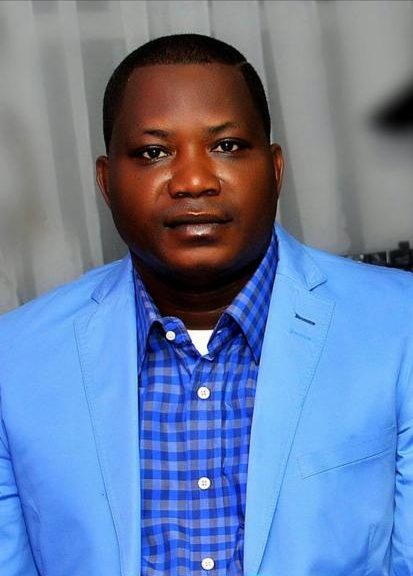
Why Ayedatiwa is the best man for the job, by Ajanaku

Why Ayedatiwa is the best man for the job, by Ajanaku
Sahara Weekly Reports That IDOWU AJANAKU, former Director of media and media for Akeredolu ,former Special Adviser to Governor Akinwumi Ambode , a close ally of President Bola Tinubu is from Idogun,Ose local government areas of Ondo State. In this interview, he speaks on the forthcoming governorship primary of the All Progressives Congress, (APC) in Ondo State and why the issue of continuity should be taken into consideration.

The National Working Committee of APC had said there won’t be any automatic ticket for all aspirants in the next gubernatorial primary schedule for April, including Governor Aiyedatiwa, does this not sound counterproductive?
There are 3 ways specified in the Constitution of the APC for choosing candidates for elective offices. The first is through Direct Primaries where every member of the party votes for the candidate of their choice; the second is through Delegates where elected delegates are the ones to vote in the primaries to choose the candidate for the office; and the third is through Consensus where there is only one candidate for the office or where all the candidates other candidates decide to step down for one of them.
The NWC of APC has not said anything to undermine anyone;they have only reiterated what is in the Constitution of the party that where there is more than one candidates there would be primaries election. This was done in Kogi recently, nothing they have said is new. You may also recollect that in 2020, the Late Arakunrin Akeredolu contested as a sitting Governor in the primaries to become the candidate of the party in that election. It cannot be counter-productive and cannot in anyway be to the disadvantage of any candidate.
Why should Aiyedatiwa be given special privilege over other contestants?
As far as I can see , no special privilege have been given to him by the National leadership but you can see that he is shoulder higher than all the other candidates in this contest.
The reasons are not farfetched. Ayedatiwa has been part and parcel of the vision of Akeredolu since 2012. He was involved in production and publicizing of the 5 point Agenda designated AKETI in the first attempt at the Governorship of Ondo State which did not succeed at that time. He never left the party. Even when he wanted to go the Senate in 2019 and the National leadership decided to return the sitting Federal Legislators he took it in good faith and did not follow the others who decided to run in the AA party against the APC. This is a testament to his consistency in the progressive fold.
In terms of experience he had served as Commissioner in the Niger Delta Development Commission (NDDC), a full-fledged Deputy Governor, an Acting Governor and now a sitting Governor. Who amongst the other contestant can parade such experience in governance, tell me?
It was reported that one of the aspirants said he wants to provide leadership for the party and the state. This is after becoming everything he wanted in the PDP! He had never been part of the progressive fold. Is it not the same person who in the full glare of the media in 2015 during the Presidential campaign for PDP,told the whole world that APC should be sweeping the country with their broom while PDP would remain in power? This is a fair weather politician who is neither here nor there but only constant in his thirst for power and cannot be trusted.
Another one who created a crisis in his party by holding parallel congresses and holding the candidate down in court until they lost the election and who has never been a part of the progressive fold is claiming to have the magic wand. The magic wand with which he had always ran anything he touches aground is not what Ondo state needs now.
This was the same man who went completely against the President and the party in the election for the Senate President. In fact he moved the motion for the nomination of the other candidate against the wish of the party leadership. How do you trust that kind of individual?
It is a fact that majority of the aspirants jostling for the APC ticket in Ondo State today are images of the PDP who used fake soldiers to drive out the progressive government under the leadership of Adefarati in 2003. They are the same people regrouping to steal the ticket of the APC to foster their conservative and reactionary ideals on the State reputed as the cradle of the progressive politics in Nigeria. APC cannot be deceived – the wind has blown and we have seen whatever they believed they were hiding!
Do you not foresee a scenario where other aspirants may work against the incumbent governor if he wins the primary?
At the end of the day when Ayedatiwa wins the ticket it will separate the wheat from the shaft. It is the shaft that would be blown away.
Do not forget that after the primaries, the candidate will become the candidate of the party and all the genuine members of the progressive stock in the State will work for his victory. Moreover, the man is already showing signs of good leadership and has demonstrated capacity for progressive ideas. He still has over seven months to further impress the people of Ondo State and deliver the dividend of democracy such that there would no reason why genuine members of the party and the people of Ondo State would not vote for him.
Here is a man who gave the members recognition for the first time since 2016 when he gathered them in a stakeholder forum recently. The members of the party were elated and joyous. It would be a pipe dream for anyone to think he would be able to rally such people against him after he has won the party’s ticket. They will only labour in vain. Mark my words when Ayedatiwawins the ticket of the party, he will win the governorship election by landslide God’s grace.
Aiyedatiwa runs a joint ticket with the late Governor RotimiAkeredolu, so the deceased governor was said to have governed Ondo State below the expectations. What then justified him to continue?
Everyone who wants to run for governorship in Ondo state hasbeen saying they are banking on what Akeredolu has done. One of the aspirants is even laying claim to be the anointed successor to Akeredolu even though he could not point to a single eye witness to corroborate his claim . He could not even remember the date he was told by the late Akeredolu according to him.Why are they trying to use his reputation of he has done nothing?
It is a notorious fact is that Akeredolu achievements in office cannot be wished away. You cannot wish away the formation of the Amotekun security force which he championed to stem the tide of the devilish move by killers herdsmen in Ondo State and the Southwest in general even at the risk of his second term ticket. He rose in defense of his people.
The Flyover at Ore is the first of its kind in the entire state. The dangerous Oke alabojuto at oka that has led to the death of many people was conquered by Akeredolu. The construction of many roads were started and completed across the state. It was rather unfortunate that the health challenge truncated his move for many more groundbreaking achievements that could have been recorded amongst which is the seaport for Ondo State and completion of many other road projects.
These achievements by the Akeredolu/Ayedatiwa government cannot be wished away. There is no way you can also write that history without recognising the supportive role that Ayedatiwaplayed as the Deputy Governor to Late Arakunrin Akeredolu. It cannot be an albatross but rather a blessing that Ayedatiwaserved meritoriously with Akeredolu to deliver the dividend of democracy to the Ondo State people within the resources available to them. He is justified to continue, to do better and also correct any perceived wrong that anyone may think of the past. He will be running the new regime with a huge benefit of hindsight that any other person cannot have.
One of the perceptions that may work against the incumbent is that of a traitor, won’t this work against him?
The first question to ask those who are plying this narrative is whether they heard the Late Arakurin Akeredolu when he as Governor he made a public declaration and pronouncement the day they were sworn in? In the full glare of the public and the media he thanked him for his loyalty and declared him as his successor. How does this translate to betrayal?
There is no public evidence that Akeredolu ever changed his mind on his perception of the person of Governor Lucky Ayedatiwa all through his lifetime. This brouhaha started the day he pronounced him his successor. The people who thought that they should have been the one to take Ayedatiwa’s place started working overtime from that moment trying to draw a wedge between them. They were the one who were peddling this false narrative to paint him in bad light.
Unfortunately the ill-health of Akeredolu provided the room for this cabal to hijack the system and even the man to the extent that they rendered him incommunicado in his last moment. They were the only ones that could see him and publish whatever they like. There was no time and evidence all through the time that Ayedatiwa ever came out to fight his boss.
When they met with the President, they could not provide any evidence to the claim that Ayedatiwa was working against the boss when they were asked for it. This was why they were unable to impeach him. The question of being a ‘traitor’ has no basis it only existed in the figment of the imagination of the cabals who thought Ondo State was in their pocket to plunder as they wish. They underestimated God.
Do you believe that zoning will work in favour of Aiyedatiwaboth in the primary and real polls?
The reality is that this was already an agreement by stakeholders that this should be zoned to the south. It was clear that after the 8 years of Mimiko from Ondo central, and Akeredolu from the North, it is only natural and just that the Governorship seat should go to Ondo South. This was the slogan during Akeredolu’s campaign for second term and that was why for the first time in the history of the state the progressive won in the enclave of the PDP in Ondo South overwhelmingly. It is also the reason why most of the aspirants are from Ondo South this time around.
Ayedatiwa is well-placed being from Ilaje in Ondo South, the area that lays the golden egg for the state. In terms of Zoning heis favoured and as the incumbent Governor, he has an edge over others.
The APC has a protocol and laid down procedure for choosing their candidates. They will not give their ticket to outsiders. I am talking as an insider with benefit of insight that there are certain prerequisite the APC has in choosing their candidates.
By April 17th, you will see the reality of all that I have said.
Again on loyalty, this Governor Ayedatiwa gave Akeredolu the first bullet proof vehicle when he was nominated as the Candidate of the Party in 2012.
Above all, I believe that there is a finger of God in Ayedatiwa’sascension to the office of Governor and this will also show in his subsequently getting the ticket of the party and winning the gubernatorial election in November this year.




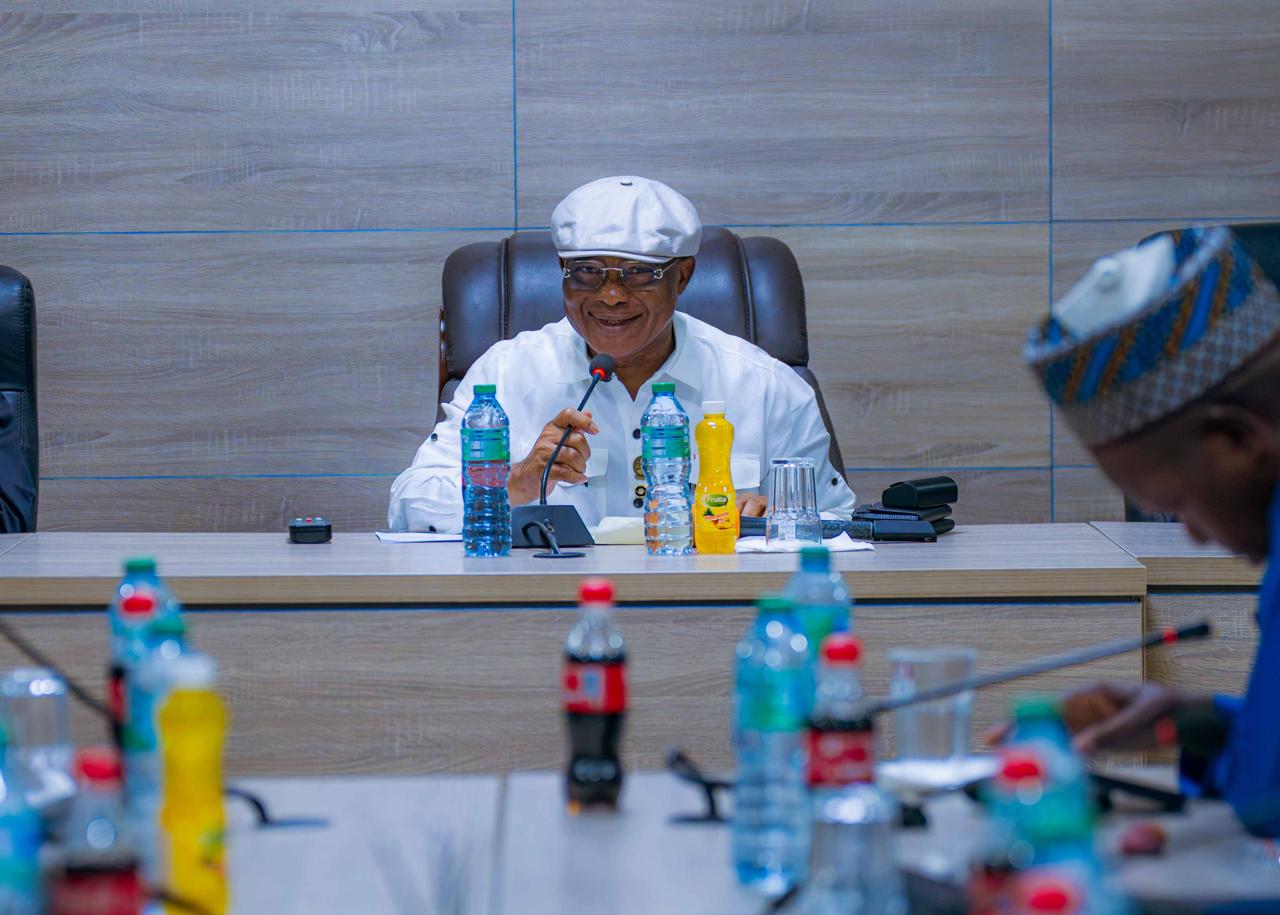
*Renewed Hope Ambassadors Step Into the Next Phase
Fresh from the successful APC 2026 National Convention, the Renewed Hope Ambassadors National, Zonal, and State leadership gathered in Abuja over the weekend, for its fourth strategic meeting, setting the tone for nationwide grassroots activation ahead of 2027.
Chaired by Governor Hope Uzodinma (Imo State) the Director General and National Coordinator of the Renewed Hope Ambassadors, alongside Deputy Director-General, Governor Uba Sani of Kaduna State, and Governor Inuwa Yahaya of Gombe State as Secretary, the session reinforced one clear direction: One Party. One Message. One Mobilization whilst also laying out a strategic roadmap for the activation of the network across all communities in Nigeria.
Backed by the strength of 31 APC-led states, the Renewed Hope Agenda is taking Bola Ahmed Tinubu’s message of progress and reform to every corner of Nigeria.
From bold economic restructuring to initiatives like NELFUND, the increase in the national minimum wage from ₦30,000 to ₦70,000, and strategic investments in critical sectors, including PNiCGI, the mission remains clear: helping Nigerians understand both the purpose and the progress of the Renewed Hope vision.
This is coordination at scale. This is grassroots engagement with purpose. This is the next phase of Renewed Hope with One Party, One Message, and One Mobilisation framework
#RenewedHopeAmbassadors #APC #WeAreAPC


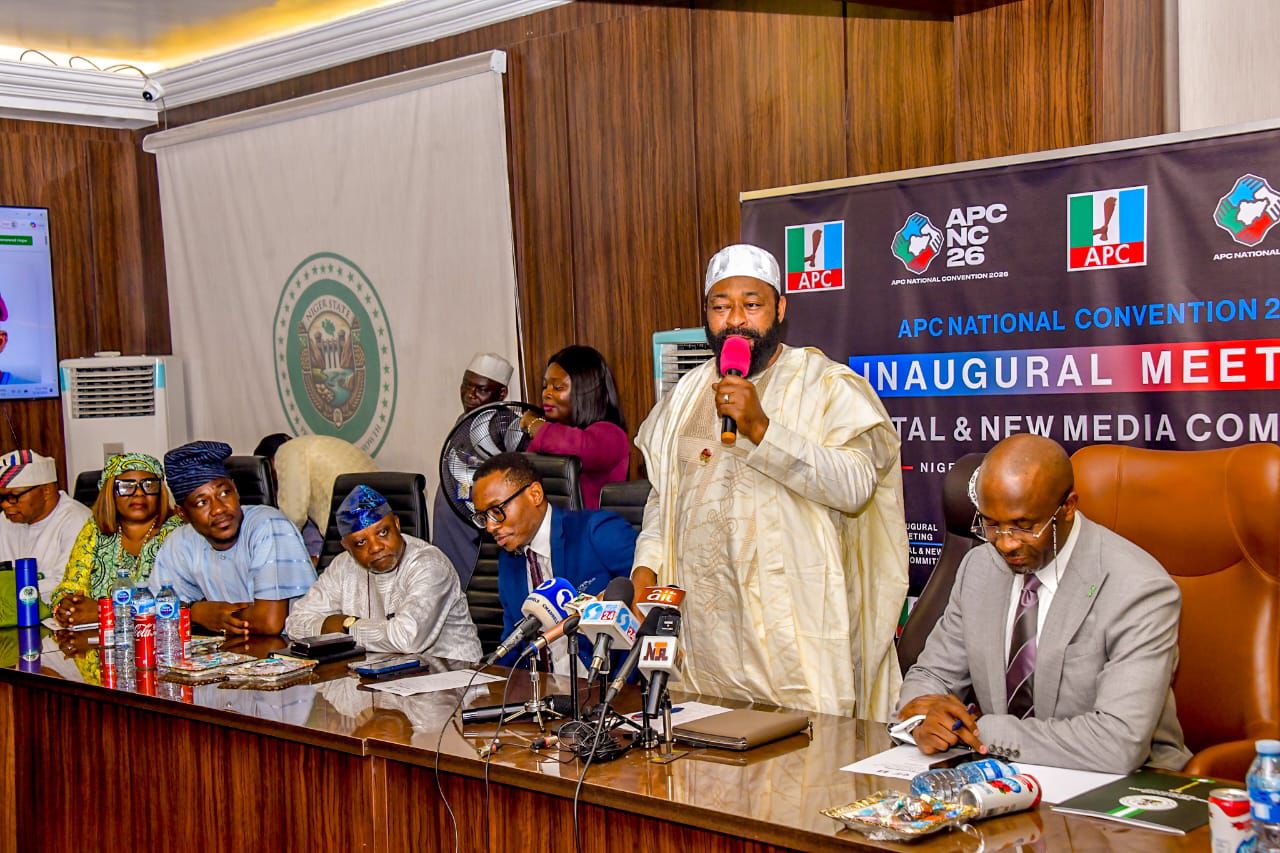
Governor Bago Inaugurates APC Digital Media Sub-Committee Ahead of National Convention.
Governor Umaru Bago has inaugurated the Digital Media Sub-Committee for the forthcoming National Convention of the All Progressives Congress (APC), scheduled to hold on March 27 and 28, 2026 in Abuja.
Chairing the sub-committee, Governor Bago tasked members with the responsibility of effectively communicating the party’s manifesto to the public.
He emphasized the need to leverage social media platforms to highlight the achievements and ongoing efforts of President Bola Ahmed Tinubu, noting that communication gaps have posed challenges that must now be decisively addressed.
The Co-Chair of the sub-committee, Hon. Benjamin Kalu, Deputy Speaker of the House of Representatives, echoed the Governor’s position, urging members to project the activities of both the party and the government to a broader audience.
He called for a deliberate and coordinated effort to showcase the party’s achievements and policy direction, stressing the importance of shaping a compelling and consistent narrative across all digital platforms.
Delivering a presentation to the committee, Otega Ogra, SSA to the President on New Media, who serves as Secretary of the sub-committee, outlined strategic focus areas to guide the team’s operations.
His presentation highlighted communication priorities and actionable steps to achieve the committee’s mandate and strengthen the party’s digital engagement.


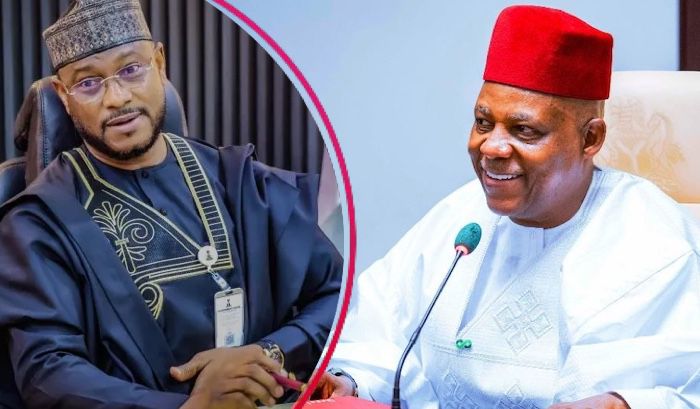
VP Shettima Set to Lead Delegation to Zamfara as Governor Dauda Lawal Formally Joins APC
The Zamfara State chapter of the All Progressives Congress (APC) has finalized plans to receive Vice President Kashim Shettima for the formal defection and reception of Governor Dauda Lawal into the ruling party, scheduled to take place on Tuesday.
State APC Chairman, Tukur Danfulani Maikatako, disclosed this during a high-level stakeholders’ meeting held in Gusau, the state capital. He noted that the Vice President would be joined by the party’s national leadership to mark what he described as a landmark political realignment in the state.
Maikatako expressed the party’s excitement over Governor Lawal’s return, recalling that Zamfara had historically been an APC stronghold and that the Governor was previously a bona fide member of the party before his earlier exit.
“We all know that Zamfara has long been one of the APC’s stronghold states, where the defected Governor was once a bona fide member. Now that he has decided to return home, having been satisfied that the APC remains his second choice after the one he left for obvious reasons,” Maikatako stated.
The Chairman called on all party faithful across the 147 wards in the state’s 14 local government areas to turn out en masse to honour the Vice President’s visit. He emphasized that the event was strategically positioned to bolster the party’s popularity and strengthen its structures ahead of the 2027 general elections.
In a strong appeal for unity, Maikatako urged members to set aside all factional tendencies, stressing that the APC remained one political family with shared goals, particularly the ambition to make Zamfara and Nigeria great again.
Echoing similar sentiments, a former state APC Chairman, Lawal M. Liman, appealed to members to cascade the message to their wards and local government areas. He reinforced the need for cohesion, noting that the party’s collective strength would be critical to achieving success in future elections.

All eyes are now on Gusau as the ruling party prepares for a high-profile political gathering expected to further consolidate its influence in Zamfara State.


-

 society6 months ago
Religion: Africa’s Oldest Weapon of Enslavement and the Forgotten Truth
-

 news4 months ago
WHO REALLY OWNS MONIEPOINT? The $290 Million Deal That Sold Nigeria’s Top Fintech to Foreign Interests
-

 society6 months ago
“You Are Never Without Help” – Pastor Gebhardt Berndt Inspires Hope Through Empower Church (Video)
-

 celebrity radar - gossips2 months ago
Dr. Chris Okafor Returns with Power and Fire of the Spirit -Mounts Grace Nation Altar with Fresh Anointing and Restoration Grace on February 1, 2026