
celebrity radar - gossips
Ayinde Barrister: Prophet without honour (3) By Tunde Odesola


Ayinde Barrister: Prophet without honour (3)- Birth, breath and death; three seeds cohabiting in the same pod. Birth-breath-death: Sikiru Ayinde Balogun’s earthly journey in a winged chariot driven by fate, fuelled by freewill.

Fatefully, Ayinde was born by a butcher father and a pepper-seller mother. Utterly, he had no say over the spermatic fluid that shot him into existence.
By freewill, Sikiru was a motor-boy, bus conductor, soldier and musician. He could’ve chosen to be a butcher like his father or be the face behind his family’s ancestral masquerade called Adakeja or be a hoodlum in the Ayeye area of Ibadan, a city renowned for robust oratory and notorious free-for-all, ija igboro laarun Ibadan.
When death ransacked Fuji Chamber in Isolo, Lagos, but couldn’t find Ayinde, death mutated into a flight called fate and headed abroad, looking for Sikiru, whom it gripped by the jugular on St Mary’s Hospital bed in London.
Sikiru begged and sang melody to death, but death was deaf. He cried, but death was blood-thirsty, dragging Agbaje along into a dark, endless tunnel without looking back.
Ayinde is the puzzle called Fuji. His voice is the riddle of the yam flour displayed uncovered in the rain and wind, yet unaffected by both elements, but when the yam flour took a dive into hot water, it became amala, ready for gbegiri and ewedu.
If you ever heard the melody of the billowy octopus thumping a piano underwater, you’ll appreciate the mystery of Ayinde’s vocal cords resonating tunefully when singing but the cords stammer when speaking.
It’s the scientific fate of the male octopus to die after fertilising the female’s eggs just as the female octopus dies after giving birth. In the octopean world, live and let die is the mantra. Before Abinuwaye departed the mortal realm and embarked on the journey to Aljanah fridaus, however, he wrote his name in the sands of time with numerous great deeds.
Testifying to Barrister’s humanity, Galala king, Daddy Showkey, said, “Barrister gave me 250 bags of cement and 500 blocks to start the foundation for my first house in Ojodu in the 1990s. Today, I’ve a shrine in my house for Barrister. I put his picture there and pray to his spirit to guide me before I leave home everyday.”
He said, “Wasiu Alabi Pasuma’s wife had a baby boy one day before my wife had a baby girl. On Pasuma’s child christening, I visited his house and asked him why didn’t he invite Barrister to the occasion. Pasuma said Barrister was a busy man, who wouldn’t have time to come for the christening.
“There and then, I went to Barrister’s house. I went straight into Barrister’s bedroom and I told him about the christening of Pasuma’s child. I also told him my own wife had put to bed, too. Barrister gave me N250, 000 and told me to give a higher amount of money to Pasuma. I won’t mention the amount he gave Pasuma because I don’t have his permission to say so.
“I returned to Pasuma’s house and gave him Barrister’s gift. I told him to give me from his own gift and Pasuma gave me N150,000 from Barrister’s gift. On the day of my first child’s naming, Barrister came at night with a cooling van. He also gave me another N250,000 when my wife had our second baby.”
Showkey went on to say that Barrister, in 1994, when he (Showkey) was a nobody, Barrister sang his praise on stage, and when he went on stage to ‘spray’ him, Barrister told him not to, and Barrister, instead, ‘sprayed’ him, and told his manager to give him all the money people ‘sprayed’ Barrister while he (Showkey) was on stage, dancing. Showkey said the money was about N300,000.
Speaking at the inaugural Barry Day celebration organised by Ayinde Barrister Legacy Group, in February 2013, at Sheraton Hotel, Lagos, a former Governor of Ogun State, Chief Segun Osoba, said despite being very close to him, Barrister never came to seek contract from him when he was governor.
All the personalities, whom Barrister praised in his songs, including Alhaji Adisa Onifade, Chief Buhari Oloto, Alhaji Murhi Gbadeyanka, Alhaji Adisa Osiefa, Asiwaju Tunde Khamis Badmus, Chief Abiola Ogundokun, Chief Oyasola Oyadeji, said Ololade sang their praises free of charge.
Mayegun Musulumi of Iwo, Debo Badru, whose father taught young Sikiru the Holy Qoran, in Iwo, said Barrister did what he preached. He said, “I was the Personal Assistant to Governor Adetunji Adeleke in Osun between 1992 and 1993. Barrister was friends with Governor Adeleke since way back in the US. Whenever Barrister had a show in Osun or its environs, he would visit my house. I was very little to Barrister in everything, but he showed me love.
“When he visited one day, I told him that he should let us go and visit his friend, the governor. He agreed. When we got to the governor, they were happy to see one another. The governor pointedly asked him if he was interested in taking contract, but he said no.”
Juju music icon, YK Ajao, who said Barrister bought brand new musical set for him. “He treated me like a younger brother. He gave me money to build my house. I went to his wardrobe to take any kind of clothes I wanted, though his clothes were not my size. He would ensure I play before him so that the people who came to watch him would ‘spray’ me first. I would play for like only 30 minutes, but would make more money than musicians who played all night,” YK Ajao said.
Waka queen, Salawa Abeni, said while she was married to Kollington Ayinla, and lived under the same roof with Baba Alatika, she defied her husband by buying and listening to Barristers songs. “General Kollington would break the disc containing Barrister’s music, I would go and buy another one, he would break it, and I would buy another. From when I was a kid singer, Barrister had taken up the role of father in my life, Salawa said.
The anchor of Oludasile Fuji, a social media group formed in honour of Barrister, Otunba Tokunbo Okunola, said Barrister was clairvoyant. Okunola, whose group conducted interviews for Showkey, Badru, Salawa, and many friends of Barrister, said Barrister would’ve been richer than any African musician if not for his philanthropy.
For someone who has done so much to put an indigenous music on the global entertainment map, Olayimika deserves immortalisation from Nigerian governments at state and national levels.
But Ayinde-Ogun wasn’t an angel, after all. He was a hypocrite who turned the Holy Quran upside down to justify a shameless act after stabbing his bosom friend, Adisa Pele, in the back by marrying Pele’s daughter, Olayinka, who was carried by Barrister during her christening.
Despite his self-professed subscription to the Omoluabi ethos, Barrister shockingly attempted to justify his ignoble act in his 1997 album, Prophecy, by citing unrelated Islamic event, saying his shameful act was similar to what obtained during the time of Prophet Muhammad (SWT).
Pele, the PRO, Ayinde Barrister and his Fuji Organisation, was in the same car with Barrister in 1976 when he had an accident.
Apart from intensive womanising, Barrister also allowed his philanthropy to affect the earnings of his band boys with his attitude of giving all the money generated at shows and parties out to people.
Also, Barrister, who prided himself as singing meaningful songs, temporarily abandoned his style of Fuji to sing lewd Fuji songs called Saje.
Talking about Barrister’s love for the young to grow, Badru recalled that Barrister once had to sing Obesere’s music when fans were leaving his stage. Badru said Barrister’s stage became enlivened after he sang one or two of Obesere’s songs before Barrister went back to his own songs.
This capitulation reflected the dimming of the sun and its journey homeward.
Adieu, Abinuwaye.
Concluded.
Email: [email protected]
Facebook: @tunde odesola
Twitter: @tunde_odesola




celebrity radar - gossips
Adron Homes Celebrates Visionary Chairman, Aare Adetola Emmanuel King, at 51
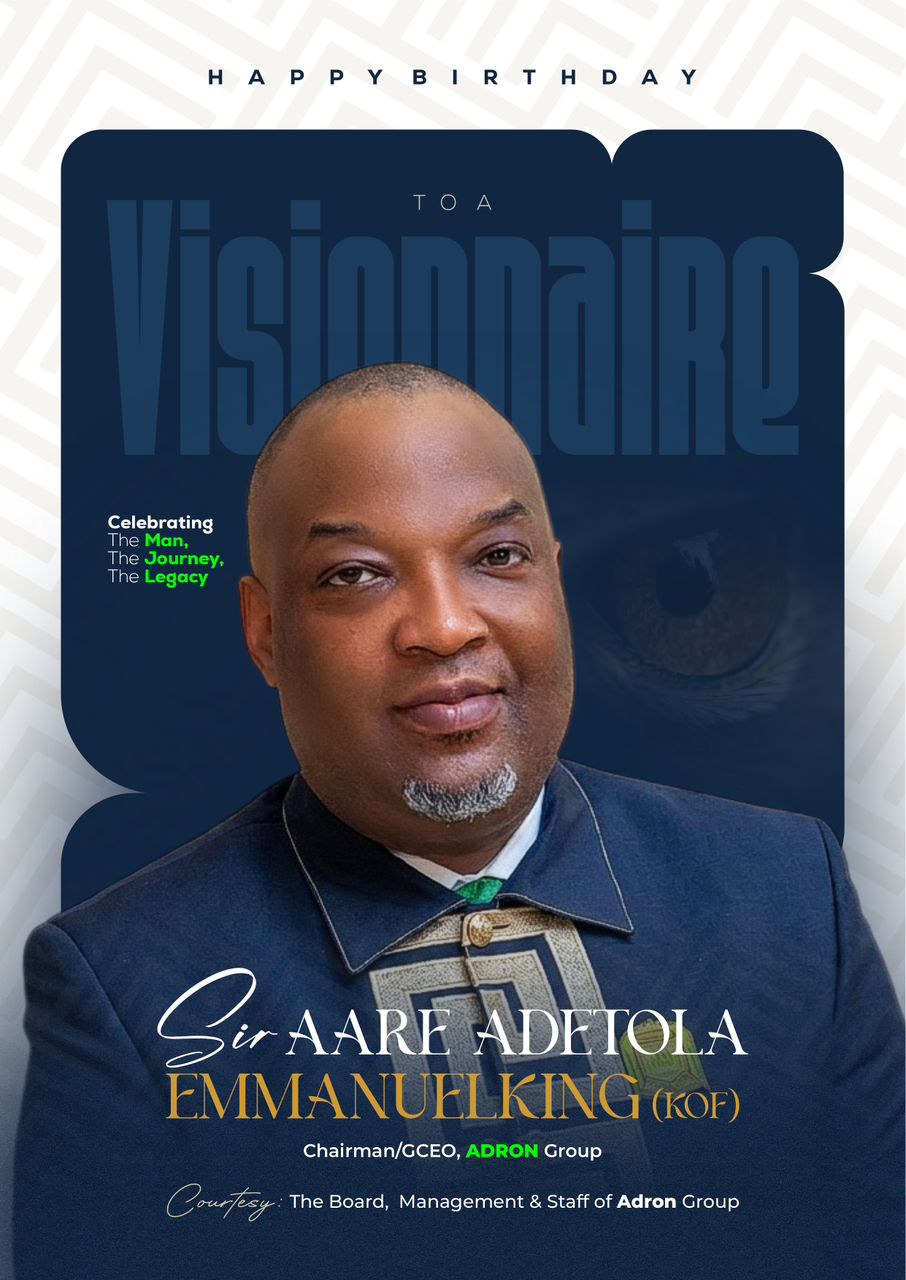
Adron Homes Celebrates Visionary Chairman, Aare Adetola Emmanuel King, at 51
The management and staff of Adron Homes and Properties Limited have joined family, friends, associates, and well-wishers across the globe to celebrate their Chairman and Chief Executive Officer, Aare Adetola EmmanuelKing, as he marks his 51st birthday.

In a statement released by the company, the milestone was described as a celebration of an exceptional leader whose vision, resilience, and entrepreneurial brilliance have not only transformed Adron Homes into a household name in Nigeria’s real estate sector but have also redefined affordable housing across the country.
Under his dynamic leadership, Adron Homes has continued to expand its footprint, delivering value-driven residential solutions while empowering thousands of Nigerians with opportunities for home ownership. His commitment to excellence, innovation, and customer satisfaction has remained the driving force behind the company’s sustained growth and industry leadership.
The statement further highlighted Aare EmmanuelKing’s passion for nation-building and community development, noting his significant contributions to job creation, youth empowerment, and the promotion of socio-economic development through real estate investments.
“As a leader, mentor, and visionary, Aare Adetola EmmanuelKing has consistently inspired a culture of excellence, integrity, and dedication within the organization. His ability to turn bold ideas into reality continues to position Adron Homes as a trailblazer in the industry,” the statement read.
The company expressed profound gratitude for his steadfast leadership and prayed for continued wisdom, strength, and sound health as he embarks on another year of impactful achievements.
As he celebrates his 51st birthday, the entire Adron Homes family proudly honours a man whose legacy continues to shape the future of real estate in Nigeria.
Happy 51st Birthday, Aare Adetola EmmanuelKing!
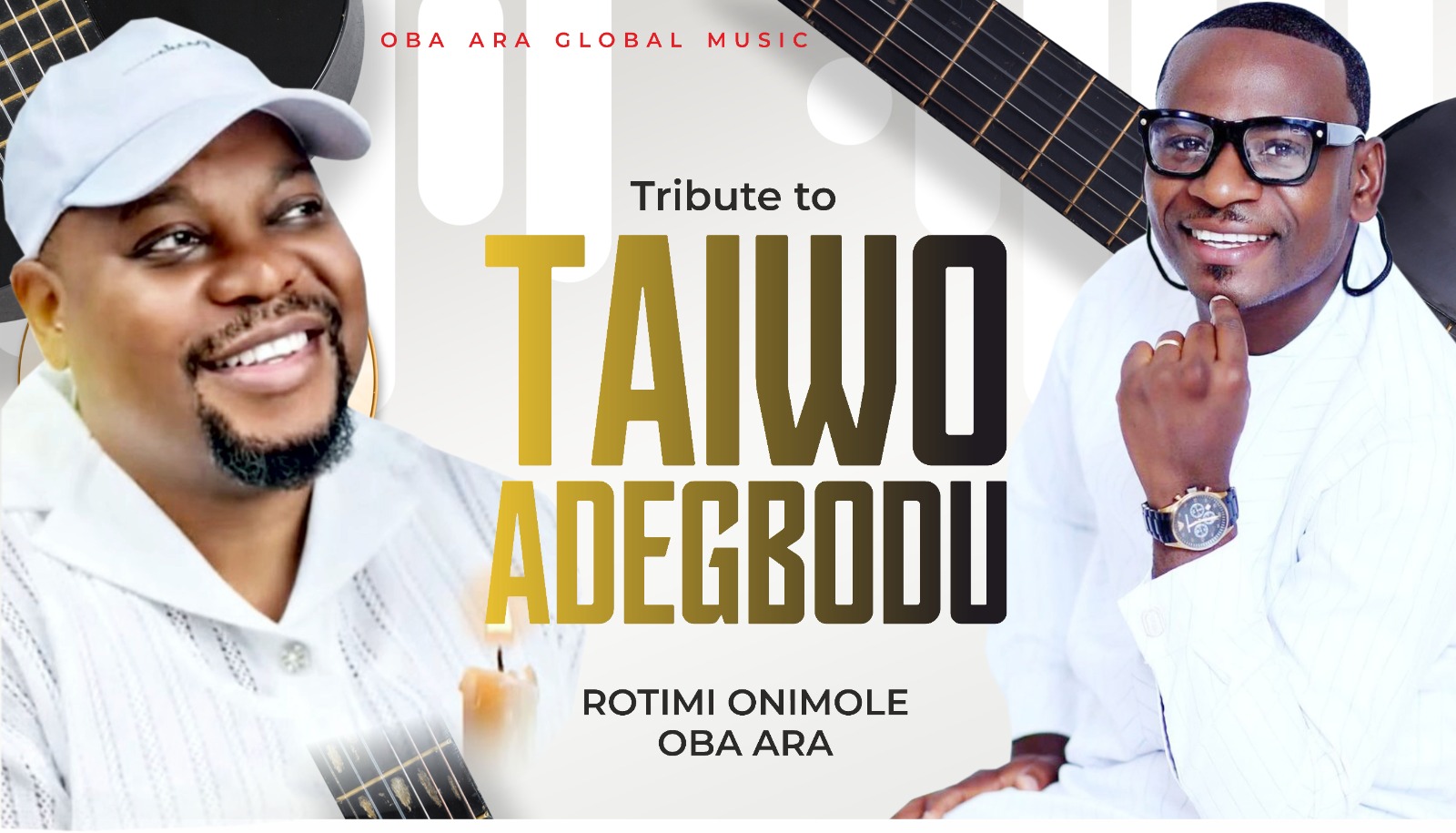
Oba Ara Releases Emotional Tribute to Late Taiwo Adegbodu
Taofik Afolabi
The gospel music community continues to grieve the painful loss of Taiwo Adegbodu, a beloved figure whose sudden departure left a deep void among fans, colleagues, and loved ones. In response to this loss, renowned gospel minister Rotimi Onimole, popularly known as Oba Ara, has released a moving tribute song that captures both the sorrow of the moment and the enduring legacy of the late singer.
Oba Ara, a proud son of Isale Eko, channels raw emotion throughout the song, using heartfelt lyrics and soul-stirring melodies to reflect on his personal connection with Taiwo Adegbodu. In the tribute, he openly expresses how deeply the news of Adegbodu’s passing shook him, describing it as a painful and unexpected loss that is difficult to come to terms with.
The song goes beyond mourning, it celebrates the life, ministry, and impact of Taiwo Adegbodu. Oba Ara highlights the late artist’s dedication to spreading the gospel through music, his inspiring voice, and the spiritual influence he had on many within and beyond Nigeria. Through powerful verses, he paints a picture of a man who lived for God and touched countless lives through his ministry.
Listeners have described the tribute as both comforting and deeply emotional, as it resonates with the collective grief of the gospel music community. It serves as a reminder that although Taiwo Adegbodu is no longer physically present, his music, message, and legacy will continue to live on.
In honoring his late colleague, Oba Ara not only pays his respects but also offers a source of healing for fans and fellow ministers, using music as a tool to process grief and celebrate a life well lived.
celebrity radar - gossips
Buratai, Fagbemi , Shagaya, Olofa, Others Eulogise Olowu Kuta’s Olori On 60th Birthday, Foundation Launch

Buratai, Fagbemi , Shagaya, Olofa, Others Eulogise Olowu Kuta’s Olori On 60th Birthday, Foundation Launch
Eminent personalities across the Nigeria stormed the TFK Event Centre, Bala Mohammed Way, Guzape, Abuja, to celebrate the 60th birthday of Olowu Kuta’s Olori, Queen Jumai Amoke and her Foundation Launch on Saturday 28, March 2026.

From former Chief of Army Staff, Lt Gen TY Buratai rtd, to the Minister of Justice and Attorney-General of the Federation, Prince Lateef Fagbemi; Olofa of Offa, HRM Oba Mufutau Gbadamosi. Even top businesswoman and socialite, Chief (Mrs) Bola Shagaya, was in attendance.


Other dignitaries were newly promoted Deputy Inspector-General of Police and former AIG Zone 2 , Lagos , Adegoke Fayoade, Major General Abdumalik, Major General Samuel Adebayo rtd (Fmr CDI);
Major General Anthony Omozoje rtd (Fmr Copp);
Alhaji Tajudeen Owoyemi (Asiwaju of Offa and CEO Radisson Hotel Nigeria;
Dr Waheed Olagunju, former managing director of Bank of Industry, Oniba of Iba, Lagos State, HRM Oba Dr Suleiman Raji ;
Justice Falola, Olu of Ile-Ogbo , Oba Adetoyese amongst many traditional rulers and captains of industry too numerous to mention.
Speaking at the occasion, the Chief Host, Olowu of Kuta, HRM Oba Dr Adekunle Oyelude Makama, CON , Tegbosun iii, who is also the husband of the celebrant commended Queen Jumai for ‘ her slender arms full of kindness’ to establish such humanitarian Foundation, ‘Amoke Children and mother in Need Foundation’ at a time Nigerians are going through economic crisis occassioned by the global meltdown.
Olowu also commended her steadfastness and love for the less privileged and downtrodden.
The monarch refrenced the task before his wife’s humanitarian gesture said her best is yet to come.
” Olori Amoke Jumai, I celebrate you. You will celebrate 70, 80, 90 and continue to shine as you continue to put a smile on people’s faces. I love you, “Olowu Kuta added.
To Lt Gen Buratai, a former army chief and former Nigerian Ambassador to Benin Republic, the reward of hard work is more work.
Buratai, who also doubles as Balogun Agba of Owu Kuta, a chieftaincy title reserved for a generalismo congratulated Queen Jumai for attaining the age of 60 in good health.
The retired army General said he’s not surprised by the turn out of eminent personalities across the country to celebrate the Olowu Kuta’s Olori because she merited it through her hospitality to all, adding that Allah the most merciful, most beneficial would accept all her act of ibadah.
The minister of Justice, Prince Fagbemi, was full of praises for Queen Jumai for deeming it fit to have a place in her heart to accommodate the needy and less privileged in ‘our society.’
Prince Fagbemi urged the guests to contribute generously to support the Foundation in order to continue to alleviate poverty and put a smile on the faces of the people.
” I congratulate you on your 60th birthday and Foundation Launch. I wish you many happy returns of the day and many more fruitful services to the country and motherland”, Prince Fagbemi added.
The celebrant, Queen Jumai who was grining from ear to ear thankfully said she was excited by the turn out and the response of the people to her foundation.
Queen Jumai, however, promised to continue to use her resources and donations received for the good of the needy and less privileged in the society.
” I want to appreciate my own Kabiesi Olofa of Offa , for his presence and im I’m using him as a point of contact to all other Kabiesis present here, the minister of justice and Attorney-General, you’re welcome, sir; Mrs Bola Shagaya, I salute your enterprise, Lt Gen Buratai, I’m grateful, sir; DIG Fayoade, Justice Falola and other dignitaries too numerous to mention, I thank you, all. To my darling husband, Kabiesi Olowu , I thank you immensely for your support. And to my family and friends, I thank you , all. E se pupo!”, she said.


-

 society7 months ago
Religion: Africa’s Oldest Weapon of Enslavement and the Forgotten Truth
-

 news4 months ago
WHO REALLY OWNS MONIEPOINT? The $290 Million Deal That Sold Nigeria’s Top Fintech to Foreign Interests
-

 society6 months ago
“You Are Never Without Help” – Pastor Gebhardt Berndt Inspires Hope Through Empower Church (Video)
-

 celebrity radar - gossips2 months ago
Dr. Chris Okafor Returns with Power and Fire of the Spirit -Mounts Grace Nation Altar with Fresh Anointing and Restoration Grace on February 1, 2026